First Farmers: The Revolution of AgricultureAssignment 3By: Alexis Apgar
The Last Ice Age70,000 BCE – 10,000 BCEThe Agricultural Revolution coincided with the end of the last Ice Age. At the end of the last Ice Age human migration across the earth began.
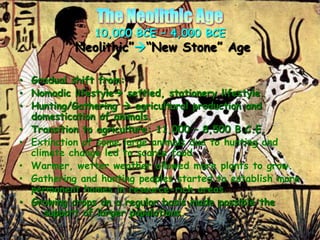
The Neolithic Age10,000 BCE – 4,000 BCE“Neolithic”“New Stone” AgeGradual shift from:Nomadic lifestyle settled, stationery lifestyle.Hunting/Gathering  agricultural production and domestication of animals.Transition to agriculture: 11,000 – 8,500 B.C.E.Extinction of some large animals due to hunting and climate change led to scarce food.Warmer, wetter weather allowed more plants to grow.Gathering and hunting peoples started to establish more permanent homes in resource-rich areas. Growing crops on a regular basis made possible the    support of larger populations.
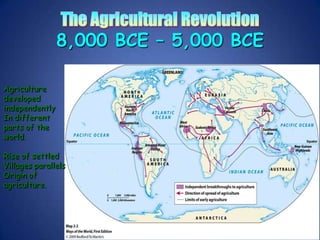
The Agricultural Revolution8,000 BCE – 5,000 BCEAgriculture developed independently In different parts of the world. Rise of settledVillages parallelsOrigin of agriculture.
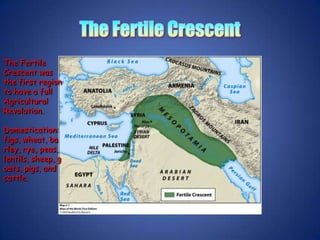
The Fertile CrescentThe Fertile Crescent was the first region to have a full Agricultural Revolution.Domestication: figs, wheat, barley, rye, peas, lentils, sheep, goats, pigs, and cattle.
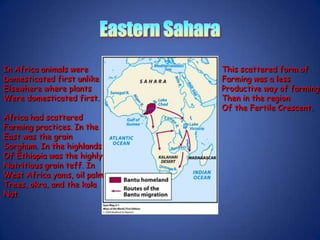
Eastern SaharaIn Africa animals wereDomesticated first unlike Elsewhere where plants Were domesticated first.Africa had scattered Farming practices. In the East was the grainSorghum. In the highlandsOf Ethiopia was the highlyNutritious grain teff. InWest Africa yams, oil palmTrees, okra, and the kolaNut.This scattered form ofFarming was a less Productive way of farmingThen in the regionOf the Fertile Crescent.
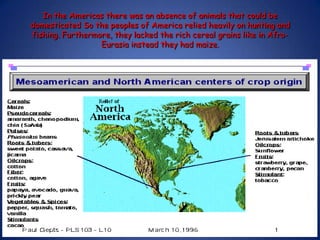
In the Americas there was an absence of animals that could be domesticated So the peoples of America relied heavily on hunting and fishing. Furthermore, they lacked the rich cereal grains like in Afro-Eurasia instead they had maize.
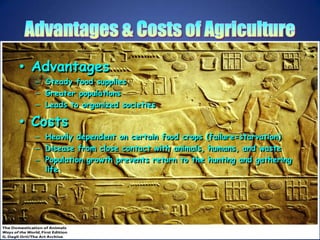
Advantages & Costs of AgricultureAdvantagesSteady food suppliesGreater populationsLeads to organized societiesCostsHeavily dependent on certain food crops (failure=starvation)Disease from close contact with animals, humans, and wastePopulation growth prevents return to the hunting and gathering life.
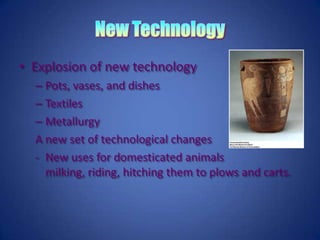
New TechnologyExplosion of new technologyPots, vases, and dishesTextiles MetallurgyA new set of technological changesNew uses for domesticated animals milking, riding, hitching them to plows and carts.Social Variation in the Age of AgriculturePastoral SocietiesIn Central Asia, the Arabian Peninsula, the Sahara, and in parts of eastern and southern Africa people depended heavily on their animals and became herders, pastoralists, or nomads.Agricultural Village SocietiesSettled village based farms maintenance of equality and freedom: no kings, chiefs, bureaucrats, and aristocrats.Organized by kinship, group, or lineage performed the functions of its government.ChiefdomsChiefs, unlike kings rely on generosity, ritual status, or charisma to govern, not force.Locations include Mesopotamia, Pacific Islands, and North America.
First farmers

First farmers

  • 1.
    First Farmers: TheRevolution of AgricultureAssignment 3By: Alexis Apgar
  • 2.
    The Last IceAge70,000 BCE – 10,000 BCEThe Agricultural Revolution coincided with the end of the last Ice Age. At the end of the last Ice Age human migration across the earth began.
  • 3.
    The Neolithic Age10,000BCE – 4,000 BCE“Neolithic”“New Stone” AgeGradual shift from:Nomadic lifestyle settled, stationery lifestyle.Hunting/Gathering  agricultural production and domestication of animals.Transition to agriculture: 11,000 – 8,500 B.C.E.Extinction of some large animals due to hunting and climate change led to scarce food.Warmer, wetter weather allowed more plants to grow.Gathering and hunting peoples started to establish more permanent homes in resource-rich areas. Growing crops on a regular basis made possible the support of larger populations.
  • 4.
    The Agricultural Revolution8,000BCE – 5,000 BCEAgriculture developed independently In different parts of the world. Rise of settledVillages parallelsOrigin of agriculture.
  • 5.
    The Fertile CrescentTheFertile Crescent was the first region to have a full Agricultural Revolution.Domestication: figs, wheat, barley, rye, peas, lentils, sheep, goats, pigs, and cattle.
  • 6.
    Eastern SaharaIn Africaanimals wereDomesticated first unlike Elsewhere where plants Were domesticated first.Africa had scattered Farming practices. In the East was the grainSorghum. In the highlandsOf Ethiopia was the highlyNutritious grain teff. InWest Africa yams, oil palmTrees, okra, and the kolaNut.This scattered form ofFarming was a less Productive way of farmingThen in the regionOf the Fertile Crescent.
  • 7.
    In the Americasthere was an absence of animals that could be domesticated So the peoples of America relied heavily on hunting and fishing. Furthermore, they lacked the rich cereal grains like in Afro-Eurasia instead they had maize.
  • 8.
    Advantages & Costsof AgricultureAdvantagesSteady food suppliesGreater populationsLeads to organized societiesCostsHeavily dependent on certain food crops (failure=starvation)Disease from close contact with animals, humans, and wastePopulation growth prevents return to the hunting and gathering life.
  • 9.
    New TechnologyExplosion ofnew technologyPots, vases, and dishesTextiles MetallurgyA new set of technological changesNew uses for domesticated animals milking, riding, hitching them to plows and carts.Social Variation in the Age of AgriculturePastoral SocietiesIn Central Asia, the Arabian Peninsula, the Sahara, and in parts of eastern and southern Africa people depended heavily on their animals and became herders, pastoralists, or nomads.Agricultural Village SocietiesSettled village based farms maintenance of equality and freedom: no kings, chiefs, bureaucrats, and aristocrats.Organized by kinship, group, or lineage performed the functions of its government.ChiefdomsChiefs, unlike kings rely on generosity, ritual status, or charisma to govern, not force.Locations include Mesopotamia, Pacific Islands, and North America.