Designing a training programme
Designing a training programme Factors you need to consider when designing a training programme P  Purpose I  Identification T  Testing S  Select Methods of training T  Time O  Organise session P  Put it all together/ Periodisation
Designing a training programme Purpose S  Specific M  Measurable A  Attainable R  Realistic T  Time E  Exciting R  Recorded
Designing a training programme Identification What energy systems are required What fitness components are involved They should be related to the goal EG. Half marathon requirements Aerobic system, cardio-respiratory endurance, nutrition, fluid  balance, and muscular endurance
Designing a training programme Testing To motivate Identify profile weaknesses  Assess reality of achieving goal Limitations. Accuracy with which test carried out. Accuracy of measurement Familiarity with protocols.
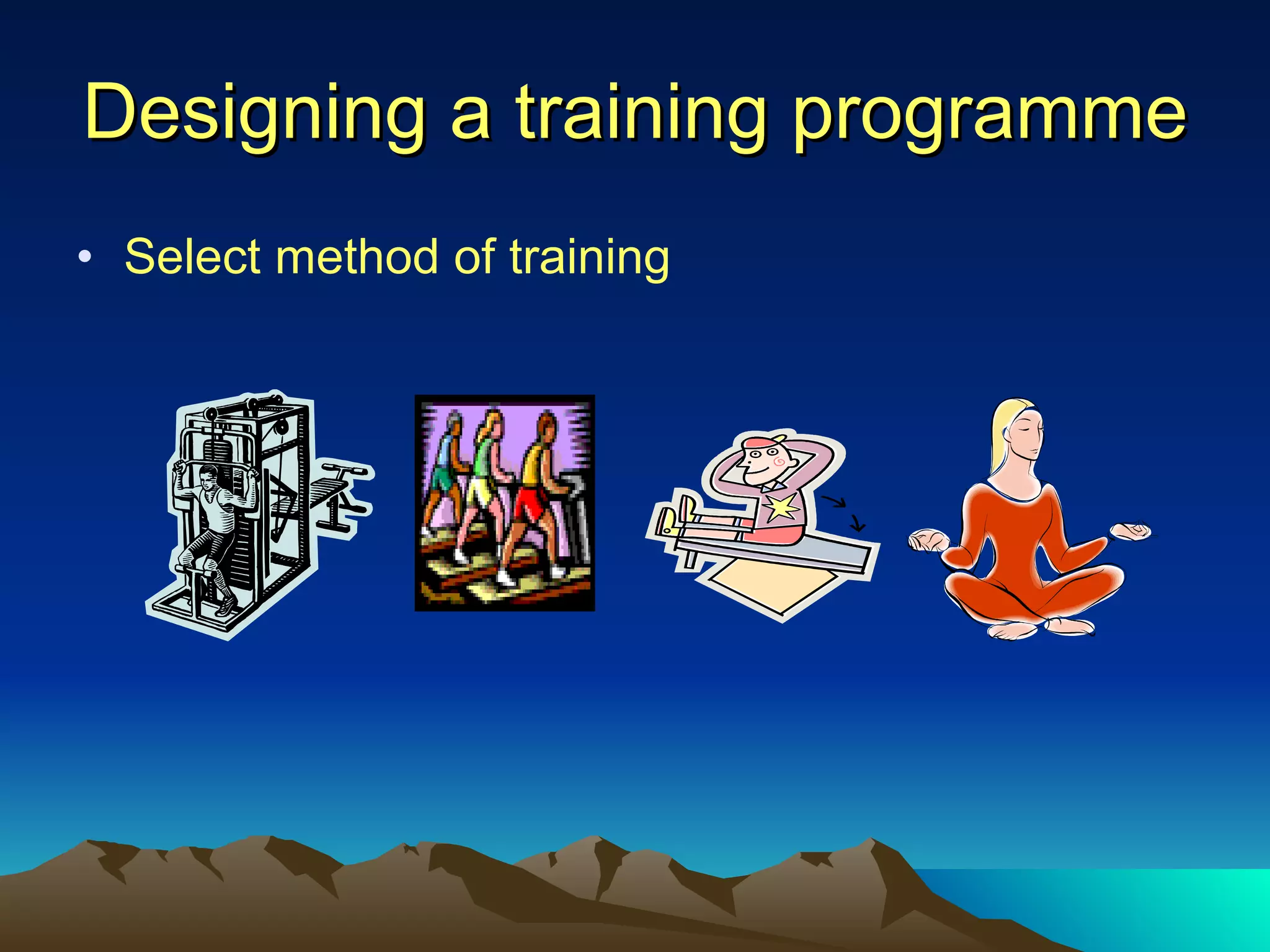
Designing a training programme Select method of training
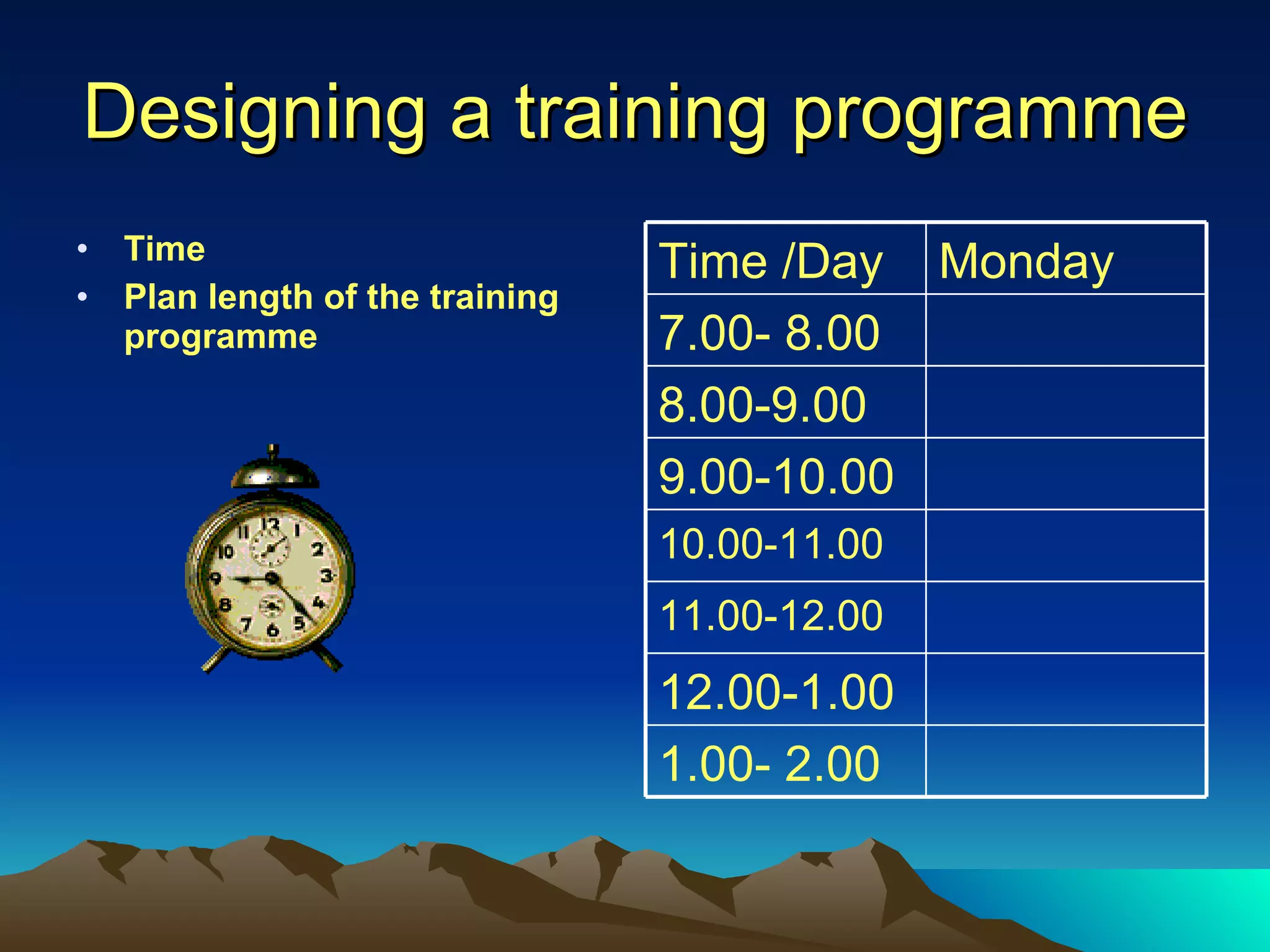
Designing a training programme Time Plan length of the training programme 1.00- 2.00 12.00-1.00 11.00-12.00 10.00-11.00 9.00-10.00 8.00-9.00 7.00- 8.00 Monday Time /Day
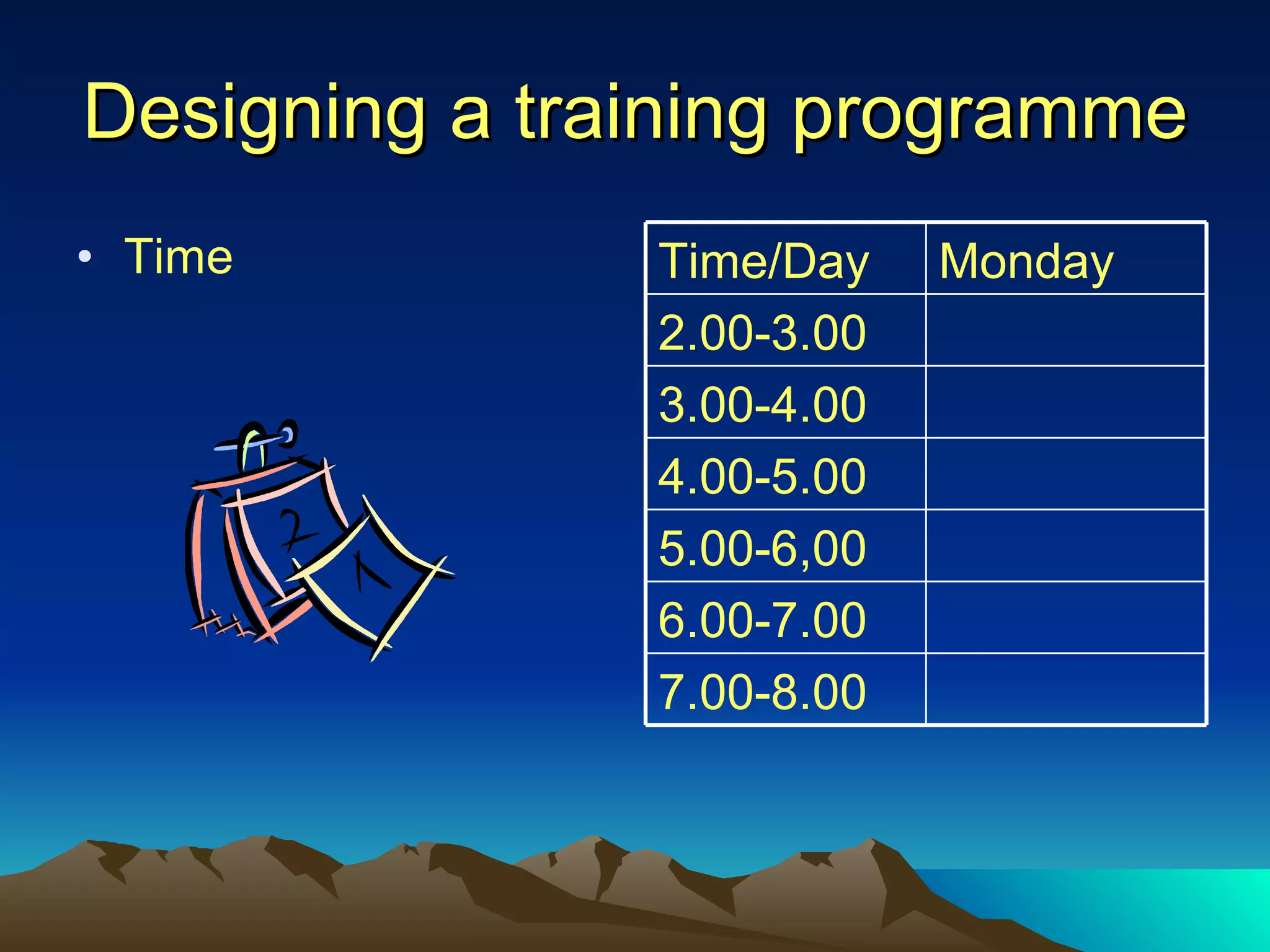
Designing a training programme Time 7.00-8.00 6.00-7.00 5.00-6,00 4.00-5.00 3.00-4.00 2.00-3.00 Monday Time/Day
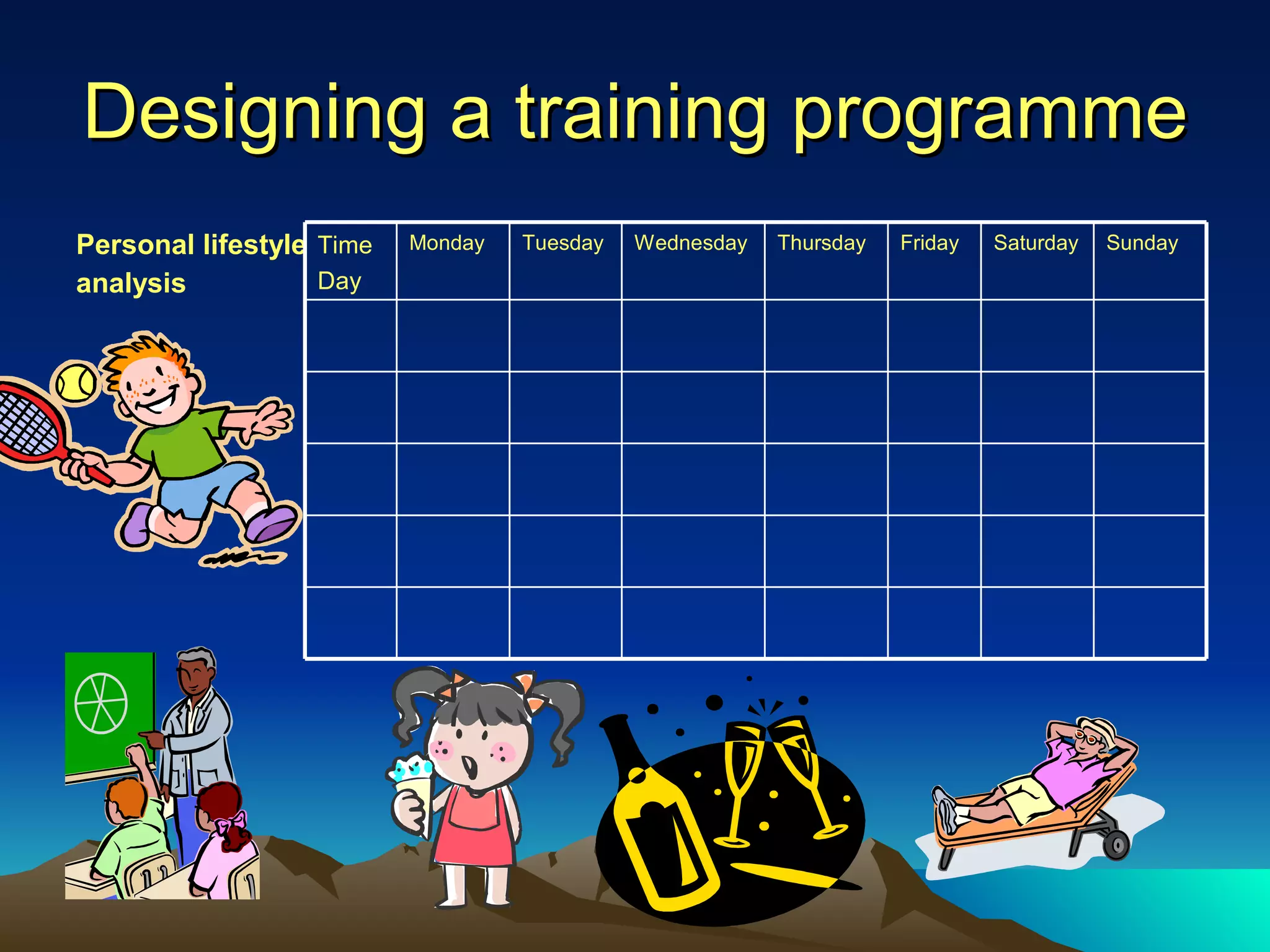
Designing a training programme Personal lifestyle analysis Sunday Saturday Friday Thursday Wednesday Tuesday Monday Time Day
Designing a training programme Organise session Factors hat need to be considered for the training session How do they fit into the overall training. When do I rest What principles of training will be used :  specificity, overload For each selected method of training is critical to the success of training
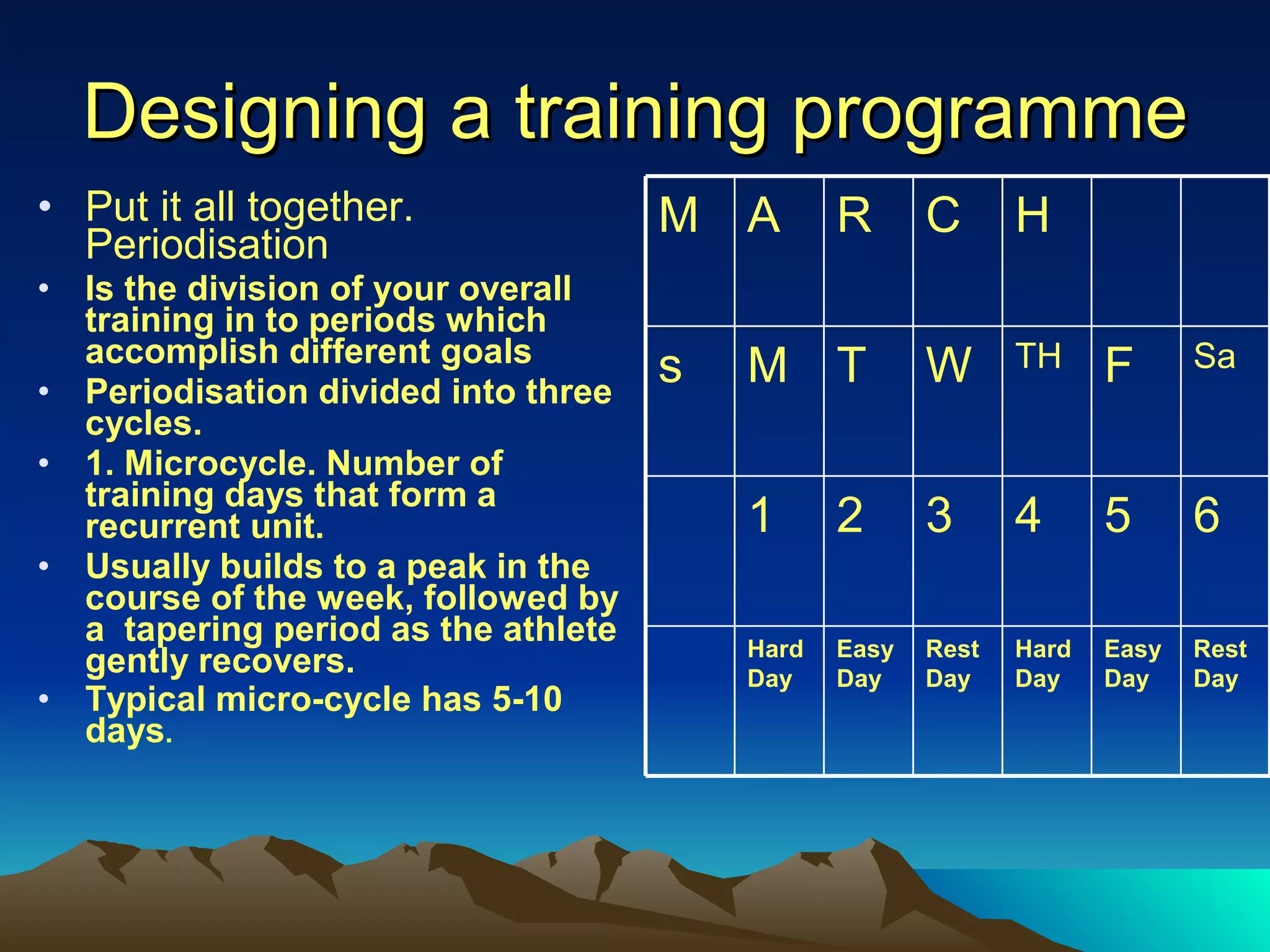
Designing a training programme Put it all together. Periodisation Is the division of your overall training in to periods which accomplish different goals Periodisation divided into three cycles. 1. Microcycle. Number of training days that form a recurrent unit. Usually builds to a peak in the course of the week, followed by a  tapering period as the athlete gently recovers. Typical micro-cycle has 5-10 days . Rest Day Easy Day Hard Day Rest Day Easy Day Hard Day 6 5 4 3 2 1 Sa F TH W T M s H C R A M
Designing a training programme Mesocycle A period of 4-12 weeks training towards a goal.  Often made up of 4-12 micro cycles
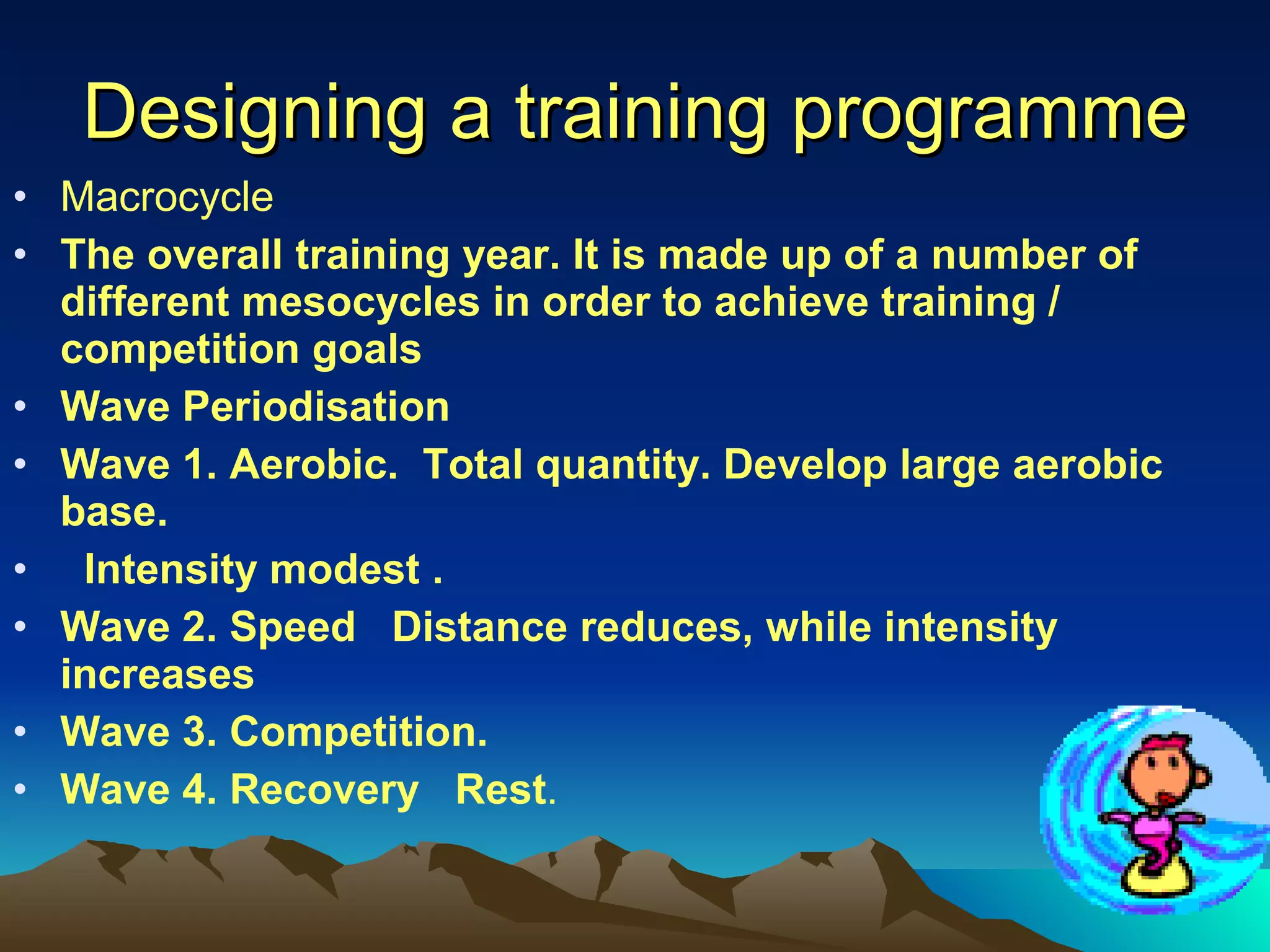
Designing a training programme Macrocycle The overall training year. It is made up of a number of different mesocycles in order to achieve training / competition goals Wave Periodisation Wave 1. Aerobic.  Total quantity. Develop large aerobic base. Intensity modest . Wave 2. Speed  Distance reduces, while intensity increases Wave 3. Competition.  Wave 4. Recovery  Rest .
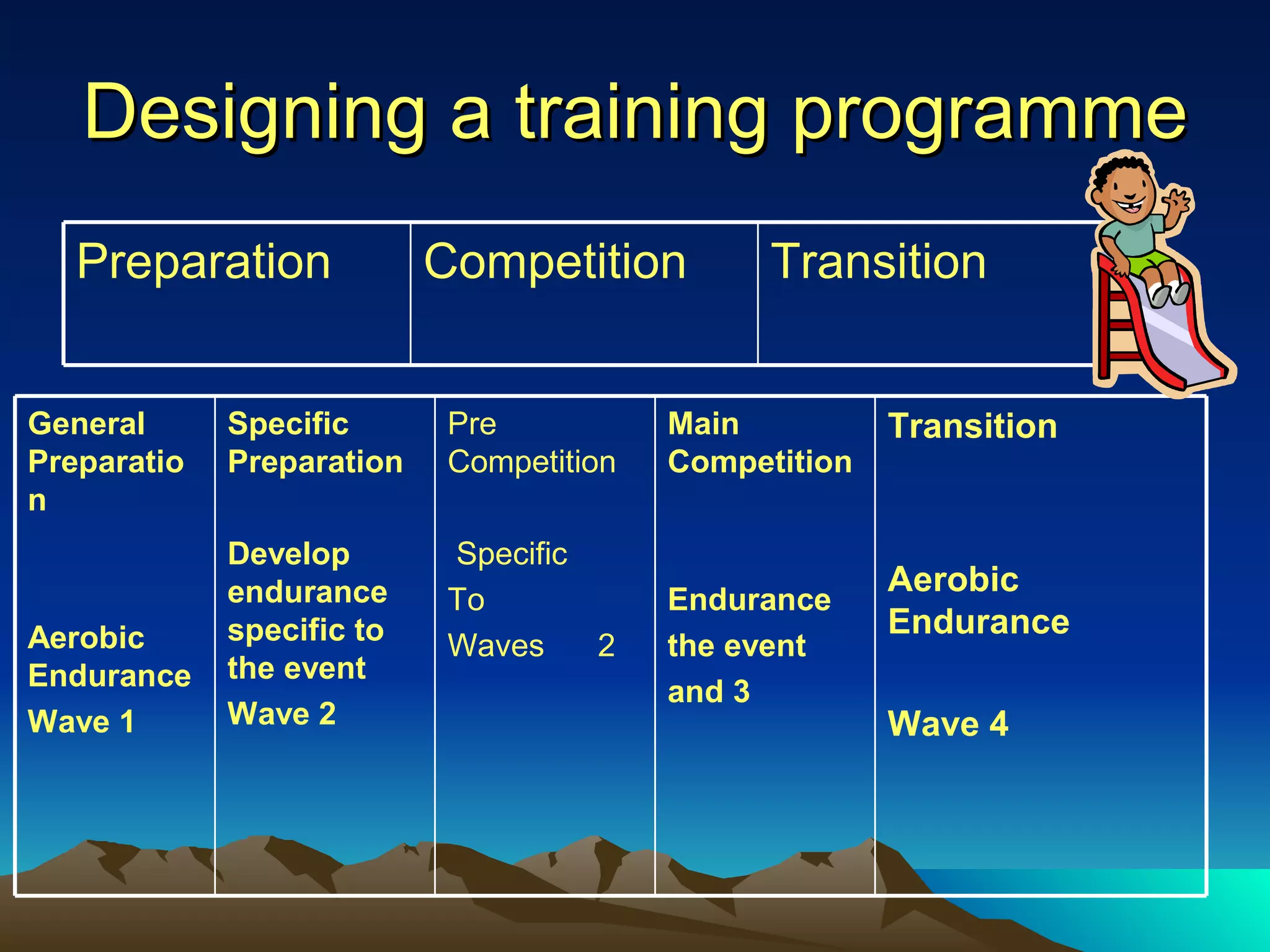
Designing a training programme Transition Competition Preparation Transition Aerobic Endurance Wave 4 Main Competition Endurance the event and 3 Pre Competition Specific  To Waves  2 Specific Preparation Develop endurance specific to the event Wave 2 General Preparation Aerobic Endurance Wave 1
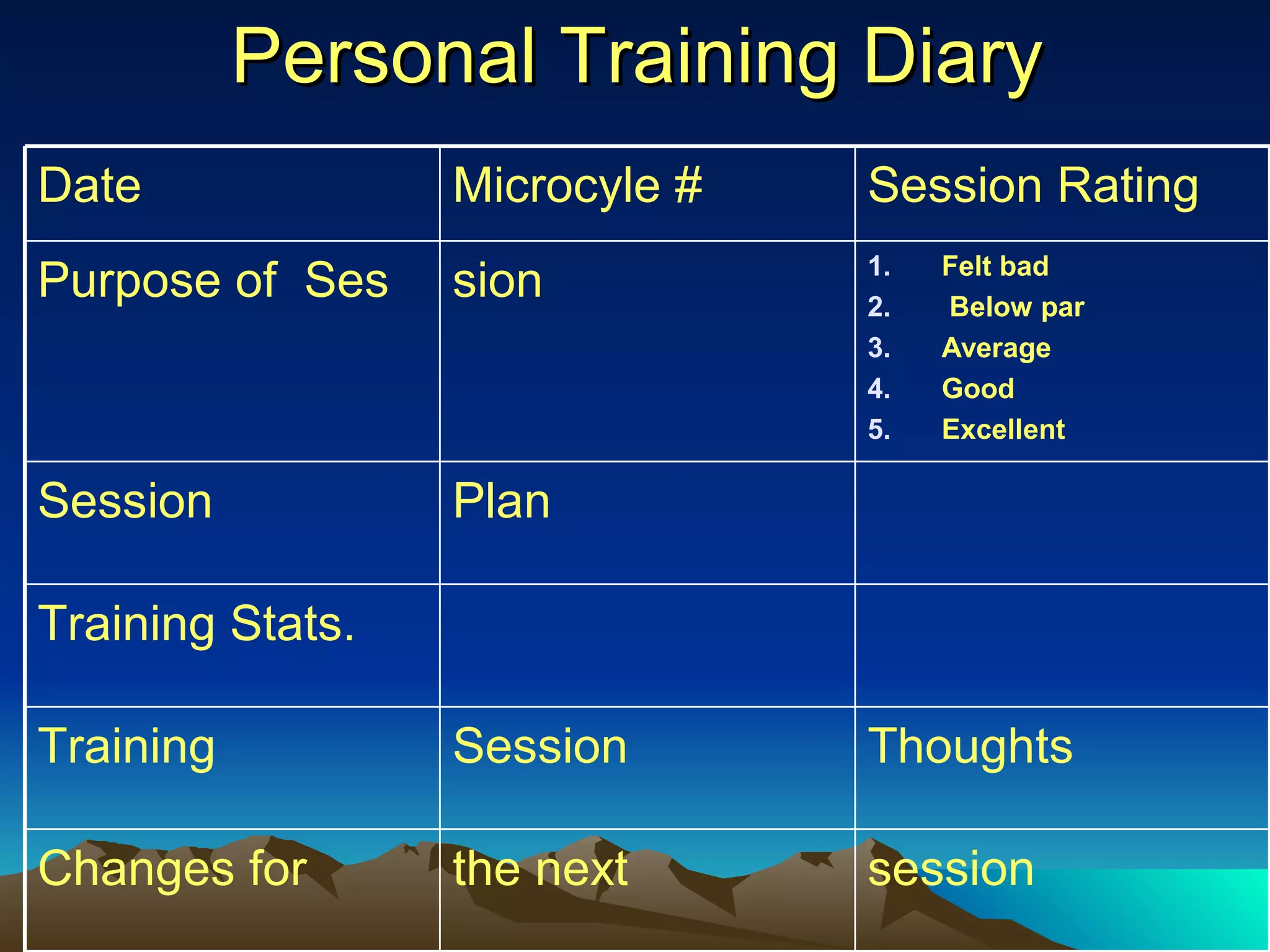
Personal Training Diary session the next Changes for Thoughts Session  Training Training Stats. Plan Session  Felt bad Below par Average Good Excellent sion Purpose of  Ses Session Rating Microcyle # Date
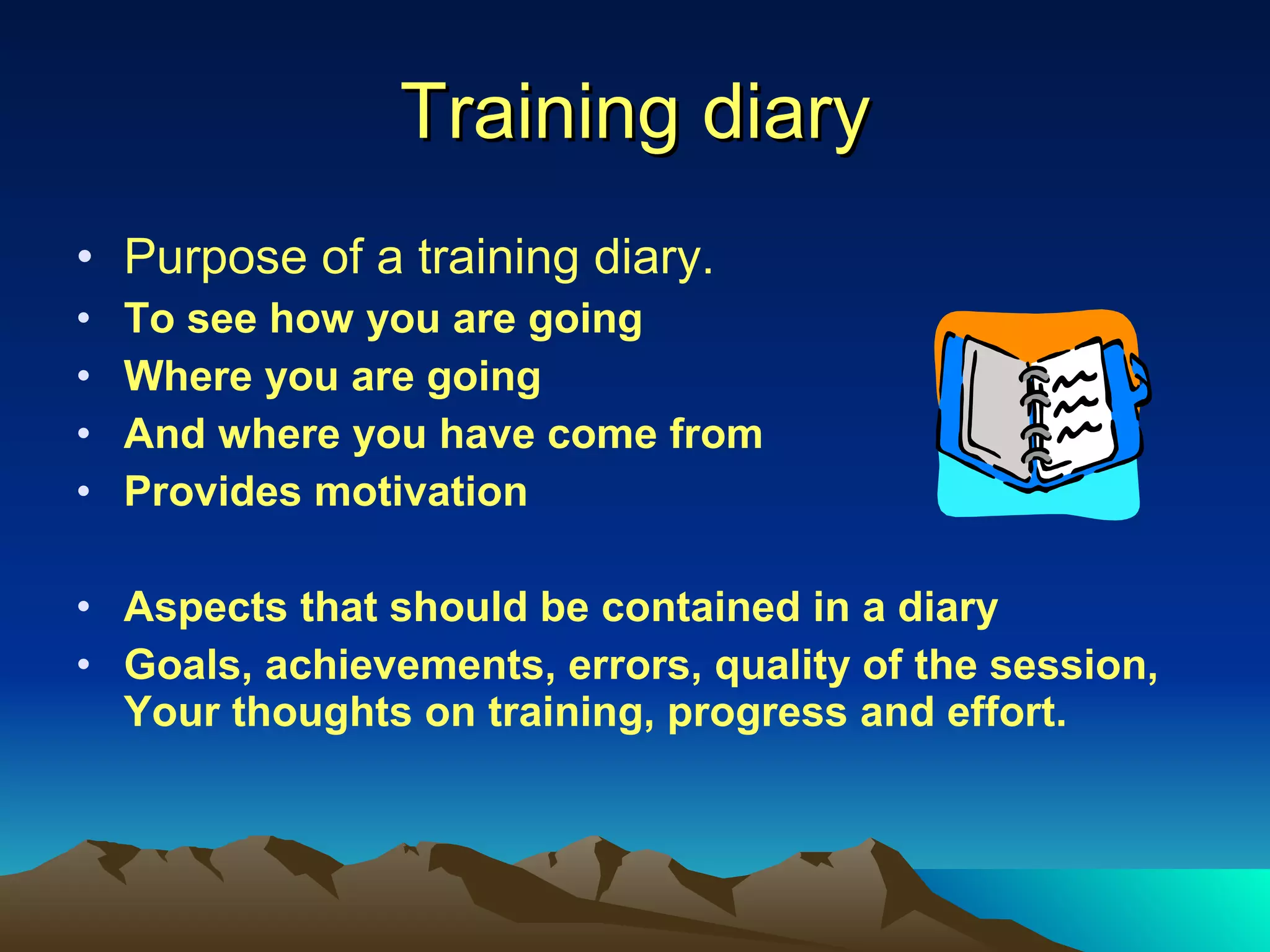
Training diary Purpose of a training diary. To see how you are going Where you are going And where you have come from Provides motivation Aspects that should be contained in a diary Goals, achievements, errors, quality of the session, Your thoughts on training, progress and effort.
Training diary It keeps your specific goal to the forefront. It will have on going measures. You can adjust the goal to keep it realistic and attainable. Because the diary is being kept daily as it progresses towards the goal. It will be time based It helps you manage your time in training. You can have testing sessions recorded to gauge progress and /0r changes you need to make. It may help you to organise or reorganise your training session. You can see if your microcycles fit in to the overall macrocyle.
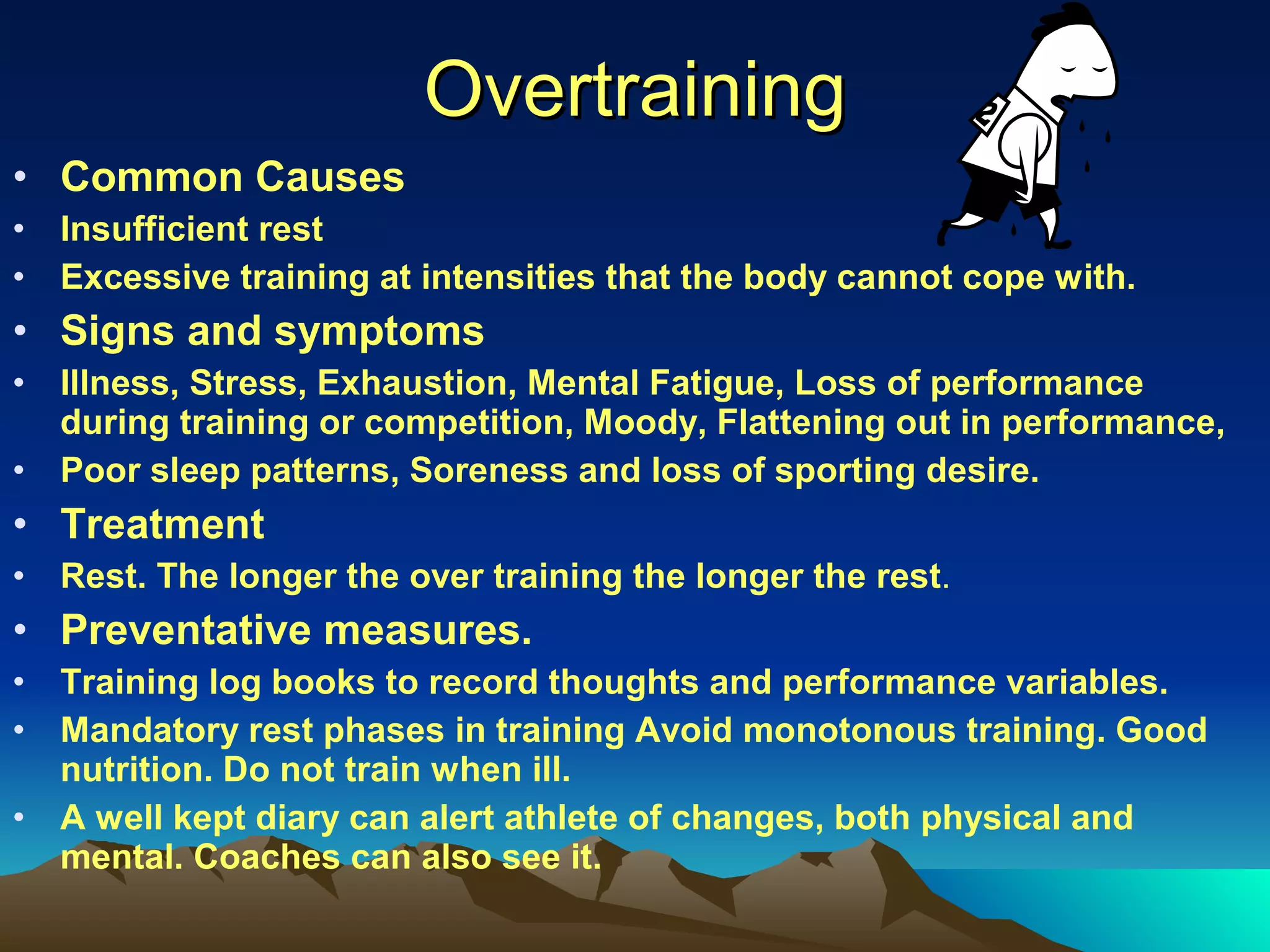
Overtraining Common Causes Insufficient rest Excessive training at intensities that the body cannot cope with. Signs and symptoms Illness, Stress, Exhaustion, Mental Fatigue, Loss of performance during training or competition, Moody, Flattening out in performance, Poor sleep patterns, Soreness and loss of sporting desire. Treatment Rest. The longer the over training the longer the rest . Preventative measures. Training log books to record thoughts and performance variables. Mandatory rest phases in training Avoid monotonous training. Good nutrition. Do not train when ill. A well kept diary can alert athlete of changes, both physical and mental. Coaches can also see it.

Designing a training programme

  • 1.
  • 2.
    Designing a trainingprogramme Factors you need to consider when designing a training programme P Purpose I Identification T Testing S Select Methods of training T Time O Organise session P Put it all together/ Periodisation
  • 3.
    Designing a trainingprogramme Purpose S Specific M Measurable A Attainable R Realistic T Time E Exciting R Recorded
  • 4.
    Designing a trainingprogramme Identification What energy systems are required What fitness components are involved They should be related to the goal EG. Half marathon requirements Aerobic system, cardio-respiratory endurance, nutrition, fluid balance, and muscular endurance
  • 5.
    Designing a trainingprogramme Testing To motivate Identify profile weaknesses Assess reality of achieving goal Limitations. Accuracy with which test carried out. Accuracy of measurement Familiarity with protocols.
  • 6.
    Designing a trainingprogramme Select method of training
  • 7.
    Designing a trainingprogramme Time Plan length of the training programme 1.00- 2.00 12.00-1.00 11.00-12.00 10.00-11.00 9.00-10.00 8.00-9.00 7.00- 8.00 Monday Time /Day
  • 8.
    Designing a trainingprogramme Time 7.00-8.00 6.00-7.00 5.00-6,00 4.00-5.00 3.00-4.00 2.00-3.00 Monday Time/Day
  • 9.
    Designing a trainingprogramme Personal lifestyle analysis Sunday Saturday Friday Thursday Wednesday Tuesday Monday Time Day
  • 10.
    Designing a trainingprogramme Organise session Factors hat need to be considered for the training session How do they fit into the overall training. When do I rest What principles of training will be used : specificity, overload For each selected method of training is critical to the success of training
  • 11.
    Designing a trainingprogramme Put it all together. Periodisation Is the division of your overall training in to periods which accomplish different goals Periodisation divided into three cycles. 1. Microcycle. Number of training days that form a recurrent unit. Usually builds to a peak in the course of the week, followed by a tapering period as the athlete gently recovers. Typical micro-cycle has 5-10 days . Rest Day Easy Day Hard Day Rest Day Easy Day Hard Day 6 5 4 3 2 1 Sa F TH W T M s H C R A M
  • 12.
    Designing a trainingprogramme Mesocycle A period of 4-12 weeks training towards a goal. Often made up of 4-12 micro cycles
  • 13.
    Designing a trainingprogramme Macrocycle The overall training year. It is made up of a number of different mesocycles in order to achieve training / competition goals Wave Periodisation Wave 1. Aerobic. Total quantity. Develop large aerobic base. Intensity modest . Wave 2. Speed Distance reduces, while intensity increases Wave 3. Competition. Wave 4. Recovery Rest .
  • 14.
    Designing a trainingprogramme Transition Competition Preparation Transition Aerobic Endurance Wave 4 Main Competition Endurance the event and 3 Pre Competition Specific To Waves 2 Specific Preparation Develop endurance specific to the event Wave 2 General Preparation Aerobic Endurance Wave 1
  • 15.
    Personal Training Diarysession the next Changes for Thoughts Session Training Training Stats. Plan Session Felt bad Below par Average Good Excellent sion Purpose of Ses Session Rating Microcyle # Date
  • 16.
    Training diary Purposeof a training diary. To see how you are going Where you are going And where you have come from Provides motivation Aspects that should be contained in a diary Goals, achievements, errors, quality of the session, Your thoughts on training, progress and effort.
  • 17.
    Training diary Itkeeps your specific goal to the forefront. It will have on going measures. You can adjust the goal to keep it realistic and attainable. Because the diary is being kept daily as it progresses towards the goal. It will be time based It helps you manage your time in training. You can have testing sessions recorded to gauge progress and /0r changes you need to make. It may help you to organise or reorganise your training session. You can see if your microcycles fit in to the overall macrocyle.
  • 18.
    Overtraining Common CausesInsufficient rest Excessive training at intensities that the body cannot cope with. Signs and symptoms Illness, Stress, Exhaustion, Mental Fatigue, Loss of performance during training or competition, Moody, Flattening out in performance, Poor sleep patterns, Soreness and loss of sporting desire. Treatment Rest. The longer the over training the longer the rest . Preventative measures. Training log books to record thoughts and performance variables. Mandatory rest phases in training Avoid monotonous training. Good nutrition. Do not train when ill. A well kept diary can alert athlete of changes, both physical and mental. Coaches can also see it.