Principles of Periodization
    University of Massachusetts Boston

         Timothy R. Morgan, D.C.
Periodization
 Periodization – systematic variation of training specificity, intensity, and
  volume organized into planned periods or cycles within an overall
  program

 Training programs need to be varied in order to continually presenting
  the athlete with new demands and challenges

 Training variation helps to avoid plateauing of physical adaptations and
  psychological adjustments

 The positive outcome gained through a successful training program
  cannot continue indefinitely unless the training stimulus is constantly
  changed
General Adaptation Syndrome
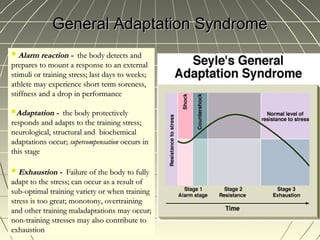
 Alarm reaction -     the body detects and
prepares to mount a response to an external
stimuli or training stress; last days to weeks;
athlete may experience short term soreness,
stiffness and a drop in performance

Adaptation -     the body protectively
responds and adapts to the training stress;
neurological, structural and biochemical
adaptations occur; supercompensation occurs in
this stage

 Exhaustion -      Failure of the body to fully
adapt to the stress; can occur as a result of
sub-optimal training variety or when training
stress is too great; monotony, overtraining
and other training maladaptations may occur;
non-training stresses may also contribute to
exhaustion
Supercompensation
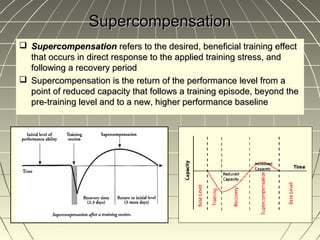
 Supercompensation refers to the desired, beneficial training effect
  that occurs in direct response to the applied training stress, and
  following a recovery period
 Supercompensation is the return of the performance level from a
  point of reduced capacity that follows a training episode, beyond the
  pre-training level and to a new, higher performance baseline
Supercompensation & Adaptation
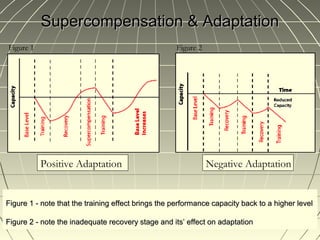
Figure 1                                            Figure 2


           Positive Adaptation                                 Negative Adaptation


Figure 1 - note that the training effect brings the performance capacity back to a higher level

Figure 2 - note the inadequate recovery stage and its’ effect on adaptation
Periodization Cycles
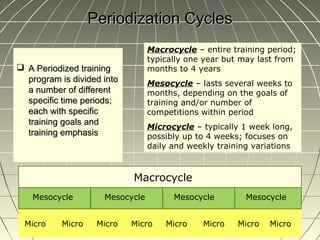
                                 Macrocycle – entire training period;
                                 typically one year but may last from
 A Periodized training          months to 4 years
  program is divided into        Mesocycle – lasts several weeks to
  a number of different          months, depending on the goals of
  specific time periods;         training and/or number of
  each with specific             competitions within period
  training goals and
                                 Microcycle – typically 1 week long,
  training emphasis              possibly up to 4 weeks; focuses on
                                 daily and weekly training variations


                            Macrocycle
   Mesocycle         Mesocycle         Mesocycle         Mesocycle


 Micro     Micro    Micro   Micro    Micro    Micro    Micro   Micro
Periodization Periods
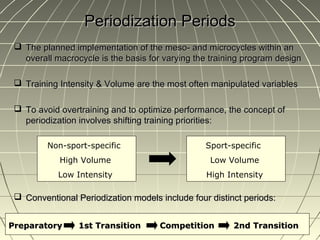
  The planned implementation of the meso- and microcycles within an
   overall macrocycle is the basis for varying the training program design

  Training Intensity & Volume are the most often manipulated variables

  To avoid overtraining and to optimize performance, the concept of
   periodization involves shifting training priorities:

         Non-sport-specific                      Sport-specific
            High Volume                           Low Volume
            Low Intensity                        High Intensity

  Conventional Periodization models include four distinct periods:


Preparatory      1st Transition       Competition       2nd Transition
Preparatory Period
 The longest phase of the Macrocycle; occurs during the non-
  competitive period of the athlete’s calendar
 Major emphasis of this period is establishing a base level of
  conditioning, increasing athlete’s tolerance to more intense training
 Low intensity / High Volume training
 High volume training requires extensive recovery; sport specific skills
  are therefore not stressed, largely due to time requirements
 As the Preparatory period carries out, individual microcycles are
  designed to progressively increase resistance training loads and sport-
  conditioning intensity, decrease training volume and give more
  attention to sport-specific training

    Preparatory period is divided into three phases:

         Hypertrophy / Endurance
         Basic Strength
         Strength / Power
Preparatory Period (cont.)

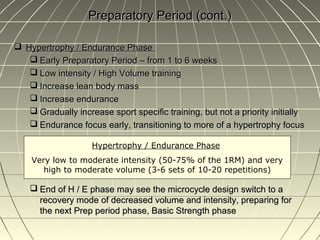
 Hypertrophy / Endurance Phase
    Early Preparatory Period – from 1 to 6 weeks
    Low intensity / High Volume training
    Increase lean body mass
    Increase endurance
    Gradually increase sport specific training, but not a priority initially
    Endurance focus early, transitioning to more of a hypertrophy focus

                    Hypertrophy / Endurance Phase
    Very low to moderate intensity (50-75% of the 1RM) and very
       high to moderate volume (3-6 sets of 10-20 repetitions)

     End of H / E phase may see the microcycle design switch to a
      recovery mode of decreased volume and intensity, preparing for
      the next Prep period phase, Basic Strength phase
Preparatory Period (cont.)
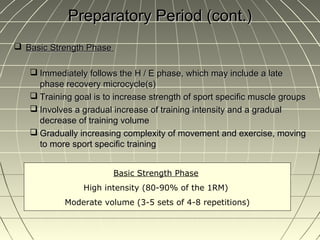
 Basic Strength Phase

    Immediately follows the H / E phase, which may include a late
     phase recovery microcycle(s)
    Training goal is to increase strength of sport specific muscle groups
    Involves a gradual increase of training intensity and a gradual
     decrease of training volume
    Gradually increasing complexity of movement and exercise, moving
     to more sport specific training


                         Basic Strength Phase
                High intensity (80-90% of the 1RM)
           Moderate volume (3-5 sets of 4-8 repetitions)
Preparatory Period (cont.)
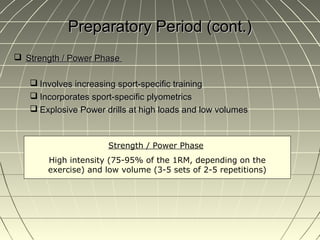
 Strength / Power Phase

    Involves increasing sport-specific training
    Incorporates sport-specific plyometrics
    Explosive Power drills at high loads and low volumes


                      Strength / Power Phase
       High intensity (75-95% of the 1RM, depending on the
       exercise) and low volume (3-5 sets of 2-5 repetitions)
First Transition Period
 Scheduled between the Preparatory Period and the Competition
  Period
 Represents a break between high volume training and high intensity
  training
Competition Period
 The goal of this period is to peak strength and power through further
  increases in training intensity with additional decreases in training
  volume
 Significant increase in sport specific skill and strategy training
 Less time is spent on physical conditioning
 Competitions may be incorporated as training sessions
 The duration of the competition period is sport dependent, therefore
  microcycles need to be manipulated due to seasonal demands
 With a short season, the goal is to peak strength and power for the
  competitive period
 Longer seasons (some professional sport seasons may span 6-9
  months) require a conditioning preservation goal; preserving
  strength/power/performance over the length of the competitive period;
  moderate volume, moderate intensity maintenance program

Peaking : very high intensity 93+% 1RM -- very low volume 1-3 sets of 1-3 reps
Maintenance : moderate volume ~2-3 sets of 6-8 reps
2nd Transition Period
 Also known as “Active Rest” or “Restoration” Period
 Scheduled to follow the prolonged, intense competition period
 The duration of this period will differ depending on the length of the other
  macrocycle periods, but typically lasts for 1-4 weeks
 The 2nd Transition allows the athlete to physically and psychologically rest and
  recover from the competition period prior to entering into the preparatory period
  of the next macrocycle
 Rather than inactivity, this period is marked by unstructured, non-sport-specific
  exercise
 Low intensity / low volume, non-aggressive training
 Light recreational activities (i.e. recreational swimming, volleyball, very light
  resistance training, yoga, etc.)
 The concept of “active rest” can also be used as a 1-week break between other
  training phases or mesocycle periods. Active rest used in this capacity can be
  termed an “unloading week”, and attempts to prepare the athlete’s body for the
  increased demands of the next phase of training
 Unloading weeks help to minimize the cumulative stress that continuous
  training places on the athlete’s body and may help prevent overtraining
  syndrome
Applying Sport Seasons to Periodization

 Off-Season – period between the competitive season and the pre-
  season
 Most of the Preparatory period occurs during the off-season
 Depending on the length of the off-season (dictated by the length of the
  competitive season), the S&C professional can break up this season into
  separate preparatory mesocycles. i.e. athlete may rotate through two or
  more cycles of endurance/hypertrophy, basic strength and strength/power
  phases, depending on sport-specific needs

   Preseason – leads up to the 1st contest of the season
   Varies in length depending on sport, but is usually less than 6 weeks
   The preseason typically contains the late phases of the Preparatory
    period and the 1st transition period
References


Baechle, TR. Earle, RW. Essentials of
 Strength Training and Conditioning, 2 nd
 Ed. 2000. Human Kinetics.

Principlesof periodization

  • 1.
    Principles of Periodization University of Massachusetts Boston Timothy R. Morgan, D.C.
  • 2.
    Periodization  Periodization –systematic variation of training specificity, intensity, and volume organized into planned periods or cycles within an overall program  Training programs need to be varied in order to continually presenting the athlete with new demands and challenges  Training variation helps to avoid plateauing of physical adaptations and psychological adjustments  The positive outcome gained through a successful training program cannot continue indefinitely unless the training stimulus is constantly changed
  • 3.
    General Adaptation Syndrome Alarm reaction - the body detects and prepares to mount a response to an external stimuli or training stress; last days to weeks; athlete may experience short term soreness, stiffness and a drop in performance Adaptation - the body protectively responds and adapts to the training stress; neurological, structural and biochemical adaptations occur; supercompensation occurs in this stage  Exhaustion - Failure of the body to fully adapt to the stress; can occur as a result of sub-optimal training variety or when training stress is too great; monotony, overtraining and other training maladaptations may occur; non-training stresses may also contribute to exhaustion
  • 4.
    Supercompensation  Supercompensation refersto the desired, beneficial training effect that occurs in direct response to the applied training stress, and following a recovery period  Supercompensation is the return of the performance level from a point of reduced capacity that follows a training episode, beyond the pre-training level and to a new, higher performance baseline
  • 5.
    Supercompensation & Adaptation Figure1 Figure 2 Positive Adaptation Negative Adaptation Figure 1 - note that the training effect brings the performance capacity back to a higher level Figure 2 - note the inadequate recovery stage and its’ effect on adaptation
  • 6.
    Periodization Cycles Macrocycle – entire training period; typically one year but may last from  A Periodized training months to 4 years program is divided into Mesocycle – lasts several weeks to a number of different months, depending on the goals of specific time periods; training and/or number of each with specific competitions within period training goals and Microcycle – typically 1 week long, training emphasis possibly up to 4 weeks; focuses on daily and weekly training variations Macrocycle Mesocycle Mesocycle Mesocycle Mesocycle Micro Micro Micro Micro Micro Micro Micro Micro
  • 7.
    Periodization Periods The planned implementation of the meso- and microcycles within an overall macrocycle is the basis for varying the training program design  Training Intensity & Volume are the most often manipulated variables  To avoid overtraining and to optimize performance, the concept of periodization involves shifting training priorities: Non-sport-specific Sport-specific High Volume Low Volume Low Intensity High Intensity  Conventional Periodization models include four distinct periods: Preparatory 1st Transition Competition 2nd Transition
  • 8.
    Preparatory Period  Thelongest phase of the Macrocycle; occurs during the non- competitive period of the athlete’s calendar  Major emphasis of this period is establishing a base level of conditioning, increasing athlete’s tolerance to more intense training  Low intensity / High Volume training  High volume training requires extensive recovery; sport specific skills are therefore not stressed, largely due to time requirements  As the Preparatory period carries out, individual microcycles are designed to progressively increase resistance training loads and sport- conditioning intensity, decrease training volume and give more attention to sport-specific training Preparatory period is divided into three phases:  Hypertrophy / Endurance  Basic Strength  Strength / Power
  • 9.
    Preparatory Period (cont.) Hypertrophy / Endurance Phase  Early Preparatory Period – from 1 to 6 weeks  Low intensity / High Volume training  Increase lean body mass  Increase endurance  Gradually increase sport specific training, but not a priority initially  Endurance focus early, transitioning to more of a hypertrophy focus Hypertrophy / Endurance Phase Very low to moderate intensity (50-75% of the 1RM) and very high to moderate volume (3-6 sets of 10-20 repetitions)  End of H / E phase may see the microcycle design switch to a recovery mode of decreased volume and intensity, preparing for the next Prep period phase, Basic Strength phase
  • 10.
    Preparatory Period (cont.) Basic Strength Phase  Immediately follows the H / E phase, which may include a late phase recovery microcycle(s)  Training goal is to increase strength of sport specific muscle groups  Involves a gradual increase of training intensity and a gradual decrease of training volume  Gradually increasing complexity of movement and exercise, moving to more sport specific training Basic Strength Phase High intensity (80-90% of the 1RM) Moderate volume (3-5 sets of 4-8 repetitions)
  • 11.
    Preparatory Period (cont.) Strength / Power Phase  Involves increasing sport-specific training  Incorporates sport-specific plyometrics  Explosive Power drills at high loads and low volumes Strength / Power Phase High intensity (75-95% of the 1RM, depending on the exercise) and low volume (3-5 sets of 2-5 repetitions)
  • 12.
    First Transition Period Scheduled between the Preparatory Period and the Competition Period  Represents a break between high volume training and high intensity training
  • 13.
    Competition Period  Thegoal of this period is to peak strength and power through further increases in training intensity with additional decreases in training volume  Significant increase in sport specific skill and strategy training  Less time is spent on physical conditioning  Competitions may be incorporated as training sessions  The duration of the competition period is sport dependent, therefore microcycles need to be manipulated due to seasonal demands  With a short season, the goal is to peak strength and power for the competitive period  Longer seasons (some professional sport seasons may span 6-9 months) require a conditioning preservation goal; preserving strength/power/performance over the length of the competitive period; moderate volume, moderate intensity maintenance program Peaking : very high intensity 93+% 1RM -- very low volume 1-3 sets of 1-3 reps Maintenance : moderate volume ~2-3 sets of 6-8 reps
  • 14.
    2nd Transition Period Also known as “Active Rest” or “Restoration” Period  Scheduled to follow the prolonged, intense competition period  The duration of this period will differ depending on the length of the other macrocycle periods, but typically lasts for 1-4 weeks  The 2nd Transition allows the athlete to physically and psychologically rest and recover from the competition period prior to entering into the preparatory period of the next macrocycle  Rather than inactivity, this period is marked by unstructured, non-sport-specific exercise  Low intensity / low volume, non-aggressive training  Light recreational activities (i.e. recreational swimming, volleyball, very light resistance training, yoga, etc.)  The concept of “active rest” can also be used as a 1-week break between other training phases or mesocycle periods. Active rest used in this capacity can be termed an “unloading week”, and attempts to prepare the athlete’s body for the increased demands of the next phase of training  Unloading weeks help to minimize the cumulative stress that continuous training places on the athlete’s body and may help prevent overtraining syndrome
  • 15.
    Applying Sport Seasonsto Periodization  Off-Season – period between the competitive season and the pre- season  Most of the Preparatory period occurs during the off-season  Depending on the length of the off-season (dictated by the length of the competitive season), the S&C professional can break up this season into separate preparatory mesocycles. i.e. athlete may rotate through two or more cycles of endurance/hypertrophy, basic strength and strength/power phases, depending on sport-specific needs  Preseason – leads up to the 1st contest of the season  Varies in length depending on sport, but is usually less than 6 weeks  The preseason typically contains the late phases of the Preparatory period and the 1st transition period
  • 16.
    References Baechle, TR. Earle,RW. Essentials of Strength Training and Conditioning, 2 nd Ed. 2000. Human Kinetics.