Optimizing Quality Systems with
        Design Thinking
      Michael Plishka, ZenStorming Solutions, LLC


                                                    1
Who Designs?


“Everyone designs who devises courses of
    action aimed at changing existing
     situations into preferred ones.”
               -Herb Simon


                                           2
Design is More Than Style...

   “Good design is a catalyst for creating total experiences that
transcend functional benefits alone and delight consumers. It is
       a catalyst for moving a business from being technology-
     centered or product-myopic to one that is more consumer-
                                           experience-centered”

                                      -A.G. Lafley, CEO of P&G


                                                                    3
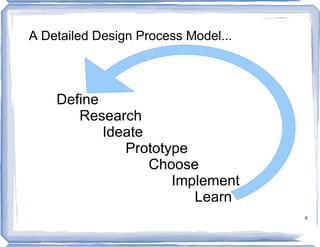
A Detailed Design Process Model...


    Define
       Research
           Ideate
              Prototype
                  Choose
                     Implement
                        Learn
                                     4
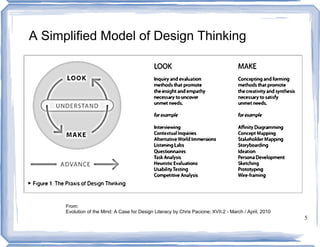
A Simplified Model of Design Thinking


      From:
      Evolution of the Mind: A Case for Design Literacy by Chris Pacione; XVII.2 - March / April, 2010
                                                                                                         5
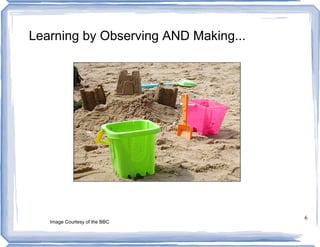
Learning by Observing AND Making...


                                      6
   Image Courtesy of the BBC
Design Thinking is About Beauty...


 “Remember that beauty breeds loyalty
when it comes to organizational systems.”
       -Scott Belsky, Author and Founder of Behance.com


           Beauty = Elegant, Pleasing

       Loyalty = Faithfulness= Compliance!


                                                          7
What Are Some Traits of a Beautiful System?


            It makes sense

             It has balance

               It has form

                It is clear

               It is useful                   8
Subjectiveness of Beauty...


                              9
The Beginnings of a Beautiful System...

                               It's human centered – not system
                             centered. A beautiful system exists
                                         for you, not vice-versa.

                             It starts with the premise of asking,
                                              “What is possible?”

                                It asks “Why are we doing this?”

                               It is an extension of your brand, it
                              reflects who you are and what you
                                                              do.

                                      It fosters conversation and
                            conversation leads to understanding
                             of yourselves, your customers, your
                                         systems and your goals.


                                                                      10
The Beginnings of a Beautiful System...

                                  It's human centered – not
                              system centered. A beautiful
 Design Thinking            system exists for you, not vice-
                                                     versa.
 isn't about                     It starts with the premise of
                                asking, “What is possible?”
 solving problems                It asks “Why are we doing

 as much as it is                                    this?”

                            It is an extension of your brand,
 about exploring                   it reflects who you are and
                                                  what you do.

 possible                       It fosters conversation and
                                      conversation leads to
 solutions                    understanding of yourselves,
                             your customers, your systems
                                             and your goals.
                                                                 11
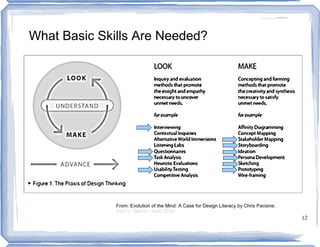
What Basic Skills Are Needed?


              From: Evolution of the Mind: A Case for Design Literacy by Chris Pacione;
              XVII.2 - March / April, 2010
                                                                                          12
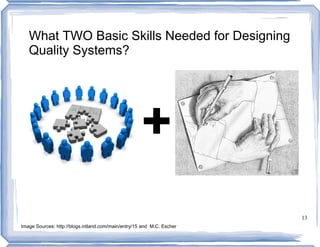
What TWO Basic Skills Needed for Designing
   Quality Systems?


                                                                        13
Image Sources: http://blogs.intland.com/main/entry/15 and M.C. Escher
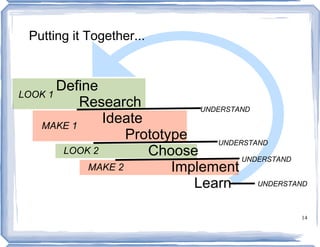
Putting it Together...


       Define
LOOK 1
          Research            UNDERSTAND

   MAKE 1
               Ideate
                   Prototype      UNDERSTAND
        LOOK 2        Choose           UNDERSTAND
            MAKE 2        Implement
                             Learn        UNDERSTAND


                                                   14
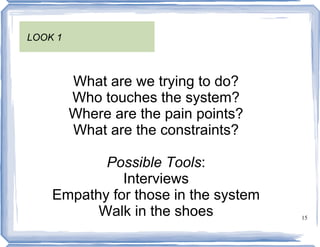
LOOK 1


         What are we trying to do?
         Who touches the system?
         Where are the pain points?
         What are the constraints?

           Possible Tools:
              Interviews
    Empathy for those in the system
          Walk in the shoes           15
16
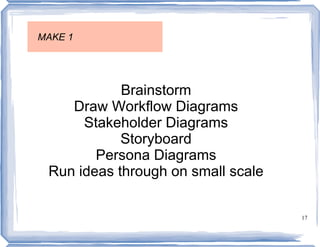
MAKE 1


            Brainstorm
    Draw Workflow Diagrams
      Stakeholder Diagrams
            Storyboard
        Persona Diagrams
 Run ideas through on small scale

                                    17
18
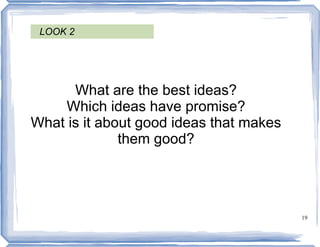
LOOK 2


      What are the best ideas?
    Which ideas have promise?
What is it about good ideas that makes
              them good?


                                         19
20
MAKE 2


Implement best ideas on larger scale


                                       21
22
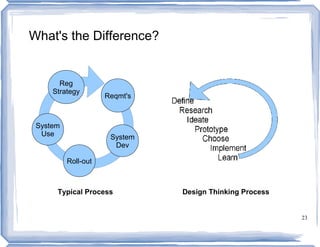
What's the Difference?


       Reg
     Strategy
                     Reqmt's


 System
  Use                 System
                       Dev

          Roll-out


      Typical Process          Design Thinking Process


                                                         23
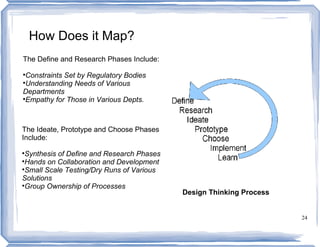
How Does it Map?
The Define and Research Phases Include:

 Constraints Set by Regulatory Bodies

 Understanding Needs of Various
Departments

 Empathy for Those in Various Depts.


The Ideate, Prototype and Choose Phases
Include:

 Synthesis of Define and Research Phases

 Hands on Collaboration and Development

 Small Scale Testing/Dry Runs of Various
Solutions

 Group Ownership of Processes
                                           Design Thinking Process


                                                                     24
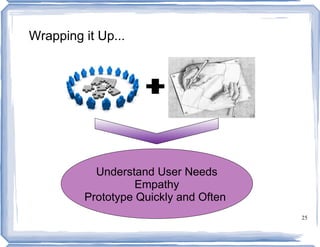
Wrapping it Up...


           Understand User Needs
                   Empathy
         Prototype Quickly and Often
                                       25
Contact Information


     Michael Plishka
     ZenStorming Solutions, LLC
     PO Box 6158
     Lindenhurst, IL 60046

     michael@zenstorming.com
     1-866-801-6737
     Skype: callmeplish
     Twitter: @Plish


                                  26

Design Thinking For Quality Systems

  • 1.
    Optimizing Quality Systemswith Design Thinking Michael Plishka, ZenStorming Solutions, LLC 1
  • 2.
    Who Designs? “Everyone designswho devises courses of action aimed at changing existing situations into preferred ones.” -Herb Simon 2
  • 3.
    Design is MoreThan Style... “Good design is a catalyst for creating total experiences that transcend functional benefits alone and delight consumers. It is a catalyst for moving a business from being technology- centered or product-myopic to one that is more consumer- experience-centered” -A.G. Lafley, CEO of P&G 3
  • 4.
    A Detailed DesignProcess Model... Define Research Ideate Prototype Choose Implement Learn 4
  • 5.
    A Simplified Modelof Design Thinking From: Evolution of the Mind: A Case for Design Literacy by Chris Pacione; XVII.2 - March / April, 2010 5
  • 6.
    Learning by ObservingAND Making... 6 Image Courtesy of the BBC
  • 7.
    Design Thinking isAbout Beauty... “Remember that beauty breeds loyalty when it comes to organizational systems.” -Scott Belsky, Author and Founder of Behance.com Beauty = Elegant, Pleasing Loyalty = Faithfulness= Compliance! 7
  • 8.
    What Are SomeTraits of a Beautiful System? It makes sense It has balance It has form It is clear It is useful 8
  • 9.
  • 10.
    The Beginnings ofa Beautiful System... It's human centered – not system centered. A beautiful system exists for you, not vice-versa. It starts with the premise of asking, “What is possible?” It asks “Why are we doing this?” It is an extension of your brand, it reflects who you are and what you do. It fosters conversation and conversation leads to understanding of yourselves, your customers, your systems and your goals. 10
  • 11.
    The Beginnings ofa Beautiful System... It's human centered – not system centered. A beautiful Design Thinking system exists for you, not vice- versa. isn't about It starts with the premise of asking, “What is possible?” solving problems It asks “Why are we doing as much as it is this?” It is an extension of your brand, about exploring it reflects who you are and what you do. possible It fosters conversation and conversation leads to solutions understanding of yourselves, your customers, your systems and your goals. 11
  • 12.
    What Basic SkillsAre Needed? From: Evolution of the Mind: A Case for Design Literacy by Chris Pacione; XVII.2 - March / April, 2010 12
  • 13.
    What TWO BasicSkills Needed for Designing Quality Systems? 13 Image Sources: http://blogs.intland.com/main/entry/15 and M.C. Escher
  • 14.
    Putting it Together... Define LOOK 1 Research UNDERSTAND MAKE 1 Ideate Prototype UNDERSTAND LOOK 2 Choose UNDERSTAND MAKE 2 Implement Learn UNDERSTAND 14
  • 15.
    LOOK 1 What are we trying to do? Who touches the system? Where are the pain points? What are the constraints? Possible Tools: Interviews Empathy for those in the system Walk in the shoes 15
  • 16.
  • 17.
    MAKE 1 Brainstorm Draw Workflow Diagrams Stakeholder Diagrams Storyboard Persona Diagrams Run ideas through on small scale 17
  • 18.
  • 19.
    LOOK 2 What are the best ideas? Which ideas have promise? What is it about good ideas that makes them good? 19
  • 20.
  • 21.
    MAKE 2 Implement bestideas on larger scale 21
  • 22.
  • 23.
    What's the Difference? Reg Strategy Reqmt's System Use System Dev Roll-out Typical Process Design Thinking Process 23
  • 24.
    How Does itMap? The Define and Research Phases Include:  Constraints Set by Regulatory Bodies  Understanding Needs of Various Departments  Empathy for Those in Various Depts. The Ideate, Prototype and Choose Phases Include:  Synthesis of Define and Research Phases  Hands on Collaboration and Development  Small Scale Testing/Dry Runs of Various Solutions  Group Ownership of Processes Design Thinking Process 24
  • 25.
    Wrapping it Up... Understand User Needs Empathy Prototype Quickly and Often 25
  • 26.
    Contact Information Michael Plishka ZenStorming Solutions, LLC PO Box 6158 Lindenhurst, IL 60046 michael@zenstorming.com 1-866-801-6737 Skype: callmeplish Twitter: @Plish 26