Introduction to Service Design
Eng. Haytham El Mardi
Implemented ISO 9001:2008
quality management system in
the vocational college, improving
overall performance and
reputation
Conducted gap analysis to
identify areas of improvement
and ensured compliance with ISO
9001:2008 requirements
Established a quality policy and
objectives, enhancing alignment
with international best practices
and legal regulations
Re-designed, structured and
coordinated the educational
vocation college system within a
12-month timeframe, achieving a
95% user satisfaction rate.
Collaborated with a team of 10
technicians to successfully
implement an LMS, achieving a
90% completion rate within 6
months.
Conducted end-user training on
the LMS for over 200 users,
achieving an 85% satisfaction
rating within 10 months of
implementation.
Designed and developed
comprehensive user manuals and
guides within 8 weeks, resulting
in a 20% reduction in support
inquiries in the following quarter.
Trained staff on ISO 21001:2018
educational organization
management system, which
helped in streamlining processes
and improving student outcomes
Developed Key Performance
Indicators (KPIs) such as student
satisfaction rate, graduation rate,
and course completion rate to
measure the impact of ISO
implementation on college
performance
Utilized tools like process
flowcharts, Pareto charts, and
cause-effect diagrams for
continuous improvement
initiatives based on the ISO
methodologies
Coordinated regular internal
audits and management reviews
to ensure conformance with both
ISO 9001:2008 and ISO
21001:2018 standards
Fostered a culture of continuous
improvement which resulted in
an overall increase in enrollment
rates at the vocational college
due to enhanced reputation
Sustained the ISO certifications
through external audits,
solidifying the college's
dedication to excellence in
education
Improved transparency and
communication between various
departments using KPI Strategic
alignment
Eg. Haytham El Mardi, MBA, PMP, PgMP
HAYTHAM@ELMARDI@YAHOO.COM
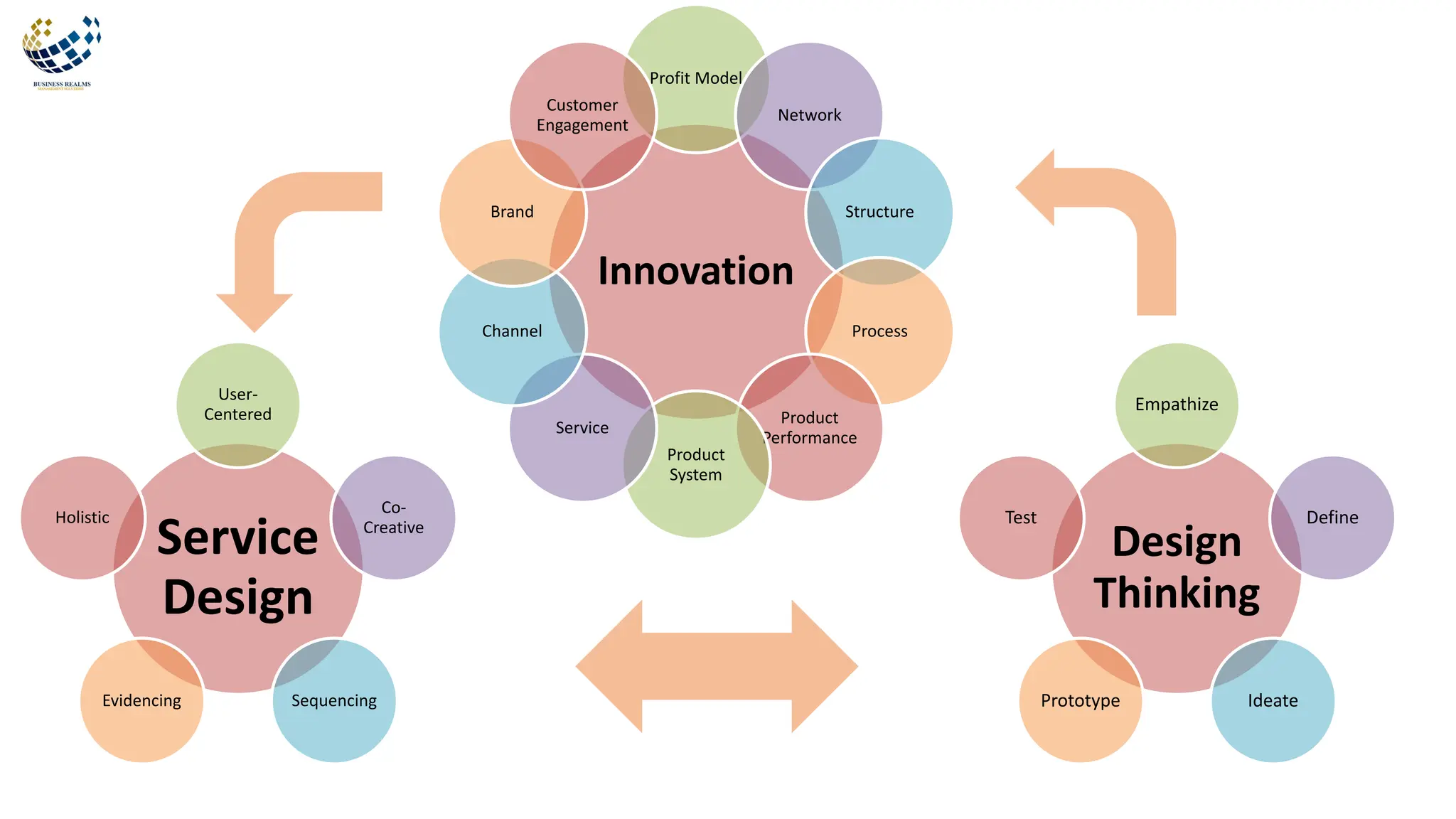
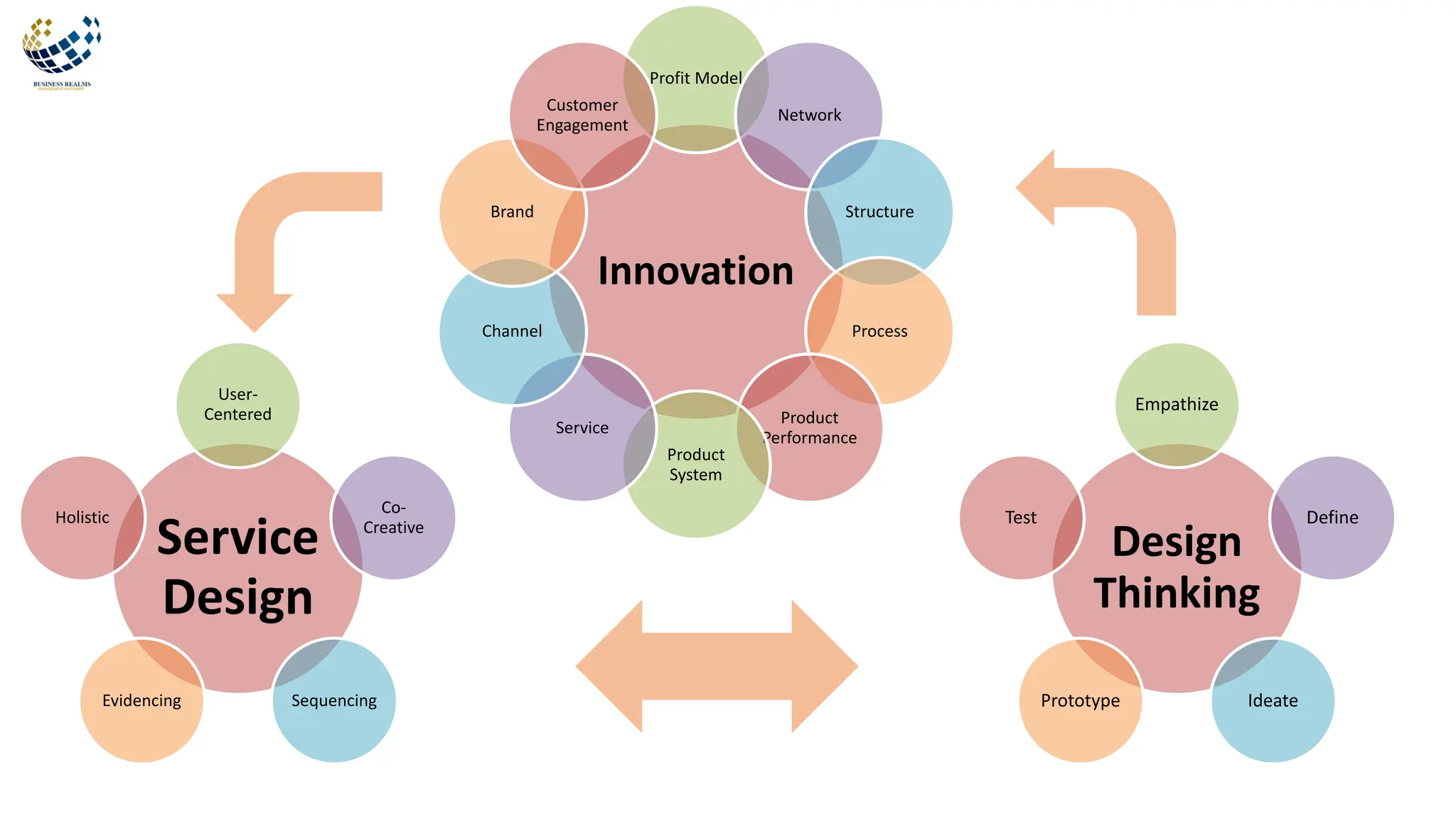
Innovation
Profit Model
Network
Structure
Process
Product
Performance
Product
System
Service
Channel
Brand
Customer
Engagement
Design
Thinking
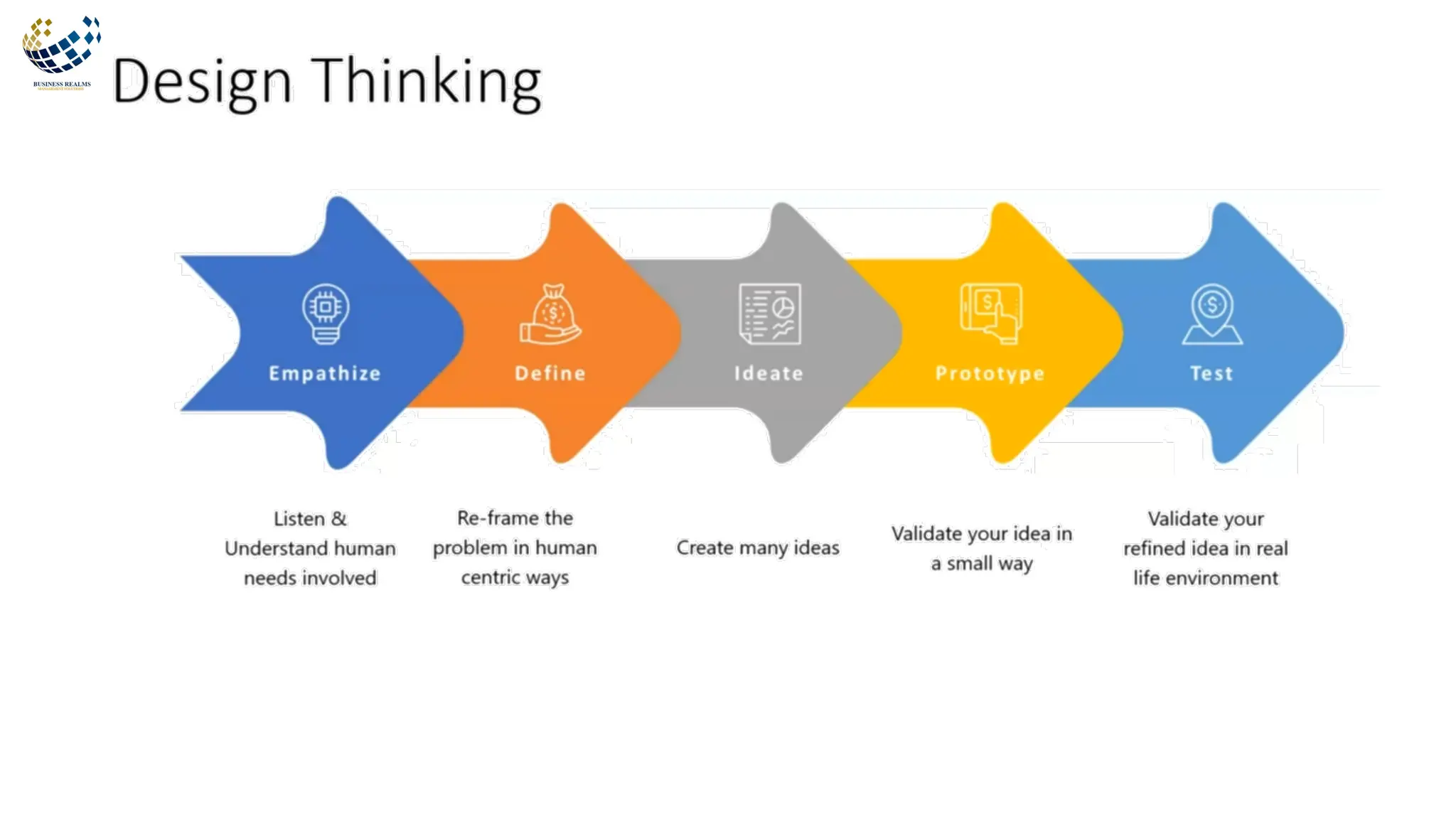
Empathize
Define
Ideate
Prototype
Test
Service
Design
User-
Centered
Co-
Creative
Sequencing
Evidencing
Holistic
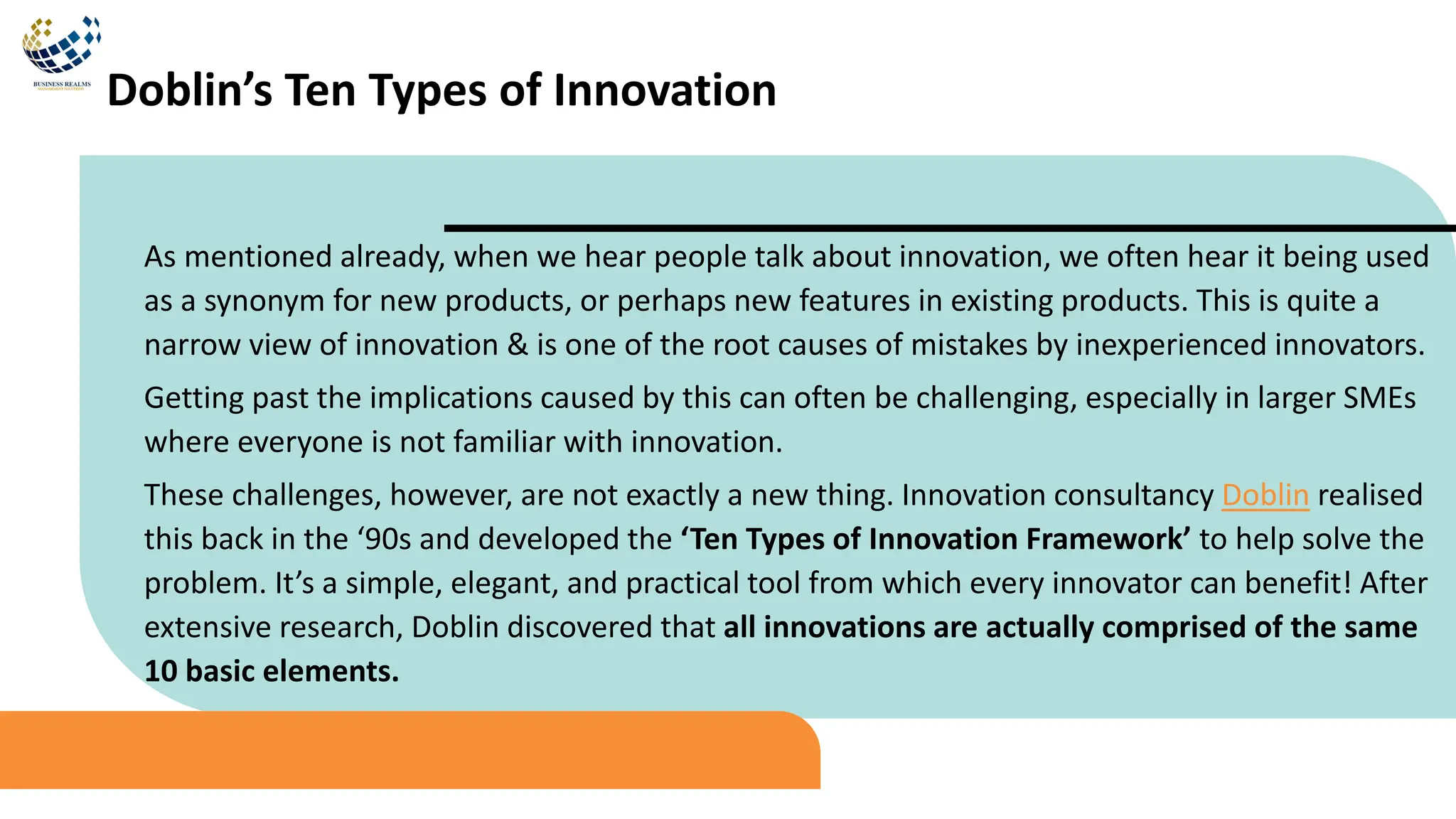
As mentioned already, when we hear people talk about innovation, we often hear it being used
as a synonym for new products, or perhaps new features in existing products. This is quite a
narrow view of innovation & is one of the root causes of mistakes by inexperienced innovators.
Getting past the implications caused by this can often be challenging, especially in larger SMEs
where everyone is not familiar with innovation.
These challenges, however, are not exactly a new thing. Innovation consultancy Doblin realised
this back in the ‘90s and developed the ‘Ten Types of Innovation Framework’ to help solve the
problem. It’s a simple, elegant, and practical tool from which every innovator can benefit! After
extensive research, Doblin discovered that all innovations are actually comprised of the same
10 basic elements.
Doblin’s Ten Types of Innovation
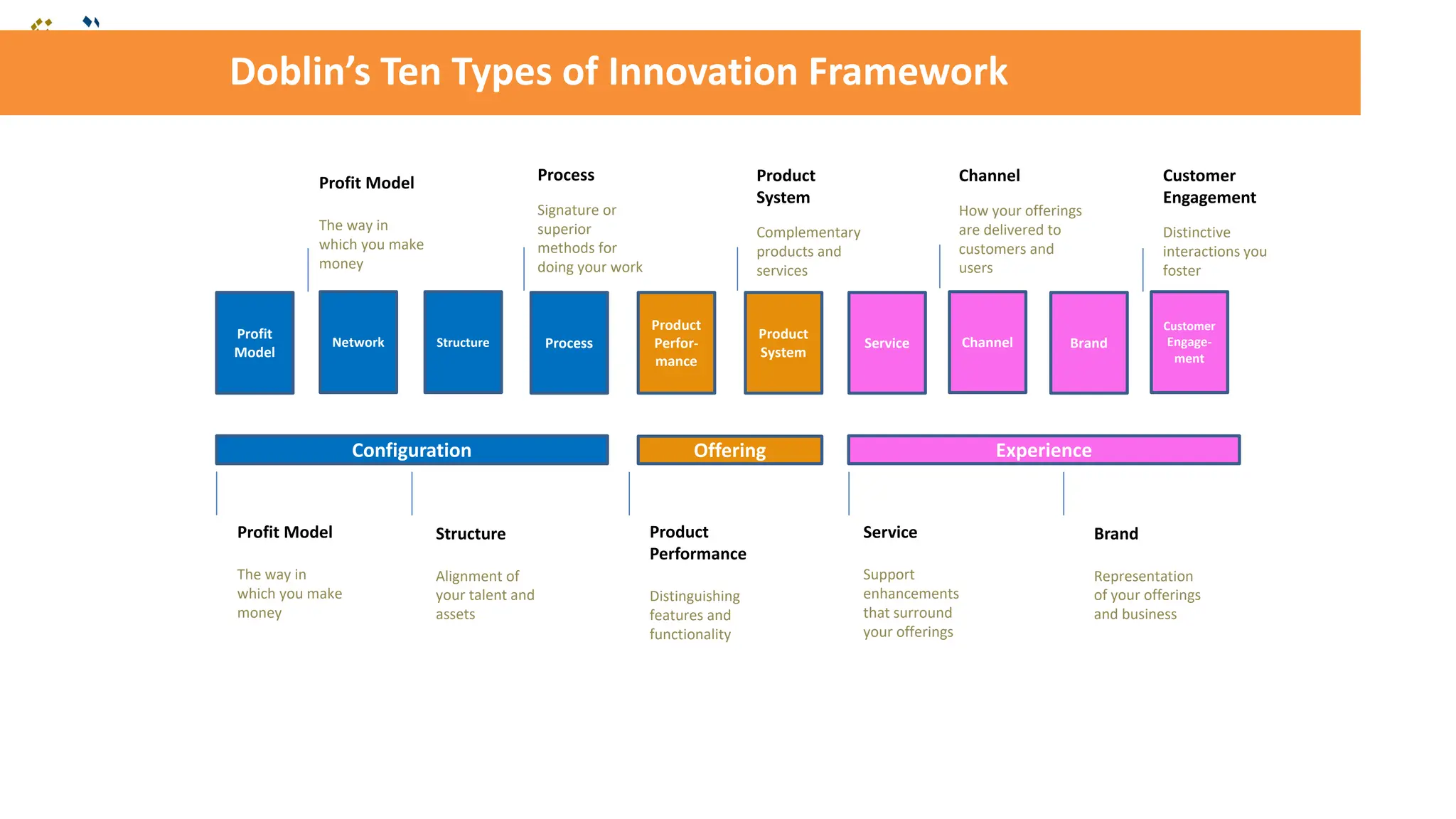
Doblin’s Ten Types of Innovation Framework
Profit
Model
Network Structure Process
Product
Perfor-
mance
Product
System
Service Channel Brand
Customer
Engage-
ment
Configuration Experience
Offering
Profit Model
The way in
which you make
money
Structure
Alignment of
your talent and
assets
Product
Performance
Distinguishing
features and
functionality
Service
Support
enhancements
that surround
your offerings
Brand
Representation
of your offerings
and business
Customer
Engagement
Distinctive
interactions you
foster
Process
Signature or
superior
methods for
doing your work
Product
System
Complementary
products and
services
Channel
How your offerings
are delivered to
customers and
users
Profit Model
The way in
which you make
money
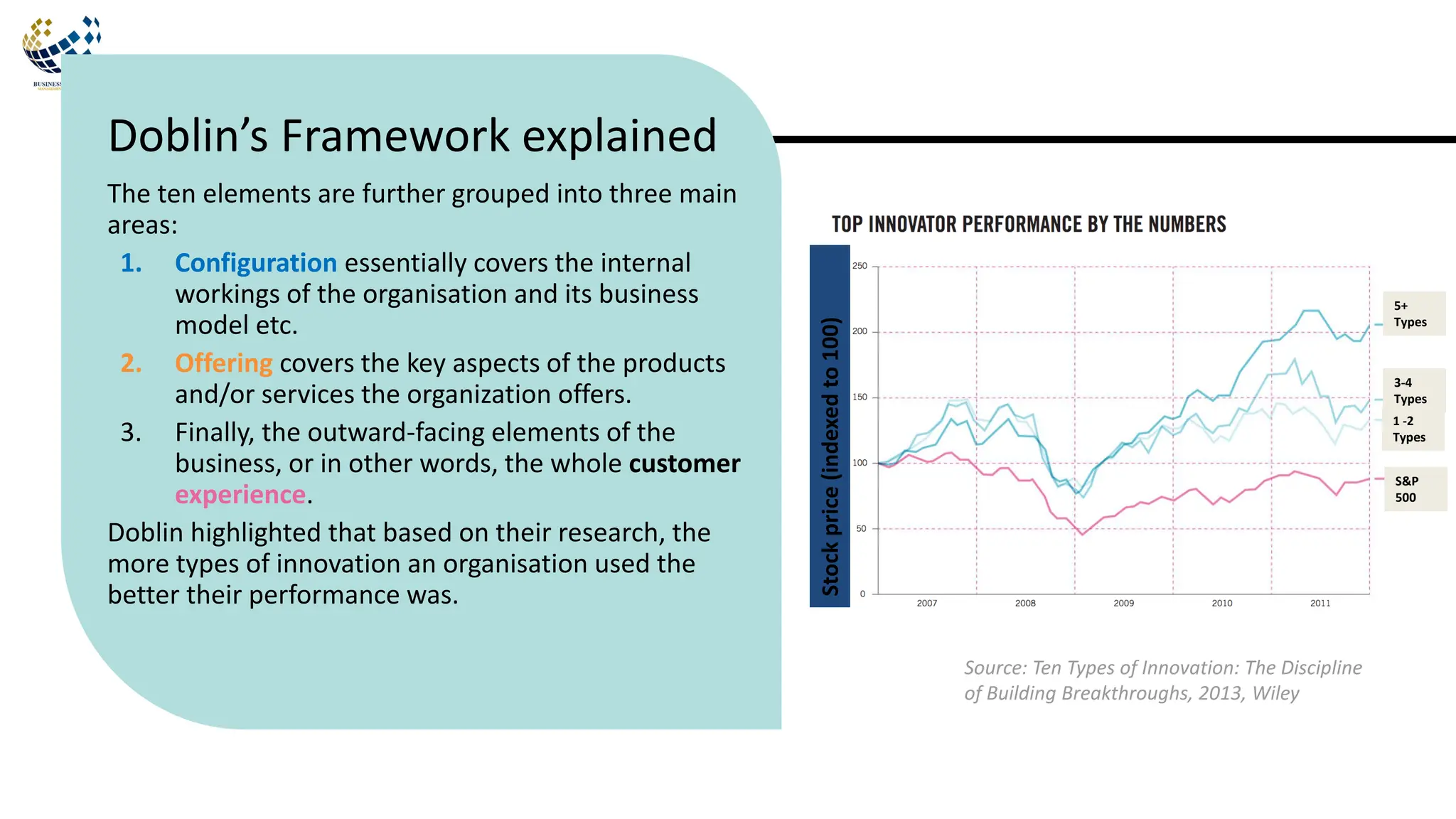
The ten elements are further grouped into three main
areas:
1. Configuration essentially covers the internal
workings of the organisation and its business
model etc.
2. Offering covers the key aspects of the products
and/or services the organization offers.
3. Finally, the outward-facing elements of the
business, or in other words, the whole customer
experience.
Doblin highlighted that based on their research, the
more types of innovation an organisation used the
better their performance was.
Doblin’s Framework explained
Stock
price
(indexed
to
100)
5+
Types
3-4
Types
1 -2
Types
S&P
500
Source: Ten Types of Innovation: The Discipline
of Building Breakthroughs, 2013, Wiley
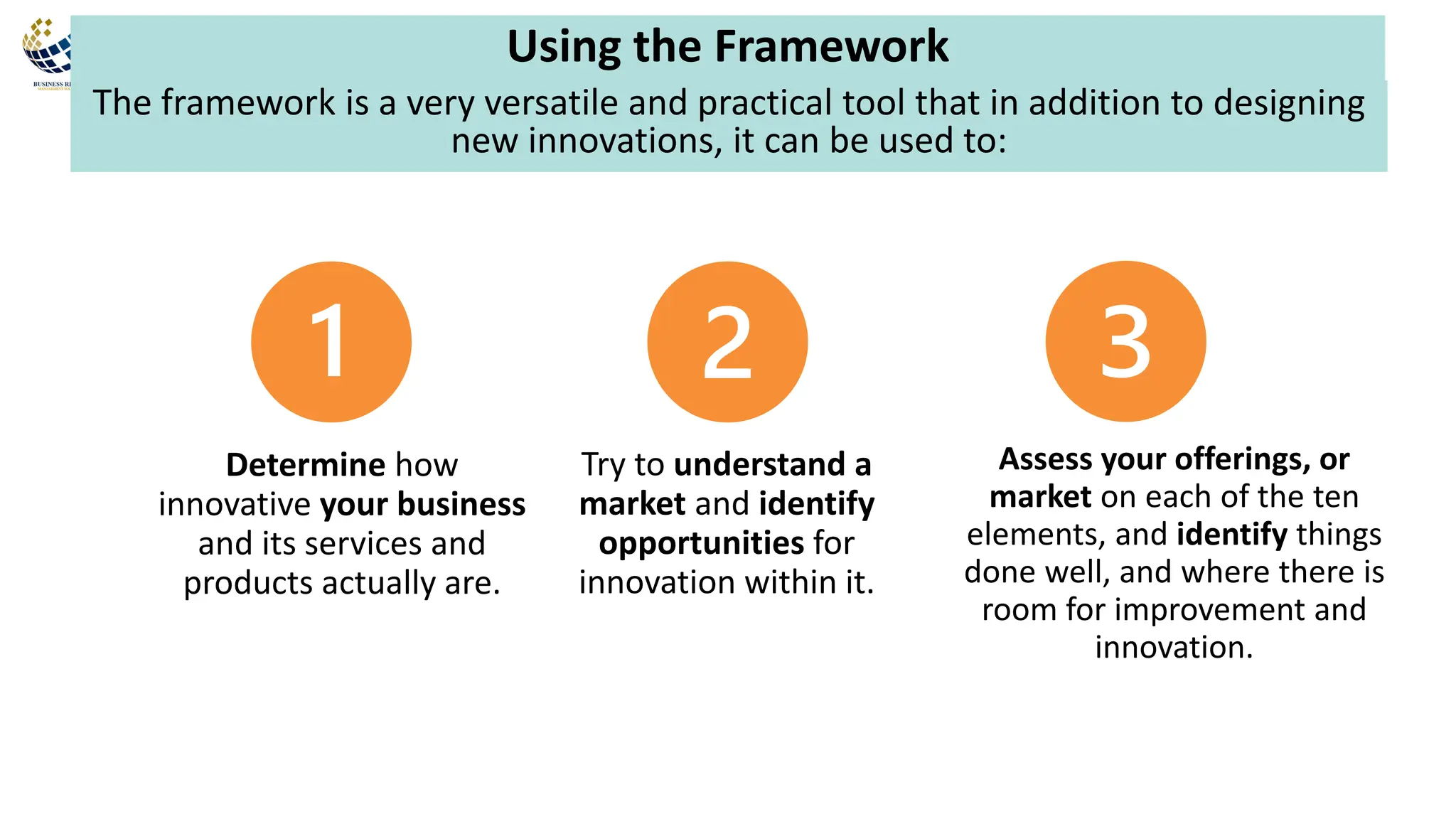
The framework is a very versatile and practical tool that in addition to designing
new innovations, it can be used to:
Using the Framework
Determine how
innovative your business
and its services and
products actually are.
Try to understand a
market and identify
opportunities for
innovation within it.
Assess your offerings, or
market on each of the ten
elements, and identify things
done well, and where there is
room for improvement and
innovation.
Whether you’re just getting started with innovation, have already gained some successful
experience from it, or are a battle-scarred veteran innovator, you can still try to find new
growth opportunities in your ethical food SME, no matter your current level. Your approach to
innovation depends mainly on your unique capabilities and strategic goals. Ultimately,
managing innovation is no different from managing any other major change, and more or less
the same principles apply.
Although it's important to move fast, don't bite off more than you can chew. To avoid
unnecessary havoc, you want to use the framework to analyse your business and then:
•Break down your strategic goals into smaller, easily implemented pieces
•Commit to the process
Getting started in Innovation…
Innovation
Profit Model
Network
Structure
Process
Product
Performance
Product
System
Service
Channel
Brand
Customer
Engagement
Design
Thinking
Empathize
Define
Ideate
Prototype
Test
Service
Design
User-
Centered
Co-
Creative
Sequencing
Evidencing
Holistic
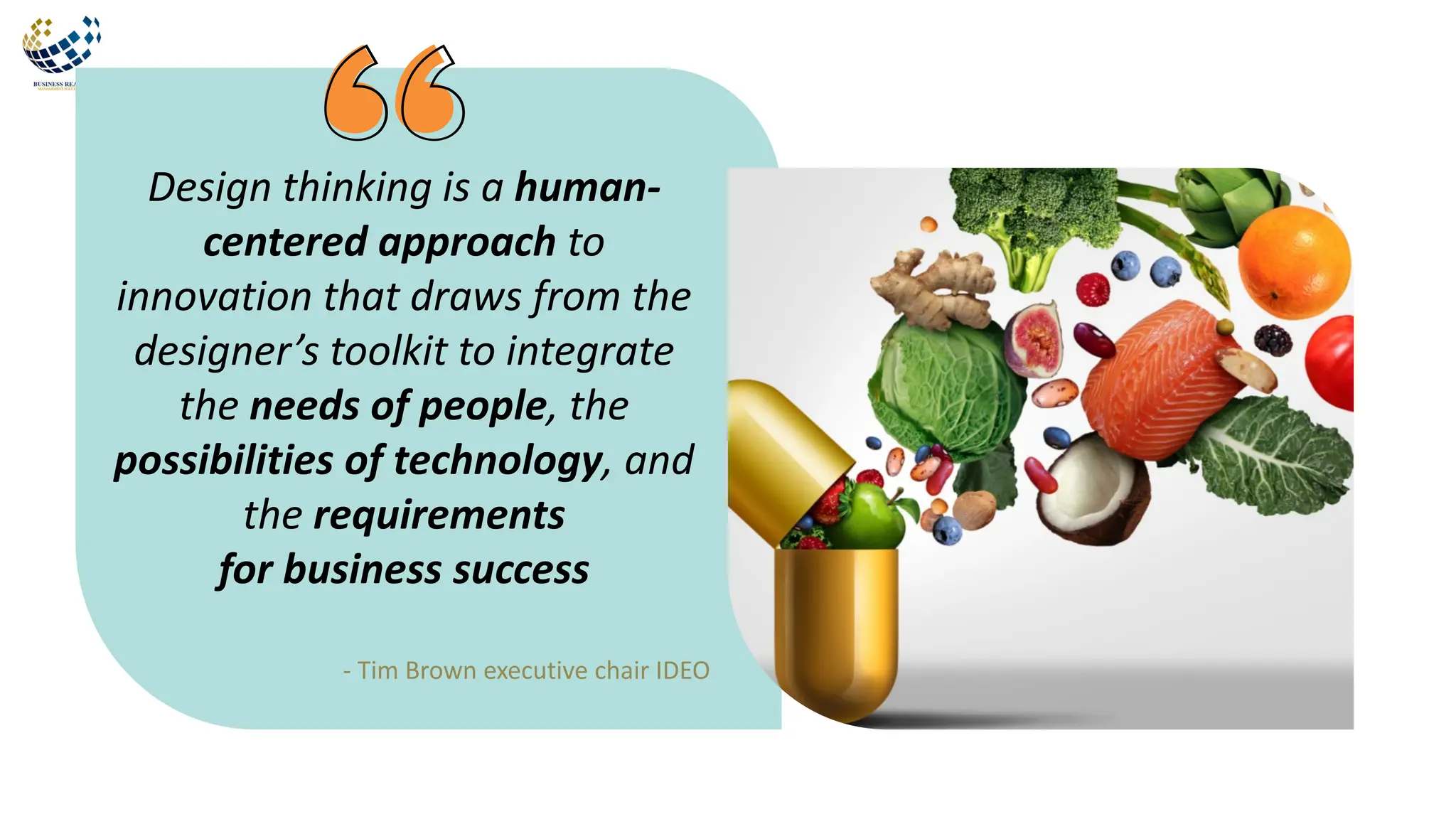
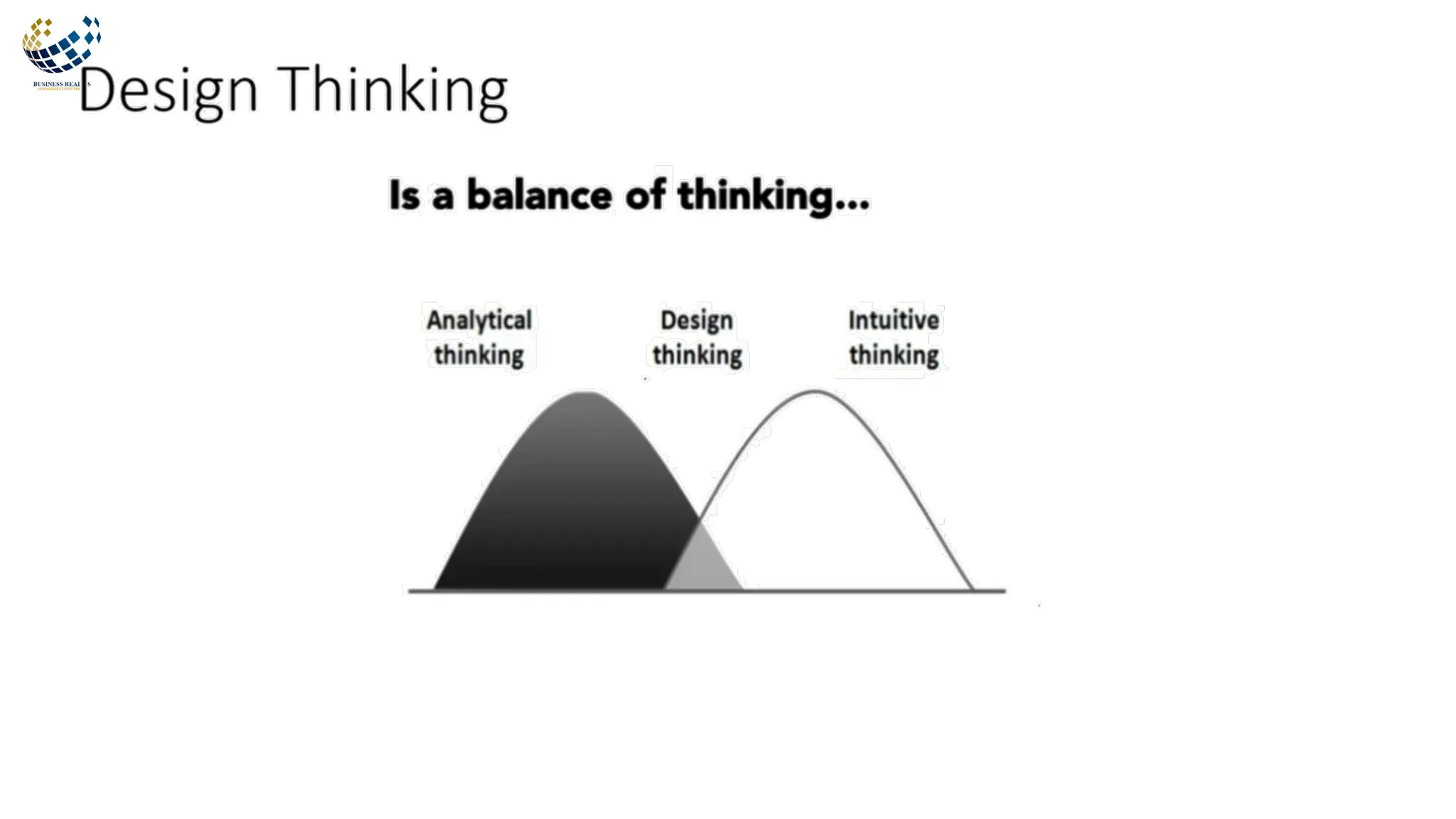
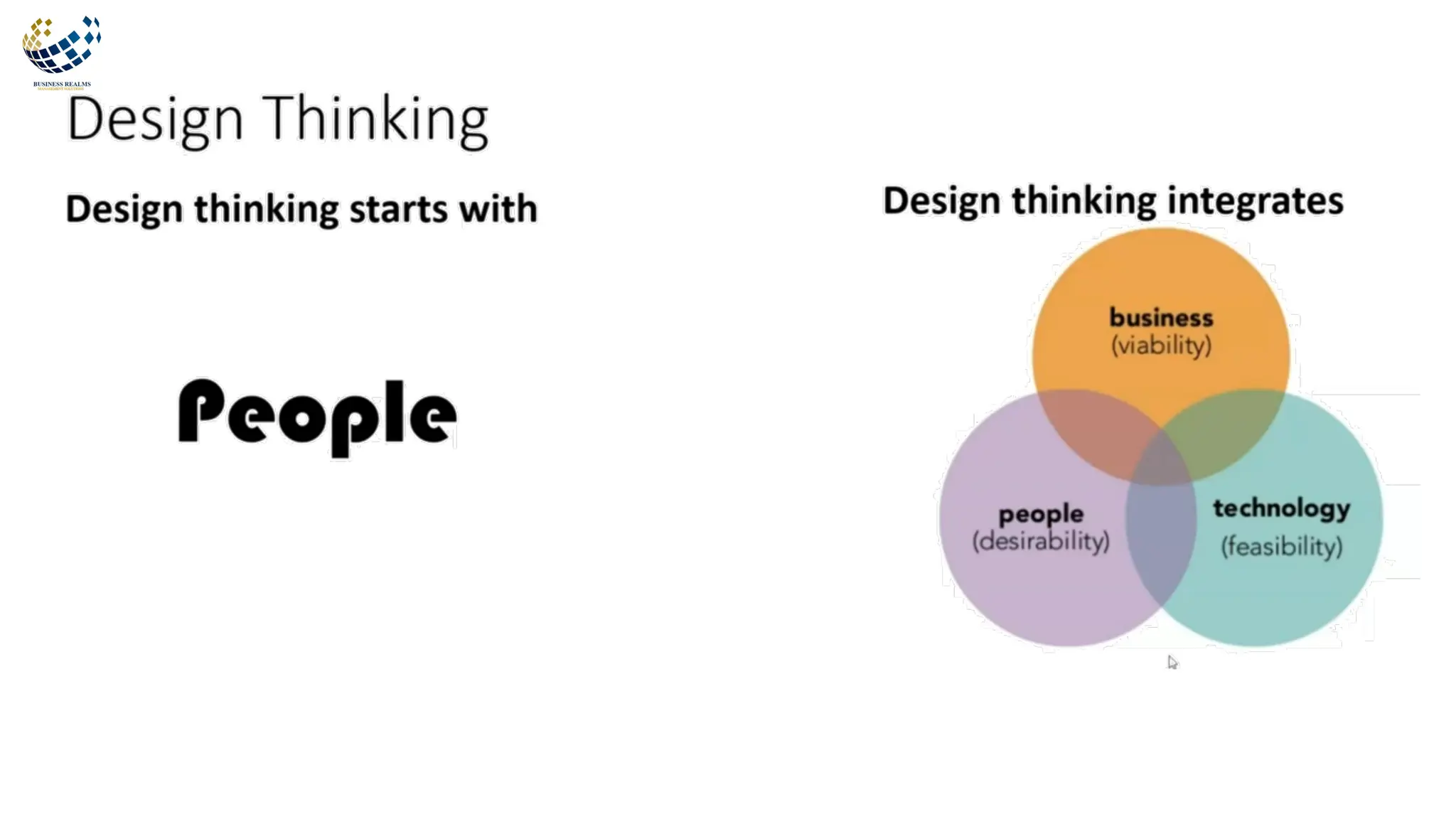
Design thinking is a human-
centered approach to
innovation that draws from the
designer’s toolkit to integrate
the needs of people, the
possibilities of technology, and
the requirements
for business success
- Tim Brown executive chair IDEO
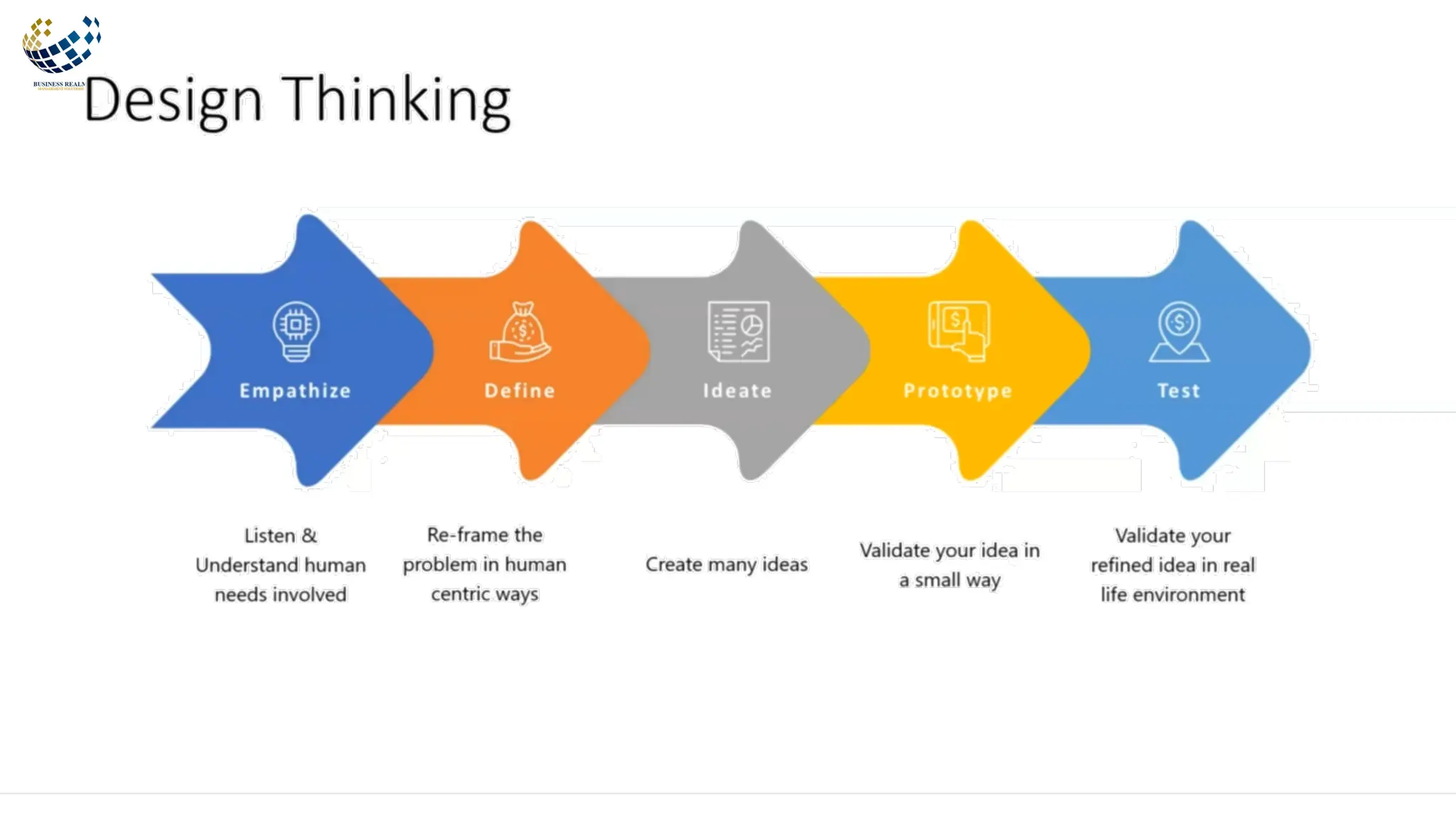
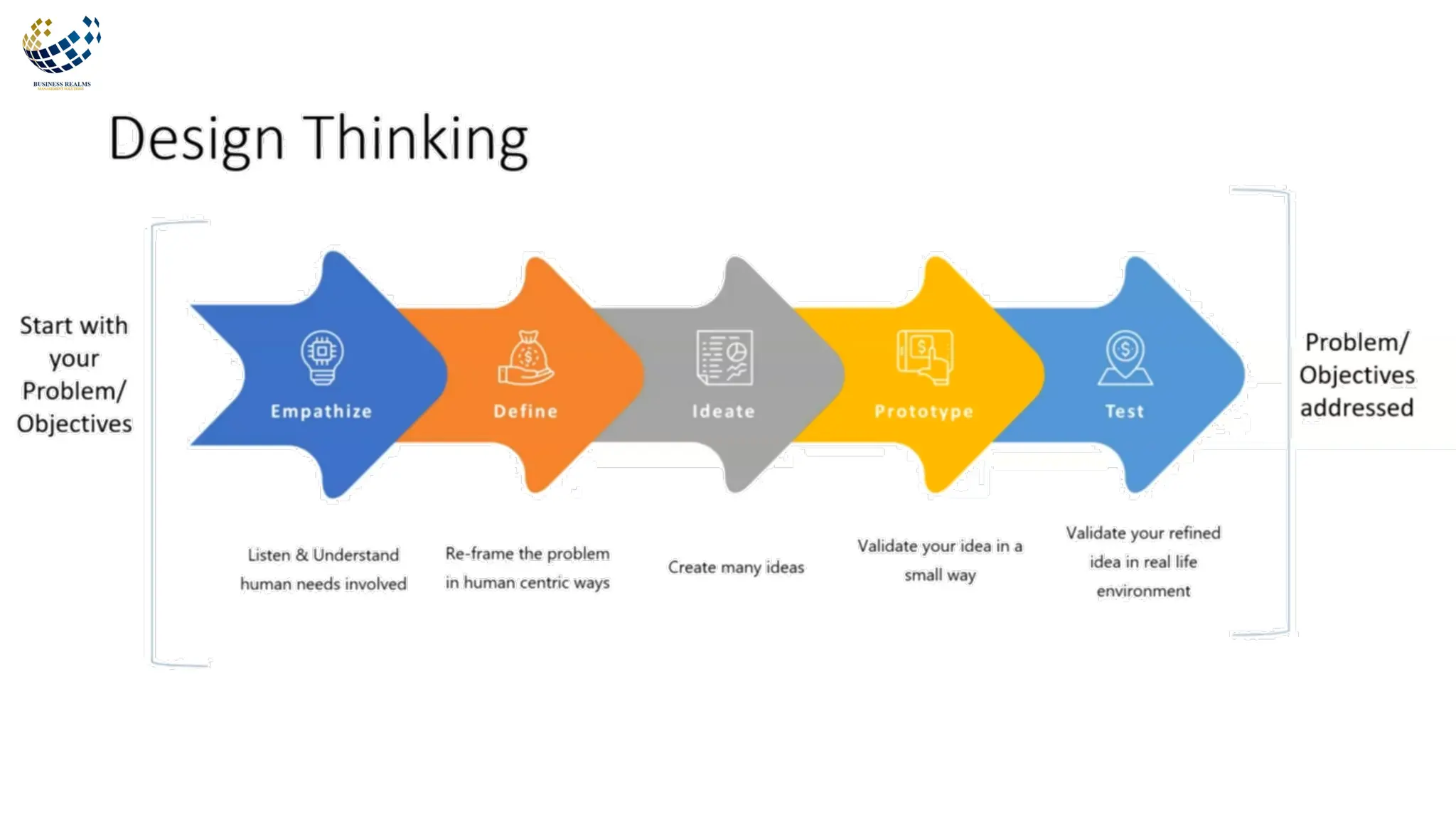
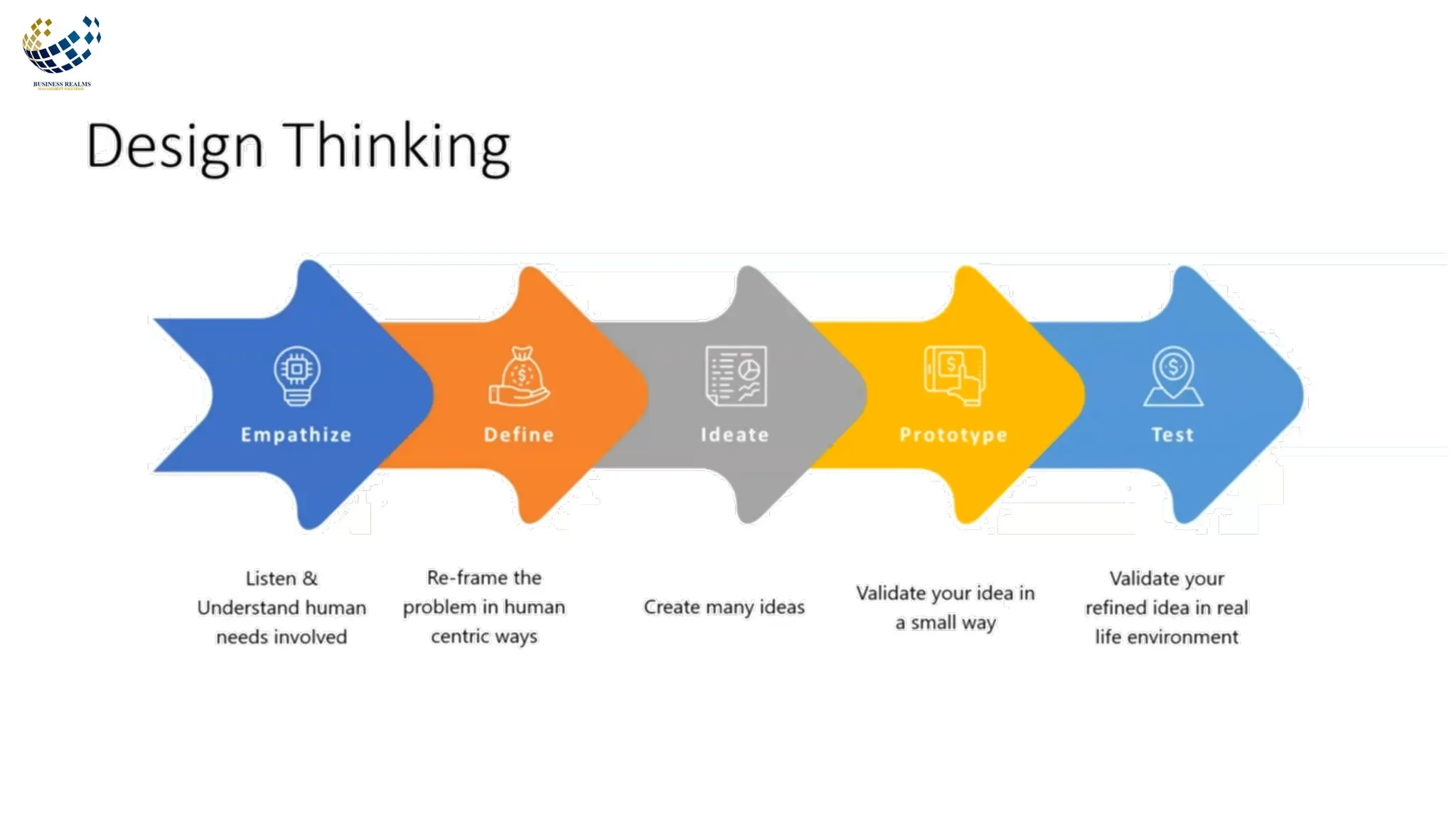
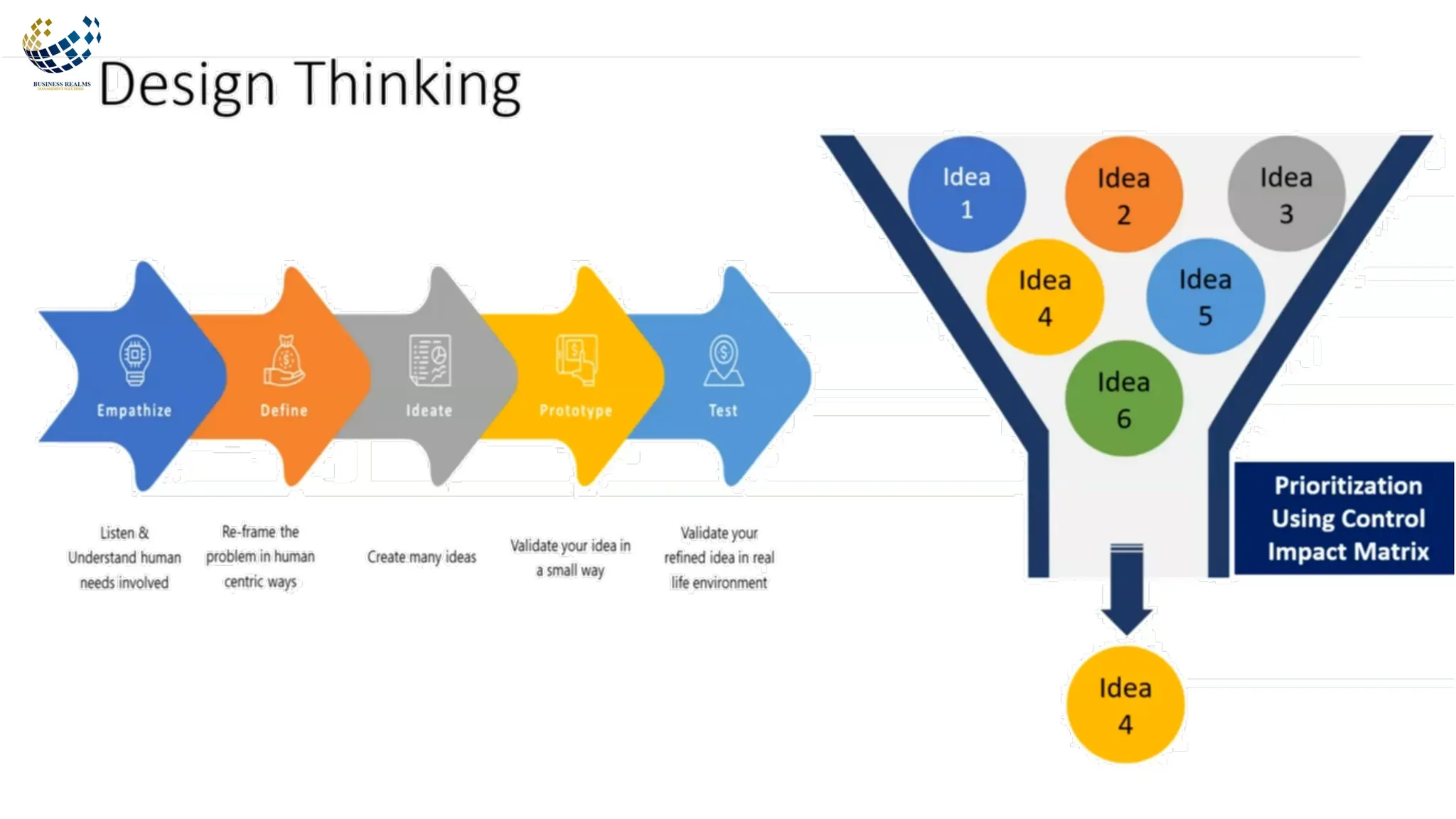
Design Thinking is a 5-step process to
create meaningful ideas that solve
real problems for a particular group
of people.
The process has brought many
businesses lots of happy customers
and helped entrepreneurs from all
around the world, to solve problems
with innovative new solutions.
Human Centric Problem
Solving
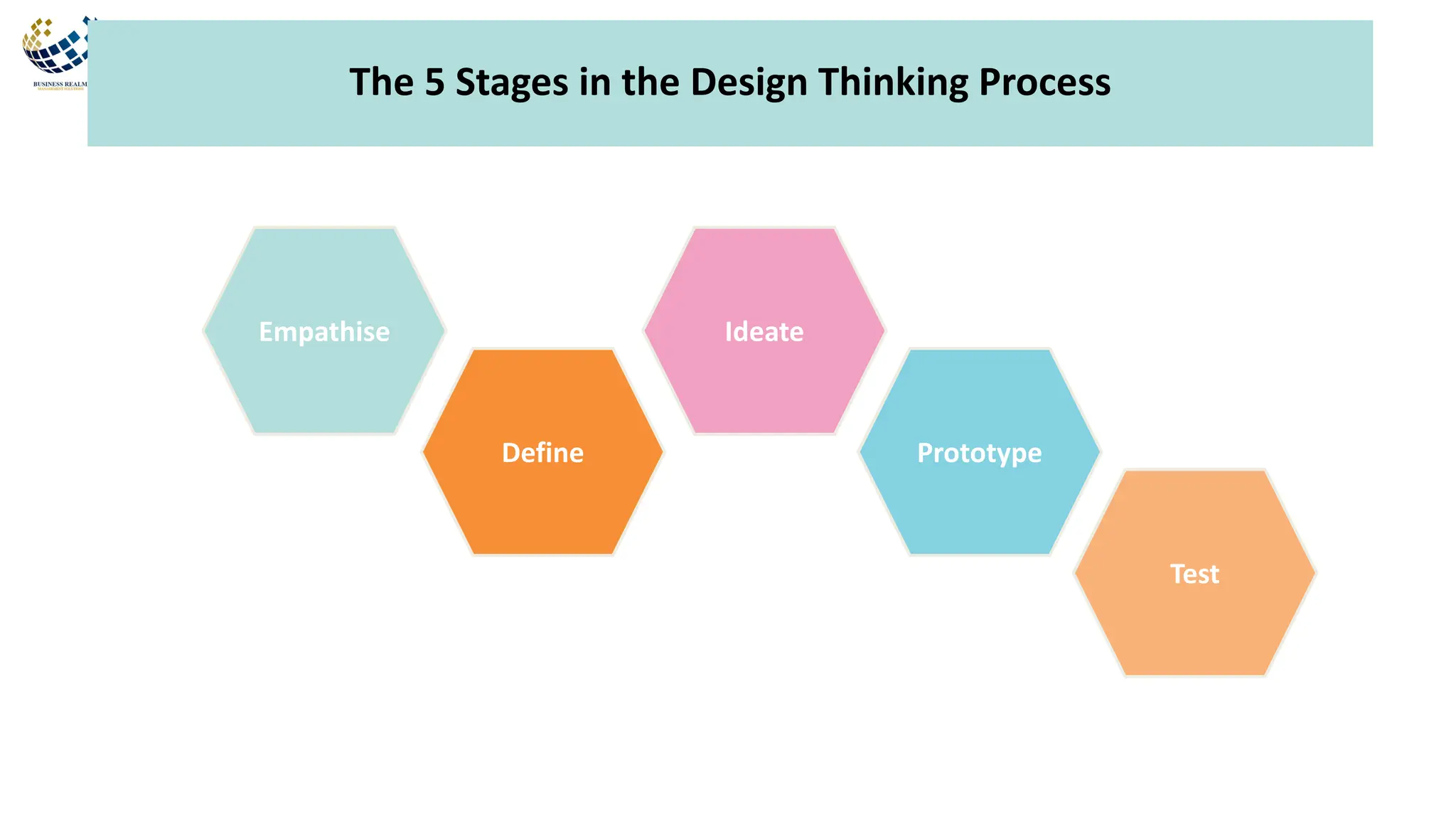
The 5 Stages in the Design Thinking Process
Empathise
Define
Ideate
Prototype
Test
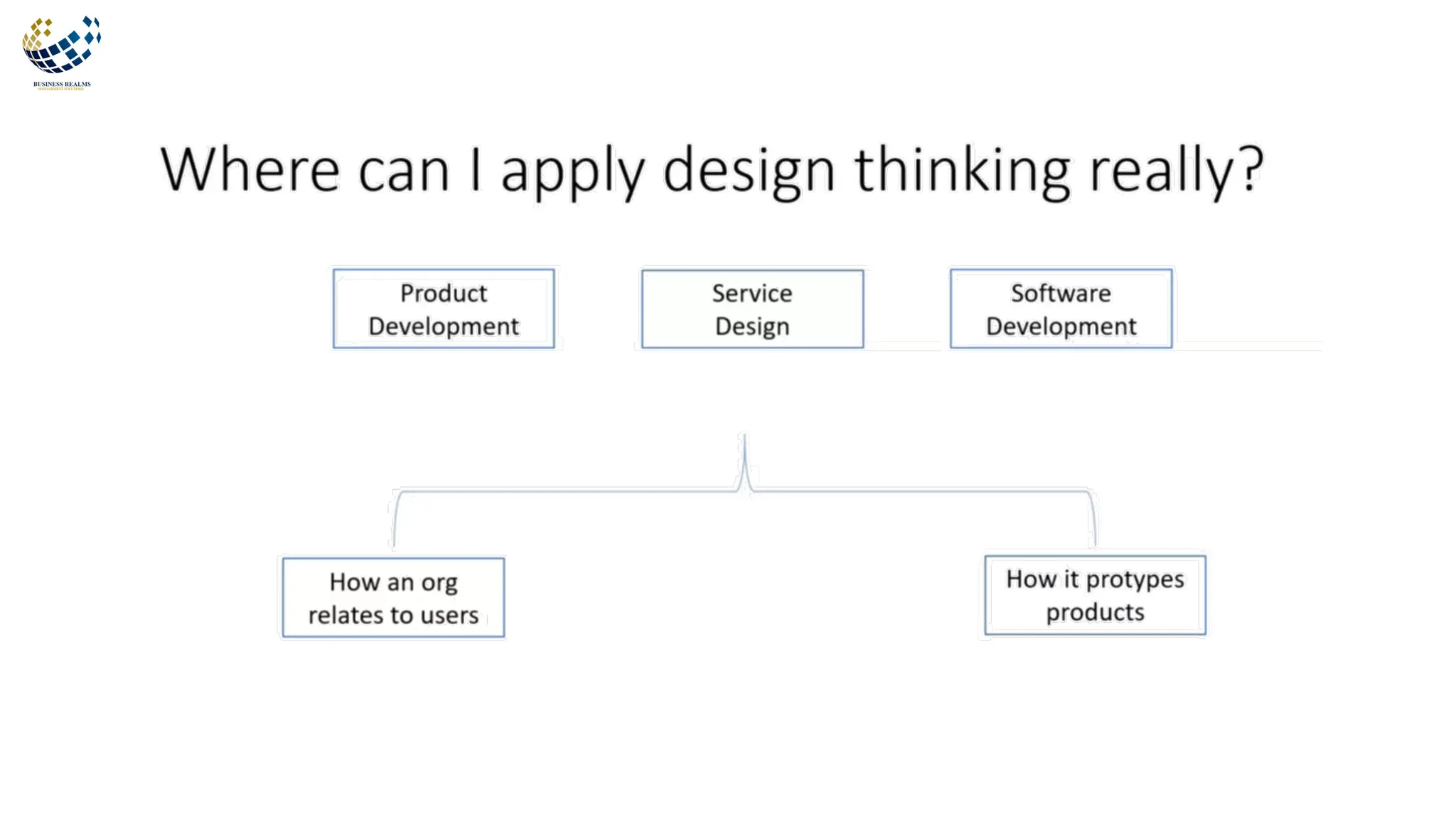
What is Design Thinking
How it is different from Service Design, UX
Design?
Empathize and RE-FRAME
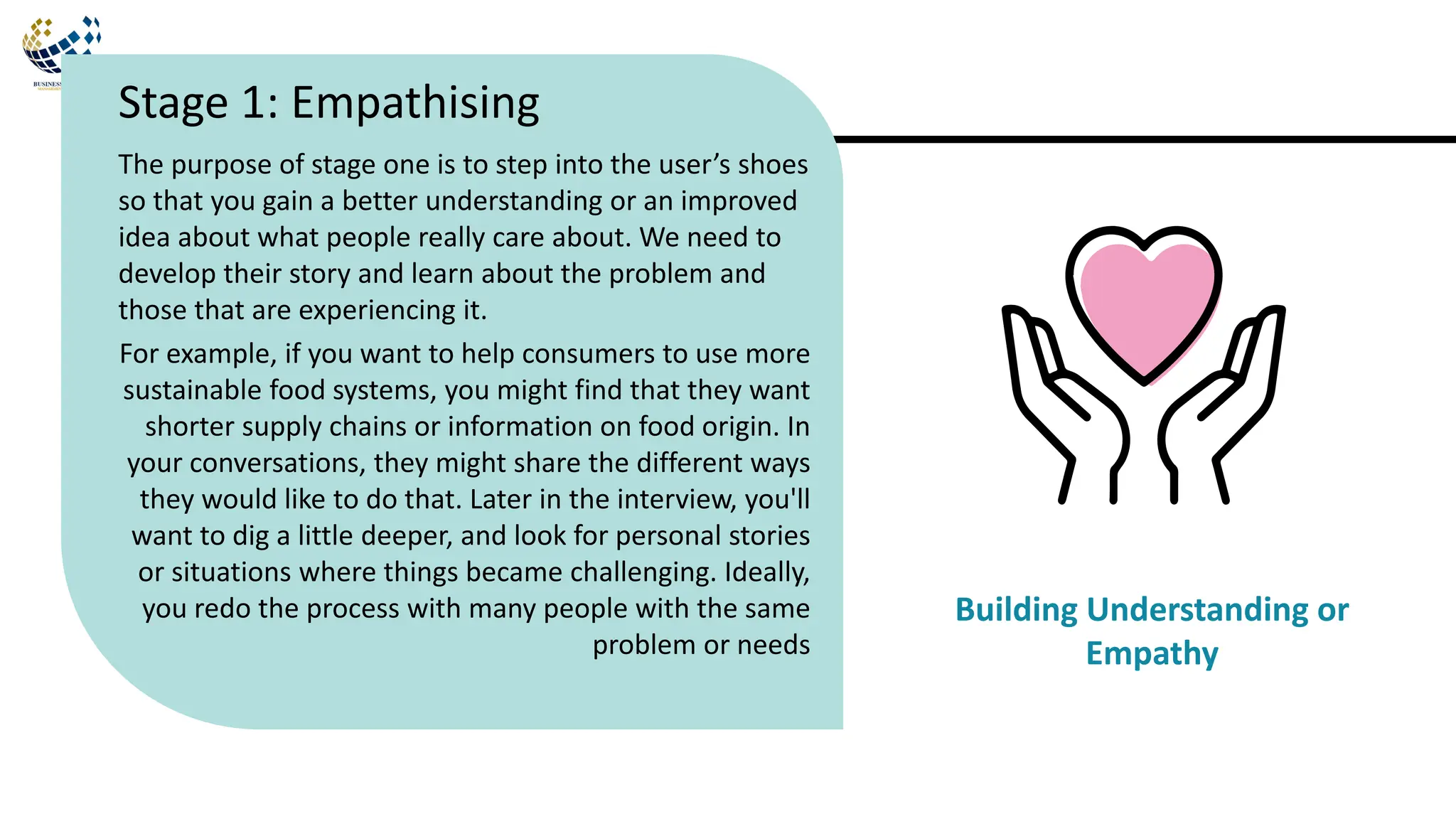
The purpose of stage one is to step into the user’s shoes
so that you gain a better understanding or an improved
idea about what people really care about. We need to
develop their story and learn about the problem and
those that are experiencing it.
For example, if you want to help consumers to use more
sustainable food systems, you might find that they want
shorter supply chains or information on food origin. In
your conversations, they might share the different ways
they would like to do that. Later in the interview, you'll
want to dig a little deeper, and look for personal stories
or situations where things became challenging. Ideally,
you redo the process with many people with the same
problem or needs
Stage 1: Empathising
Building Understanding or
Empathy
Goals:
• Expand knowledge about the user and their
problems
• Obtain knowledge about the background of
the problem, the place of use of the
product, and the operating environment
• Develop a common understanding of the
challenge
• Develop specialist knowledge about the
project
Empathise - Observing customer
behaviour in their natural environment
Examples of Tools for the empathy
stage:
• Surveys
• Target group observation
• Interviews
• Listening to the end user
• Shadowing
• Body-storming
• Role Playing
We shouldn’t draw conclusions at this stage
This short video defines
what empathy is and
highlights the importance of
empathy and total
immersion in the issue or to
your end user, in order to
solve their problems and
therefore you are staying
connected to your mission.
Empathy as a tool
The Define stage can often be the longest stage but it
is worth not rushing, so as to develop a better
understanding of the actual needs of people via
certain activities like empathy mapping or underlining
the verbs or activities that the people mentioned
when talking about their problems: like finding local
seasonal produce or healthy options, or having
information on the food origin and it’s carbon
footprint.
You might realise it's not always about the food, but
more about the tasks surrounding it. After your
analysis, formulate a problem statement to suit this
cohort.
Stage 2: Define the Problem
Identify specific
issues & needs
that the user has
Goals:
• The goal here is to understand more about
the problem and those who experience/are
impacted by it. (your Target Group)
• Then gather what you have learned, the
insights you have gained and start to
articulate the potential user’s real
needs/wants.
• Develop the Problem Statement
Define the Problem – Assessing the
actual needs and formulating the
problem statement
Examples of Tools for the Define
stage:
• Empathy mapping
• Creating Personas
• Storytelling
• Customer path mapping
• Lean Canvas
• Apps e.g, Trello, Asana,
Evernote, OneNote
We need to identify the real problems &
needs
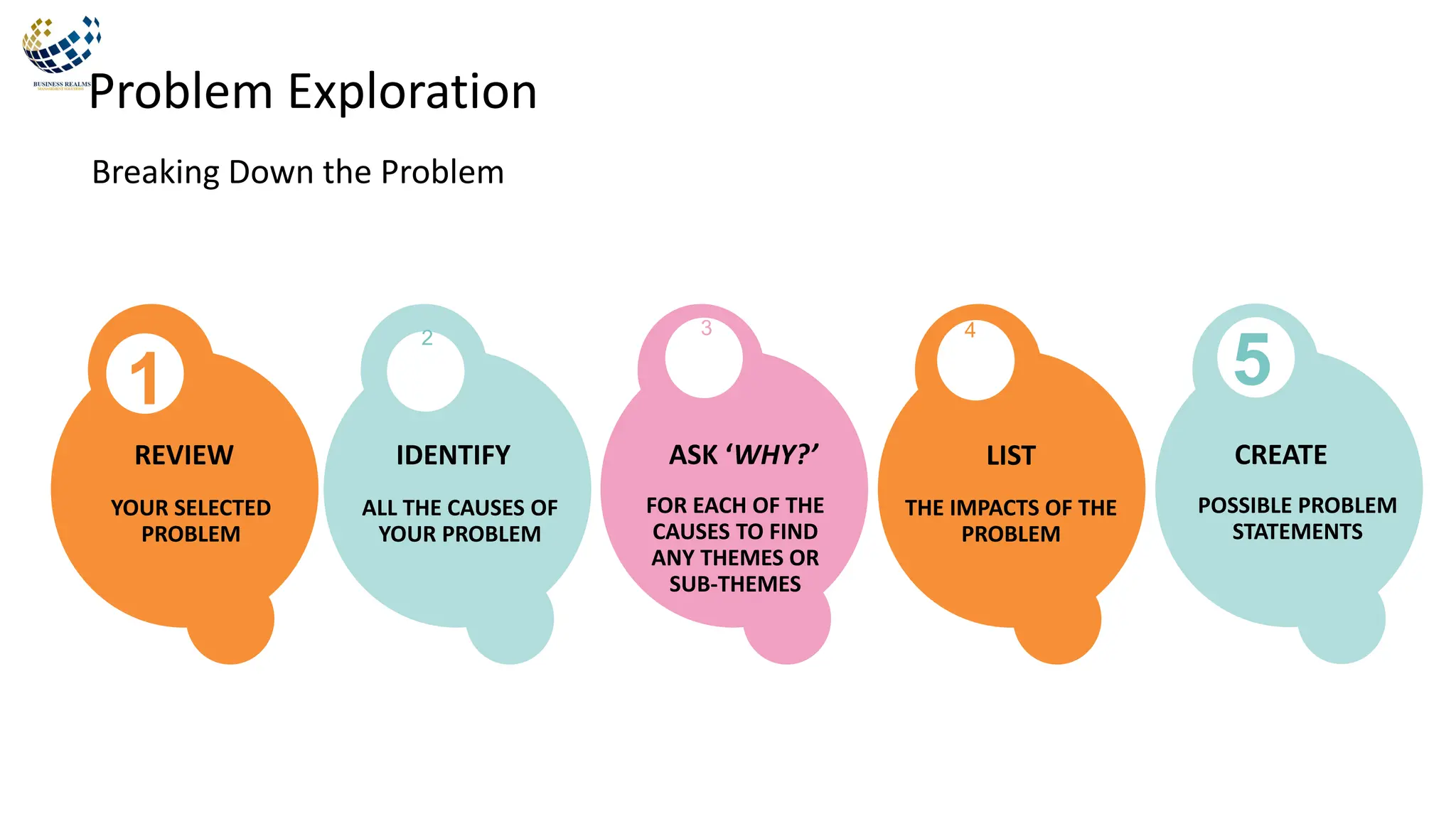
Problem Exploration
4
2 3
5
1
Breaking Down the Problem
YOUR SELECTED
PROBLEM
REVIEW IDENTIFY
ALL THE CAUSES OF
YOUR PROBLEM
FOR EACH OF THE
CAUSES TO FIND
ANY THEMES OR
SUB-THEMES
ASK ‘WHY?’ LIST CREATE
THE IMPACTS OF THE
PROBLEM
POSSIBLE PROBLEM
STATEMENTS
• Who is impacted by this problem?
• Who cares about this problem?
• Which of these will be YOUR target
group?
• Is there already an idea?
• Is there already a solution?
• Who has these?
• How can you do better?
Other Questions:
This is a short video with an
overview of the Customer
Empathy Map. This is a useful
tool that can be used to help
businesses better understand
their customers and help
them discover and define the
real problem that the
customer is experiencing
Empathy Maps
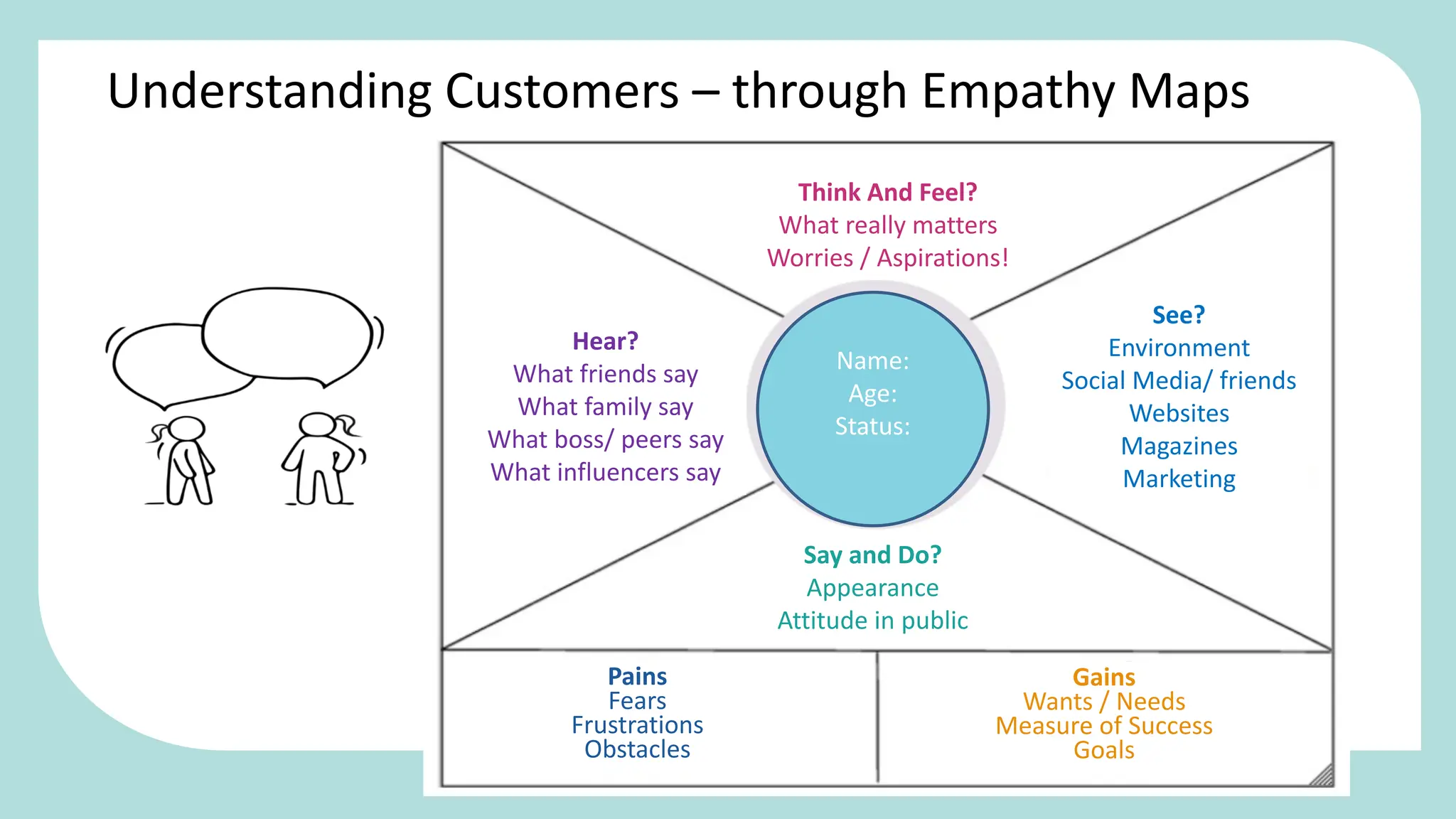
Understanding Customers – through Empathy Maps
Name:
Age:
Status:
Think And Feel?
What really matters
Worries / Aspirations!
Hear?
What friends say
What family say
What boss/ peers say
What influencers say
See?
Environment
Social Media/ friends
Websites
Magazines
Marketing
Say and Do?
Appearance
Attitude in public
Pains
Fears
Frustrations
Obstacles
Gains
Wants / Needs
Measure of Success
Goals
Start thinking about your Target or potential customer…
Grab a sheet of paper or work and start your own EMPATHY MAP
Note :
• How do they think and feel?
• What do they see / observe regularly?
• What do they hear and from whom…who influences them?
• How do they behave…what do they say and do?
Once you have created a picture of your customer you should now be able to
identify some of their pains and gains
Training Exercise:
Now focus only on the problem statement
and come up with ideas that solve the
problem. The point is not to get a perfect
idea, but rather to come up with as many
ideas as possible: like unique virtual reality
experiences, zero-cook healthy options,
zero-waste foods, ways to offer information.
Whatever it is, sketch up your best ideas and
show them to the people you are trying to
help, so you get their feedback.
Stage 3: Ideate
Brainstorm and
come up with creative
solutions
Goals:
• Generate and collect as many ideas as
possible in a collaborative manner
• Analyse ideas and choose most appropriate
• Form real concepts
• Obtain the optimal solution
Ideate solutions – Brainstorm and
come up with creative solutions
Examples of Tools for the Ideate stage:
• Brainstorming
• Braindumping
• Brain writing
• Brainwalking
• 6 Thinking hats method
• SWOT / PEST analysis
• Sketching
This phase should limit criticism
Quantity is what counts, not quality
There are no silly or wrong ideas!
This video is a brief outline of
what is involved in the Ideate
stage of the Design Thinking
process. Quantity is more
important than quality initially.
Then you can converge again
and select the most suitable
solution to the problem to bring
to the prototype stage.
How to Ideate
Next take a moment to reflect on what you
have learned from your conversations with
your ‘users’, about the different ideas. Ask
yourself, how does your idea fit in the
context of people's actual lives? Your
solution could be a combination of a new
idea and what is already being used. Then
connect the dots, sketch up your final
solution and go build a real prototype that's
just good enough to be tested.
Stage 4: Prototype
Build a representation for
one or more of these ideas,
to show others
Goals:
Creating a food prototype, defined as a three-
dimensional manifestation of your food
product or concept, is an essential early step in
new food, beverage, and nutraceutical product
development…we need to:
• Build simple representations as visual
object(s) to demonstrate the effect of
innovation
• Not to overcomplicate the prototype
• Fail fast / iterate quickly
• To create as quickly as possible
Prototype – Checking solutions in
practice
Examples of Tools for the Prototype stage:
• Mock-ups
• Tasters/ Batch testing
• Storyboards
• Figma
• Adobe XD
• In Vision
• Froghop food prototyping
Time to choose the best ideas!
Narrow the created solutions to a maximum
of several variants
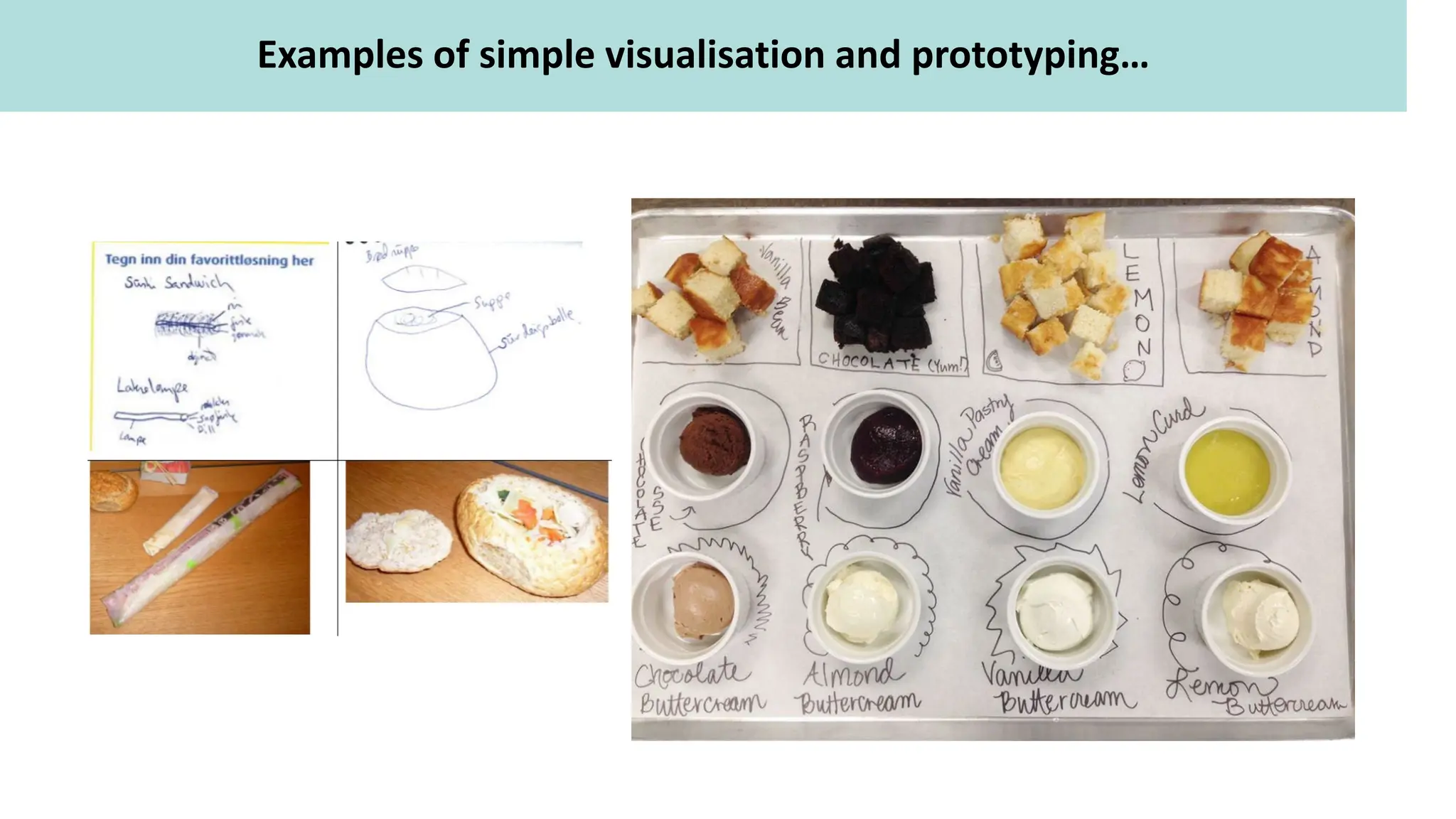
Examples of simple visualisation and prototyping…
This video is a brief outline of
why prototyping is used during
the design thinking process
and how it saves time and
money in the long run and
helps us refine our product or
service and understand the
problem or challenge even
better.
Why use the
prototype stage?
Then test your prototype with the actual end
users. Don't defend your idea in case people
don't like it, the point is to learn what works and
what doesn't, so any feedback is great. Then go
back to ideation or prototyping and apply your
learning. Repeat the process until you have a
prototype that works and solves the real
problem.
Now you are ready to change the world or fill
the massive gap in the Sustainable & ethical
Market Market.
Stage 5: Test
Return to the people
experiencing the problem
and test your ideas to
receive feedback
Goals:
• Understand what works and what are
impediments
• Test in a neutral environment or that most
similar to typical user location
• Observe spontaneous and authentic
reactions from users
• Getting feedback from users about the
prototype to make decisions about the next
steps
Test – The opportunity to test
prototypes in real conditions
Things to consider for the Test stage:
• Just observe don’t comment or defend
your product
• It is ok to fail you are still on a journey of
discovery
• The design thinking process is an iterative
process. To adapt the prototype properly
to the needs of its future users and really
refine it, the last three phases should be
repeated
The Design team needs to take a back seat
for this stage and just observe interaction
with the prototype.
This video is a brief outline of
what is involved in the Test
stage of the Design Thinking
process. It explains why
testing is important and how
it helps us refine our product
or service and understand the
problem or challenge even
better.
The Testing Stage
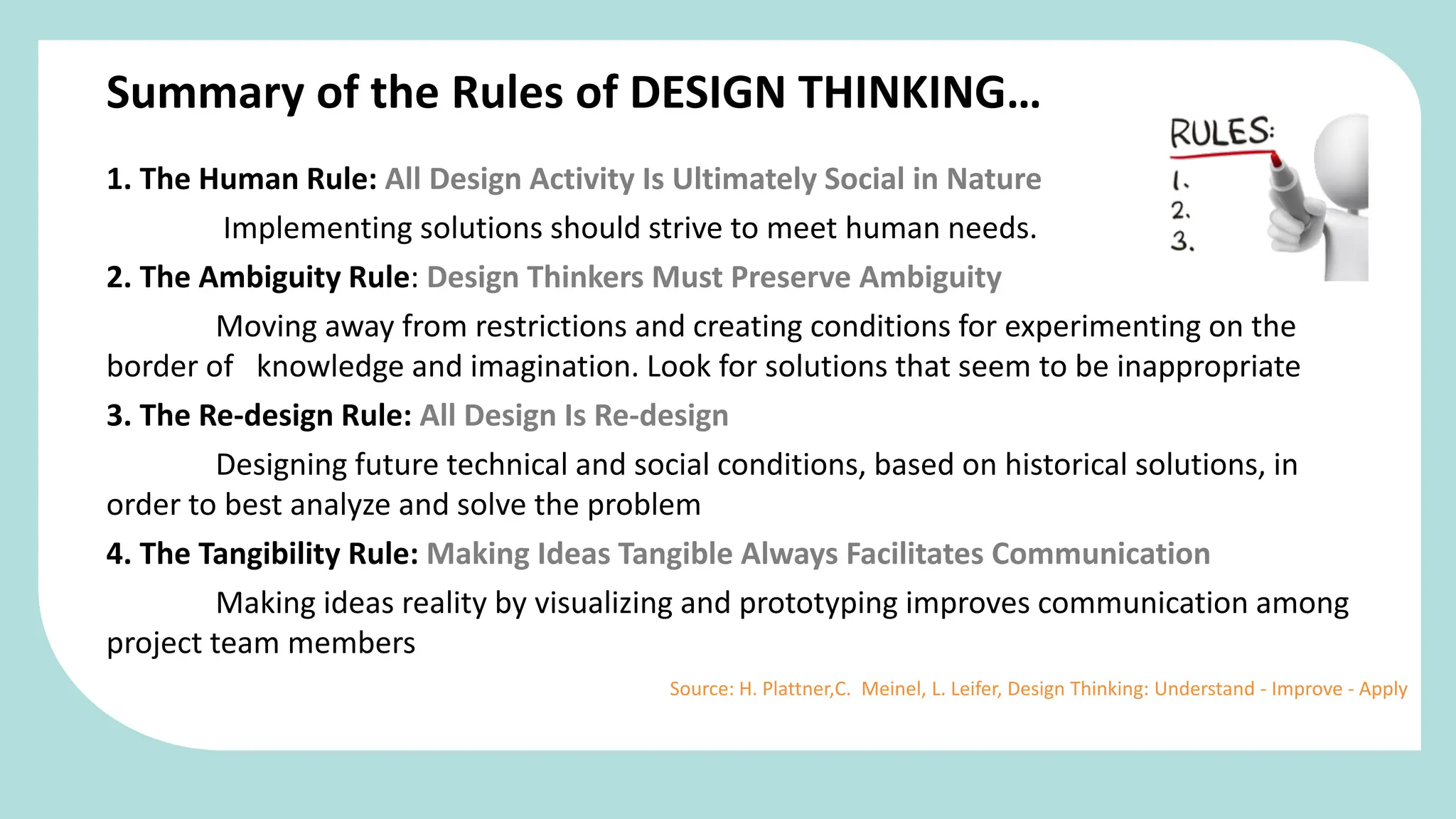
1. The Human Rule: All Design Activity Is Ultimately Social in Nature
Implementing solutions should strive to meet human needs.
2. The Ambiguity Rule: Design Thinkers Must Preserve Ambiguity
Moving away from restrictions and creating conditions for experimenting on the
border of knowledge and imagination. Look for solutions that seem to be inappropriate
3. The Re-design Rule: All Design Is Re-design
Designing future technical and social conditions, based on historical solutions, in
order to best analyze and solve the problem
4. The Tangibility Rule: Making Ideas Tangible Always Facilitates Communication
Making ideas reality by visualizing and prototyping improves communication among
project team members
Summary of the Rules of DESIGN THINKING…
Source: H. Plattner,C. Meinel, L. Leifer, Design Thinking: Understand - Improve - Apply
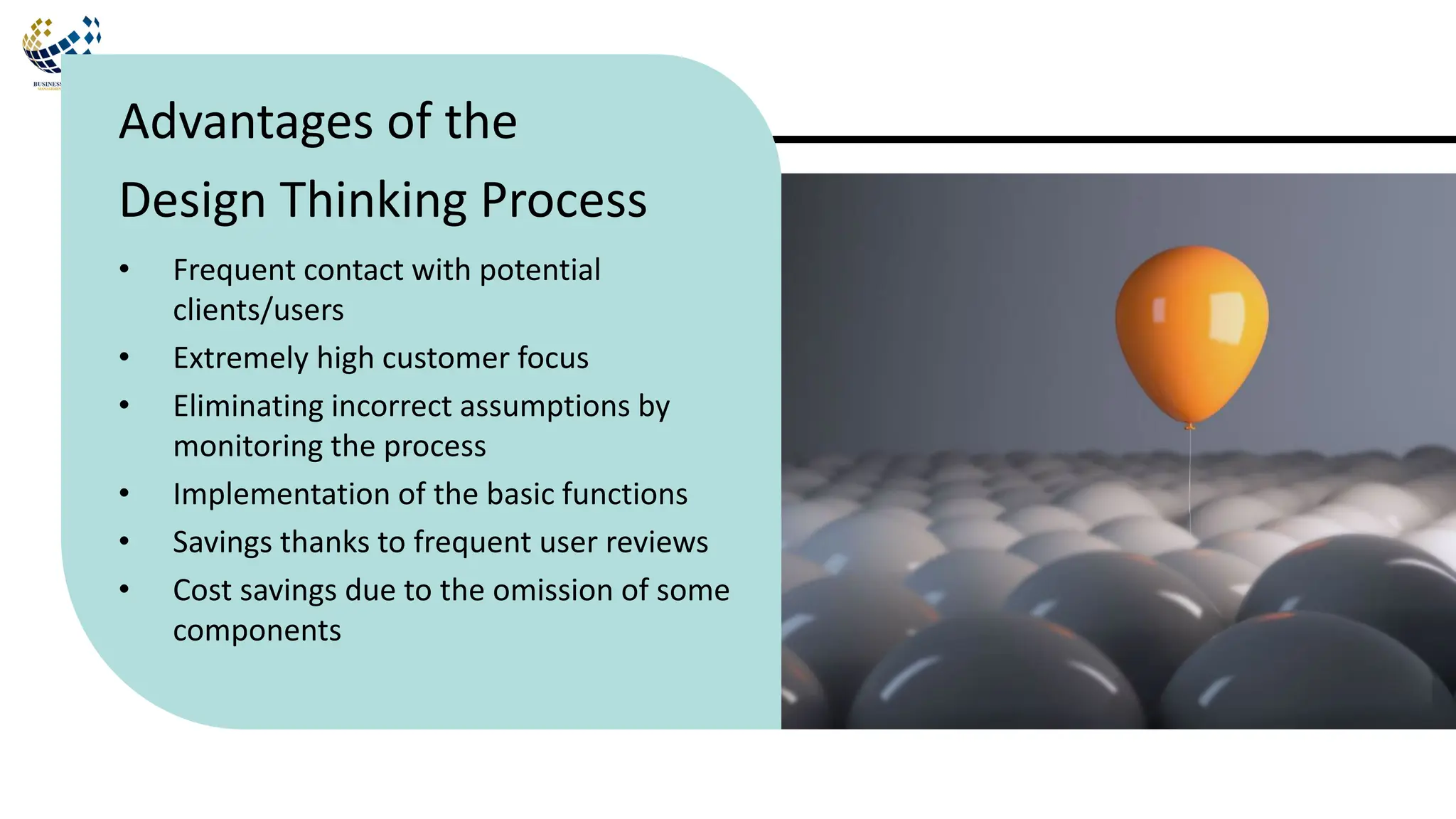
• Frequent contact with potential
clients/users
• Extremely high customer focus
• Eliminating incorrect assumptions by
monitoring the process
• Implementation of the basic functions
• Savings thanks to frequent user reviews
• Cost savings due to the omission of some
components
Advantages of the
Design Thinking Process
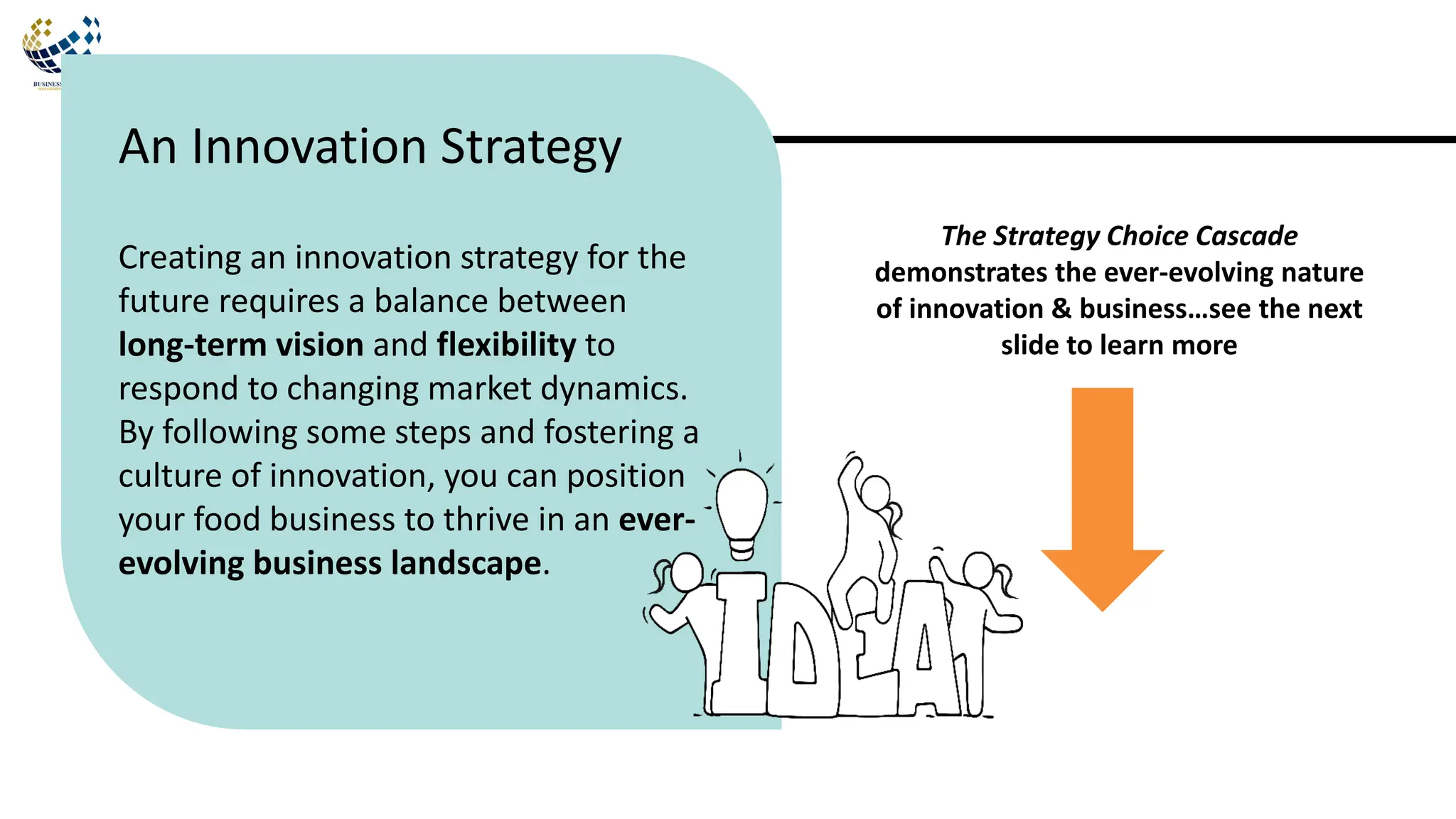
Creating an innovation strategy for the
future requires a balance between
long-term vision and flexibility to
respond to changing market dynamics.
By following some steps and fostering a
culture of innovation, you can position
your food business to thrive in an ever-
evolving business landscape.
An Innovation Strategy
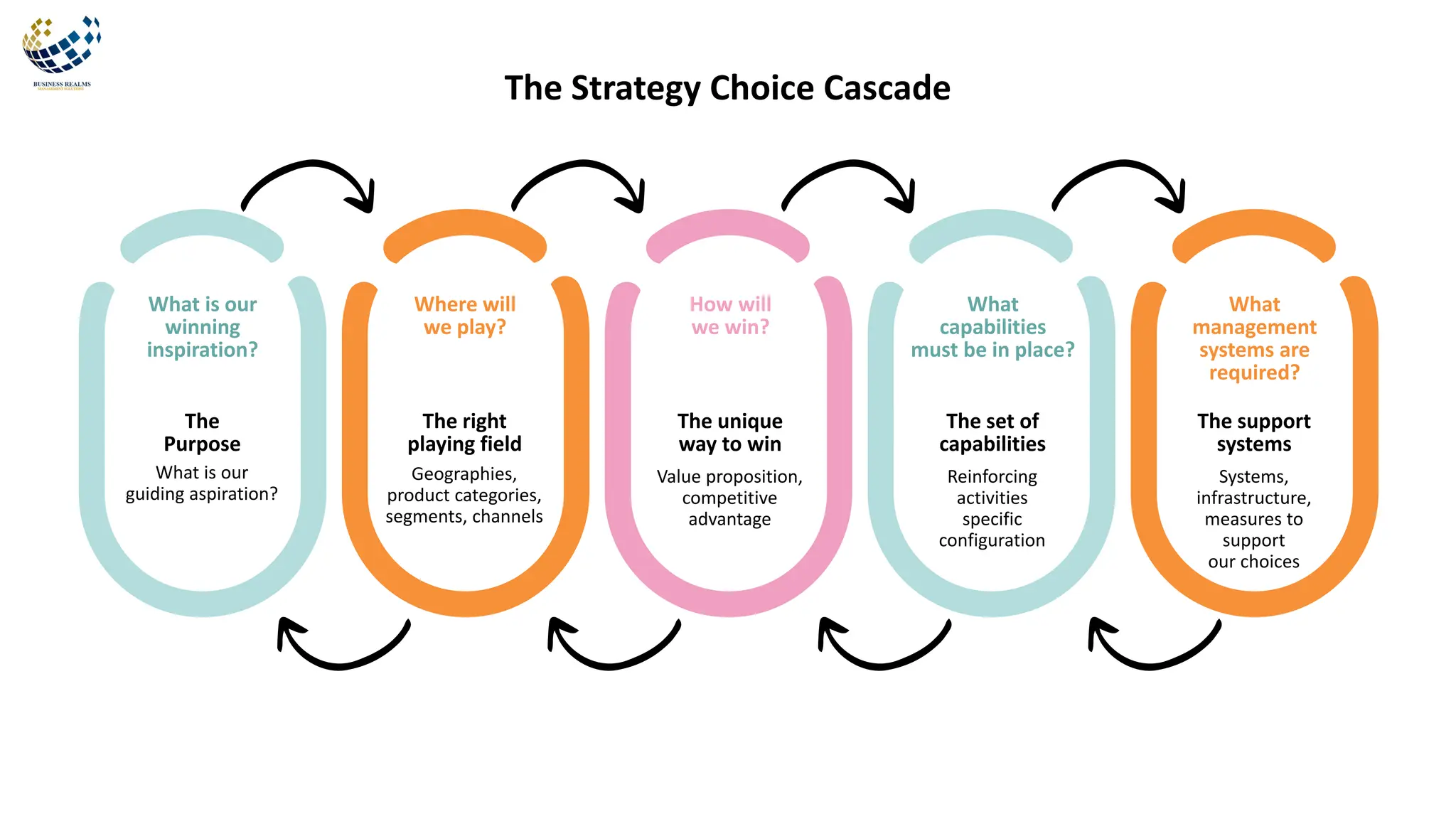
The Strategy Choice Cascade
demonstrates the ever-evolving nature
of innovation & business…see the next
slide to learn more
The Strategy Choice Cascade
The right
playing field
Where will
we play?
Geographies,
product categories,
segments, channels
The
Purpose
What is our
winning
inspiration?
What is our
guiding aspiration?
The set of
capabilities
What
capabilities
must be in place?
Reinforcing
activities
specific
configuration
The unique
way to win
How will
we win?
Value proposition,
competitive
advantage
The support
systems
What
management
systems are
required?
Systems,
infrastructure,
measures to
support
our choices
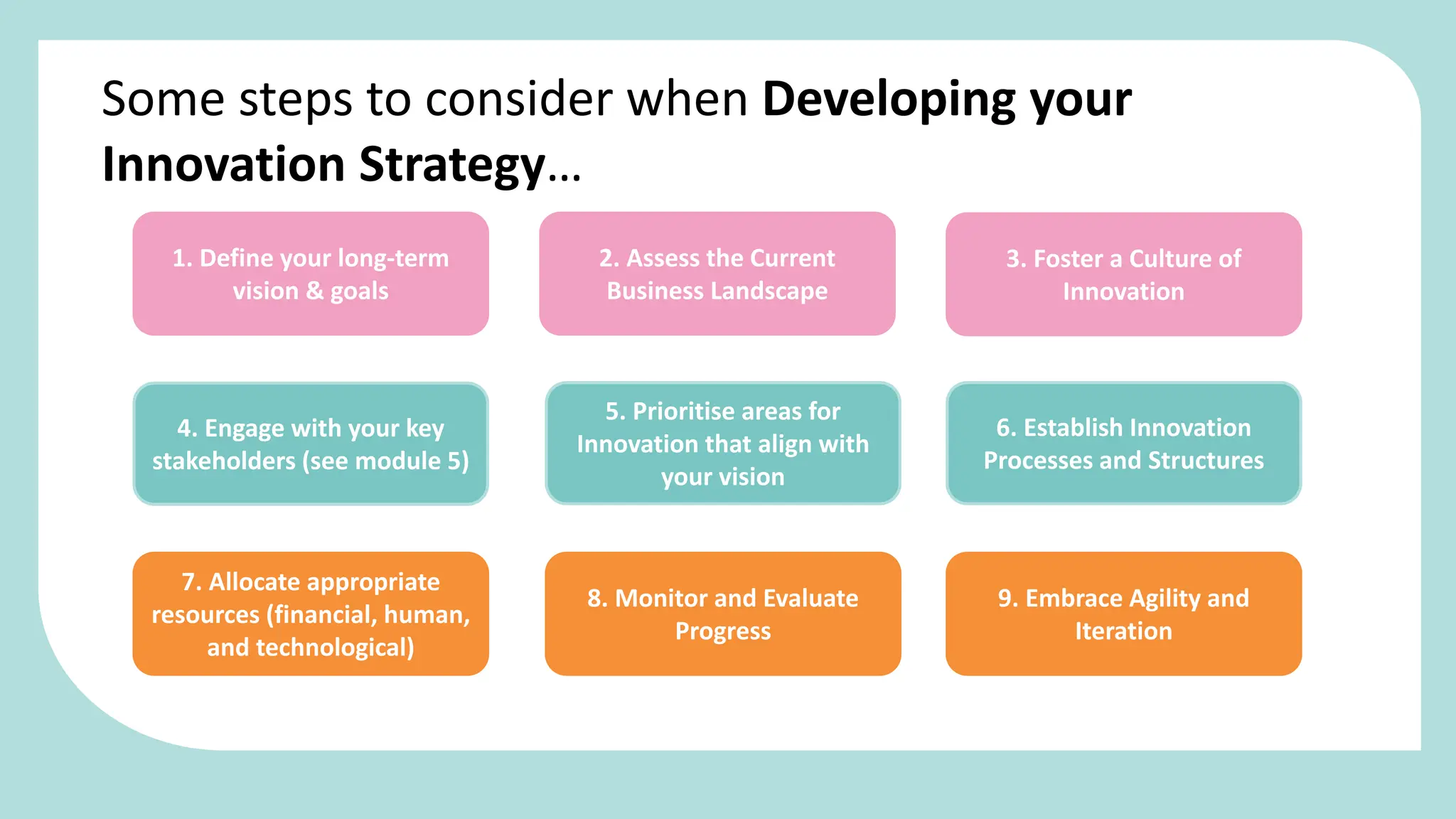
Some steps to consider when Developing your
Innovation Strategy…
1. Define your long-term
vision & goals
9. Embrace Agility and
Iteration
8. Monitor and Evaluate
Progress
7. Allocate appropriate
resources (financial, human,
and technological)
4. Engage with your key
stakeholders (see module 5)
5. Prioritise areas for
Innovation that align with
your vision
2. Assess the Current
Business Landscape
6. Establish Innovation
Processes and Structures
3. Foster a Culture of
Innovation
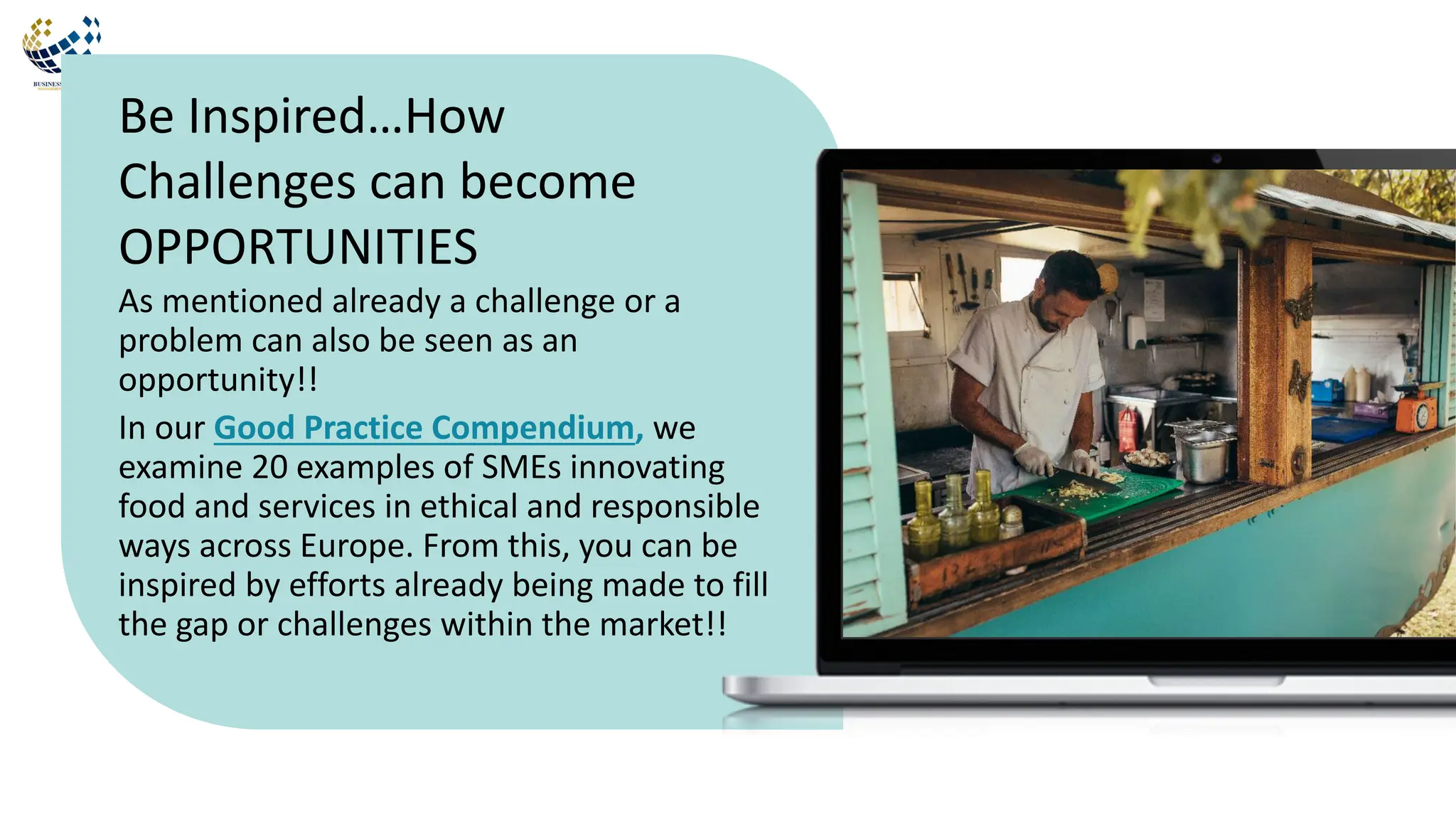
As mentioned already a challenge or a
problem can also be seen as an
opportunity!!
In our Good Practice Compendium, we
examine 20 examples of SMEs innovating
food and services in ethical and responsible
ways across Europe. From this, you can be
inspired by efforts already being made to fill
the gap or challenges within the market!!
Be Inspired…How
Challenges can become
OPPORTUNITIES
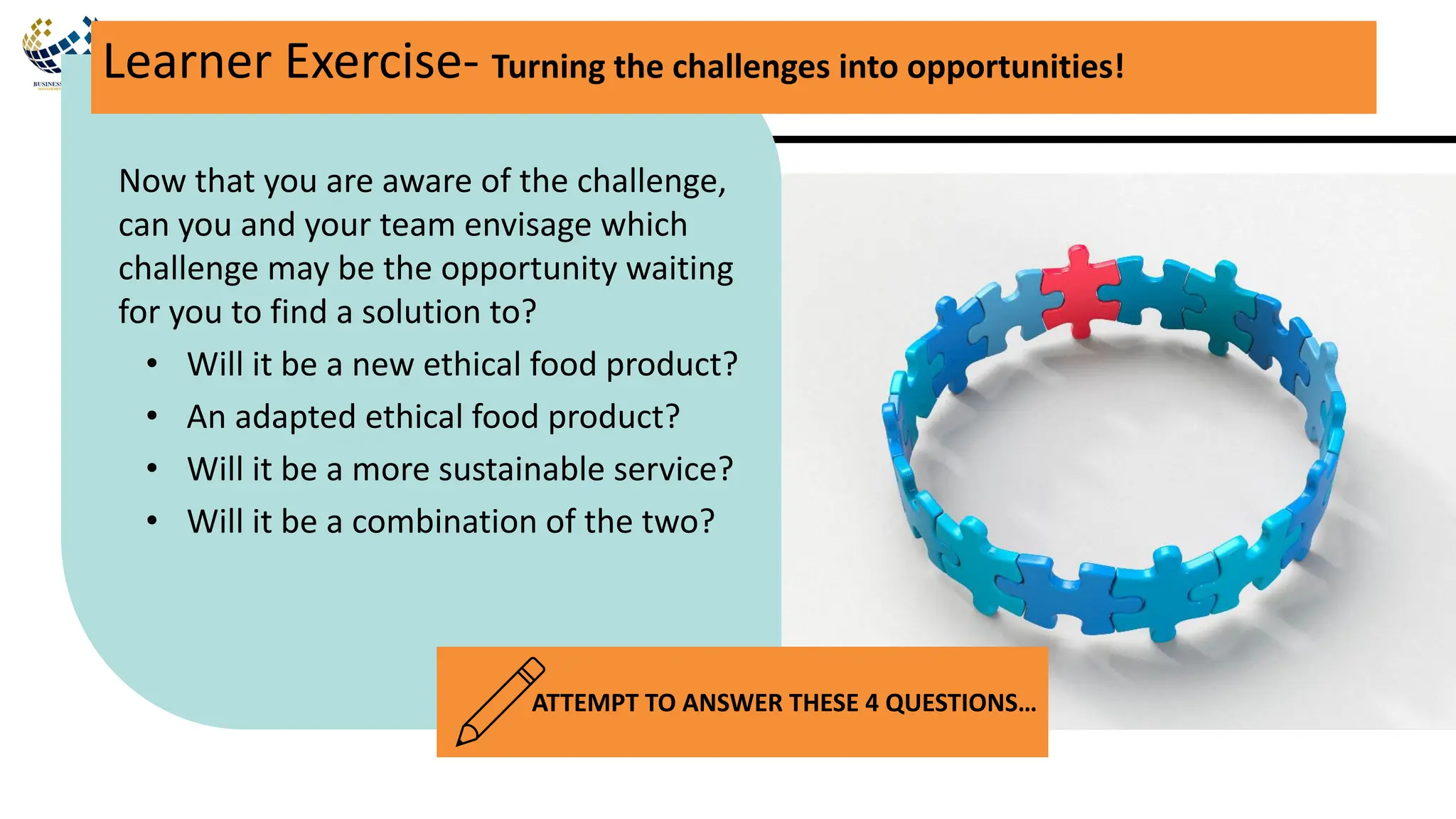
Now that you are aware of the challenge,
can you and your team envisage which
challenge may be the opportunity waiting
for you to find a solution to?
• Will it be a new ethical food product?
• An adapted ethical food product?
• Will it be a more sustainable service?
• Will it be a combination of the two?
Learner Exercise- Turning the challenges into opportunities!
ATTEMPT TO ANSWER THESE 4 QUESTIONS…
Failure is a really powerful tool for learning.
Experimenting with foods or ideas to create
prototypes and then interacting with them and
testing them is the core of innovation. You have to
understand that not all of your attempts will or can
work. Especially as we attempt to solve big problems
(like food waste or improved food systems) we are
bound to fail. However, if we are prepared for this
failure and adopt the correct mindset we will
inevitably learn something from that failure.
Preparing for Failure
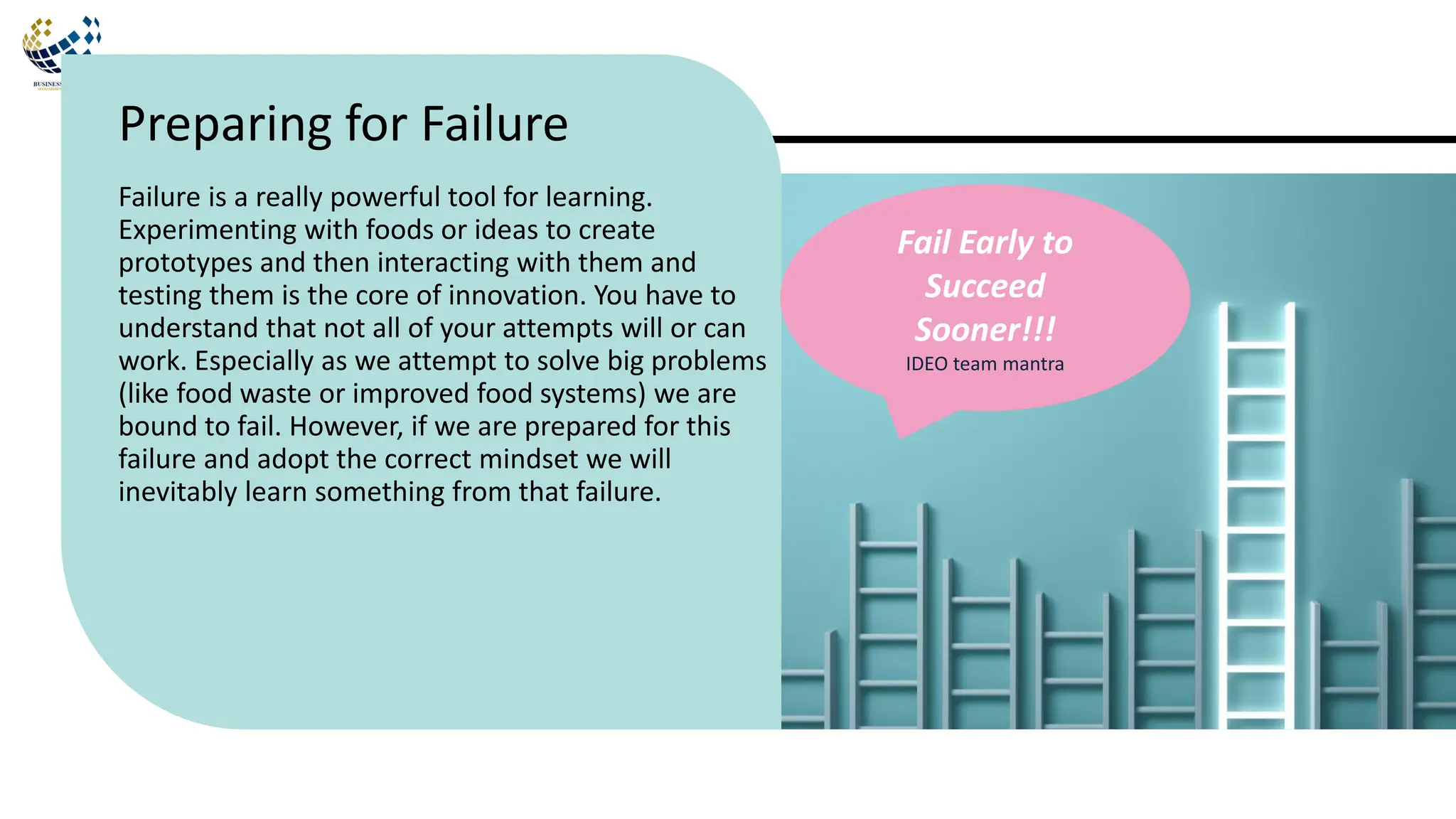
Fail Early to
Succeed
Sooner!!!
IDEO team mantra
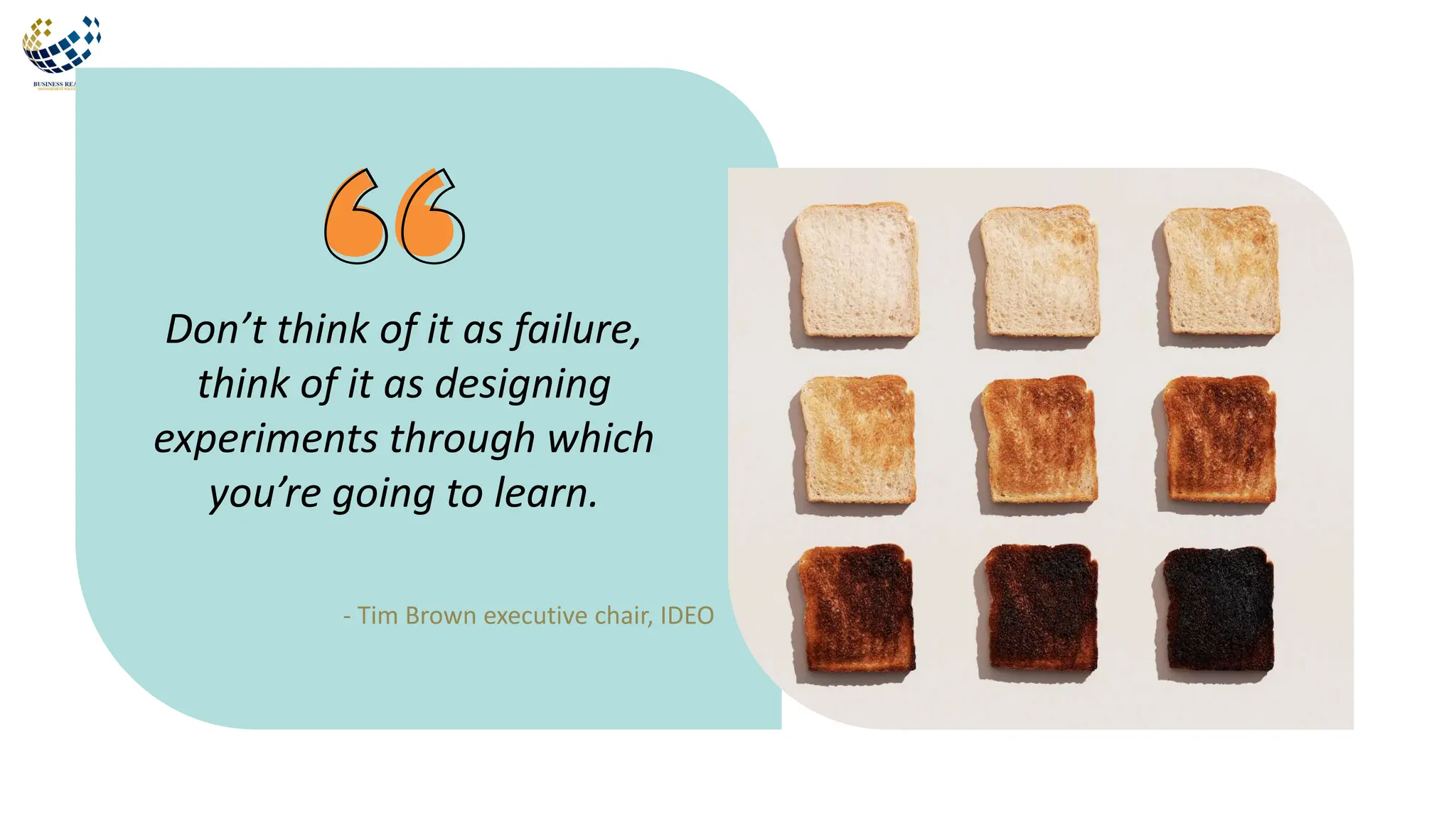
Don’t think of it as failure,
think of it as designing
experiments through which
you’re going to learn.
- Tim Brown executive chair, IDEO
Ultimately, failure can serve as a catalyst for growth and improvement. Entrepreneurs who
embrace failure as a learning opportunity, reflect on their experiences, and apply the lessons
learned are better equipped to navigate future challenges, make informed decisions, and
increase their chances of success. For example, failure can:
• Build your resilience and ability to bounce back and persevere through challenges
• You can learn to adapt and be flexible in the face of adversity
• Provide an opportunity to reflect and identify weaknesses or shortcomings in business models,
processes, or skills
• Reveal valuable insights about customer preferences, needs, or pain points
• Help you to assess and mitigate risk more effectively and to have continency plans
• highlight the significance of networking and collaboration. You can learn to seek support, advice,
and mentorship from others in the industry
The benefit of Failure…
I have not failed. I have just
found 10,000 ways that
won’t work
Thomas Edison

Complete Introduction to Service Design and Design Thinking

  • 1.
    Introduction to ServiceDesign Eng. Haytham El Mardi
  • 2.
    Implemented ISO 9001:2008 qualitymanagement system in the vocational college, improving overall performance and reputation Conducted gap analysis to identify areas of improvement and ensured compliance with ISO 9001:2008 requirements Established a quality policy and objectives, enhancing alignment with international best practices and legal regulations Re-designed, structured and coordinated the educational vocation college system within a 12-month timeframe, achieving a 95% user satisfaction rate. Collaborated with a team of 10 technicians to successfully implement an LMS, achieving a 90% completion rate within 6 months. Conducted end-user training on the LMS for over 200 users, achieving an 85% satisfaction rating within 10 months of implementation. Designed and developed comprehensive user manuals and guides within 8 weeks, resulting in a 20% reduction in support inquiries in the following quarter. Trained staff on ISO 21001:2018 educational organization management system, which helped in streamlining processes and improving student outcomes Developed Key Performance Indicators (KPIs) such as student satisfaction rate, graduation rate, and course completion rate to measure the impact of ISO implementation on college performance Utilized tools like process flowcharts, Pareto charts, and cause-effect diagrams for continuous improvement initiatives based on the ISO methodologies Coordinated regular internal audits and management reviews to ensure conformance with both ISO 9001:2008 and ISO 21001:2018 standards Fostered a culture of continuous improvement which resulted in an overall increase in enrollment rates at the vocational college due to enhanced reputation Sustained the ISO certifications through external audits, solidifying the college's dedication to excellence in education Improved transparency and communication between various departments using KPI Strategic alignment Eg. Haytham El Mardi, MBA, PMP, PgMP HAYTHAM@ELMARDI@YAHOO.COM
  • 3.
  • 13.
    As mentioned already,when we hear people talk about innovation, we often hear it being used as a synonym for new products, or perhaps new features in existing products. This is quite a narrow view of innovation & is one of the root causes of mistakes by inexperienced innovators. Getting past the implications caused by this can often be challenging, especially in larger SMEs where everyone is not familiar with innovation. These challenges, however, are not exactly a new thing. Innovation consultancy Doblin realised this back in the ‘90s and developed the ‘Ten Types of Innovation Framework’ to help solve the problem. It’s a simple, elegant, and practical tool from which every innovator can benefit! After extensive research, Doblin discovered that all innovations are actually comprised of the same 10 basic elements. Doblin’s Ten Types of Innovation
  • 14.
    Doblin’s Ten Typesof Innovation Framework Profit Model Network Structure Process Product Perfor- mance Product System Service Channel Brand Customer Engage- ment Configuration Experience Offering Profit Model The way in which you make money Structure Alignment of your talent and assets Product Performance Distinguishing features and functionality Service Support enhancements that surround your offerings Brand Representation of your offerings and business Customer Engagement Distinctive interactions you foster Process Signature or superior methods for doing your work Product System Complementary products and services Channel How your offerings are delivered to customers and users Profit Model The way in which you make money
  • 15.
    The ten elementsare further grouped into three main areas: 1. Configuration essentially covers the internal workings of the organisation and its business model etc. 2. Offering covers the key aspects of the products and/or services the organization offers. 3. Finally, the outward-facing elements of the business, or in other words, the whole customer experience. Doblin highlighted that based on their research, the more types of innovation an organisation used the better their performance was. Doblin’s Framework explained Stock price (indexed to 100) 5+ Types 3-4 Types 1 -2 Types S&P 500 Source: Ten Types of Innovation: The Discipline of Building Breakthroughs, 2013, Wiley
  • 16.
    The framework isa very versatile and practical tool that in addition to designing new innovations, it can be used to: Using the Framework Determine how innovative your business and its services and products actually are. Try to understand a market and identify opportunities for innovation within it. Assess your offerings, or market on each of the ten elements, and identify things done well, and where there is room for improvement and innovation.
  • 17.
    Whether you’re justgetting started with innovation, have already gained some successful experience from it, or are a battle-scarred veteran innovator, you can still try to find new growth opportunities in your ethical food SME, no matter your current level. Your approach to innovation depends mainly on your unique capabilities and strategic goals. Ultimately, managing innovation is no different from managing any other major change, and more or less the same principles apply. Although it's important to move fast, don't bite off more than you can chew. To avoid unnecessary havoc, you want to use the framework to analyse your business and then: •Break down your strategic goals into smaller, easily implemented pieces •Commit to the process Getting started in Innovation…
  • 18.
  • 19.
    Design thinking isa human- centered approach to innovation that draws from the designer’s toolkit to integrate the needs of people, the possibilities of technology, and the requirements for business success - Tim Brown executive chair IDEO
  • 20.
    Design Thinking isa 5-step process to create meaningful ideas that solve real problems for a particular group of people. The process has brought many businesses lots of happy customers and helped entrepreneurs from all around the world, to solve problems with innovative new solutions. Human Centric Problem Solving
  • 21.
    The 5 Stagesin the Design Thinking Process Empathise Define Ideate Prototype Test
  • 22.
    What is DesignThinking How it is different from Service Design, UX Design?
  • 31.
  • 33.
    The purpose ofstage one is to step into the user’s shoes so that you gain a better understanding or an improved idea about what people really care about. We need to develop their story and learn about the problem and those that are experiencing it. For example, if you want to help consumers to use more sustainable food systems, you might find that they want shorter supply chains or information on food origin. In your conversations, they might share the different ways they would like to do that. Later in the interview, you'll want to dig a little deeper, and look for personal stories or situations where things became challenging. Ideally, you redo the process with many people with the same problem or needs Stage 1: Empathising Building Understanding or Empathy
  • 34.
    Goals: • Expand knowledgeabout the user and their problems • Obtain knowledge about the background of the problem, the place of use of the product, and the operating environment • Develop a common understanding of the challenge • Develop specialist knowledge about the project Empathise - Observing customer behaviour in their natural environment Examples of Tools for the empathy stage: • Surveys • Target group observation • Interviews • Listening to the end user • Shadowing • Body-storming • Role Playing We shouldn’t draw conclusions at this stage
  • 35.
    This short videodefines what empathy is and highlights the importance of empathy and total immersion in the issue or to your end user, in order to solve their problems and therefore you are staying connected to your mission. Empathy as a tool
  • 43.
    The Define stagecan often be the longest stage but it is worth not rushing, so as to develop a better understanding of the actual needs of people via certain activities like empathy mapping or underlining the verbs or activities that the people mentioned when talking about their problems: like finding local seasonal produce or healthy options, or having information on the food origin and it’s carbon footprint. You might realise it's not always about the food, but more about the tasks surrounding it. After your analysis, formulate a problem statement to suit this cohort. Stage 2: Define the Problem Identify specific issues & needs that the user has
  • 44.
    Goals: • The goalhere is to understand more about the problem and those who experience/are impacted by it. (your Target Group) • Then gather what you have learned, the insights you have gained and start to articulate the potential user’s real needs/wants. • Develop the Problem Statement Define the Problem – Assessing the actual needs and formulating the problem statement Examples of Tools for the Define stage: • Empathy mapping • Creating Personas • Storytelling • Customer path mapping • Lean Canvas • Apps e.g, Trello, Asana, Evernote, OneNote We need to identify the real problems & needs
  • 45.
    Problem Exploration 4 2 3 5 1 BreakingDown the Problem YOUR SELECTED PROBLEM REVIEW IDENTIFY ALL THE CAUSES OF YOUR PROBLEM FOR EACH OF THE CAUSES TO FIND ANY THEMES OR SUB-THEMES ASK ‘WHY?’ LIST CREATE THE IMPACTS OF THE PROBLEM POSSIBLE PROBLEM STATEMENTS
  • 46.
    • Who isimpacted by this problem? • Who cares about this problem? • Which of these will be YOUR target group? • Is there already an idea? • Is there already a solution? • Who has these? • How can you do better? Other Questions:
  • 47.
    This is ashort video with an overview of the Customer Empathy Map. This is a useful tool that can be used to help businesses better understand their customers and help them discover and define the real problem that the customer is experiencing Empathy Maps
  • 48.
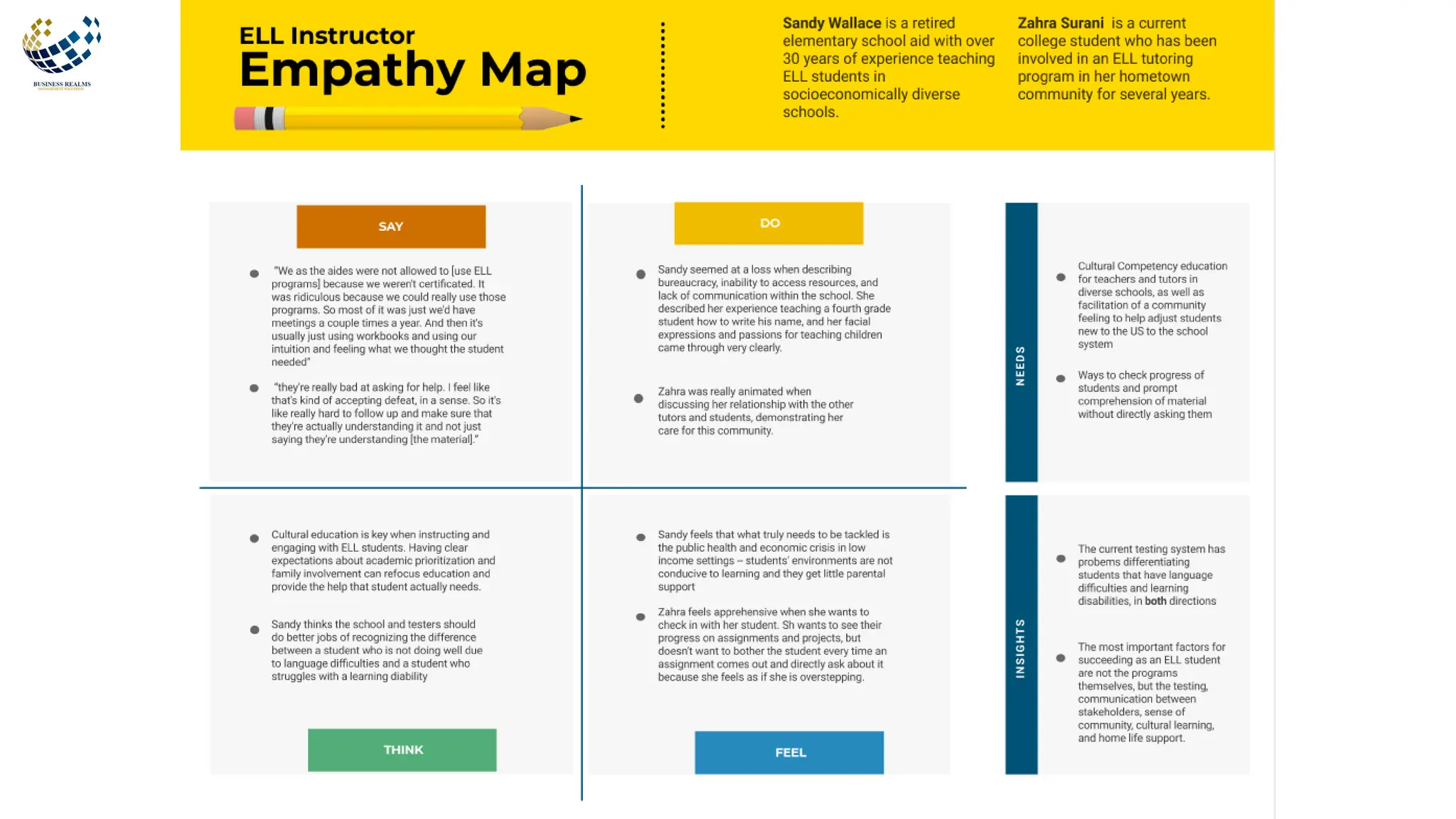
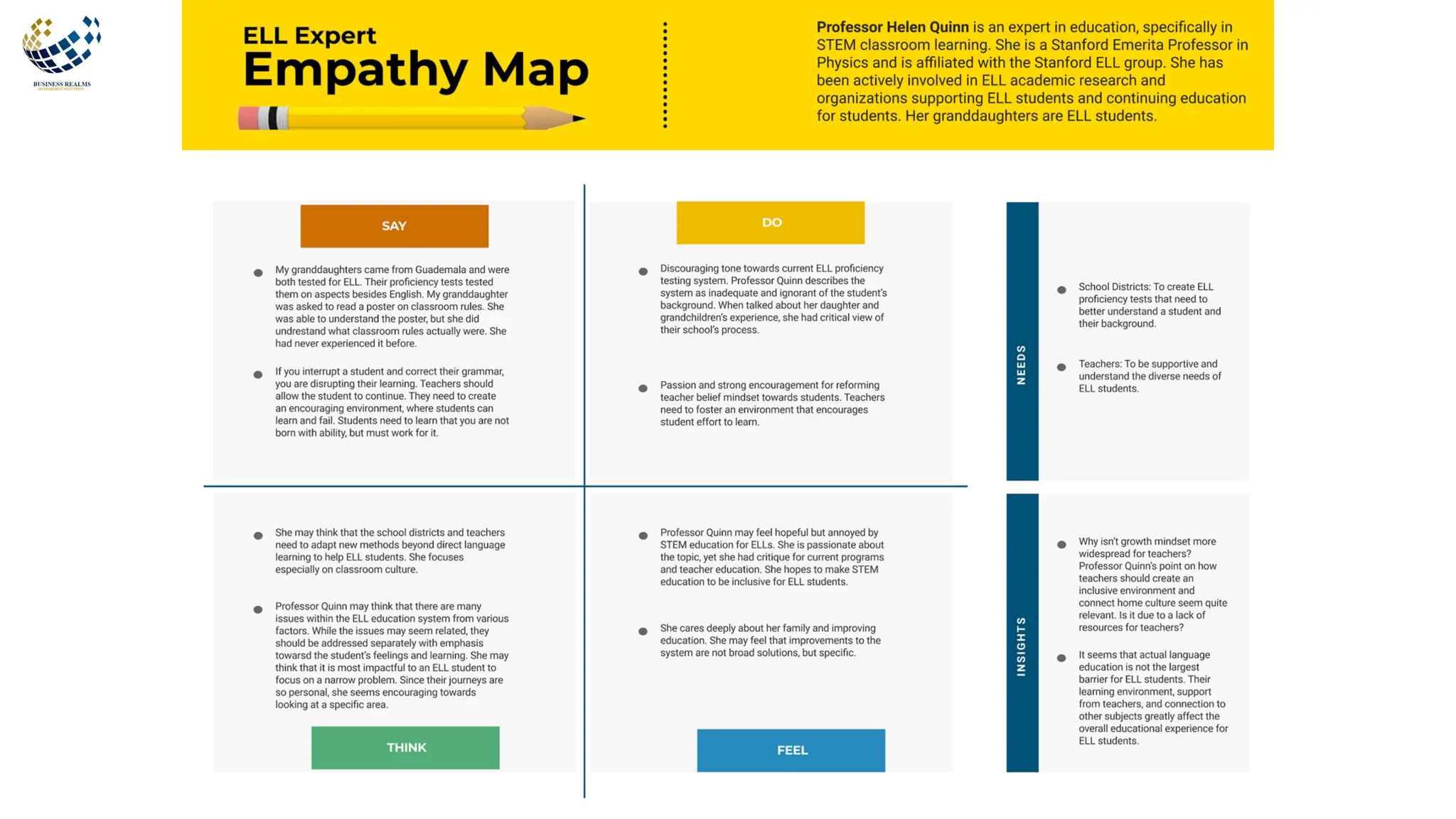
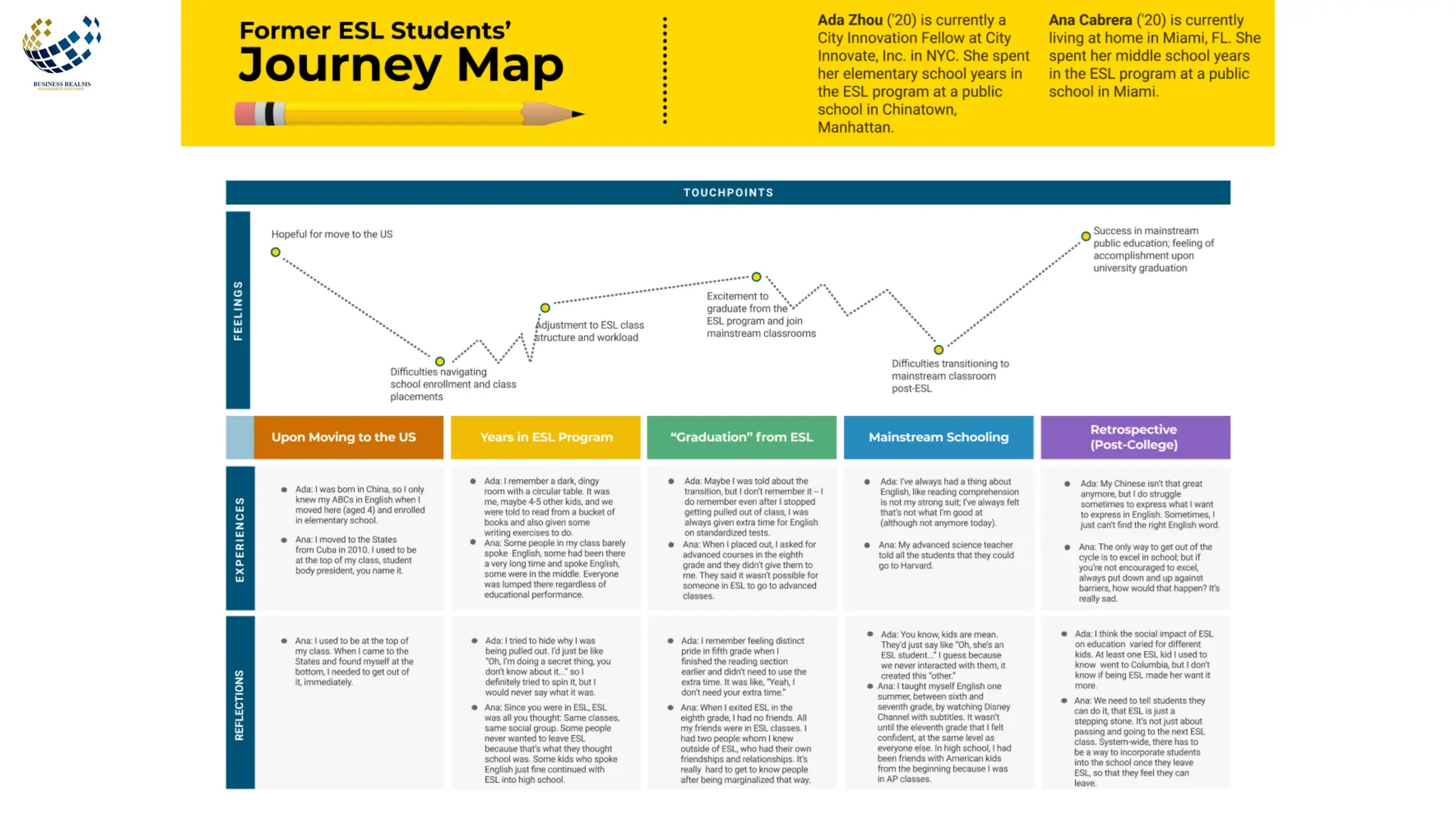
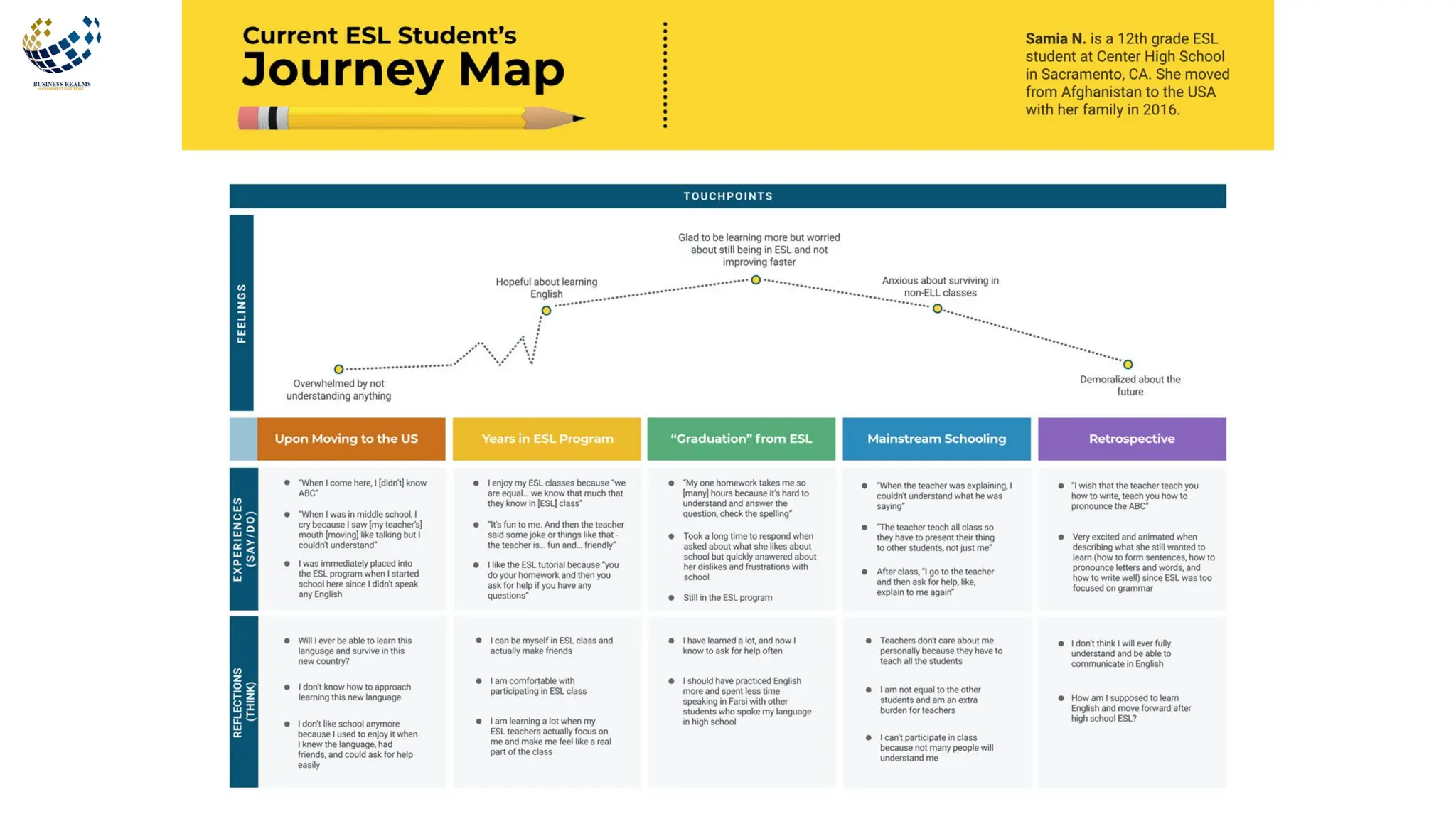
    Understanding Customers –through Empathy Maps Name: Age: Status: Think And Feel? What really matters Worries / Aspirations! Hear? What friends say What family say What boss/ peers say What influencers say See? Environment Social Media/ friends Websites Magazines Marketing Say and Do? Appearance Attitude in public Pains Fears Frustrations Obstacles Gains Wants / Needs Measure of Success Goals
  • 53.
    Start thinking aboutyour Target or potential customer… Grab a sheet of paper or work and start your own EMPATHY MAP Note : • How do they think and feel? • What do they see / observe regularly? • What do they hear and from whom…who influences them? • How do they behave…what do they say and do? Once you have created a picture of your customer you should now be able to identify some of their pains and gains Training Exercise:
  • 54.
    Now focus onlyon the problem statement and come up with ideas that solve the problem. The point is not to get a perfect idea, but rather to come up with as many ideas as possible: like unique virtual reality experiences, zero-cook healthy options, zero-waste foods, ways to offer information. Whatever it is, sketch up your best ideas and show them to the people you are trying to help, so you get their feedback. Stage 3: Ideate Brainstorm and come up with creative solutions
  • 55.
    Goals: • Generate andcollect as many ideas as possible in a collaborative manner • Analyse ideas and choose most appropriate • Form real concepts • Obtain the optimal solution Ideate solutions – Brainstorm and come up with creative solutions Examples of Tools for the Ideate stage: • Brainstorming • Braindumping • Brain writing • Brainwalking • 6 Thinking hats method • SWOT / PEST analysis • Sketching This phase should limit criticism Quantity is what counts, not quality There are no silly or wrong ideas!
  • 56.
    This video isa brief outline of what is involved in the Ideate stage of the Design Thinking process. Quantity is more important than quality initially. Then you can converge again and select the most suitable solution to the problem to bring to the prototype stage. How to Ideate
  • 69.
    Next take amoment to reflect on what you have learned from your conversations with your ‘users’, about the different ideas. Ask yourself, how does your idea fit in the context of people's actual lives? Your solution could be a combination of a new idea and what is already being used. Then connect the dots, sketch up your final solution and go build a real prototype that's just good enough to be tested. Stage 4: Prototype Build a representation for one or more of these ideas, to show others
  • 70.
    Goals: Creating a foodprototype, defined as a three- dimensional manifestation of your food product or concept, is an essential early step in new food, beverage, and nutraceutical product development…we need to: • Build simple representations as visual object(s) to demonstrate the effect of innovation • Not to overcomplicate the prototype • Fail fast / iterate quickly • To create as quickly as possible Prototype – Checking solutions in practice Examples of Tools for the Prototype stage: • Mock-ups • Tasters/ Batch testing • Storyboards • Figma • Adobe XD • In Vision • Froghop food prototyping Time to choose the best ideas! Narrow the created solutions to a maximum of several variants
  • 71.
    Examples of simplevisualisation and prototyping…
  • 72.
    This video isa brief outline of why prototyping is used during the design thinking process and how it saves time and money in the long run and helps us refine our product or service and understand the problem or challenge even better. Why use the prototype stage?
  • 73.
    Then test yourprototype with the actual end users. Don't defend your idea in case people don't like it, the point is to learn what works and what doesn't, so any feedback is great. Then go back to ideation or prototyping and apply your learning. Repeat the process until you have a prototype that works and solves the real problem. Now you are ready to change the world or fill the massive gap in the Sustainable & ethical Market Market. Stage 5: Test Return to the people experiencing the problem and test your ideas to receive feedback
  • 74.
    Goals: • Understand whatworks and what are impediments • Test in a neutral environment or that most similar to typical user location • Observe spontaneous and authentic reactions from users • Getting feedback from users about the prototype to make decisions about the next steps Test – The opportunity to test prototypes in real conditions Things to consider for the Test stage: • Just observe don’t comment or defend your product • It is ok to fail you are still on a journey of discovery • The design thinking process is an iterative process. To adapt the prototype properly to the needs of its future users and really refine it, the last three phases should be repeated The Design team needs to take a back seat for this stage and just observe interaction with the prototype.
  • 75.
    This video isa brief outline of what is involved in the Test stage of the Design Thinking process. It explains why testing is important and how it helps us refine our product or service and understand the problem or challenge even better. The Testing Stage
  • 90.
    1. The HumanRule: All Design Activity Is Ultimately Social in Nature Implementing solutions should strive to meet human needs. 2. The Ambiguity Rule: Design Thinkers Must Preserve Ambiguity Moving away from restrictions and creating conditions for experimenting on the border of knowledge and imagination. Look for solutions that seem to be inappropriate 3. The Re-design Rule: All Design Is Re-design Designing future technical and social conditions, based on historical solutions, in order to best analyze and solve the problem 4. The Tangibility Rule: Making Ideas Tangible Always Facilitates Communication Making ideas reality by visualizing and prototyping improves communication among project team members Summary of the Rules of DESIGN THINKING… Source: H. Plattner,C. Meinel, L. Leifer, Design Thinking: Understand - Improve - Apply
  • 91.
    • Frequent contactwith potential clients/users • Extremely high customer focus • Eliminating incorrect assumptions by monitoring the process • Implementation of the basic functions • Savings thanks to frequent user reviews • Cost savings due to the omission of some components Advantages of the Design Thinking Process
  • 92.
    Creating an innovationstrategy for the future requires a balance between long-term vision and flexibility to respond to changing market dynamics. By following some steps and fostering a culture of innovation, you can position your food business to thrive in an ever- evolving business landscape. An Innovation Strategy The Strategy Choice Cascade demonstrates the ever-evolving nature of innovation & business…see the next slide to learn more
  • 93.
    The Strategy ChoiceCascade The right playing field Where will we play? Geographies, product categories, segments, channels The Purpose What is our winning inspiration? What is our guiding aspiration? The set of capabilities What capabilities must be in place? Reinforcing activities specific configuration The unique way to win How will we win? Value proposition, competitive advantage The support systems What management systems are required? Systems, infrastructure, measures to support our choices
  • 94.
    Some steps toconsider when Developing your Innovation Strategy… 1. Define your long-term vision & goals 9. Embrace Agility and Iteration 8. Monitor and Evaluate Progress 7. Allocate appropriate resources (financial, human, and technological) 4. Engage with your key stakeholders (see module 5) 5. Prioritise areas for Innovation that align with your vision 2. Assess the Current Business Landscape 6. Establish Innovation Processes and Structures 3. Foster a Culture of Innovation
  • 95.
    As mentioned alreadya challenge or a problem can also be seen as an opportunity!! In our Good Practice Compendium, we examine 20 examples of SMEs innovating food and services in ethical and responsible ways across Europe. From this, you can be inspired by efforts already being made to fill the gap or challenges within the market!! Be Inspired…How Challenges can become OPPORTUNITIES
  • 96.
    Now that youare aware of the challenge, can you and your team envisage which challenge may be the opportunity waiting for you to find a solution to? • Will it be a new ethical food product? • An adapted ethical food product? • Will it be a more sustainable service? • Will it be a combination of the two? Learner Exercise- Turning the challenges into opportunities! ATTEMPT TO ANSWER THESE 4 QUESTIONS…
  • 97.
    Failure is areally powerful tool for learning. Experimenting with foods or ideas to create prototypes and then interacting with them and testing them is the core of innovation. You have to understand that not all of your attempts will or can work. Especially as we attempt to solve big problems (like food waste or improved food systems) we are bound to fail. However, if we are prepared for this failure and adopt the correct mindset we will inevitably learn something from that failure. Preparing for Failure Fail Early to Succeed Sooner!!! IDEO team mantra
  • 98.
    Don’t think ofit as failure, think of it as designing experiments through which you’re going to learn. - Tim Brown executive chair, IDEO
  • 99.
    Ultimately, failure canserve as a catalyst for growth and improvement. Entrepreneurs who embrace failure as a learning opportunity, reflect on their experiences, and apply the lessons learned are better equipped to navigate future challenges, make informed decisions, and increase their chances of success. For example, failure can: • Build your resilience and ability to bounce back and persevere through challenges • You can learn to adapt and be flexible in the face of adversity • Provide an opportunity to reflect and identify weaknesses or shortcomings in business models, processes, or skills • Reveal valuable insights about customer preferences, needs, or pain points • Help you to assess and mitigate risk more effectively and to have continency plans • highlight the significance of networking and collaboration. You can learn to seek support, advice, and mentorship from others in the industry The benefit of Failure…
  • 100.
    I have notfailed. I have just found 10,000 ways that won’t work Thomas Edison