Forging new generations of engineers
Design Process Overview
What is Design? The word “ design ” is often used as a generic term that refers to anything that was made by a conscious human effort. Design  is also a process that is used to systematically solve problems.
A  design process  is a systematic problem-solving strategy, with criteria and constraints, used to develop many possible solutions to solve or satisfy human needs or wants and to narrow down the possible solutions to one final choice. –  ITEA  Standards for Technological Literacy What is a Design Process?
There are several design processes used in the different technical fields. The following are examples. Design Process
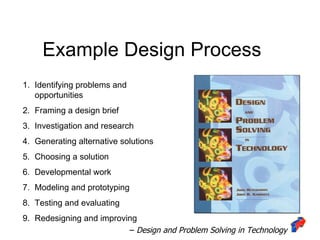
Identifying problems and opportunities Framing a design brief Investigation and research Generating alternative solutions Choosing a solution Developmental work Modeling and prototyping Testing and evaluating Redesigning and improving –  Design and Problem Solving in Technology Example Design Process
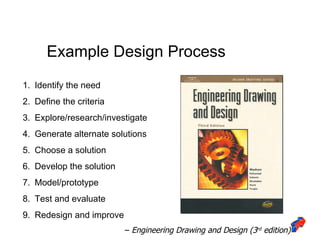
Identify the need Define the criteria Explore/research/investigate Generate alternate solutions Choose a solution Develop the solution Model/prototype Test and evaluate Redesign and improve –  Engineering Drawing and Design (3 rd  edition) Example Design Process
The following is the design process used for this course. The Adopted Design Process for PLTW courses
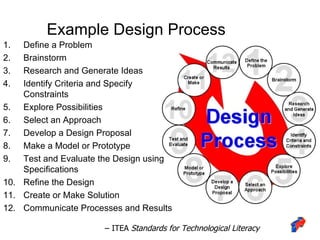
Define a Problem Brainstorm Research and Generate Ideas Identify Criteria and Specify Constraints Explore Possibilities Select an Approach Develop a Design Proposal Make a Model or Prototype Test and Evaluate the Design using Specifications Refine the Design Create or Make Solution Communicate Processes and Results Example Design Process –  ITEA  Standards for Technological Literacy
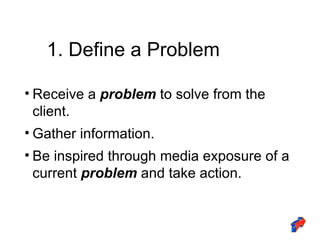
1. Define a Problem Receive a  problem  to solve from the client. Gather information. Be inspired through media exposure of a current  problem  and take action.
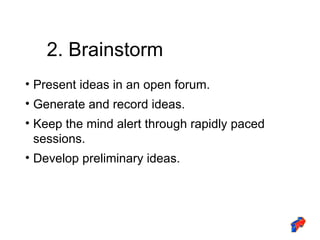
2. Brainstorm Present ideas in an open forum. Generate and record ideas. Keep the mind alert through rapidly paced sessions. Develop preliminary ideas.
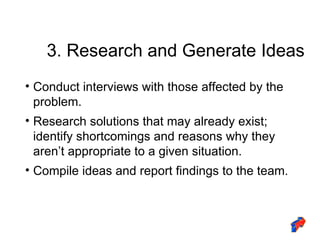
3. Research and Generate Ideas Conduct interviews with those affected by the problem.  Research solutions that may already exist; identify shortcomings and reasons why they aren’t appropriate to a given situation. Compile ideas and report findings to the team.
4. Identify Criteria and Specify Constraints  Identify what the solution should do and the degree to which the solution will be pursued. Identify constraints (i.e., budget and time are typical considerations). Draft the Design Brief.
5. Explore Possibilities Consider further development of brainstorming ideas with constraints and tradeoffs. Explore alternative ideas based on further knowledge and technologies.
6. Select an Approach Review brainstormed information and answer any lingering questions. Narrow ideas down through a voting process, or by use of a decision matrix. Decide on final idea, usually through group consensus.
7. Develop a Design Proposal Explore the idea in greater detail with annotated sketches. Make critical decisions such as material types and manufacturing methods. Generate through computer models detailed sketches to further refine the idea. Produce working drawings so the idea can be built.
8. Make a Model or Prototype Make models to help communicate the idea, and study aspects such as shape, form, fit, or texture. Construct a prototype from the working drawings, so the solution can be tested.
9. Test and Evaluate the  Design Using Specifications Design experiments and test the prototype in controlled and working environments. Gather performance data; analyze  and check results against established criteria.   Conduct a formal critique to flesh out areas of concerns, identify shortcomings, and establish any need for redesign work.
10. Refine the Design Make design changes; modify or rebuild the prototype. Make refinements until accuracy and repeatability of the prototype’s performance results are consistent. Update documentation to reflect changes. Receive user’s critique to provide outside perspective to help determine if established criteria have been met.
11. Create or Make Solution Determine custom/mass production. Consider packaging.
12. Communicate Processes  and Results Communicate the designer’s final solution through media such as PowerPoint, poster session, technical report. Market the Product. Distribute.

Design process overview

  • 1.
  • 2.
  • 3.
    What is Design?The word “ design ” is often used as a generic term that refers to anything that was made by a conscious human effort. Design is also a process that is used to systematically solve problems.
  • 4.
    A designprocess is a systematic problem-solving strategy, with criteria and constraints, used to develop many possible solutions to solve or satisfy human needs or wants and to narrow down the possible solutions to one final choice. – ITEA Standards for Technological Literacy What is a Design Process?
  • 5.
    There are severaldesign processes used in the different technical fields. The following are examples. Design Process
  • 6.
    Identifying problems andopportunities Framing a design brief Investigation and research Generating alternative solutions Choosing a solution Developmental work Modeling and prototyping Testing and evaluating Redesigning and improving – Design and Problem Solving in Technology Example Design Process
  • 7.
    Identify the needDefine the criteria Explore/research/investigate Generate alternate solutions Choose a solution Develop the solution Model/prototype Test and evaluate Redesign and improve – Engineering Drawing and Design (3 rd edition) Example Design Process
  • 8.
    The following isthe design process used for this course. The Adopted Design Process for PLTW courses
  • 9.
    Define a ProblemBrainstorm Research and Generate Ideas Identify Criteria and Specify Constraints Explore Possibilities Select an Approach Develop a Design Proposal Make a Model or Prototype Test and Evaluate the Design using Specifications Refine the Design Create or Make Solution Communicate Processes and Results Example Design Process – ITEA Standards for Technological Literacy
  • 10.
    1. Define aProblem Receive a problem to solve from the client. Gather information. Be inspired through media exposure of a current problem and take action.
  • 11.
    2. Brainstorm Presentideas in an open forum. Generate and record ideas. Keep the mind alert through rapidly paced sessions. Develop preliminary ideas.
  • 12.
    3. Research andGenerate Ideas Conduct interviews with those affected by the problem. Research solutions that may already exist; identify shortcomings and reasons why they aren’t appropriate to a given situation. Compile ideas and report findings to the team.
  • 13.
    4. Identify Criteriaand Specify Constraints Identify what the solution should do and the degree to which the solution will be pursued. Identify constraints (i.e., budget and time are typical considerations). Draft the Design Brief.
  • 14.
    5. Explore PossibilitiesConsider further development of brainstorming ideas with constraints and tradeoffs. Explore alternative ideas based on further knowledge and technologies.
  • 15.
    6. Select anApproach Review brainstormed information and answer any lingering questions. Narrow ideas down through a voting process, or by use of a decision matrix. Decide on final idea, usually through group consensus.
  • 16.
    7. Develop aDesign Proposal Explore the idea in greater detail with annotated sketches. Make critical decisions such as material types and manufacturing methods. Generate through computer models detailed sketches to further refine the idea. Produce working drawings so the idea can be built.
  • 17.
    8. Make aModel or Prototype Make models to help communicate the idea, and study aspects such as shape, form, fit, or texture. Construct a prototype from the working drawings, so the solution can be tested.
  • 18.
    9. Test andEvaluate the Design Using Specifications Design experiments and test the prototype in controlled and working environments. Gather performance data; analyze and check results against established criteria. Conduct a formal critique to flesh out areas of concerns, identify shortcomings, and establish any need for redesign work.
  • 19.
    10. Refine theDesign Make design changes; modify or rebuild the prototype. Make refinements until accuracy and repeatability of the prototype’s performance results are consistent. Update documentation to reflect changes. Receive user’s critique to provide outside perspective to help determine if established criteria have been met.
  • 20.
    11. Create orMake Solution Determine custom/mass production. Consider packaging.
  • 21.
    12. Communicate Processes and Results Communicate the designer’s final solution through media such as PowerPoint, poster session, technical report. Market the Product. Distribute.

Editor's Notes

  • #4 Talk to students about how they use a sense of design every day. The process for getting ready for school is one example.
  • #5 Tell students: “This a primary focus of this course. You will learn what a design process is and apply it to several activities projects and problems”.
  • #6 Tell students: “There are several examples used throughout the technical field.”
  • #10 There are many design processes that guide professionals in developing solutions to problems. The example that you see here is the design process that we will use for this course and the rest of the Project Lead The Way, Inc. courses you will take.
  • #11 For each step, site examples from the Brainstorming, Product Evolution, and Gossamer Condor Activities.
  • #21 Mention the difference between Custom and Mass Production