Engineering Design
     Process
1. Identify the Problem
 The first thing a good designer does is
 identify the need, problem, or opportunity.
 This is the first stage in the design loop.
 This appears to be a simple task but it
 requires careful observation and a critical
 eye. Taking the time to find the root
 problem is extremely important so that the
 ultimate solution works.
2. Define or “refine” the Problem
 The second stage involves defining the
 problem to be solved. This involves an
 investigation to find out more information
 about the problem. A team effort may be
 required. Clarification begins with a
 design brief which then guides further
 development by describing the limitations
 and requirements for the project’s solution
3. Gather Information
 The third activity involves research and
  investigation on the problem and the
  potential solutions.
 (Internet or other research – don’t reinvent
  the wheel)
4. Develop Alternate Solutions
 This is the divergent thinking step –
  brainstorming and other techniques may
  be utilized. No possible solutions should
  be ignored.
 The more ideas generated give a greater
  probability of success.
 The first idea is rarely the best.
5. Select & Refine the Best
               Solution

            The Design Proposal
 Now it is time to select the best solution
  for further development. An evaluation
  process stemming form the design brief
  may be utilized as with any decision
  process.
 Documentation should occur.
6. Express the Design Solution
 There are many ways to express a
  concept. Two of the most common are
  verbal expression or text.
 Another method which is used when
  words are inadequate is mathematics or
  an expression


                          continued
6. Express the Design Solution
 Often however, a proposed solution has
  shape and is three dimensional, and
  someone on the team must understand it
  well enough to make a model or a
  prototype on the concept
 Almost every invention begins “life’ as a
  sketch on a back of a napkin or envelope
7. Build a Model or Prototype of
            the Solution
 This is the modeling or construction part of
 the process. This part may contain the
 most technological problems.
 Experimentation with materials and
 techniques will need to be done before
 actual construction of the final model can
 be done. Technical planning happens at
 this stage, which could take the form of a
 prototype, two-or three dimensional
 model, or other clarification.
8. Evaluate, Revise, and Refine
           the Solution
 At this step, analyze the solution in terms
 of effectiveness in solving the original
 need or problem. This may be as simple
 as applying the specifications to the end
 product to see if it does all that it is
 suppose to do, but more often it involves
 performance testing.
9. Communicate the Solution
 Ideas need to be “sold” at this stage to clients or
  management. The presentation may include the
  prototypes, models, or other forms. The
  designer must know the design and subject
  matter related to the solution in order to
  effectively communicate the features. A
  designer, after completing the design process,
  can see how well he or she has accomplished
  the goals and whether more development work
  in necessary.
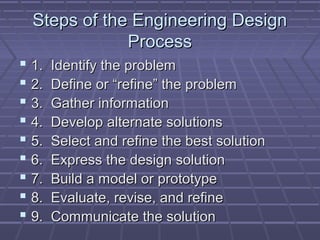
Steps of the Engineering Design
              Process
 1.   Identify the problem
 2.   Define or “refine” the problem
 3.   Gather information
 4.   Develop alternate solutions
 5.   Select and refine the best solution
 6.   Express the design solution
 7.   Build a model or prototype
 8.   Evaluate, revise, and refine
 9.   Communicate the solution

Hsu2 engdesignprocessbv

  • 1.
  • 2.
    1. Identify theProblem  The first thing a good designer does is identify the need, problem, or opportunity. This is the first stage in the design loop. This appears to be a simple task but it requires careful observation and a critical eye. Taking the time to find the root problem is extremely important so that the ultimate solution works.
  • 3.
    2. Define or“refine” the Problem  The second stage involves defining the problem to be solved. This involves an investigation to find out more information about the problem. A team effort may be required. Clarification begins with a design brief which then guides further development by describing the limitations and requirements for the project’s solution
  • 4.
    3. Gather Information The third activity involves research and investigation on the problem and the potential solutions.  (Internet or other research – don’t reinvent the wheel)
  • 5.
    4. Develop AlternateSolutions  This is the divergent thinking step – brainstorming and other techniques may be utilized. No possible solutions should be ignored.  The more ideas generated give a greater probability of success.  The first idea is rarely the best.
  • 6.
    5. Select &Refine the Best Solution  The Design Proposal  Now it is time to select the best solution for further development. An evaluation process stemming form the design brief may be utilized as with any decision process.  Documentation should occur.
  • 7.
    6. Express theDesign Solution  There are many ways to express a concept. Two of the most common are verbal expression or text.  Another method which is used when words are inadequate is mathematics or an expression continued
  • 8.
    6. Express theDesign Solution  Often however, a proposed solution has shape and is three dimensional, and someone on the team must understand it well enough to make a model or a prototype on the concept  Almost every invention begins “life’ as a sketch on a back of a napkin or envelope
  • 9.
    7. Build aModel or Prototype of the Solution  This is the modeling or construction part of the process. This part may contain the most technological problems. Experimentation with materials and techniques will need to be done before actual construction of the final model can be done. Technical planning happens at this stage, which could take the form of a prototype, two-or three dimensional model, or other clarification.
  • 10.
    8. Evaluate, Revise,and Refine the Solution  At this step, analyze the solution in terms of effectiveness in solving the original need or problem. This may be as simple as applying the specifications to the end product to see if it does all that it is suppose to do, but more often it involves performance testing.
  • 11.
    9. Communicate theSolution  Ideas need to be “sold” at this stage to clients or management. The presentation may include the prototypes, models, or other forms. The designer must know the design and subject matter related to the solution in order to effectively communicate the features. A designer, after completing the design process, can see how well he or she has accomplished the goals and whether more development work in necessary.
  • 12.
    Steps of theEngineering Design Process  1. Identify the problem  2. Define or “refine” the problem  3. Gather information  4. Develop alternate solutions  5. Select and refine the best solution  6. Express the design solution  7. Build a model or prototype  8. Evaluate, revise, and refine  9. Communicate the solution