Design Procedure
Subject: DME
Semester: 5th
Division: FX
Branch: Mechanical
Prepared By (Roll no.):
1. Akash Ambaliya (03)
2. Randhir Chavda (23)
3. Nirav Hadiya (43)
Atmiya Institute of Technology &
Science
Gujarat Technological University
What is design procedure
 Design process is a collection of procedures and habits that help teams design
better products.
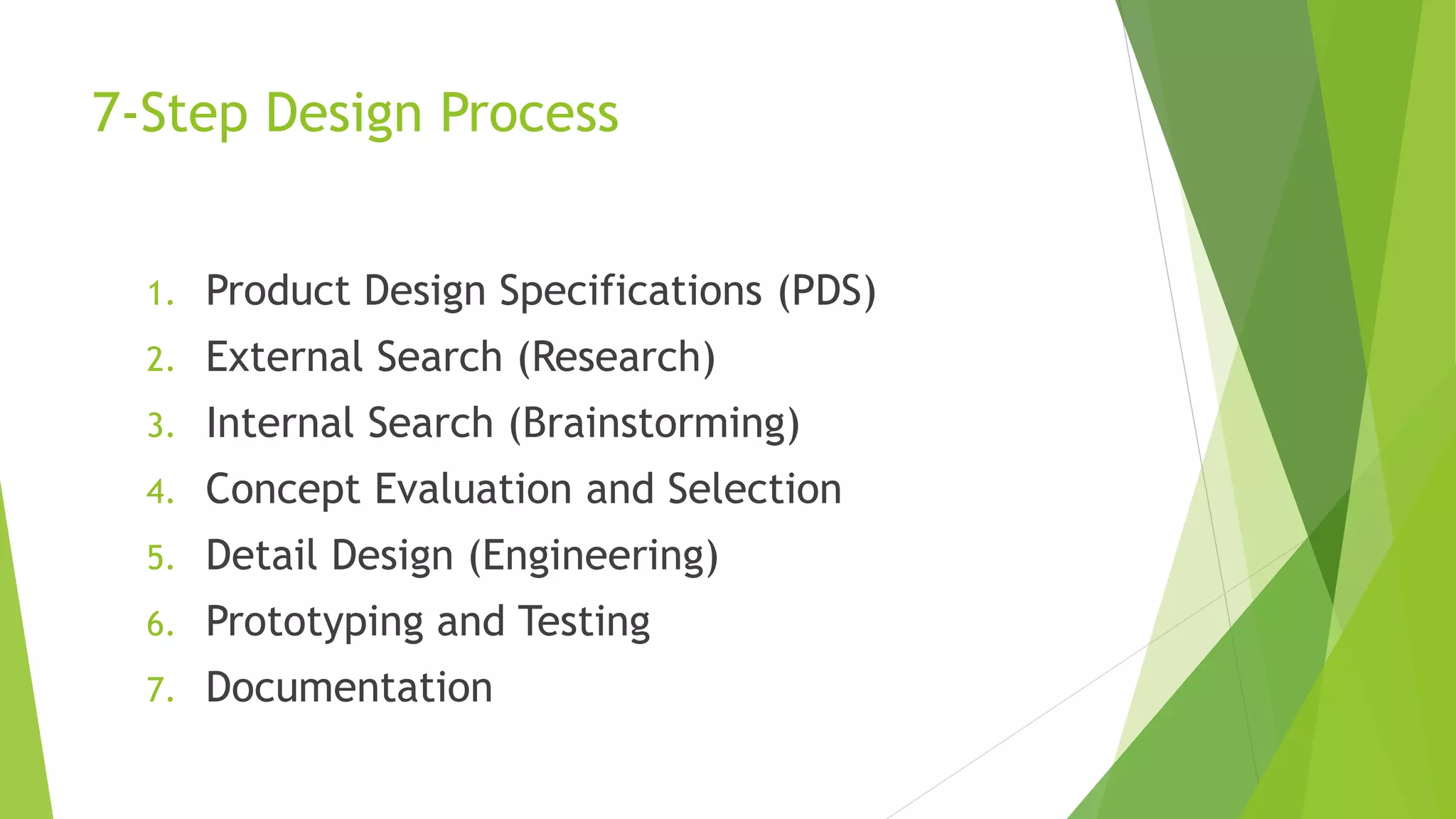
 Designing is the process of making many decisions that converts a need into a
hardware reality.
Need Product
7-Step Design Process
1. Product Design Specifications (PDS)
2. External Search (Research)
3. Internal Search (Brainstorming)
4. Concept Evaluation and Selection
5. Detail Design (Engineering)
6. Prototyping and Testing
7. Documentation
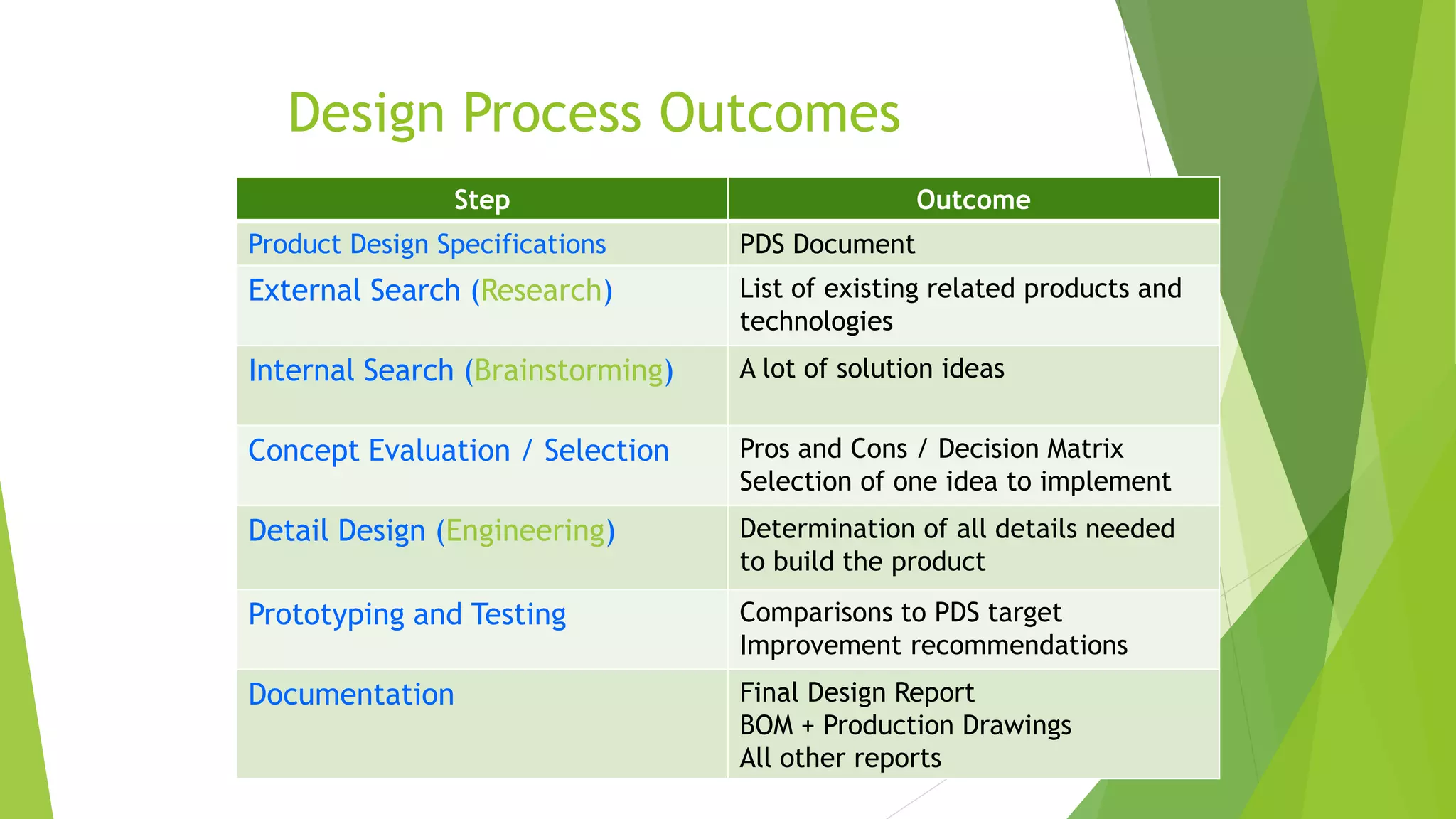
Design Process Outcomes
Step Outcome
Product Design Specifications PDS Document
External Search (Research) List of existing related products and
technologies
Internal Search (Brainstorming) A lot of solution ideas
Concept Evaluation / Selection Pros and Cons / Decision Matrix
Selection of one idea to implement
Detail Design (Engineering) Determination of all details needed
to build the product
Prototyping and Testing Comparisons to PDS target
Improvement recommendations
Documentation Final Design Report
BOM + Production Drawings
All other reports
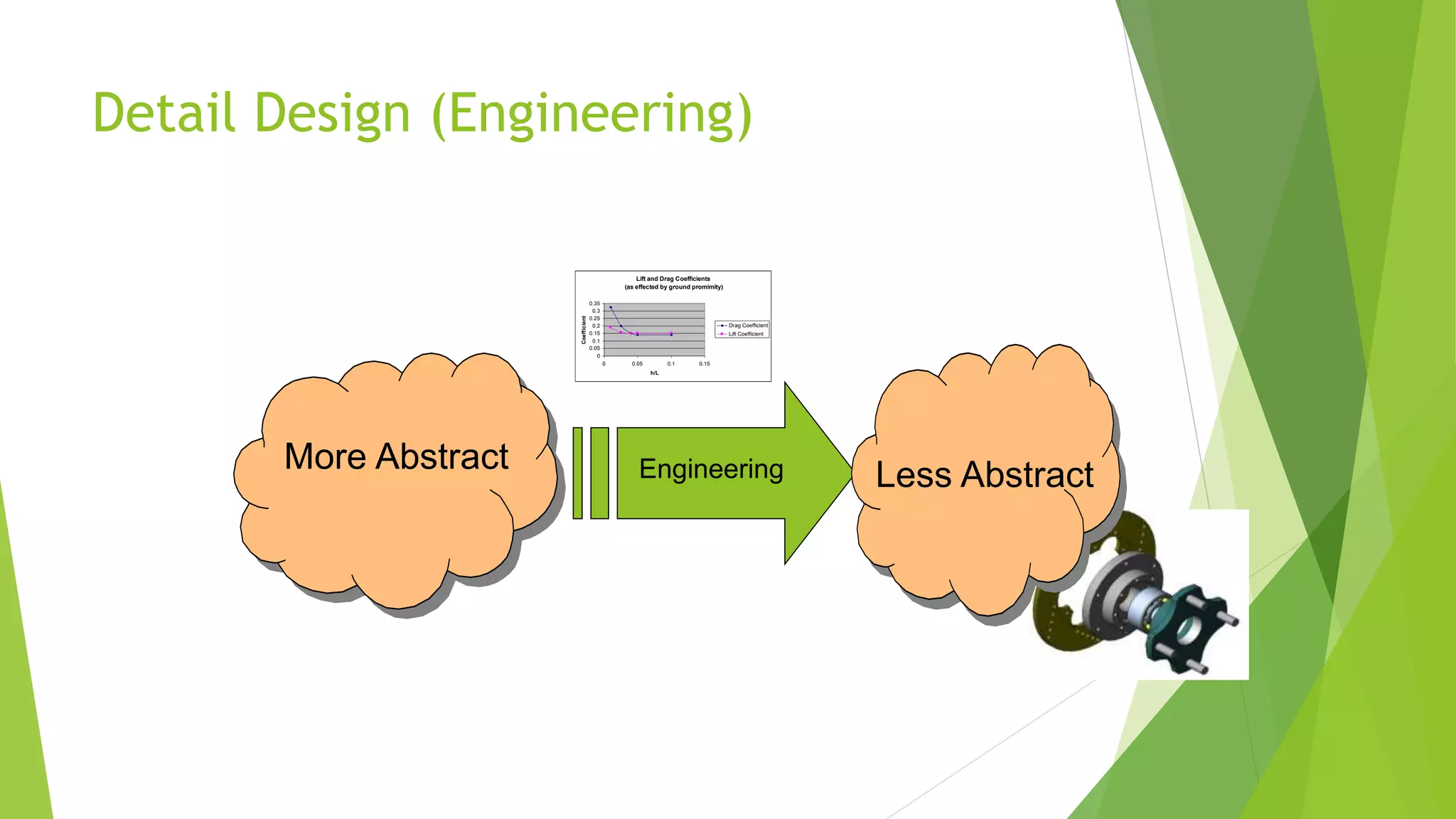
Detail Design (Engineering)
Lift and Drag Coefficients
(as effected by ground promimity)
0
0.05
0.1
0.15
0.2
0.25
0.3
0.35
0 0.05 0.1 0.15
h/L
Coefficient
Drag Coefficient
Lift Coefficient
More Abstract Engineering Less Abstract
Design Process
 Applies to Top-level decisions
 Applies to lower levels decisions
 Define requirements
 Search for existing ideas/technologies
 Brainstorm for solutions
 Pick a candidate
 Determine the details
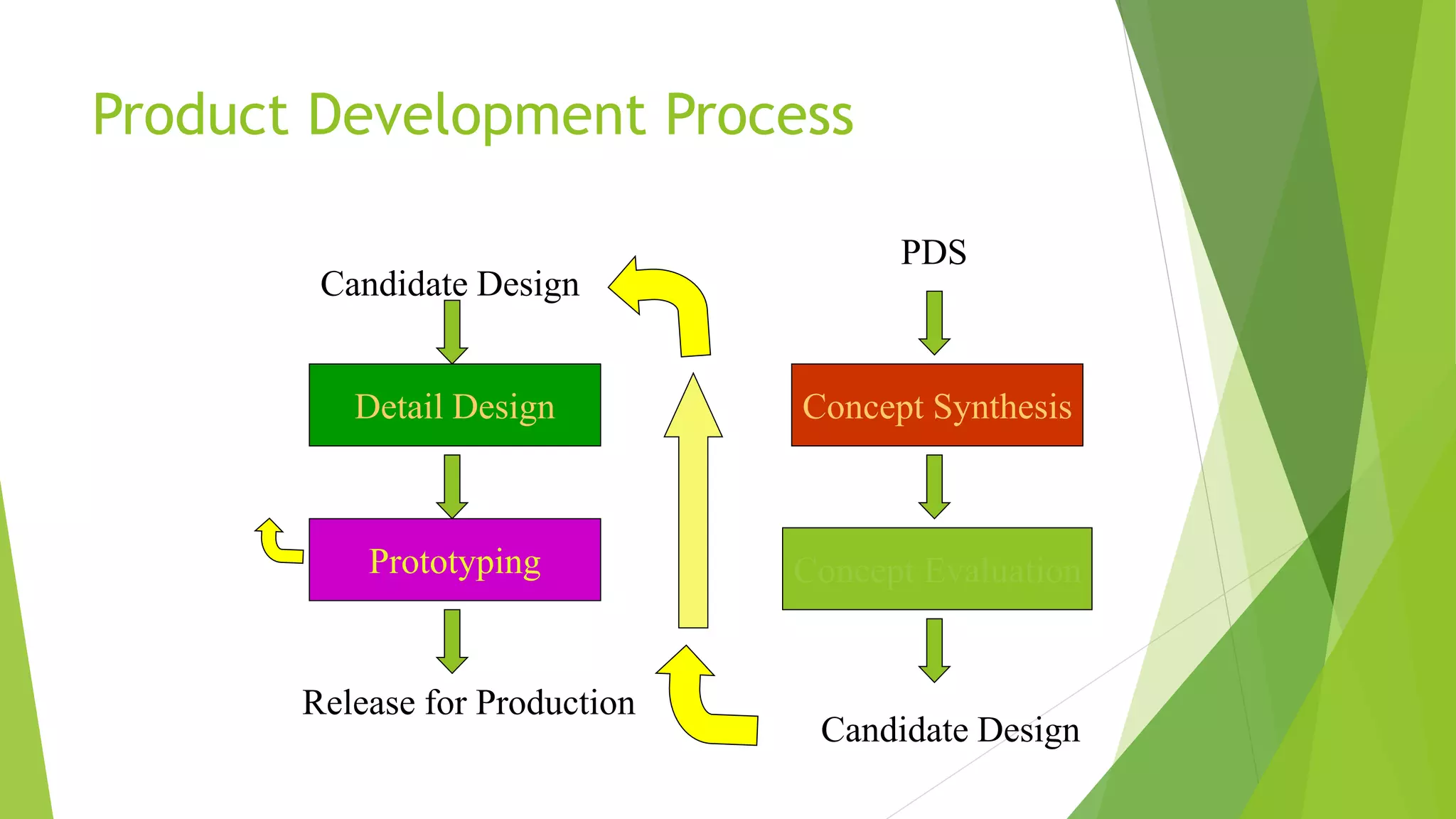
Product Development Process
Concept Synthesis
PDS
Concept Evaluation
Candidate Design
Detail Design
Candidate Design
Release for Production
Prototyping
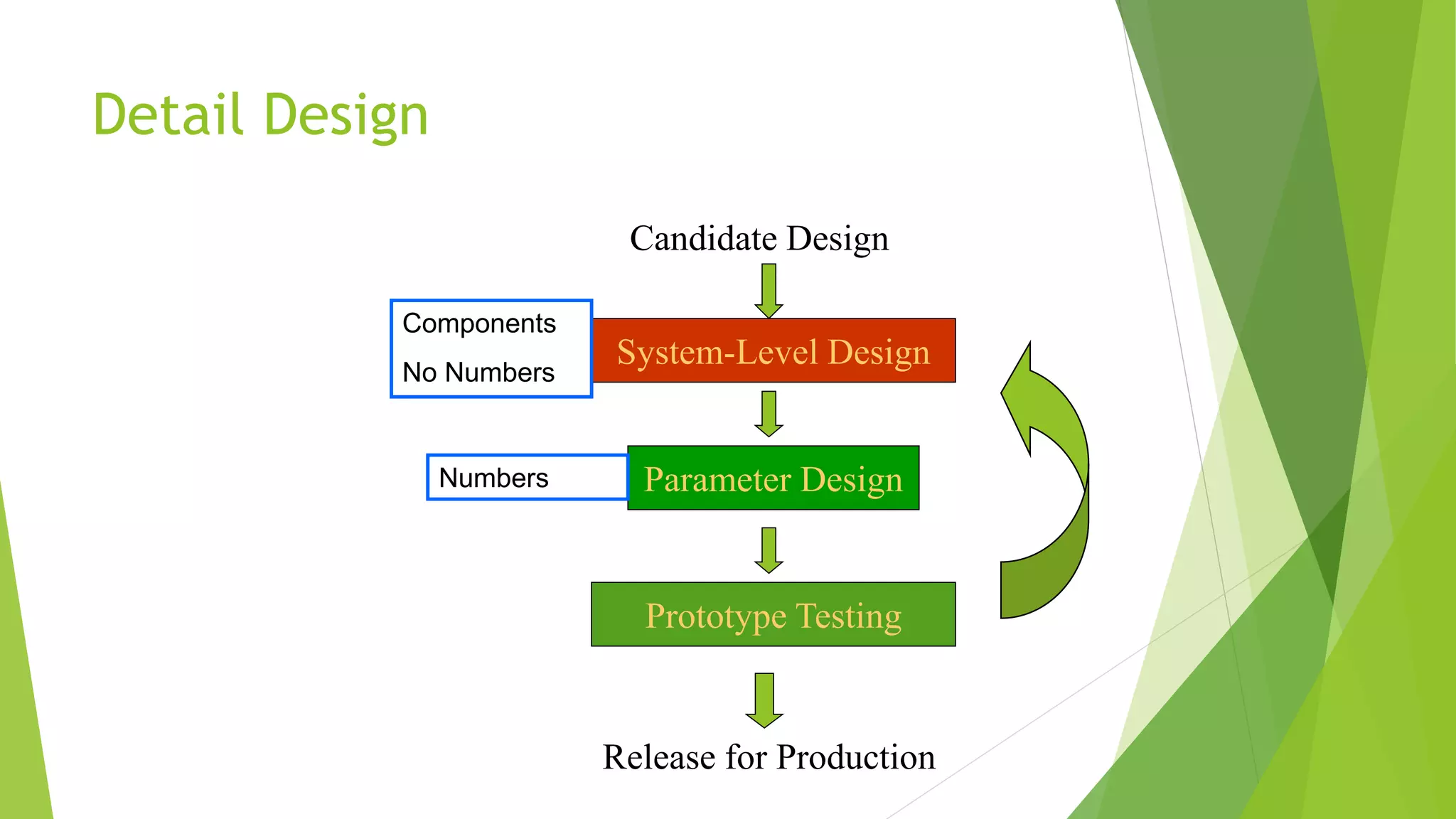
Detail Design
Parameter Design
Candidate Design
Release for Production
System-Level Design
Prototype Testing
Components
No Numbers
Numbers
Complexities of Developing a PDS
Document
 Level-I:
 Goal is clear, “Design a X to do Y”
 specifications are known,
 priorities are known,
 no mass production concerns,
 IP issues not important,
 limited customer base
 Example: one-of-a-kind equipment.
Complexities of Developing a PDS
Document
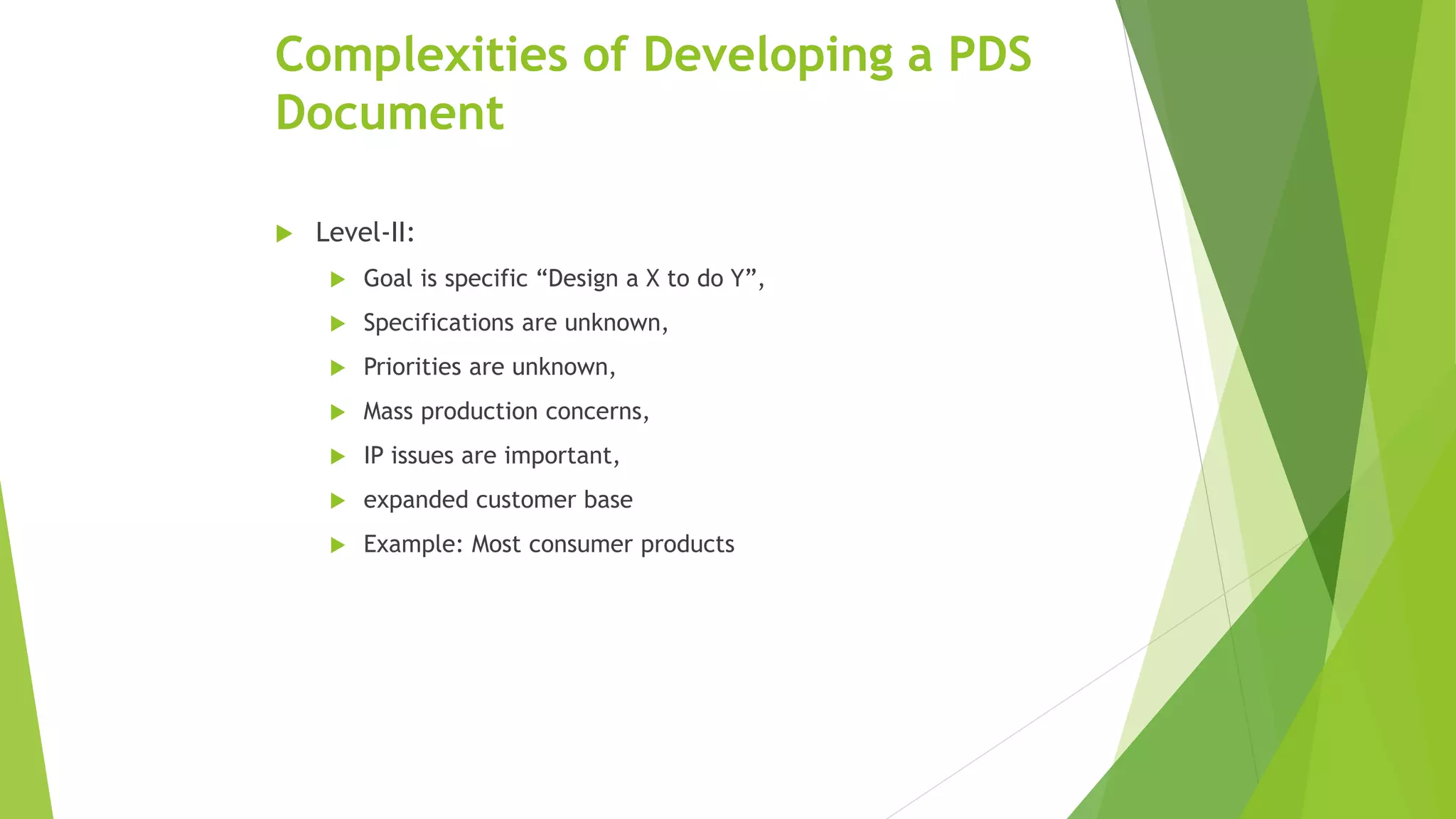
 Level-II:
 Goal is specific “Design a X to do Y”,
 Specifications are unknown,
 Priorities are unknown,
 Mass production concerns,
 IP issues are important,
 expanded customer base
 Example: Most consumer products
Complexities of Developing a PDS
Document
 Level-III:
 Goal is unclear, “Design ? To do ?
 There is a general statement of need
 Not easy to get to: “Design X to do Y”
 Example: Oceans are rising
Customers
 People who define the PDS
 People who influence product success
 People you cannot ignore
Team
Company
(Internal)
Globe
(External)
Methods of setting targets
Some targets are specified by:
 Marketing
 Management
 Regulations /standards
 Users / buyers / retailers
Methods of setting targets
 Benchmarking + parametric Studies
 Technology capability
 Field experts
 Experimentation
 Educated guesses
 Select ranges for targets from Barely acceptable to highly desirable
ThankYou…

Design Procedure

  • 1.
    Design Procedure Subject: DME Semester:5th Division: FX Branch: Mechanical Prepared By (Roll no.): 1. Akash Ambaliya (03) 2. Randhir Chavda (23) 3. Nirav Hadiya (43) Atmiya Institute of Technology & Science Gujarat Technological University
  • 2.
    What is designprocedure  Design process is a collection of procedures and habits that help teams design better products.  Designing is the process of making many decisions that converts a need into a hardware reality. Need Product
  • 3.
    7-Step Design Process 1.Product Design Specifications (PDS) 2. External Search (Research) 3. Internal Search (Brainstorming) 4. Concept Evaluation and Selection 5. Detail Design (Engineering) 6. Prototyping and Testing 7. Documentation
  • 4.
    Design Process Outcomes StepOutcome Product Design Specifications PDS Document External Search (Research) List of existing related products and technologies Internal Search (Brainstorming) A lot of solution ideas Concept Evaluation / Selection Pros and Cons / Decision Matrix Selection of one idea to implement Detail Design (Engineering) Determination of all details needed to build the product Prototyping and Testing Comparisons to PDS target Improvement recommendations Documentation Final Design Report BOM + Production Drawings All other reports
  • 5.
    Detail Design (Engineering) Liftand Drag Coefficients (as effected by ground promimity) 0 0.05 0.1 0.15 0.2 0.25 0.3 0.35 0 0.05 0.1 0.15 h/L Coefficient Drag Coefficient Lift Coefficient More Abstract Engineering Less Abstract
  • 6.
    Design Process  Appliesto Top-level decisions  Applies to lower levels decisions  Define requirements  Search for existing ideas/technologies  Brainstorm for solutions  Pick a candidate  Determine the details
  • 7.
    Product Development Process ConceptSynthesis PDS Concept Evaluation Candidate Design Detail Design Candidate Design Release for Production Prototyping
  • 8.
    Detail Design Parameter Design CandidateDesign Release for Production System-Level Design Prototype Testing Components No Numbers Numbers
  • 9.
    Complexities of Developinga PDS Document  Level-I:  Goal is clear, “Design a X to do Y”  specifications are known,  priorities are known,  no mass production concerns,  IP issues not important,  limited customer base  Example: one-of-a-kind equipment.
  • 10.
    Complexities of Developinga PDS Document  Level-II:  Goal is specific “Design a X to do Y”,  Specifications are unknown,  Priorities are unknown,  Mass production concerns,  IP issues are important,  expanded customer base  Example: Most consumer products
  • 11.
    Complexities of Developinga PDS Document  Level-III:  Goal is unclear, “Design ? To do ?  There is a general statement of need  Not easy to get to: “Design X to do Y”  Example: Oceans are rising
  • 12.
    Customers  People whodefine the PDS  People who influence product success  People you cannot ignore Team Company (Internal) Globe (External)
  • 13.
    Methods of settingtargets Some targets are specified by:  Marketing  Management  Regulations /standards  Users / buyers / retailers
  • 14.
    Methods of settingtargets  Benchmarking + parametric Studies  Technology capability  Field experts  Experimentation  Educated guesses  Select ranges for targets from Barely acceptable to highly desirable
  • 15.