Intro to
Design
Thinking
an approach to solving design
problems by understanding users'
needs and developing insights to solve
those needs
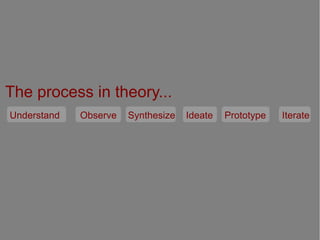
Understand Observe Synthesize Ideate Prototype Iterate
The process in theory...
Gain basic knowledge so you know the right questions to ask
Methods:
-Web research (but go beyond Google)
-Brief interviews for background
-Reach out to friends who may be connected/have information on domain
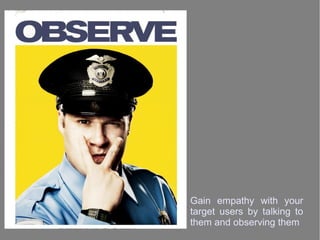
Gain empathy with your
target users by talking to
them and observing them

you need to understand your audience even better than
they understand themselves

the only way you’ll get there is to develop a deep
empathy for their habits, beliefs, quirks, workarounds...

Keep asking WHY?

Loops of questions

Observation is powerful
Come up with a point of view statement that will inform your
prototyping

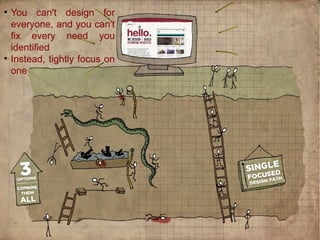
You can't design for
everyone, and you can't
fix every need you
identified

Instead, tightly focus on
one
user + need + insight
based on your point of view,
generate as many ideas as
possible

Write nonstop for a set period of time (10–20 minutes).

Do not make corrections as you write.

Keep writing, even if you have to write something like, "I don't know what to write."

Write whatever comes into your mind.

Do not judge or censor what you are writing.
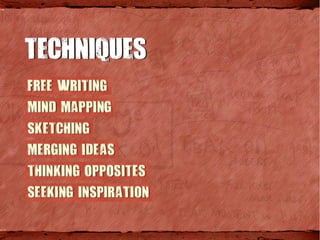
FREE WRITING
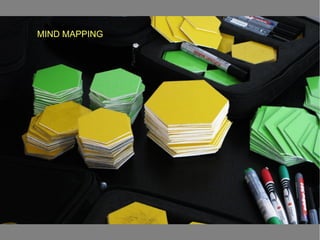
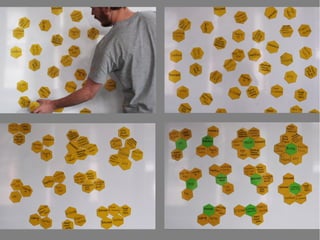
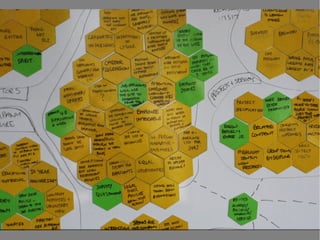
MIND MAPPING
Whatever u think
Think the,
OPPOSITE
MERGING IDEAS
Seeking INSPIRATION
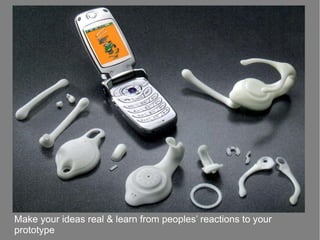
Make your ideas real & learn from peoples’ reactions to your
prototype
take insights gained from prototyping and
revisit your assumptions; sometimes you
might go all the way back to the Understand
phase
QUESTIONS?

Design process

  • 1.
  • 2.
    an approach tosolving design problems by understanding users' needs and developing insights to solve those needs
  • 4.
    Understand Observe SynthesizeIdeate Prototype Iterate The process in theory...
  • 6.
    Gain basic knowledgeso you know the right questions to ask
  • 7.
    Methods: -Web research (butgo beyond Google) -Brief interviews for background -Reach out to friends who may be connected/have information on domain
  • 9.
    Gain empathy withyour target users by talking to them and observing them
  • 10.
     you need tounderstand your audience even better than they understand themselves  the only way you’ll get there is to develop a deep empathy for their habits, beliefs, quirks, workarounds...  Keep asking WHY?  Loops of questions  Observation is powerful
  • 12.
    Come up witha point of view statement that will inform your prototyping
  • 13.
     You can't designfor everyone, and you can't fix every need you identified  Instead, tightly focus on one
  • 14.
    user + need+ insight
  • 16.
    based on yourpoint of view, generate as many ideas as possible
  • 18.
     Write nonstop fora set period of time (10–20 minutes).  Do not make corrections as you write.  Keep writing, even if you have to write something like, "I don't know what to write."  Write whatever comes into your mind.  Do not judge or censor what you are writing. FREE WRITING
  • 19.
  • 24.
  • 25.
  • 26.
  • 28.
    Make your ideasreal & learn from peoples’ reactions to your prototype
  • 30.
    take insights gainedfrom prototyping and revisit your assumptions; sometimes you might go all the way back to the Understand phase
  • 31.