Design Thinking
TANUSHREE BOSE
PGDM-HR
PUNE INSTITUTE OF BUSINESS MANAGEMENT (PIBM)
Let’s get Started
“Design is not what it looks and feels like. Design is how it works.”-
Steve Jobs
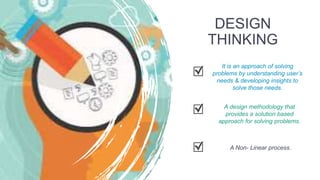
DESIGN
THINKING
It is an approach of solving
problems by understanding user’s
needs & developing insights to
solve those needs.
A design methodology that
provides a solution based
approach for solving problems.
A Non- Linear process.
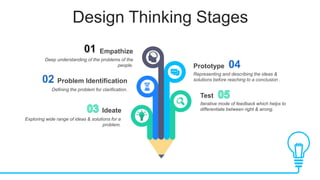
Design Thinking Stages
Prototype
Representing and describing the ideas &
solutions before reaching to a conclusion .
Test
Iterative mode of feedback which helps to
differentiate between right & wrong.
Empathize
Deep understanding of the problems of the
people.
Problem Identification
Defining the problem for clarification.
Ideate
Exploring wide range of ideas & solutions for a
problem.
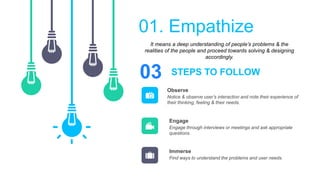
01. Empathize
It means a deep understanding of people’s problems & the
realities of the people and proceed towards solving & designing
accordingly.
03 STEPS TO FOLLOW
Engage through interviews or meetings and ask appropriate
questions.
Engage
Find ways to understand the problems and user needs.
Immerse
Notice & observe user’s interaction and note their experience of
their thinking, feeling & their needs.
Observe
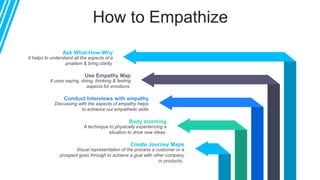
How to Empathize
It helps to understand all the aspects of a
problem & bring clarity.
Ask What-How-Why
It uses saying, doing, thinking & feeling
aspects for emotions.
Use Empathy Map
Discussing with the aspects of empathy helps
to enhance our empathetic skills
Conduct Interviews with empathy
A technique to physically experiencing a
situation to drive new ideas.
Body storming
Visual representation of the process a customer or a
prospect goes through to achieve a goal with other company
or products..
Create Journey Maps
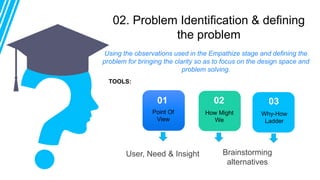
Using the observations used in the Empathize stage and defining the
problem for bringing the clarity so as to focus on the design space and
problem solving.
02. Problem Identification & defining
the problem
04
User, Need & Insight
TOOLS:
Brainstorming
alternatives
Why-How
Ladder
0302
How Might
We
01
Point Of
View
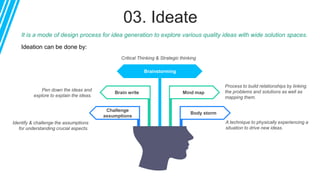
03. Ideate
Identify & challenge the assumptions
for understanding crucial aspects.
Process to build relationships by linking
the problems and solutions as well as
mapping them.
Pen down the ideas and
explore to explain the ideas.
Critical Thinking & Strategic thinking
Brainstorming
Brain write
Challenge
assumptions
Body storm
Mind map
It is a mode of design process for idea generation to explore various quality ideas with wide solution spaces.
Ideation can be done by:
A technique to physically experiencing a
situation to drive new ideas.
Use 3D plastic models with movable
parts for allowing the users to interact.
Just some features
Create a storyboard by collecting the
ideas and sequencing it .
Storyboarding
Drawing or sketching helps to
visualization of ideas.
Sketching
05
02
03
04
01
04. Prototype
Technique in user experience design for understanding
and designing workflows, menu structures.
Card sorting
Use the examples or models
for developing methods .
Use basic models or examples
It is a good way to initiate a conversation, where in a
prototype can be anything that takes a physical form
such as role playing activity, a wall of posts-its.
TOOLS:
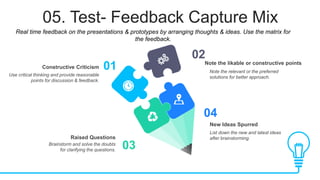
05. Test- Feedback Capture Mix
01
02
03
04
Note the likable or constructive points
Note the relevant or the preferred
solutions for better approach.
New Ideas Spurred
List down the new and latest ideas
after brainstorming.
Constructive Criticism
Use critical thinking and provide reasonable
points for discussion & feedback.
Raised Questions
Brainstorm and solve the doubts
for clarifying the questions.
Real time feedback on the presentations & prototypes by arranging thoughts & ideas. Use the matrix for
the feedback.
Thank you!!!!

Design Thinking

  • 1.
    Design Thinking TANUSHREE BOSE PGDM-HR PUNEINSTITUTE OF BUSINESS MANAGEMENT (PIBM)
  • 2.
    Let’s get Started “Designis not what it looks and feels like. Design is how it works.”- Steve Jobs
  • 3.
    DESIGN THINKING It is anapproach of solving problems by understanding user’s needs & developing insights to solve those needs. A design methodology that provides a solution based approach for solving problems. A Non- Linear process.
  • 4.
    Design Thinking Stages Prototype Representingand describing the ideas & solutions before reaching to a conclusion . Test Iterative mode of feedback which helps to differentiate between right & wrong. Empathize Deep understanding of the problems of the people. Problem Identification Defining the problem for clarification. Ideate Exploring wide range of ideas & solutions for a problem.
  • 5.
    01. Empathize It meansa deep understanding of people’s problems & the realities of the people and proceed towards solving & designing accordingly. 03 STEPS TO FOLLOW Engage through interviews or meetings and ask appropriate questions. Engage Find ways to understand the problems and user needs. Immerse Notice & observe user’s interaction and note their experience of their thinking, feeling & their needs. Observe
  • 6.
    How to Empathize Ithelps to understand all the aspects of a problem & bring clarity. Ask What-How-Why It uses saying, doing, thinking & feeling aspects for emotions. Use Empathy Map Discussing with the aspects of empathy helps to enhance our empathetic skills Conduct Interviews with empathy A technique to physically experiencing a situation to drive new ideas. Body storming Visual representation of the process a customer or a prospect goes through to achieve a goal with other company or products.. Create Journey Maps
  • 7.
    Using the observationsused in the Empathize stage and defining the problem for bringing the clarity so as to focus on the design space and problem solving. 02. Problem Identification & defining the problem 04 User, Need & Insight TOOLS: Brainstorming alternatives Why-How Ladder 0302 How Might We 01 Point Of View
  • 8.
    03. Ideate Identify &challenge the assumptions for understanding crucial aspects. Process to build relationships by linking the problems and solutions as well as mapping them. Pen down the ideas and explore to explain the ideas. Critical Thinking & Strategic thinking Brainstorming Brain write Challenge assumptions Body storm Mind map It is a mode of design process for idea generation to explore various quality ideas with wide solution spaces. Ideation can be done by: A technique to physically experiencing a situation to drive new ideas.
  • 9.
    Use 3D plasticmodels with movable parts for allowing the users to interact. Just some features Create a storyboard by collecting the ideas and sequencing it . Storyboarding Drawing or sketching helps to visualization of ideas. Sketching 05 02 03 04 01 04. Prototype Technique in user experience design for understanding and designing workflows, menu structures. Card sorting Use the examples or models for developing methods . Use basic models or examples It is a good way to initiate a conversation, where in a prototype can be anything that takes a physical form such as role playing activity, a wall of posts-its. TOOLS:
  • 10.
    05. Test- FeedbackCapture Mix 01 02 03 04 Note the likable or constructive points Note the relevant or the preferred solutions for better approach. New Ideas Spurred List down the new and latest ideas after brainstorming. Constructive Criticism Use critical thinking and provide reasonable points for discussion & feedback. Raised Questions Brainstorm and solve the doubts for clarifying the questions. Real time feedback on the presentations & prototypes by arranging thoughts & ideas. Use the matrix for the feedback.
  • 11.