
Design
Thinking
JAVIER MENDIBIL
Arantzazu, 16th of October 2013
1.1.- Design Thinking

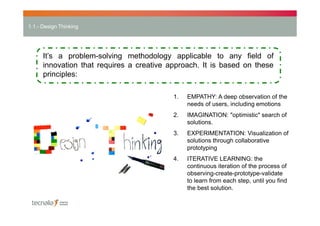
It’s a problem-solving methodology applicable to any field of
innovation that requires a creative approach. It is based on these
principles:
1.

EMPATHY: A deep observation of the
needs of users, including emotions

2.

IMAGINATION: "optimistic" search of
solutions.

3.

EXPERIMENTATION: Visualization of
solutions through collaborative
prototyping

4.

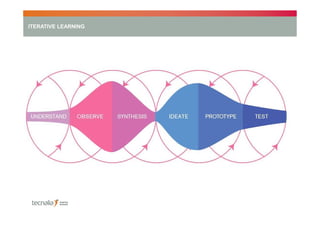
ITERATIVE LEARNING: the
continuous iteration of the process of
observing-create-prototype-validate
to learn from each step, until you find
the best solution.
1.1.- Design Thinking

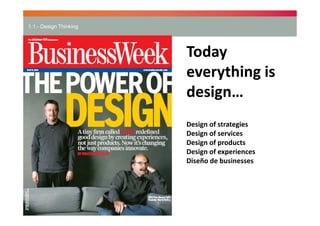
Today
everything is
design…
Design of strategies
Design of services
Design of products
Design of experiences
Diseño de businesses
iseño de Estrategia
Diseño de Servicio
Diseño d
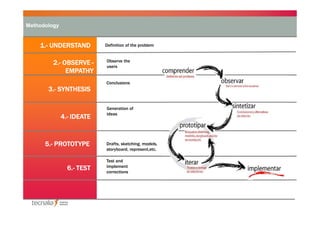
Methodology

1.1.- UNDERSTAND
2.2.- OBSERVE EMPATHY

Definition of the problem

Observe the
users

Conclusions

3.3.- SYNTHESIS

4.4.- IDEATE

Generation of
ideas

12 IDEAS

5.5.- PROTOTYPE

6.6.- TEST

Drafts, sketching, models,
storyboard, represent,etc.
Test and
implement
corrections
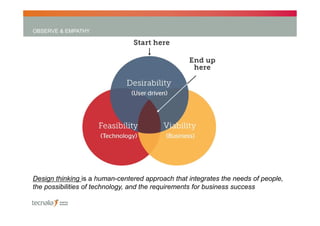
OBSERVE & EMPATHY

Design thinking is a human-centered approach that integrates the needs of people,
the possibilities of technology, and the requirements for business success
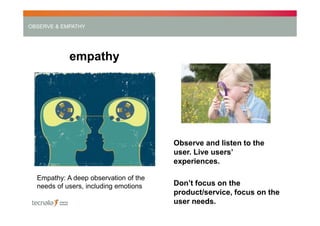
OBSERVE & EMPATHY

empathy

Observe and listen to the
user. Live users’
experiences.
Empathy: A deep observation of the
needs of users, including emotions

Don’t focus on the
product/service, focus on the
user needs.
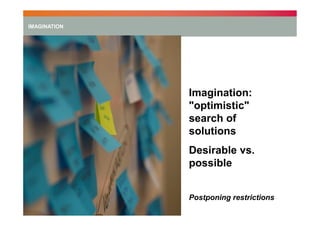
IMAGINATION

Imagination:
"optimistic"
search of
solutions
Desirable vs.
possible
Postponing restrictions
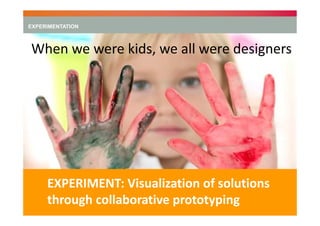
EXPERIMENTATION

When we were kids, we all were designers

EXPERIMENT: Visualization of solutions
through collaborative prototyping
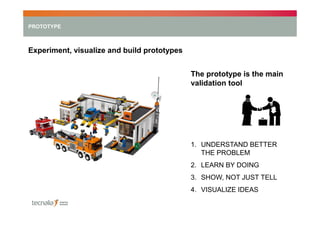
PROTOTYPE

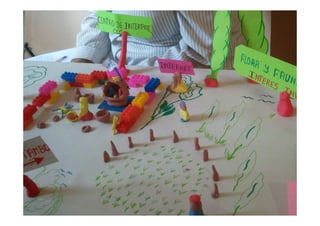
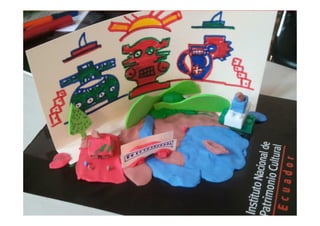
Experiment, visualize and build prototypes
The prototype is the main
validation tool

1. UNDERSTAND BETTER
THE PROBLEM
2. LEARN BY DOING
3. SHOW, NOT JUST TELL
4. VISUALIZE IDEAS
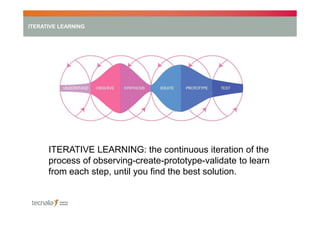
ITERATIVE LEARNING

ITERATIVE LEARNING: the continuous iteration of the
process of observing-create-prototype-validate to learn
from each step, until you find the best solution.
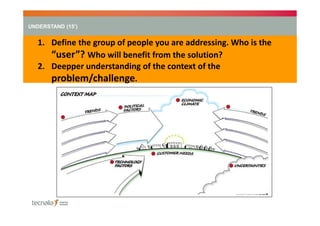
UNDERSTAND (15’)

1. Define the group of people you are addressing. Who is the
“user”? Who will benefit from the solution?
2. Deepper understanding of the context of the
problem/challenge.
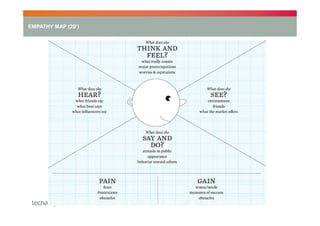
EMPATHY MAP (20’)
ITERATIVE LEARNING
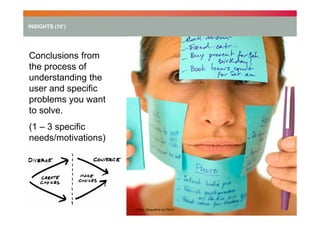
INSIGHTS (10’)

Conclusions from
the process of
understanding the
user and specific
problems you want
to solve.
(1 – 3 specific
needs/motivations)

Foto: dixquatre on Flicrk
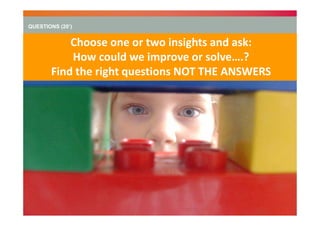
QUESTIONS (20’)

Choose one or two insights and ask:
How could we improve or solve….?
Find the right questions NOT THE ANSWERS
IDEATION (25’)

Generate ideas

Getty images

16
IDEATION (25’)

Generate SOLUTIONS

1. Generate as many ideas as possible to serve
these identified needs.
2. Use one POST-IT for each Idea
3. Do not judge or debate ideas.
4. During brainstorming, have one conversation
at a time.

17
SELECT (15’)

Make groups of similar ideas and
Vote the ones that you like to work with

18
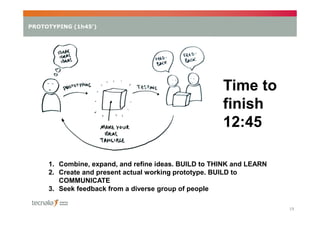
PROTOTYPING (1h45’)

Time to
finish
12:45
1. Combine, expand, and refine ideas. BUILD to THINK and LEARN
2. Create and present actual working prototype. BUILD to
COMMUNICATE
3. Seek feedback from a diverse group of people
19
PROTOTYPE

THE CHALLENGE:
The improvement of the sustainability of EOI UNIVERSITY staff and students
THE SOLUTION:
The EOI ecoGreen bus. The latest-fashion fully-equipped bus with charges, WiFi, coffee &
tea, fast & cheap, comfortable, fun and clean!

20
PROTOTYPE

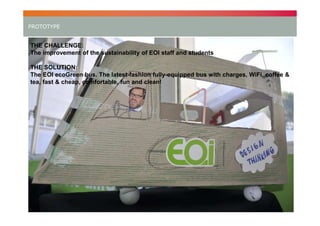
THE CHALLENGE:
The improvement of the sustainability of EOI staff and students
THE SOLUTION:
The EOI ecoGreen bus. The latest-fashion fully-equipped bus with charges, WiFi, coffee &
tea, fast & cheap, comfortable, fun and clean!

21
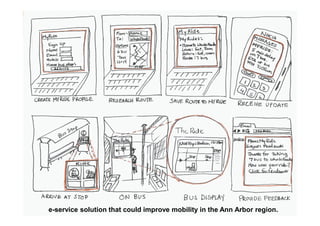
e-service solution that could improve mobility in the Ann Arbor region.

22
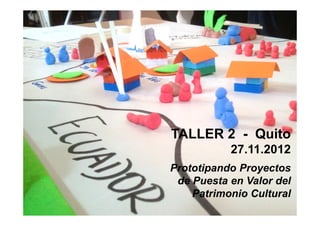
TALLER 2 - Quito
27.11.2012
Prototipando Proyectos
de Puesta en Valor del
Patrimonio Cultural
23
24
25
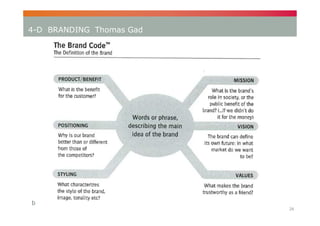
4-D BRANDING Thomas Gad

26
BRAND

PROTOTYPING THE BRAND

- Create an slogan and a logo (style) that you will
communicate
- Make them also visible on the table

27
Presentation design thinking doctoriales

Presentation design thinking doctoriales