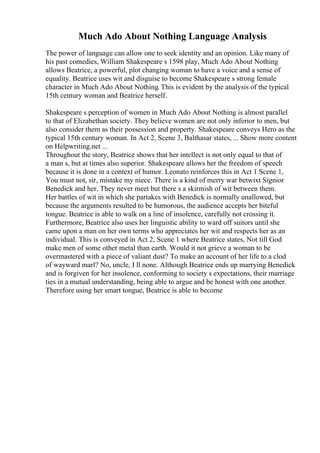
The agricultural revolution led to population growth and the enclosure movement, which concentrated land ownership. This displaced rural farmers into cities where they provided a labor force for new factories powered by James Watt's steam engine. The agricultural and industrial revolutions thus had a reciprocal relationship, with improved farming increasing the population and concentrating land ownership, providing workers for factories that produced goods more efficiently through mechanization.
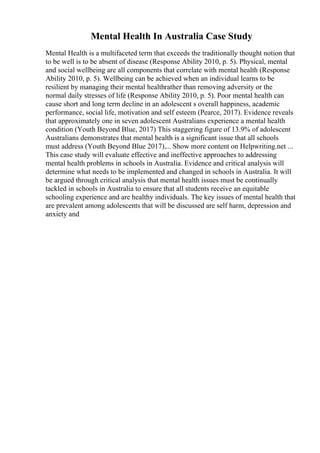
![A Brief Note On The Barrier Of Barrier
5.0 Barrier Analysis
5.1 Definition of barrier (Sklet, 2006) References are added as numbers [1] in the text
and then full name, publication, year etc. will need to be added in the appendix
(already created). If we copy from the text books (even if we provide the reference
from where the text was copied from) we are going to get a bad mark due to
plagiarism (SD)
Safety barrier: A physical and/ or nonphysical means planned to prevent, control, or
mitigate undesired events or accidents
Barrier function: A function planned to prevent, control, or mitigate undesired event
or accidents
Barrier system: A system that has been designed and implemented to perform one or
more barrier functions
5.2 General strategy for barrier (Marvin, 2011)
The plant shall, as far as practicable, be designed to reduce the risk for any
hazardous event to arise and develop into a major accident. In this context, a
hazardous event will typically be release of hydrocarbons to the atmosphere, with
potential to develop into a fire or explosion if ignited.
Inherent safety: The primary means for controlling the risk shall be design for
inherent safety. This is covered by Layout/arrangement and Containment. The
containment function shall prevent any leaks from occurring, and should a leak
occur the layout and arrangement of the plant shall prevent the leak from develop
into a major accident (typically by segregation of equipment, the segregation shall
preferably be by distance).
Minimize: Reducing the](https://image.slidesharecdn.com/descriptiveessayintroductionexamples-240206155500-7c2595dd/85/Descriptive-Essay-Introduction-Examples-pdf-29-320.jpg)
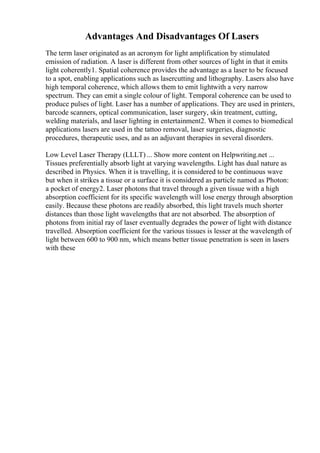
![Organizational Culture And Its Cultural Culture
To greet each other in Tibet, you stick out your tongue and put your hands together in
front of your chest. In Japan, it is only polite if you bow to each other when greeting.
There are hundreds of different ethnic groups in the world and they all have their own
customs and traditions that stemmed out from their underlying culture. Similar to
these ethnic groups, each organization also have their own unique culture that guides
how people behave and what people believe in within the organization.
In formal terms, organizational culture is the set of values, norms, guiding beliefs,
and understandings that is shared by members of an organization and is taught to
new members. [p.332; Organization theory Design; Daft, Armstrong] Put it in
simple terms, it is basically how the employees in a company are expected to
behave and go about their daily business. Organizational culture can be observed in
visible artifacts and employee behaviors such as symbols, slogan, the way people
talk, the way people dress, and even the atmosphere at the workplace. These visible
artifacts and observable behaviors reflects the deeper values and beliefs of each
member of the organization which in turn represents the true culture. I have the
privilege to be working for TD Canada Trust for the past two years and this is an
organization that oozes the word culture . First thing you learn at training (rite of
passage) is the logo (green armchair) and the slogan (Banking can be this
comfortable) of](https://image.slidesharecdn.com/descriptiveessayintroductionexamples-240206155500-7c2595dd/85/Descriptive-Essay-Introduction-Examples-pdf-49-320.jpg)
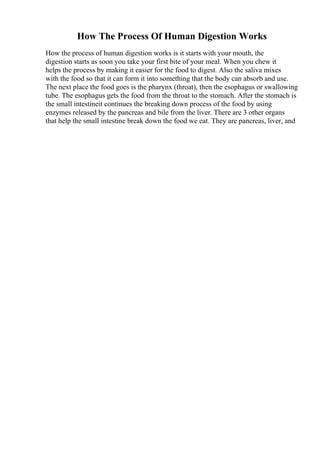
![Robert Oppenheimer Character Traits
Great Personalities of World War II: Robert Oppenheimer July 16, 1945; 05:29:21
A.M Mountain Western Time: [1] a light stronger than a thousand suns filled the
sky in the deserts of New Mexico, the father of the deadliest instrument ever used
in warfare grimly remarked: Now I am become Death, the destroyer of worlds. The
successful detonation of the first Atomic Bomb triggered an arms races beyond the
scope of most people s imagination; it immediately and fundamentally changed the
conduct of nations. Behind of all the politics, warfare and propaganda was a
theoretical physicist named Robert Oppenheimer he was tasked with the creation of
this diabolical weapon. Robert Oppenheimer was a man who did not fire a single
bullet or order a single... Show more content on Helpwriting.net ...
According to Robert Oppenheimer Letters and Recollections Groves and
Oppenheimer discussed what to do if the rain did not stop in time for the 4:00 a.m.
test. To lighten the mood, Enrico Fermi (a nobel prize winning physicist) began
betting on whether the bomb would merely destroy New Mexico or the whole world.
Oppenheimer himself bet ten dollars that the test would be a failure and there would
be no explosion at](https://image.slidesharecdn.com/descriptiveessayintroductionexamples-240206155500-7c2595dd/85/Descriptive-Essay-Introduction-Examples-pdf-50-320.jpg)


