Downloaded 20 times


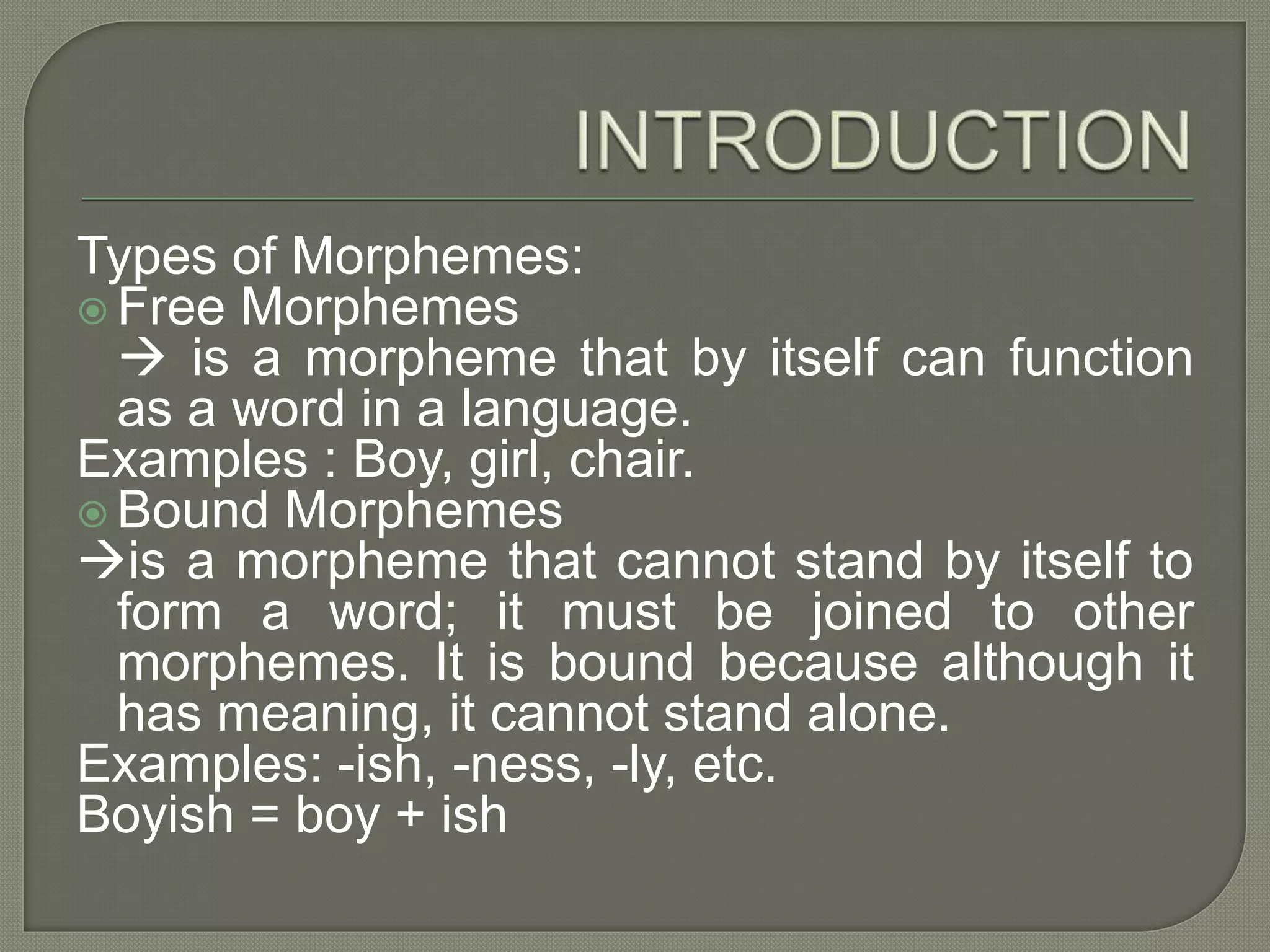


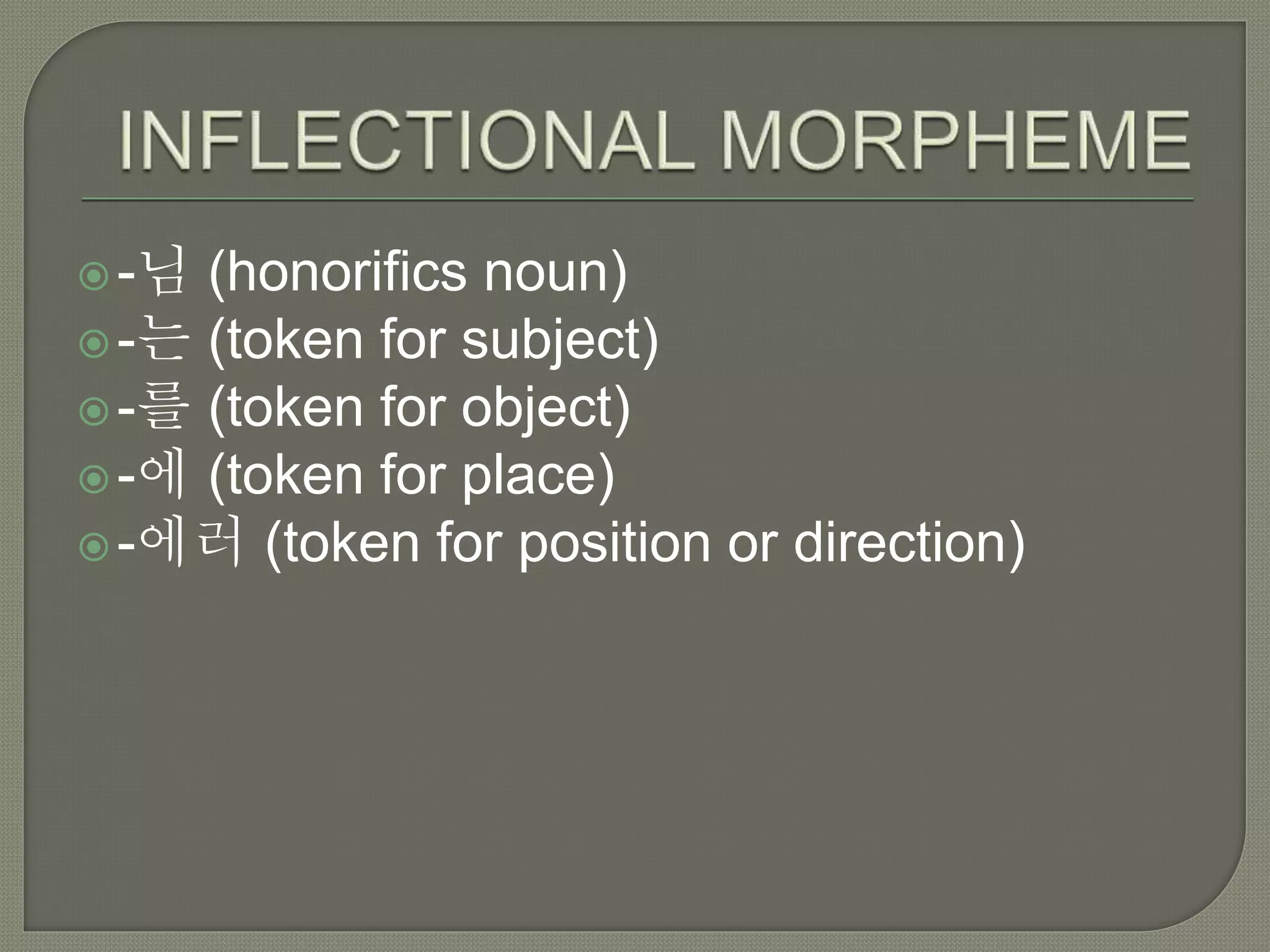


This document discusses morphology and morphemes in language. It defines morphology as the study of word structure and formation, including inflection, derivation, and compounding. Morphemes are the smallest meaningful units of a language. There are two types of morphemes: free morphemes, which can stand alone as words, and bound morphemes, which must be attached to other morphemes. The document then gives examples of derivational morphemes in Korean that change word categories, such as adding "-하다" to form verbs from nouns. It also lists some examples of inflectional morphemes in Korean that indicate grammatical information like tense, honorifics, and grammatical particles.


