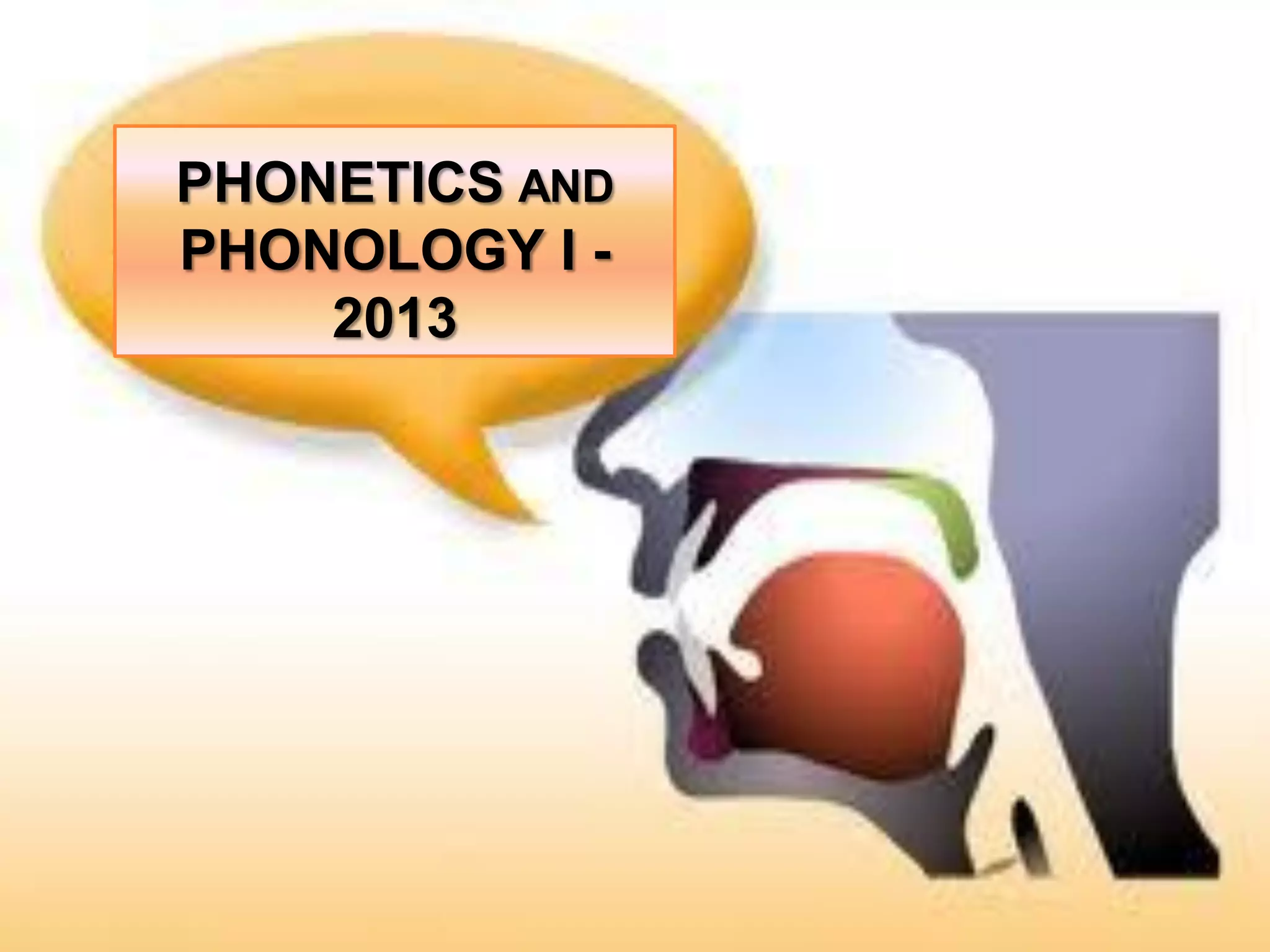
PHONETICS AND
PHONOLOGY I 2013
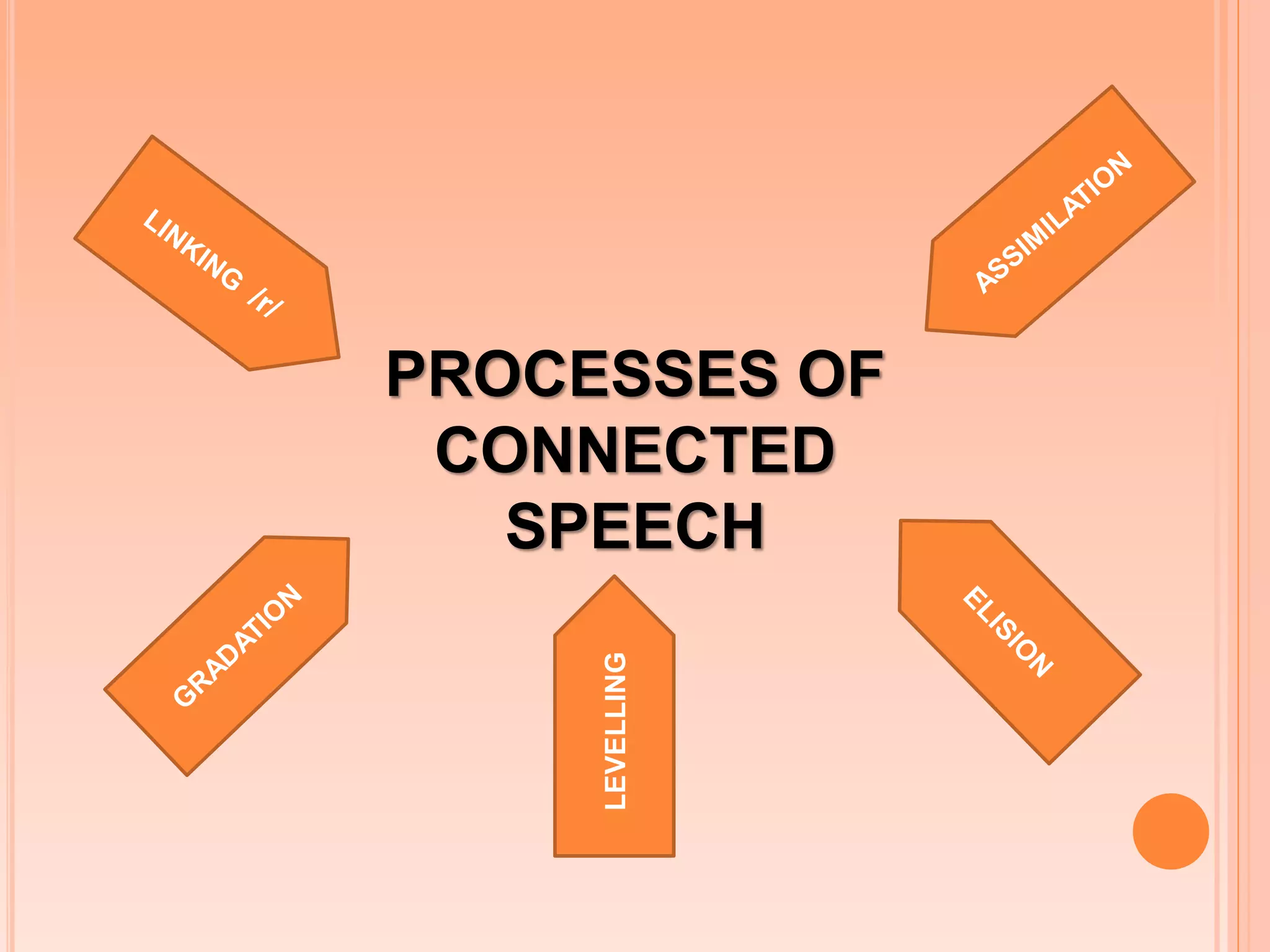
LEVELLING

PROCESSES OF
CONNECTED
SPEECH
WHAT DO WE UNDERSTAND BY “CONNECTED
SPEECH”?
In natural speech, there are many processes that result in
differences between isolated words and the same words in
occurring in connected speech.
When we speak naturally we do not pronounce a word, stop, and
then continue. FLUENT speech flows with a rhythm and the words
bump into each other. To make speech flow smoothly the way we
pronounce the end and beginning of some words can change
depending on the sounds at the beginning and end of those
words.
These changes that affect the quality of sounds are known as:
FEATURES OF CONNECTED SPEECH.
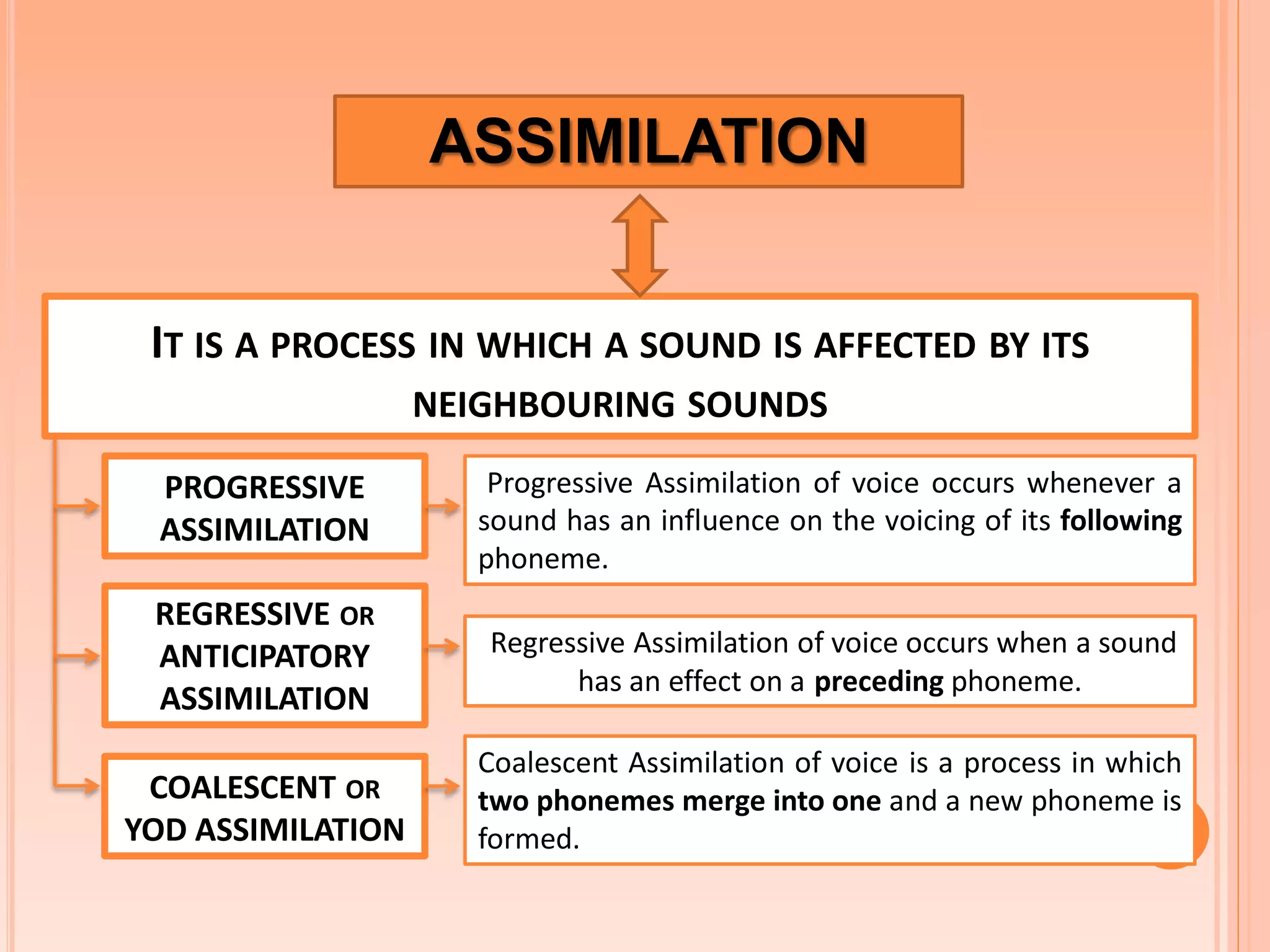
ASSIMILATION
IT IS A PROCESS IN WHICH A SOUND IS AFFECTED BY ITS
NEIGHBOURING SOUNDS
PROGRESSIVE
ASSIMILATION

Progressive Assimilation of voice occurs whenever a
sound has an influence on the voicing of its following
phoneme.

REGRESSIVE OR
ANTICIPATORY
ASSIMILATION

Regressive Assimilation of voice occurs when a sound
has an effect on a preceding phoneme.

COALESCENT OR
YOD ASSIMILATION

Coalescent Assimilation of voice is a process in which
two phonemes merge into one and a new phoneme is
formed.
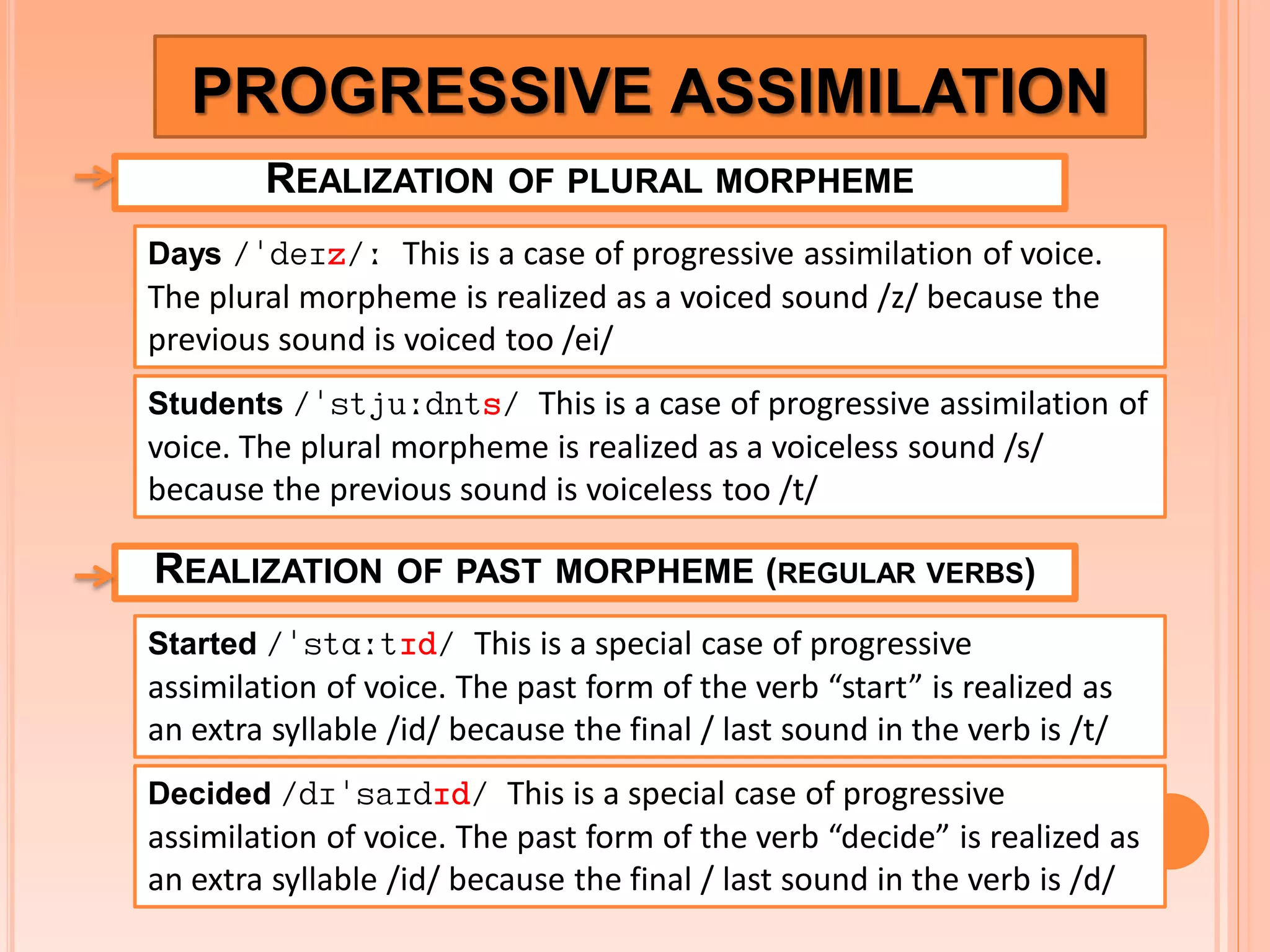
PROGRESSIVE ASSIMILATION
REALIZATION

OF PLURAL MORPHEME

Days /deIz/: This is a case of progressive assimilation of voice.

The plural morpheme is realized as a voiced sound /z/ because the
previous sound is voiced too /ei/
Students /stju:dnts/ This is a case of progressive assimilation of

voice. The plural morpheme is realized as a voiceless sound /s/
because the previous sound is voiceless too /t/

REALIZATION

OF PAST MORPHEME (REGULAR VERBS)

Started /stA:tId/ This is a special case of progressive

assimilation of voice. The past form of the verb “start” is realized as
an extra syllable /id/ because the final / last sound in the verb is /t/
Decided /dIsaIdId/ This is a special case of progressive

assimilation of voice. The past form of the verb “decide” is realized as
an extra syllable /id/ because the final / last sound in the verb is /d/
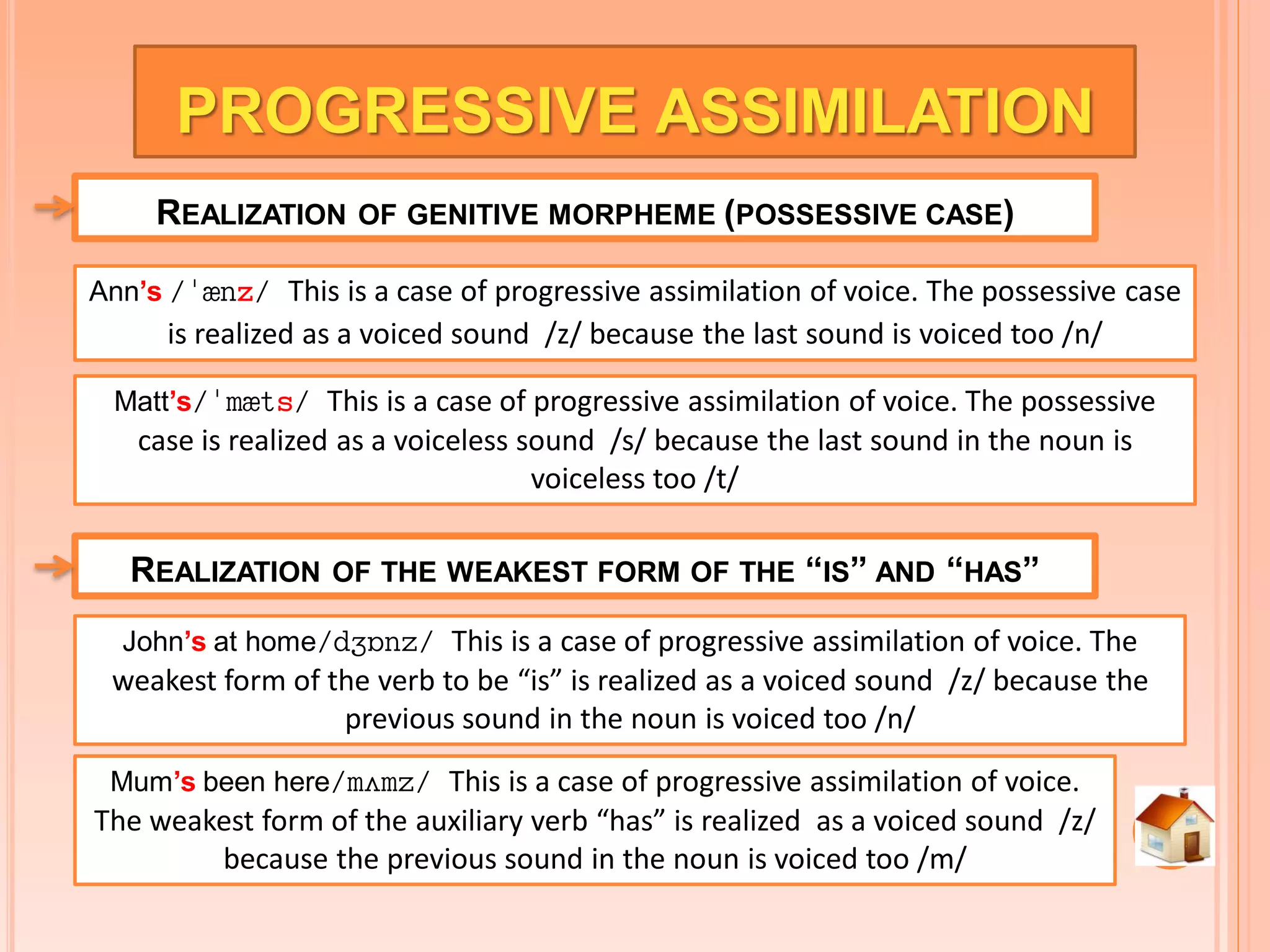
PROGRESSIVE ASSIMILATION
REALIZATION OF GENITIVE MORPHEME (POSSESSIVE CASE)
Ann’s /nz/ This is a case of progressive assimilation of voice. The possessive case

is realized as a voiced sound /z/ because the last sound is voiced too /n/
Matt’s/mts/ This is a case of progressive assimilation of voice. The possessive

case is realized as a voiceless sound /s/ because the last sound in the noun is
voiceless too /t/

REALIZATION OF THE WEAKEST FORM OF THE “IS” AND “HAS”
John’s at home/dZnz/ This is a case of progressive assimilation of voice. The

weakest form of the verb to be “is” is realized as a voiced sound /z/ because the
previous sound in the noun is voiced too /n/
Mum’s been here/mVmz/ This is a case of progressive assimilation of voice.

The weakest form of the auxiliary verb “has” is realized as a voiced sound /z/
because the previous sound in the noun is voiced too /m/
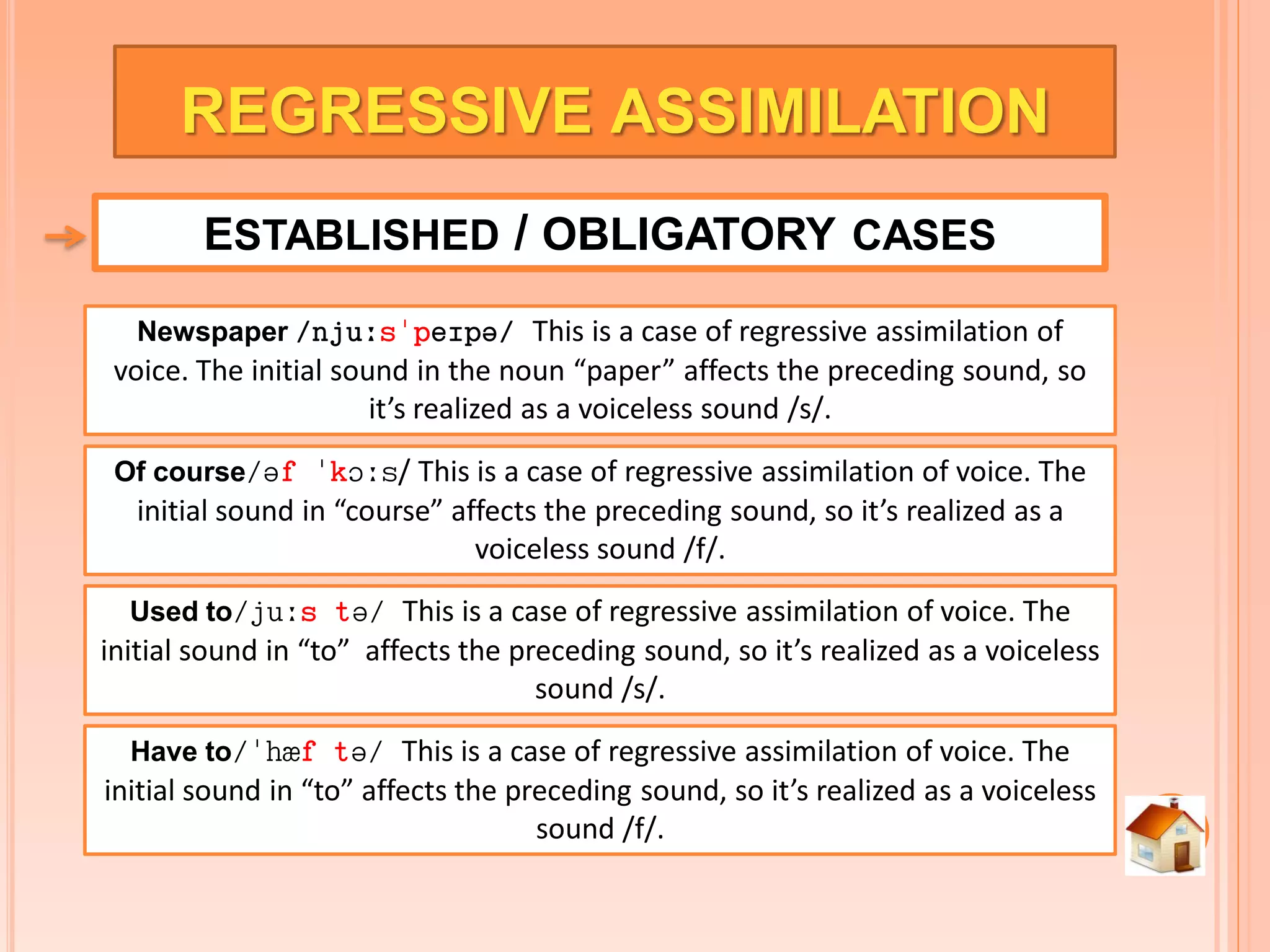
REGRESSIVE ASSIMILATION
ESTABLISHED / OBLIGATORY CASES
Newspaper /nju:speIp/ This is a case of regressive assimilation of

voice. The initial sound in the noun “paper” affects the preceding sound, so
it’s realized as a voiceless sound /s/.
Of course/f kO:s/ This is a case of regressive assimilation of voice. The

initial sound in “course” affects the preceding sound, so it’s realized as a
voiceless sound /f/.
Used to/ju:s t/ This is a case of regressive assimilation of voice. The

initial sound in “to” affects the preceding sound, so it’s realized as a voiceless
sound /s/.
Have to/hf t/ This is a case of regressive assimilation of voice. The

initial sound in “to” affects the preceding sound, so it’s realized as a voiceless
sound /f/.
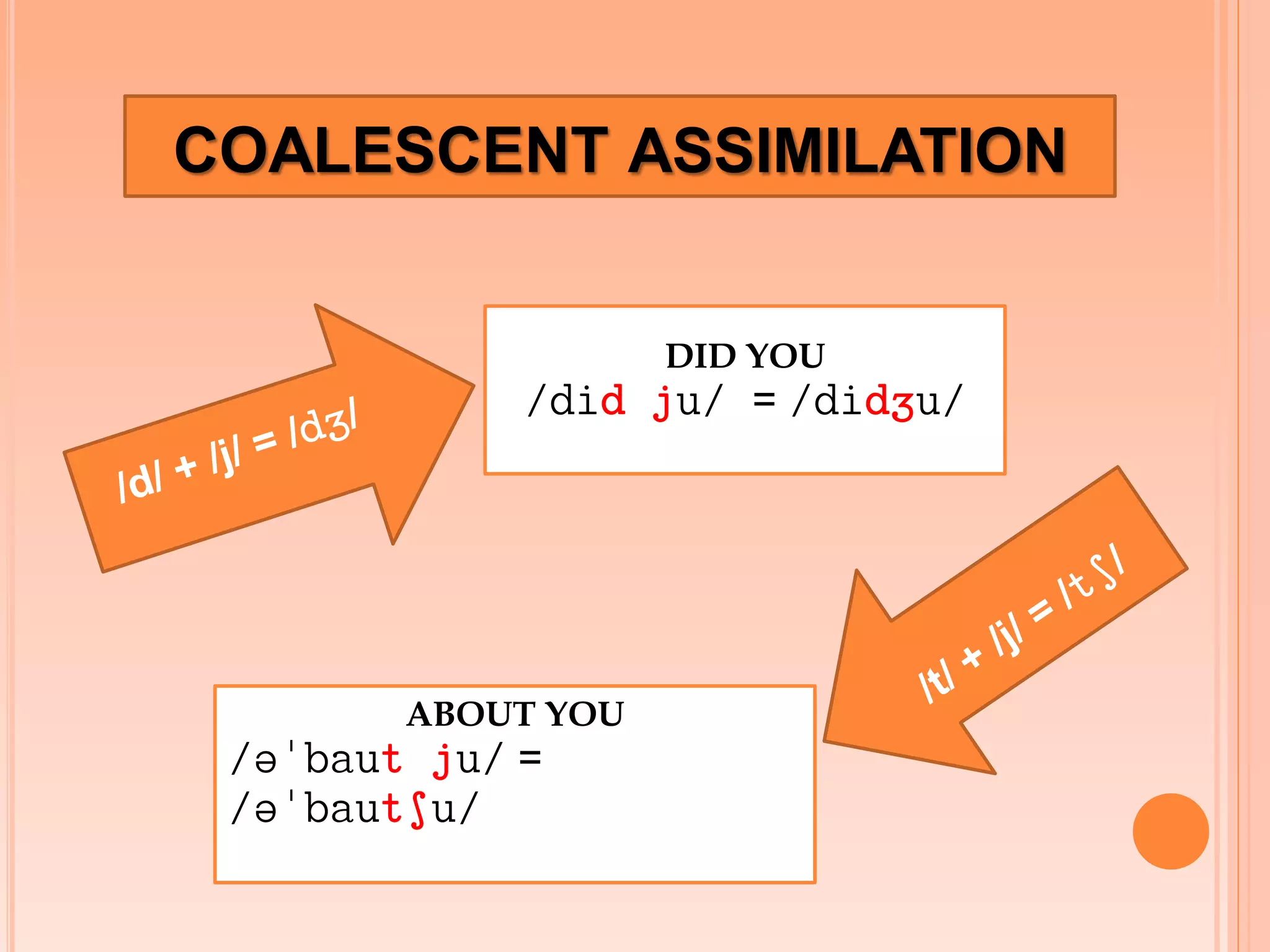
COALESCENT ASSIMILATION
DID YOU

/did ju/ = /didZu/

ABOUT YOU

/baut ju/ =
/bautSu/
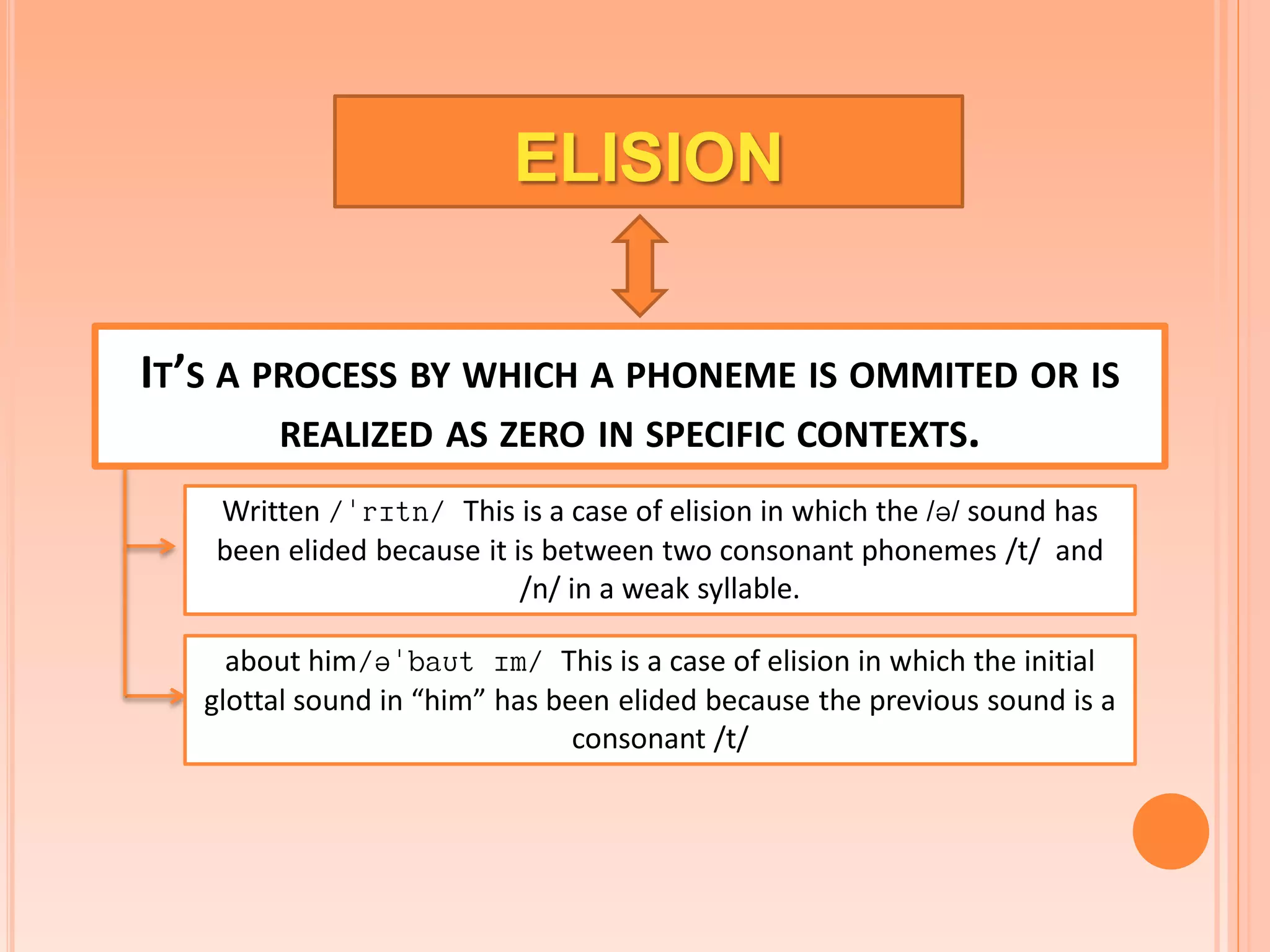
ELISION
IT’S A PROCESS BY WHICH A PHONEME IS OMMITED OR IS
REALIZED AS ZERO IN SPECIFIC CONTEXTS.
Written /rItn/ This is a case of elision in which the // sound has
been elided because it is between two consonant phonemes /t/ and
/n/ in a weak syllable.
about him/baUt Im/ This is a case of elision in which the initial
glottal sound in “him” has been elided because the previous sound is a
consonant /t/
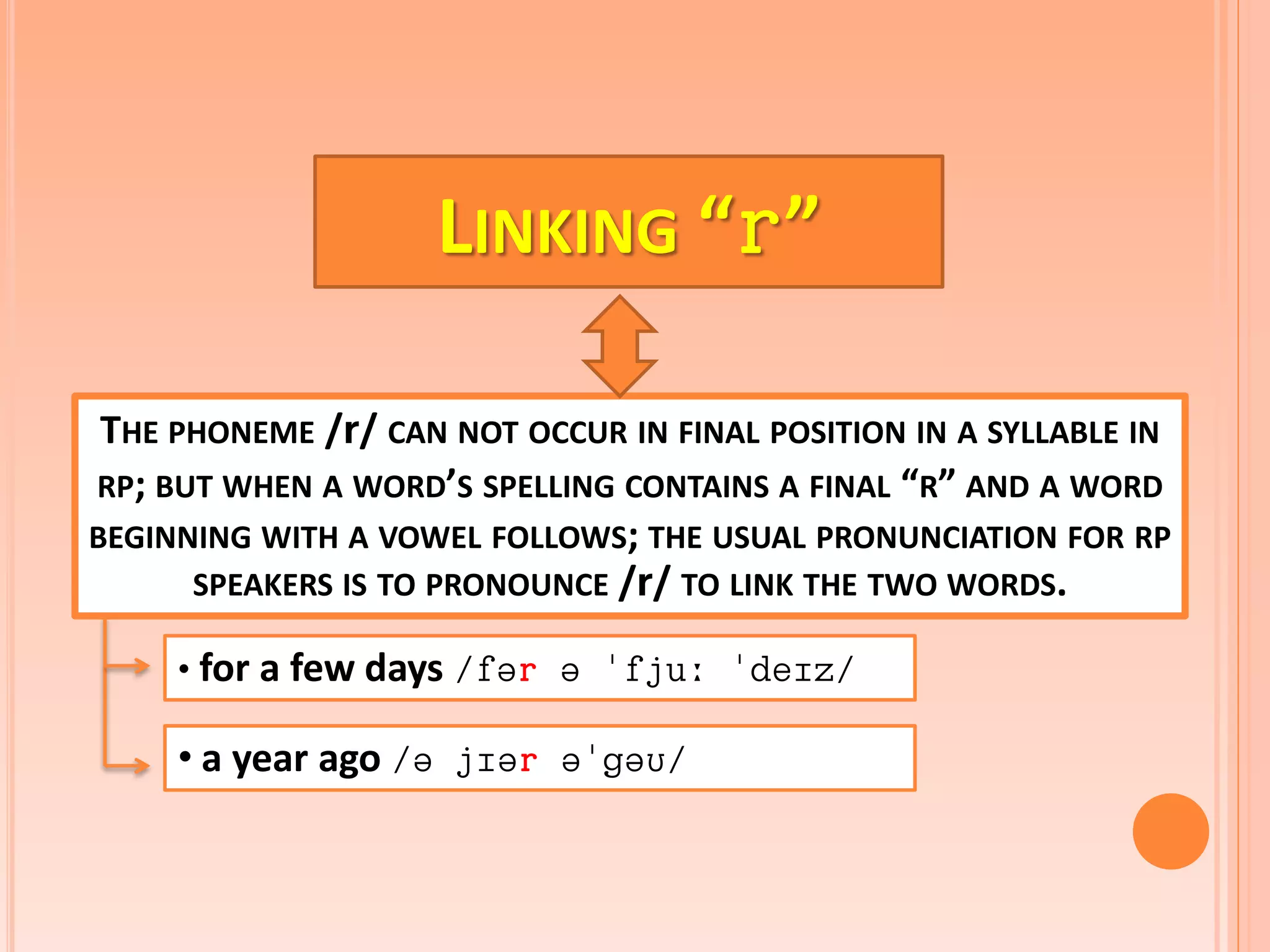
LINKING “”
THE PHONEME // CAN NOT OCCUR IN FINAL POSITION IN A SYLLABLE IN
RP; BUT WHEN A WORD’S SPELLING CONTAINS A FINAL “R” AND A WORD
BEGINNING WITH A VOWEL FOLLOWS; THE USUAL PRONUNCIATION FOR RP
SPEAKERS IS TO PRONOUNCE // TO LINK THE TWO WORDS.
• for a few days /f  fju: deIz/

• a year ago / jI gU/

Processes of Connected Speech

  • 1.
  • 2.
  • 3.
    WHAT DO WEUNDERSTAND BY “CONNECTED SPEECH”? In natural speech, there are many processes that result in differences between isolated words and the same words in occurring in connected speech. When we speak naturally we do not pronounce a word, stop, and then continue. FLUENT speech flows with a rhythm and the words bump into each other. To make speech flow smoothly the way we pronounce the end and beginning of some words can change depending on the sounds at the beginning and end of those words. These changes that affect the quality of sounds are known as: FEATURES OF CONNECTED SPEECH.
  • 4.
    ASSIMILATION IT IS APROCESS IN WHICH A SOUND IS AFFECTED BY ITS NEIGHBOURING SOUNDS PROGRESSIVE ASSIMILATION Progressive Assimilation of voice occurs whenever a sound has an influence on the voicing of its following phoneme. REGRESSIVE OR ANTICIPATORY ASSIMILATION Regressive Assimilation of voice occurs when a sound has an effect on a preceding phoneme. COALESCENT OR YOD ASSIMILATION Coalescent Assimilation of voice is a process in which two phonemes merge into one and a new phoneme is formed.
  • 5.
    PROGRESSIVE ASSIMILATION REALIZATION OF PLURALMORPHEME Days /deIz/: This is a case of progressive assimilation of voice. The plural morpheme is realized as a voiced sound /z/ because the previous sound is voiced too /ei/ Students /stju:dnts/ This is a case of progressive assimilation of voice. The plural morpheme is realized as a voiceless sound /s/ because the previous sound is voiceless too /t/ REALIZATION OF PAST MORPHEME (REGULAR VERBS) Started /stA:tId/ This is a special case of progressive assimilation of voice. The past form of the verb “start” is realized as an extra syllable /id/ because the final / last sound in the verb is /t/ Decided /dIsaIdId/ This is a special case of progressive assimilation of voice. The past form of the verb “decide” is realized as an extra syllable /id/ because the final / last sound in the verb is /d/
  • 6.
    PROGRESSIVE ASSIMILATION REALIZATION OFGENITIVE MORPHEME (POSSESSIVE CASE) Ann’s /nz/ This is a case of progressive assimilation of voice. The possessive case is realized as a voiced sound /z/ because the last sound is voiced too /n/ Matt’s/mts/ This is a case of progressive assimilation of voice. The possessive case is realized as a voiceless sound /s/ because the last sound in the noun is voiceless too /t/ REALIZATION OF THE WEAKEST FORM OF THE “IS” AND “HAS” John’s at home/dZnz/ This is a case of progressive assimilation of voice. The weakest form of the verb to be “is” is realized as a voiced sound /z/ because the previous sound in the noun is voiced too /n/ Mum’s been here/mVmz/ This is a case of progressive assimilation of voice. The weakest form of the auxiliary verb “has” is realized as a voiced sound /z/ because the previous sound in the noun is voiced too /m/
  • 7.
    REGRESSIVE ASSIMILATION ESTABLISHED /OBLIGATORY CASES Newspaper /nju:speIp/ This is a case of regressive assimilation of voice. The initial sound in the noun “paper” affects the preceding sound, so it’s realized as a voiceless sound /s/. Of course/f kO:s/ This is a case of regressive assimilation of voice. The initial sound in “course” affects the preceding sound, so it’s realized as a voiceless sound /f/. Used to/ju:s t/ This is a case of regressive assimilation of voice. The initial sound in “to” affects the preceding sound, so it’s realized as a voiceless sound /s/. Have to/hf t/ This is a case of regressive assimilation of voice. The initial sound in “to” affects the preceding sound, so it’s realized as a voiceless sound /f/.
  • 9.
    COALESCENT ASSIMILATION DID YOU /didju/ = /didZu/ ABOUT YOU /baut ju/ = /bautSu/
  • 10.
    ELISION IT’S A PROCESSBY WHICH A PHONEME IS OMMITED OR IS REALIZED AS ZERO IN SPECIFIC CONTEXTS. Written /rItn/ This is a case of elision in which the // sound has been elided because it is between two consonant phonemes /t/ and /n/ in a weak syllable. about him/baUt Im/ This is a case of elision in which the initial glottal sound in “him” has been elided because the previous sound is a consonant /t/
  • 11.
    LINKING “” THE PHONEME// CAN NOT OCCUR IN FINAL POSITION IN A SYLLABLE IN RP; BUT WHEN A WORD’S SPELLING CONTAINS A FINAL “R” AND A WORD BEGINNING WITH A VOWEL FOLLOWS; THE USUAL PRONUNCIATION FOR RP SPEAKERS IS TO PRONOUNCE // TO LINK THE TWO WORDS. • for a few days /f  fju: deIz/ • a year ago / jI gU/