FIND WORD WHICH HAS AS MANY 
MORPHEMES AS POSSIBLE 
Pseudoantidisestablishmentarianism: False 
opposition to the separation of church and of the 
state. 
Pseudo-: fa ls e 
Anti-: a g a ins t 
Dis-: no t 
Establish: 
-Ment: the a c tio n/p ro c e s s o f … 
-Arian: p e rs o n 
-Ism: be lie f…
 WORD CAN BE MADE 
LONGER BY ADDING 
AFFIXES
STRUCTURE OF WORD 
No more than 
1 prefix 
(which is 
always 
derrivational) 
No more than 1 
inflectional 
suffix; usually 
comes last in 
the word 
There may be 
more than 1 
derrivational 
suffixes
Examples: 
-Tra ns p o rte rs 
tra ns : prefix (across, through, beyond) 
p o rt: bound base (carry) 
e r: derrivational suffix (person) 
s : inflectional suffix (plural) 
-Inte rna tio na liz e d 
na tio n: free base 
inte r: prefix (among, between) 
a l: derivational suffix (belong to) 
iz e : derivational suffix (make) 
e d : inflectional suffix (past/past participle) 
-Unve rba liz e d 
-Find ing s
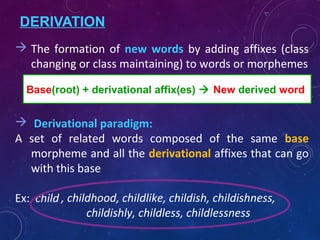
DERIVATION 
 The formation of new words by adding affixes (class 
changing or class maintaining) to words or morphemes 
Base(root) + derivational affix(es)  New derived word 
 Derivational paradigm: 
A set of related words composed of the same base 
morpheme and all the derivational affixes that can go 
with this base 
Ex: child 
, childhood, childlike, childish, childishness, 
childishly, childless, childlessness
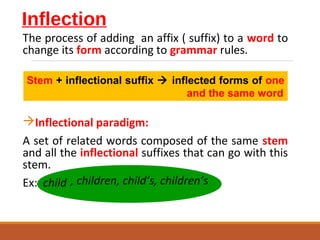
Inflection 
The process of adding an affix ( suffix) to a word to 
change its form according to grammar rules. 
Stem + inflectional suffix  inflected forms of one 
and the same word 
Inflectional paradigm: 
A set of related words composed of the same stem 
and all the inflectional suffixes that can go with this 
stem. 
Ex: child , children, child’s, children’s
Derivational/ Inflectional 
paradigm 
Man 
 man, manly, 
manliness, unman, 
subman, reman, 
superman, manlike, 
manlikeness 
Large 
 large, largely, 
enlarge, largish, 
largesse, enlargement, 
enlarger 
 man, men, man’s. 
men’s 
 large, larger, largest
Analyse these words: 
Unfrie nd line s s 
Info rm a lity 
How are they formed? Which affixes 
are added first to the base…? 
 The process of adding affixes to 
make new words
 IC-diagrams 
Un friend li ness
WORD IMMEDIATE CCOONNSSTTIITTUUEENNTTSS ((IICC)) 
To analyse the structure of a word, we must 
base on its hierarchical constituents (which 
means that a constituent of a word can be a 
constituent of another constituent of that 
word) . 
What are IC’s? 
Any of the 2 meaningful parts forming a 
larger linguistic unit.
WORD IMMEDIATE CCOONNSSTTIITTUUEENNTTSS 
How to divide a word into IC’s? 
The first cut is b/w the inflectional suffix (if 
any) and the rest of the word. 
The IC’s should be free forms, having 
meaning on their own. 
The meaning of the IC’s should be related to 
the meaning of the word
WORD IMMEDIATE CONSTITUENTS/ EEXXAAMMPPLLEESS 
Discover (v): to find or learn sth new… 
discover * discover 
dis cover discov er(person who…) 
(not) (put sth on sth to protect it) 
* discover * discover 
dis cover disc over 
(not) cov er (CD) (above; across)
WORD IMMEDIATE CCOONNSSTTIITTUUEENNTTSS 
Examples: 
inte rna tio na liz e d 
inte rna tio na liz e e d 
inte rna tio na l iz e 
inte r na tio na l 
na tio n a l

Derivation & inflection

  • 2.
    FIND WORD WHICHHAS AS MANY MORPHEMES AS POSSIBLE Pseudoantidisestablishmentarianism: False opposition to the separation of church and of the state. Pseudo-: fa ls e Anti-: a g a ins t Dis-: no t Establish: -Ment: the a c tio n/p ro c e s s o f … -Arian: p e rs o n -Ism: be lie f…
  • 3.
     WORD CANBE MADE LONGER BY ADDING AFFIXES
  • 4.
    STRUCTURE OF WORD No more than 1 prefix (which is always derrivational) No more than 1 inflectional suffix; usually comes last in the word There may be more than 1 derrivational suffixes
  • 5.
    Examples: -Tra nsp o rte rs tra ns : prefix (across, through, beyond) p o rt: bound base (carry) e r: derrivational suffix (person) s : inflectional suffix (plural) -Inte rna tio na liz e d na tio n: free base inte r: prefix (among, between) a l: derivational suffix (belong to) iz e : derivational suffix (make) e d : inflectional suffix (past/past participle) -Unve rba liz e d -Find ing s
  • 6.
    DERIVATION  Theformation of new words by adding affixes (class changing or class maintaining) to words or morphemes Base(root) + derivational affix(es)  New derived word  Derivational paradigm: A set of related words composed of the same base morpheme and all the derivational affixes that can go with this base Ex: child , childhood, childlike, childish, childishness, childishly, childless, childlessness
  • 7.
    Inflection The processof adding an affix ( suffix) to a word to change its form according to grammar rules. Stem + inflectional suffix  inflected forms of one and the same word Inflectional paradigm: A set of related words composed of the same stem and all the inflectional suffixes that can go with this stem. Ex: child , children, child’s, children’s
  • 8.
    Derivational/ Inflectional paradigm Man  man, manly, manliness, unman, subman, reman, superman, manlike, manlikeness Large  large, largely, enlarge, largish, largesse, enlargement, enlarger  man, men, man’s. men’s  large, larger, largest
  • 9.
    Analyse these words: Unfrie nd line s s Info rm a lity How are they formed? Which affixes are added first to the base…?  The process of adding affixes to make new words
  • 10.
     IC-diagrams Unfriend li ness
  • 11.
    WORD IMMEDIATE CCOONNSSTTIITTUUEENNTTSS((IICC)) To analyse the structure of a word, we must base on its hierarchical constituents (which means that a constituent of a word can be a constituent of another constituent of that word) . What are IC’s? Any of the 2 meaningful parts forming a larger linguistic unit.
  • 12.
    WORD IMMEDIATE CCOONNSSTTIITTUUEENNTTSS How to divide a word into IC’s? The first cut is b/w the inflectional suffix (if any) and the rest of the word. The IC’s should be free forms, having meaning on their own. The meaning of the IC’s should be related to the meaning of the word
  • 13.
    WORD IMMEDIATE CONSTITUENTS/EEXXAAMMPPLLEESS Discover (v): to find or learn sth new… discover * discover dis cover discov er(person who…) (not) (put sth on sth to protect it) * discover * discover dis cover disc over (not) cov er (CD) (above; across)
  • 14.
    WORD IMMEDIATE CCOONNSSTTIITTUUEENNTTSS Examples: inte rna tio na liz e d inte rna tio na liz e e d inte rna tio na l iz e inte r na tio na l na tio n a l