Depression
DEPRESSEDGAL27
What is it?
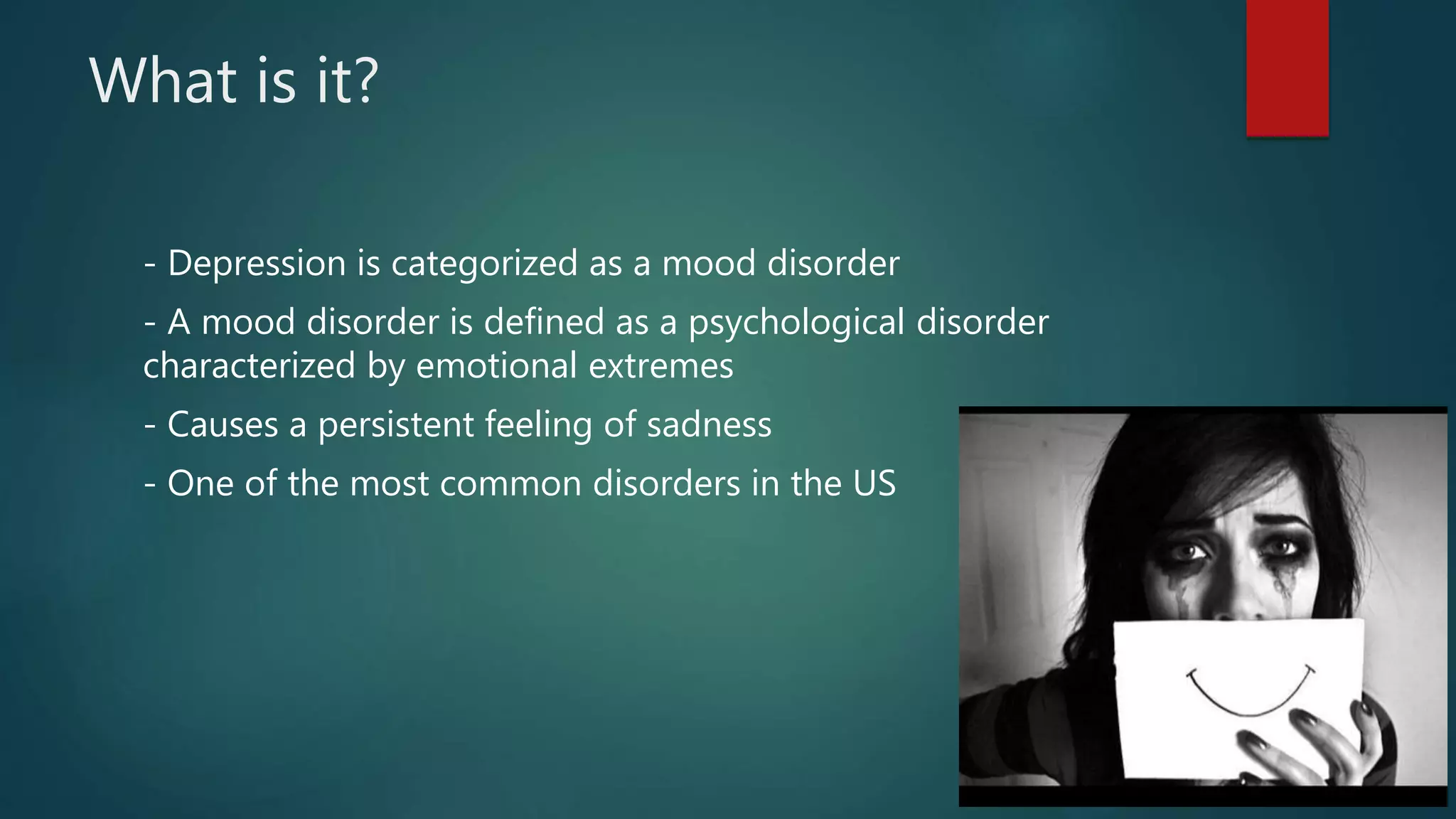
- Depression is categorized as a mood disorder
- A mood disorder is defined as a psychological disorder
characterized by emotional extremes
- Causes a persistent feeling of sadness
- One of the most common disorders in the US
Statistics
- 6.7% of American adults exhibited
symptoms of a major depressive episode
in 2014
- 3-5% of adults suffer from major
depressive disorder at any given time
- 1 in 50 children and 2 in 25 teens show
symptoms of major depression
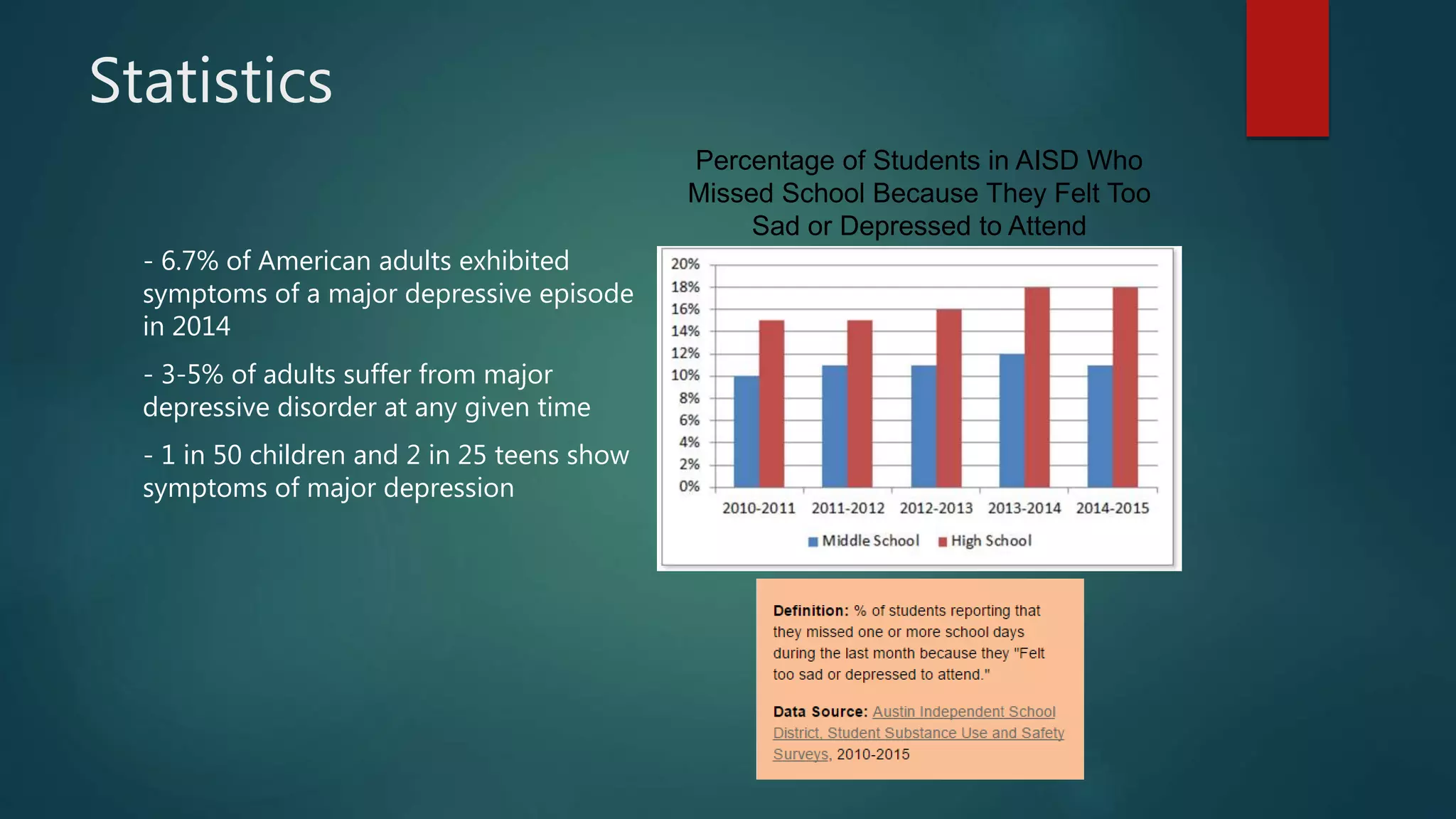
Percentage of Students in AISD Who
Missed School Because They Felt Too
Sad or Depressed to Attend
Types of Depression Include
- Major Depressive Disorder
- Catatonic Depression
- Seasonal Affective Disorder
- Dysthymic Disorder
- Bipolar Depression
- Clinical Depression
Major Depressive Disorder
This disorder occurs when
symptoms of depression last
two weeks or more and are not
caused by drugs or a medical
condition
Causes of Depression
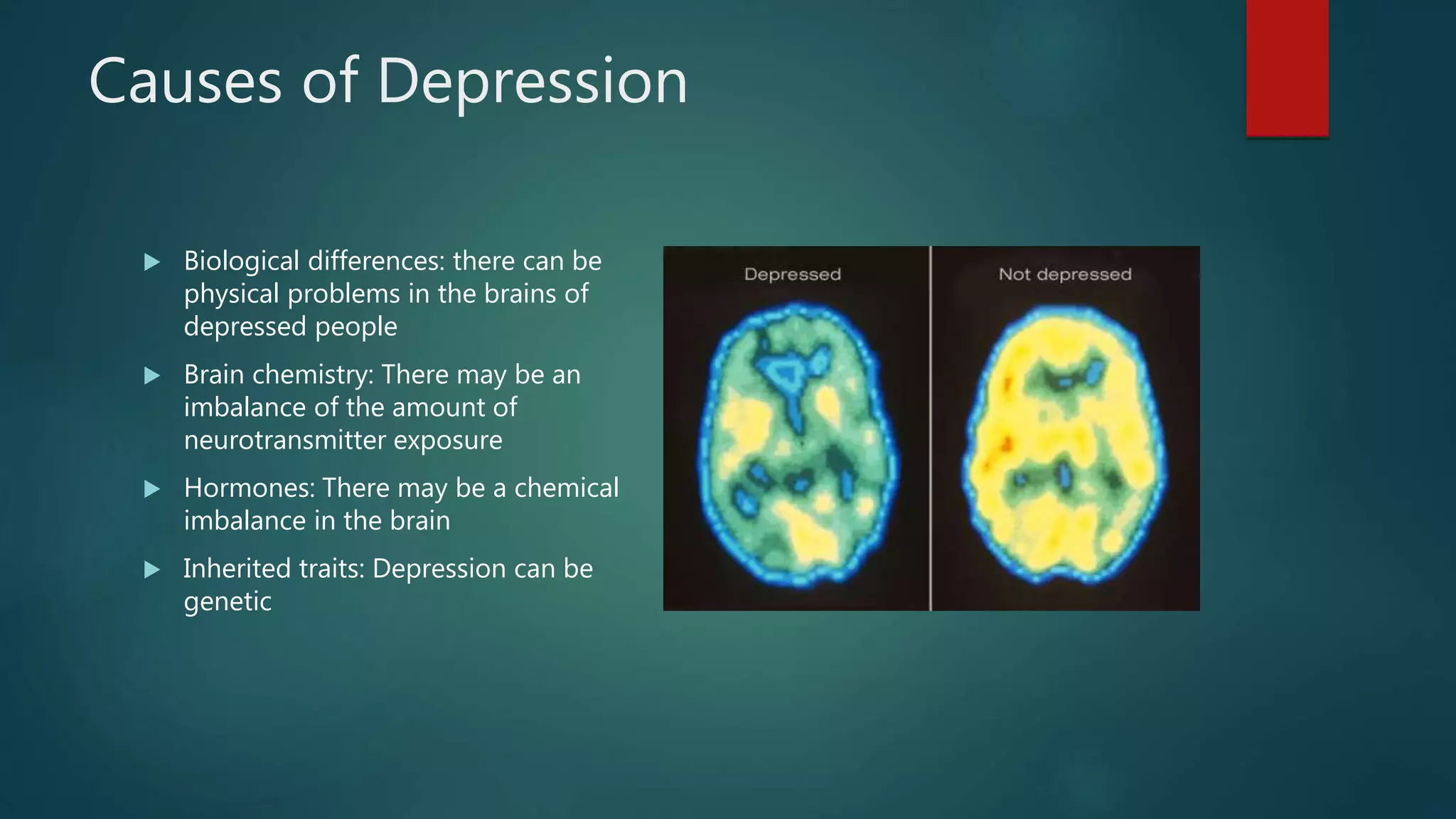
 Biological differences: there can be
physical problems in the brains of
depressed people
 Brain chemistry: There may be an
imbalance of the amount of
neurotransmitter exposure
 Hormones: There may be a chemical
imbalance in the brain
 Inherited traits: Depression can be
genetic
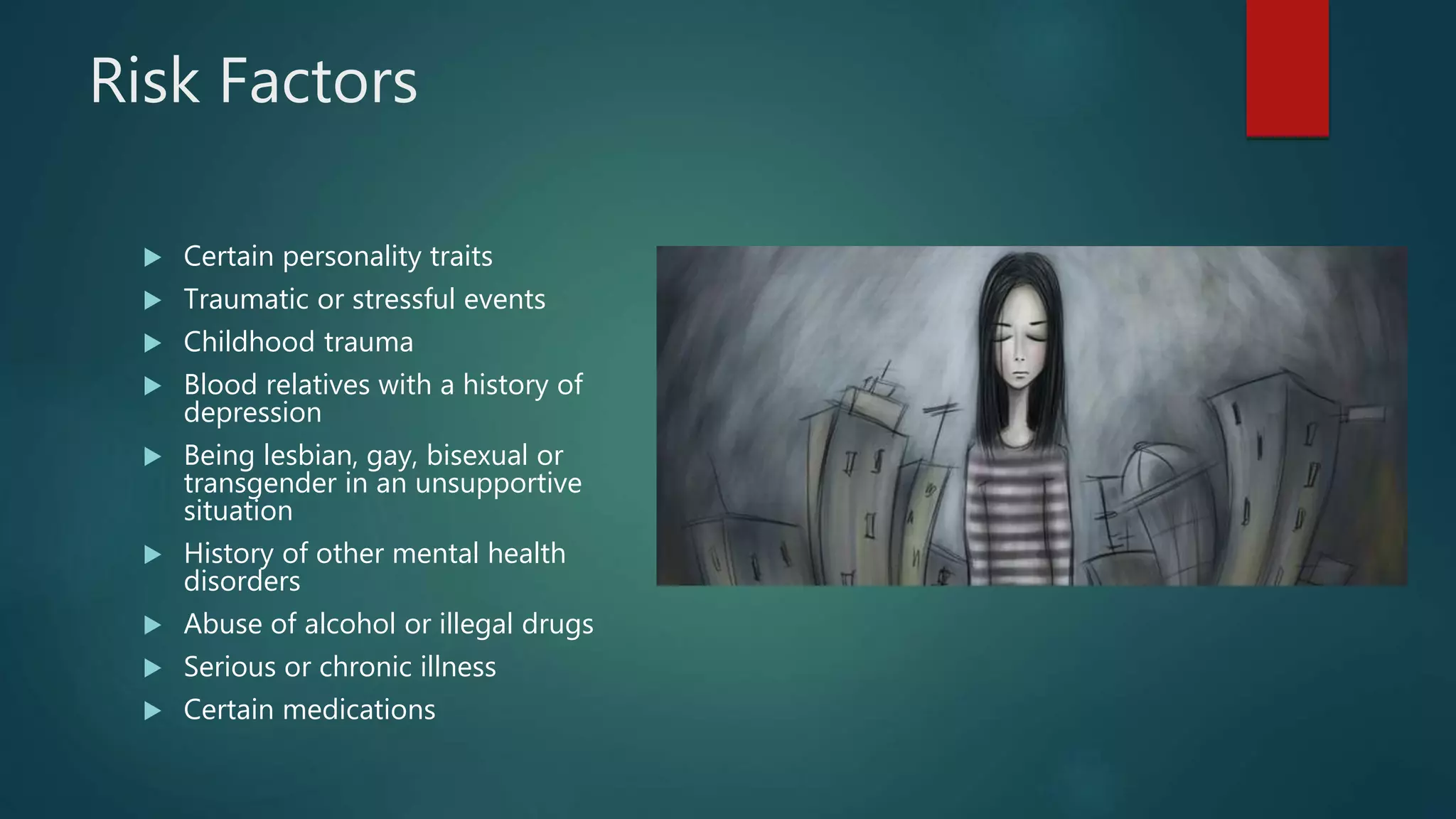
Risk Factors
 Certain personality traits
 Traumatic or stressful events
 Childhood trauma
 Blood relatives with a history of
depression
 Being lesbian, gay, bisexual or
transgender in an unsupportive
situation
 History of other mental health
disorders
 Abuse of alcohol or illegal drugs
 Serious or chronic illness
 Certain medications
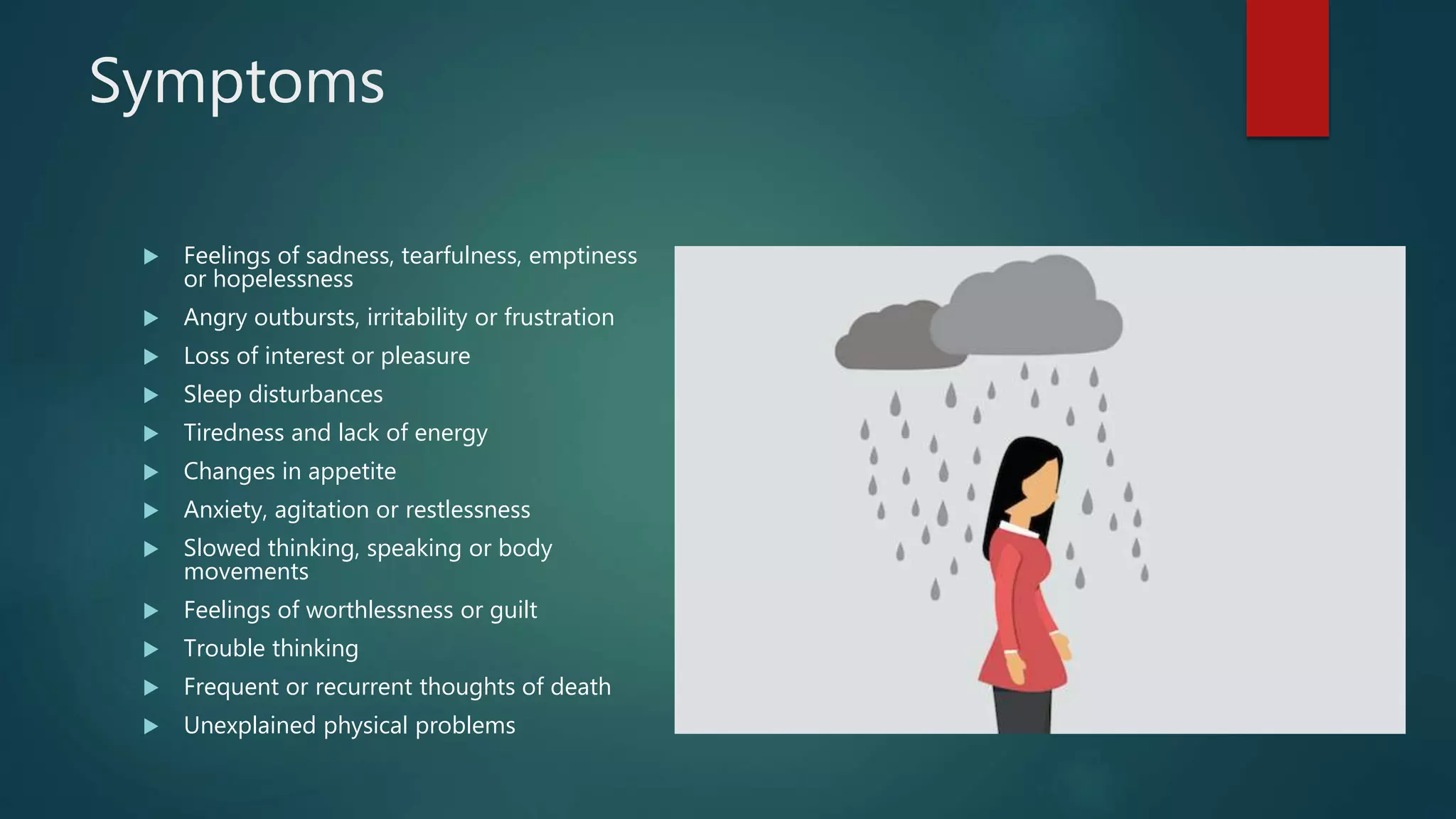
Symptoms
 Feelings of sadness, tearfulness, emptiness
or hopelessness
 Angry outbursts, irritability or frustration
 Loss of interest or pleasure
 Sleep disturbances
 Tiredness and lack of energy
 Changes in appetite
 Anxiety, agitation or restlessness
 Slowed thinking, speaking or body
movements
 Feelings of worthlessness or guilt
 Trouble thinking
 Frequent or recurrent thoughts of death
 Unexplained physical problems
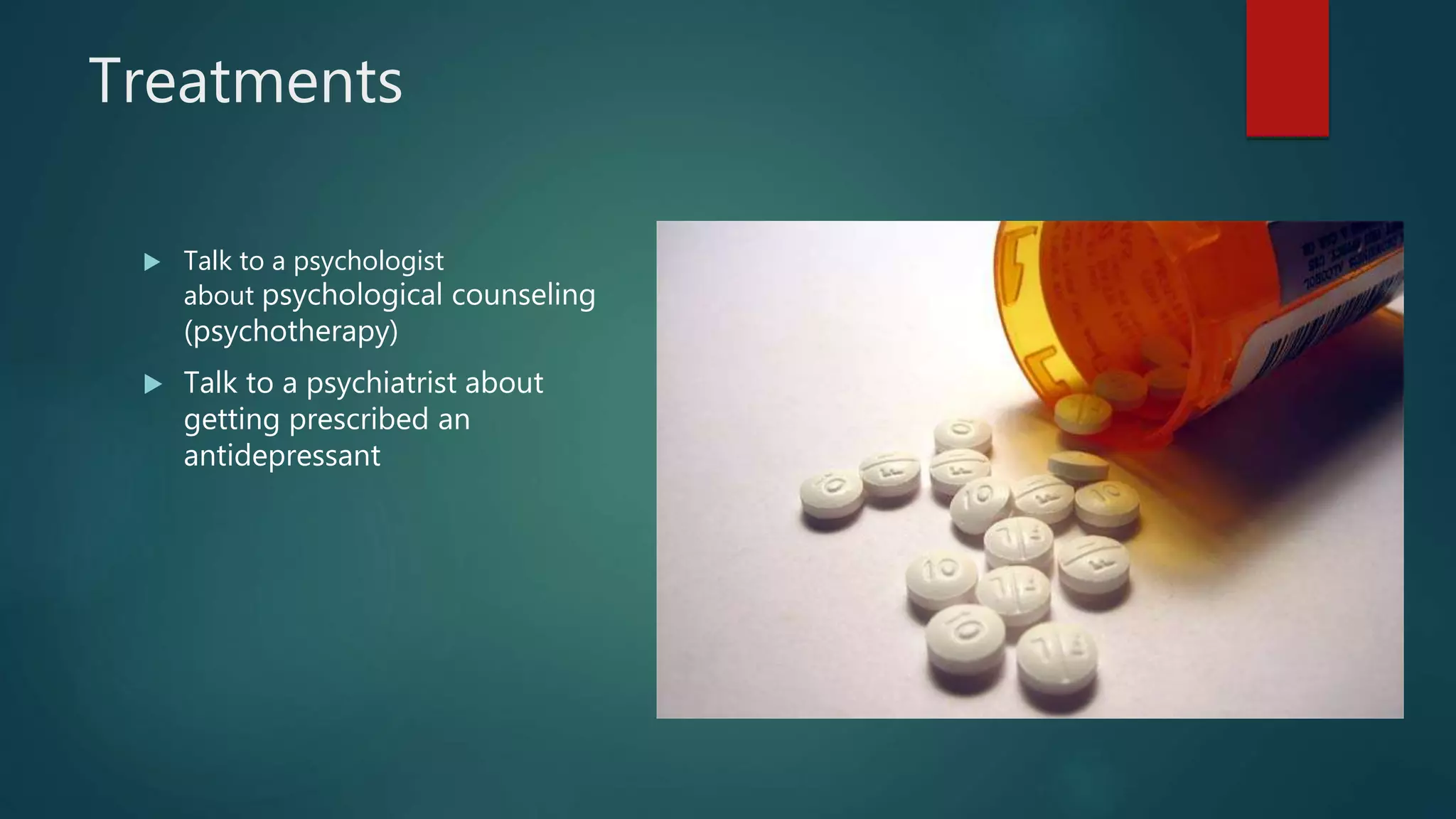
Treatments
 Talk to a psychologist
about psychological counseling
(psychotherapy)
 Talk to a psychiatrist about
getting prescribed an
antidepressant
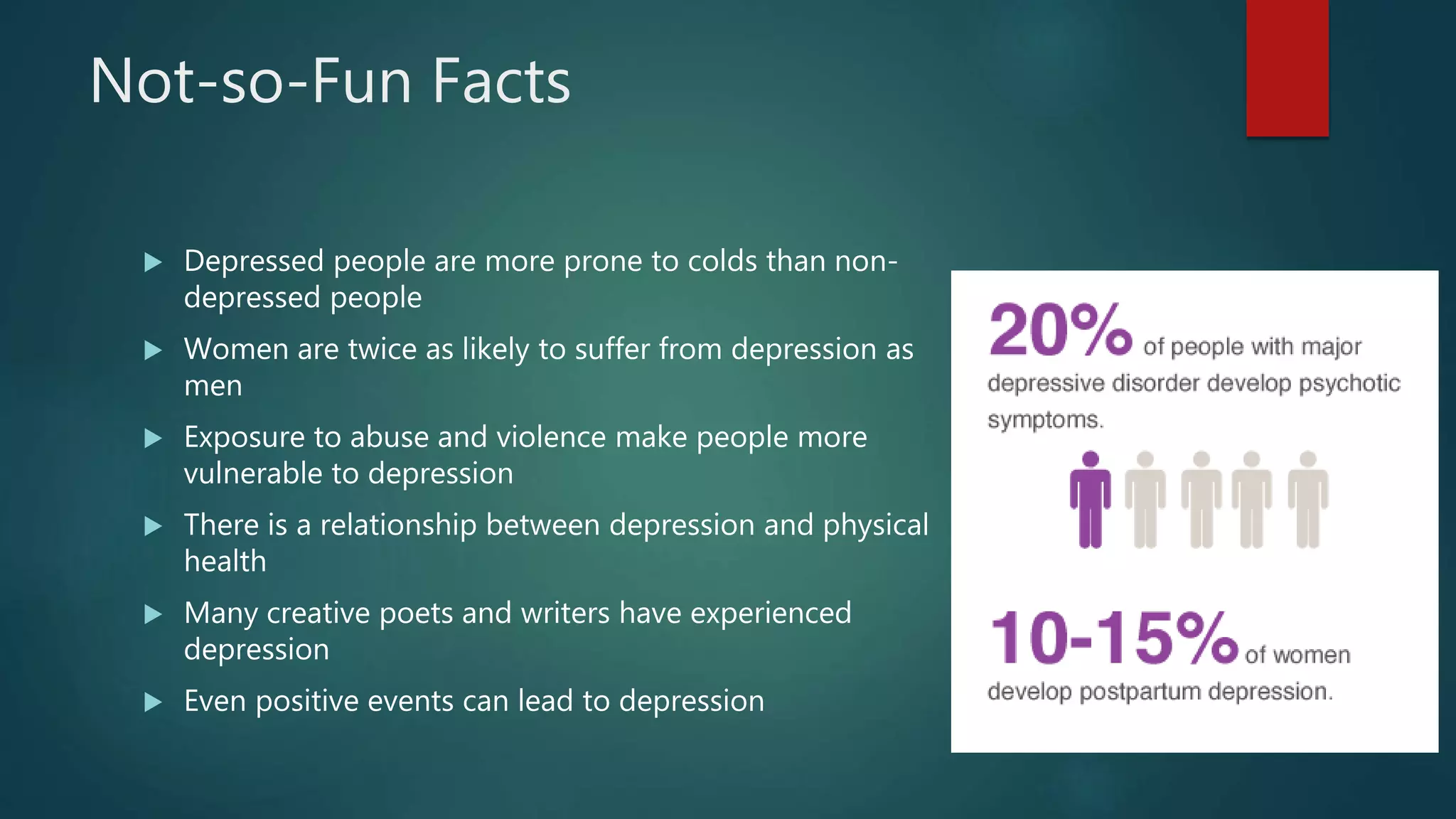
Not-so-Fun Facts
 Depressed people are more prone to colds than non-
depressed people
 Women are twice as likely to suffer from depression as
men
 Exposure to abuse and violence make people more
vulnerable to depression
 There is a relationship between depression and physical
health
 Many creative poets and writers have experienced
depression
 Even positive events can lead to depression
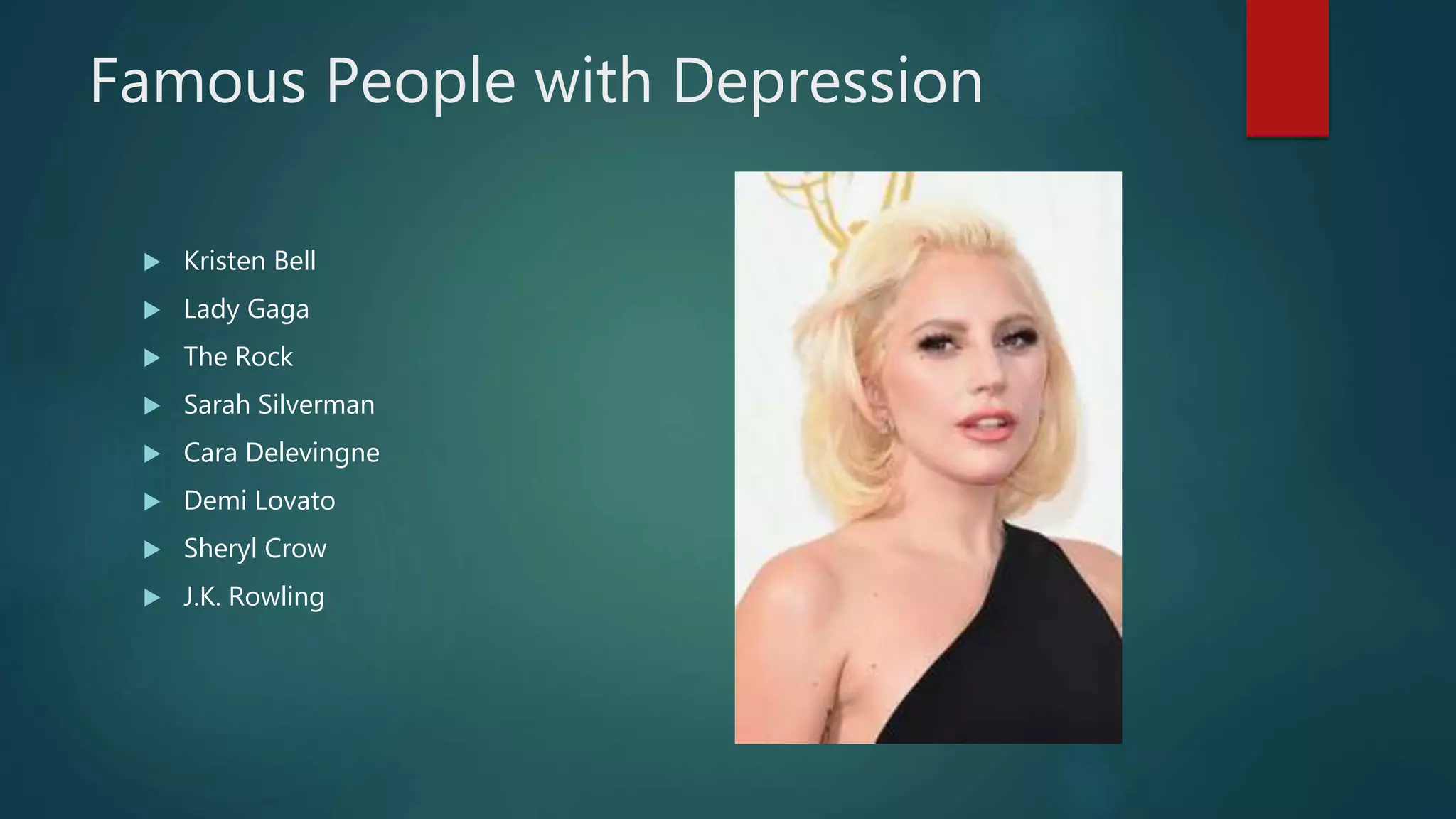
Famous People with Depression
 Kristen Bell
 Lady Gaga
 The Rock
 Sarah Silverman
 Cara Delevingne
 Demi Lovato
 Sheryl Crow
 J.K. Rowling
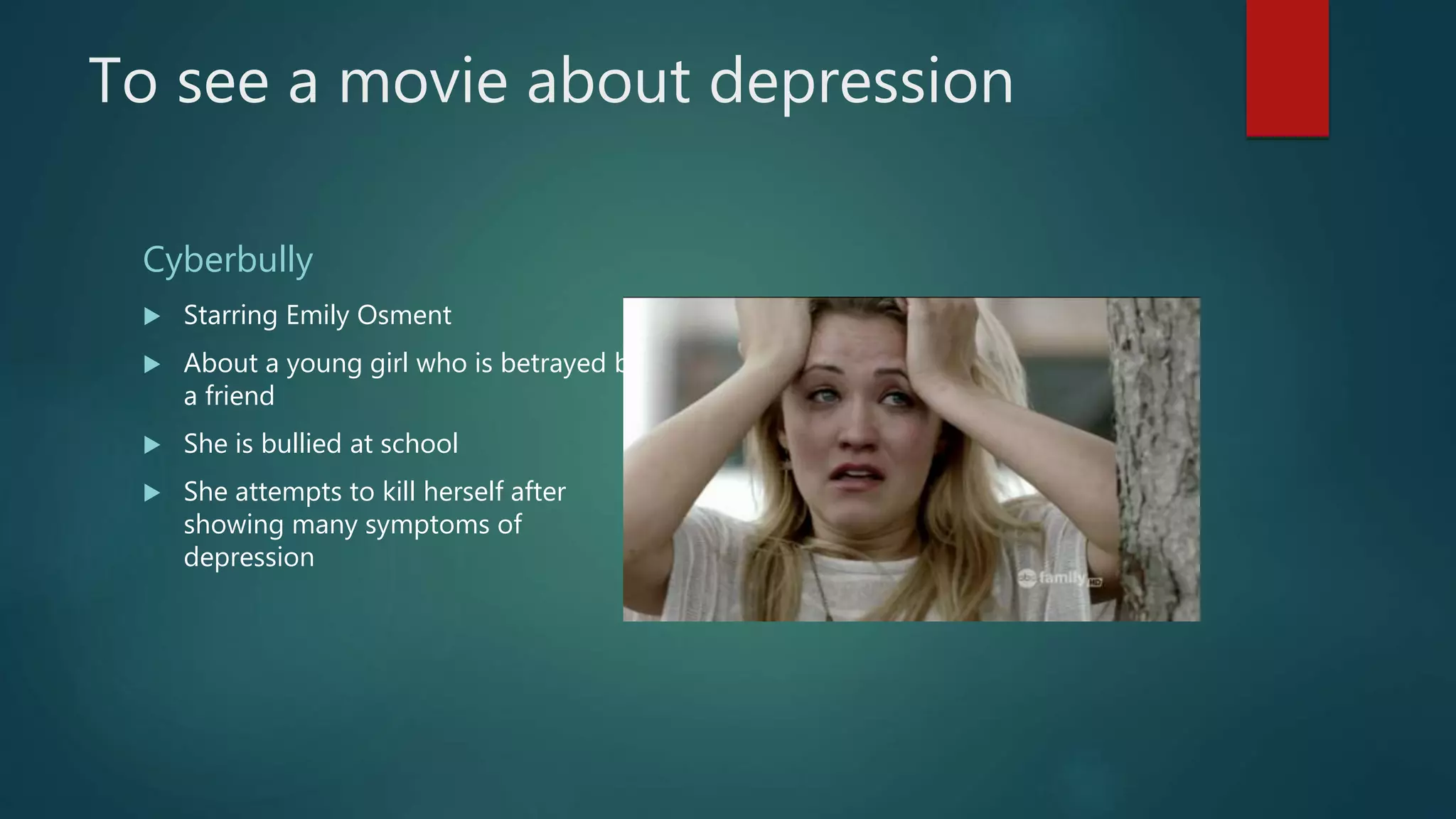
To see a movie about depression
Cyberbully
 Starring Emily Osment
 About a young girl who is betrayed by
a friend
 She is bullied at school
 She attempts to kill herself after
showing many symptoms of
depression
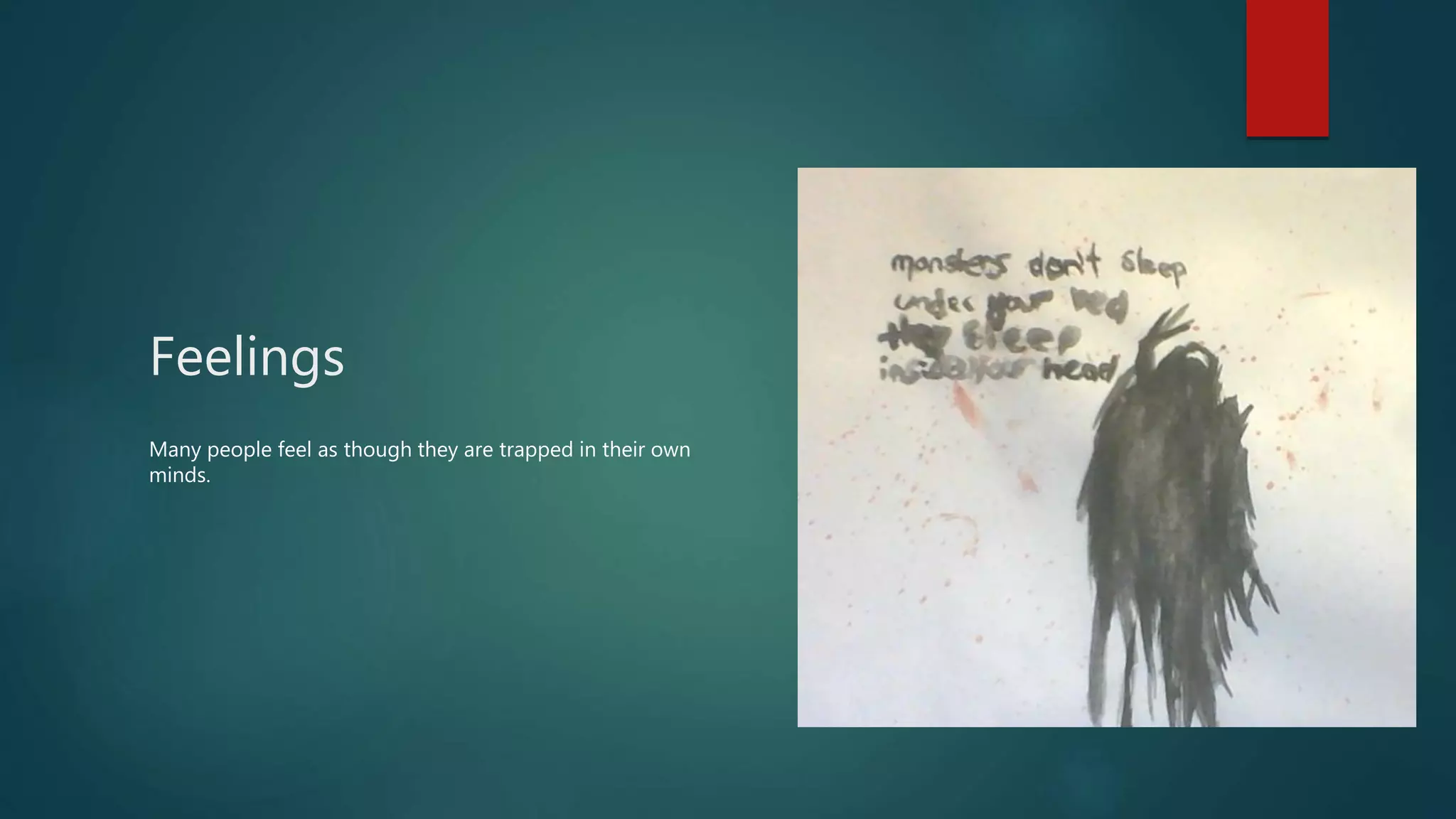
Feelings
Many people feel as though they are trapped in their own
minds.
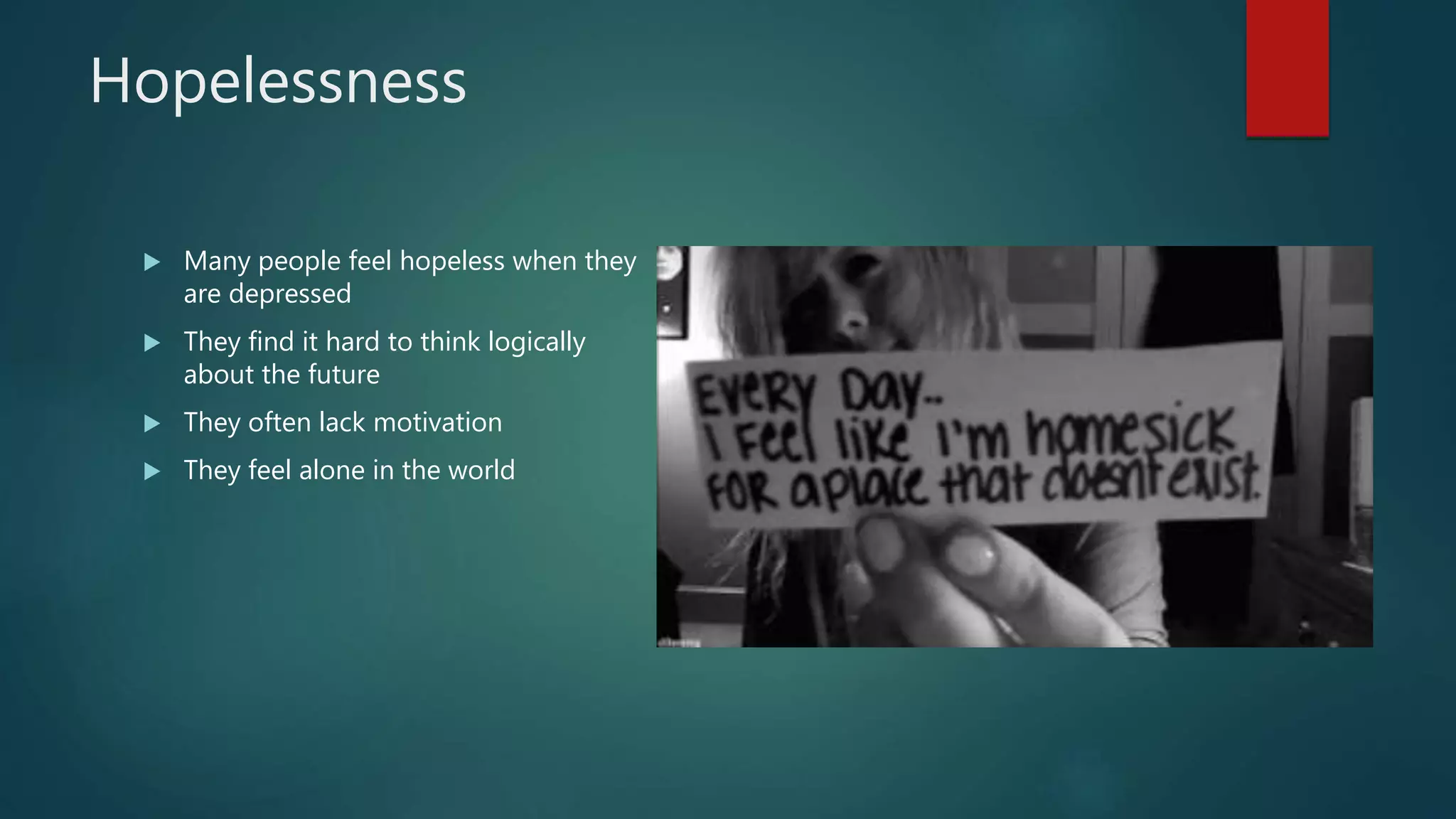
Hopelessness
 Many people feel hopeless when they
are depressed
 They find it hard to think logically
about the future
 They often lack motivation
 They feel alone in the world
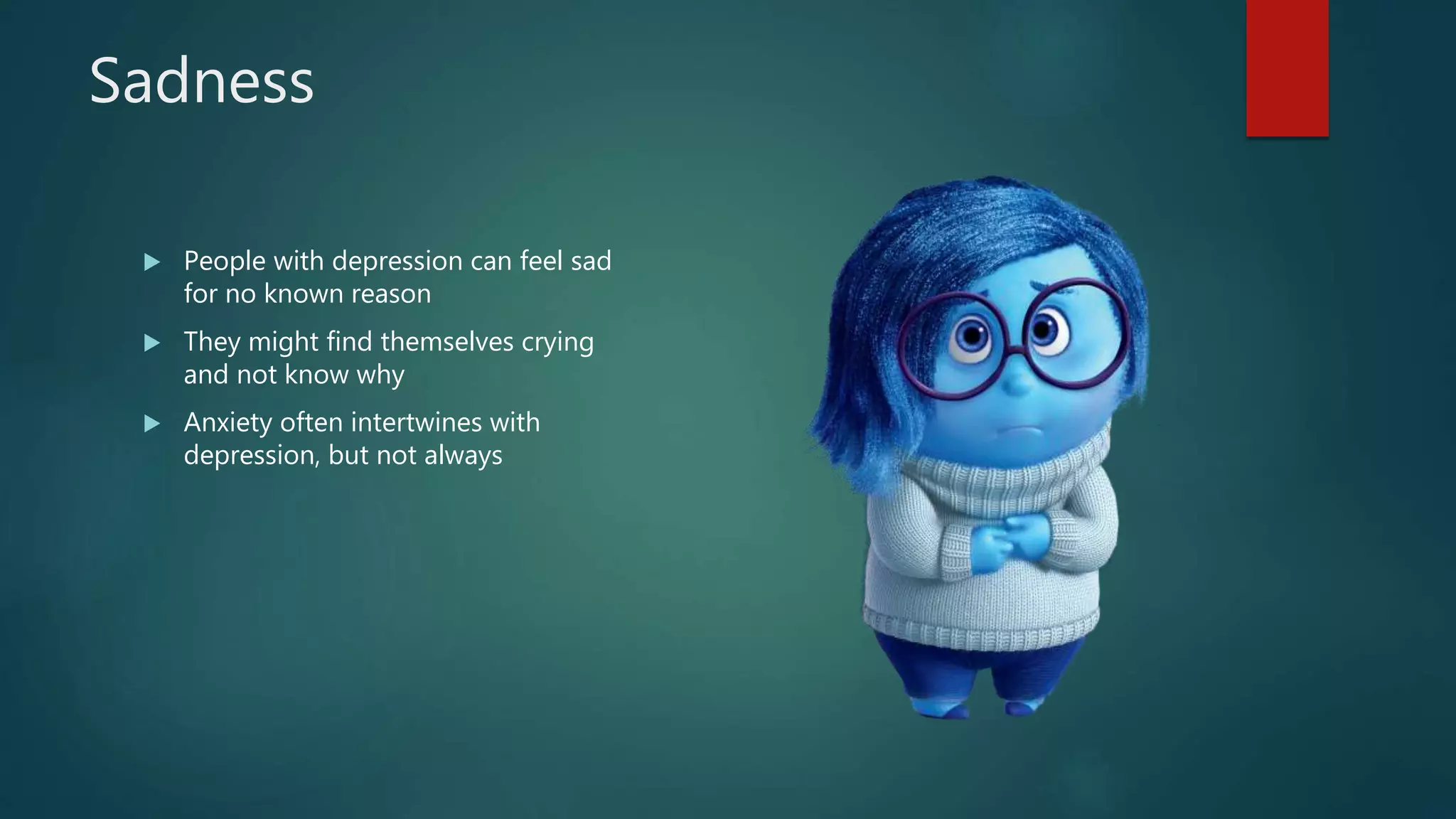
Sadness
 People with depression can feel sad
for no known reason
 They might find themselves crying
and not know why
 Anxiety often intertwines with
depression, but not always
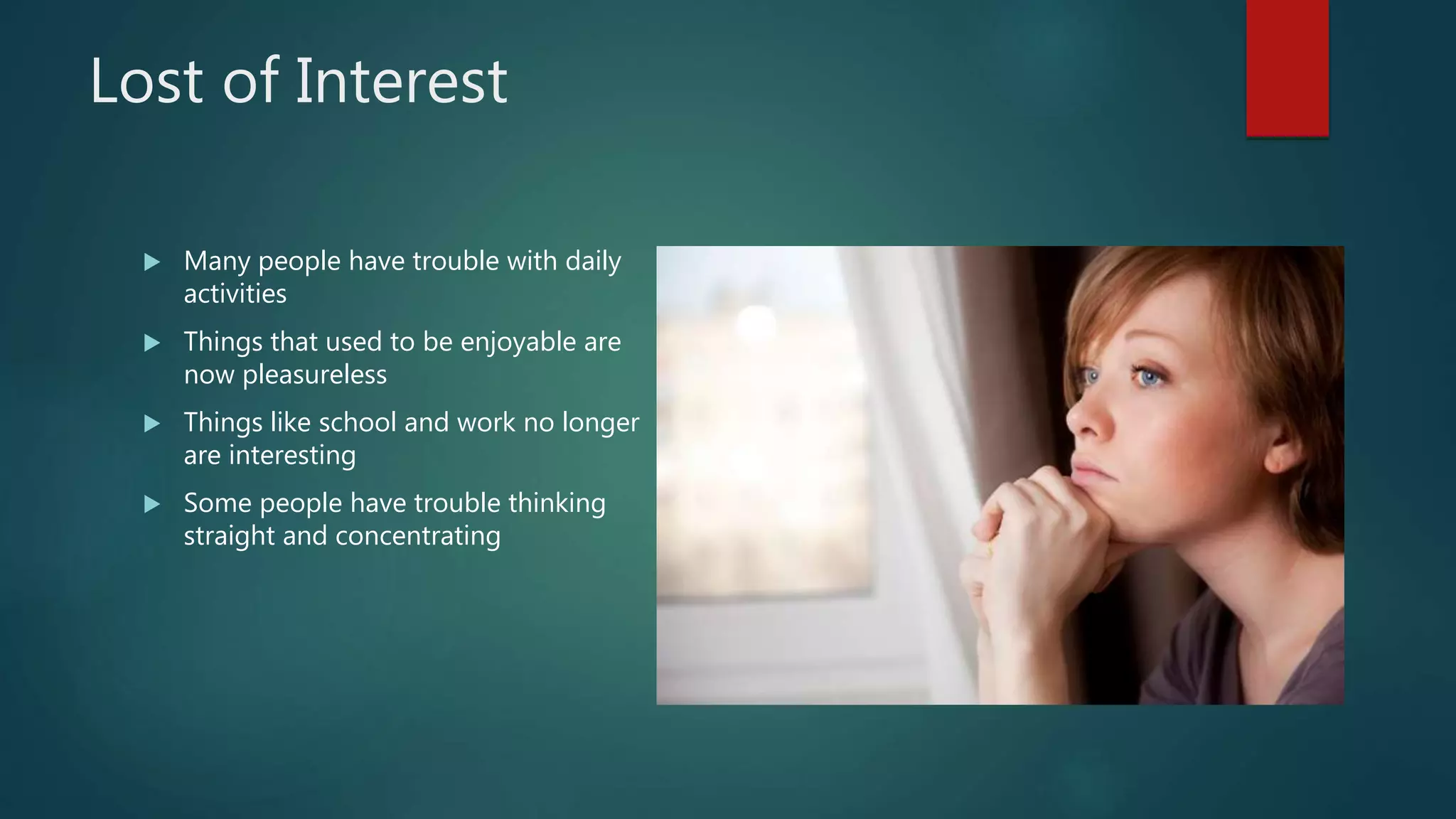
Lost of Interest
 Many people have trouble with daily
activities
 Things that used to be enjoyable are
now pleasureless
 Things like school and work no longer
are interesting
 Some people have trouble thinking
straight and concentrating
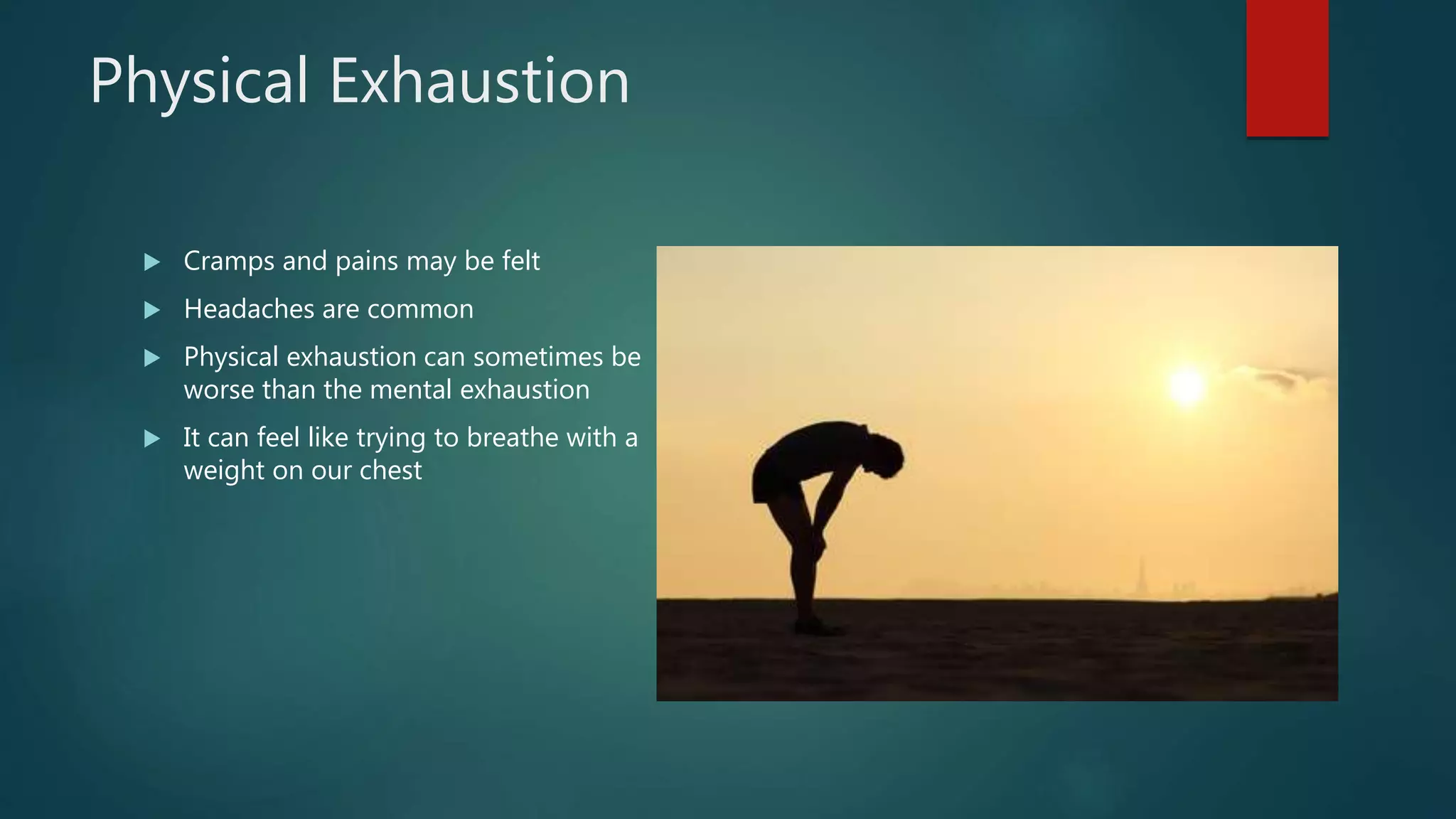
Physical Exhaustion
 Cramps and pains may be felt
 Headaches are common
 Physical exhaustion can sometimes be
worse than the mental exhaustion
 It can feel like trying to breathe with a
weight on our chest
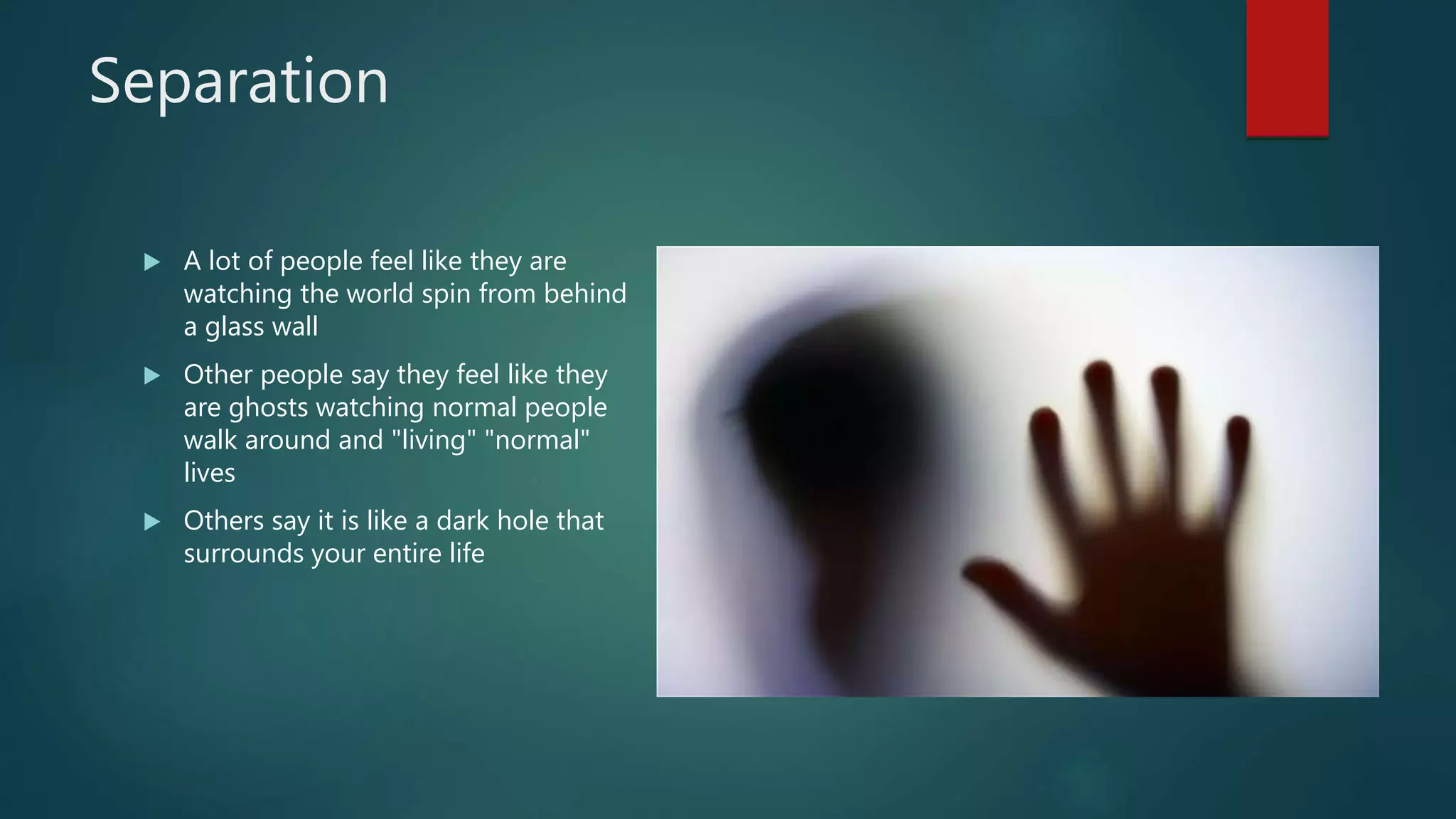
Separation
 A lot of people feel like they are
watching the world spin from behind
a glass wall
 Other people say they feel like they
are ghosts watching normal people
walk around and "living" "normal"
lives
 Others say it is like a dark hole that
surrounds your entire life
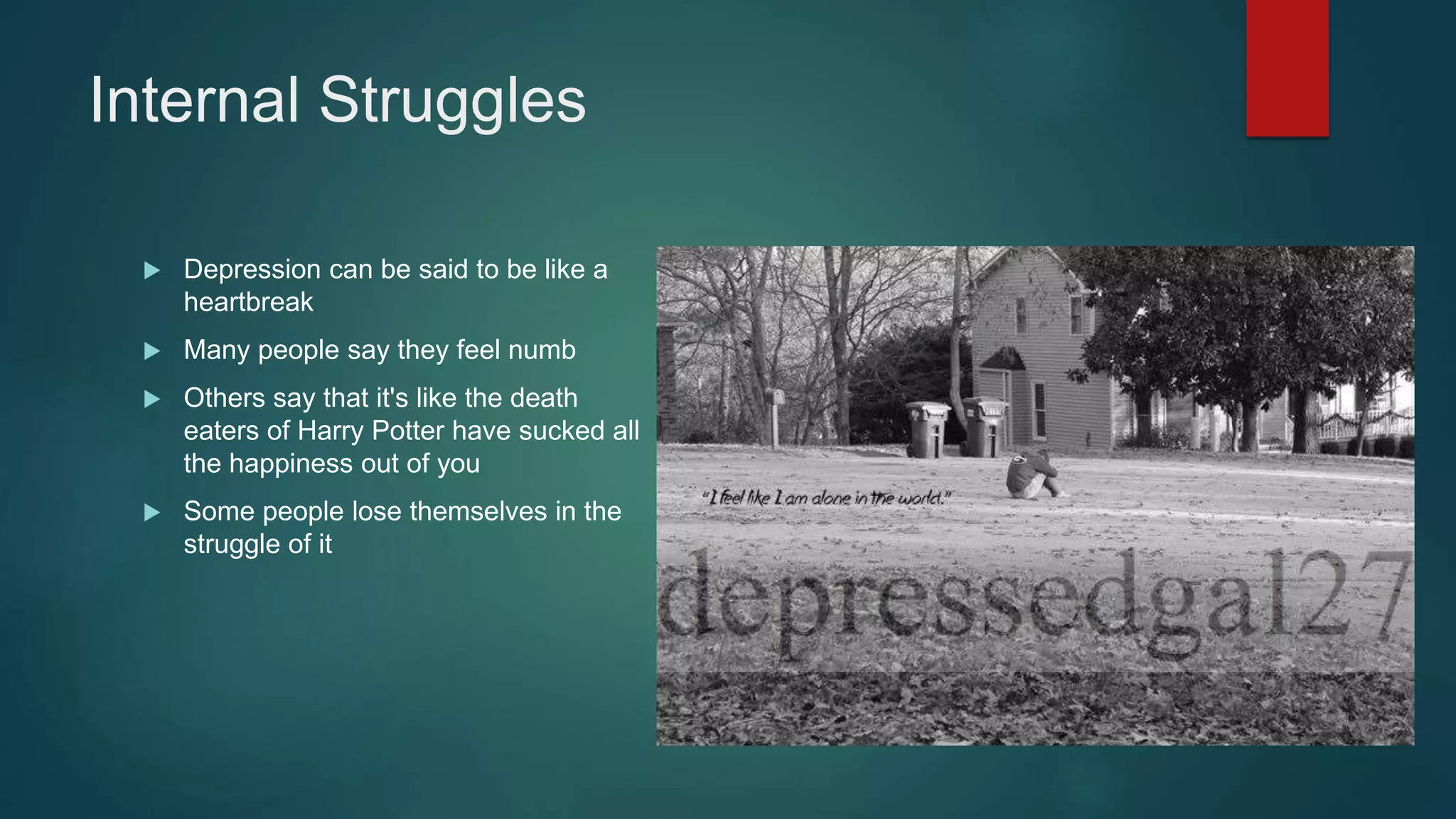
Internal Struggles
 Depression can be said to be like a
heartbreak
 Many people say they feel numb
 Others say that it's like the death
eaters of Harry Potter have sucked all
the happiness out of you
 Some people lose themselves in the
struggle of it
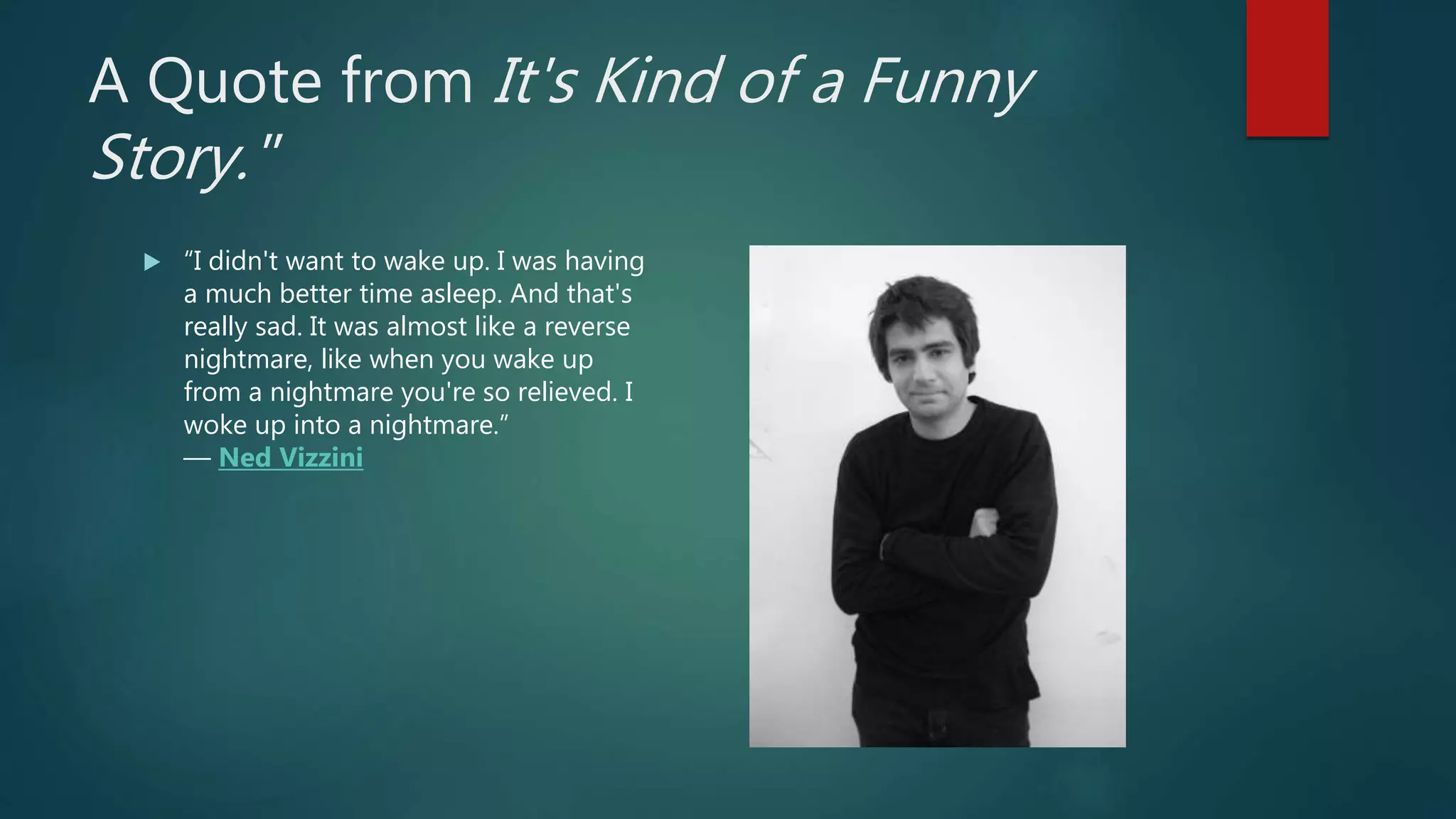
A Quote from It's Kind of a Funny
Story."
 “I didn't want to wake up. I was having
a much better time asleep. And that's
really sad. It was almost like a reverse
nightmare, like when you wake up
from a nightmare you're so relieved. I
woke up into a nightmare.”
― Ned Vizzini
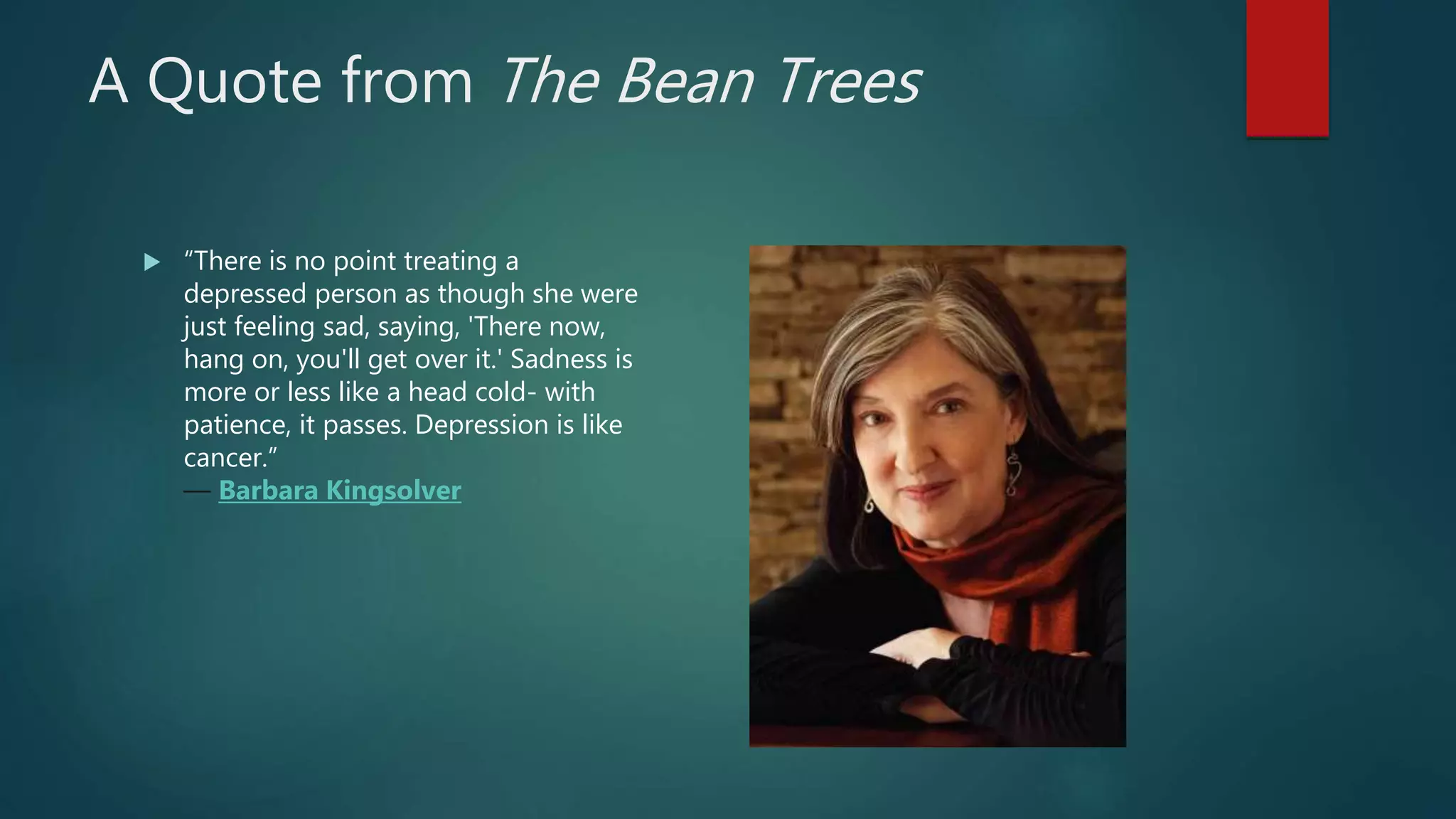
A Quote from The Bean Trees
 “There is no point treating a
depressed person as though she were
just feeling sad, saying, 'There now,
hang on, you'll get over it.' Sadness is
more or less like a head cold- with
patience, it passes. Depression is like
cancer.”
― Barbara Kingsolver
Sources
Depression. (2016, August). Retrieved December 09, 2016,
from https://www.adaa.org/understanding-anxiety/depression
Mayo Clinic. (n.d.). Retrieved December 09,
2016, from http://www.mayoclinic.org/
Myers, D. G. (2007). Psychology. New York: Worth.

Depression PowerPoint

  • 1.
  • 2.
    What is it? -Depression is categorized as a mood disorder - A mood disorder is defined as a psychological disorder characterized by emotional extremes - Causes a persistent feeling of sadness - One of the most common disorders in the US
  • 3.
    Statistics - 6.7% ofAmerican adults exhibited symptoms of a major depressive episode in 2014 - 3-5% of adults suffer from major depressive disorder at any given time - 1 in 50 children and 2 in 25 teens show symptoms of major depression Percentage of Students in AISD Who Missed School Because They Felt Too Sad or Depressed to Attend
  • 4.
    Types of DepressionInclude - Major Depressive Disorder - Catatonic Depression - Seasonal Affective Disorder - Dysthymic Disorder - Bipolar Depression - Clinical Depression
  • 5.
    Major Depressive Disorder Thisdisorder occurs when symptoms of depression last two weeks or more and are not caused by drugs or a medical condition
  • 6.
    Causes of Depression Biological differences: there can be physical problems in the brains of depressed people  Brain chemistry: There may be an imbalance of the amount of neurotransmitter exposure  Hormones: There may be a chemical imbalance in the brain  Inherited traits: Depression can be genetic
  • 7.
    Risk Factors  Certainpersonality traits  Traumatic or stressful events  Childhood trauma  Blood relatives with a history of depression  Being lesbian, gay, bisexual or transgender in an unsupportive situation  History of other mental health disorders  Abuse of alcohol or illegal drugs  Serious or chronic illness  Certain medications
  • 8.
    Symptoms  Feelings ofsadness, tearfulness, emptiness or hopelessness  Angry outbursts, irritability or frustration  Loss of interest or pleasure  Sleep disturbances  Tiredness and lack of energy  Changes in appetite  Anxiety, agitation or restlessness  Slowed thinking, speaking or body movements  Feelings of worthlessness or guilt  Trouble thinking  Frequent or recurrent thoughts of death  Unexplained physical problems
  • 9.
    Treatments  Talk toa psychologist about psychological counseling (psychotherapy)  Talk to a psychiatrist about getting prescribed an antidepressant
  • 10.
    Not-so-Fun Facts  Depressedpeople are more prone to colds than non- depressed people  Women are twice as likely to suffer from depression as men  Exposure to abuse and violence make people more vulnerable to depression  There is a relationship between depression and physical health  Many creative poets and writers have experienced depression  Even positive events can lead to depression
  • 11.
    Famous People withDepression  Kristen Bell  Lady Gaga  The Rock  Sarah Silverman  Cara Delevingne  Demi Lovato  Sheryl Crow  J.K. Rowling
  • 12.
    To see amovie about depression Cyberbully  Starring Emily Osment  About a young girl who is betrayed by a friend  She is bullied at school  She attempts to kill herself after showing many symptoms of depression
  • 13.
    Feelings Many people feelas though they are trapped in their own minds.
  • 14.
    Hopelessness  Many peoplefeel hopeless when they are depressed  They find it hard to think logically about the future  They often lack motivation  They feel alone in the world
  • 15.
    Sadness  People withdepression can feel sad for no known reason  They might find themselves crying and not know why  Anxiety often intertwines with depression, but not always
  • 16.
    Lost of Interest Many people have trouble with daily activities  Things that used to be enjoyable are now pleasureless  Things like school and work no longer are interesting  Some people have trouble thinking straight and concentrating
  • 17.
    Physical Exhaustion  Crampsand pains may be felt  Headaches are common  Physical exhaustion can sometimes be worse than the mental exhaustion  It can feel like trying to breathe with a weight on our chest
  • 18.
    Separation  A lotof people feel like they are watching the world spin from behind a glass wall  Other people say they feel like they are ghosts watching normal people walk around and "living" "normal" lives  Others say it is like a dark hole that surrounds your entire life
  • 19.
    Internal Struggles  Depressioncan be said to be like a heartbreak  Many people say they feel numb  Others say that it's like the death eaters of Harry Potter have sucked all the happiness out of you  Some people lose themselves in the struggle of it
  • 20.
    A Quote fromIt's Kind of a Funny Story."  “I didn't want to wake up. I was having a much better time asleep. And that's really sad. It was almost like a reverse nightmare, like when you wake up from a nightmare you're so relieved. I woke up into a nightmare.” ― Ned Vizzini
  • 21.
    A Quote fromThe Bean Trees  “There is no point treating a depressed person as though she were just feeling sad, saying, 'There now, hang on, you'll get over it.' Sadness is more or less like a head cold- with patience, it passes. Depression is like cancer.” ― Barbara Kingsolver
  • 22.
    Sources Depression. (2016, August).Retrieved December 09, 2016, from https://www.adaa.org/understanding-anxiety/depression Mayo Clinic. (n.d.). Retrieved December 09, 2016, from http://www.mayoclinic.org/ Myers, D. G. (2007). Psychology. New York: Worth.