•World Health Day is celebrated on 7 April every year to
mark the anniversary of the founding of WHO in 1948.
•. Each year a theme is selected that highlights a priority
area of public health.
•The Day provides an opportunity for individuals in every
community to get involved in activities that can lead to
better health.
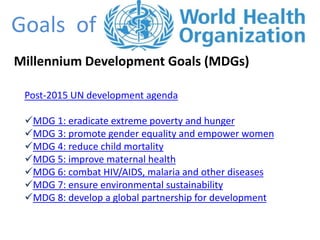
Goals of
Millennium Development Goals (MDGs)
Post-2015 UN development agenda
MDG 1: eradicate extreme poverty and hunger
MDG 3: promote gender equality and empower women
MDG 4: reduce child mortality
MDG 5: improve maternal health
MDG 6: combat HIV/AIDS, malaria and other diseases
MDG 7: ensure environmental sustainability
MDG 8: develop a global partnership for development
•2017: Depression: Let's talk
•2016: Halt the rise: beat diabetes
•2015: Food safety
•2014: Vector-borne diseases: small bite, big threat
•2013: Healthy heart beat, Healthy blood pressure
•2012: Good health adds life to years
•2011: Anti-microbial resistance: no action today, no cure tomorrow
•2010: Urbanization and health: make cities healthier
•2009: Save lives, Make hospitals safe in emergencies
•2008: Protecting health from the adverse effects of climate change
•2007: International health security
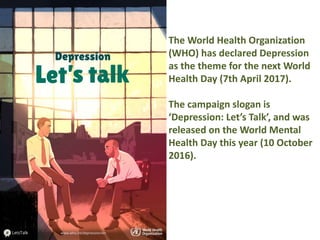
The World Health Organization
(WHO) has declared Depression
as the theme for the next World
Health Day (7th April 2017).
The campaign slogan is
‘Depression: Let’s Talk’, and was
released on the World Mental
Health Day this year (10 October
2016).
What is Depression?
Depression is an illness characterized by persistent sadness and a loss
of interest in activities that you normally enjoy, accompanied by an
inability to carry out daily activities, for at least two weeks.
In addition, people with depression normally have several of the
following symptoms:
a loss of energy;
a change in appetite;
sleeping more or less;
anxiety;
reduced concentration;
restlessness;
feelings of worthlessness, guilt, or hopelessness; and
thoughts of self-harm or suicide.
Key Messages:
Depression is a common mental disorder that affects people of
all ages, from all walks of life, in all countries.
Depression is not a sign of weakness.
The risk of becoming depressed is increased by
opoverty,
ounemployment,
olife events such as the death of a loved one or a relationship
break-up,
ophysical illness and
oproblems caused by alcohol and drug use
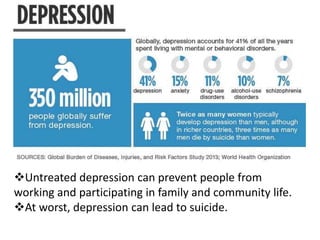
Untreated depression can prevent people from
working and participating in family and community life.
At worst, depression can lead to suicide.
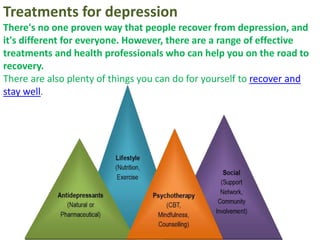
Treatments for depression
There's no one proven way that people recover from depression, and
it's different for everyone. However, there are a range of effective
treatments and health professionals who can help you on the road to
recovery.
There are also plenty of things you can do for yourself to recover and
stay well.
WORLD HEALTH DAY 2017

WORLD HEALTH DAY 2017

  • 2.
    •World Health Dayis celebrated on 7 April every year to mark the anniversary of the founding of WHO in 1948. •. Each year a theme is selected that highlights a priority area of public health. •The Day provides an opportunity for individuals in every community to get involved in activities that can lead to better health.
  • 3.
    Goals of Millennium DevelopmentGoals (MDGs) Post-2015 UN development agenda MDG 1: eradicate extreme poverty and hunger MDG 3: promote gender equality and empower women MDG 4: reduce child mortality MDG 5: improve maternal health MDG 6: combat HIV/AIDS, malaria and other diseases MDG 7: ensure environmental sustainability MDG 8: develop a global partnership for development
  • 4.
    •2017: Depression: Let'stalk •2016: Halt the rise: beat diabetes •2015: Food safety •2014: Vector-borne diseases: small bite, big threat •2013: Healthy heart beat, Healthy blood pressure •2012: Good health adds life to years •2011: Anti-microbial resistance: no action today, no cure tomorrow •2010: Urbanization and health: make cities healthier •2009: Save lives, Make hospitals safe in emergencies •2008: Protecting health from the adverse effects of climate change •2007: International health security
  • 5.
    The World HealthOrganization (WHO) has declared Depression as the theme for the next World Health Day (7th April 2017). The campaign slogan is ‘Depression: Let’s Talk’, and was released on the World Mental Health Day this year (10 October 2016).
  • 6.
    What is Depression? Depressionis an illness characterized by persistent sadness and a loss of interest in activities that you normally enjoy, accompanied by an inability to carry out daily activities, for at least two weeks. In addition, people with depression normally have several of the following symptoms: a loss of energy; a change in appetite; sleeping more or less; anxiety; reduced concentration; restlessness; feelings of worthlessness, guilt, or hopelessness; and thoughts of self-harm or suicide.
  • 7.
    Key Messages: Depression isa common mental disorder that affects people of all ages, from all walks of life, in all countries. Depression is not a sign of weakness. The risk of becoming depressed is increased by opoverty, ounemployment, olife events such as the death of a loved one or a relationship break-up, ophysical illness and oproblems caused by alcohol and drug use
  • 10.
    Untreated depression canprevent people from working and participating in family and community life. At worst, depression can lead to suicide.
  • 12.
    Treatments for depression There'sno one proven way that people recover from depression, and it's different for everyone. However, there are a range of effective treatments and health professionals who can help you on the road to recovery. There are also plenty of things you can do for yourself to recover and stay well.