Identifying
Depression
Course Objectives
• Identify the signs and symptoms of depression
• Recognize the difference between depression
  and typical sadness
• Understand the impact the depression can
  have on daily life
• Identify various methods for treatment and self
  help
Introductions
Please tell us your name,
      where you work and
 share one thing that you
  believe is a symptom of
                depression
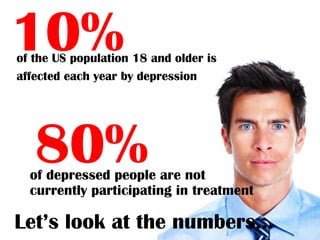
10%
of the US population 18 and older is
affected each year by depression


   80%
  of depressed people are not
  currently participating in treatment

Let’s look at the numbers…
Let’s Talk Statistics
• Depression affects approximately 9.5% of the
  US population 18 and older each year
• Twice as many women as men experience
  depression
• 15% of depressed people will commit suicide
• 54% believe that depression is a personal
  weakness
WHAT IS
DEPRESSION?
Depression is an
  illness that can
   challenge your
 ability to perform
     routine daily
  activities. At its
 worst, depression
     may lead to
contemplation of or
committing suicide
John’s view of Depression

    johns depression
S o what exac tly is
depres s ion and how
  is it different from
jus t being unhappy?


      Depression lasts longer than 2 weeks.


      Depression has specific symptoms.


      Unhappiness is a short-lived response.
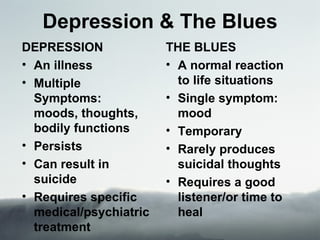
Depression & The Blues
DEPRESSION              THE BLUES
• An illness            • A normal reaction
• Multiple                to life situations
  Symptoms:             • Single symptom:
  moods, thoughts,        mood
  bodily functions      • Temporary
• Persists              • Rarely produces
• Can result in           suicidal thoughts
  suicide               • Requires a good
• Requires specific       listener/or time to
  medical/psychiatric     heal
  treatment
What is depression?

• Clinical Depression is a medical condition
  that affects a person’s mood, thoughts,
  behaviors, and body
• It changes the way that a person thinks,
  feels and acts.
• It can seriously affect your work, personal
  life, and the lives of others.
Types of Depression
• Major Depression – characterized by a deep
  sense of sadness or unhappiness and a lack of
  interest in things you used to enjoy such as
  hobbies, friends, or sex

• Bipolar Disorder - characterized by alternating
  periods of depression and elation. The high
  periods are called mania
Causes of Depression


• Complex – no clear cause
• Genetic, biological & environmental factors can
  contribute
• Biochemical factors - neurotransmitters
Contributing Factors
•   Heredity
•   Personality
•   Environmental Factors
•   Situations
•   Medical Conditions
•   Medications
•   Substance Abuse
Risk Factors for
    Depression

• Female Sex
• Advanced age
• Lower socioeconomic
  status
• Recent stressful life
  experience
• Chronic medical
  condition
• Family history/Genetics
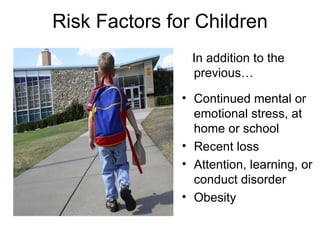
Risk Factors for Children
                In addition to the
                previous…

               • Continued mental or
                 emotional stress, at
                 home or school
               • Recent loss
               • Attention, learning, or
                 conduct disorder
               • Obesity
DIAGNOSING DEPRESSION
   • A thorough medical and
     psychiatric history
   • A complete psychiatric
     evaluation which includes a
     review of your symptoms,
     current life stresses,
     treatment history, personal
     and family history, a risk
     assessment and a thorough
     examination of your thoughts
     and feelings.
EMOTIONAL IMPACT
• Emotionally, you may experience:
    • Sadness
    • Irritability
    • Isolation
    • Loss of motivation
    • Hopelessness
    • Suicidal Thinking
    • Anxiety
    • Poor Self Esteem
PHYSICAL IMPACT
• You may Experience

    • Fatigue – Body Slows Down
    • Sleep Disturbance
    • Appetite Disturbance
    • Lowered Sex Drive
    • Aches & Pains
BEHAVIORAL IMPACT

• Persistently feeling down, sad, tearful, irritable
• Loss of interest or pleasure in activities or
  friends
• Significant change in appetite or weight
• Sleep disturbances
• Restlessness or sluggishness
Additional Signs & Symptoms


• Lack of concentration or indecision
• Feeling helpless, worthless, or guilty
• Irritability, Restlessness
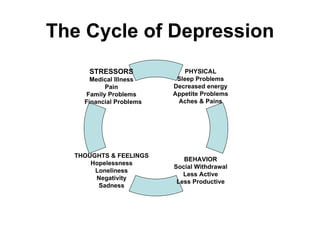
The Cycle of Depression
     STRESSORS              PHYSICAL
      Medical Illness     Sleep Problems
           Pain          Decreased energy
     Family Problems     Appetite Problems
    Financial Problems    Aches & Pains


  THOUGHTS & FEELINGS
                            BEHAVIOR
      Hopelessness
                         Social Withdrawal
       Loneliness
                            Less Active
       Negativity
                          Less Productive
        Sadness
HOW DEPRESSION AFFECTS YOU

• Body – You may sleep poorly, have less
  energy, have more aches and pains

• Behavior – You may talk less, socialize less,
  spend more time alone

• Thinking – You may have more negative
  thoughts than positive thoughts, feel hopeless,
  or lose interest in things.
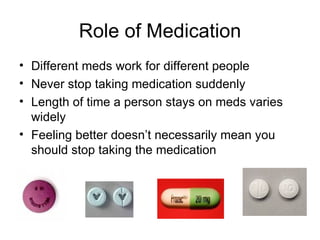
Role of Medication
• Different meds work for different people
• Never stop taking medication suddenly
• Length of time a person stays on meds varies
  widely
• Feeling better doesn’t necessarily mean you
  should stop taking the medication
Anti-depressant Medication
          Information & Tips
• Anti-depressants help balance chemicals
  in the brain
• Anti-depressants are not habit forming
• They need to be taken daily
• If you think you are experiencing side
  effects, write down what they are and how
  often they occur. Discuss side effects with
  your doctor.
• Don’t stop the medication before you
  discuss it with your doctor.
What you can do if you’re
      depressed?
Finding
      Professional Help
      • Talk with your private
        doctor
      • Talk with a psychiatrist
Hel
  p
      • Talk with a therapist

Me    • Talk with your Pastor
Self Help for Depression
•   Educate yourself - Read
•   Challenge Negative Thinking Habits
•   Exercise
•   Good nutrition
•   Stay Social – Participate don’t Isolate
•   Have someone to talk to
•   Seek help from a professional if your
    mood doesn’t lift.
How Can you Help Others
• If you know someone who is depressed
  – Be Supportive, listen without judgment
  – Don’t try to diagnose them yourself
  – Recognize that they can’t just “Snap out of it”
  – Urge them to do positive things that they
    enjoy – accompany them
  – Support the idea of counseling/medication
    treatment
  – Learn about depression yourself
Depression
Questions/Summary

 • Sadness vs depression
   - VIDEO
Test Your
    Knowledge

• Test Answers -
  Handout

Understanding Depression

  • 1.
  • 2.
    Course Objectives • Identifythe signs and symptoms of depression • Recognize the difference between depression and typical sadness • Understand the impact the depression can have on daily life • Identify various methods for treatment and self help
  • 3.
    Introductions Please tell usyour name, where you work and share one thing that you believe is a symptom of depression
  • 4.
    10% of the USpopulation 18 and older is affected each year by depression 80% of depressed people are not currently participating in treatment Let’s look at the numbers…
  • 5.
    Let’s Talk Statistics •Depression affects approximately 9.5% of the US population 18 and older each year • Twice as many women as men experience depression • 15% of depressed people will commit suicide • 54% believe that depression is a personal weakness
  • 6.
  • 7.
    Depression is an illness that can challenge your ability to perform routine daily activities. At its worst, depression may lead to contemplation of or committing suicide
  • 8.
    John’s view ofDepression johns depression
  • 9.
    S o whatexac tly is depres s ion and how is it different from jus t being unhappy? Depression lasts longer than 2 weeks. Depression has specific symptoms. Unhappiness is a short-lived response.
  • 10.
    Depression & TheBlues DEPRESSION THE BLUES • An illness • A normal reaction • Multiple to life situations Symptoms: • Single symptom: moods, thoughts, mood bodily functions • Temporary • Persists • Rarely produces • Can result in suicidal thoughts suicide • Requires a good • Requires specific listener/or time to medical/psychiatric heal treatment
  • 11.
    What is depression? •Clinical Depression is a medical condition that affects a person’s mood, thoughts, behaviors, and body • It changes the way that a person thinks, feels and acts. • It can seriously affect your work, personal life, and the lives of others.
  • 12.
    Types of Depression •Major Depression – characterized by a deep sense of sadness or unhappiness and a lack of interest in things you used to enjoy such as hobbies, friends, or sex • Bipolar Disorder - characterized by alternating periods of depression and elation. The high periods are called mania
  • 13.
    Causes of Depression •Complex – no clear cause • Genetic, biological & environmental factors can contribute • Biochemical factors - neurotransmitters
  • 14.
    Contributing Factors • Heredity • Personality • Environmental Factors • Situations • Medical Conditions • Medications • Substance Abuse
  • 15.
    Risk Factors for Depression • Female Sex • Advanced age • Lower socioeconomic status • Recent stressful life experience • Chronic medical condition • Family history/Genetics
  • 16.
    Risk Factors forChildren In addition to the previous… • Continued mental or emotional stress, at home or school • Recent loss • Attention, learning, or conduct disorder • Obesity
  • 17.
    DIAGNOSING DEPRESSION • A thorough medical and psychiatric history • A complete psychiatric evaluation which includes a review of your symptoms, current life stresses, treatment history, personal and family history, a risk assessment and a thorough examination of your thoughts and feelings.
  • 18.
    EMOTIONAL IMPACT • Emotionally,you may experience: • Sadness • Irritability • Isolation • Loss of motivation • Hopelessness • Suicidal Thinking • Anxiety • Poor Self Esteem
  • 19.
    PHYSICAL IMPACT • Youmay Experience • Fatigue – Body Slows Down • Sleep Disturbance • Appetite Disturbance • Lowered Sex Drive • Aches & Pains
  • 20.
    BEHAVIORAL IMPACT • Persistentlyfeeling down, sad, tearful, irritable • Loss of interest or pleasure in activities or friends • Significant change in appetite or weight • Sleep disturbances • Restlessness or sluggishness
  • 21.
    Additional Signs &Symptoms • Lack of concentration or indecision • Feeling helpless, worthless, or guilty • Irritability, Restlessness
  • 22.
    The Cycle ofDepression STRESSORS PHYSICAL Medical Illness Sleep Problems Pain Decreased energy Family Problems Appetite Problems Financial Problems Aches & Pains THOUGHTS & FEELINGS BEHAVIOR Hopelessness Social Withdrawal Loneliness Less Active Negativity Less Productive Sadness
  • 23.
    HOW DEPRESSION AFFECTSYOU • Body – You may sleep poorly, have less energy, have more aches and pains • Behavior – You may talk less, socialize less, spend more time alone • Thinking – You may have more negative thoughts than positive thoughts, feel hopeless, or lose interest in things.
  • 24.
    Role of Medication •Different meds work for different people • Never stop taking medication suddenly • Length of time a person stays on meds varies widely • Feeling better doesn’t necessarily mean you should stop taking the medication
  • 25.
    Anti-depressant Medication Information & Tips • Anti-depressants help balance chemicals in the brain • Anti-depressants are not habit forming • They need to be taken daily • If you think you are experiencing side effects, write down what they are and how often they occur. Discuss side effects with your doctor. • Don’t stop the medication before you discuss it with your doctor.
  • 26.
    What you cando if you’re depressed?
  • 27.
    Finding Professional Help • Talk with your private doctor • Talk with a psychiatrist Hel p • Talk with a therapist Me • Talk with your Pastor
  • 28.
    Self Help forDepression • Educate yourself - Read • Challenge Negative Thinking Habits • Exercise • Good nutrition • Stay Social – Participate don’t Isolate • Have someone to talk to • Seek help from a professional if your mood doesn’t lift.
  • 29.
    How Can youHelp Others • If you know someone who is depressed – Be Supportive, listen without judgment – Don’t try to diagnose them yourself – Recognize that they can’t just “Snap out of it” – Urge them to do positive things that they enjoy – accompany them – Support the idea of counseling/medication treatment – Learn about depression yourself
  • 30.
  • 31.
    Test Your Knowledge • Test Answers - Handout

Editor's Notes

  • #2 06/22/12
  • #6 06/22/12
  • #8 06/22/12 Depression is a medical illness that involves the mind and body. Also called major depression, major depressive disorder and clinical depression, it affects how you feel, think and behave. Depression can lead to a variety of emotional and physical problems. You may have trouble doing normal day-to-day activities, and depression may make you feel as if life isn't worth living. More than just a bout of the blues, depression isn't a weakness, nor is it something that you can simply "snap out" of. Depression is a chronic illness that usually requires long-term treatment, like diabetes or high blood pressure. But don't get discouraged. Most people with depression feel better with medication, psychological counseling or other treatment.