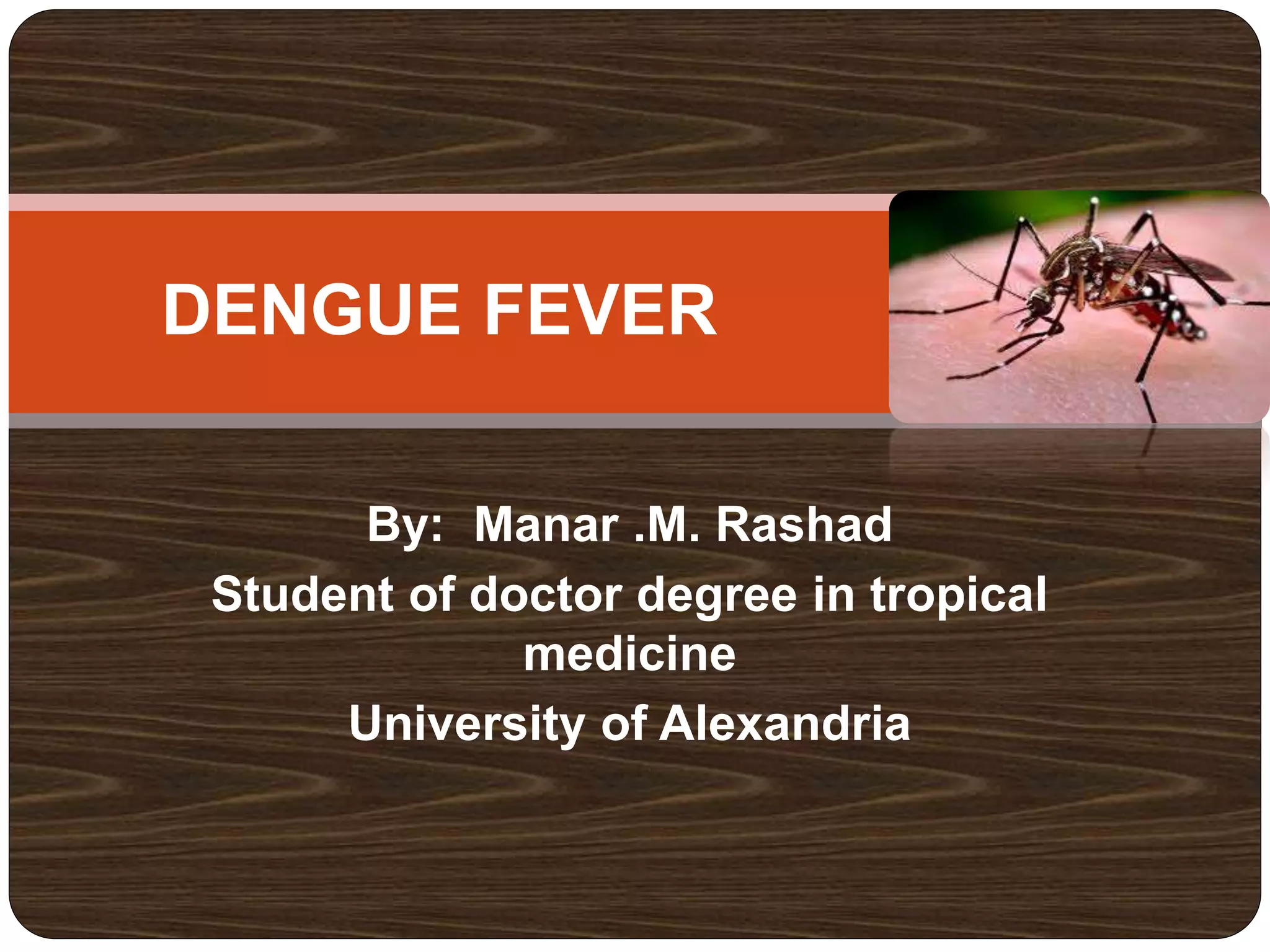
DENGUE FEVER
By: Manar .M. Rashad
Student of doctor degree in tropical
medicine
University of Alexandria
History
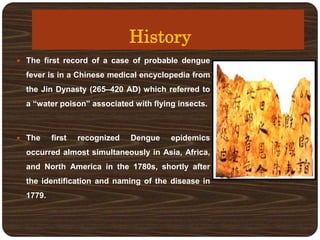
 The first record of a case of probable dengue
fever is in a Chinese medical encyclopedia from
the Jin Dynasty (265–420 AD) which referred to
a “water poison” associated with flying insects.
 The first recognized Dengue epidemics
occurred almost simultaneously in Asia, Africa,
and North America in the 1780s, shortly after
the identification and naming of the disease in
1779.
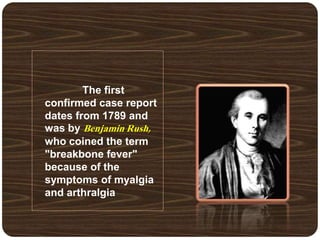
The first
confirmed case report
dates from 1789 and
was by Benjamin Rush,
who coined the term
"breakbone fever"
because of the
symptoms of myalgia
and arthralgia
 The origins of the word dengue are not clear, but one theory
is that it is derived from the Swahili phrase "Ka-dinga pepo",
meaning "cramp-like seizure caused by an evil spirit"
 Dengue fever is the most common arthropod borne viral
disease.
 Dengue fever is one of the most important emerging disease
of the tropical and sub tropical regions, affecting urban and
pre urban areas
Global burden of DENGUE:
 During the 19th century, dengue was considered a
sporadic disease that caused epidemics at long
intervals,
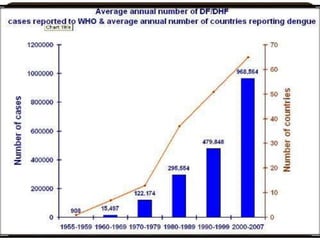
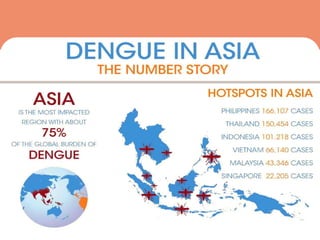
 Today, dengue ranks as the most important
mosquito-borne viral disease in the world. In the
last 50 years, incidence has increased 30-fold.
2.5
bilions
exposed
around
100
countries
50
million
infected
500,000
DHF
22,000
deaths
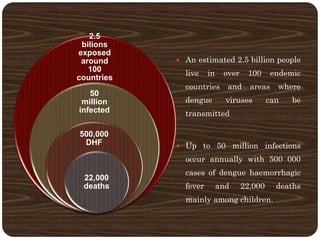
 An estimated 2.5 billion people
live in over 100 endemic
countries and areas where
dengue viruses can be
transmitted
 Up to 50 million infections
occur annually with 500 000
cases of dengue haemorrhagic
fever and 22,000 deaths
mainly among children.
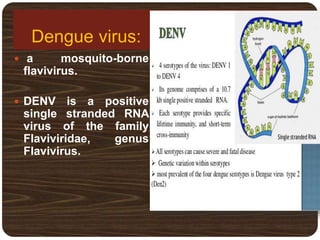
Dengue virus:
 a mosquito-borne
flavivirus.
 DENV is a positive
single stranded RNA
virus of the family
Flaviviridae, genus
Flavivirus.
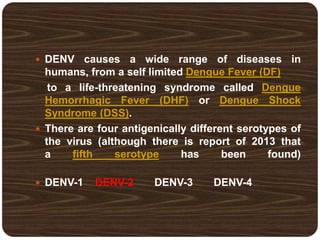
 DENV causes a wide range of diseases in
humans, from a self limited Dengue Fever (DF)
to a life-threatening syndrome called Dengue
Hemorrhagic Fever (DHF) or Dengue Shock
Syndrome (DSS).
 There are four antigenically different serotypes of
the virus (although there is report of 2013 that
a fifth serotype has been found)
 DENV-1 DENV-2 DENV-3 DENV-4
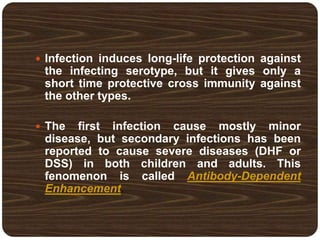
 Infection induces long-life protection against
the infecting serotype, but it gives only a
short time protective cross immunity against
the other types.
 The first infection cause mostly minor
disease, but secondary infections has been
reported to cause severe diseases (DHF or
DSS) in both children and adults. This
fenomenon is called Antibody-Dependent
Enhancement.
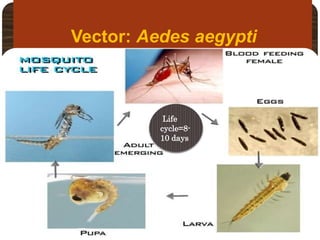
Vector: Aedes aegypti
Adult
Larva
Life
cycle=8-
10 days
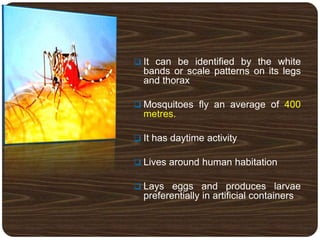
 It can be identified by the white
bands or scale patterns on its legs
and thorax
 Mosquitoes fly an average of 400
metres.
 It has daytime activity
 Lives around human habitation
 Lays eggs and produces larvae
preferentially in artificial containers
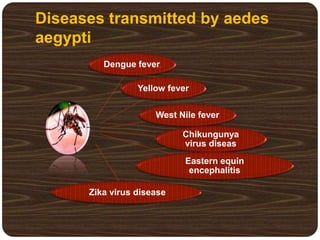
Diseases transmitted by aedes
aegypti
Dengue fever,
Yellow fever
West Nile fever
Chikungunya
virus diseas
Eastern equin
encephalitis
Zika virus disease
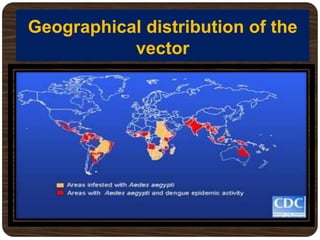
Geographical distribution of the
vector
Challenge in controlling vector
 There is a very important adaptation of dengue
vectors that makes controlling their populations a
difficult task. Their eggs can withstand desiccation
for several months, which means that even if all
larvae, pupae, and adults were eliminated at some
point in time, repopulation will occur as soon as the
eggs in the containers are flooded with water.
Unfortunately, there is no effective way to control the
eggs in containers..
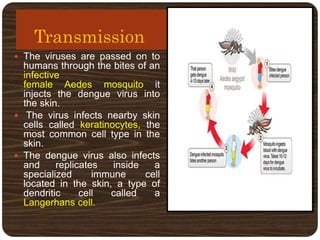
Transmission
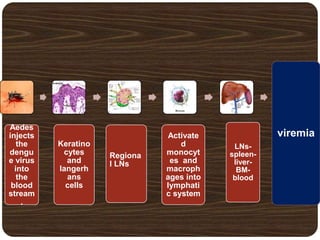
 The viruses are passed on to
humans through the bites of an
infective
female Aedes mosquito it
injects the dengue virus into
the skin.
 The virus infects nearby skin
cells called keratinocytes, the
most common cell type in the
skin.
 The dengue virus also infects
and replicates inside a
specialized immune cell
located in the skin, a type of
dendritic cell called a
Langerhans cell.
 Once the Langerhans cells are infected with the
dengue virus, they travel from the infection site in
the skin to the lymph nodes.
 The infected Langerhans cells display dengue
viral antigens on their surface, which activates the
innate immune response by alerting two types of
white blood cells, called monocytes and
macrophages, to fight the virus.
 . As the infected monocytes and macrophages travel
through the lymphatic system, the dengue virus
spreads throughout the body.
 During its journey, the dengue virus infects more cells,
including those in the lymph nodes and bone marrow,
macrophages in both the spleen and liver, and
monocytes in the blood.
 The spread and increase of the virus results
in viremia, a condition in which there is a high level of
dengue virus in the blood stream.
Aedes
injects
the
dengu
e virus
into
the
blood
stream
.
Keratino
cytes
and
langerh
ans
cells
Regiona
l LNs
Activate
d
monocyt
es and
macroph
ages into
lymphati
c system
LNs-
spleen-
liver-
BM-
blood
viremia
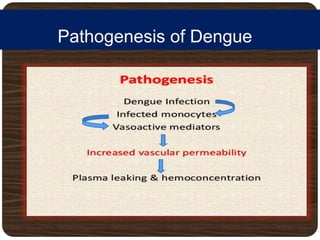
Pathogenesis of Dengue
 The microvascular leak occurs at a time when the
viral load is in steep decline and is associated
with a more intense immune response.
 Disruption in the endothelial glycocalyx layer has
been implicated, through immune-mediated
mechanisms by the virus or the NS1 antigen
adhering to the endothelial layer.
 The NS1 antigen is a glycoprotein secreted from
dengue-infected cells and is required for viral
replication.
 Studies have shown that NS1 can selectively bind
to heparin sulphate in the glycocalyx layer of
microvascular endothelial cells. Thus facilitating
immune complex formation and antibody-
dependent complement activation causing the
endothelial damage and microvascular leakage.
fever is a
Systemic disease
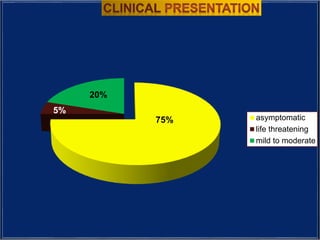
75%
5%
20%
asymptomatic
life threatening
mild to moderate
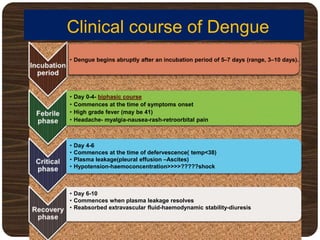
Clinical course of Dengue
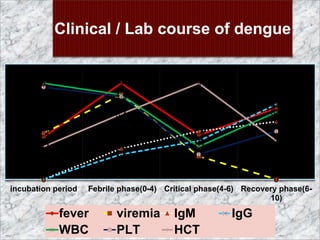
• Dengue begins abruptly after an incubation period of 5–7 days (range, 3–10 days).
• Day 0-4- biphasic course
• Commences at the time of symptoms onset
• High grade fever (may be 41)
• Headache- myalgia-nausea-rash-retroorbital pain
• Day 4-6
• Commences at the time of defervescence( temp<38)
• Plasma leakage(pleural effusion –Ascites)
• Hypotension-haemoconcentration>>>>?????shock
• Day 6-10
• Commences when plasma leakage resolves
• Reabsorbed extravascular fluid-haemodynamic stability-diuresis
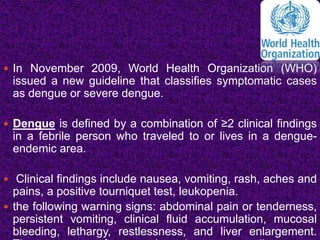
 In November 2009, World Health Organization (WHO)
issued a new guideline that classifies symptomatic cases
as dengue or severe dengue.
 Dengue is defined by a combination of ≥2 clinical findings
in a febrile person who traveled to or lives in a dengue-
endemic area.
 Clinical findings include nausea, vomiting, rash, aches and
pains, a positive tourniquet test, leukopenia.
 the following warning signs: abdominal pain or tenderness,
persistent vomiting, clinical fluid accumulation, mucosal
bleeding, lethargy, restlessness, and liver enlargement.
 Severe dengue is classified as dengue with any of the
following symptoms:
 severe plasma leakage leading to shock or fluid
accumulation with respiratory distress
 severe bleeding
 severe organ impairment such as elevated transaminases
≥1,000 IU/L, impaired consciousness, or cardiovascular
compromise.
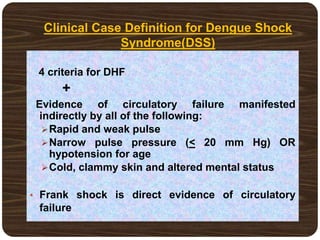
Clinical Case Definition for Dengue Shock
Syndrome(DSS)
4 criteria for DHF
+
Evidence of circulatory failure manifested
indirectly by all of the following:
Rapid and weak pulse
Narrow pulse pressure (< 20 mm Hg) OR
hypotension for age
Cold, clammy skin and altered mental status
• Frank shock is direct evidence of circulatory
failure
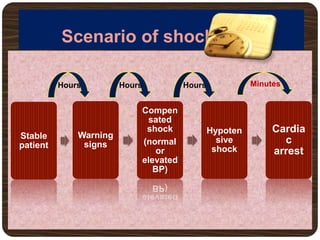
Scenario of shock
Stable
patient
Warning
signs
Compen
sated
shock
(normal
or
elevated
BP)
Hypoten
sive
shock
Cardia
c
arrest
Hours Hours Hours Minutes
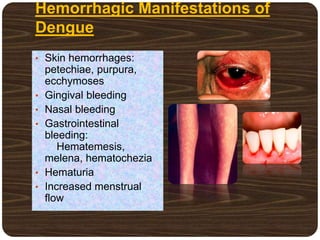
Hemorrhagic Manifestations of
Dengue
• Skin hemorrhages:
petechiae, purpura,
ecchymoses
• Gingival bleeding
• Nasal bleeding
• Gastrointestinal
bleeding:
Hematemesis,
melena, hematochezia
• Hematuria
• Increased menstrual
flow
Signs and Symptoms of
Encephalitis/Encephalopathy Associated with Acute
Dengue Infection
• Decreased level of consciousness:
lethargy, confusion, coma
• Seizures
• Nuchal rigidity
• Paresis
DIAGNOSIS/ LAB WORK
 ISOLATION OF DENGUE VIRUS
 INCREASED IgM OR IgG ANTIBODIES
TITRES
 DENQUE ANTIGEN DETECTION (NS1) BY
IMMUNOHISTOCHEMISTRY,IMMUNOFLUR
OSCENCE,ELISA
 PCR(detection of viral RNA)
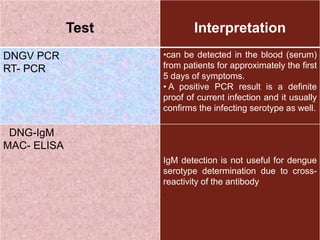
Test Interpretation
DNGV PCR
RT- PCR
•can be detected in the blood (serum)
from patients for approximately the first
5 days of symptoms.
• A positive PCR result is a definite
proof of current infection and it usually
confirms the infecting serotype as well.
DNG-IgM
MAC- ELISA
IgM detection is not useful for dengue
serotype determination due to cross-
reactivity of the antibody
.
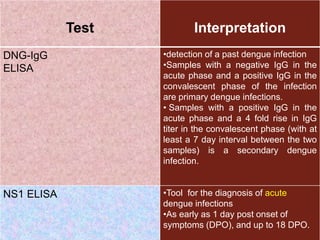
Test Interpretation
DNG-IgG
ELISA
•detection of a past dengue infection
•Samples with a negative IgG in the
acute phase and a positive IgG in the
convalescent phase of the infection
are primary dengue infections.
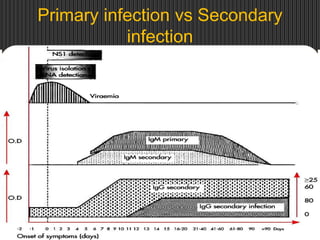
• Samples with a positive IgG in the
acute phase and a 4 fold rise in IgG
titer in the convalescent phase (with at
least a 7 day interval between the two
samples) is a secondary dengue
infection.
NS1 ELISA •Tool for the diagnosis of acute
dengue infections
•As early as 1 day post onset of
symptoms (DPO), and up to 18 DPO.
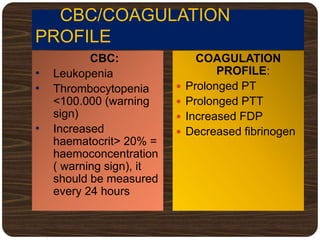
CBC/COAGULATION
PROFILE
CBC:
• Leukopenia
• Thrombocytopenia
<100.000 (warning
sign)
• Increased
haematocrit> 20% =
haemoconcentration
( warning sign), it
should be measured
every 24 hours
COAGULATION
PROFILE:
 Prolonged PT
 Prolonged PTT
 Increased FDP
 Decreased fibrinogen
Clinical course of Dengue:
2.2
5
2.3
3.7
2.4
4.4
1.2
00
1.6
2.5
3
0
1.3
2
3.9
5
4.4
1.7
3.5
4.8
4.3
1.3
2.5
1.7
3.4
5
2
incubation period Febrile phase(0-4) Critical phase(4-6) Recovery phase(6-
10)
Clinical / Lab course of dengue
fever viremia IgM IgG
WBC PLT HCT
Primary infection vs Secondary
infection
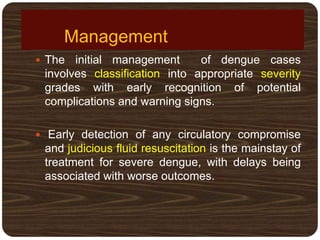
Management
 The initial management of dengue cases
involves classification into appropriate severity
grades with early recognition of potential
complications and warning signs.
 Early detection of any circulatory compromise
and judicious fluid resuscitation is the mainstay of
treatment for severe dengue, with delays being
associated with worse outcomes.
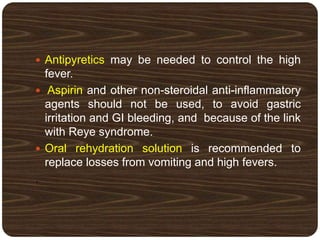
 Antipyretics may be needed to control the high
fever.
 Aspirin and other non-steroidal anti-inflammatory
agents should not be used, to avoid gastric
irritation and GI bleeding, and because of the link
with Reye syndrome.
 Oral rehydration solution is recommended to
replace losses from vomiting and high fevers.
.
 Fluid therapy:
 The minimum amount of intravenous fluid should
be given to ensure adequate perfusion, clinicians
should be guided by vital signs, haematocrit and
average urine output of 0.5 mL/kg per hour.
 Isotonic fluids should be given for the duration of
the critical period only (usually 24–48 hours), as
there is a significant risk of fluid overload if
intravenous fluids are continued into the recovery
phase.
Colloids may be given in:
 Hypotensive shock
 After >20-30 ml/ kg/ day crystalloids given
 Haematocrit does not decrease after crystalloids
administration in shock state
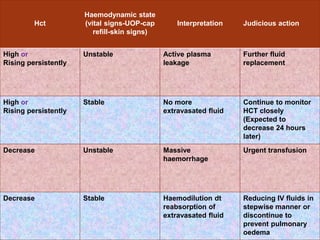
Hct
Haemodynamic state
(vital signs-UOP-cap
refill-skin signs)
Interpretation Judicious action
High or
Rising persistently
Unstable Active plasma
leakage
Further fluid
replacement
High or
Rising persistently
Stable No more
extravasated fluid
Continue to monitor
HCT closely
(Expected to
decrease 24 hours
later)
Decrease Unstable Massive
haemorrhage
Urgent transfusion
Decrease Stable Haemodilution dt
reabsorption of
extravasated fluid
Reducing IV fluids in
stepwise manner or
discontinue to
prevent pulmonary
oedema
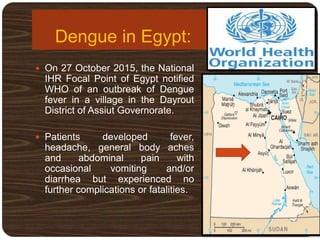
Dengue in Egypt:
 On 27 October 2015, the National
IHR Focal Point of Egypt notified
WHO of an outbreak of Dengue
fever in a village in the Dayrout
District of Assiut Governorate.
 Patients developed fever,
headache, general body aches
and abdominal pain with
occasional vomiting and/or
diarrhea but experienced no
further complications or fatalities.
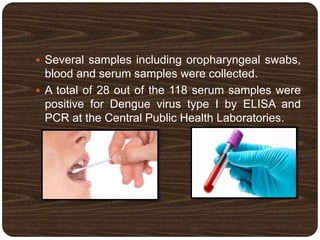
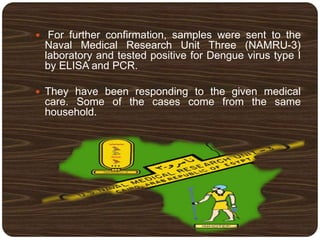
 Several samples including oropharyngeal swabs,
blood and serum samples were collected.
 A total of 28 out of the 118 serum samples were
positive for Dengue virus type I by ELISA and
PCR at the Central Public Health Laboratories.
 For further confirmation, samples were sent to the
Naval Medical Research Unit Three (NAMRU-3)
laboratory and tested positive for Dengue virus type I
by ELISA and PCR.
 They have been responding to the given medical
care. Some of the cases come from the same
household.
Era of Dengue
vaccine(upcoming!)
 The growing global epidemic of dengue is of
mounting concern, and a safe and effective
vaccine is urgently needed.
 WHO expects vaccines to be an integrated
part of the Global dengue prevention and
control strategy (2012-2020).
 The first dengue vaccine,
Dengvaxia (CYD-TDV) by Sanofi
Pasteur, was first registered in
Mexico in December, 2015.
 CYD-TDV is a live recombinant
tetravalent dengue vaccine that
has been evaluated as a 3-dose
series on a 0/6/12 month schedule
in Phase III clinical studies.
 It has been registered for use in
individuals 9-45 years of age living
in endemic areas
Thank you
Thank

Dengue

  • 1.
    DENGUE FEVER By: Manar.M. Rashad Student of doctor degree in tropical medicine University of Alexandria
  • 2.
    History  The firstrecord of a case of probable dengue fever is in a Chinese medical encyclopedia from the Jin Dynasty (265–420 AD) which referred to a “water poison” associated with flying insects.  The first recognized Dengue epidemics occurred almost simultaneously in Asia, Africa, and North America in the 1780s, shortly after the identification and naming of the disease in 1779.
  • 3.
    The first confirmed casereport dates from 1789 and was by Benjamin Rush, who coined the term "breakbone fever" because of the symptoms of myalgia and arthralgia
  • 4.
     The originsof the word dengue are not clear, but one theory is that it is derived from the Swahili phrase "Ka-dinga pepo", meaning "cramp-like seizure caused by an evil spirit"  Dengue fever is the most common arthropod borne viral disease.  Dengue fever is one of the most important emerging disease of the tropical and sub tropical regions, affecting urban and pre urban areas
  • 5.
    Global burden ofDENGUE:  During the 19th century, dengue was considered a sporadic disease that caused epidemics at long intervals,  Today, dengue ranks as the most important mosquito-borne viral disease in the world. In the last 50 years, incidence has increased 30-fold.
  • 6.
    2.5 bilions exposed around 100 countries 50 million infected 500,000 DHF 22,000 deaths  An estimated2.5 billion people live in over 100 endemic countries and areas where dengue viruses can be transmitted  Up to 50 million infections occur annually with 500 000 cases of dengue haemorrhagic fever and 22,000 deaths mainly among children.
  • 9.
    Dengue virus:  amosquito-borne flavivirus.  DENV is a positive single stranded RNA virus of the family Flaviviridae, genus Flavivirus.
  • 10.
     DENV causesa wide range of diseases in humans, from a self limited Dengue Fever (DF) to a life-threatening syndrome called Dengue Hemorrhagic Fever (DHF) or Dengue Shock Syndrome (DSS).  There are four antigenically different serotypes of the virus (although there is report of 2013 that a fifth serotype has been found)  DENV-1 DENV-2 DENV-3 DENV-4
  • 11.
     Infection induceslong-life protection against the infecting serotype, but it gives only a short time protective cross immunity against the other types.  The first infection cause mostly minor disease, but secondary infections has been reported to cause severe diseases (DHF or DSS) in both children and adults. This fenomenon is called Antibody-Dependent Enhancement.
  • 12.
  • 13.
     It canbe identified by the white bands or scale patterns on its legs and thorax  Mosquitoes fly an average of 400 metres.  It has daytime activity  Lives around human habitation  Lays eggs and produces larvae preferentially in artificial containers
  • 14.
    Diseases transmitted byaedes aegypti Dengue fever, Yellow fever West Nile fever Chikungunya virus diseas Eastern equin encephalitis Zika virus disease
  • 15.
  • 16.
    Challenge in controllingvector  There is a very important adaptation of dengue vectors that makes controlling their populations a difficult task. Their eggs can withstand desiccation for several months, which means that even if all larvae, pupae, and adults were eliminated at some point in time, repopulation will occur as soon as the eggs in the containers are flooded with water. Unfortunately, there is no effective way to control the eggs in containers..
  • 17.
    Transmission  The virusesare passed on to humans through the bites of an infective female Aedes mosquito it injects the dengue virus into the skin.  The virus infects nearby skin cells called keratinocytes, the most common cell type in the skin.  The dengue virus also infects and replicates inside a specialized immune cell located in the skin, a type of dendritic cell called a Langerhans cell.
  • 18.
     Once theLangerhans cells are infected with the dengue virus, they travel from the infection site in the skin to the lymph nodes.  The infected Langerhans cells display dengue viral antigens on their surface, which activates the innate immune response by alerting two types of white blood cells, called monocytes and macrophages, to fight the virus.
  • 19.
     . Asthe infected monocytes and macrophages travel through the lymphatic system, the dengue virus spreads throughout the body.  During its journey, the dengue virus infects more cells, including those in the lymph nodes and bone marrow, macrophages in both the spleen and liver, and monocytes in the blood.  The spread and increase of the virus results in viremia, a condition in which there is a high level of dengue virus in the blood stream.
  • 20.
  • 21.
  • 22.
     The microvascularleak occurs at a time when the viral load is in steep decline and is associated with a more intense immune response.  Disruption in the endothelial glycocalyx layer has been implicated, through immune-mediated mechanisms by the virus or the NS1 antigen adhering to the endothelial layer.
  • 23.
     The NS1antigen is a glycoprotein secreted from dengue-infected cells and is required for viral replication.  Studies have shown that NS1 can selectively bind to heparin sulphate in the glycocalyx layer of microvascular endothelial cells. Thus facilitating immune complex formation and antibody- dependent complement activation causing the endothelial damage and microvascular leakage.
  • 24.
  • 25.
  • 26.
    Clinical course ofDengue • Dengue begins abruptly after an incubation period of 5–7 days (range, 3–10 days). • Day 0-4- biphasic course • Commences at the time of symptoms onset • High grade fever (may be 41) • Headache- myalgia-nausea-rash-retroorbital pain • Day 4-6 • Commences at the time of defervescence( temp<38) • Plasma leakage(pleural effusion –Ascites) • Hypotension-haemoconcentration>>>>?????shock • Day 6-10 • Commences when plasma leakage resolves • Reabsorbed extravascular fluid-haemodynamic stability-diuresis
  • 27.
     In November2009, World Health Organization (WHO) issued a new guideline that classifies symptomatic cases as dengue or severe dengue.  Dengue is defined by a combination of ≥2 clinical findings in a febrile person who traveled to or lives in a dengue- endemic area.  Clinical findings include nausea, vomiting, rash, aches and pains, a positive tourniquet test, leukopenia.  the following warning signs: abdominal pain or tenderness, persistent vomiting, clinical fluid accumulation, mucosal bleeding, lethargy, restlessness, and liver enlargement.
  • 28.
     Severe dengueis classified as dengue with any of the following symptoms:  severe plasma leakage leading to shock or fluid accumulation with respiratory distress  severe bleeding  severe organ impairment such as elevated transaminases ≥1,000 IU/L, impaired consciousness, or cardiovascular compromise.
  • 29.
    Clinical Case Definitionfor Dengue Shock Syndrome(DSS) 4 criteria for DHF + Evidence of circulatory failure manifested indirectly by all of the following: Rapid and weak pulse Narrow pulse pressure (< 20 mm Hg) OR hypotension for age Cold, clammy skin and altered mental status • Frank shock is direct evidence of circulatory failure
  • 30.
  • 31.
    Hemorrhagic Manifestations of Dengue •Skin hemorrhages: petechiae, purpura, ecchymoses • Gingival bleeding • Nasal bleeding • Gastrointestinal bleeding: Hematemesis, melena, hematochezia • Hematuria • Increased menstrual flow
  • 32.
    Signs and Symptomsof Encephalitis/Encephalopathy Associated with Acute Dengue Infection • Decreased level of consciousness: lethargy, confusion, coma • Seizures • Nuchal rigidity • Paresis
  • 33.
    DIAGNOSIS/ LAB WORK ISOLATION OF DENGUE VIRUS  INCREASED IgM OR IgG ANTIBODIES TITRES  DENQUE ANTIGEN DETECTION (NS1) BY IMMUNOHISTOCHEMISTRY,IMMUNOFLUR OSCENCE,ELISA  PCR(detection of viral RNA)
  • 34.
    Test Interpretation DNGV PCR RT-PCR •can be detected in the blood (serum) from patients for approximately the first 5 days of symptoms. • A positive PCR result is a definite proof of current infection and it usually confirms the infecting serotype as well. DNG-IgM MAC- ELISA IgM detection is not useful for dengue serotype determination due to cross- reactivity of the antibody .
  • 35.
    Test Interpretation DNG-IgG ELISA •detection ofa past dengue infection •Samples with a negative IgG in the acute phase and a positive IgG in the convalescent phase of the infection are primary dengue infections. • Samples with a positive IgG in the acute phase and a 4 fold rise in IgG titer in the convalescent phase (with at least a 7 day interval between the two samples) is a secondary dengue infection. NS1 ELISA •Tool for the diagnosis of acute dengue infections •As early as 1 day post onset of symptoms (DPO), and up to 18 DPO.
  • 36.
    CBC/COAGULATION PROFILE CBC: • Leukopenia • Thrombocytopenia <100.000(warning sign) • Increased haematocrit> 20% = haemoconcentration ( warning sign), it should be measured every 24 hours COAGULATION PROFILE:  Prolonged PT  Prolonged PTT  Increased FDP  Decreased fibrinogen
  • 37.
    Clinical course ofDengue: 2.2 5 2.3 3.7 2.4 4.4 1.2 00 1.6 2.5 3 0 1.3 2 3.9 5 4.4 1.7 3.5 4.8 4.3 1.3 2.5 1.7 3.4 5 2 incubation period Febrile phase(0-4) Critical phase(4-6) Recovery phase(6- 10) Clinical / Lab course of dengue fever viremia IgM IgG WBC PLT HCT
  • 38.
    Primary infection vsSecondary infection
  • 39.
    Management  The initialmanagement of dengue cases involves classification into appropriate severity grades with early recognition of potential complications and warning signs.  Early detection of any circulatory compromise and judicious fluid resuscitation is the mainstay of treatment for severe dengue, with delays being associated with worse outcomes.
  • 40.
     Antipyretics maybe needed to control the high fever.  Aspirin and other non-steroidal anti-inflammatory agents should not be used, to avoid gastric irritation and GI bleeding, and because of the link with Reye syndrome.  Oral rehydration solution is recommended to replace losses from vomiting and high fevers. .
  • 41.
     Fluid therapy: The minimum amount of intravenous fluid should be given to ensure adequate perfusion, clinicians should be guided by vital signs, haematocrit and average urine output of 0.5 mL/kg per hour.  Isotonic fluids should be given for the duration of the critical period only (usually 24–48 hours), as there is a significant risk of fluid overload if intravenous fluids are continued into the recovery phase.
  • 42.
    Colloids may begiven in:  Hypotensive shock  After >20-30 ml/ kg/ day crystalloids given  Haematocrit does not decrease after crystalloids administration in shock state
  • 43.
    Hct Haemodynamic state (vital signs-UOP-cap refill-skinsigns) Interpretation Judicious action High or Rising persistently Unstable Active plasma leakage Further fluid replacement High or Rising persistently Stable No more extravasated fluid Continue to monitor HCT closely (Expected to decrease 24 hours later) Decrease Unstable Massive haemorrhage Urgent transfusion Decrease Stable Haemodilution dt reabsorption of extravasated fluid Reducing IV fluids in stepwise manner or discontinue to prevent pulmonary oedema
  • 44.
    Dengue in Egypt: On 27 October 2015, the National IHR Focal Point of Egypt notified WHO of an outbreak of Dengue fever in a village in the Dayrout District of Assiut Governorate.  Patients developed fever, headache, general body aches and abdominal pain with occasional vomiting and/or diarrhea but experienced no further complications or fatalities.
  • 45.
     Several samplesincluding oropharyngeal swabs, blood and serum samples were collected.  A total of 28 out of the 118 serum samples were positive for Dengue virus type I by ELISA and PCR at the Central Public Health Laboratories.
  • 46.
     For furtherconfirmation, samples were sent to the Naval Medical Research Unit Three (NAMRU-3) laboratory and tested positive for Dengue virus type I by ELISA and PCR.  They have been responding to the given medical care. Some of the cases come from the same household.
  • 47.
    Era of Dengue vaccine(upcoming!) The growing global epidemic of dengue is of mounting concern, and a safe and effective vaccine is urgently needed.  WHO expects vaccines to be an integrated part of the Global dengue prevention and control strategy (2012-2020).
  • 48.
     The firstdengue vaccine, Dengvaxia (CYD-TDV) by Sanofi Pasteur, was first registered in Mexico in December, 2015.  CYD-TDV is a live recombinant tetravalent dengue vaccine that has been evaluated as a 3-dose series on a 0/6/12 month schedule in Phase III clinical studies.  It has been registered for use in individuals 9-45 years of age living in endemic areas
  • 49.