Definition, Structure and
Types of an Editorial
Presented by:
Attroba Adan (01)
Hina Liaqat (10)
BS. MCM (V)
Table of contents
• Definitions of Editorial
• Structure of an Editorial
A Sample Structure
• Types of Editorial
Style vise Division
Subject vise Division
Definition
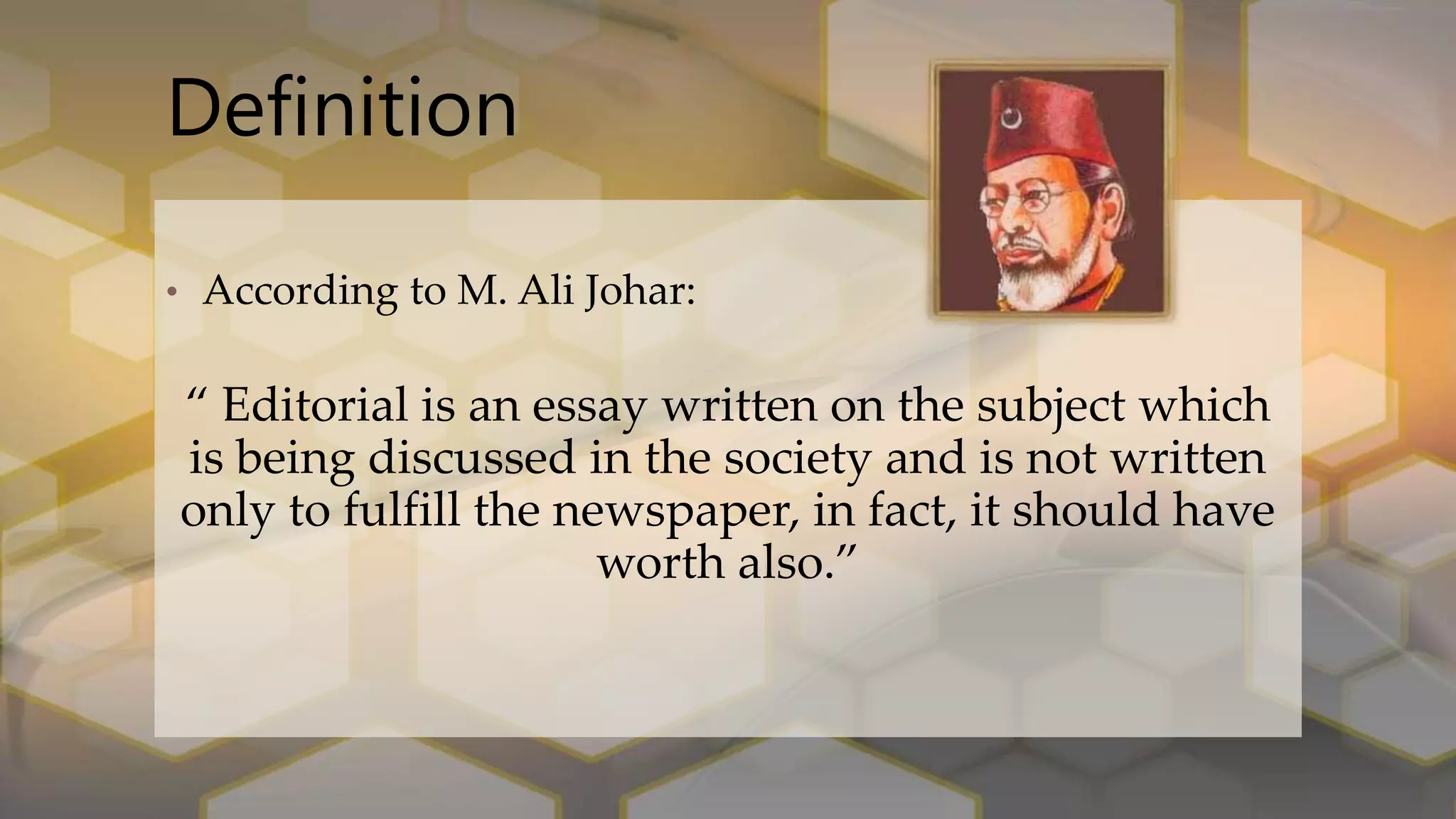
• According to M. Ali Johar:
“ Editorial is an essay written on the subject which
is being discussed in the society and is not written
only to fulfill the newspaper, in fact, it should have
worth also.”
Definition
• According to G.M Naqqash:
“An editorial is not simply an essay on some
important issue, with a few lines of criticism or
comment at the end. A good editorial article is a
carefully constructed analytical essay in which
writer explains and interpret an event or public
issue.”
Definition
• Some other definitions are:
An article in a newspaper that expresses the
editor's opinion on a subject of particular interest at
the present time.
Editorial is a comment on those trends which lie at
the core of daily occurrences.
Structure of an Editorial
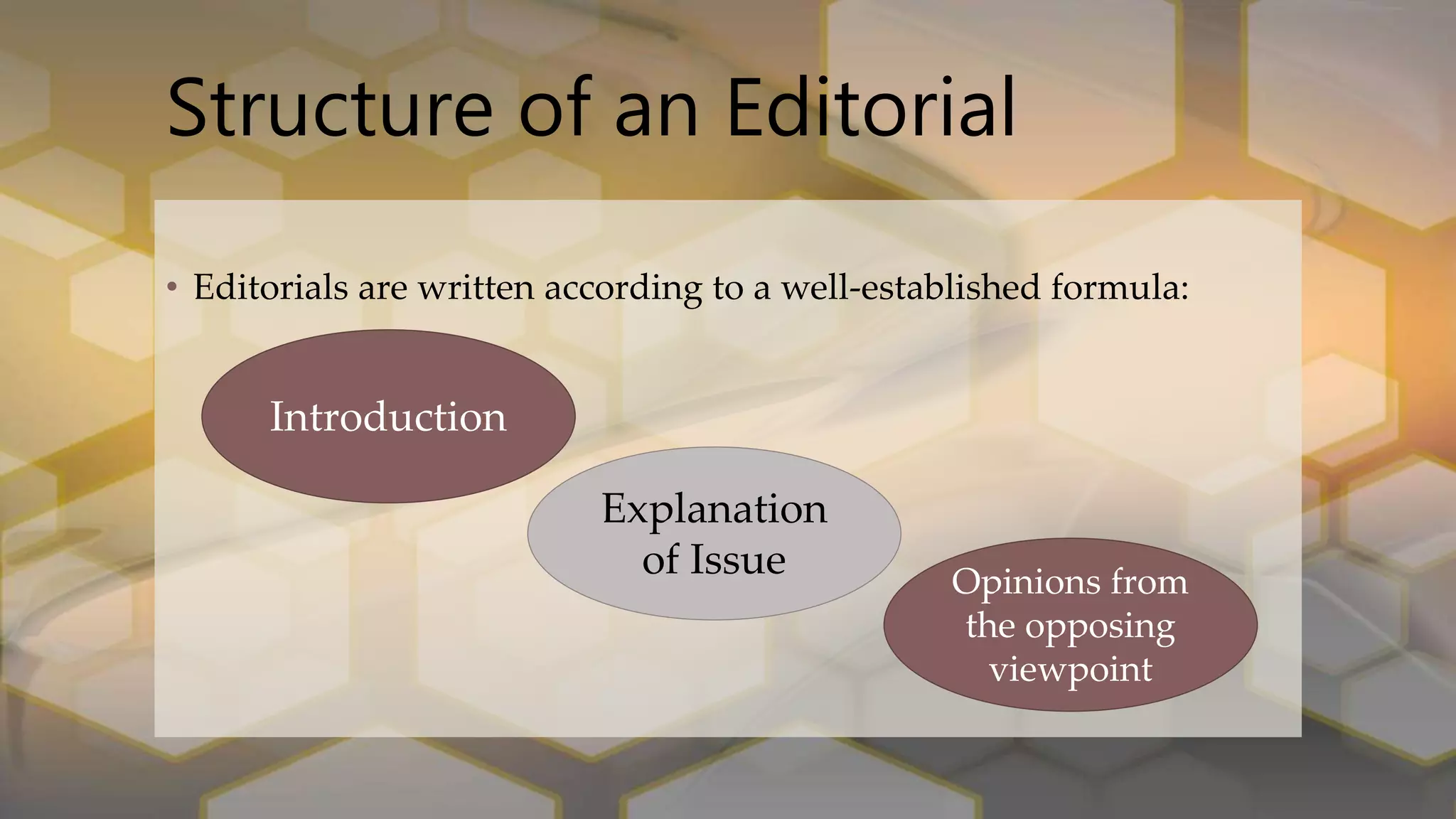
• Editorials are written according to a well-established formula:
Introduction
Explanation
of Issue Opinions from
the opposing
viewpoint
Structure of an Editorial
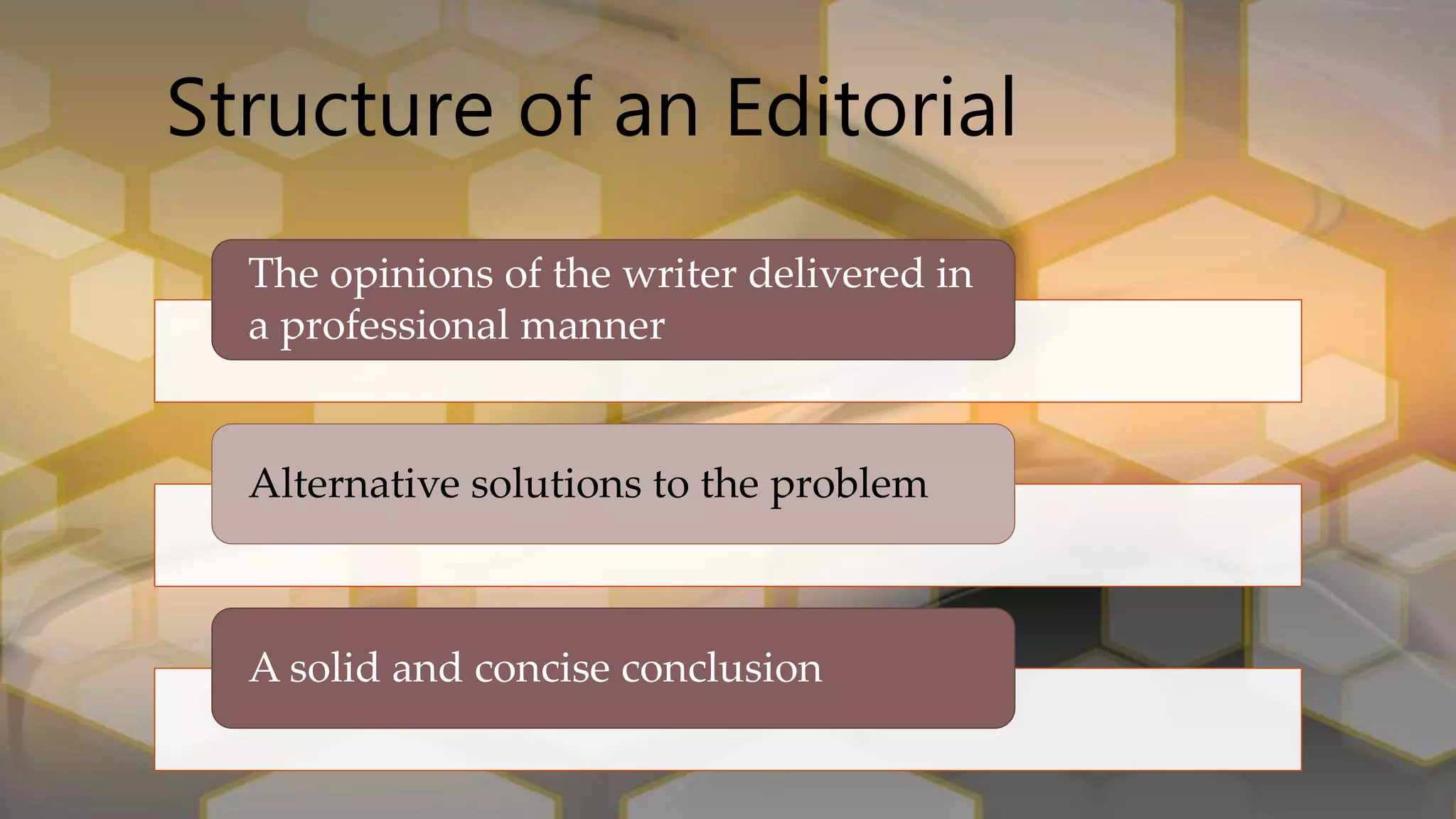
The opinions of the writer delivered in
a professional manner
Alternative solutions to the problem
A solid and concise conclusion
A Sample Structure
 Lead with an Objective Explanation of the Issue:
• Include the five W's and the H.
• Pull in facts and quotations from the sources which are
relevant.
• Additional research may be necessary.
A Sample Structure
Present Your Opposition First:
• Identify the people who oppose you.
• Use facts and quotations to state objectively their
opinions.
• Give a strong position of the opposition.
A Sample Structure
Directly Refute The Opposition's Beliefs:
• Pull in other facts and quotations from people who
support your position.
• Acknowledge the valid point of opposition. It will make
you appear rational.
A Sample Structure
Give Reasons:
• In defense of your position, give reasons from strong to
strongest order.
• Use a literary or cultural reference that lends to your
credibility and perceived intelligence.
A Sample Structure
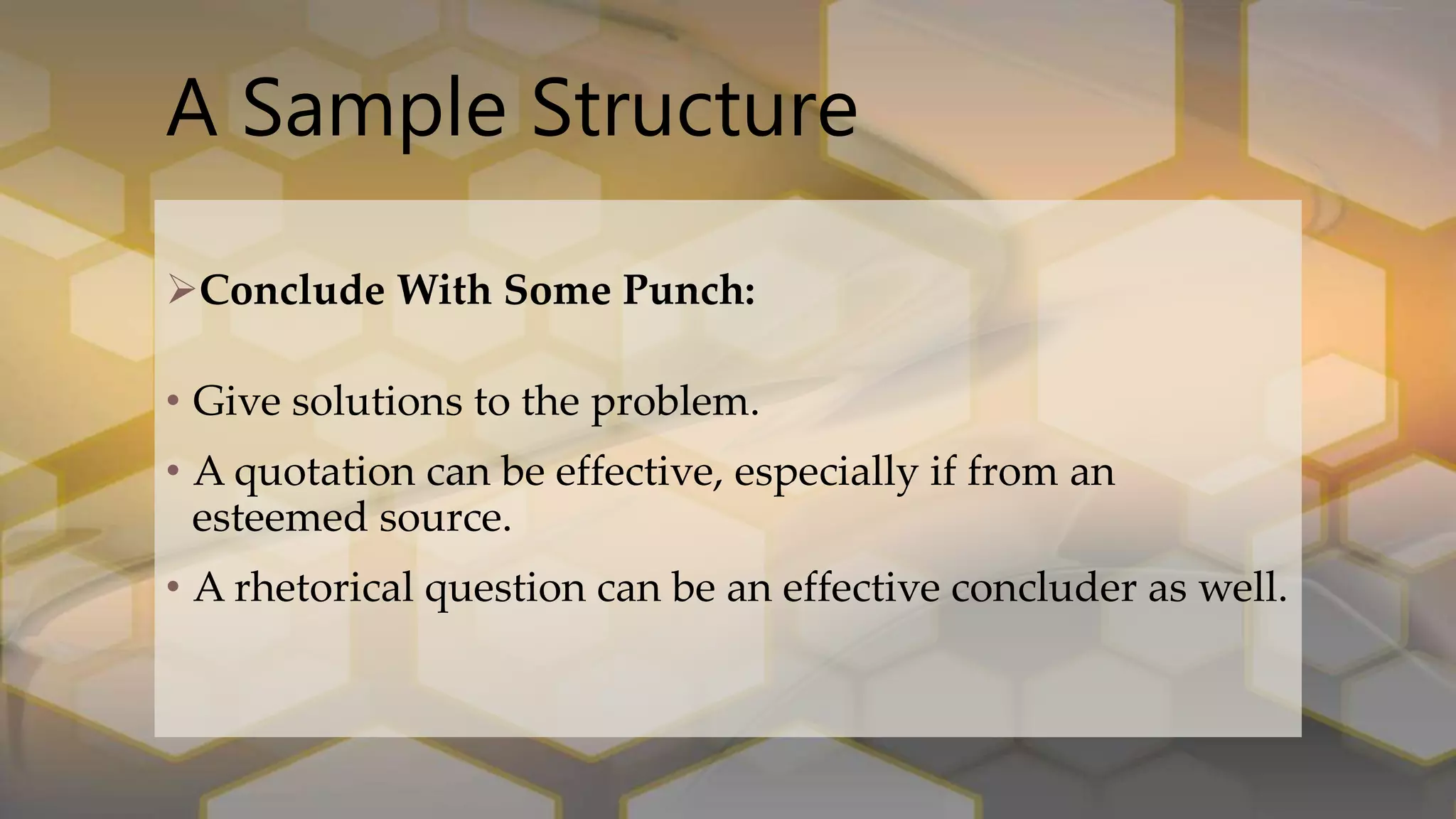
Conclude With Some Punch:
• Give solutions to the problem.
• A quotation can be effective, especially if from an
esteemed source.
• A rhetorical question can be an effective concluder as well.
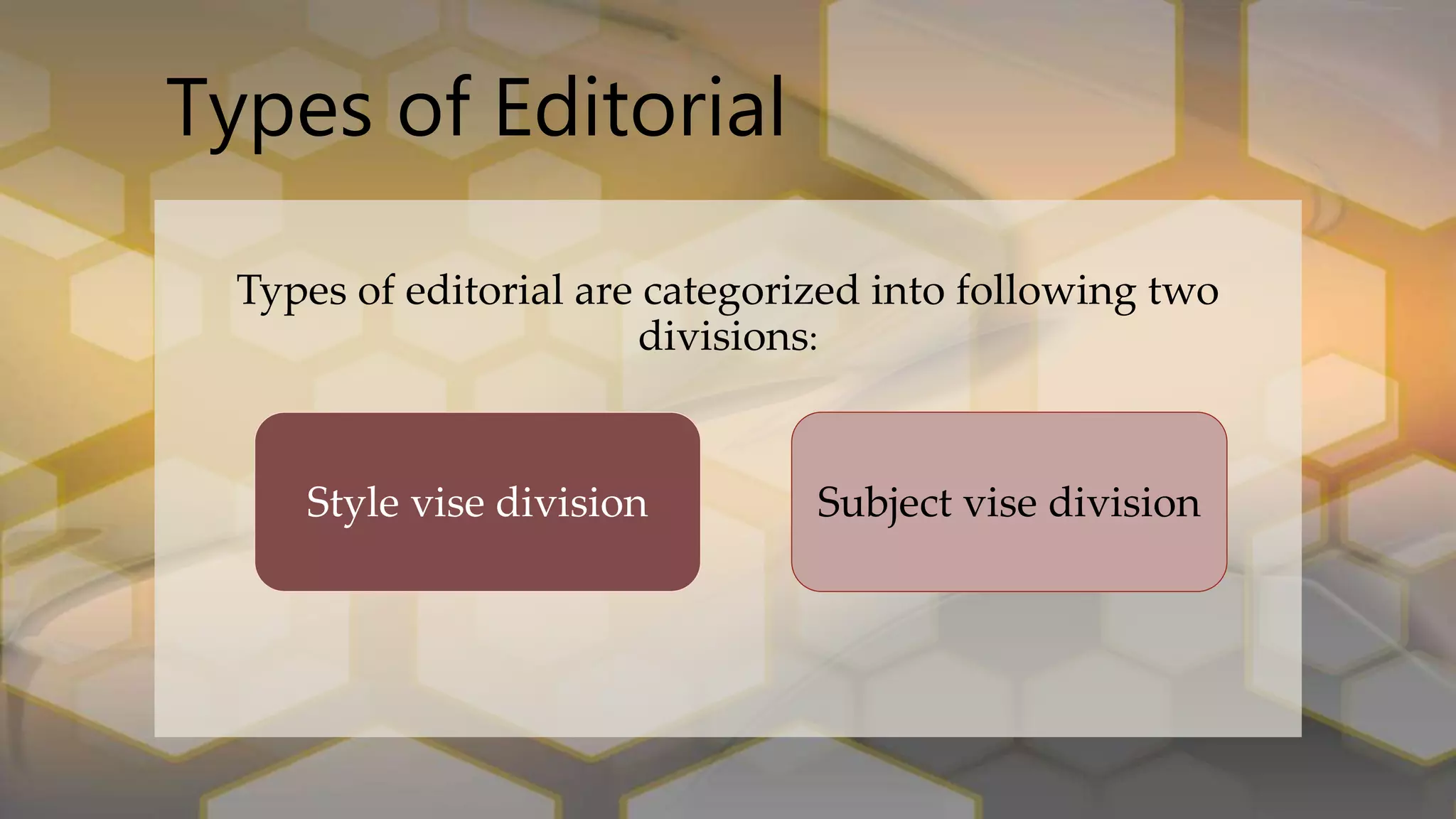
Types of Editorial
Types of editorial are categorized into following two
divisions:
Style vise division Subject vise division
Types of Editorial
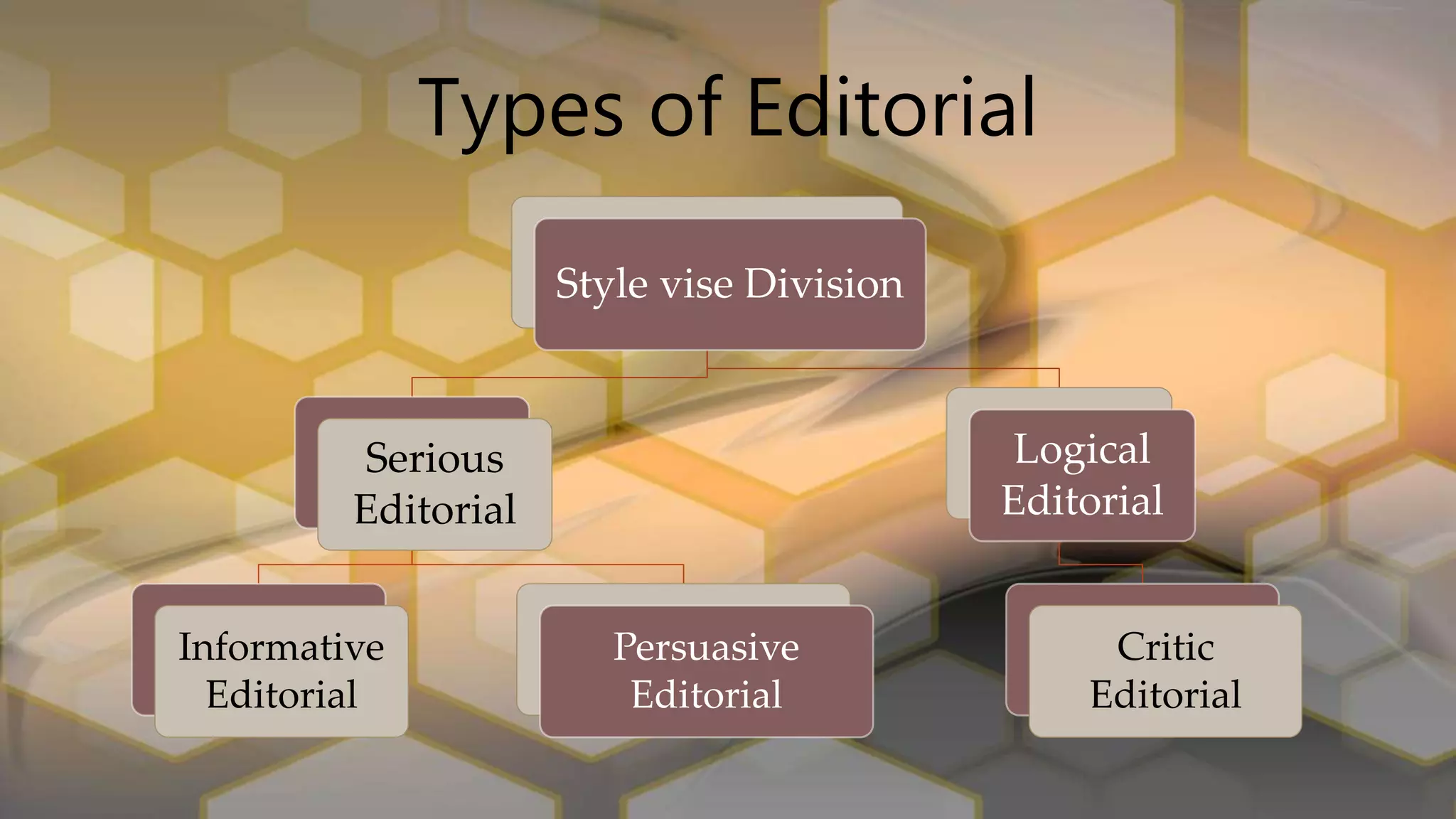
Style vise Division
Serious
Editorial
Informative
Editorial
Persuasive
Editorial
Logical
Editorial
Critic
Editorial
Types of Editorial
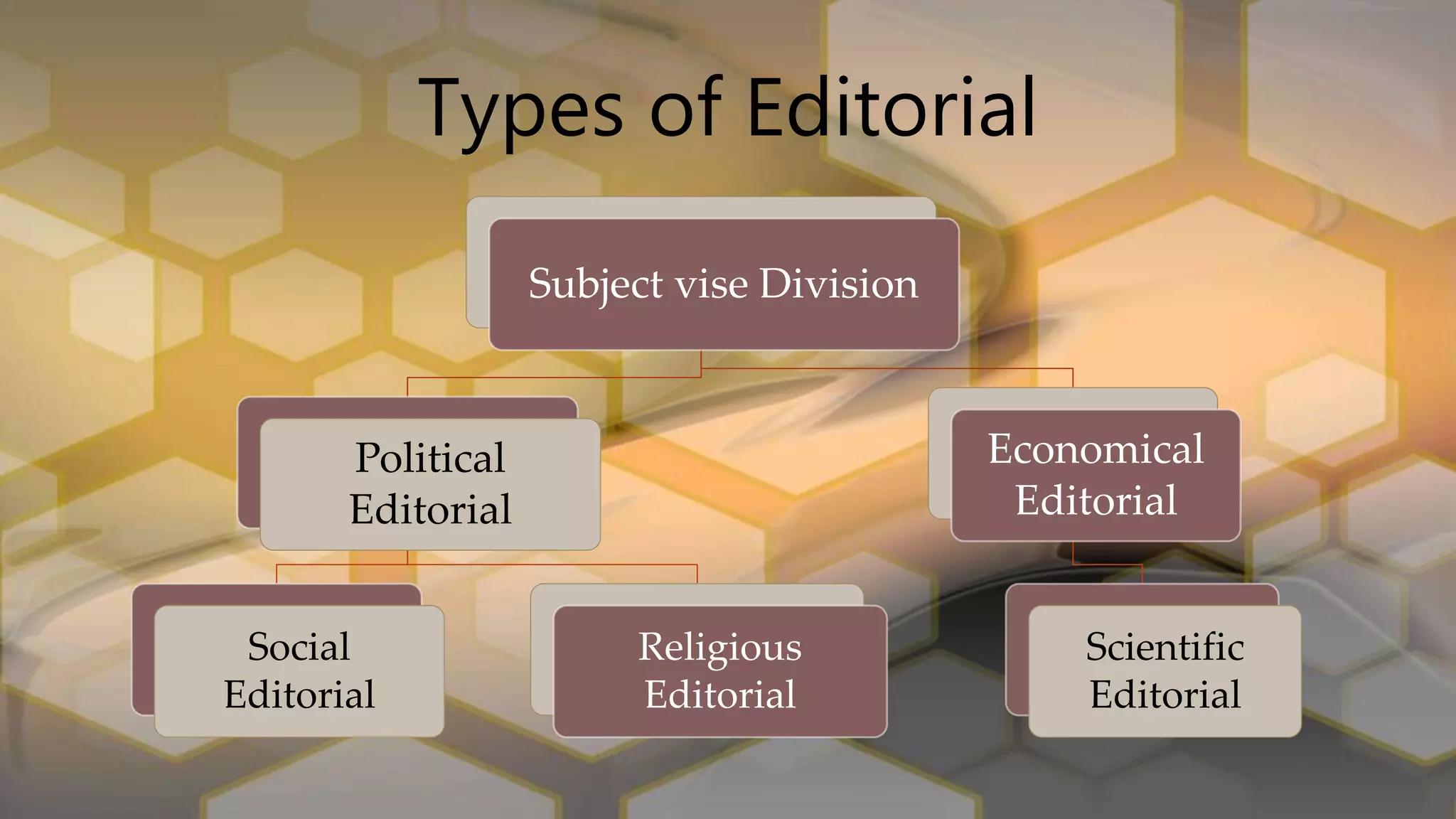
Subject vise Division
Political
Editorial
Social
Editorial
Religious
Editorial
Economical
Editorial
Scientific
Editorial
THANK
YOU!

Definition, Structure and Types of an Editorial

  • 1.
    Definition, Structure and Typesof an Editorial Presented by: Attroba Adan (01) Hina Liaqat (10) BS. MCM (V)
  • 2.
    Table of contents •Definitions of Editorial • Structure of an Editorial A Sample Structure • Types of Editorial Style vise Division Subject vise Division
  • 3.
    Definition • According toM. Ali Johar: “ Editorial is an essay written on the subject which is being discussed in the society and is not written only to fulfill the newspaper, in fact, it should have worth also.”
  • 4.
    Definition • According toG.M Naqqash: “An editorial is not simply an essay on some important issue, with a few lines of criticism or comment at the end. A good editorial article is a carefully constructed analytical essay in which writer explains and interpret an event or public issue.”
  • 5.
    Definition • Some otherdefinitions are: An article in a newspaper that expresses the editor's opinion on a subject of particular interest at the present time. Editorial is a comment on those trends which lie at the core of daily occurrences.
  • 6.
    Structure of anEditorial • Editorials are written according to a well-established formula: Introduction Explanation of Issue Opinions from the opposing viewpoint
  • 7.
    Structure of anEditorial The opinions of the writer delivered in a professional manner Alternative solutions to the problem A solid and concise conclusion
  • 9.
    A Sample Structure Lead with an Objective Explanation of the Issue: • Include the five W's and the H. • Pull in facts and quotations from the sources which are relevant. • Additional research may be necessary.
  • 10.
    A Sample Structure PresentYour Opposition First: • Identify the people who oppose you. • Use facts and quotations to state objectively their opinions. • Give a strong position of the opposition.
  • 11.
    A Sample Structure DirectlyRefute The Opposition's Beliefs: • Pull in other facts and quotations from people who support your position. • Acknowledge the valid point of opposition. It will make you appear rational.
  • 12.
    A Sample Structure GiveReasons: • In defense of your position, give reasons from strong to strongest order. • Use a literary or cultural reference that lends to your credibility and perceived intelligence.
  • 13.
    A Sample Structure ConcludeWith Some Punch: • Give solutions to the problem. • A quotation can be effective, especially if from an esteemed source. • A rhetorical question can be an effective concluder as well.
  • 14.
    Types of Editorial Typesof editorial are categorized into following two divisions: Style vise division Subject vise division
  • 15.
    Types of Editorial Stylevise Division Serious Editorial Informative Editorial Persuasive Editorial Logical Editorial Critic Editorial
  • 16.
    Types of Editorial Subjectvise Division Political Editorial Social Editorial Religious Editorial Economical Editorial Scientific Editorial
  • 17.