EDITORIAL WRITING
What is an editorial?
• Editorial is a piece of writing that
expresses opinion and ideas.
• Editorial comments on current
events or issues.
• Editorial is a opinion piece written
by the publication’s editorial board
or a specific author.
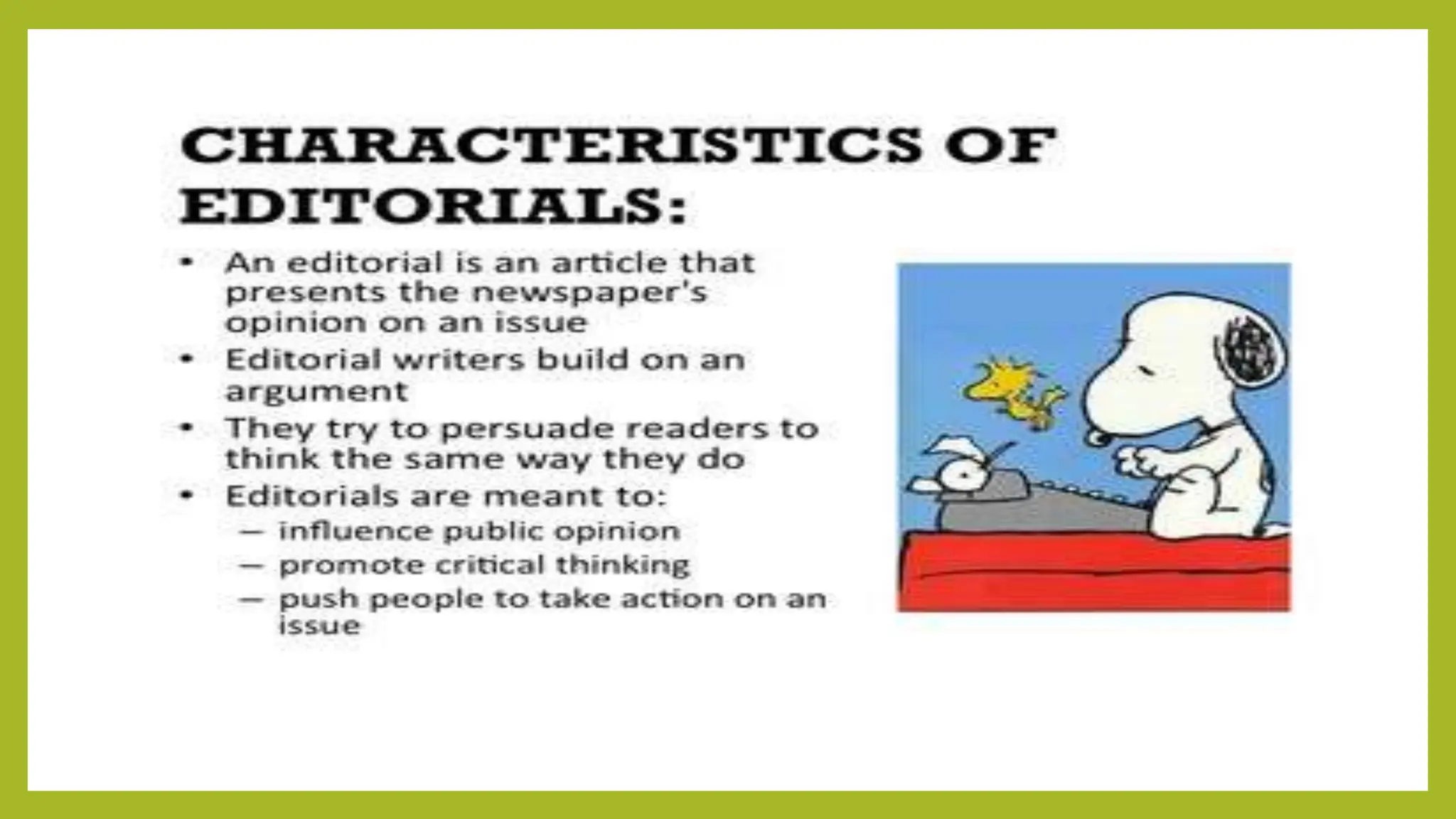
• It expresses a particular viewpoint or stance on a topic and often includes
persuasive arguments or recommendations.
• Editorial aim to influence reader’s opinions and provoke discussion.
• An opinionated article written by an author expressing their viewpoint on a
particular topic.
• An editorial is an opinion piece published by a news organization.
Editorials can appear on TV, the radio, and the internet, but the iconic
editorial format is a piece of writing that appears in newspapers or
magazines.
Types of Editorials
News interpretation: This type of editorial attempts to frame
recent news reporting in a specific light or position a recent event
in a broader context. Often it will reference reported stories in the
current issue of the same publication.
Praise editorials: Some editorials exist to champion a person,
institution, or work of art.
Critical editorials: Some editorial writers use the editorial
format to share critical opinions of a leader, institution, policy,
or work of art.
Persuasive editorials: Many editorials are persuasive writing
pieces that start with a thesis statement or argument that the
writer spends the rest of the piece attempting to prove.
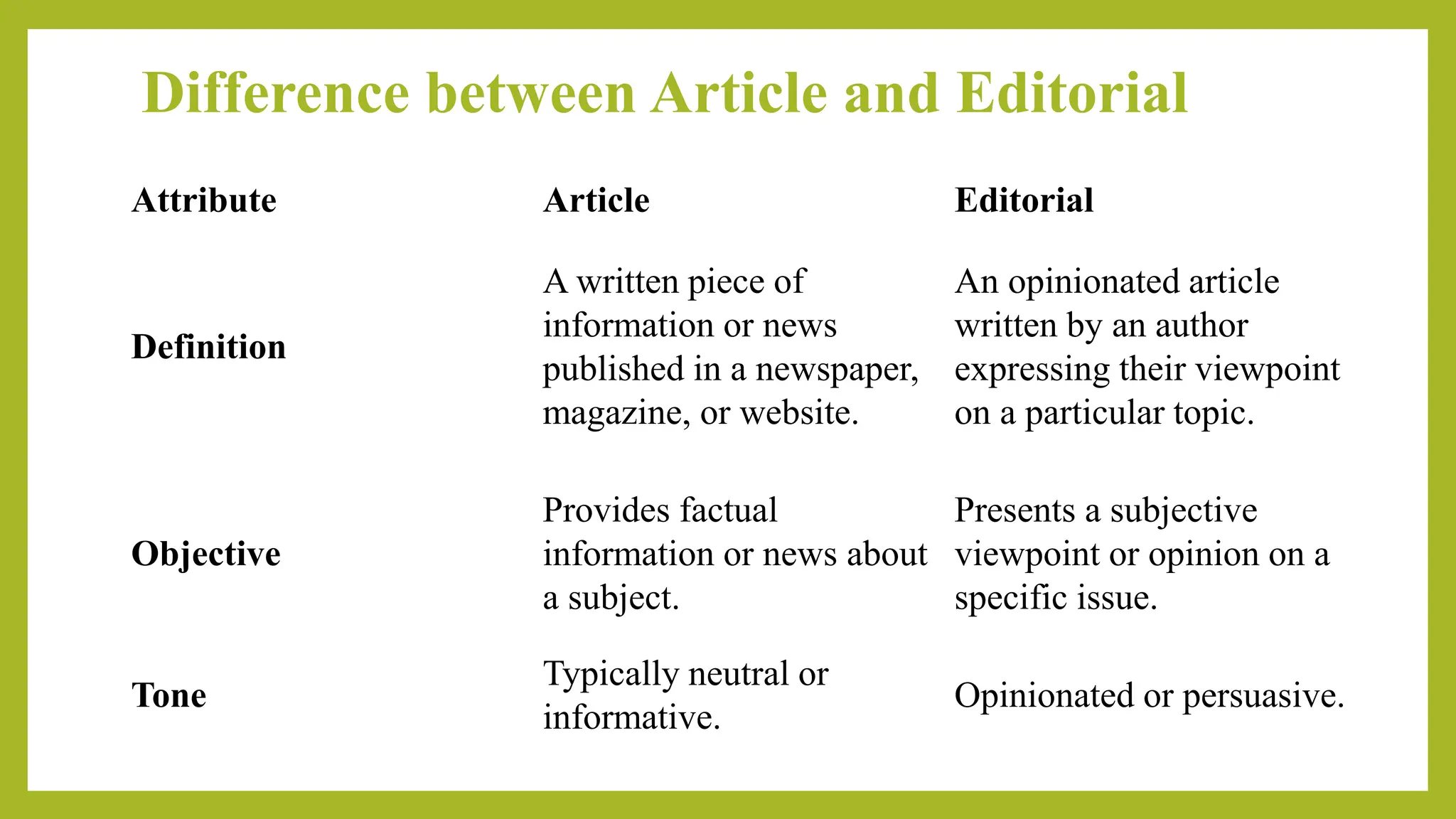
Difference between Article and Editorial
Attribute Article Editorial
Definition
A written piece of
information or news
published in a newspaper,
magazine, or website.
An opinionated article
written by an author
expressing their viewpoint
on a particular topic.
Objective
Provides factual
information or news about
a subject.
Presents a subjective
viewpoint or opinion on a
specific issue.
Tone
Typically neutral or
informative.
Opinionated or persuasive.
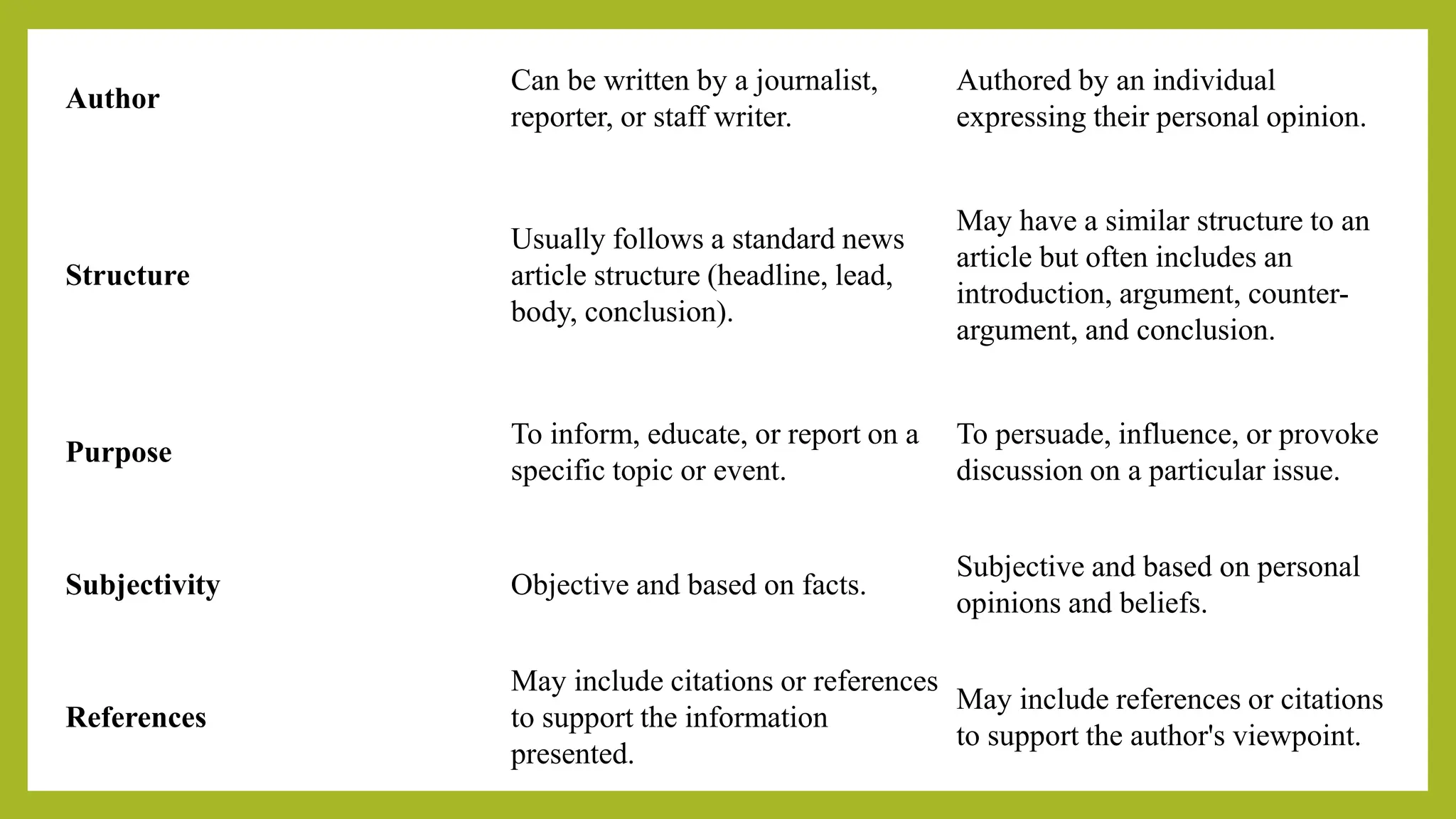
Author
Can be written by a journalist,
reporter, or staff writer.
Authored by an individual
expressing their personal opinion.
Structure
Usually follows a standard news
article structure (headline, lead,
body, conclusion).
May have a similar structure to an
article but often includes an
introduction, argument, counter-
argument, and conclusion.
Purpose
To inform, educate, or report on a
specific topic or event.
To persuade, influence, or provoke
discussion on a particular issue.
Subjectivity Objective and based on facts.
Subjective and based on personal
opinions and beliefs.
References
May include citations or references
to support the information
presented.
May include references or citations
to support the author's viewpoint.
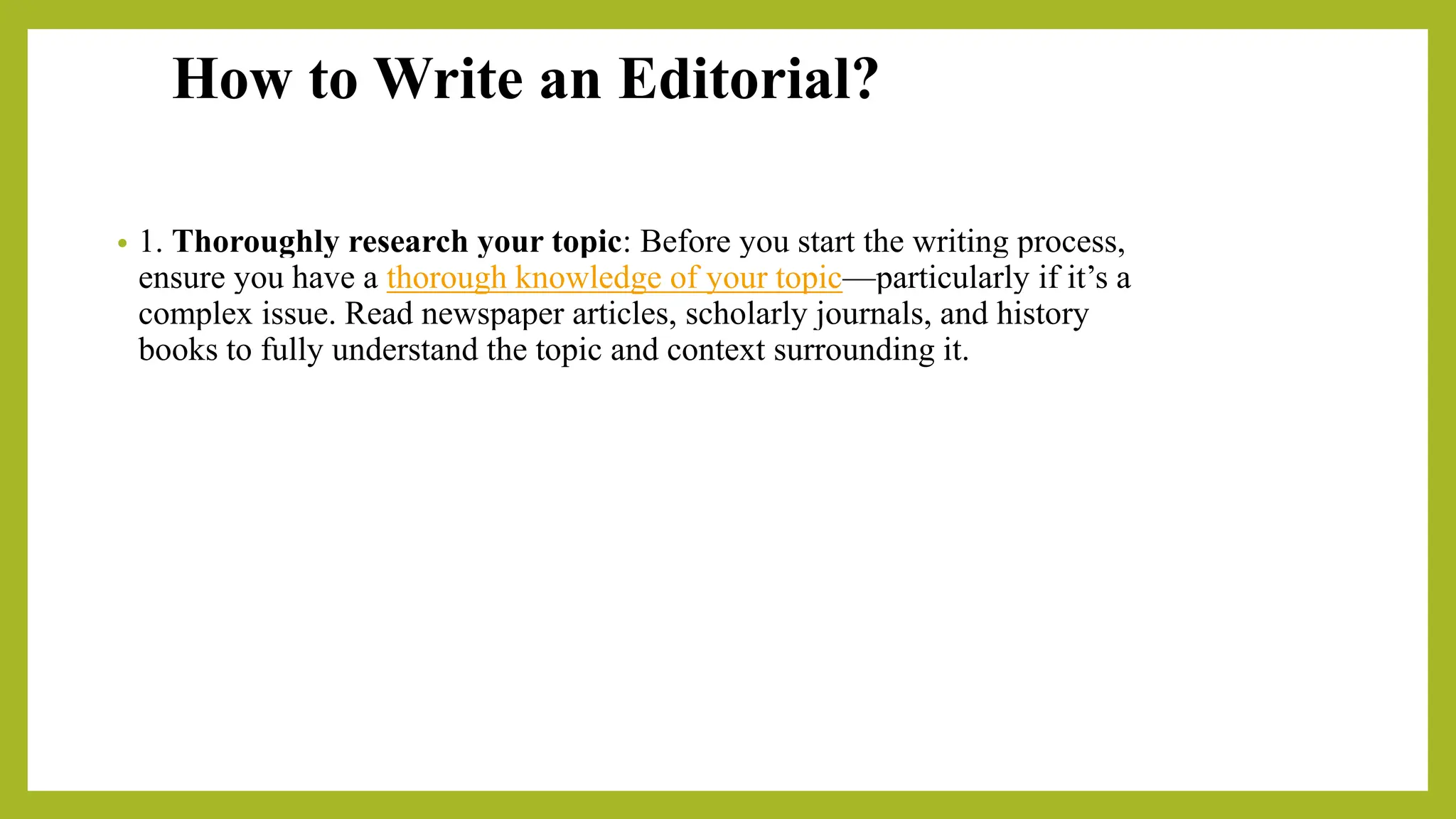
How to Write an Editorial?
• 1. Thoroughly research your topic: Before you start the writing process,
ensure you have a thorough knowledge of your topic—particularly if it’s a
complex issue. Read newspaper articles, scholarly journals, and history
books to fully understand the topic and context surrounding it.
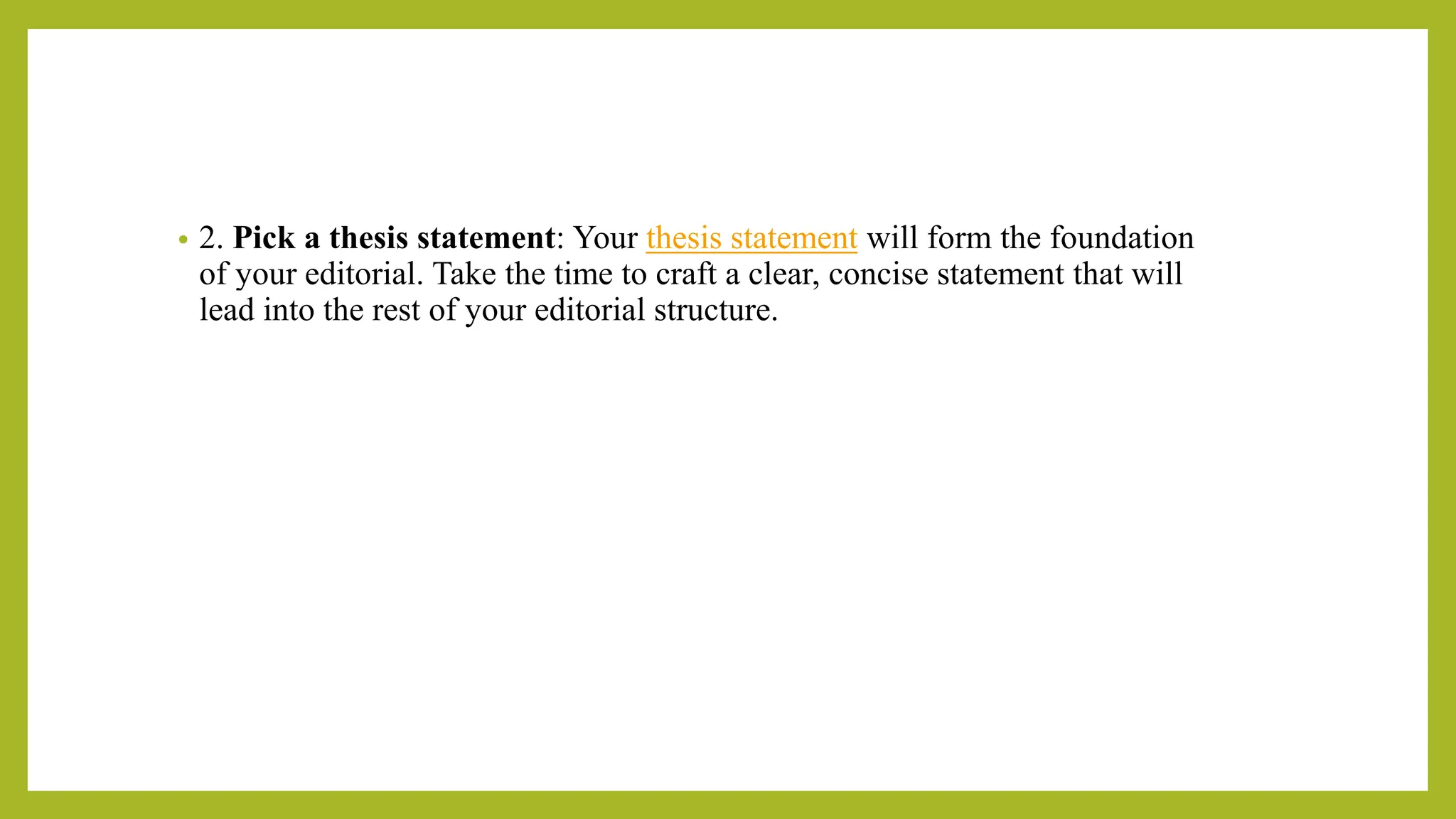
• 2. Pick a thesis statement: Your thesis statement will form the foundation
of your editorial. Take the time to craft a clear, concise statement that will
lead into the rest of your editorial structure.
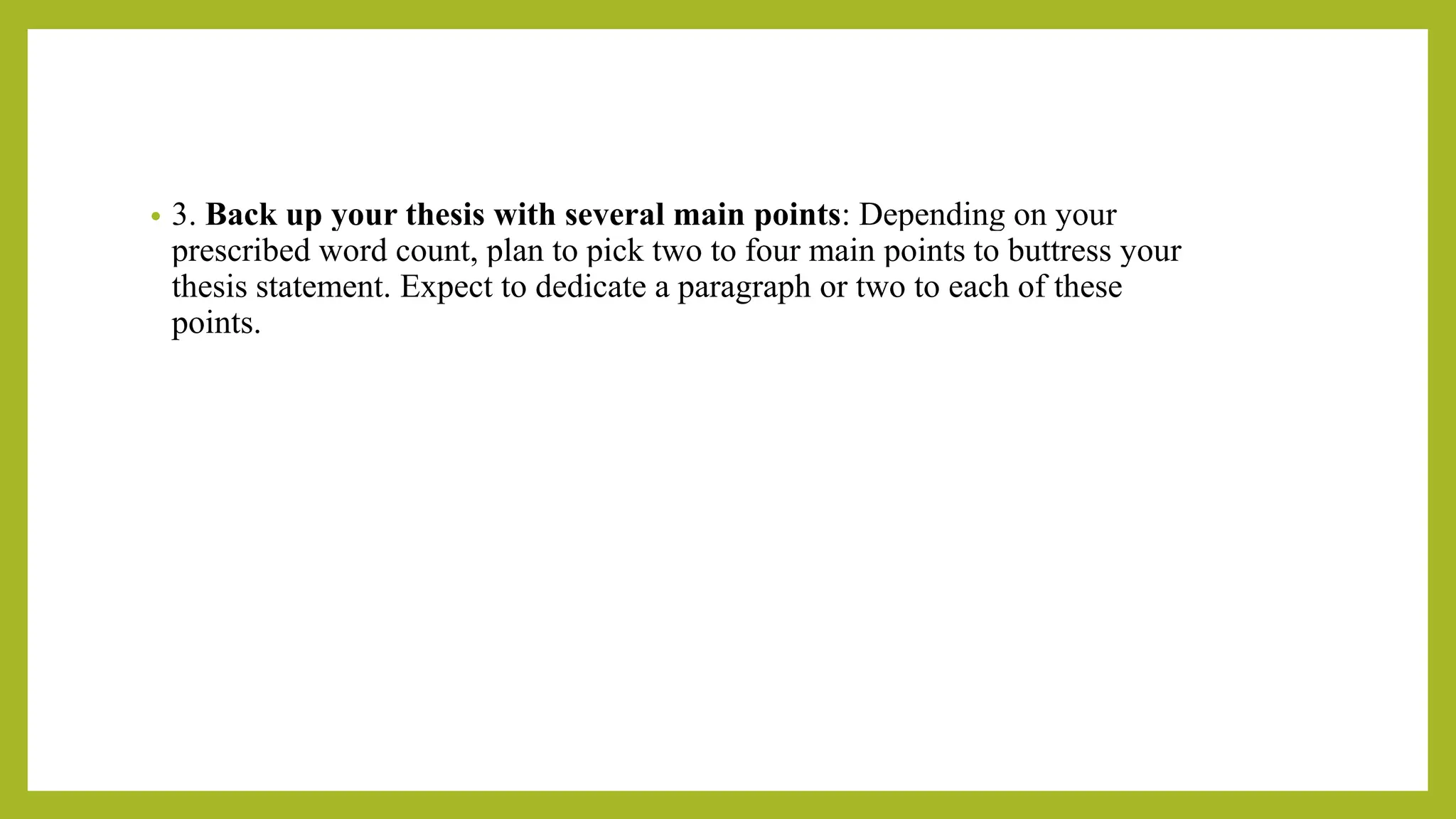
• 3. Back up your thesis with several main points: Depending on your
prescribed word count, plan to pick two to four main points to buttress your
thesis statement. Expect to dedicate a paragraph or two to each of these
points.
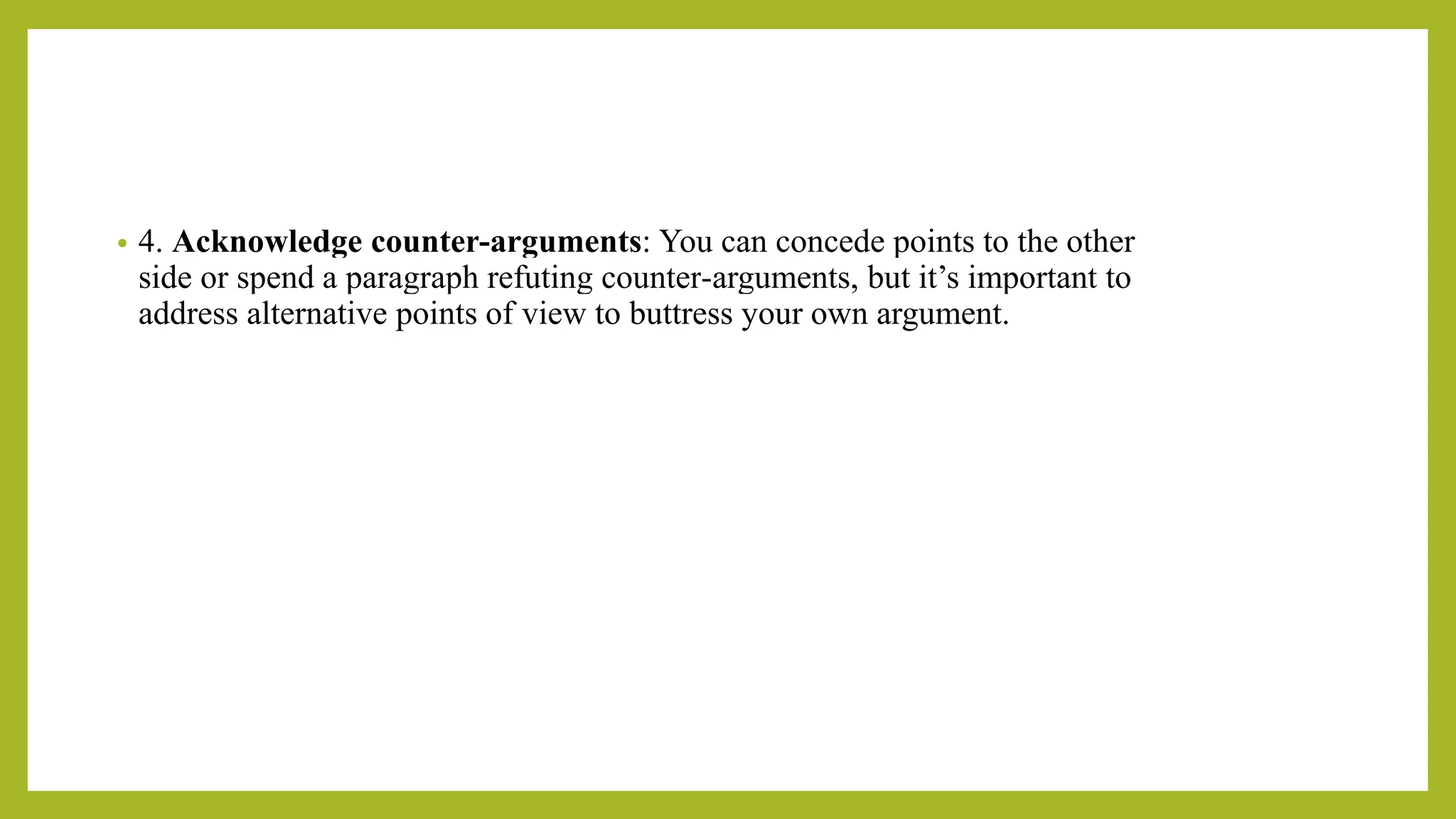
• 4. Acknowledge counter-arguments: You can concede points to the other
side or spend a paragraph refuting counter-arguments, but it’s important to
address alternative points of view to buttress your own argument.
• 5. Conclude with a call to action or summary of your main point: If your
editorial is intended to address a problem, inform readers about possible solutions.
If you want to empower your readers to learn more about the topic, provide links to
resources or book titles to explore. At the end of an editorial centered on praise or
criticism, return to your thesis statement and connect any ideas that remain open-
ended.
• 6. Edit your work until you reach a final draft: Self-editing involves revising
your editorial for quality and clarity. Read over your draft and remove unnecessary
words, clichés, or sentences that distract from the central argument. Once you’ve
revisited your draft for substantive issues, proofread your editorial for grammatical
errors and typos.
Thank You

writing for magazine Editorial Writing.pptx

  • 1.
  • 2.
    What is aneditorial? • Editorial is a piece of writing that expresses opinion and ideas. • Editorial comments on current events or issues. • Editorial is a opinion piece written by the publication’s editorial board or a specific author.
  • 3.
    • It expressesa particular viewpoint or stance on a topic and often includes persuasive arguments or recommendations. • Editorial aim to influence reader’s opinions and provoke discussion. • An opinionated article written by an author expressing their viewpoint on a particular topic. • An editorial is an opinion piece published by a news organization. Editorials can appear on TV, the radio, and the internet, but the iconic editorial format is a piece of writing that appears in newspapers or magazines.
  • 5.
    Types of Editorials Newsinterpretation: This type of editorial attempts to frame recent news reporting in a specific light or position a recent event in a broader context. Often it will reference reported stories in the current issue of the same publication. Praise editorials: Some editorials exist to champion a person, institution, or work of art.
  • 6.
    Critical editorials: Someeditorial writers use the editorial format to share critical opinions of a leader, institution, policy, or work of art. Persuasive editorials: Many editorials are persuasive writing pieces that start with a thesis statement or argument that the writer spends the rest of the piece attempting to prove.
  • 7.
    Difference between Articleand Editorial Attribute Article Editorial Definition A written piece of information or news published in a newspaper, magazine, or website. An opinionated article written by an author expressing their viewpoint on a particular topic. Objective Provides factual information or news about a subject. Presents a subjective viewpoint or opinion on a specific issue. Tone Typically neutral or informative. Opinionated or persuasive.
  • 8.
    Author Can be writtenby a journalist, reporter, or staff writer. Authored by an individual expressing their personal opinion. Structure Usually follows a standard news article structure (headline, lead, body, conclusion). May have a similar structure to an article but often includes an introduction, argument, counter- argument, and conclusion. Purpose To inform, educate, or report on a specific topic or event. To persuade, influence, or provoke discussion on a particular issue. Subjectivity Objective and based on facts. Subjective and based on personal opinions and beliefs. References May include citations or references to support the information presented. May include references or citations to support the author's viewpoint.
  • 11.
    How to Writean Editorial? • 1. Thoroughly research your topic: Before you start the writing process, ensure you have a thorough knowledge of your topic—particularly if it’s a complex issue. Read newspaper articles, scholarly journals, and history books to fully understand the topic and context surrounding it.
  • 12.
    • 2. Picka thesis statement: Your thesis statement will form the foundation of your editorial. Take the time to craft a clear, concise statement that will lead into the rest of your editorial structure.
  • 13.
    • 3. Backup your thesis with several main points: Depending on your prescribed word count, plan to pick two to four main points to buttress your thesis statement. Expect to dedicate a paragraph or two to each of these points.
  • 14.
    • 4. Acknowledgecounter-arguments: You can concede points to the other side or spend a paragraph refuting counter-arguments, but it’s important to address alternative points of view to buttress your own argument.
  • 15.
    • 5. Concludewith a call to action or summary of your main point: If your editorial is intended to address a problem, inform readers about possible solutions. If you want to empower your readers to learn more about the topic, provide links to resources or book titles to explore. At the end of an editorial centered on praise or criticism, return to your thesis statement and connect any ideas that remain open- ended.
  • 16.
    • 6. Edityour work until you reach a final draft: Self-editing involves revising your editorial for quality and clarity. Read over your draft and remove unnecessary words, clichés, or sentences that distract from the central argument. Once you’ve revisited your draft for substantive issues, proofread your editorial for grammatical errors and typos.
  • 17.