Presented by: Jikhil John
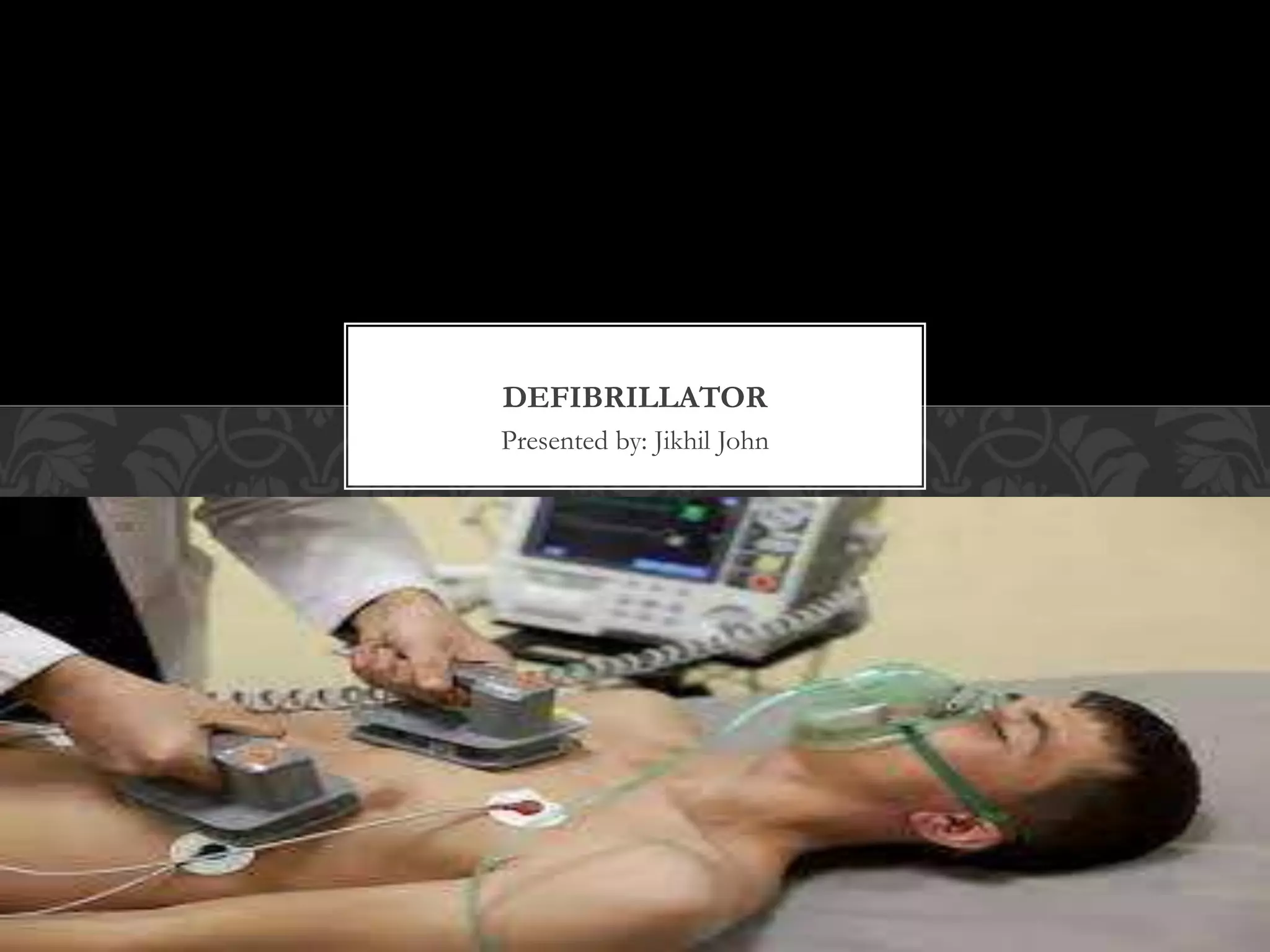
DEFIBRILLATOR
Definition:
Defibrillation is a process in which an electronic devices sends an electric
shock to the heart to stop an extremely rapid, irregular heartbeat, and restore
the normal heart rhythm.
Defibrillation is a common treatment for life threatening cardiac dysrhythmias,
ventricular fibrillation and pulse less ventricular tachycardia.
INTRODUCTION
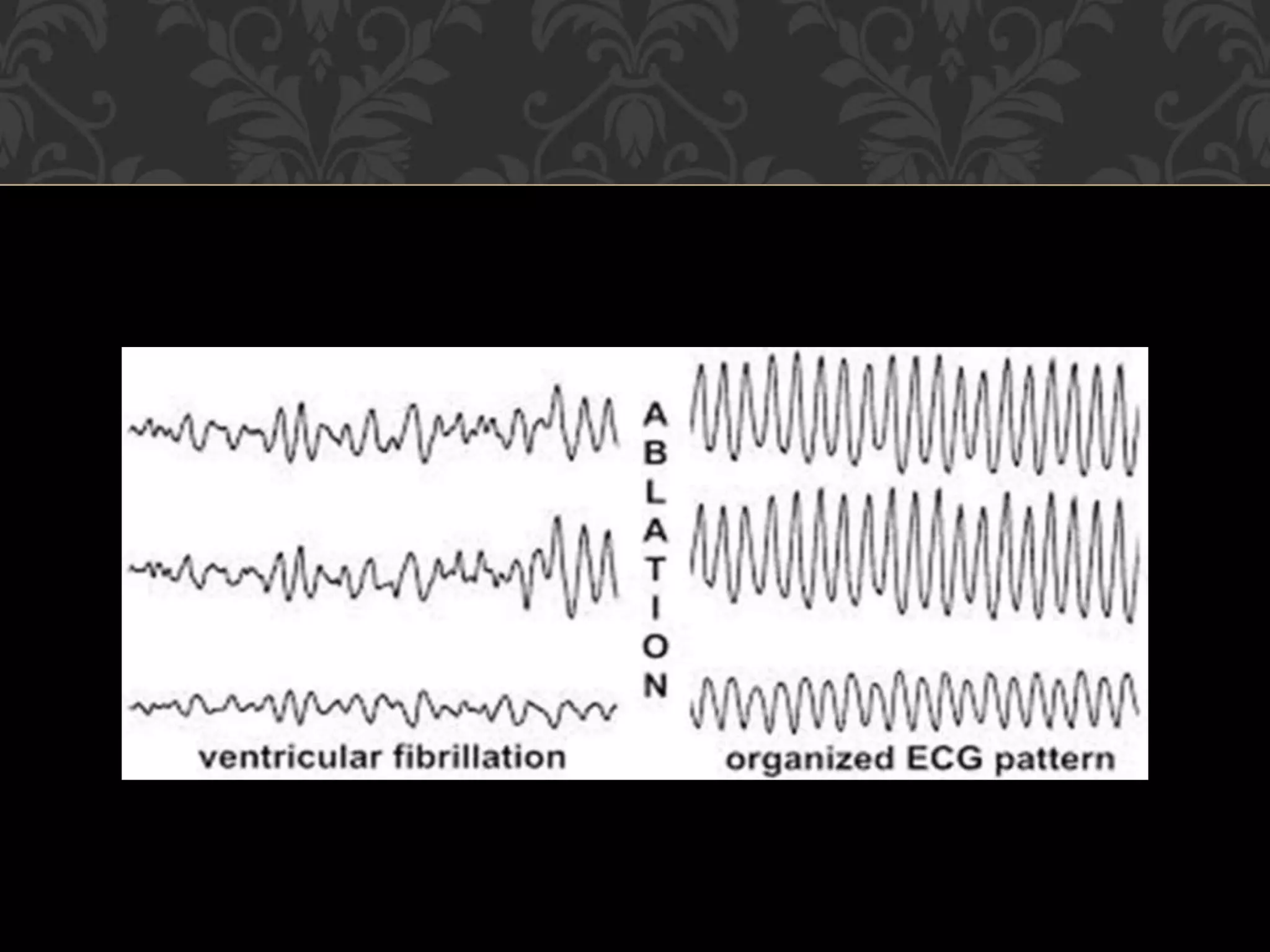
 Ventricular fibrillation is a serious cardiac emergency resulting from
asynchronous contraction of the heart muscles.
 Due to ventricular fibrillation, there is an irregular rapid heart rhythm.
 Ventricular fibrillation can be converted into a more efficient rhythm by
applying a high energy shock to the heart.
 This sudden urge across the heart causes all muscle fibers to contract
simultaneously.
NEED FOR A DEFIBRILLATOR
Defibrillation is performed to correct life threatening fibrillations of the
heart, which could result in cardiac arrest. It should be performed immediately
after identifying that the patient is experiencing a cardiac emergency, has no
pulse, and is unresponsive.
PURPOSE
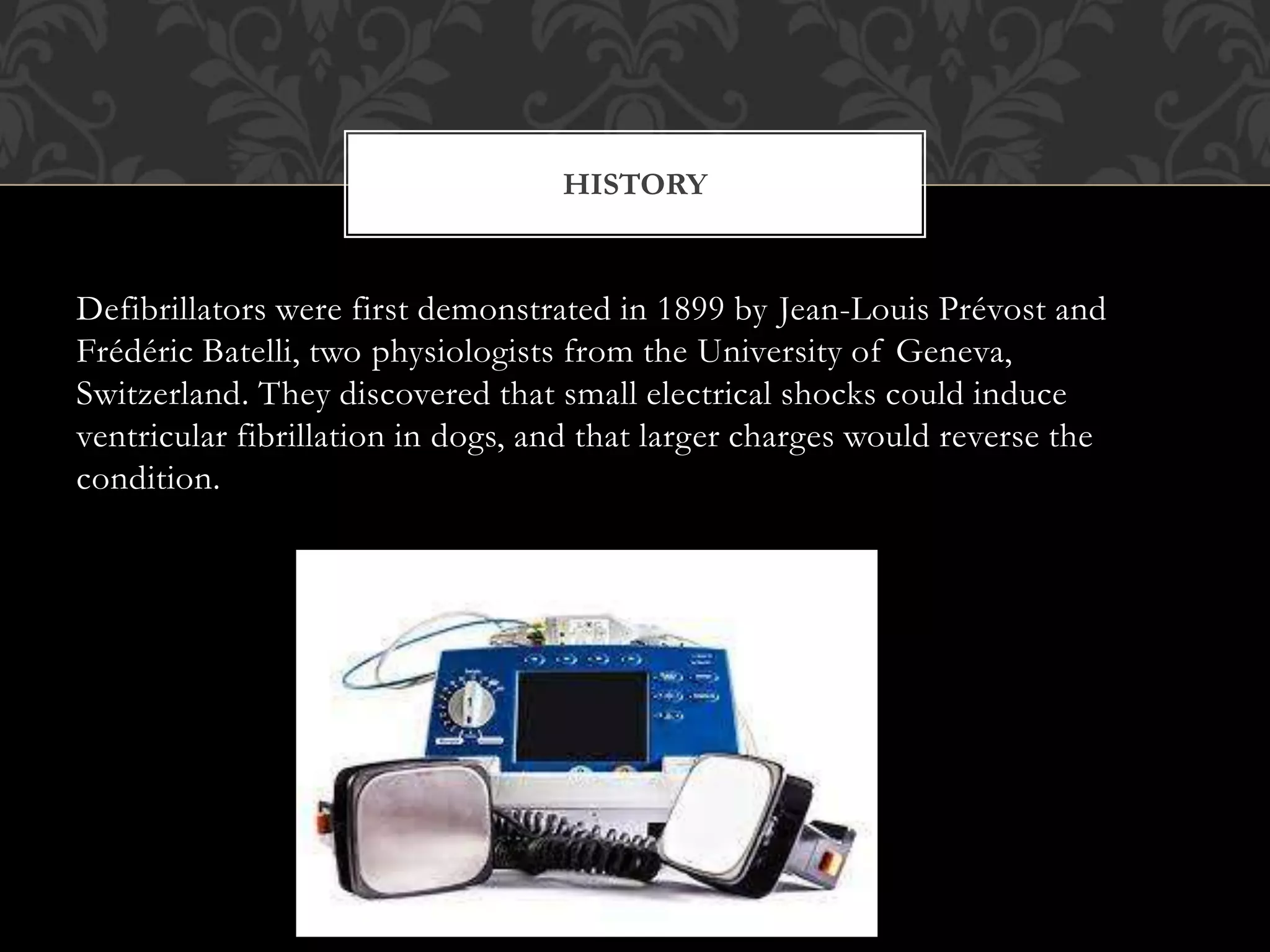
Defibrillators were first demonstrated in 1899 by Jean-Louis Prévost and
Frédéric Batelli, two physiologists from the University of Geneva,
Switzerland. They discovered that small electrical shocks could induce
ventricular fibrillation in dogs, and that larger charges would reverse the
condition.
HISTORY
Operators selects energy delivered : 50-360 joules, depending on:-
• Intrinsic characteristics of patient
• Patients disease
• Duration of arrhythmia
• Patient age
• Type of arrhythmia
STRENGTH DURATION
A corrective shock of 750-800 volts is applied within a tenth of a second
This is the sane voltage as 500-533 no of AA batteries!
POWER OF DEFIBRILLATION
 Internal defibrillator
Electrodes placed directly to the heart.
E.g. Pacemaker
 External defibrillator
Electrodes placed directly on the heart
E.g. AED
TYPES OF DEFIBRILLATORS
AED is a portable electronic device that automatically diagnoses the
ventricular fibrillation in a patient.
Automatically refers to the ability to autonomously analyze the patient's
condition
AED is a type of external defibrillation process.
AED requires self-adhesive electrodes instead of hand held paddles.
AUTOMATED EXTERNAL
DEFIBRILLATORS
 Turn on the AED
 AED will instruct the user to:-
i. Connect the electrodes to the patient
ii. Avoid touching the patient to avoid false readings by the unit.
iii. The AED examines the electrical output from the heart and determine
the patient is in a shockable rhythm or not.
iv. When device determines that shock is warranted, it will charge its
internal capacitor to deliver the shock.
v. When charged the device instructs the user to ensure no one is touching
the victim and then press a red button to deliver the shock.
WORKING OF AED
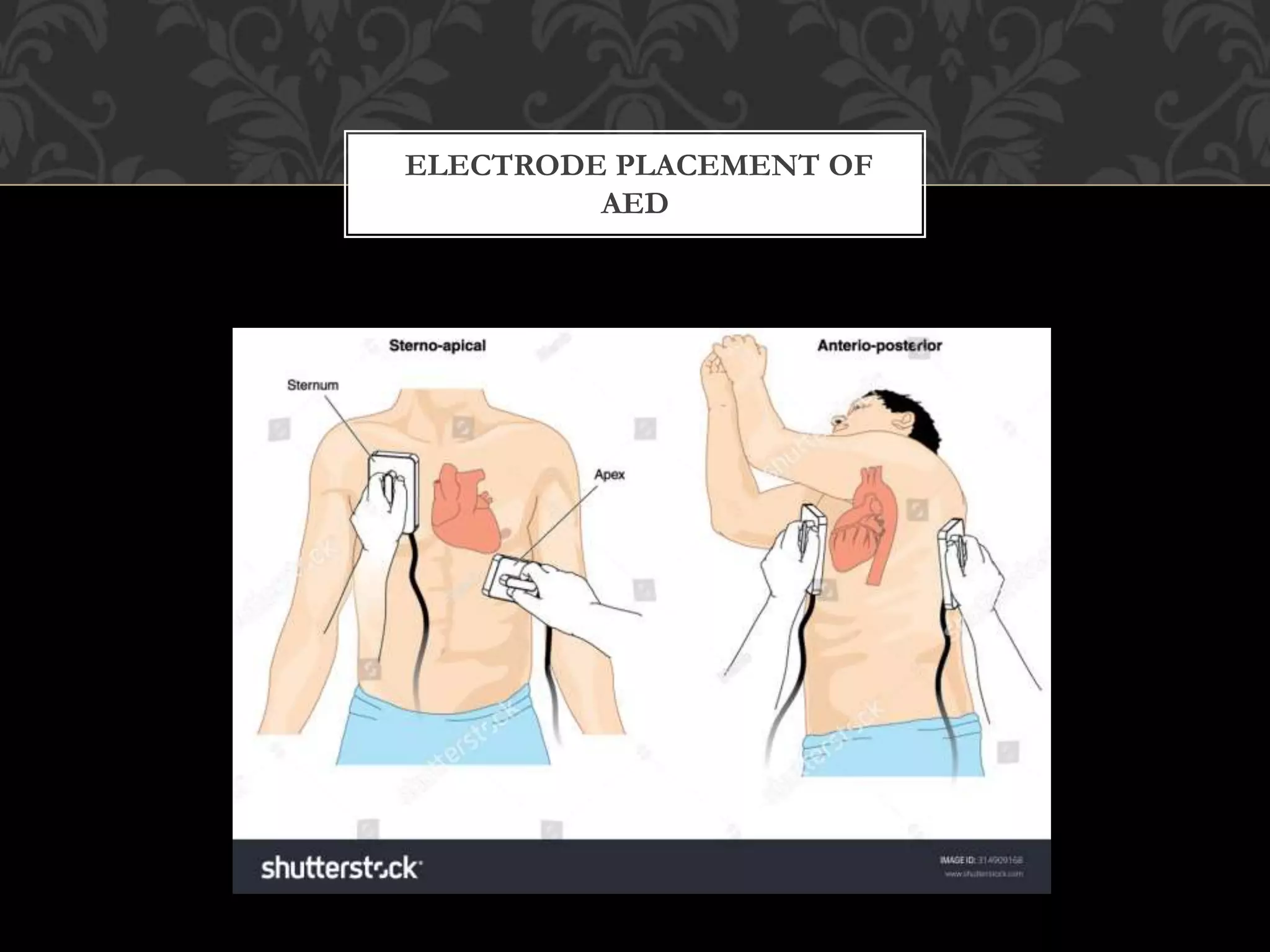
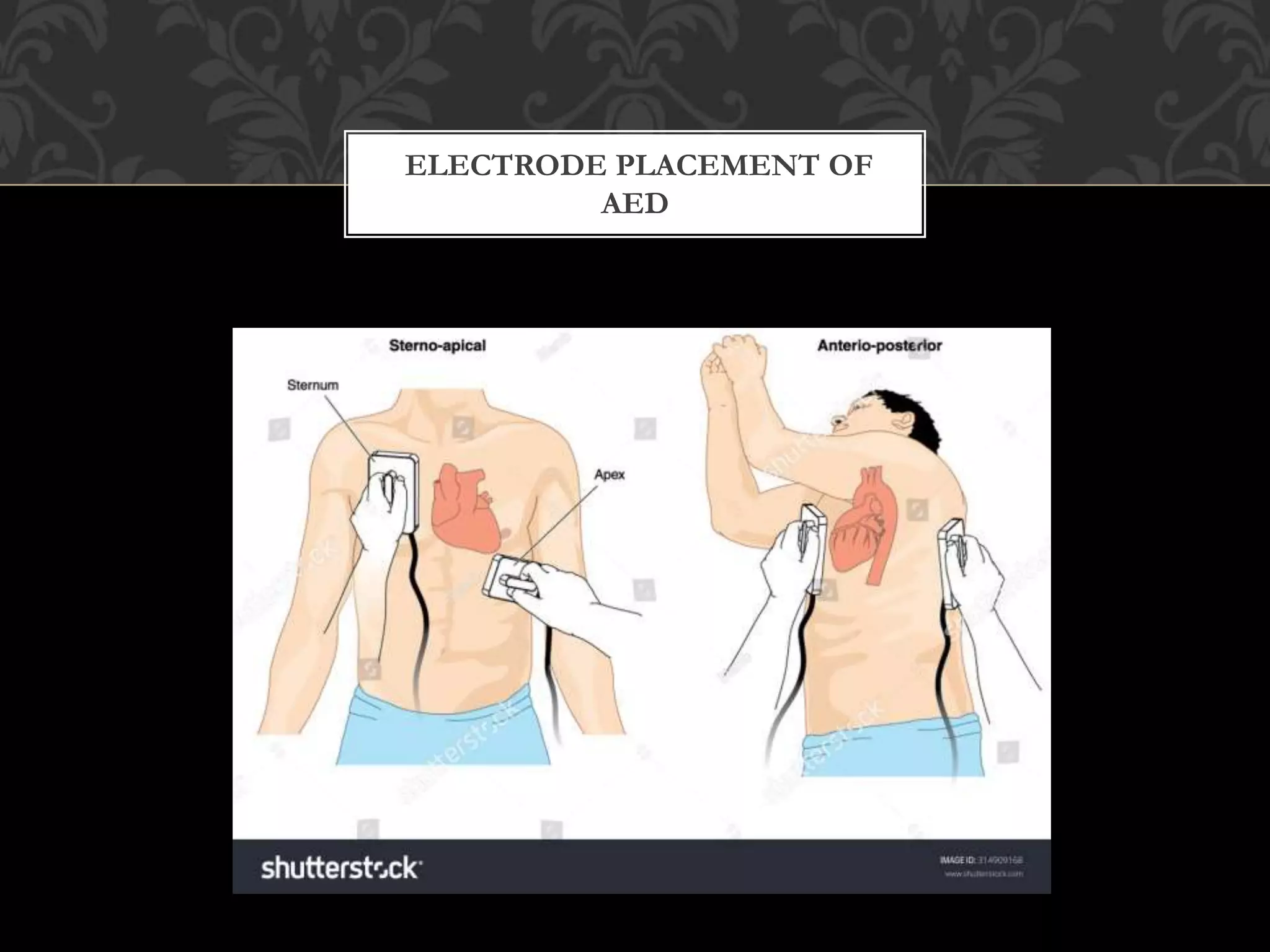
ELECTRODE PLACEMENT OF
AED
ELECTRODE PLACEMENT OF
AED
 The paddles used in the procedure should not be placed:-
i. On a woman’s breast
ii. Over an internal peacemaker patients.
 Before the paddle is used, a gel must be applied to the patient’s skin.
PRECAUTIONS
• Skin burns from the defibrillator paddles are the most common
complication of defibrillation.
• Other risks include injury to the heart muscle, abnormal heart rhythms and
blood clots.
RISKS IN DEFIBRILLATION
• Check to ensure that the leads are securely attached if the monitor reads,
“No leads”
• Verify that the energy select control settings are correct if the defibrillator
does not charge.
• Change the electrodes and make sure that the electrodes adapter cable is
properly connected if you receive a message of “ PACER FAILURE”.
Restart the pacer
TROUBLESHOOTING
Defibrillator.pptx
Defibrillator.pptx

Defibrillator.pptx

  • 1.
    Presented by: JikhilJohn DEFIBRILLATOR
  • 2.
    Definition: Defibrillation is aprocess in which an electronic devices sends an electric shock to the heart to stop an extremely rapid, irregular heartbeat, and restore the normal heart rhythm. Defibrillation is a common treatment for life threatening cardiac dysrhythmias, ventricular fibrillation and pulse less ventricular tachycardia. INTRODUCTION
  • 3.
     Ventricular fibrillationis a serious cardiac emergency resulting from asynchronous contraction of the heart muscles.  Due to ventricular fibrillation, there is an irregular rapid heart rhythm.  Ventricular fibrillation can be converted into a more efficient rhythm by applying a high energy shock to the heart.  This sudden urge across the heart causes all muscle fibers to contract simultaneously. NEED FOR A DEFIBRILLATOR
  • 5.
    Defibrillation is performedto correct life threatening fibrillations of the heart, which could result in cardiac arrest. It should be performed immediately after identifying that the patient is experiencing a cardiac emergency, has no pulse, and is unresponsive. PURPOSE
  • 6.
    Defibrillators were firstdemonstrated in 1899 by Jean-Louis Prévost and Frédéric Batelli, two physiologists from the University of Geneva, Switzerland. They discovered that small electrical shocks could induce ventricular fibrillation in dogs, and that larger charges would reverse the condition. HISTORY
  • 7.
    Operators selects energydelivered : 50-360 joules, depending on:- • Intrinsic characteristics of patient • Patients disease • Duration of arrhythmia • Patient age • Type of arrhythmia STRENGTH DURATION
  • 8.
    A corrective shockof 750-800 volts is applied within a tenth of a second This is the sane voltage as 500-533 no of AA batteries! POWER OF DEFIBRILLATION
  • 9.
     Internal defibrillator Electrodesplaced directly to the heart. E.g. Pacemaker  External defibrillator Electrodes placed directly on the heart E.g. AED TYPES OF DEFIBRILLATORS
  • 10.
    AED is aportable electronic device that automatically diagnoses the ventricular fibrillation in a patient. Automatically refers to the ability to autonomously analyze the patient's condition AED is a type of external defibrillation process. AED requires self-adhesive electrodes instead of hand held paddles. AUTOMATED EXTERNAL DEFIBRILLATORS
  • 11.
     Turn onthe AED  AED will instruct the user to:- i. Connect the electrodes to the patient ii. Avoid touching the patient to avoid false readings by the unit. iii. The AED examines the electrical output from the heart and determine the patient is in a shockable rhythm or not. iv. When device determines that shock is warranted, it will charge its internal capacitor to deliver the shock. v. When charged the device instructs the user to ensure no one is touching the victim and then press a red button to deliver the shock. WORKING OF AED
  • 12.
  • 13.
  • 14.
     The paddlesused in the procedure should not be placed:- i. On a woman’s breast ii. Over an internal peacemaker patients.  Before the paddle is used, a gel must be applied to the patient’s skin. PRECAUTIONS
  • 15.
    • Skin burnsfrom the defibrillator paddles are the most common complication of defibrillation. • Other risks include injury to the heart muscle, abnormal heart rhythms and blood clots. RISKS IN DEFIBRILLATION
  • 16.
    • Check toensure that the leads are securely attached if the monitor reads, “No leads” • Verify that the energy select control settings are correct if the defibrillator does not charge. • Change the electrodes and make sure that the electrodes adapter cable is properly connected if you receive a message of “ PACER FAILURE”. Restart the pacer TROUBLESHOOTING