
• Introduction:
• Ways of thinking About
Decision making:
• Types Of Decision Making:
• Levels Of Decision Making:
• Styles Of Decision Making:
• Decision Making Under Diff
Conditions:
• Steps In The Decision Making
Process:
 Decision-Making Process:
 The sequence of events taken by management to solve the problems
 A systematic process.
 Analysis reveals that virtually every
manager makes decisions
 This points to decision-making as the
common function of managers
 Some writers have used the term
"decision-maker" in place of manager
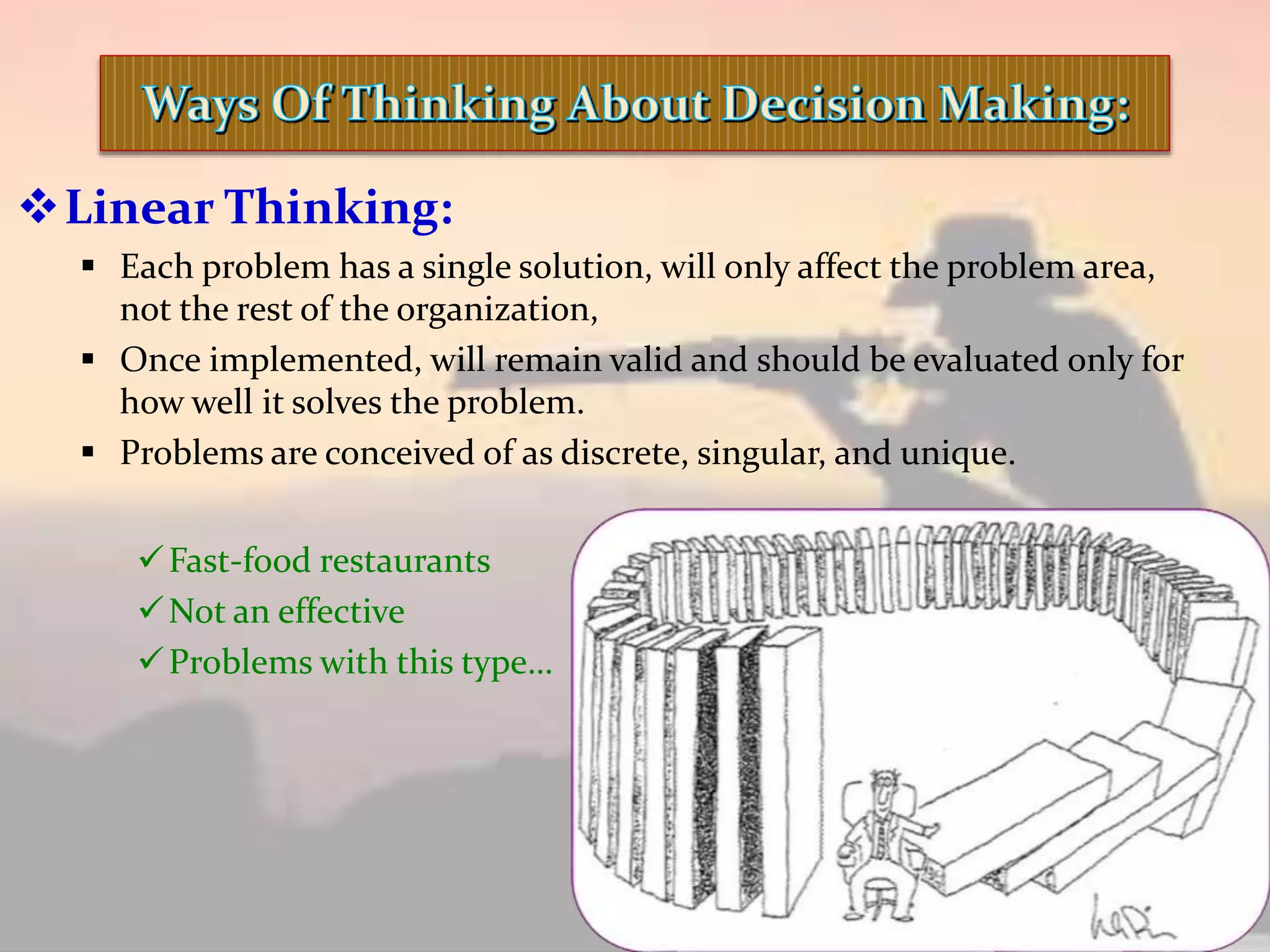
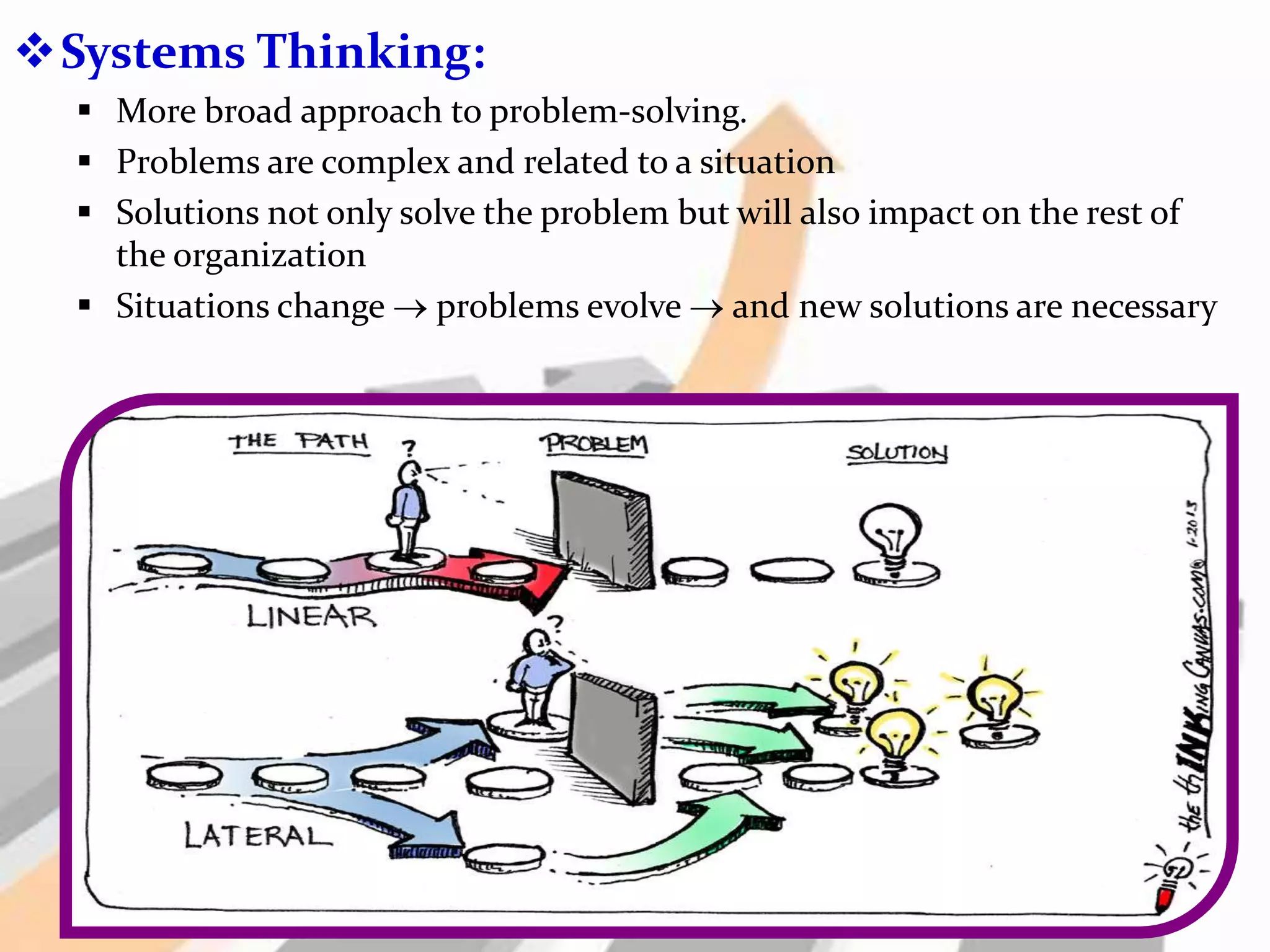
Linear Thinking:
 Each problem has a single solution, will only affect the problem area,
not the rest of the organization,
 Once implemented, will remain valid and should be evaluated only for
how well it solves the problem.
 Problems are conceived of as discrete, singular, and unique.
Fast-food restaurants
Not an effective
Problems with this type…
Systems Thinking:
 More broad approach to problem-solving.
 Problems are complex and related to a situation
 Solutions not only solve the problem but will also impact on the rest of
the organization
 Situations change  problems evolve  and new solutions are necessary
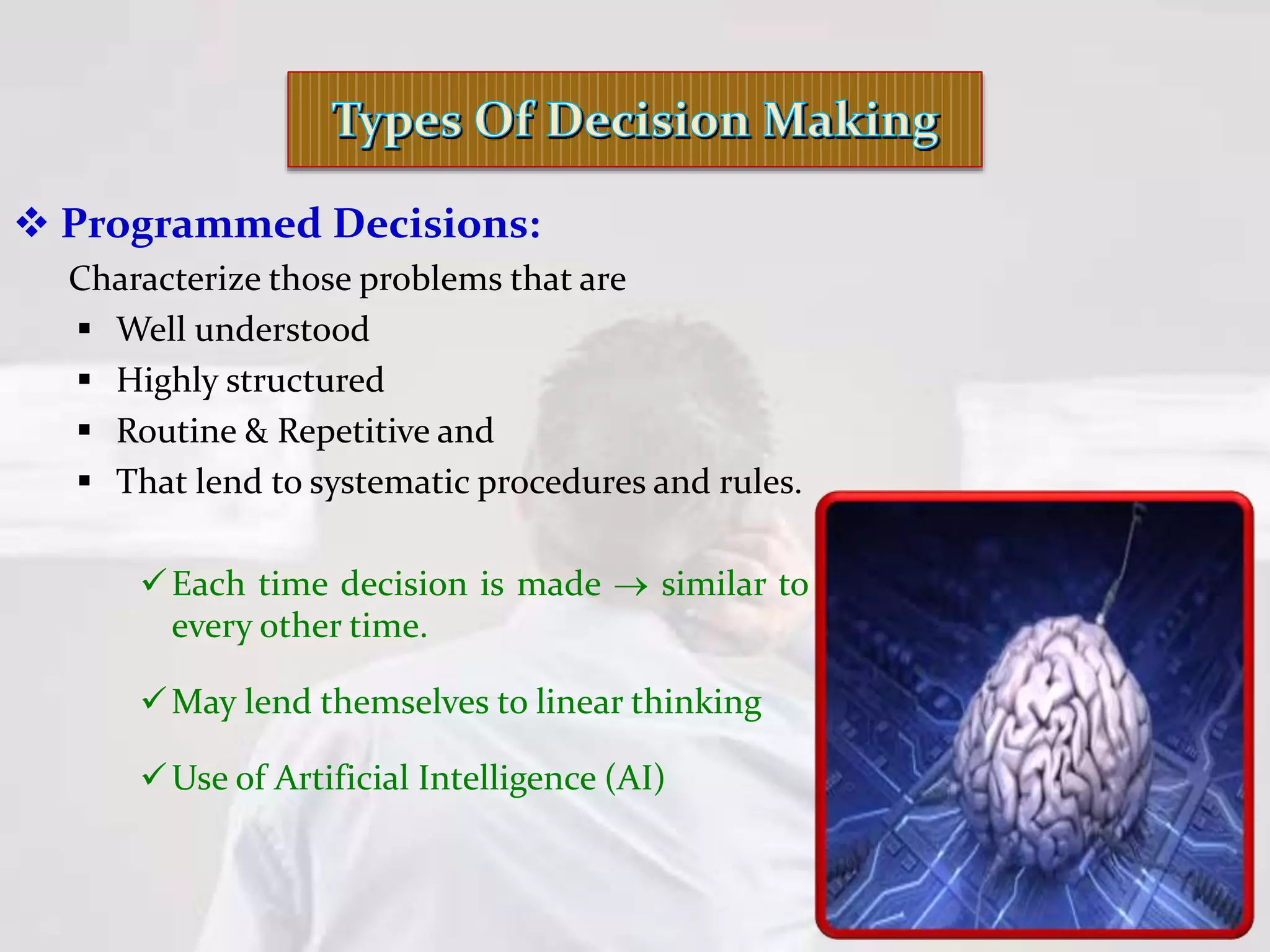
 Programmed Decisions:
Characterize those problems that are
 Well understood
 Highly structured
 Routine & Repetitive and
 That lend to systematic procedures and rules.
Each time decision is made  similar to
every other time.
May lend themselves to linear thinking
Use of Artificial Intelligence (AI)
 Nonprogrammed Decisions:
Nonprogrammed decisions are those problems that are
 Not well understood
 Not highly structured
 Tend to be unique
 And do not lend to routine or systematic procedures.
Happens so rarely
Rely heavily on the decision-making abilities of managers
There is no routine solution available
Use of data from past problems
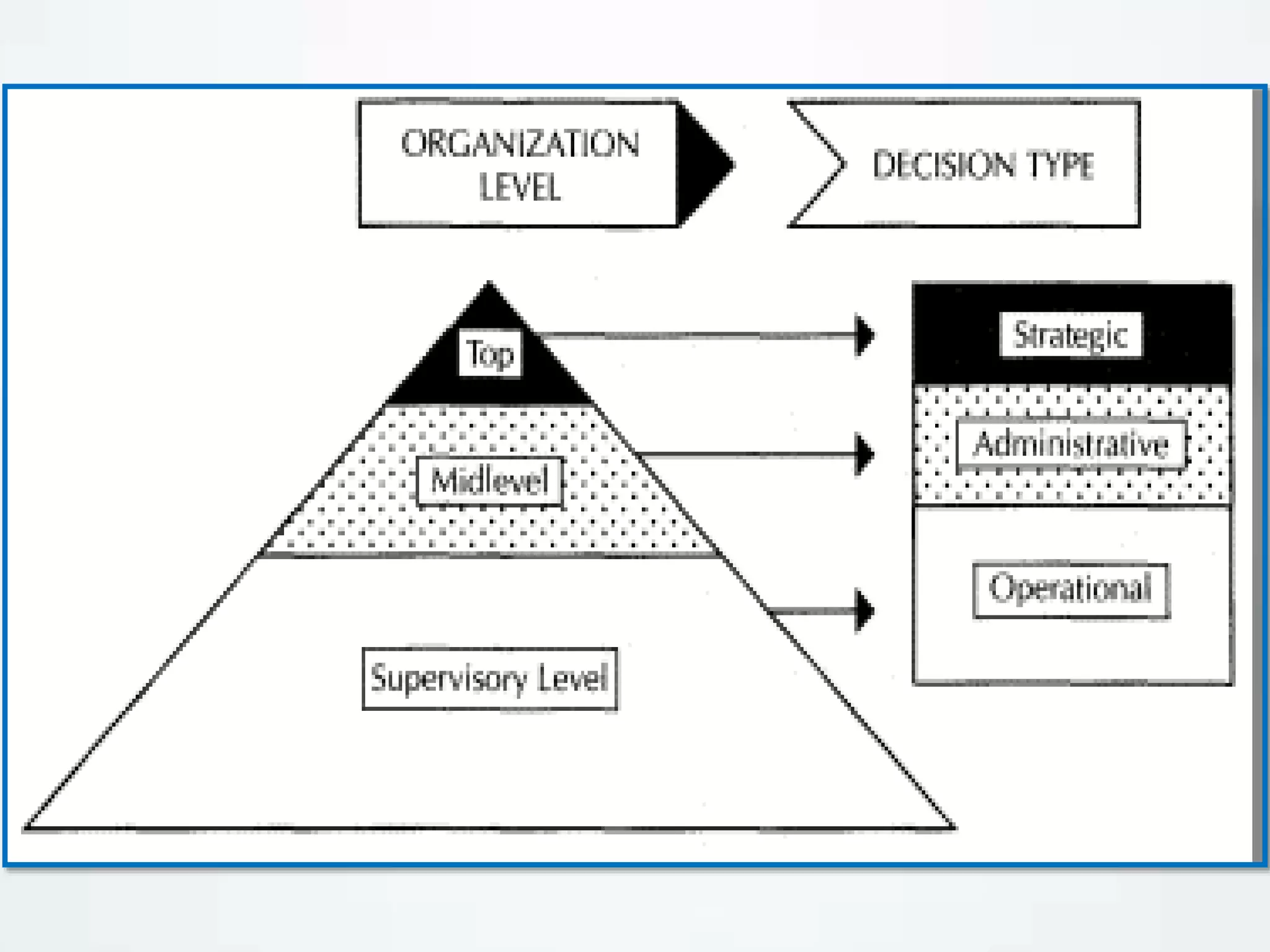
 Strategic
 Administrative
 Operational
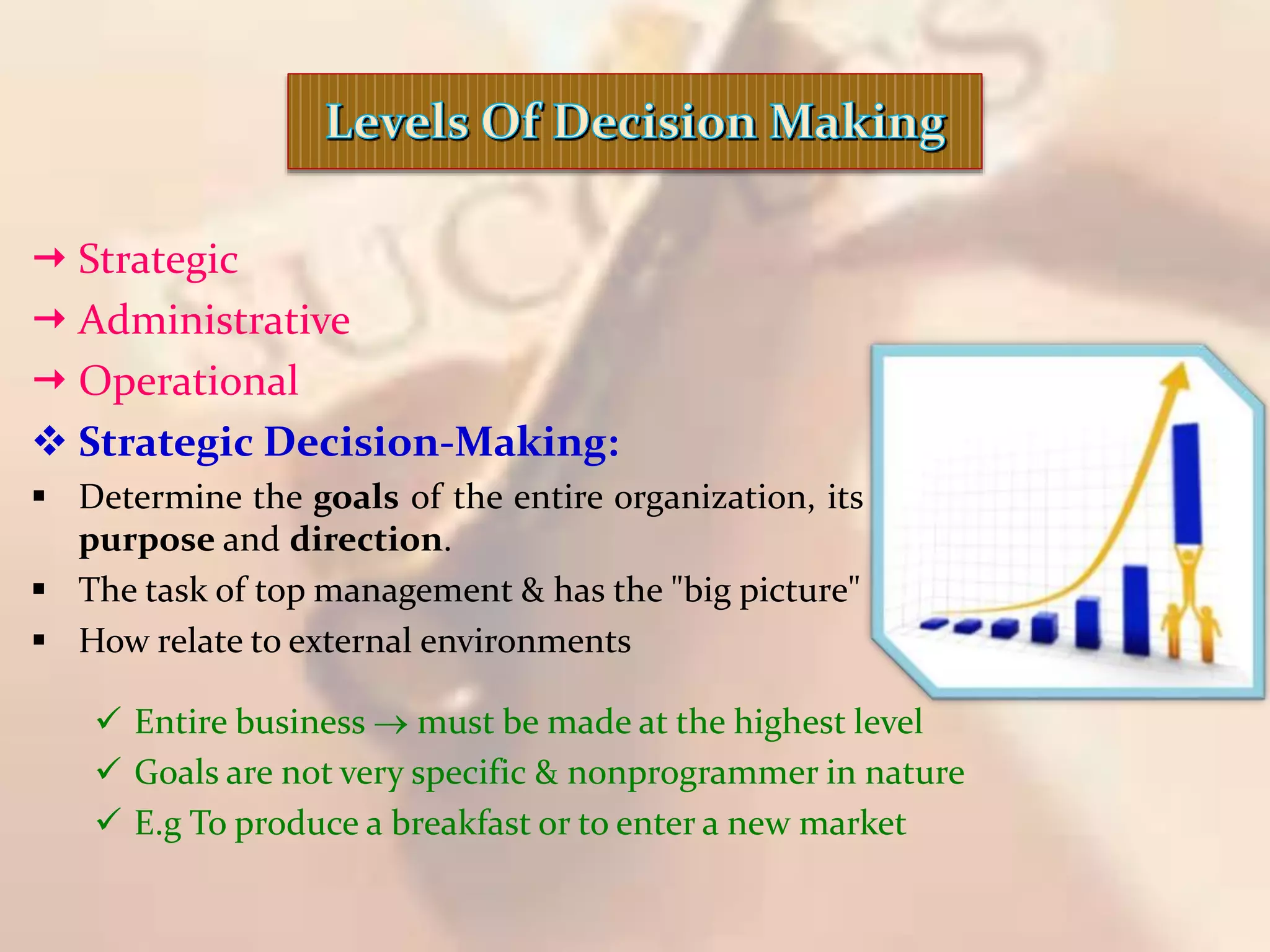
 Strategic Decision-Making:
 Determine the goals of the entire organization, its
purpose and direction.
 The task of top management & has the "big picture"
 How relate to external environments
 Entire business  must be made at the highest level
 Goals are not very specific & nonprogrammer in nature
 E.g To produce a breakfast or to enter a new market
 Administrative Decision-Making:
 Those made on a lower level
 Usually made by midlevel management
 concerns the development of tactics to accomplish the
strategic goals defined by top management.
 specific & departmental.
 E.g To produce a specific kind of cereal, in this case a
fruit-and-fiber breakfast cereal.
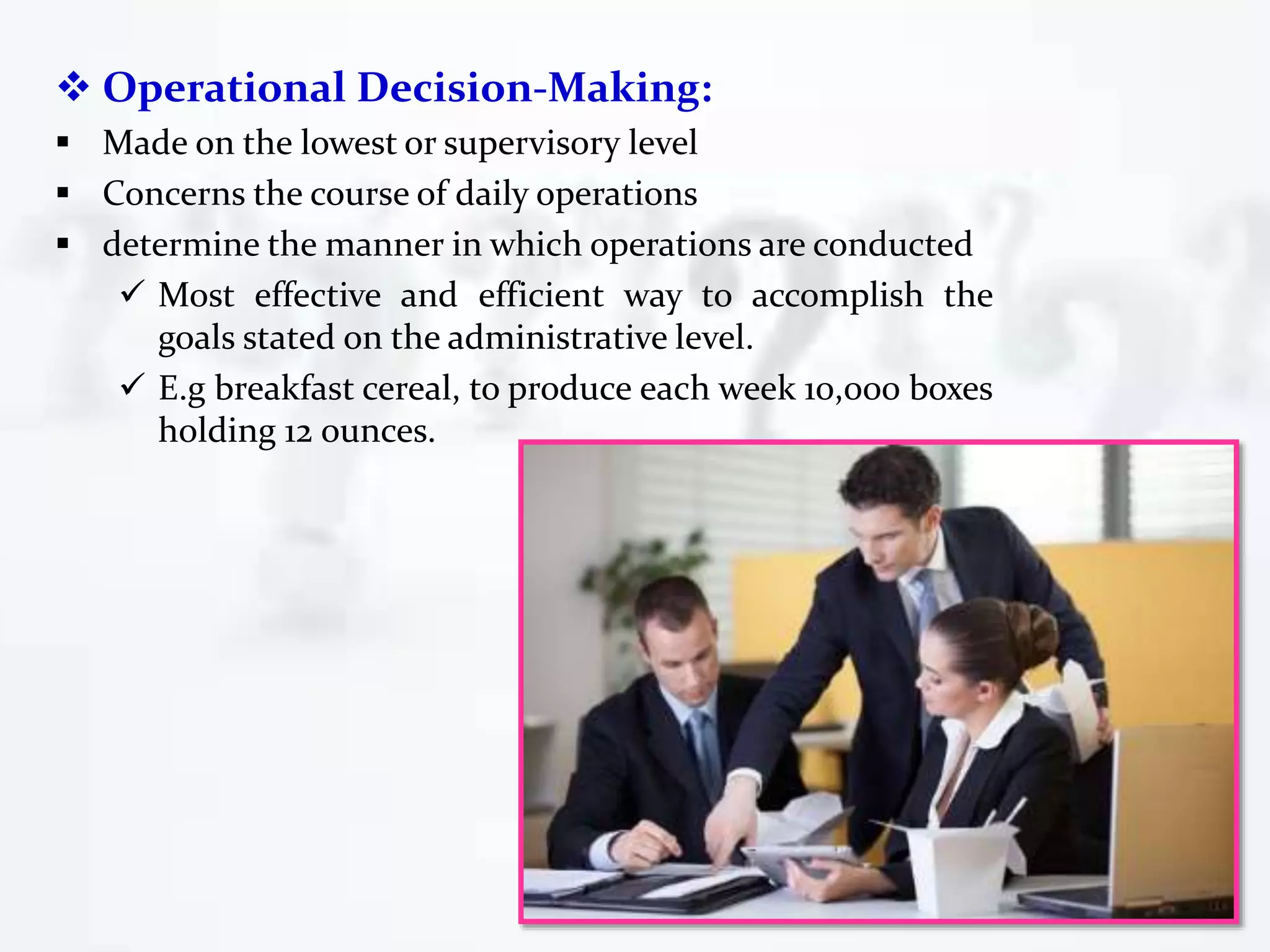
 Operational Decision-Making:
 Made on the lowest or supervisory level
 Concerns the course of daily operations
 determine the manner in which operations are conducted
 Most effective and efficient way to accomplish the
goals stated on the administrative level.
 E.g breakfast cereal, to produce each week 10,000 boxes
holding 12 ounces.
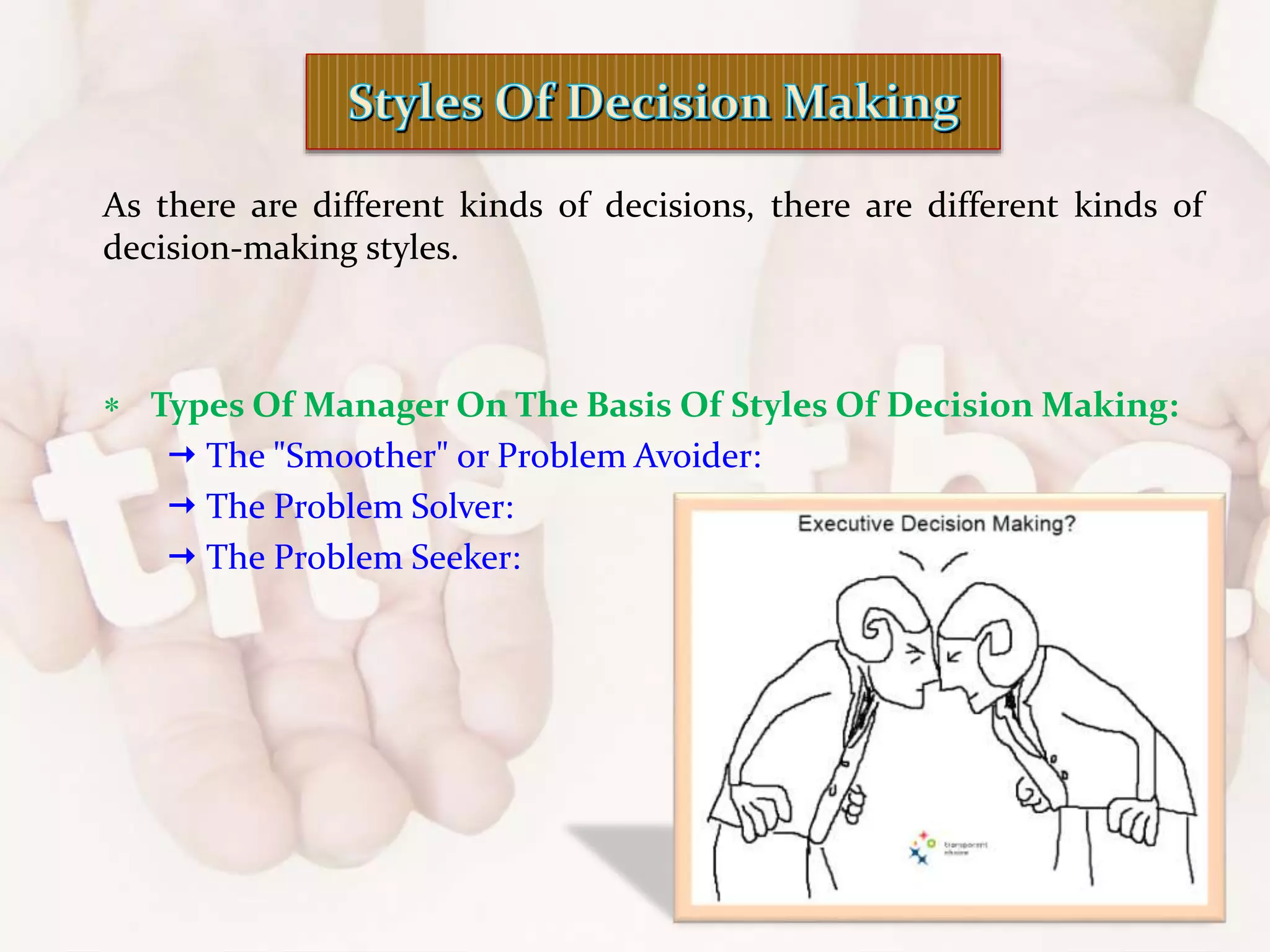
As there are different kinds of decisions, there are different kinds of
decision-making styles.
 Types Of Manager On The Basis Of Styles Of Decision Making:
 The "Smoother" or Problem Avoider:
 The Problem Solver:
 The Problem Seeker:
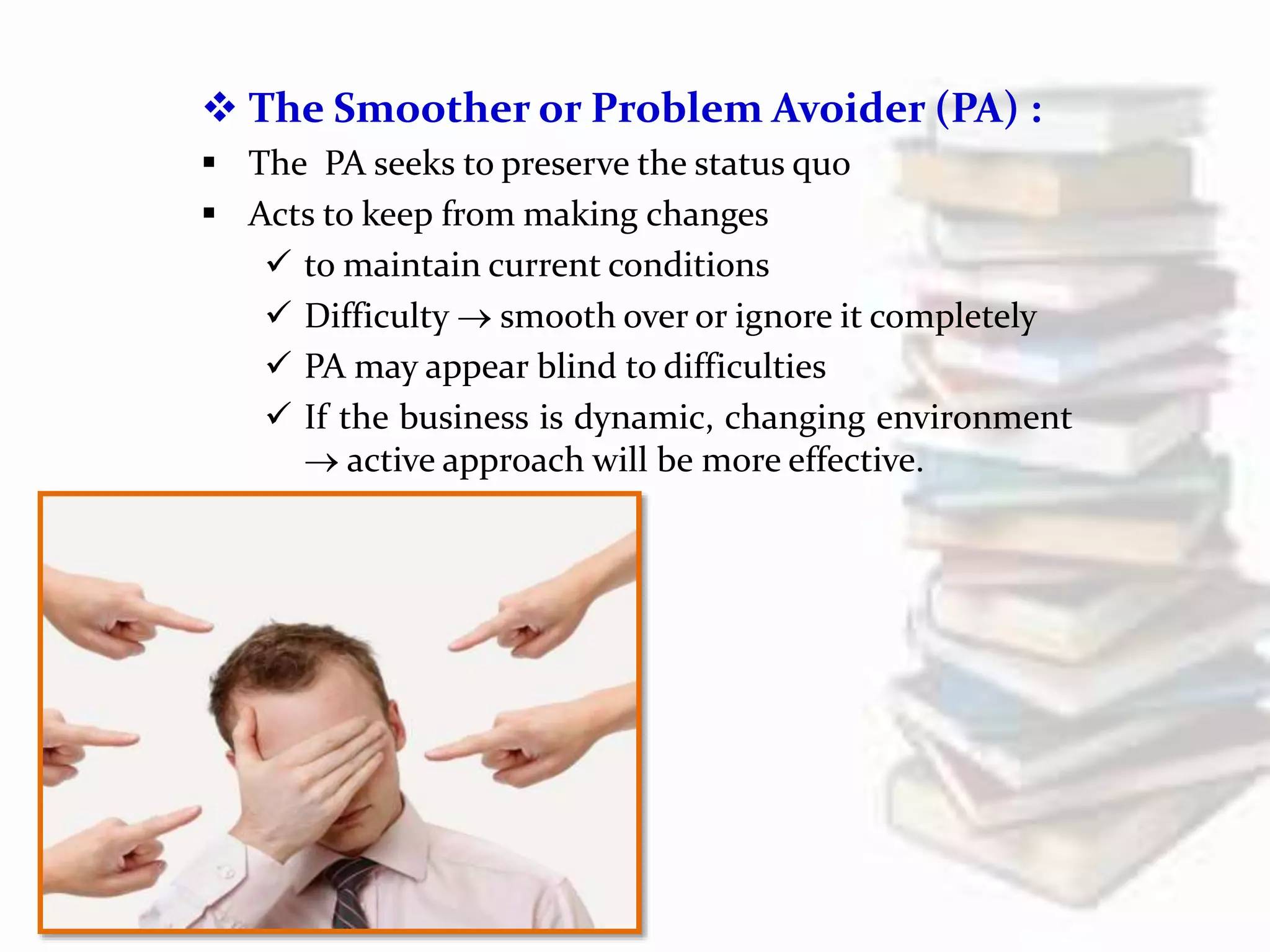
 The Smoother or Problem Avoider (PA) :
 The PA seeks to preserve the status quo
 Acts to keep from making changes
 to maintain current conditions
 Difficulty  smooth over or ignore it completely
 PA may appear blind to difficulties
 If the business is dynamic, changing environment
 active approach will be more effective.
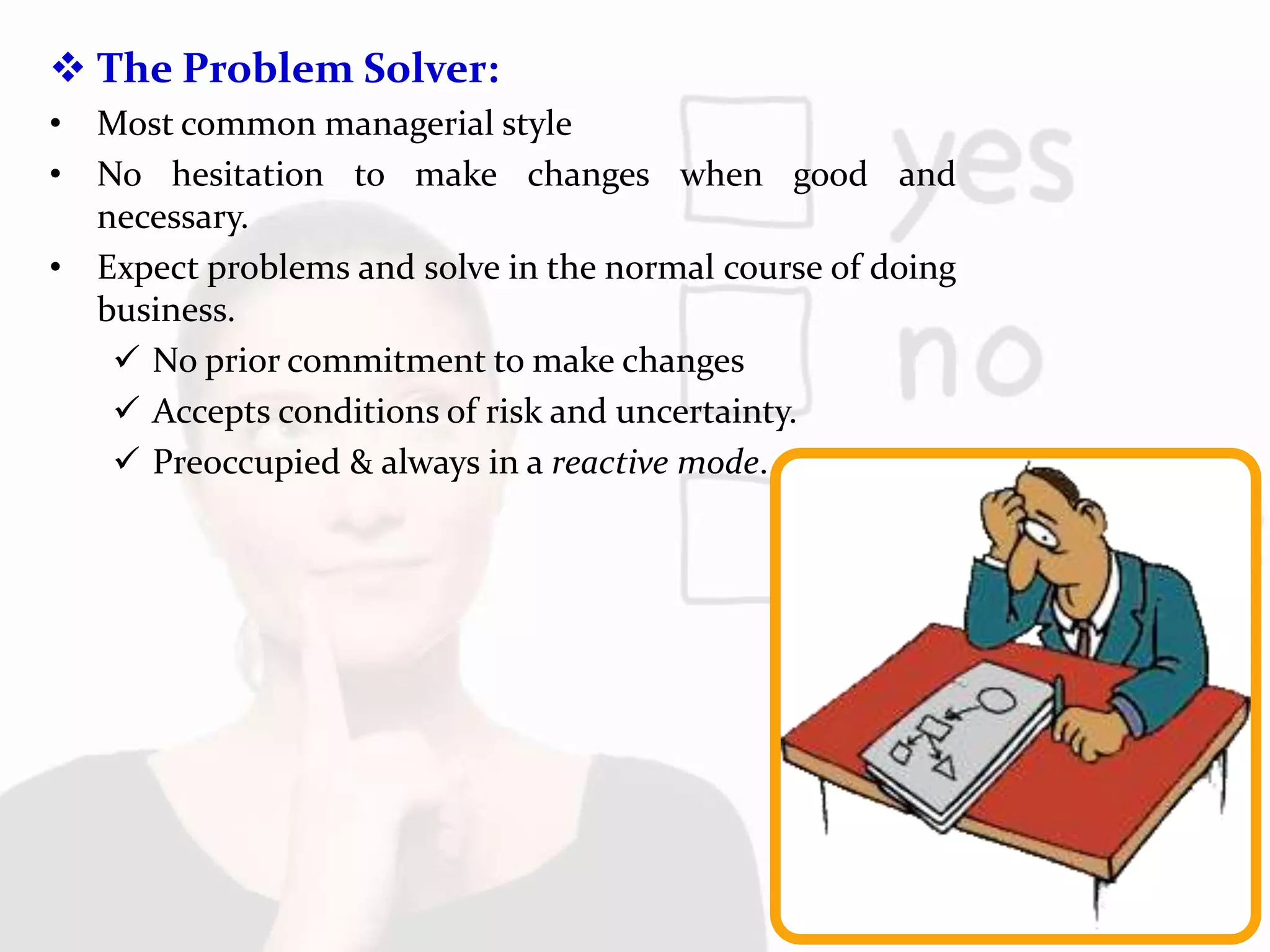
 The Problem Solver:
• Most common managerial style
• No hesitation to make changes when good and
necessary.
• Expect problems and solve in the normal course of doing
business.
 No prior commitment to make changes
 Accepts conditions of risk and uncertainty.
 Preoccupied & always in a reactive mode.
 The Problem Seeker:
 Actively seeks out problems and attempts to deal with them before they
emerge as major difficulties for a business.
 Future planning and contingencies creation are involved
 Believes to anticipate, not merely to react
 Uses the data analysis, to understand the present, to project the future.
 Efficient way to deal with small problems before they become big ones.
 But may lead to a neglect of current needs and situations
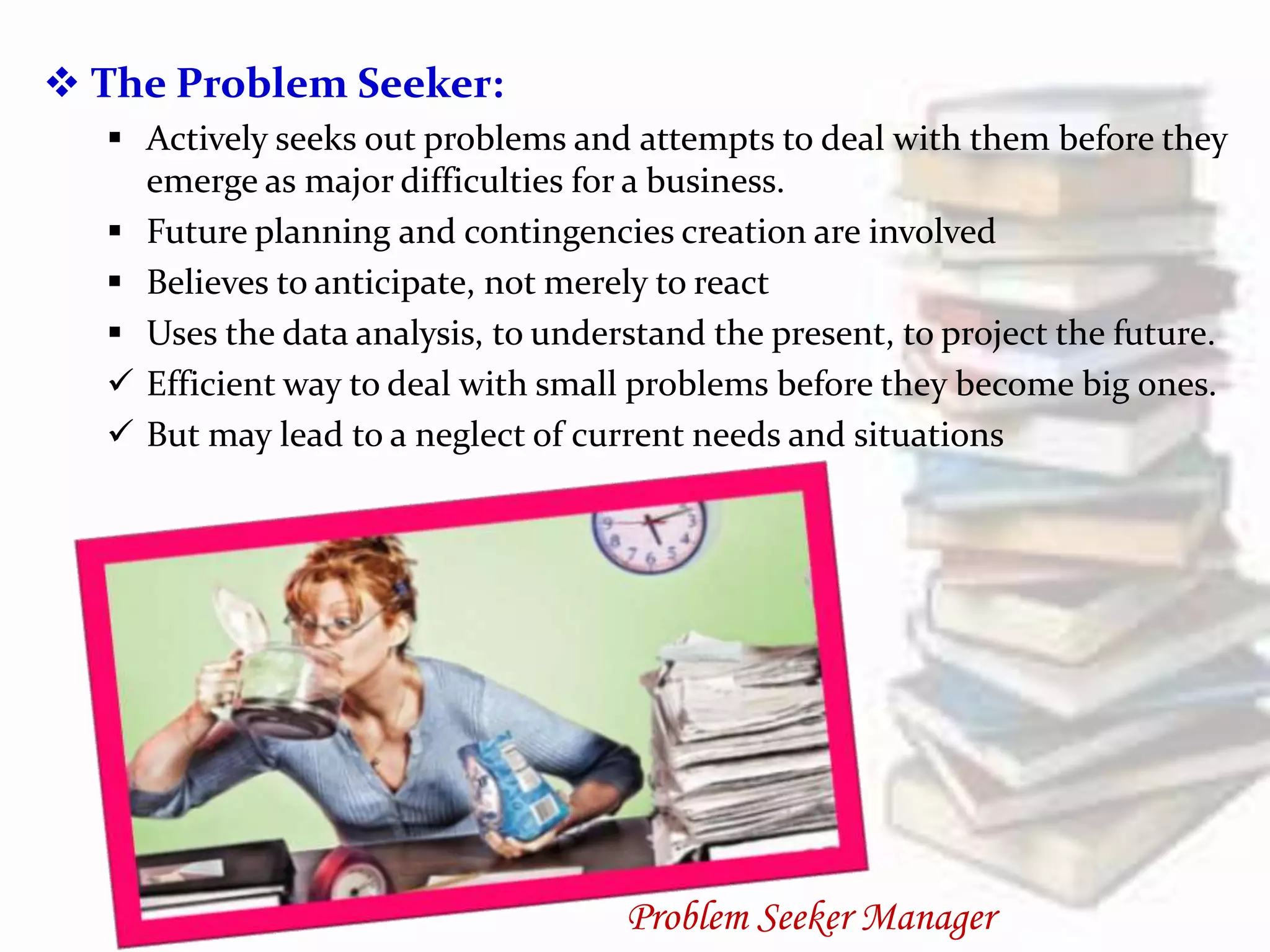
Problem Seeker Manager
 Conditions Of Certainty:
• Results are known in advance
• No unanticipated results are there
• Decisions made under this are programmed
• Possible in the most simple situations
• Encounters a degree of risk
 Conditions Of Risk:
• Results are not definitely known
• But will probably fall within a known range
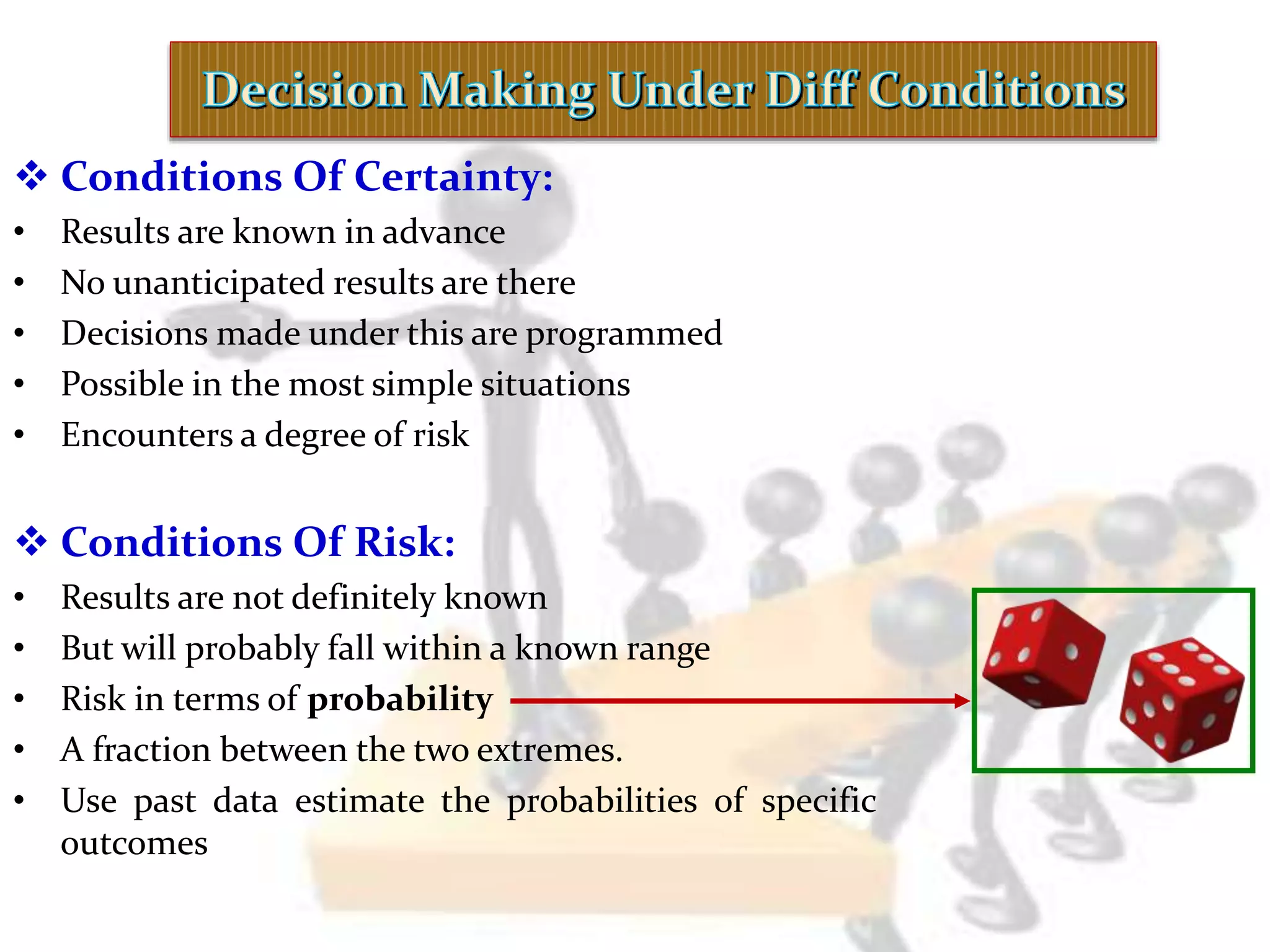
• Risk in terms of probability
• A fraction between the two extremes.
• Use past data estimate the probabilities of specific
outcomes
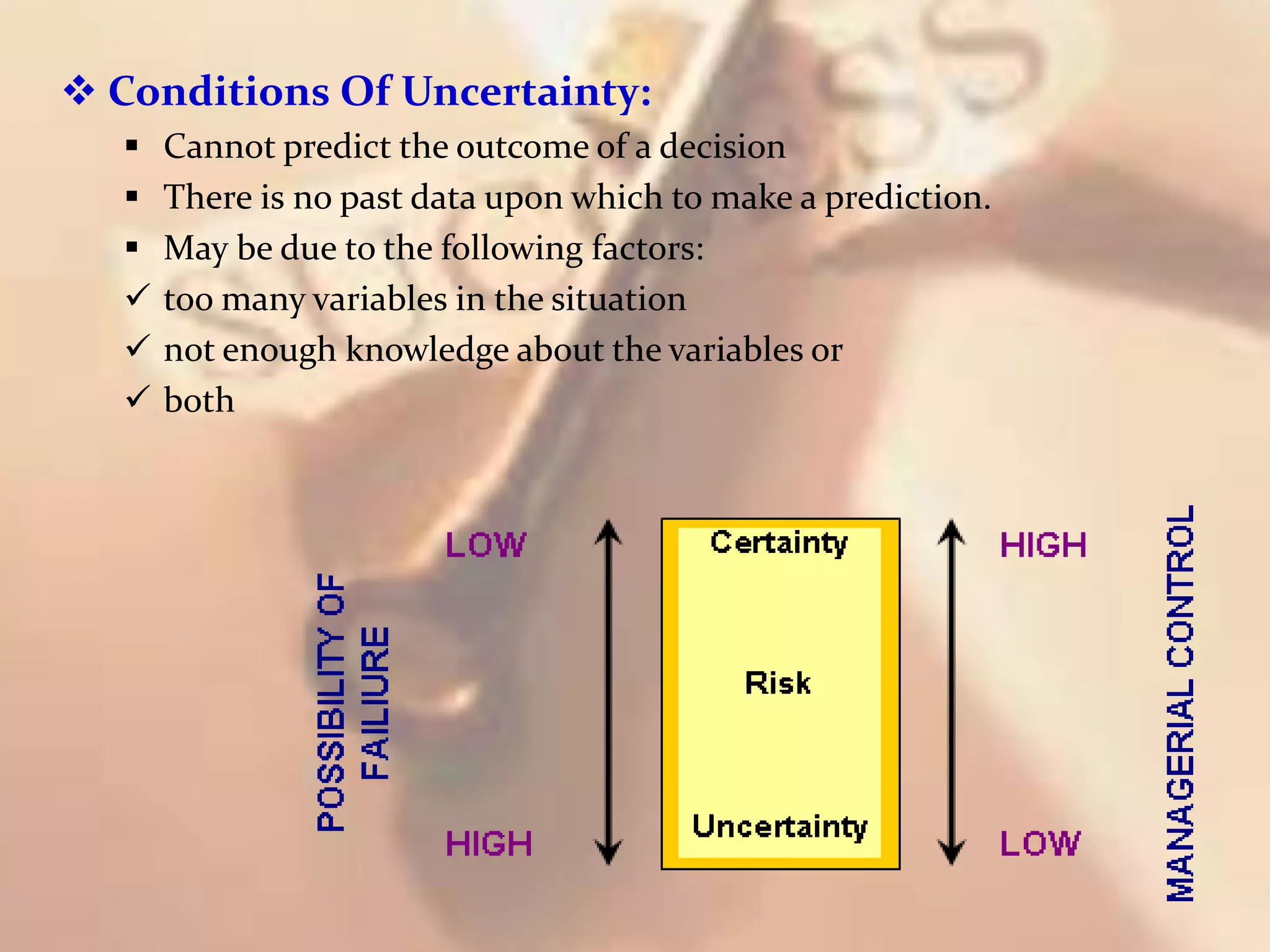
 Conditions Of Uncertainty:
 Cannot predict the outcome of a decision
 There is no past data upon which to make a prediction.
 May be due to the following factors:
 too many variables in the situation
 not enough knowledge about the variables or
 both
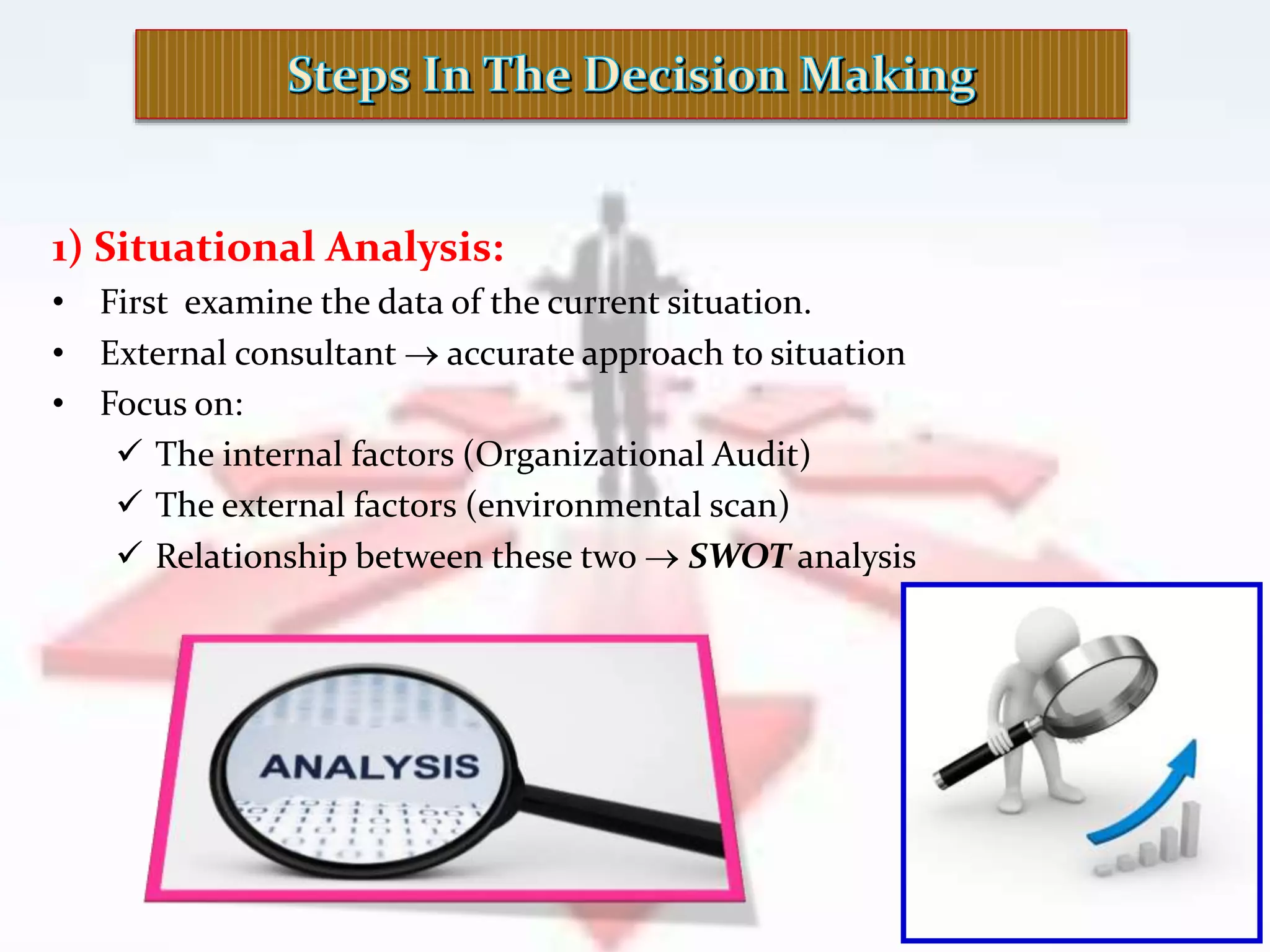
1) Situational Analysis:
• First examine the data of the current situation.
• External consultant  accurate approach to situation
• Focus on:
 The internal factors (Organizational Audit)
 The external factors (environmental scan)
 Relationship between these two  SWOT analysis
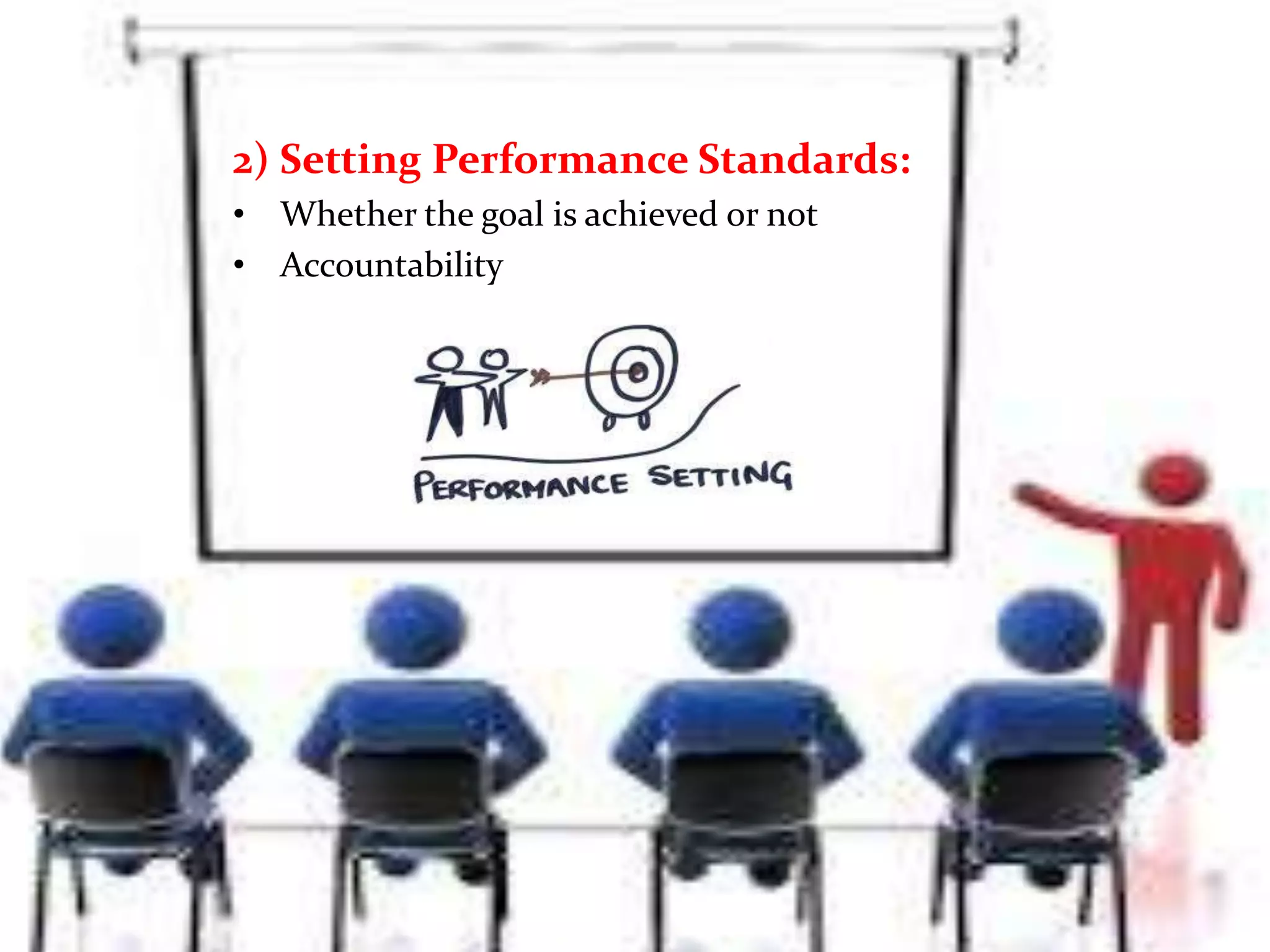
2) Setting Performance Standards:
• Whether the goal is achieved or not
• Accountability
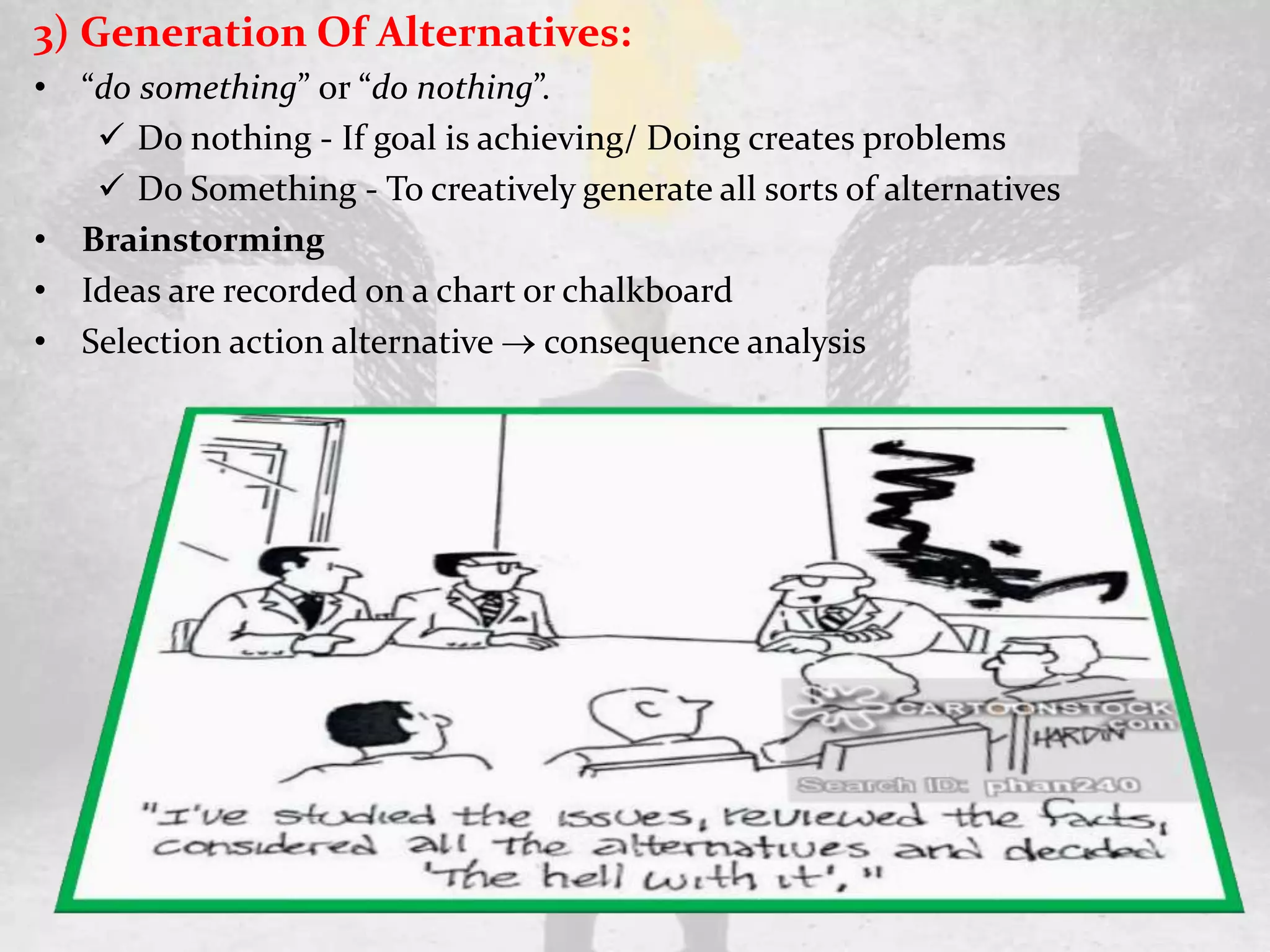
3) Generation Of Alternatives:
• “do something” or “do nothing”.
 Do nothing - If goal is achieving/ Doing creates problems
 Do Something - To creatively generate all sorts of alternatives
• Brainstorming
• Ideas are recorded on a chart or chalkboard
• Selection action alternative  consequence analysis
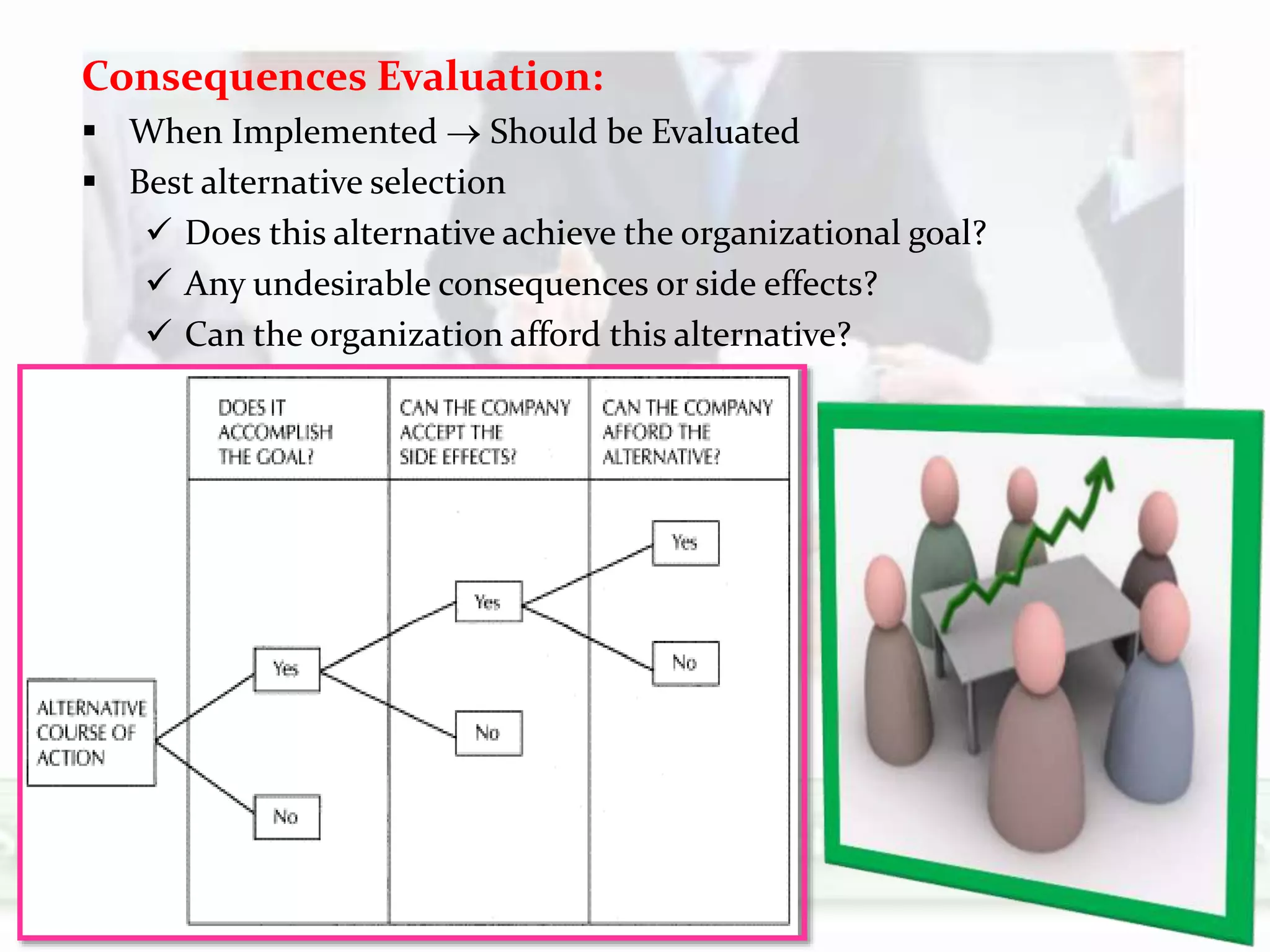
Consequences Evaluation:
 When Implemented  Should be Evaluated
 Best alternative selection
 Does this alternative achieve the organizational goal?
 Any undesirable consequences or side effects?
 Can the organization afford this alternative?
5) Pilot-Testing And Full Implementation:
• Once an alternative is chosen, the alternative (s) must be pilot-tested
• Should not proceed to full implementation
• Final chance to modify (feedback)
• After pilot test, fully implemented
• After a period of time  measured and evaluated.
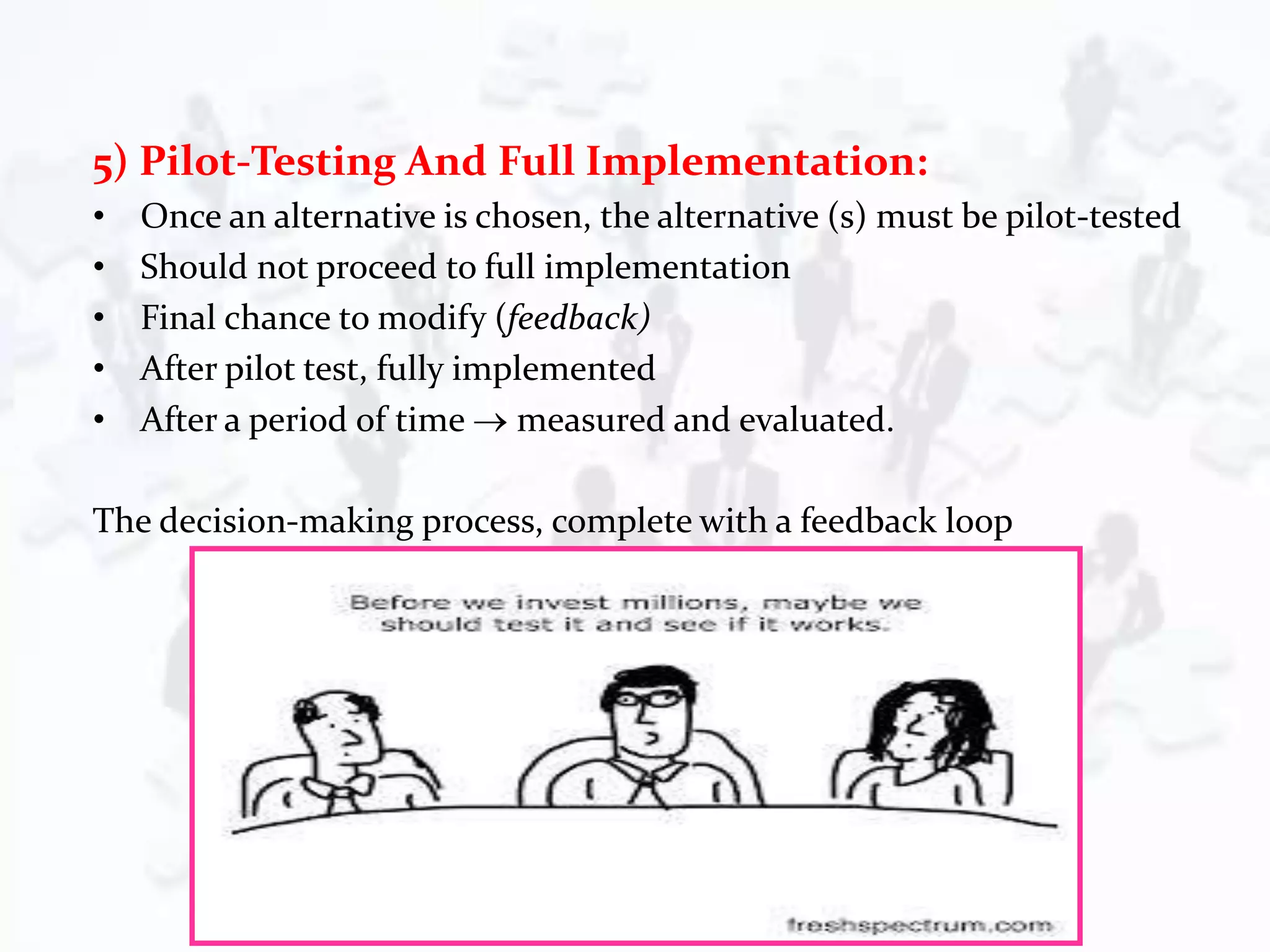
The decision-making process, complete with a feedback loop
• So Be Ready …….
Decesion Making Tahir Khan, University Of Peshawar

Decesion Making Tahir Khan, University Of Peshawar

  • 2.
    • Introduction: • Waysof thinking About Decision making: • Types Of Decision Making: • Levels Of Decision Making: • Styles Of Decision Making: • Decision Making Under Diff Conditions: • Steps In The Decision Making Process:
  • 3.
     Decision-Making Process: The sequence of events taken by management to solve the problems  A systematic process.  Analysis reveals that virtually every manager makes decisions  This points to decision-making as the common function of managers  Some writers have used the term "decision-maker" in place of manager
  • 4.
    Linear Thinking:  Eachproblem has a single solution, will only affect the problem area, not the rest of the organization,  Once implemented, will remain valid and should be evaluated only for how well it solves the problem.  Problems are conceived of as discrete, singular, and unique. Fast-food restaurants Not an effective Problems with this type…
  • 5.
    Systems Thinking:  Morebroad approach to problem-solving.  Problems are complex and related to a situation  Solutions not only solve the problem but will also impact on the rest of the organization  Situations change  problems evolve  and new solutions are necessary
  • 6.
     Programmed Decisions: Characterizethose problems that are  Well understood  Highly structured  Routine & Repetitive and  That lend to systematic procedures and rules. Each time decision is made  similar to every other time. May lend themselves to linear thinking Use of Artificial Intelligence (AI)
  • 7.
     Nonprogrammed Decisions: Nonprogrammeddecisions are those problems that are  Not well understood  Not highly structured  Tend to be unique  And do not lend to routine or systematic procedures. Happens so rarely Rely heavily on the decision-making abilities of managers There is no routine solution available Use of data from past problems
  • 8.
     Strategic  Administrative Operational  Strategic Decision-Making:  Determine the goals of the entire organization, its purpose and direction.  The task of top management & has the "big picture"  How relate to external environments  Entire business  must be made at the highest level  Goals are not very specific & nonprogrammer in nature  E.g To produce a breakfast or to enter a new market
  • 9.
     Administrative Decision-Making: Those made on a lower level  Usually made by midlevel management  concerns the development of tactics to accomplish the strategic goals defined by top management.  specific & departmental.  E.g To produce a specific kind of cereal, in this case a fruit-and-fiber breakfast cereal.
  • 10.
     Operational Decision-Making: Made on the lowest or supervisory level  Concerns the course of daily operations  determine the manner in which operations are conducted  Most effective and efficient way to accomplish the goals stated on the administrative level.  E.g breakfast cereal, to produce each week 10,000 boxes holding 12 ounces.
  • 12.
    As there aredifferent kinds of decisions, there are different kinds of decision-making styles.  Types Of Manager On The Basis Of Styles Of Decision Making:  The "Smoother" or Problem Avoider:  The Problem Solver:  The Problem Seeker:
  • 13.
     The Smootheror Problem Avoider (PA) :  The PA seeks to preserve the status quo  Acts to keep from making changes  to maintain current conditions  Difficulty  smooth over or ignore it completely  PA may appear blind to difficulties  If the business is dynamic, changing environment  active approach will be more effective.
  • 14.
     The ProblemSolver: • Most common managerial style • No hesitation to make changes when good and necessary. • Expect problems and solve in the normal course of doing business.  No prior commitment to make changes  Accepts conditions of risk and uncertainty.  Preoccupied & always in a reactive mode.
  • 15.
     The ProblemSeeker:  Actively seeks out problems and attempts to deal with them before they emerge as major difficulties for a business.  Future planning and contingencies creation are involved  Believes to anticipate, not merely to react  Uses the data analysis, to understand the present, to project the future.  Efficient way to deal with small problems before they become big ones.  But may lead to a neglect of current needs and situations Problem Seeker Manager
  • 16.
     Conditions OfCertainty: • Results are known in advance • No unanticipated results are there • Decisions made under this are programmed • Possible in the most simple situations • Encounters a degree of risk  Conditions Of Risk: • Results are not definitely known • But will probably fall within a known range • Risk in terms of probability • A fraction between the two extremes. • Use past data estimate the probabilities of specific outcomes
  • 17.
     Conditions OfUncertainty:  Cannot predict the outcome of a decision  There is no past data upon which to make a prediction.  May be due to the following factors:  too many variables in the situation  not enough knowledge about the variables or  both
  • 18.
    1) Situational Analysis: •First examine the data of the current situation. • External consultant  accurate approach to situation • Focus on:  The internal factors (Organizational Audit)  The external factors (environmental scan)  Relationship between these two  SWOT analysis
  • 19.
    2) Setting PerformanceStandards: • Whether the goal is achieved or not • Accountability
  • 20.
    3) Generation OfAlternatives: • “do something” or “do nothing”.  Do nothing - If goal is achieving/ Doing creates problems  Do Something - To creatively generate all sorts of alternatives • Brainstorming • Ideas are recorded on a chart or chalkboard • Selection action alternative  consequence analysis
  • 21.
    Consequences Evaluation:  WhenImplemented  Should be Evaluated  Best alternative selection  Does this alternative achieve the organizational goal?  Any undesirable consequences or side effects?  Can the organization afford this alternative?
  • 22.
    5) Pilot-Testing AndFull Implementation: • Once an alternative is chosen, the alternative (s) must be pilot-tested • Should not proceed to full implementation • Final chance to modify (feedback) • After pilot test, fully implemented • After a period of time  measured and evaluated. The decision-making process, complete with a feedback loop
  • 23.
    • So BeReady …….