DDR Memory
Memory (Basic)
• Collection of storage cells together
• Involves circuit to transfer information across
• Different device has different memory
architecture
RAM/ Random Access Memory
• Volatile memory(information is lost when
power supply OFF)
• When open program, it load it to RAM from
hard disk.
• Consist of multiplexing and demultiplexing
circuit to make data to provided address
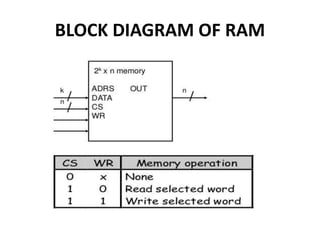
BLOCK DIAGRAM OF RAM
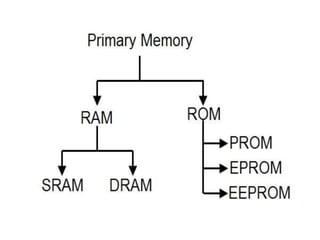
TYPES OF RAM
• SRAM( Static random access memory): Holds
data in static form
• DRAM( Dynamic Random access memory): It
constantly needs to be refreshed and lose
data shortly
DRAM FEATURES
• Less power consumption
• Used in main memory
• Needs more memory and needs to be
refreshed constantly.
DDR SDRAM
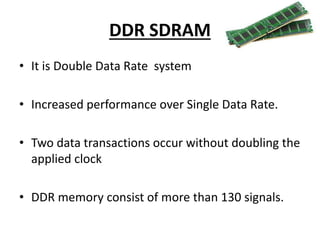
• It is Double Data Rate system
• Increased performance over Single Data Rate.
• Two data transactions occur without doubling the
applied clock
• DDR memory consist of more than 130 signals.
DDR SDRAM REGISTERS
• MODE REGISTER: The mode register is used to
define the mode of operation of ddr sdram
• EXTENDED MODE REGISTER: It controls the
operations that are beyond mode registers
Commands of DDR SDRAM
• DESELECT
• NO OPERATION
• ACTIVE
• READ
• WRITE
• BURST TERMINATE
• PRE CHARGE
• AUTO refresh
ADVANTAGES OF DDR SDRAM
• Comparable Bandwidth level
• Lower latency cost
DISADVANTAGES OF DDR SDRAM
• Poor bus efficiency 65%
• Not by Intel
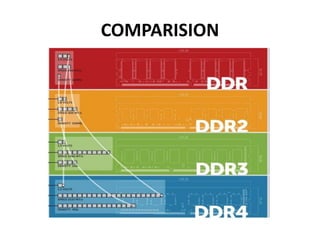
COMPARISION
DDR4 SDRAM
• Greater bandwidth
• Power Savings
• Performance enhancement
THANK YOU

DDR

  • 1.
  • 2.
    Memory (Basic) • Collectionof storage cells together • Involves circuit to transfer information across • Different device has different memory architecture
  • 4.
    RAM/ Random AccessMemory • Volatile memory(information is lost when power supply OFF) • When open program, it load it to RAM from hard disk. • Consist of multiplexing and demultiplexing circuit to make data to provided address
  • 5.
  • 6.
    TYPES OF RAM •SRAM( Static random access memory): Holds data in static form • DRAM( Dynamic Random access memory): It constantly needs to be refreshed and lose data shortly
  • 7.
    DRAM FEATURES • Lesspower consumption • Used in main memory • Needs more memory and needs to be refreshed constantly.
  • 8.
    DDR SDRAM • Itis Double Data Rate system • Increased performance over Single Data Rate. • Two data transactions occur without doubling the applied clock • DDR memory consist of more than 130 signals.
  • 9.
    DDR SDRAM REGISTERS •MODE REGISTER: The mode register is used to define the mode of operation of ddr sdram • EXTENDED MODE REGISTER: It controls the operations that are beyond mode registers
  • 10.
    Commands of DDRSDRAM • DESELECT • NO OPERATION • ACTIVE • READ • WRITE • BURST TERMINATE • PRE CHARGE • AUTO refresh
  • 11.
    ADVANTAGES OF DDRSDRAM • Comparable Bandwidth level • Lower latency cost
  • 12.
    DISADVANTAGES OF DDRSDRAM • Poor bus efficiency 65% • Not by Intel
  • 13.
  • 14.
    DDR4 SDRAM • Greaterbandwidth • Power Savings • Performance enhancement
  • 15.