Downloaded 167 times
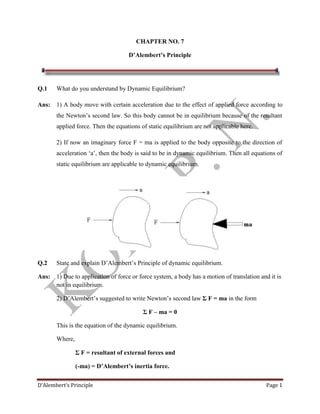
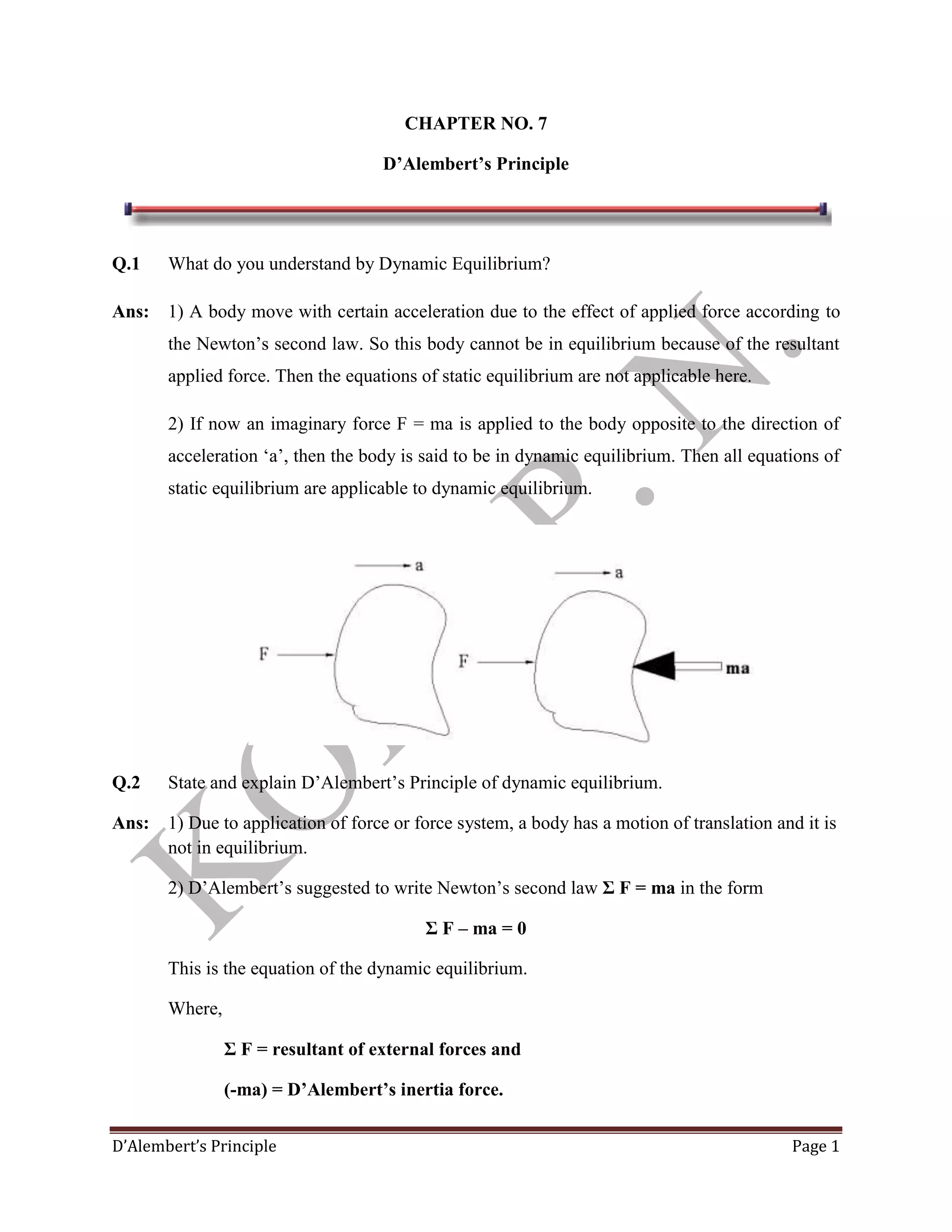
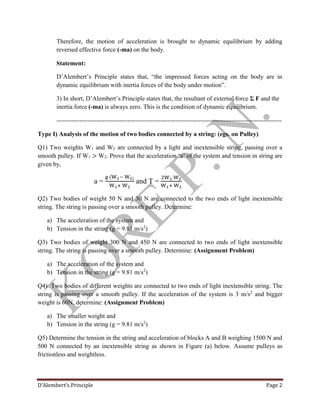
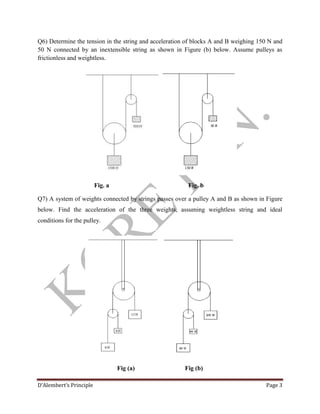
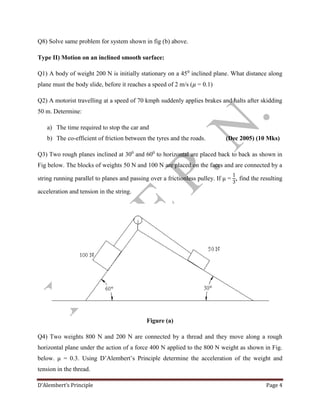
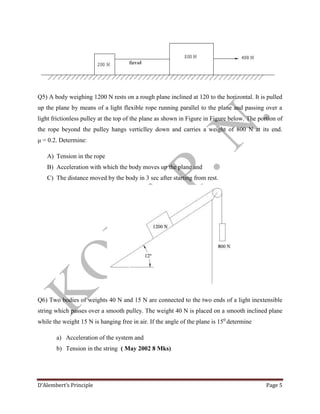
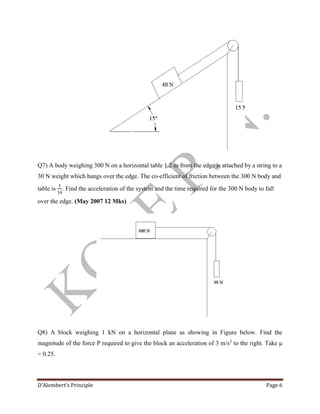
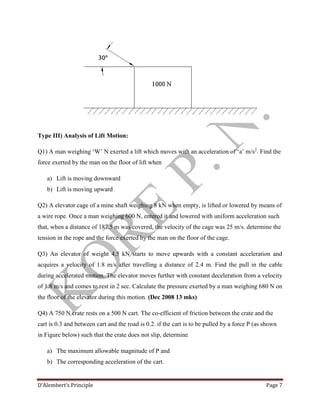
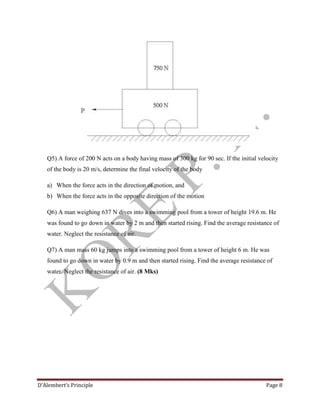

D'Alembert's Principle states that the resultant of all external forces and inertia forces acting on a body is zero for the body to be in dynamic equilibrium. Inertia forces are represented as minus mass times acceleration. The principle allows equations of static equilibrium to be applied to bodies undergoing translational motion by considering an imaginary inertia force equal and opposite to actual inertia. Several example problems are provided applying the principle to analyze motion of connected bodies over pulleys, motion on inclined planes, and motion within elevators.


