 The cytoskeleton extends throughout the cytoplasm and
is a complex network of protein filaments.
 Providing structural support to the cell, the cytoskeleton
also functions in cell motility and regulation.
 The existence of an organized fibrous array or
cytoskeleton in the structure of the protoplasm was
postulated in 1928 by Koltzoff.
What is Cytoskeleton?
Types of protein filaments
There are three main types of Protein fibers in
the cytoskeleton:
A. MICROTUBULES
B. MICROFILAMENTS
C. INTERMEDIATE FILAMENTS
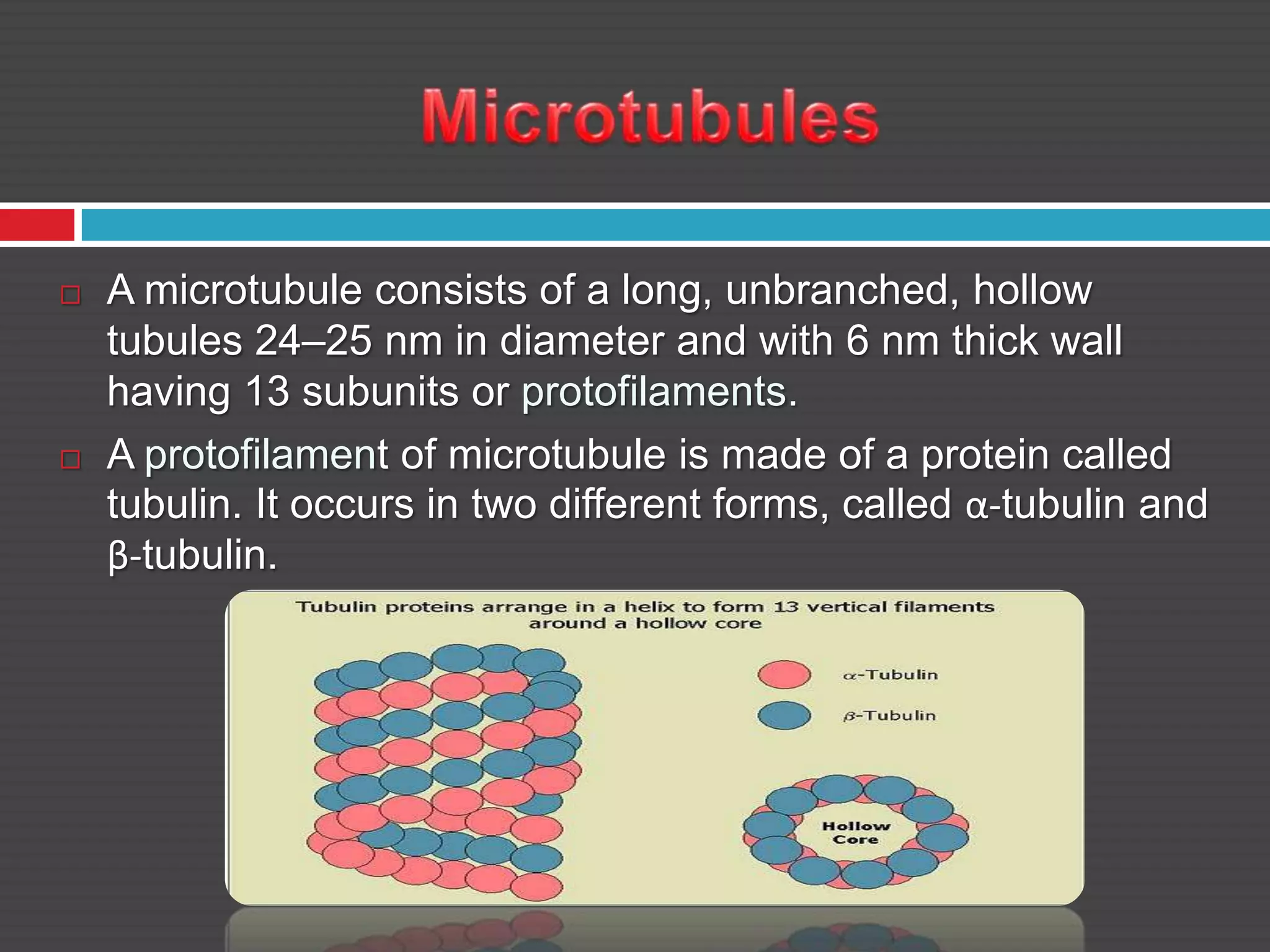
 A microtubule consists of a long, unbranched, hollow
tubules 24–25 nm in diameter and with 6 nm thick wall
having 13 subunits or protofilaments.
 A protofilament of microtubule is made of a protein called
tubulin. It occurs in two different forms, called α-tubulin and
β-tubulin.
Functions of Microtubules
 Microtubules are the central structural supports in cilia
and flagella.
 During cell differentiation, the mechanical function of
microtubules is used to determine the shape of the
developing cells.
 Microtubules play a role in the contraction of the spindle
and movement of chromosomes and centrioles as well
as in ciliary and flagellar motion.
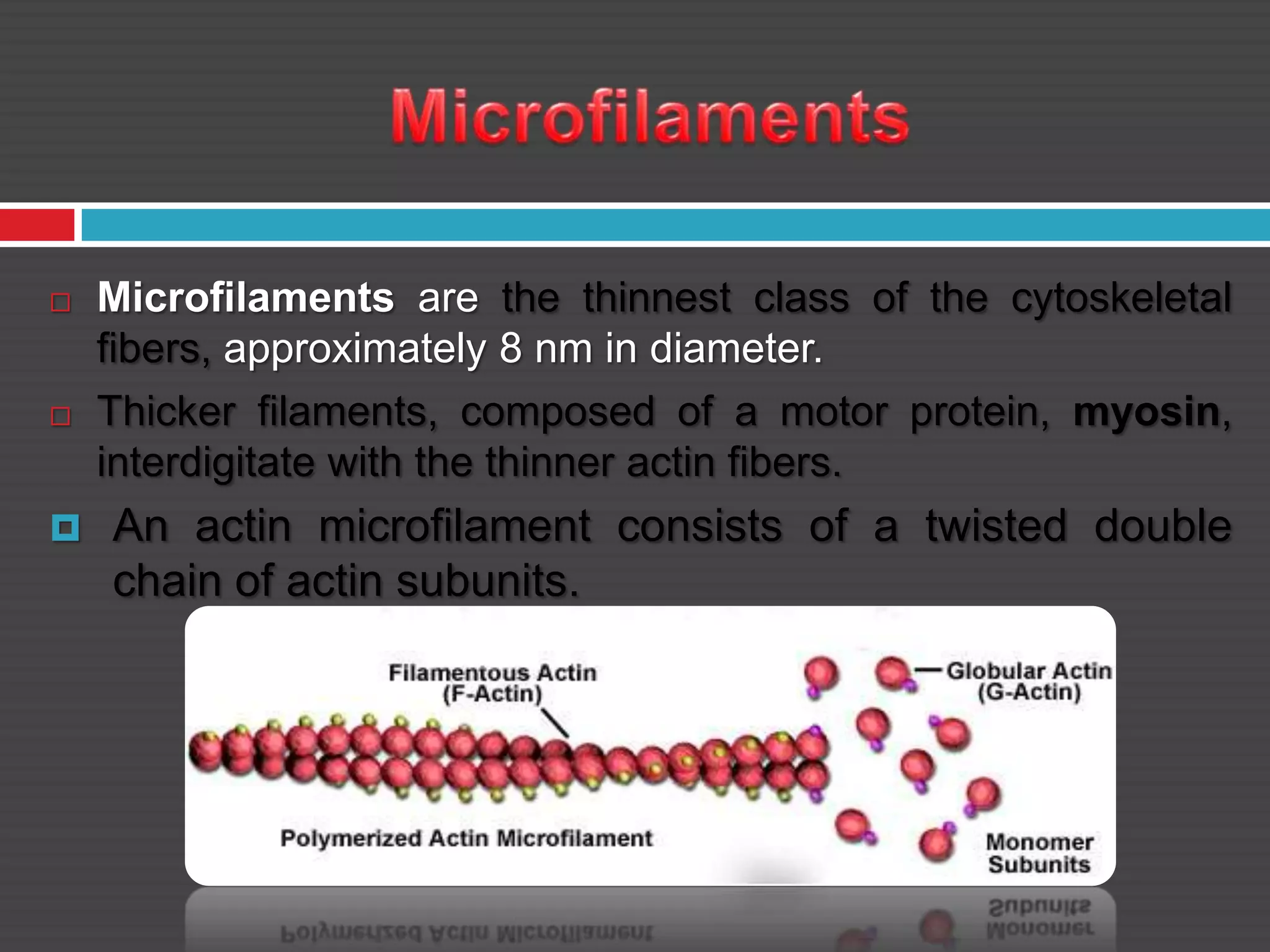
 Microfilaments are the thinnest class of the cytoskeletal
fibers, approximately 8 nm in diameter.
 Thicker filaments, composed of a motor protein, myosin,
interdigitate with the thinner actin fibers.
 An actin microfilament consists of a twisted double
chain of actin subunits.
Function of microfilaments
 Microfilaments are found to be involved in movement
associated with furrow formation in cell division.
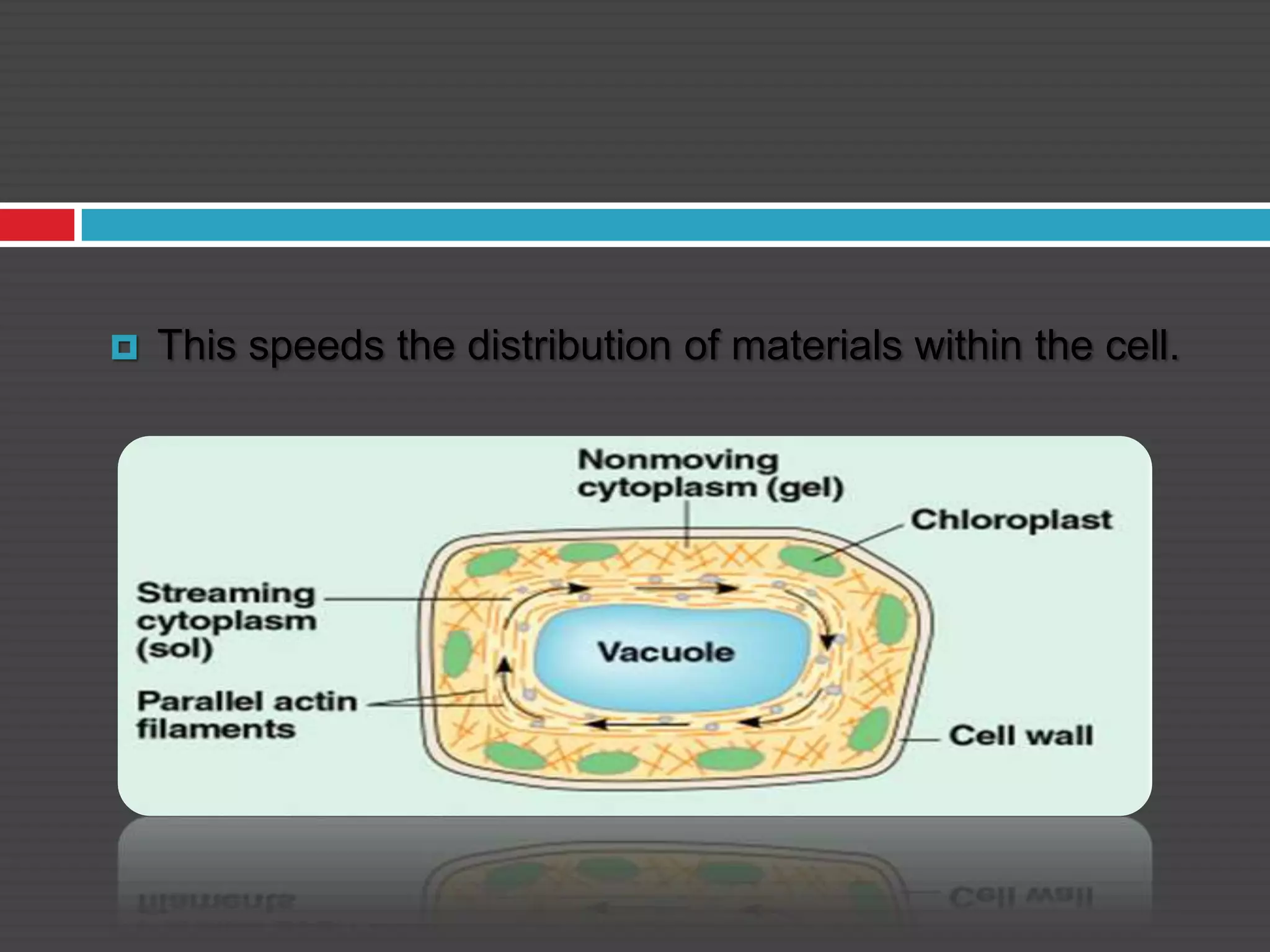
 In plant cells(and others), actin-myosin interactions and
sol-gel transformations drive cytoplasmic streaming.
 This creates a circular flow of cytoplasm in the cell.
 This speeds the distribution of materials within the cell.
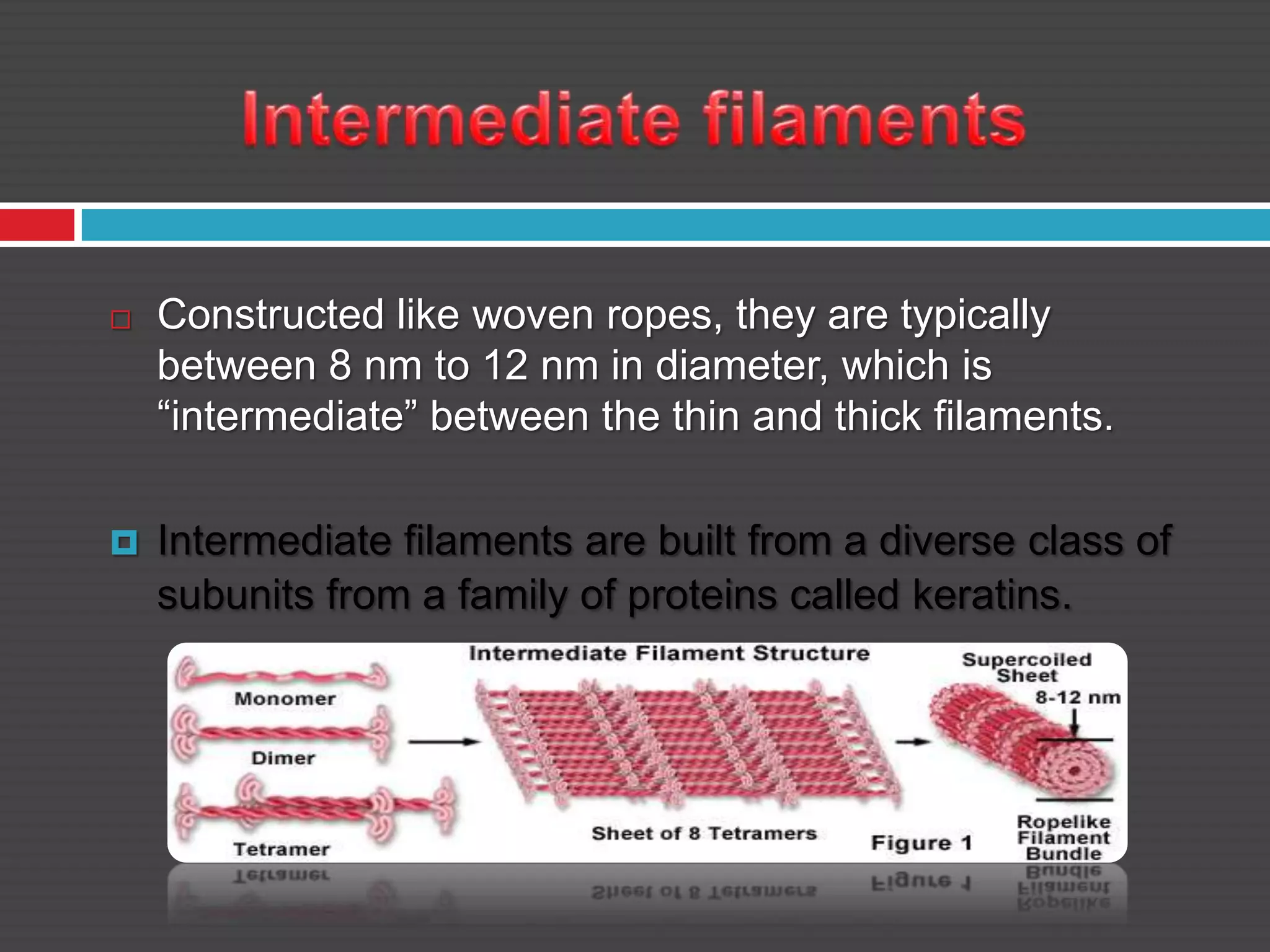
 Constructed like woven ropes, they are typically
between 8 nm to 12 nm in diameter, which is
“intermediate” between the thin and thick filaments.
 Intermediate filaments are built from a diverse class of
subunits from a family of proteins called keratins.
Function of Intermediate filaments
 They are very stable structures provide
reinforce cell shape and fix organelle
location.
 Intermediate filaments can be anchored
between the membrane to provide extra
support
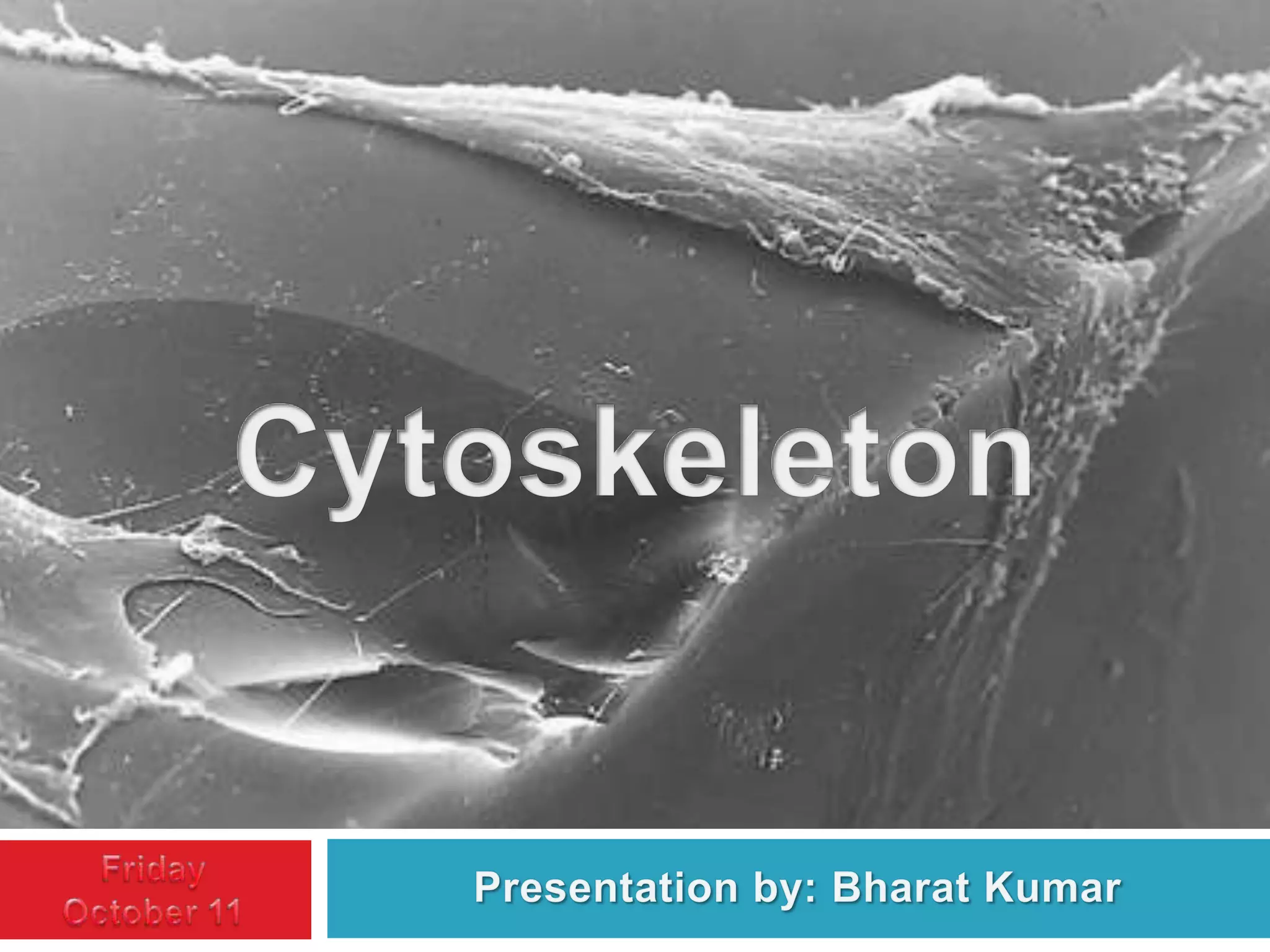
Cytoskeleton

Cytoskeleton

  • 3.
     The cytoskeletonextends throughout the cytoplasm and is a complex network of protein filaments.  Providing structural support to the cell, the cytoskeleton also functions in cell motility and regulation.  The existence of an organized fibrous array or cytoskeleton in the structure of the protoplasm was postulated in 1928 by Koltzoff. What is Cytoskeleton?
  • 4.
    Types of proteinfilaments There are three main types of Protein fibers in the cytoskeleton: A. MICROTUBULES B. MICROFILAMENTS C. INTERMEDIATE FILAMENTS
  • 5.
     A microtubuleconsists of a long, unbranched, hollow tubules 24–25 nm in diameter and with 6 nm thick wall having 13 subunits or protofilaments.  A protofilament of microtubule is made of a protein called tubulin. It occurs in two different forms, called α-tubulin and β-tubulin.
  • 6.
    Functions of Microtubules Microtubules are the central structural supports in cilia and flagella.  During cell differentiation, the mechanical function of microtubules is used to determine the shape of the developing cells.  Microtubules play a role in the contraction of the spindle and movement of chromosomes and centrioles as well as in ciliary and flagellar motion.
  • 7.
     Microfilaments arethe thinnest class of the cytoskeletal fibers, approximately 8 nm in diameter.  Thicker filaments, composed of a motor protein, myosin, interdigitate with the thinner actin fibers.  An actin microfilament consists of a twisted double chain of actin subunits.
  • 8.
    Function of microfilaments Microfilaments are found to be involved in movement associated with furrow formation in cell division.  In plant cells(and others), actin-myosin interactions and sol-gel transformations drive cytoplasmic streaming.  This creates a circular flow of cytoplasm in the cell.
  • 9.
     This speedsthe distribution of materials within the cell.
  • 10.
     Constructed likewoven ropes, they are typically between 8 nm to 12 nm in diameter, which is “intermediate” between the thin and thick filaments.  Intermediate filaments are built from a diverse class of subunits from a family of proteins called keratins.
  • 11.
    Function of Intermediatefilaments  They are very stable structures provide reinforce cell shape and fix organelle location.  Intermediate filaments can be anchored between the membrane to provide extra support