Ray Arren Mabutas
What is cyberstalking?
 “Cyberstalking

is defined as the
repeated use of the Internet, email, or related digital electronic
communication devices to annoy,
alarm, or threathen a specific
individual or group of individuals.
Who are the most likely
victims and offenders of
cyberstalking?
 Anyone

can be a victim of
cyberstalking.
 However, females are more likely to
become victimied than males.
 Educational institution are also a very
likely target for cyberstalking.
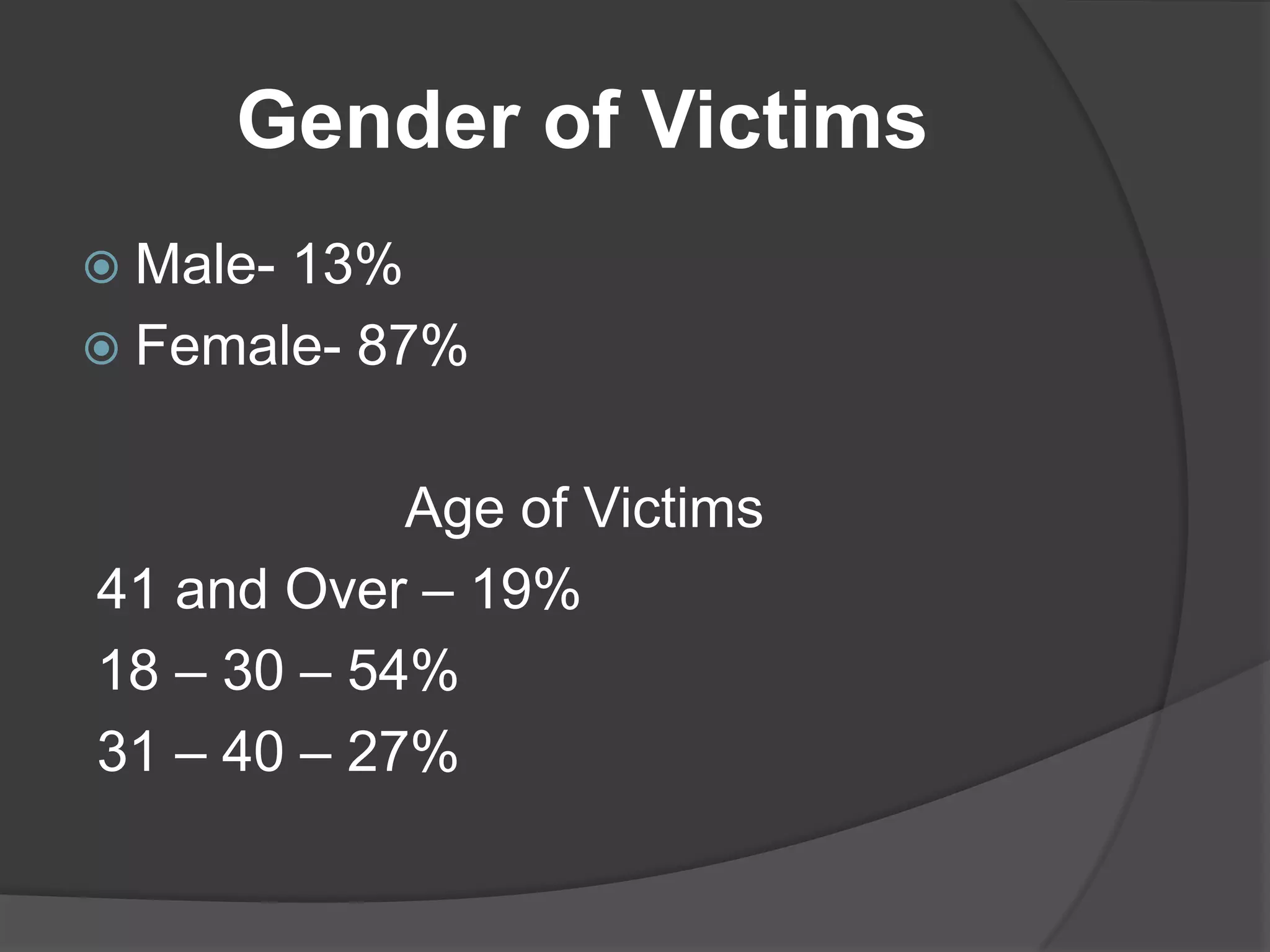
Gender of Victims
 Male-

13%
 Female- 87%
Age of Victims
41 and Over – 19%
18 – 30 – 54%
31 – 40 – 27%
Where does cyberstalking
occurs?
Email
 News Groups/ Message Boards
 Internet Sites
 Chat Rooms
 Third Party Instant Messages
 Service User Profiles

Email
 In

this form of cyberstalking, the
cyberstalking sends email to the
victim that may be threatening,
alarming, or anything of a
harassing nature. This is the most
commonly used form of
cyberstalking.
News Group/ Message Boards
 This

type of cyberstalking usually
occurs when the offender post
threatening or defamatory
statements that are directed
toward a specific group of people
or an individual.
Internet Sites
 In

this form of cyberstalking, the
offender can post very alarming
or threatening comments to a
web site. The cyberstalker could
also create a website that
contains defamatory, personal,
and degrading things about a
person.
Chat rooms
 In

this form of cyberstalking, the
offender has the capability to
send threatening material directly
to the victim and real time, and
anyone else in the chat room is
allowed to view it.
Third Party instant
Messages
 This

form of cyberstalking occurs
when the offenders has software
that tracks when the victim logs
onto a messenger service, and
then proceeds to harass the
victim in real time.
Service User Profiles
 This

type of cyberstalking is when a
user creates a false profile pretending
to be the victim. The cyberstalking
may post false information and
personal information such as, phine
numbers and addresses that directs
unwanted attention towards the
victim.
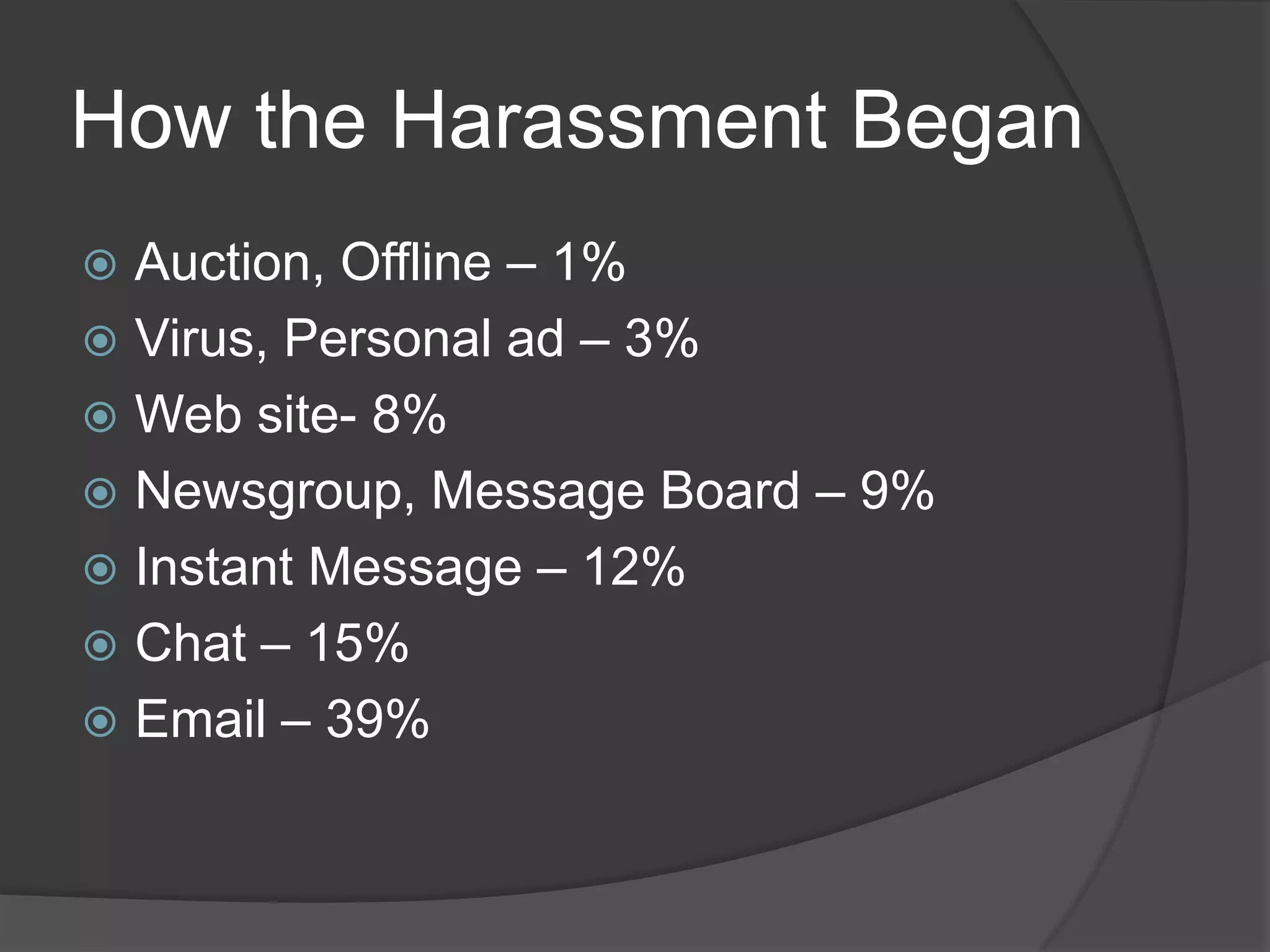
How the Harassment Began
Auction, Offline – 1%
 Virus, Personal ad – 3%
 Web site- 8%
 Newsgroup, Message Board – 9%
 Instant Message – 12%
 Chat – 15%
 Email – 39%

What is the Law pertaining to
cyberstalking
to D’ovidio: “all 50
states andd the federal
government have encated
statutes aimed at protecting the
victims of stalking.”

 According
Tools helping detect
cyberstalking
Private investigation and law
enforcement can be hired to help detect
and cease cyberstalking
 Some websites will allow the victim, to
change or delete their account
information. They also may delete any
post about you that you say are
defamatory or unture.

Effects of Cyberstalking
Changes in Sleeping and eating
patterns
 Nightmares
 Hypersvugilance
 Anxiety
 Helplessness
 Fear for safety
 Shock and disbelief


Cyberstalking (Computer Crime)

  • 1.
  • 2.
    What is cyberstalking? “Cyberstalking is defined as the repeated use of the Internet, email, or related digital electronic communication devices to annoy, alarm, or threathen a specific individual or group of individuals.
  • 3.
    Who are themost likely victims and offenders of cyberstalking?  Anyone can be a victim of cyberstalking.  However, females are more likely to become victimied than males.  Educational institution are also a very likely target for cyberstalking.
  • 4.
    Gender of Victims Male- 13%  Female- 87% Age of Victims 41 and Over – 19% 18 – 30 – 54% 31 – 40 – 27%
  • 5.
    Where does cyberstalking occurs? Email News Groups/ Message Boards  Internet Sites  Chat Rooms  Third Party Instant Messages  Service User Profiles 
  • 6.
    Email  In this formof cyberstalking, the cyberstalking sends email to the victim that may be threatening, alarming, or anything of a harassing nature. This is the most commonly used form of cyberstalking.
  • 7.
    News Group/ MessageBoards  This type of cyberstalking usually occurs when the offender post threatening or defamatory statements that are directed toward a specific group of people or an individual.
  • 8.
    Internet Sites  In thisform of cyberstalking, the offender can post very alarming or threatening comments to a web site. The cyberstalker could also create a website that contains defamatory, personal, and degrading things about a person.
  • 9.
    Chat rooms  In thisform of cyberstalking, the offender has the capability to send threatening material directly to the victim and real time, and anyone else in the chat room is allowed to view it.
  • 10.
    Third Party instant Messages This form of cyberstalking occurs when the offenders has software that tracks when the victim logs onto a messenger service, and then proceeds to harass the victim in real time.
  • 11.
    Service User Profiles This type of cyberstalking is when a user creates a false profile pretending to be the victim. The cyberstalking may post false information and personal information such as, phine numbers and addresses that directs unwanted attention towards the victim.
  • 12.
    How the HarassmentBegan Auction, Offline – 1%  Virus, Personal ad – 3%  Web site- 8%  Newsgroup, Message Board – 9%  Instant Message – 12%  Chat – 15%  Email – 39% 
  • 13.
    What is theLaw pertaining to cyberstalking to D’ovidio: “all 50 states andd the federal government have encated statutes aimed at protecting the victims of stalking.”  According
  • 14.
    Tools helping detect cyberstalking Privateinvestigation and law enforcement can be hired to help detect and cease cyberstalking  Some websites will allow the victim, to change or delete their account information. They also may delete any post about you that you say are defamatory or unture. 
  • 15.
    Effects of Cyberstalking Changesin Sleeping and eating patterns  Nightmares  Hypersvugilance  Anxiety  Helplessness  Fear for safety  Shock and disbelief 