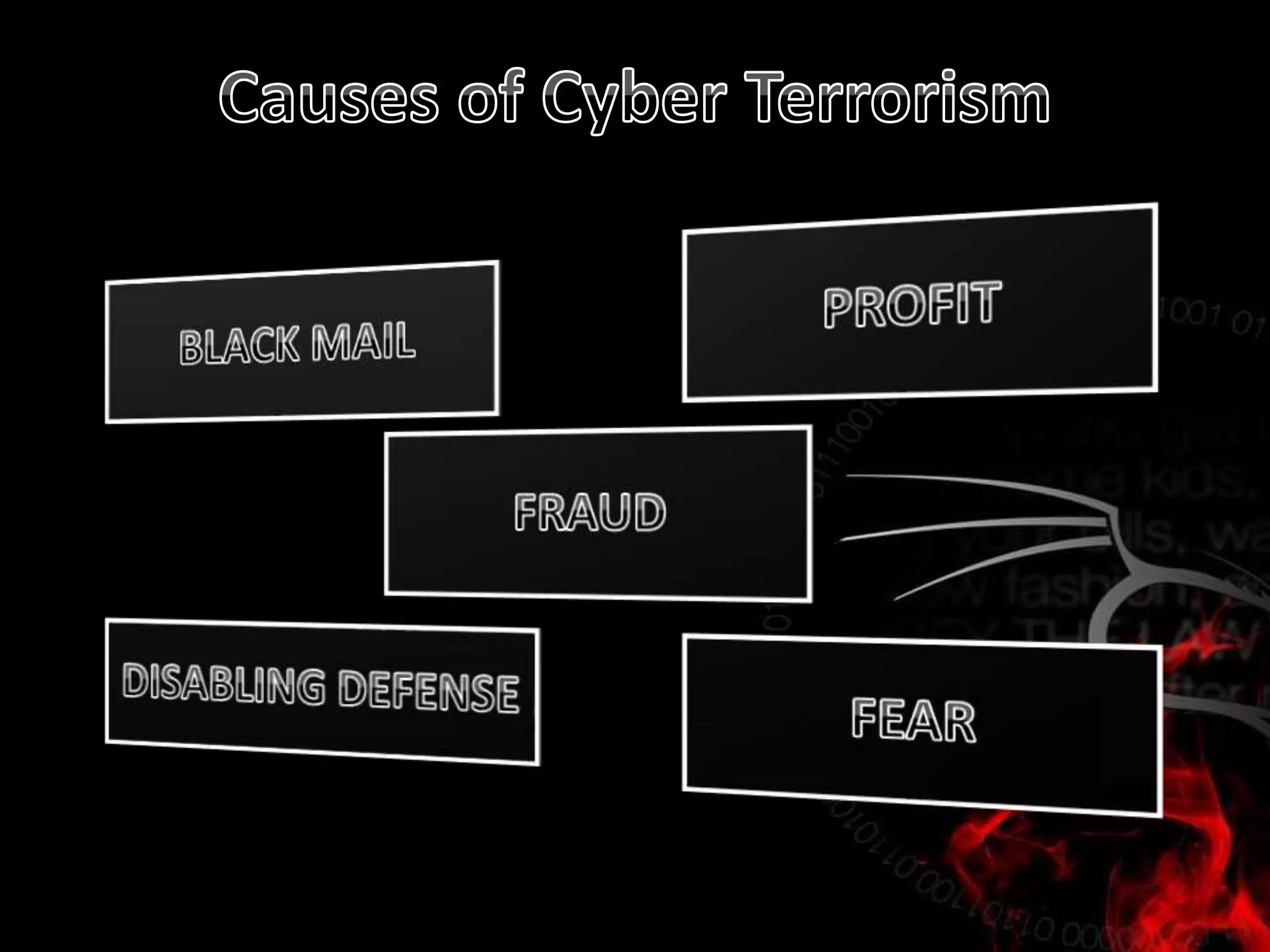
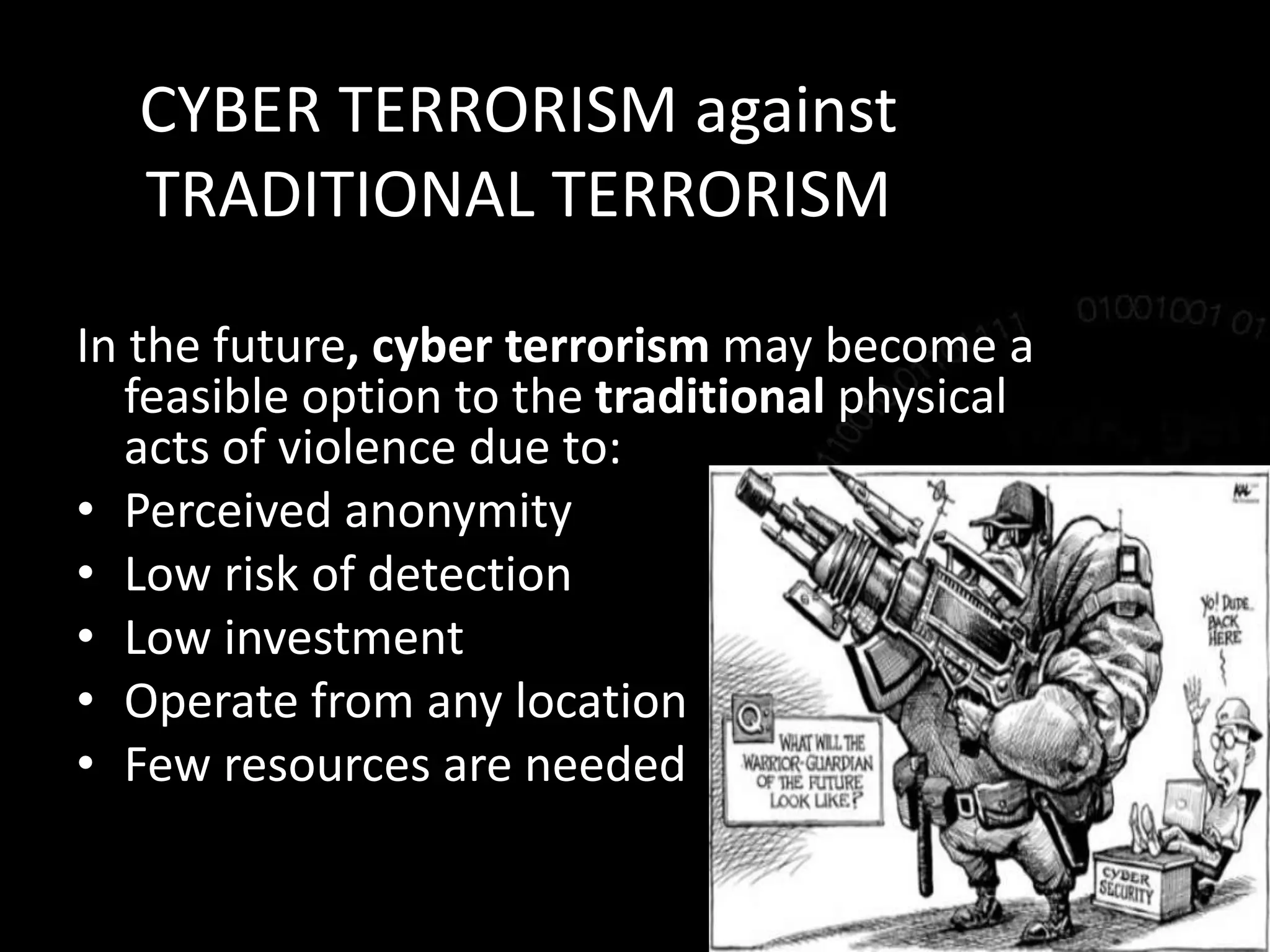
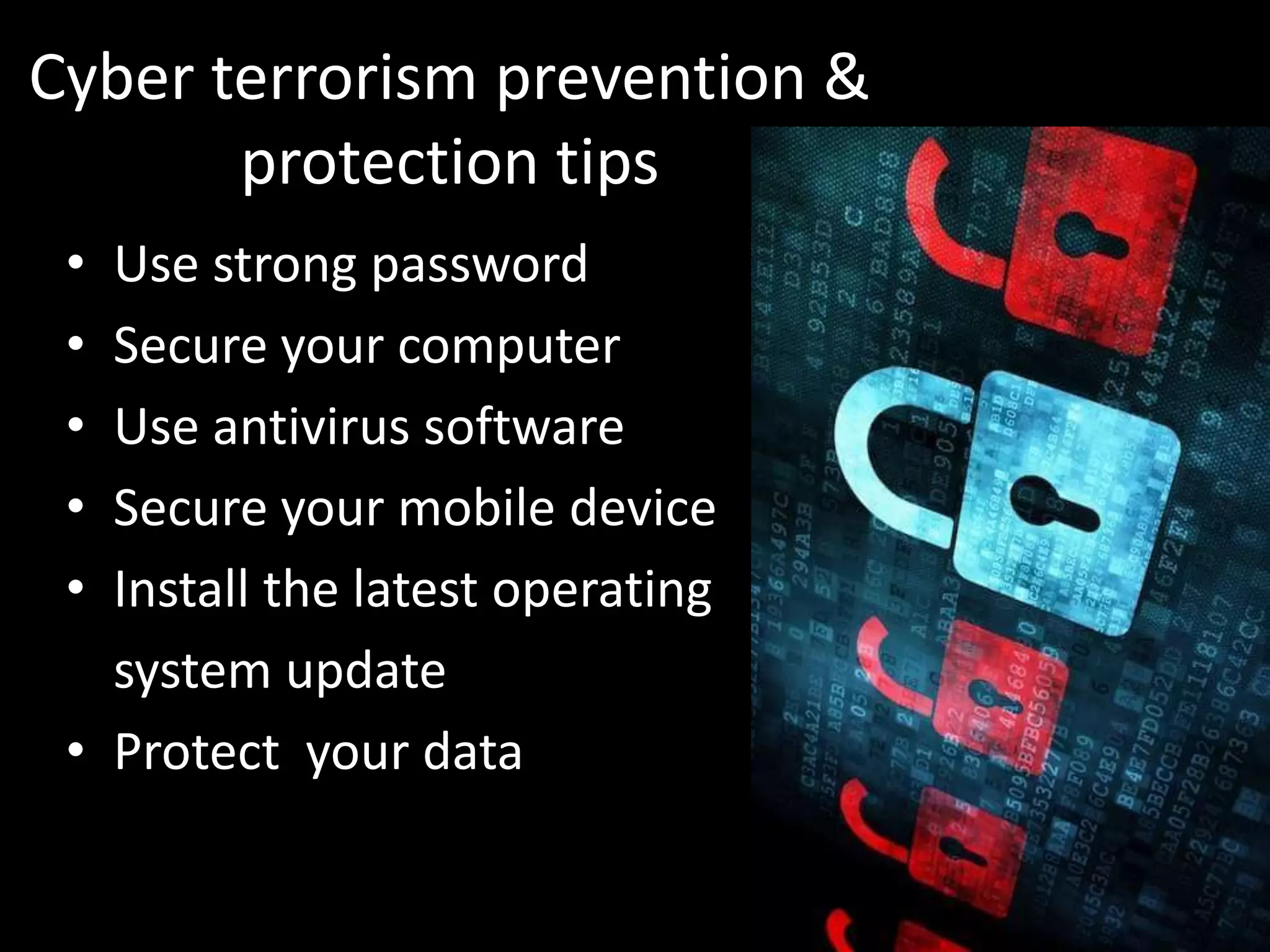
This document discusses cyber terrorism, defining it as politically motivated attacks against information systems, computer programs, and data that result in violence against non-combatants. It outlines features of cyber terrorism like difficulty identifying attackers and lack of boundaries. Common attack methods are described as IP spoofing, password cracking, and distributed denial-of-service attacks. Examples of cyber terrorist attacks given are hacking into computer systems, introducing viruses, defacing websites, and distributed denial-of-service attacks. The effects of cyber terrorism on the economy, national security, and more are examined. Prevention and protection tips include using strong passwords, securing devices and networks, and keeping software updated.