

(c) PurpleShutterbug
 SIEM (Security Information Event
Management)
 Technical Cyber Security Architecture
Deployment
 IT Environment Phasing
 Deep Packet Inspection Tools
 DRPs (Disaster Recovery Plans)
 BCMs (Business Continuity Mechanism)
(c) PurpleShutterbug2
 Cyber Risk Governance Grid
Implementation within the Organizational
Structure , as a central Breach
Management Tool.
 Compliance Centric Cyber Risk Mitigation
Strategies to eliminate probable cyber
attacks , that cause severe damage to
organisations.
 Key Indicators Identification towards
Cyber Crime Prevention Techniques.
(c) PurpleShutterbug3
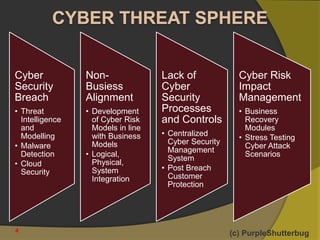
Cyber
Security
Breach
• Threat
Intelligence
and
Modelling
• Malware
Detection
• Cloud
Security
Non-
Busiess
Alignment
• Development
of Cyber Risk
Models in line
with Business
Models
• Logical,
Physical,
System
Integration
Lack of
Cyber
Security
Processes
and Controls
• Centralized
Cyber Security
Management
System
• Post Breach
Customer
Protection
Cyber Risk
Impact
Management
• Business
Recovery
Modules
• Stress Testing
Cyber Attack
Scenarios
(c) PurpleShutterbug4
 Intellectual Property Compliance and Regulatory
Disclosures
 Devaluation of Trade Names
 IP Lifecycle Exploration to delve deeply into
potential Cyber Risks
 Ownership and Rights: Z works at M Co. and
during his tenure of work develops a software. Z
later formulates his own firm and patents his
signature software , so developed while working
at M Co.
 Where does the Ownership and Rights Structure
associated with said Software prevail: Z or M Co.?
(c) PurpleShutterbug5
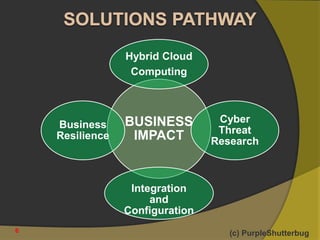
BUSINESS
IMPACT
Hybrid Cloud
Computing
Cyber
Threat
Research
Integration
and
Configuration
Business
Resilience
(c) PurpleShutterbug6

Cyber Security

  • 1.
  • 2.
     SIEM (SecurityInformation Event Management)  Technical Cyber Security Architecture Deployment  IT Environment Phasing  Deep Packet Inspection Tools  DRPs (Disaster Recovery Plans)  BCMs (Business Continuity Mechanism) (c) PurpleShutterbug2
  • 3.
     Cyber RiskGovernance Grid Implementation within the Organizational Structure , as a central Breach Management Tool.  Compliance Centric Cyber Risk Mitigation Strategies to eliminate probable cyber attacks , that cause severe damage to organisations.  Key Indicators Identification towards Cyber Crime Prevention Techniques. (c) PurpleShutterbug3
  • 4.
    Cyber Security Breach • Threat Intelligence and Modelling • Malware Detection •Cloud Security Non- Busiess Alignment • Development of Cyber Risk Models in line with Business Models • Logical, Physical, System Integration Lack of Cyber Security Processes and Controls • Centralized Cyber Security Management System • Post Breach Customer Protection Cyber Risk Impact Management • Business Recovery Modules • Stress Testing Cyber Attack Scenarios (c) PurpleShutterbug4
  • 5.
     Intellectual PropertyCompliance and Regulatory Disclosures  Devaluation of Trade Names  IP Lifecycle Exploration to delve deeply into potential Cyber Risks  Ownership and Rights: Z works at M Co. and during his tenure of work develops a software. Z later formulates his own firm and patents his signature software , so developed while working at M Co.  Where does the Ownership and Rights Structure associated with said Software prevail: Z or M Co.? (c) PurpleShutterbug5
  • 6.