The document presents an overview of cybersecurity, detailing its definition, importance, and various areas including cloud computing, risk management, and application security. It highlights the evolution of cybersecurity challenges, including common attack methods and the need for compliance and awareness in organizations. Additionally, it addresses the integration of cybersecurity into the software development lifecycle and explores career options within the field.
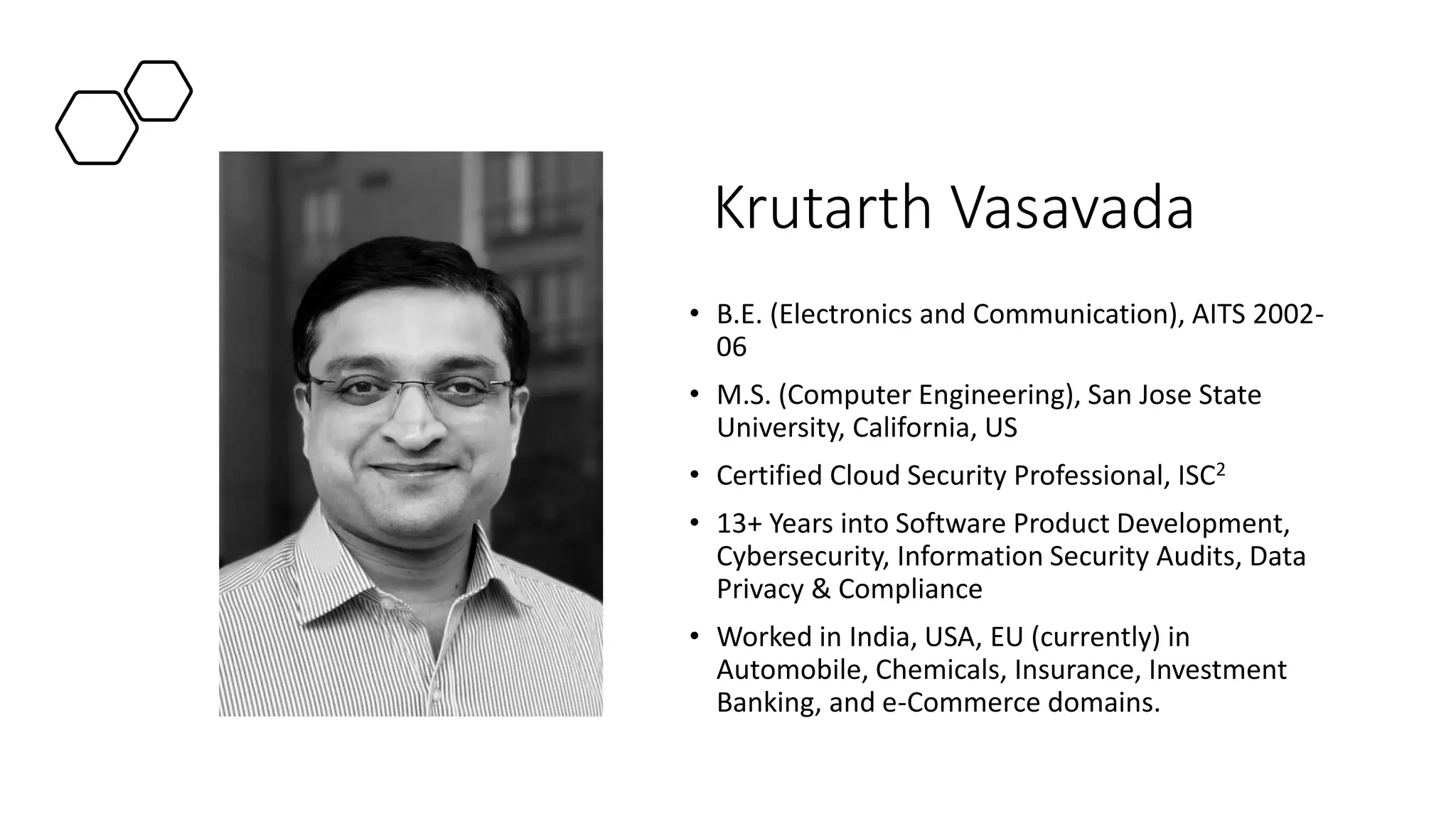
Krutarth Vasavada
• B.E.(Electronics and Communication), AITS 2002-
06
• M.S. (Computer Engineering), San Jose State
University, California, US
• Certified Cloud Security Professional, ISC2
• 13+ Years into Software Product Development,
Cybersecurity, Information Security Audits, Data
Privacy & Compliance
• Worked in India, USA, EU (currently) in
Automobile, Chemicals, Insurance, Investment
Banking, and e-Commerce domains.
3.
Topics
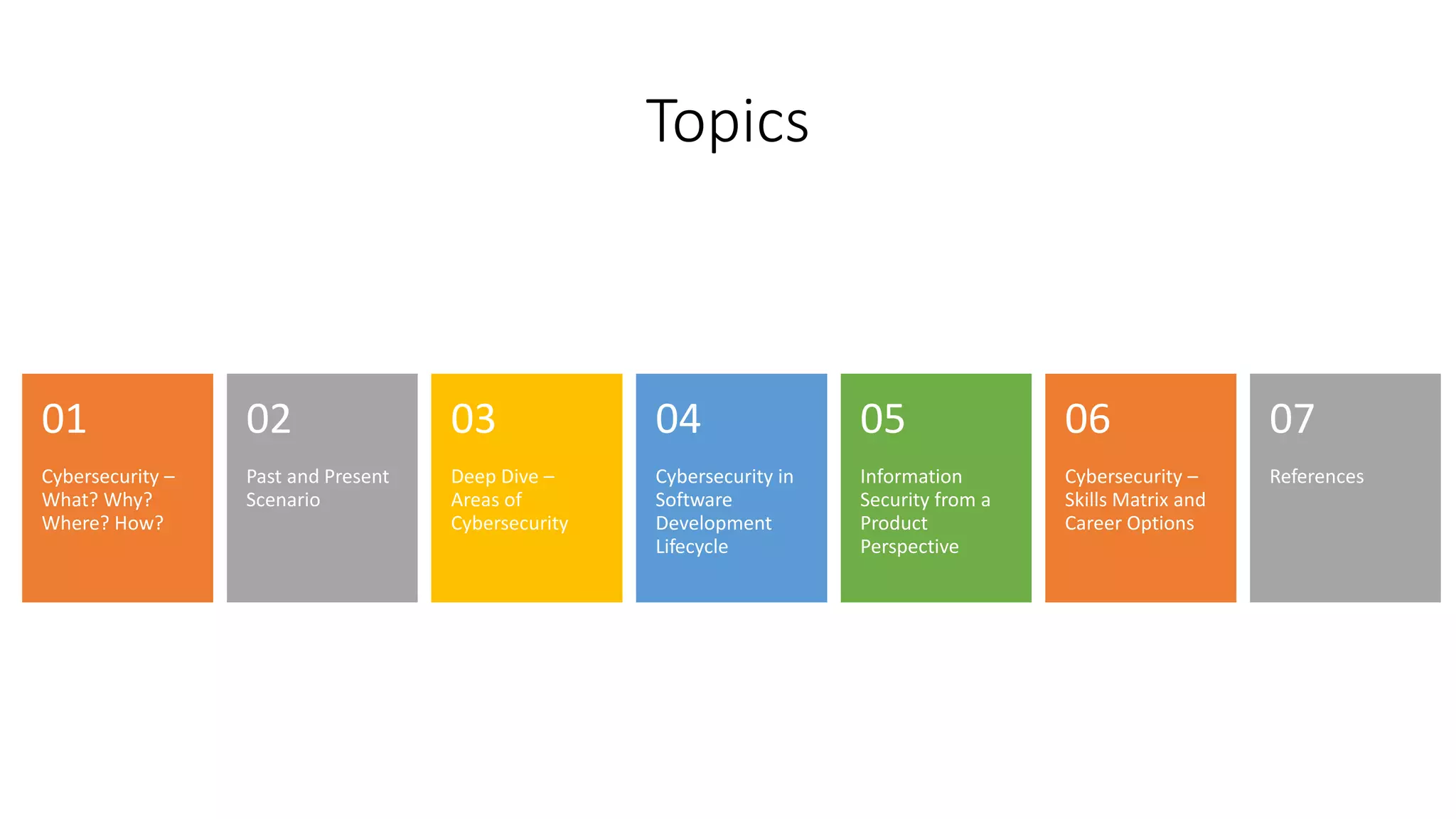
Cybersecurity –
What? Why?
Where?How?
01
Past and Present
Scenario
02
Deep Dive –
Areas of
Cybersecurity
03
Cybersecurity in
Software
Development
Lifecycle
04
Information
Security from a
Product
Perspective
05
Cybersecurity –
Skills Matrix and
Career Options
06
References
07
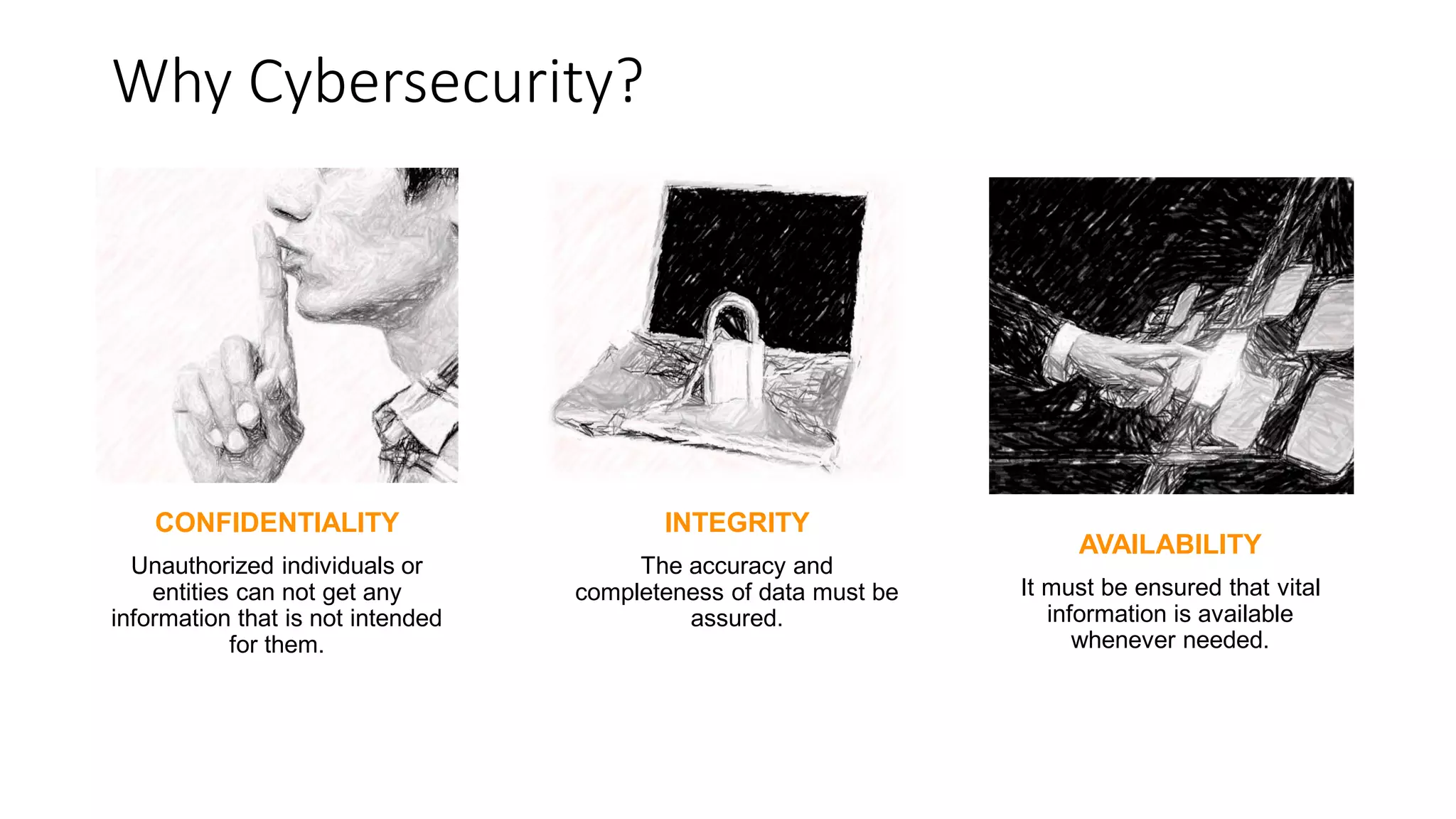
Why Cybersecurity?
CONFIDENTIALITY
Unauthorized individualsor
entities can not get any
information that is not intended
for them.
INTEGRITY
The accuracy and
completeness of data must be
assured.
AVAILABILITY
It must be ensured that vital
information is available
whenever needed.
6.
Areas of Cybersecurity
CloudComputing Concepts and Architecture
Legal Issues, Contracts and Electronic Discovery
Governance and Enterprise Risk Management
Compliance and Audit Management
Infrastructure Security
Application Security
Data Security and Encryption
7.
Next Topic
Cybersecurity –
What?Why?
Where? How?
01
Past and Present
Scenario
02
Deep Dive –
Areas of
Cybersecurity
03
Cybersecurity in
Software
Development
Lifecycle
04
Information
Security from a
Product
Perspective
05
Cybersecurity –
Skills Matrix and
Career Options
06
References
07
8.
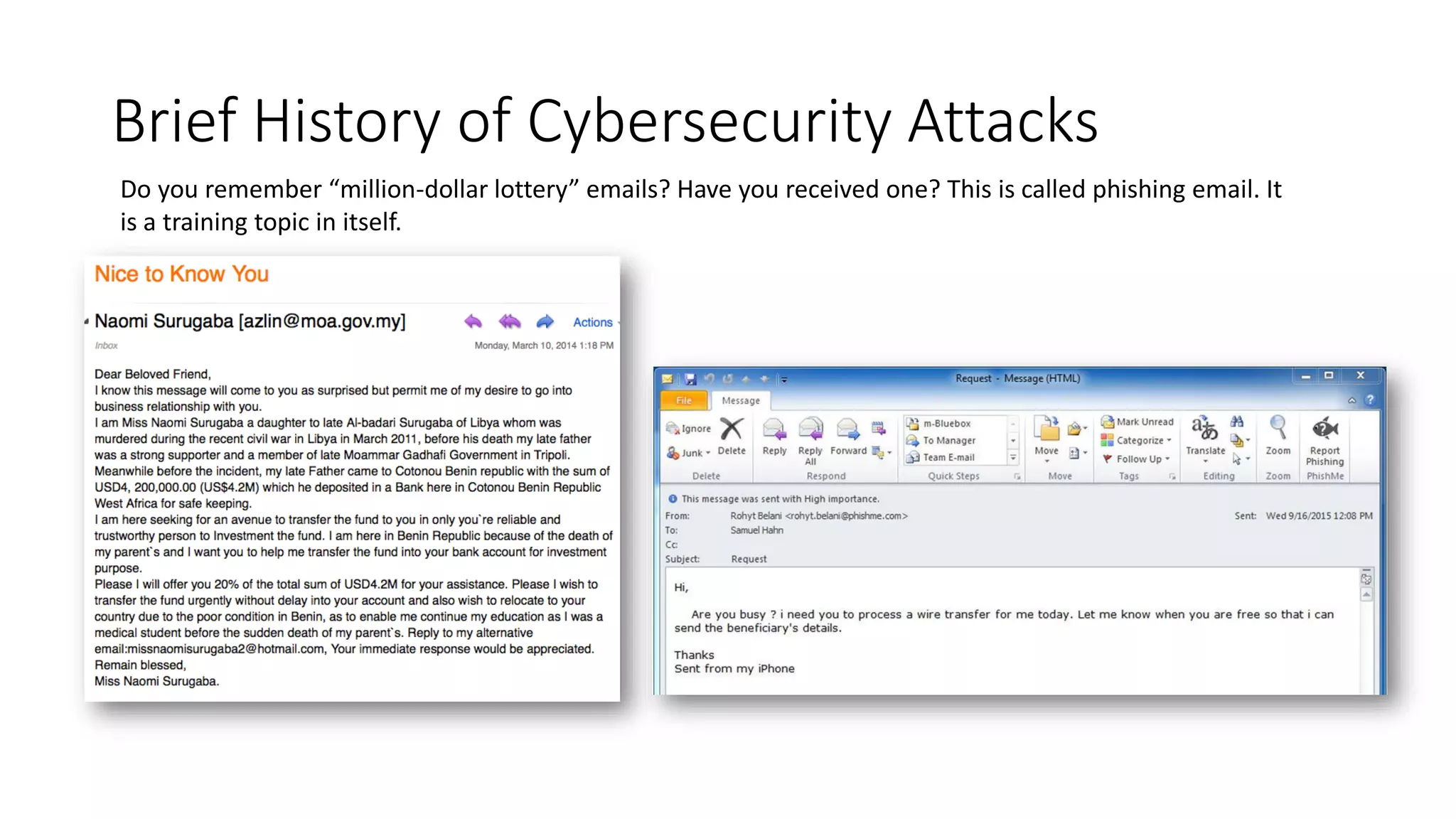
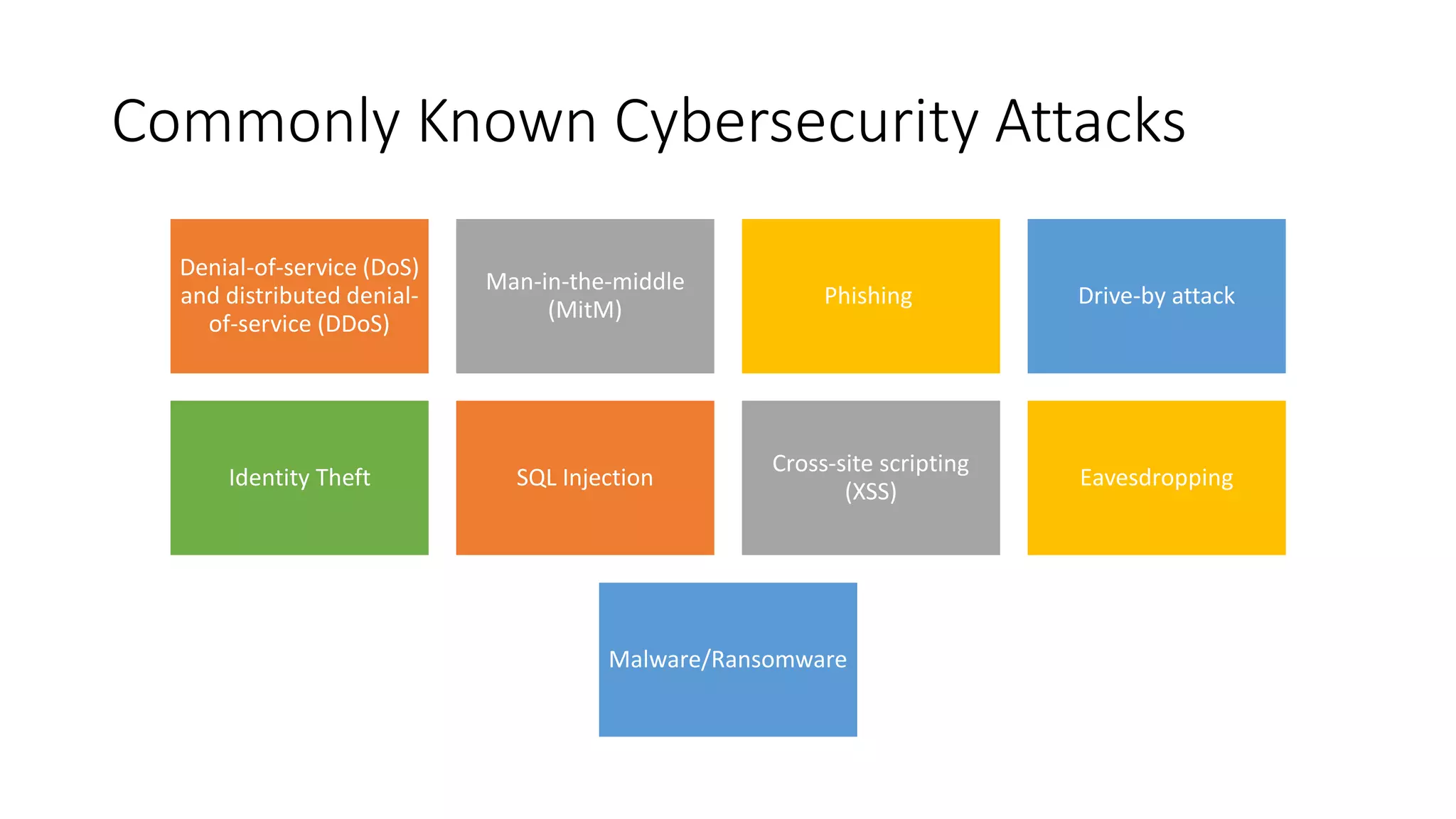
Brief History ofCybersecurity Attacks
Do you remember “million-dollar lottery” emails? Have you received one? This is called phishing email. It
is a training topic in itself.
9.
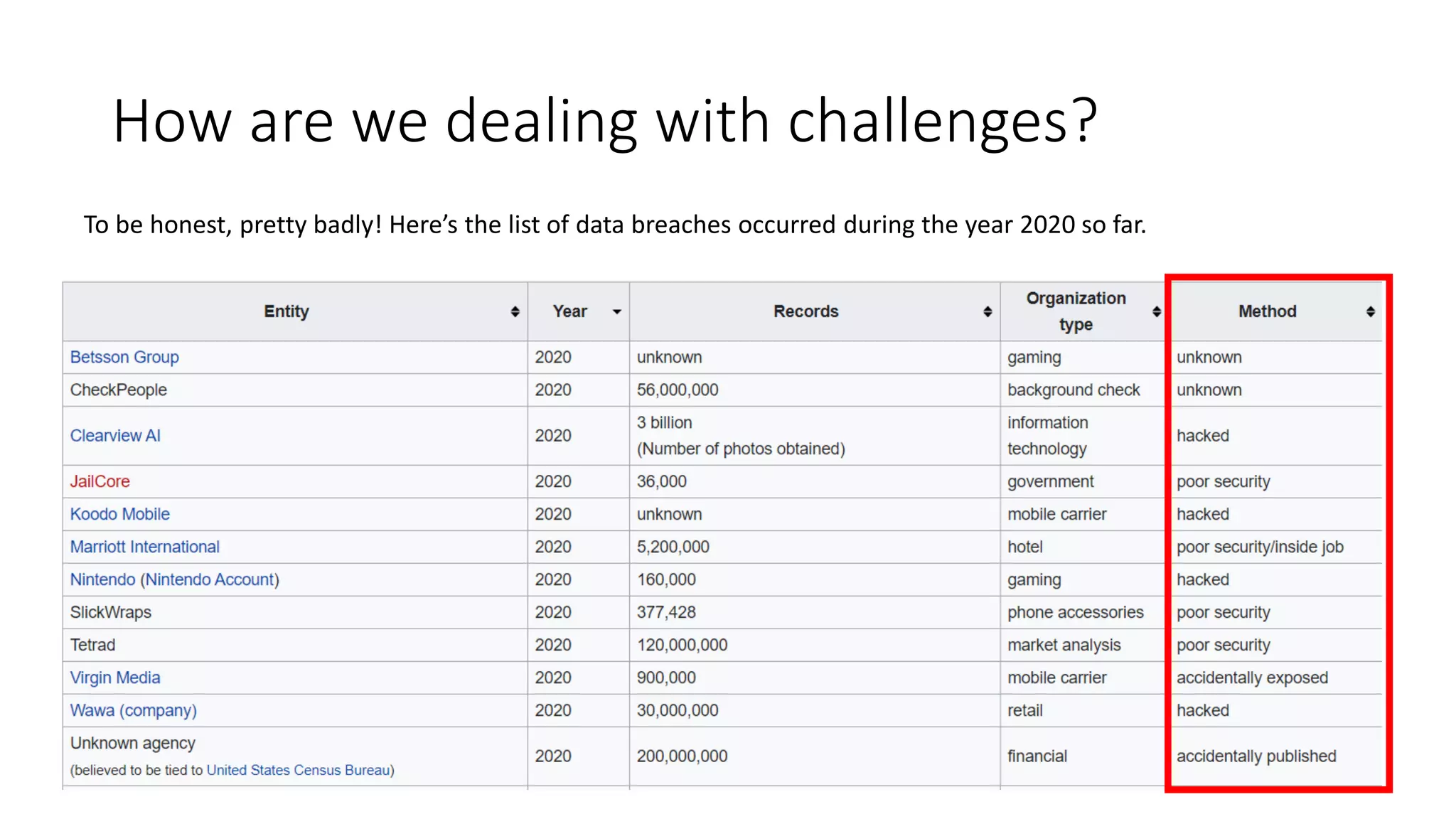
How are wedealing with challenges?
To be honest, pretty badly! Here’s the list of data breaches occurred during the year 2020 so far.
Next Topic
Cybersecurity –
What?Why?
Where? How?
01
Past and Present
Scenario
02
Deep Dive –
Areas of
Cybersecurity
03
Cybersecurity in
Software
Development
Lifecycle
04
Information
Security from a
Product
Perspective
05
Cybersecurity –
Skills Matrix and
Career Options
06
References
07
12.
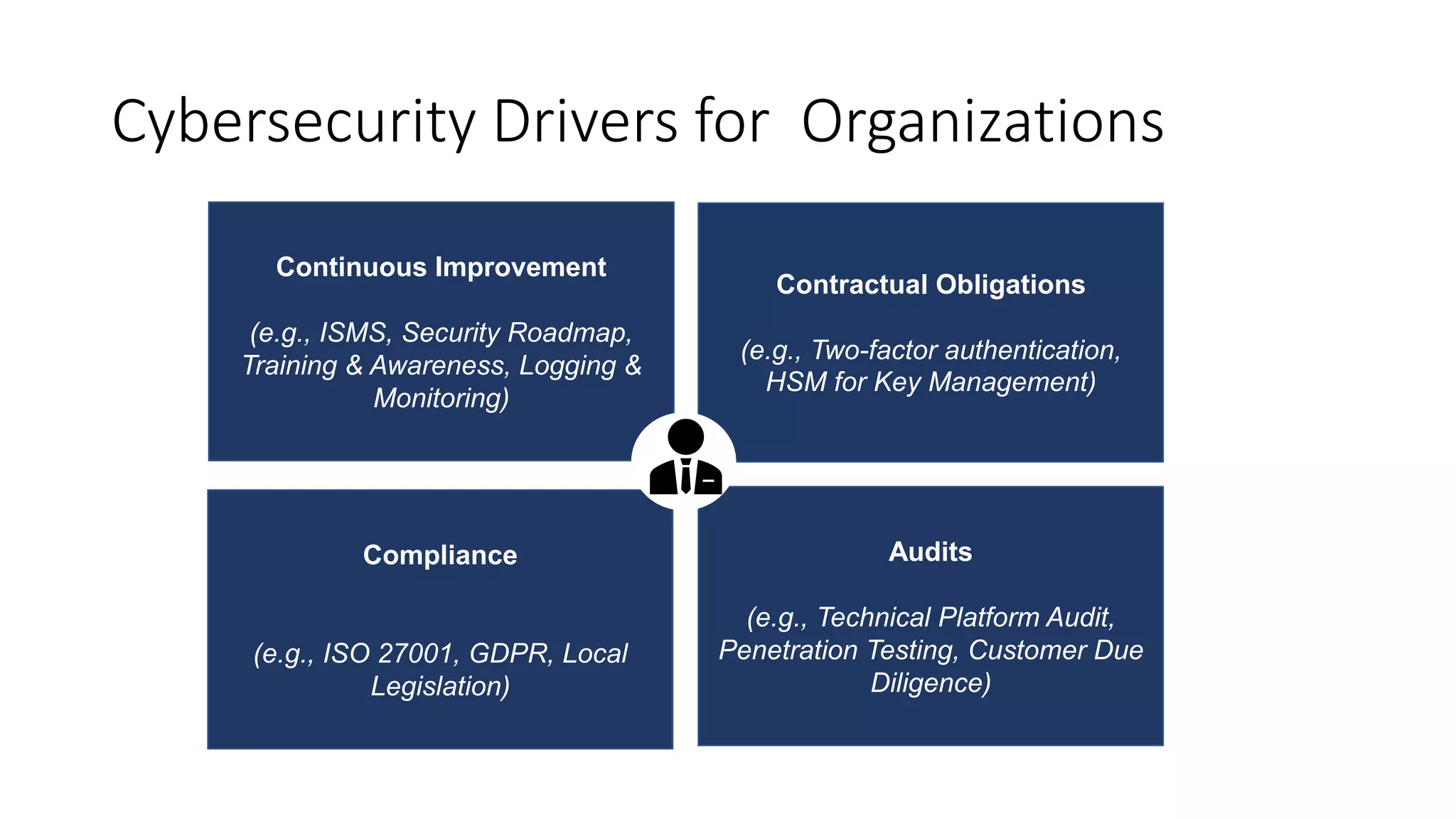
Cybersecurity Drivers forOrganizations
Continuous Improvement
(e.g., ISMS, Security Roadmap,
Training & Awareness, Logging &
Monitoring)
Compliance
(e.g., ISO 27001, GDPR, Local
Legislation)
Audits
(e.g., Technical Platform Audit,
Penetration Testing, Customer Due
Diligence)
Contractual Obligations
(e.g., Two-factor authentication,
HSM for Key Management)
13.
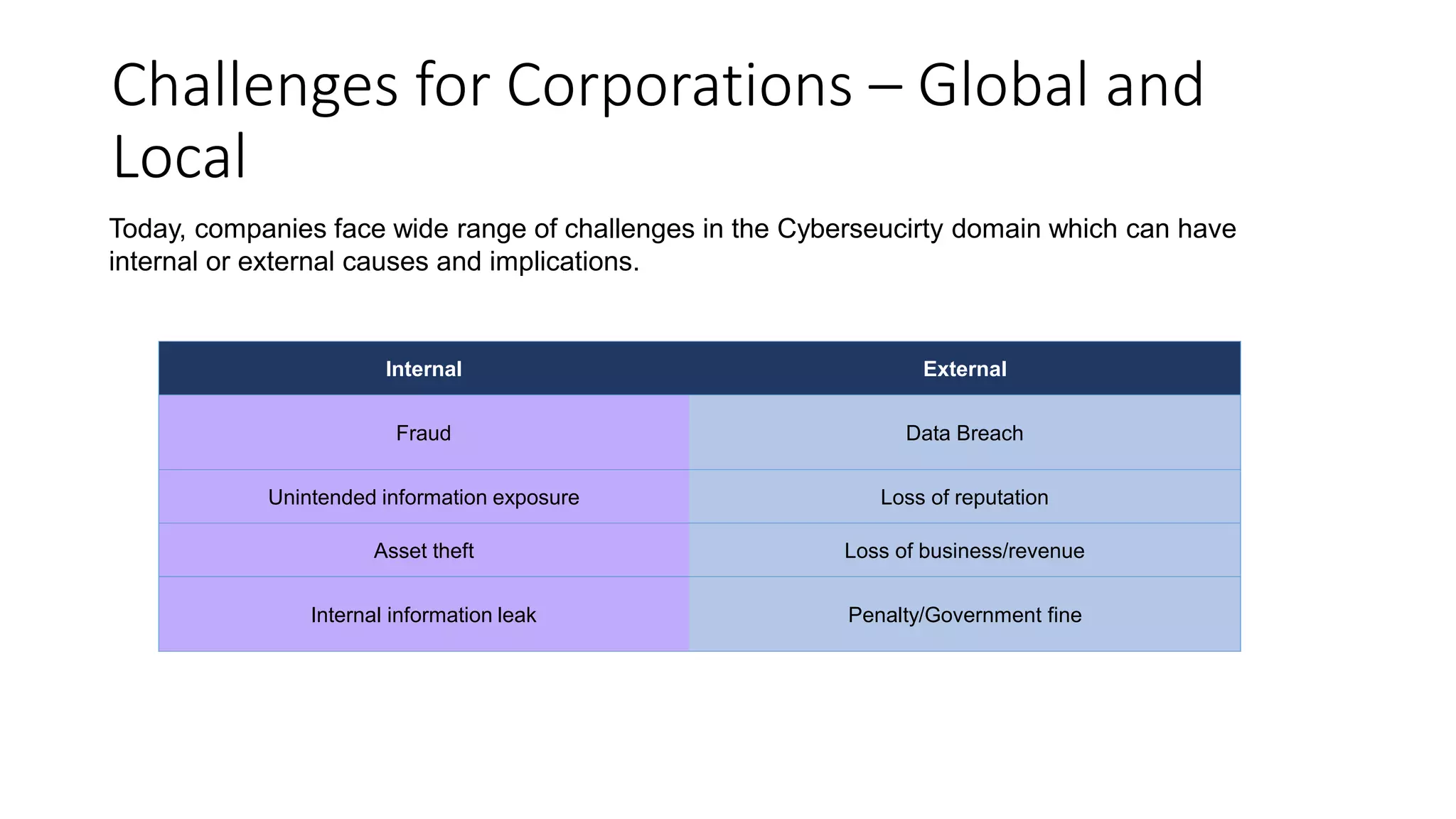
Challenges for Corporations– Global and
Local
Internal External
Fraud Data Breach
Unintended information exposure Loss of reputation
Asset theft Loss of business/revenue
Internal information leak Penalty/Government fine
Today, companies face wide range of challenges in the Cyberseucirty domain which can have
internal or external causes and implications.
14.
Next Topic
Cybersecurity –
What?Why?
Where? How?
01
Past and Present
Scenario
02
Deep Dive –
Areas of
Cybersecurity
03
Cybersecurity
in Software
Development
Lifecycle
04
Information
Security from a
Product
Perspective
05
Cybersecurity –
Skills Matrix and
Career Options
06
References
07
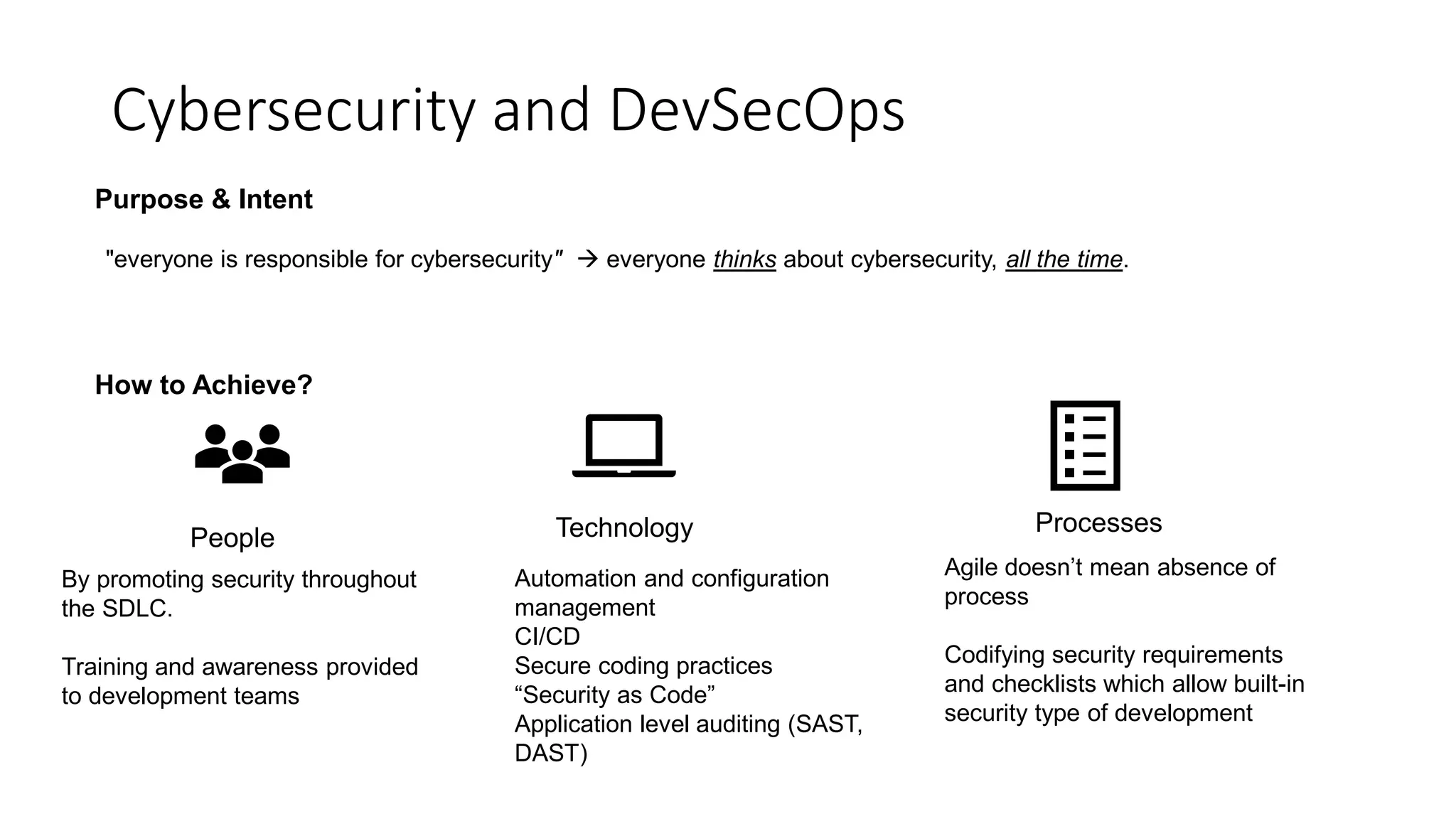
Cybersecurity and DevSecOps
Purpose& Intent
"everyone is responsible for cybersecurity" → everyone thinks about cybersecurity, all the time.
How to Achieve?
People Technology Processes
By promoting security throughout
the SDLC.
Training and awareness provided
to development teams
Agile doesn’t mean absence of
process
Codifying security requirements
and checklists which allow built-in
security type of development
Automation and configuration
management
CI/CD
Secure coding practices
“Security as Code”
Application level auditing (SAST,
DAST)
17.
Next Topic
Cybersecurity –
What?Why?
Where? How?
01
Past and Present
Scenario
02
Deep Dive –
Areas of
Cybersecurity
03
Cybersecurity in
Software
Development
Lifecycle
04
Information
Security from a
Product
Perspective
05
Cybersecurity –
Skills Matrix and
Career Options
06
References
07
18.
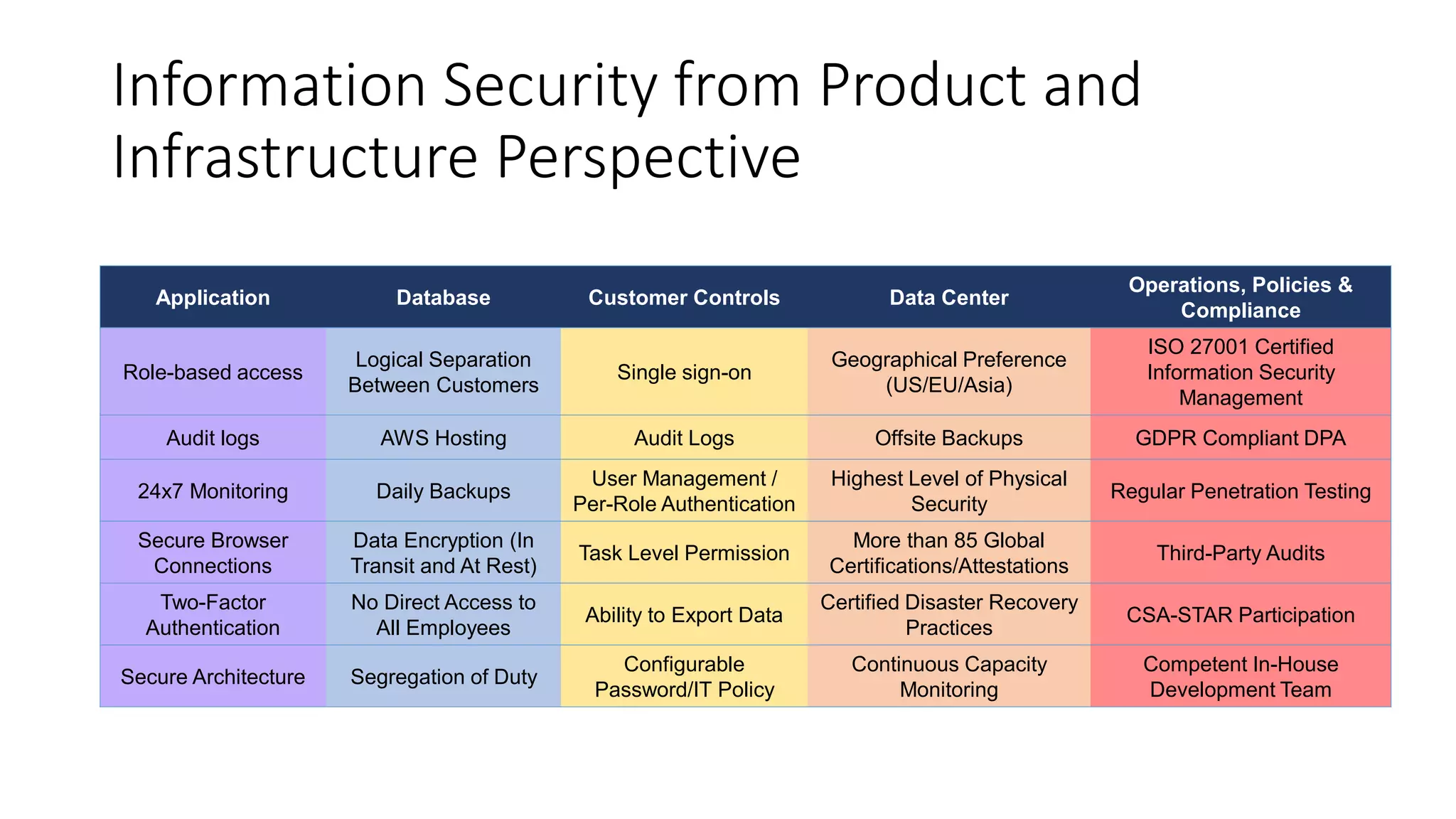
Information Security fromProduct and
Infrastructure Perspective
Application Database Customer Controls Data Center
Operations, Policies &
Compliance
Role-based access
Logical Separation
Between Customers
Single sign-on
Geographical Preference
(US/EU/Asia)
ISO 27001 Certified
Information Security
Management
Audit logs AWS Hosting Audit Logs Offsite Backups GDPR Compliant DPA
24x7 Monitoring Daily Backups
User Management /
Per-Role Authentication
Highest Level of Physical
Security
Regular Penetration Testing
Secure Browser
Connections
Data Encryption (In
Transit and At Rest)
Task Level Permission
More than 85 Global
Certifications/Attestations
Third-Party Audits
Two-Factor
Authentication
No Direct Access to
All Employees
Ability to Export Data
Certified Disaster Recovery
Practices
CSA-STAR Participation
Secure Architecture Segregation of Duty
Configurable
Password/IT Policy
Continuous Capacity
Monitoring
Competent In-House
Development Team
19.
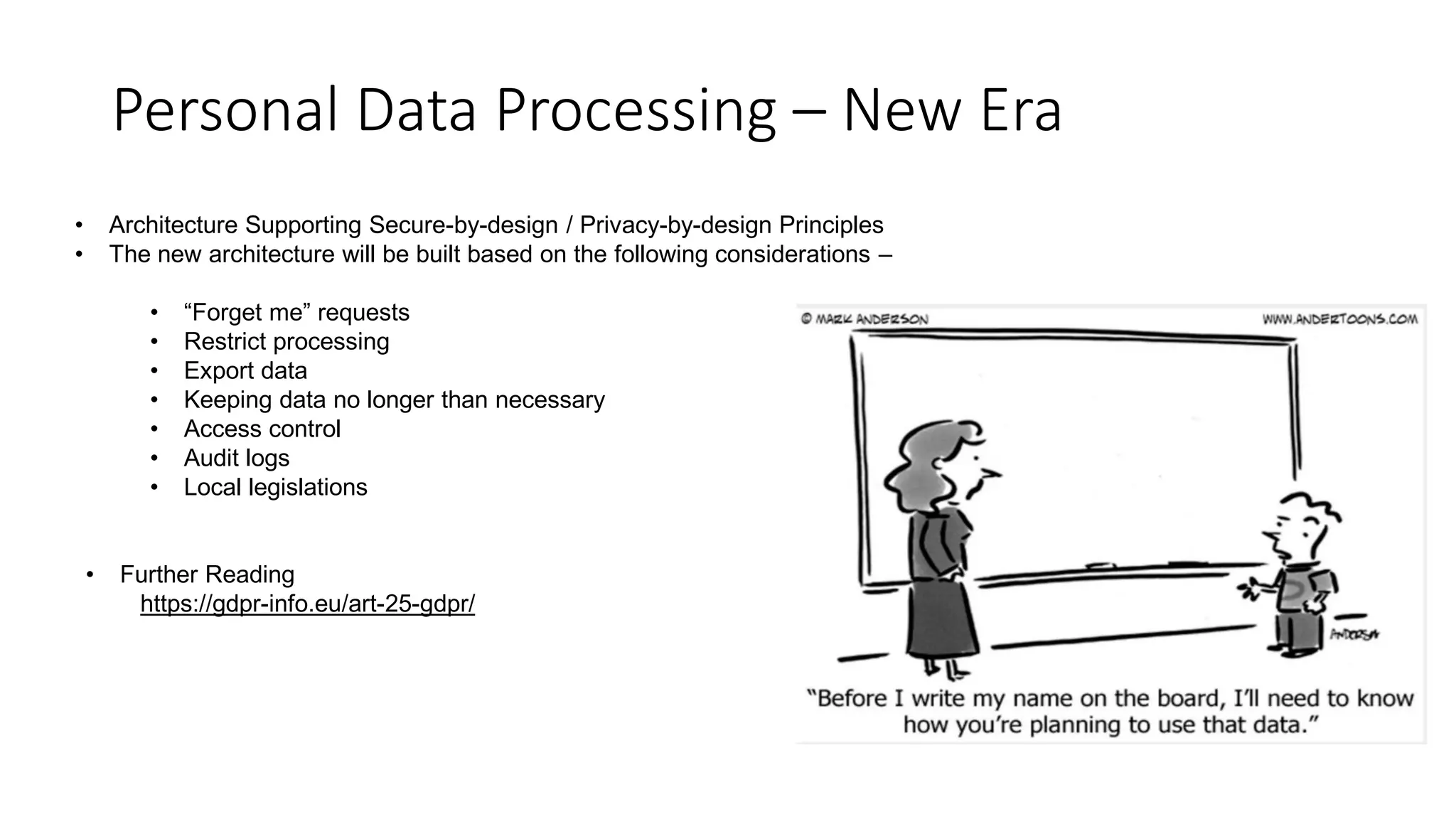
Personal Data Processing– New Era
• Architecture Supporting Secure-by-design / Privacy-by-design Principles
• The new architecture will be built based on the following considerations –
• “Forget me” requests
• Restrict processing
• Export data
• Keeping data no longer than necessary
• Access control
• Audit logs
• Local legislations
• Further Reading
https://gdpr-info.eu/art-25-gdpr/
20.
Next Topic
Cybersecurity –
What?Why?
Where? How?
01
Past and Present
Scenario
02
Deep Dive –
Areas of
Cybersecurity
03
Cybersecurity in
Software
Development
Lifecycle
04
Information
Security from a
Product
Perspective
05
Cybersecurity –
Skills Matrix and
Career Options
06
References
07
21.
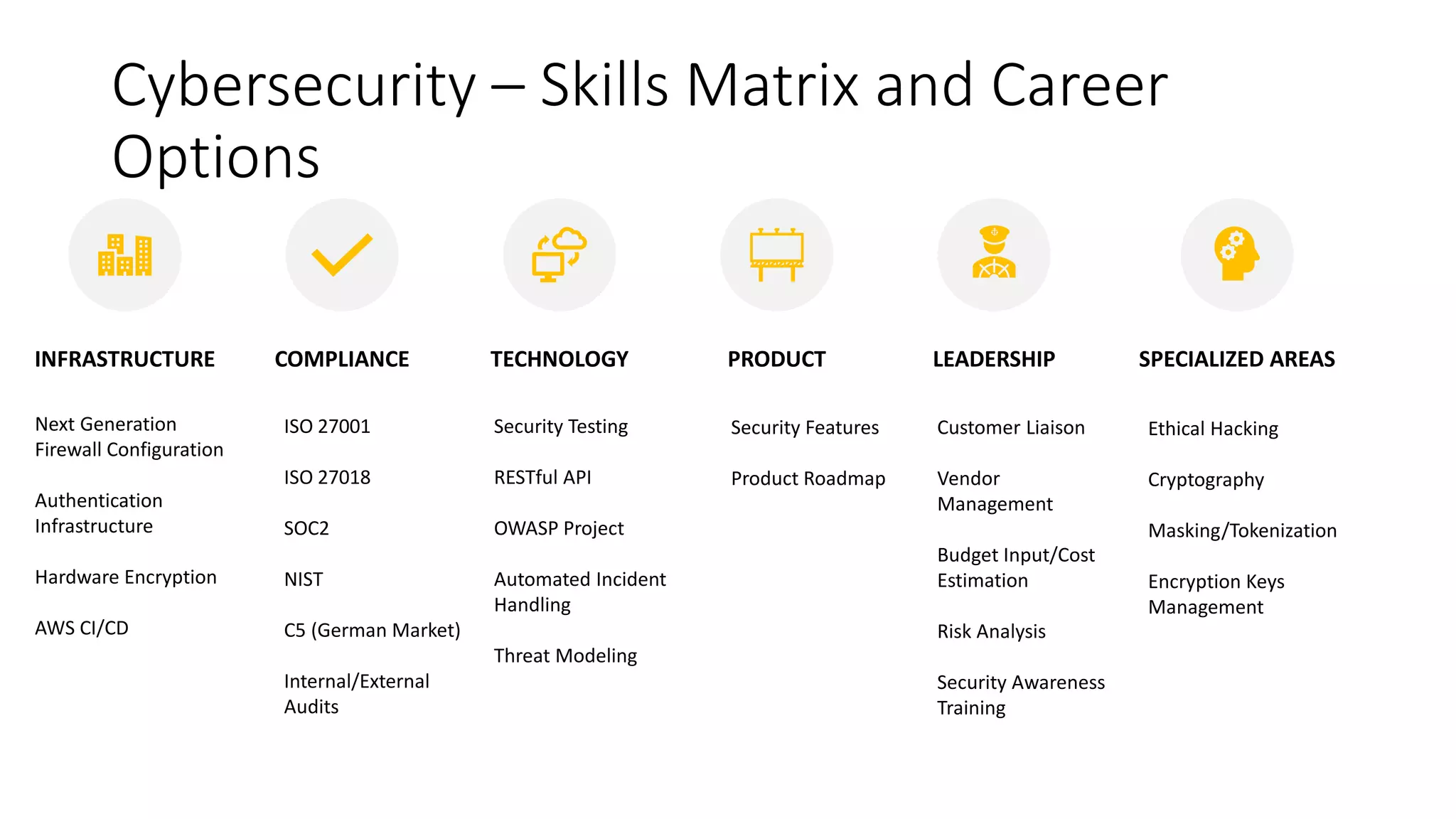
Cybersecurity – SkillsMatrix and Career
Options
INFRASTRUCTURE COMPLIANCE TECHNOLOGY PRODUCT LEADERSHIP SPECIALIZED AREAS
Next Generation
Firewall Configuration
Authentication
Infrastructure
Hardware Encryption
AWS CI/CD
ISO 27001
ISO 27018
SOC2
NIST
C5 (German Market)
Internal/External
Audits
Security Testing
RESTful API
OWASP Project
Automated Incident
Handling
Threat Modeling
Security Features
Product Roadmap
Customer Liaison
Vendor
Management
Budget Input/Cost
Estimation
Risk Analysis
Security Awareness
Training
Ethical Hacking
Cryptography
Masking/Tokenization
Encryption Keys
Management
22.
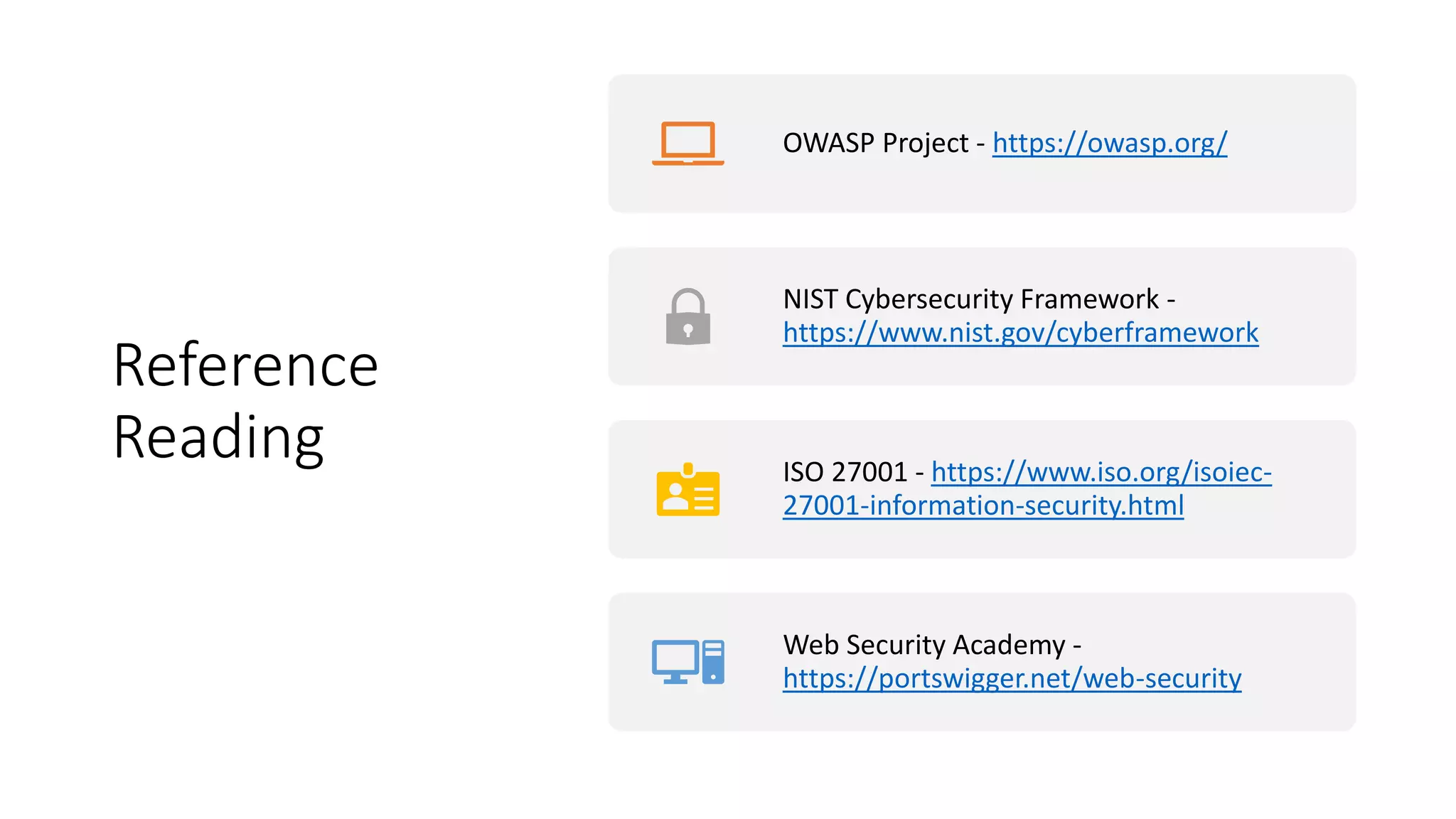
Reference
Reading
OWASP Project -https://owasp.org/
NIST Cybersecurity Framework -
https://www.nist.gov/cyberframework
ISO 27001 - https://www.iso.org/isoiec-
27001-information-security.html
Web Security Academy -
https://portswigger.net/web-security