Sunil Kumar
Research Scholar, Food Production Faculty
www.facebook.com/ihmsunilkumar
 Vegetables are cut into various size and shapes for
various cooking purpose s, creating different
textures, tastes and mouth feel. Different cuts
would differently from one to another all of them
will create a different flavour.
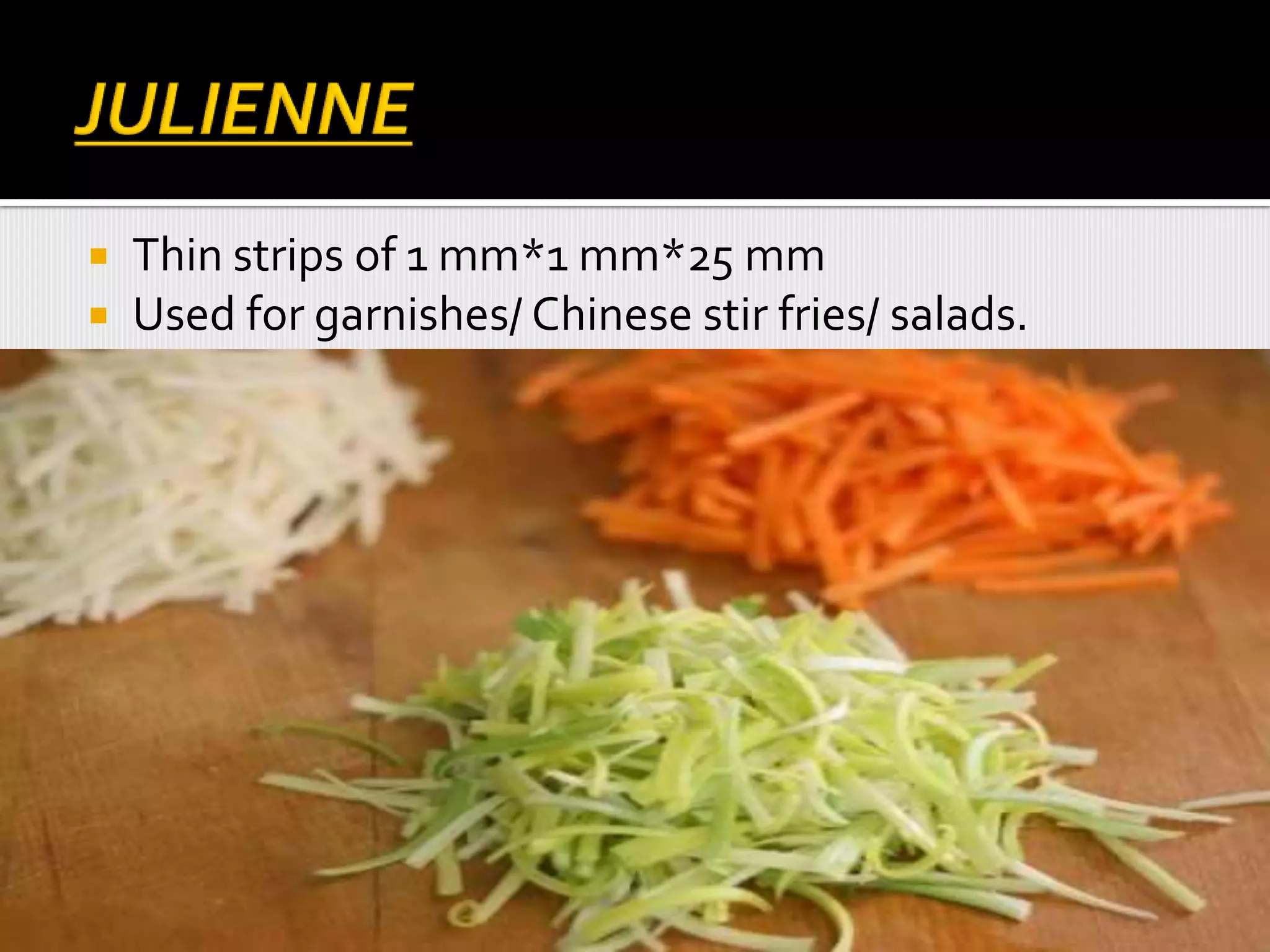
 Julienne
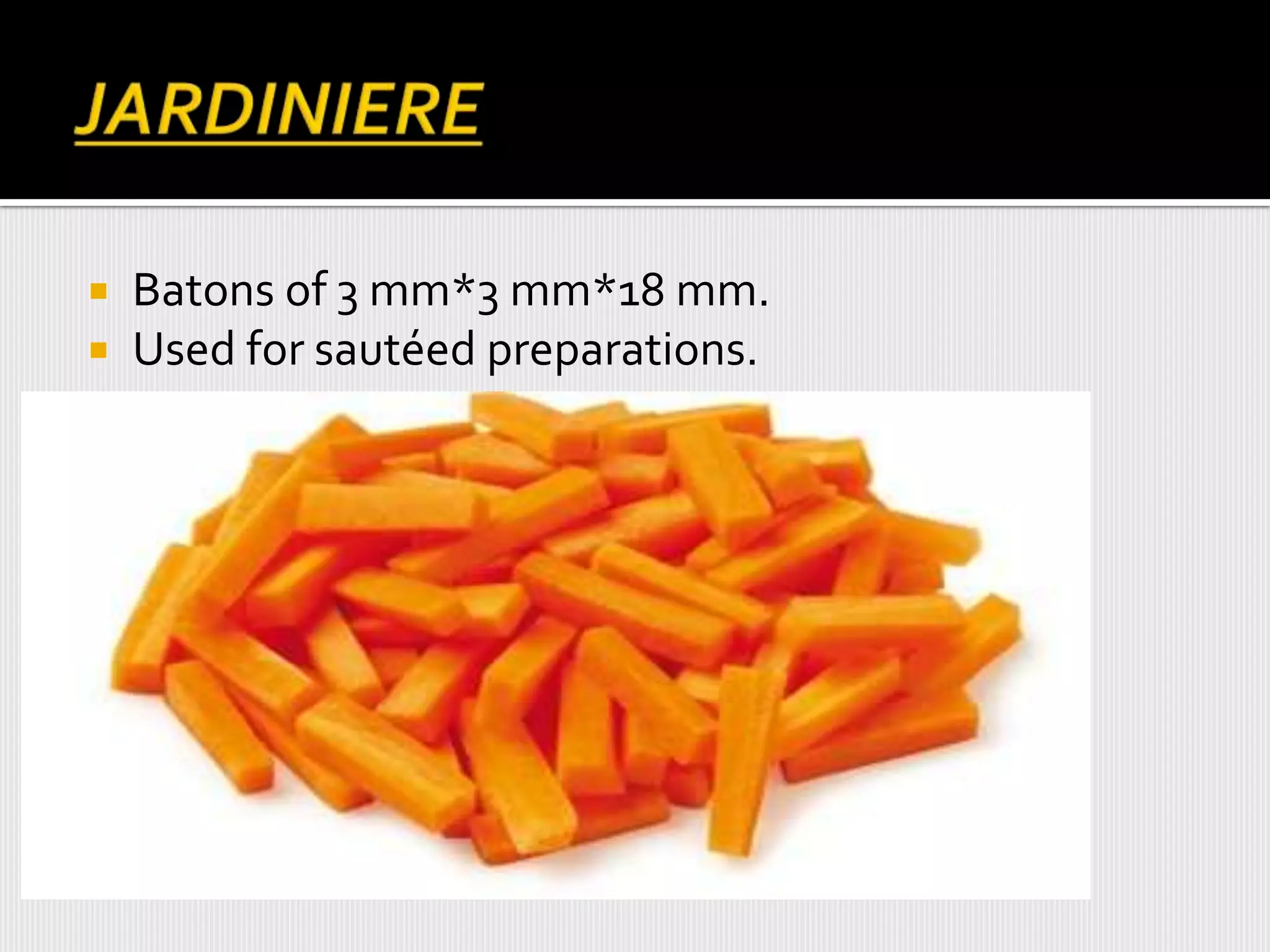
 Jardinière
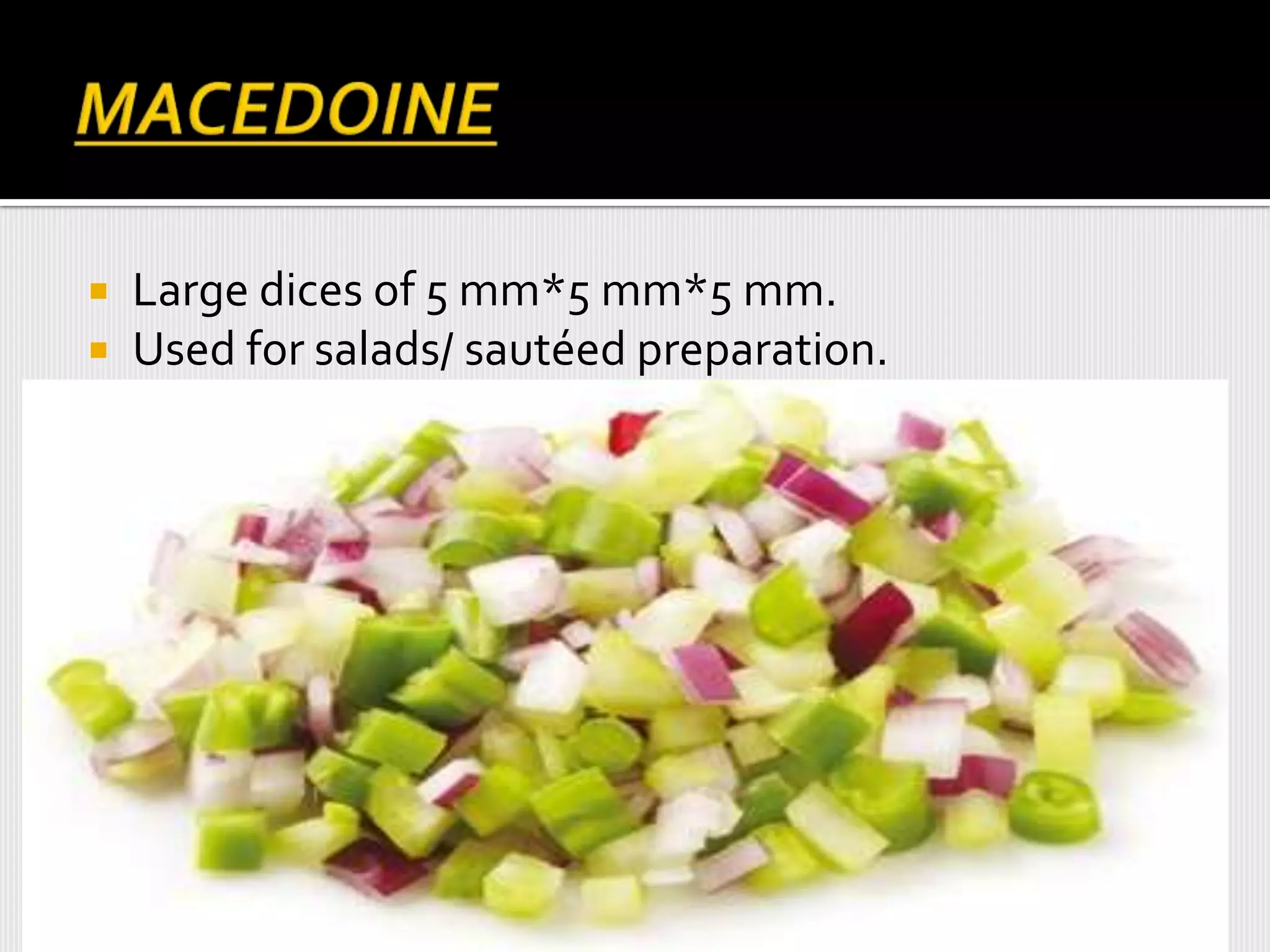
 Macedoine
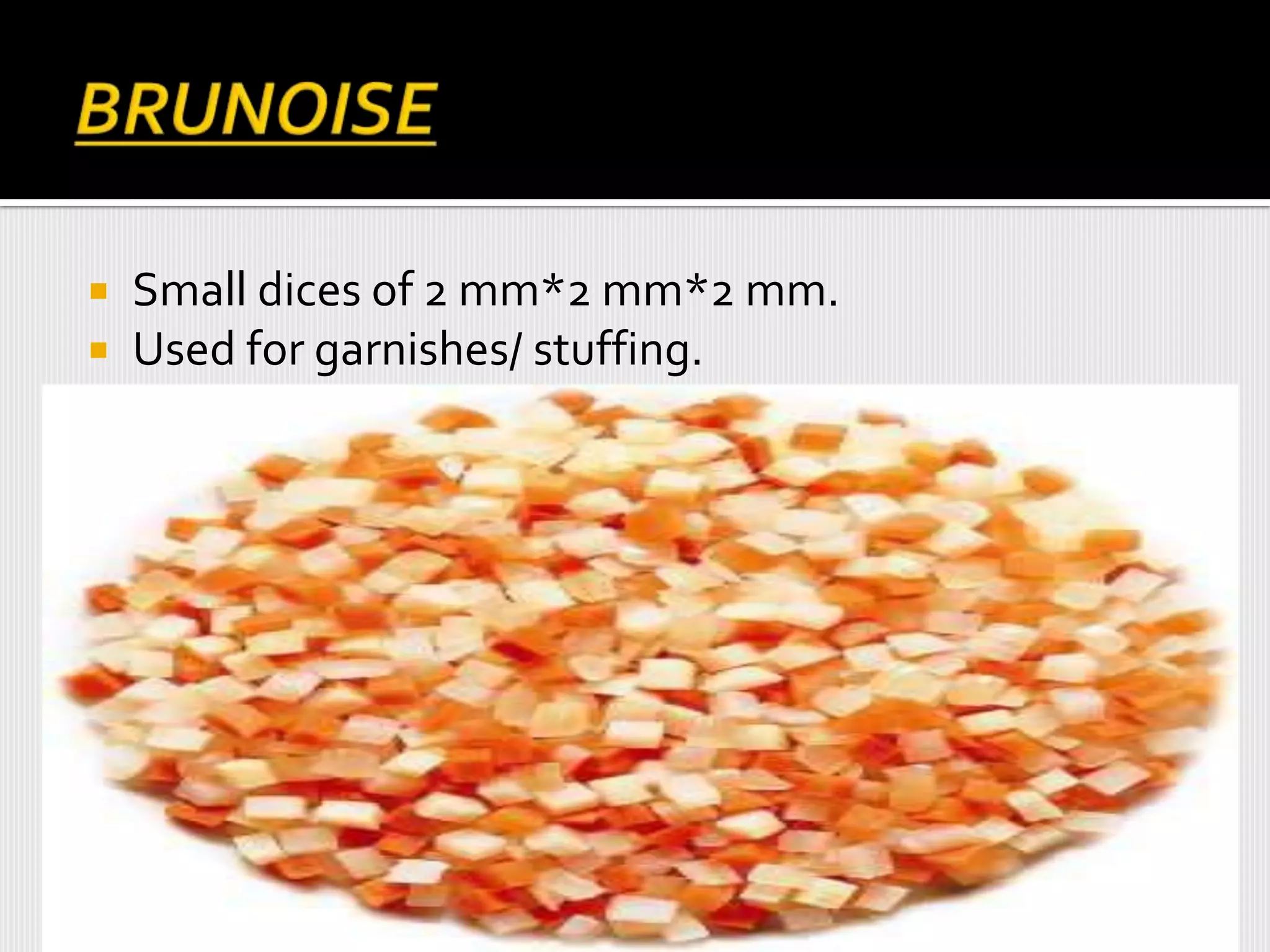
 Brunoise
 Lozenge
 Slicing
 Paring
 Chiffonade
 paysanne
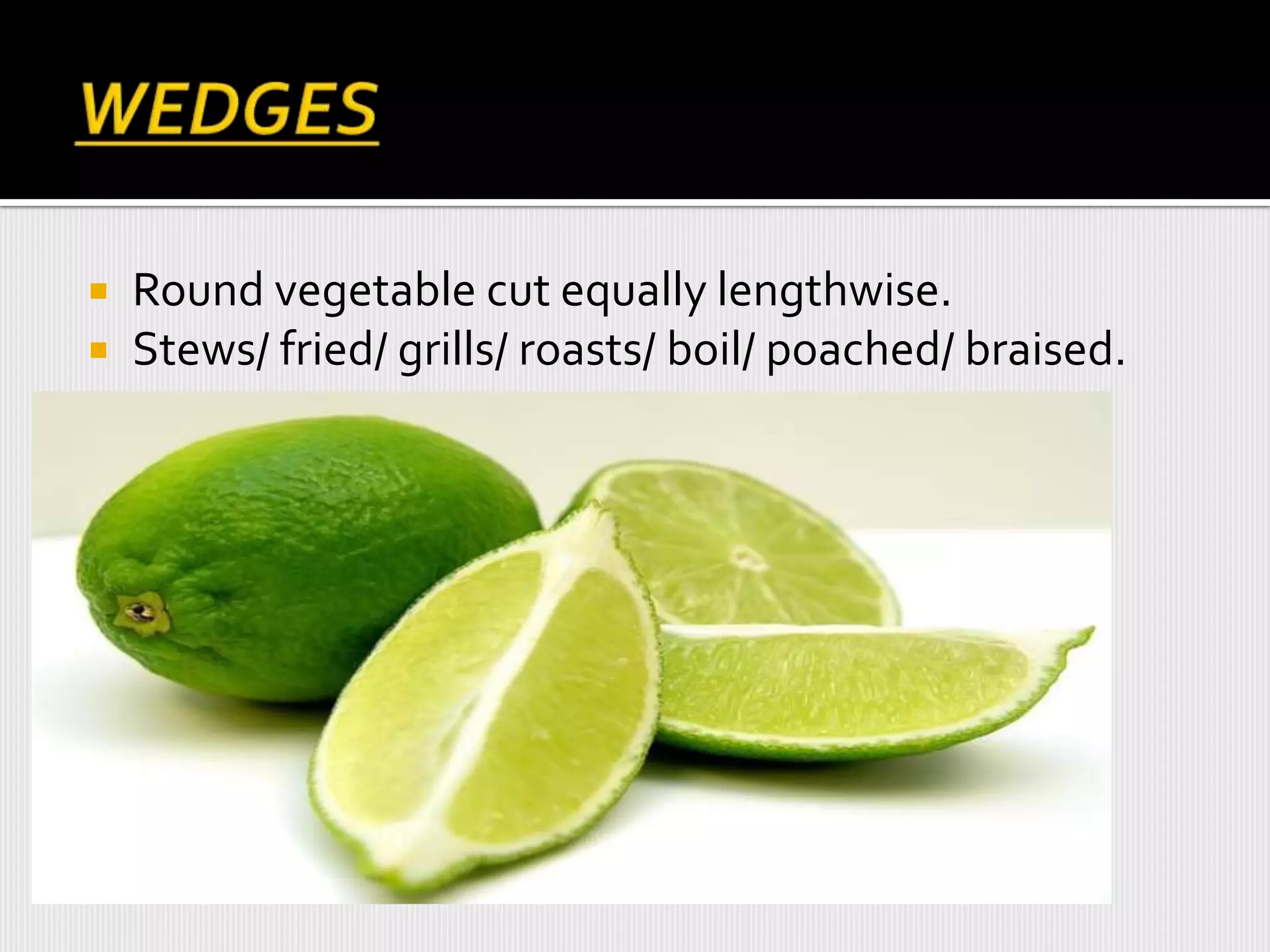
 Wedges
 Mirepoix
 Tourne
 Fluting
 Matignon
 Mincing
 Chopping
 Parisienne
 segment
 Thin strips of 1 mm*1 mm*25 mm
 Used for garnishes/ Chinese stir fries/ salads.
 Batons of 3 mm*3 mm*18 mm.
 Used for sautéed preparations.
 Large dices of 5 mm*5 mm*5 mm.
 Used for salads/ sautéed preparation.
 Small dices of 2 mm*2 mm*2 mm.
 Used for garnishes/ stuffing.
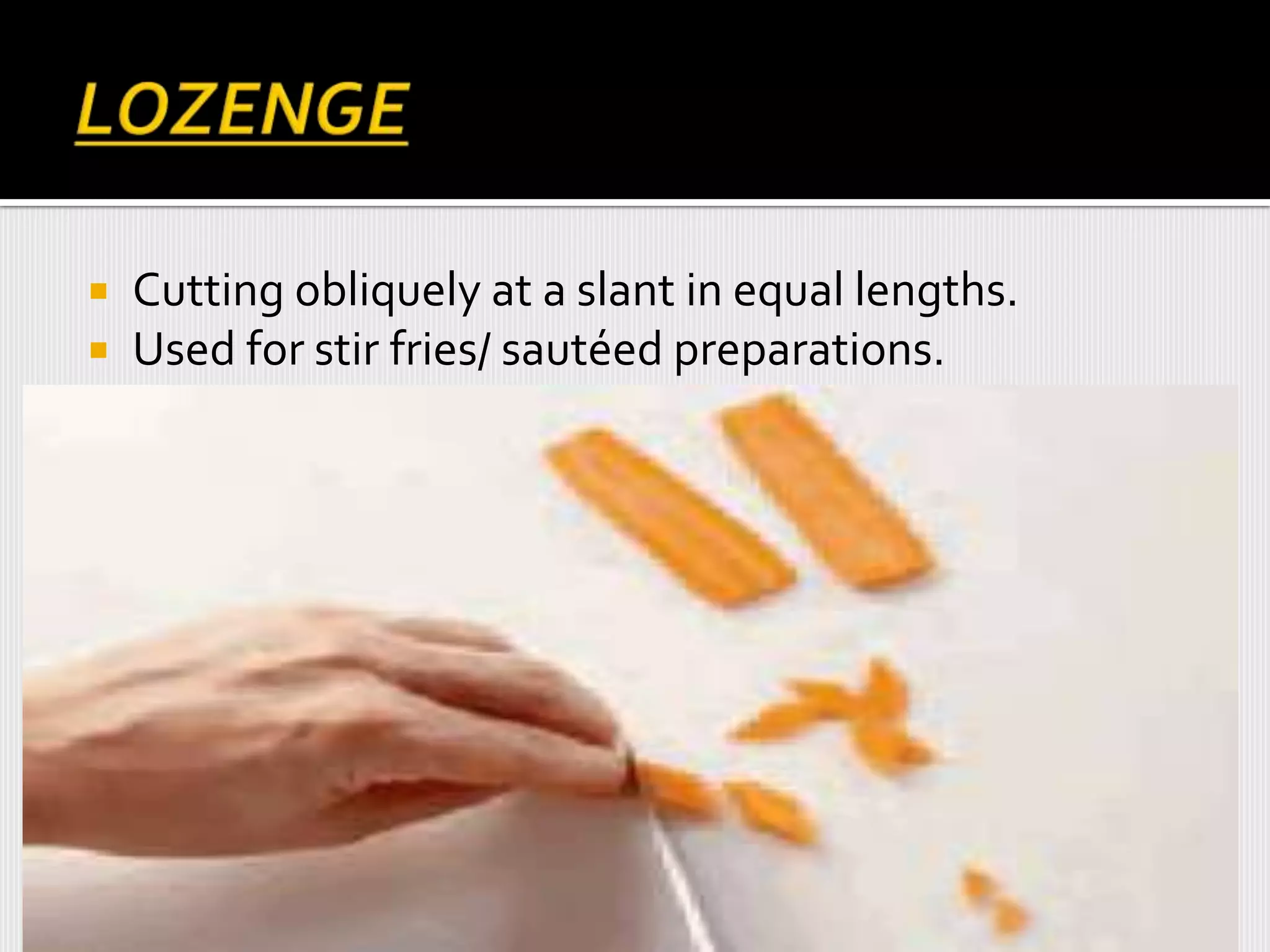
 Cutting obliquely at a slant in equal lengths.
 Used for stir fries/ sautéed preparations.
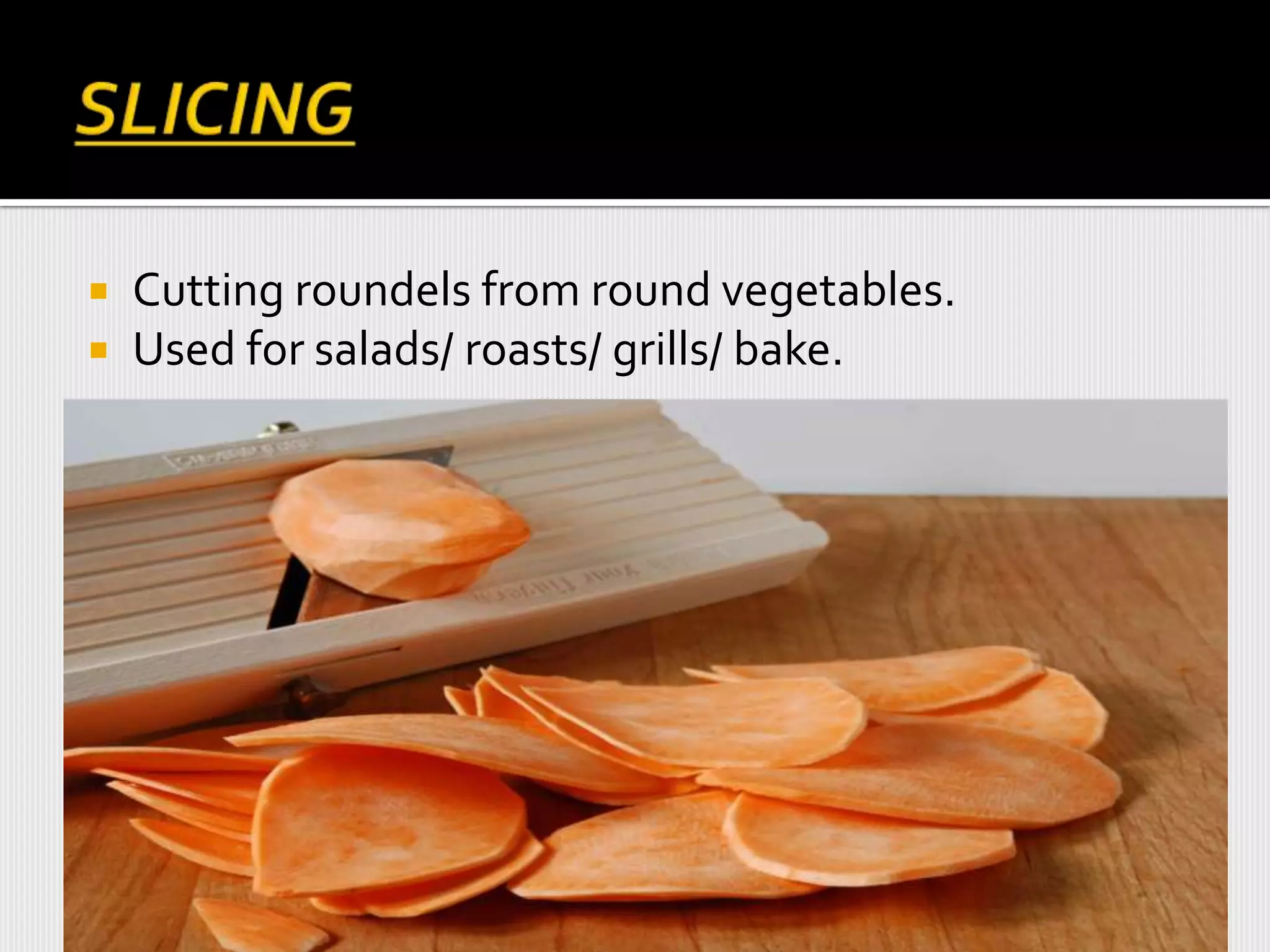
 Cutting roundels from round vegetables.
 Used for salads/ roasts/ grills/ bake.
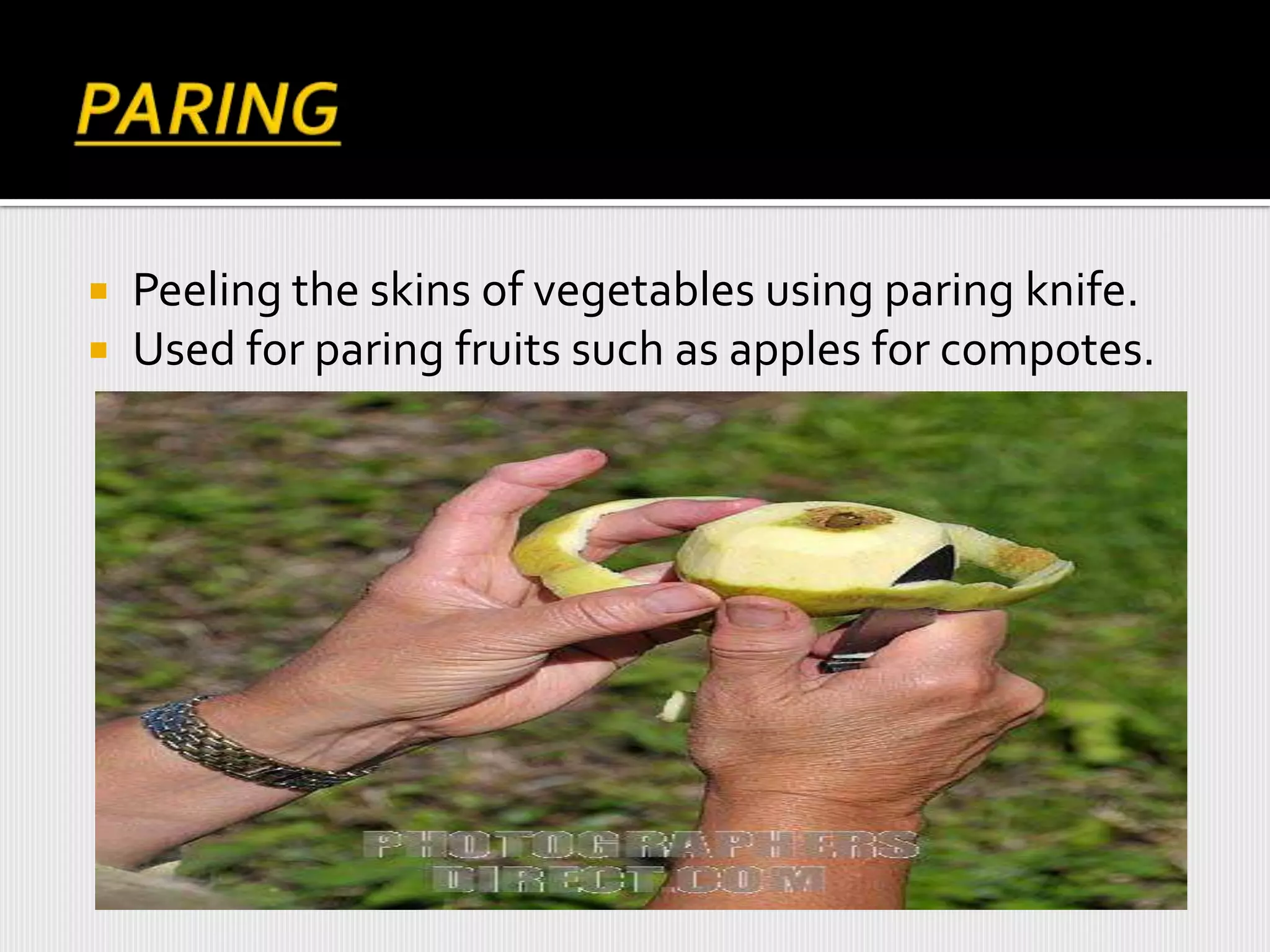
 Peeling the skins of vegetables using paring knife.
 Used for paring fruits such as apples for compotes.
 Shredded leafy vegetables.
 Used foe sautéed/ stuffing/ garnishes.
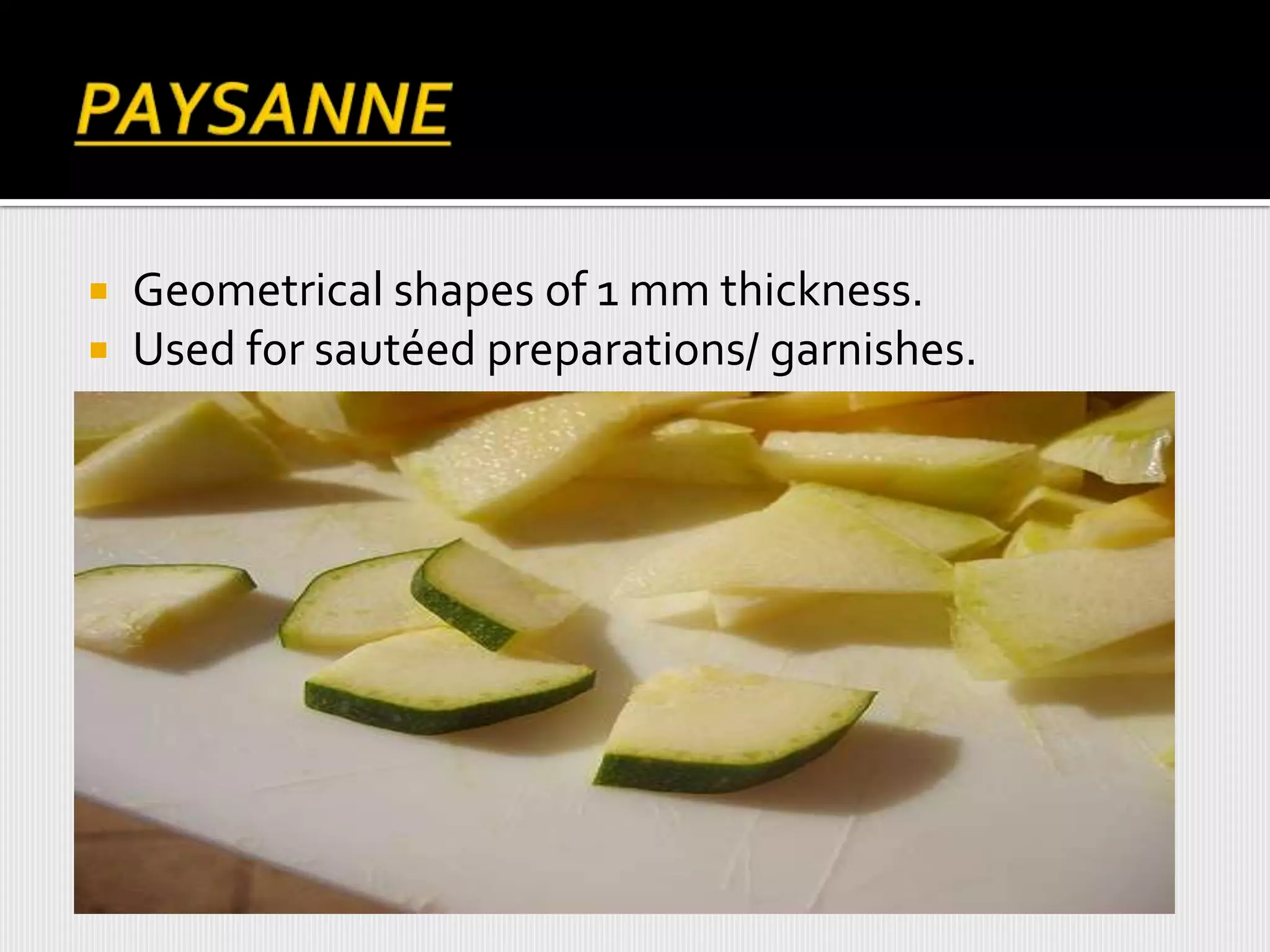
 Geometrical shapes of 1 mm thickness.
 Used for sautéed preparations/ garnishes.
 Round vegetable cut equally lengthwise.
 Stews/ fried/ grills/ roasts/ boil/ poached/ braised.
 Roughly cut vegetables , sometimes with skin.
 Used for stocks/ soups/ flavouring.
 Turning of vegetables into barrel shapes.
 Sautéed/ boiled/ poached/ roasted/ baked.
 Mushrooms turned for aesthetic appeal.
 Cut specifically for mushrooms.
 Evenly cut root vegetables.
 Used as mirepoix but served along with the dish for
example casseroles.
 Chopping the vegetables very fine.
 Used as herbs/ stuffing/ garnishes.
 Evenly cut vegetables smaller than brunoise.
 Used for garnishes/ sauces/ gravies/ stuffing.
 Scooped out with a parisienne scooper.
 Used for poached/ boiled/ sautéed/ salads.
 Usually done for citrus, fruits. Where each segment
is removed from the fruit.
 Used for salads/ fruit platters/ garnishing.
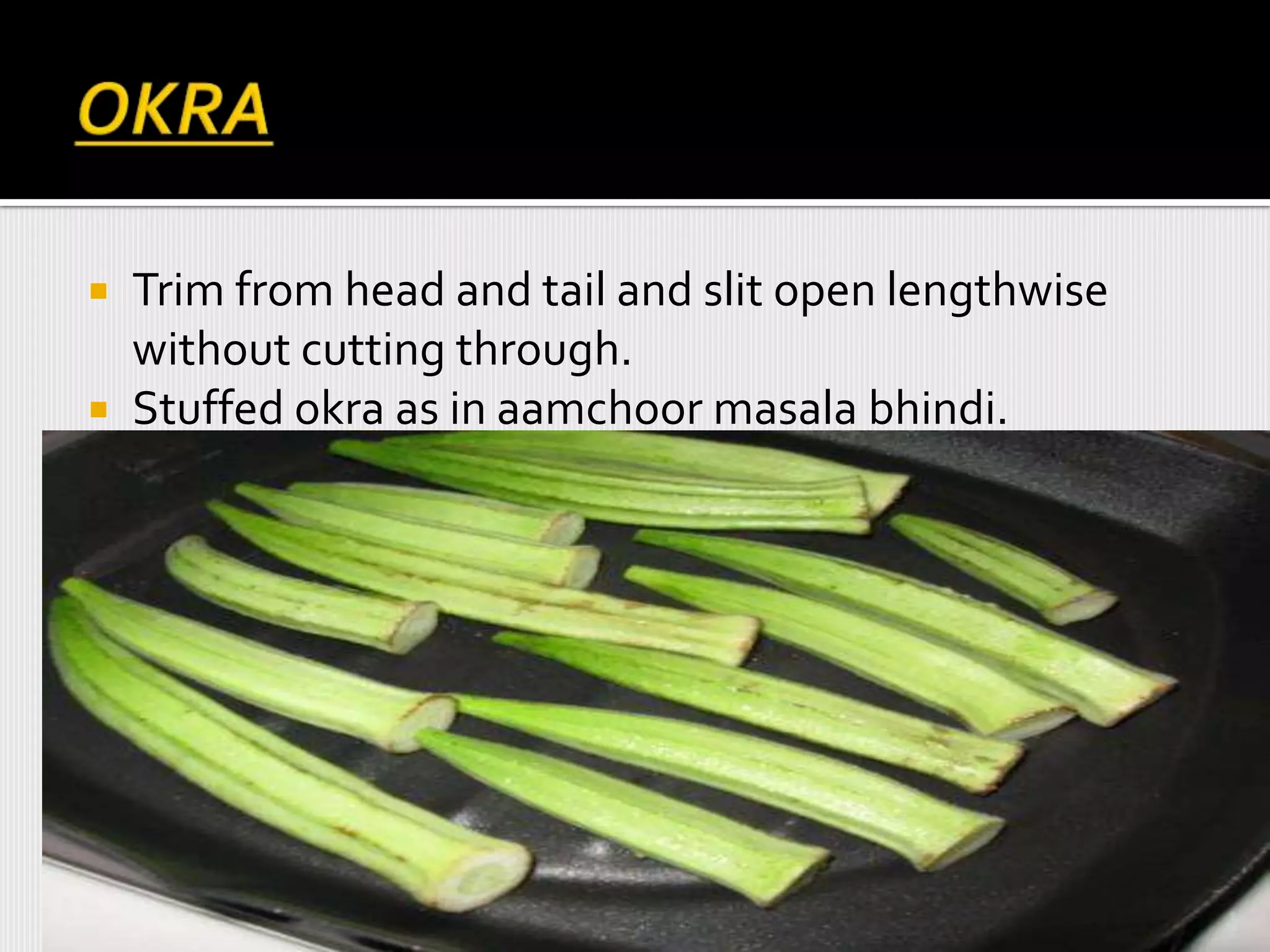
 Okra
 Baby brinjal
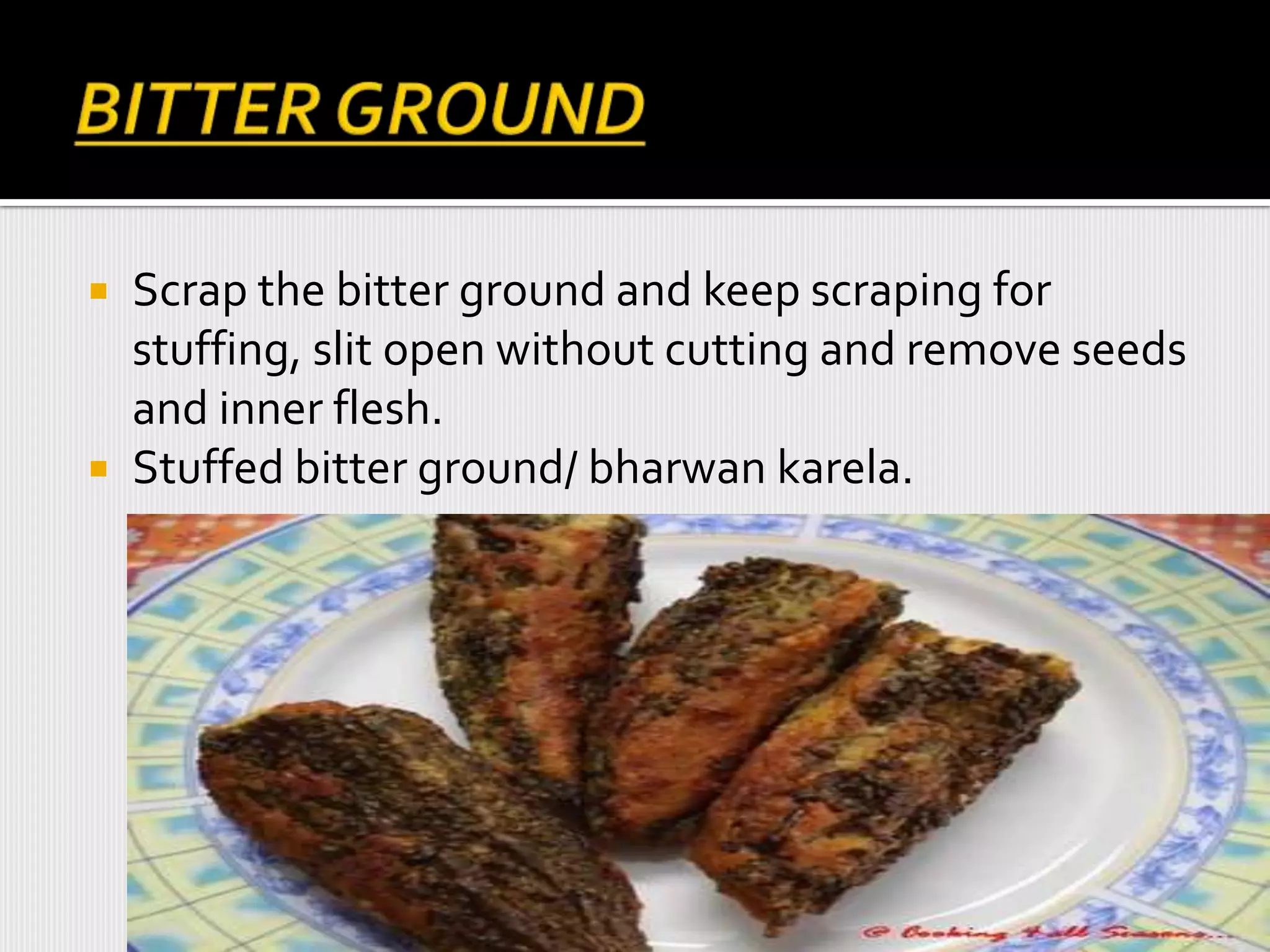
 Bitter ground
 Jackfruit
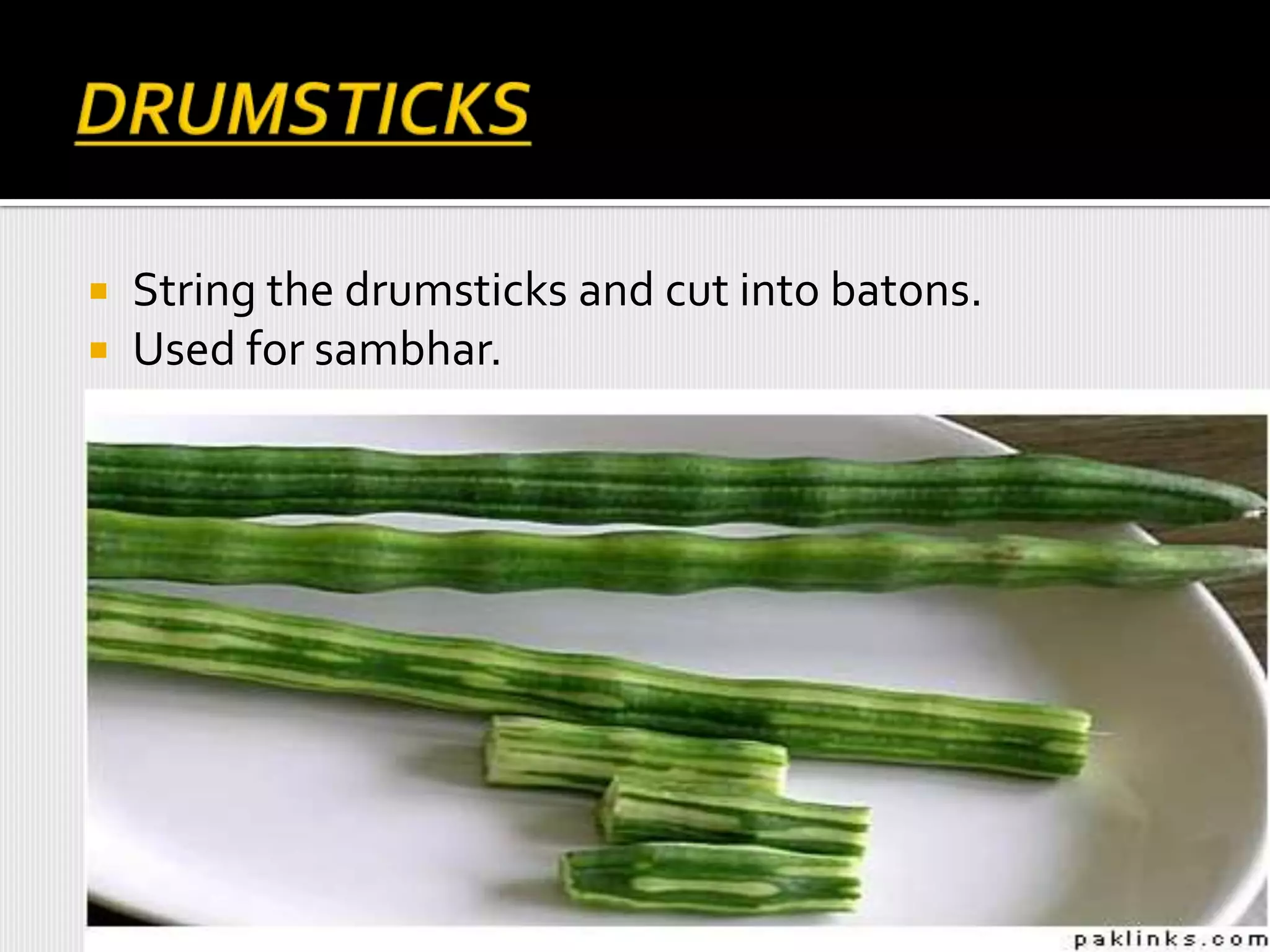
 Drumsticks
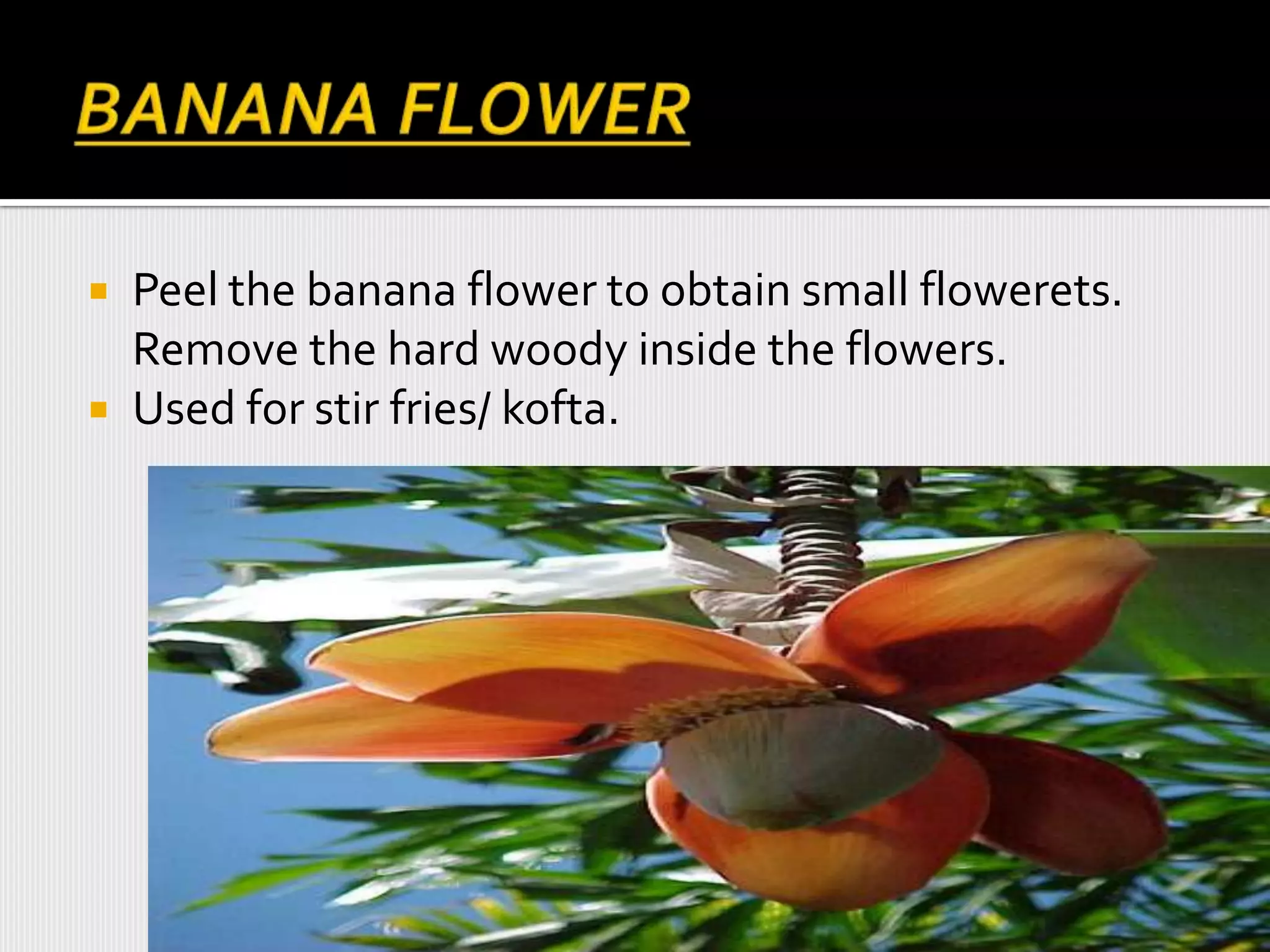
 Banana flower
 Bamboo shoot
 Chilli
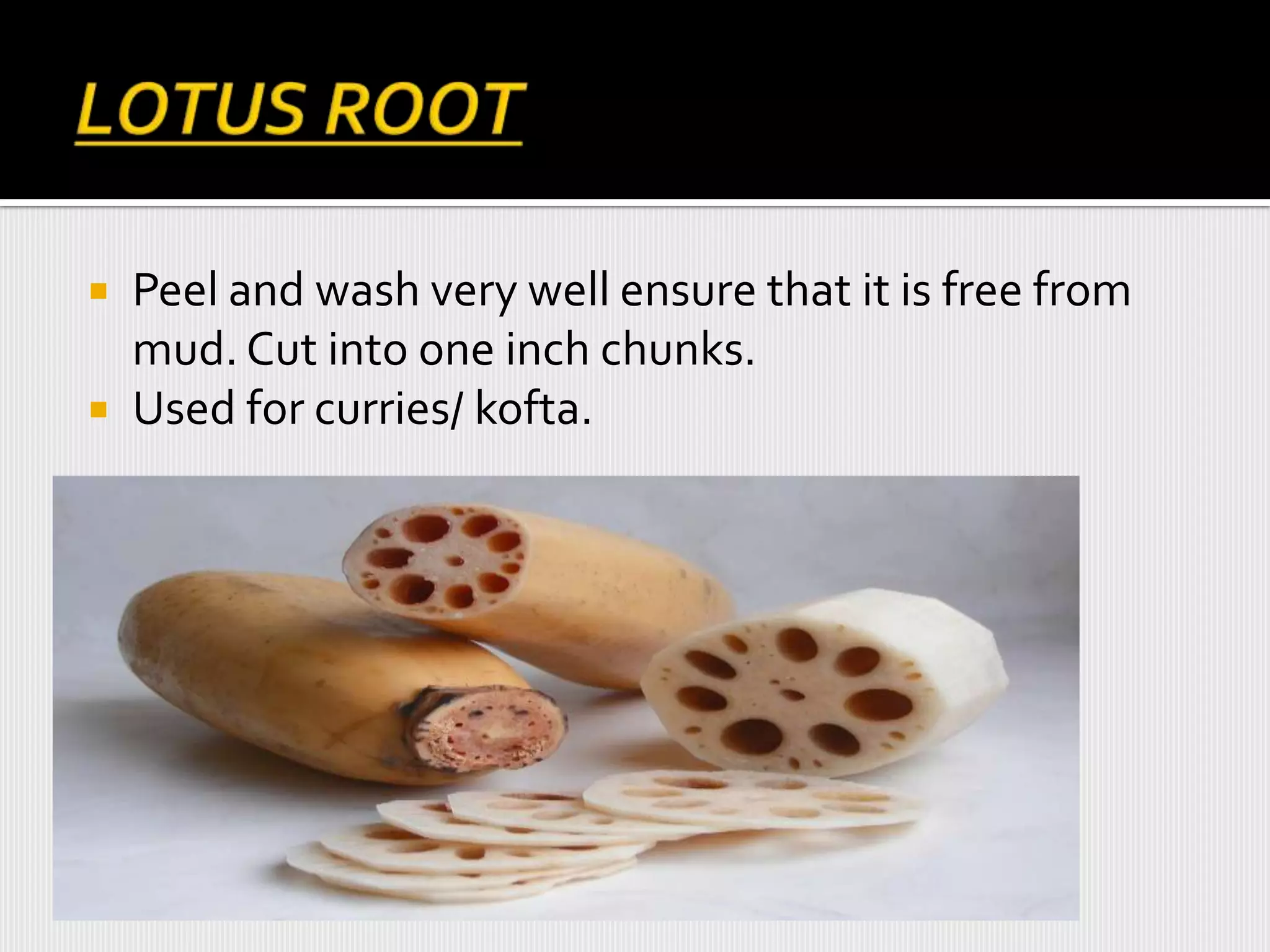
 Lotus root
 Trim from head and tail and slit open lengthwise
without cutting through.
 Stuffed okra as in aamchoor masala bhindi.
 Slit into four, keeping the stem intact.
 Stuffed brinjals/ bharwan masala baingan.
 Scrap the bitter ground and keep scraping for
stuffing, slit open without cutting and remove seeds
and inner flesh.
 Stuffed bitter ground/ bharwan karela.
 Cut into quarters, remove the skin not washing too
much, remove the center pith.
 Used for kofta, curries, biryani.
 String the drumsticks and cut into batons.
 Used for sambhar.
 Peel the banana flower to obtain small flowerets.
Remove the hard woody inside the flowers.
 Used for stir fries/ kofta.
 Peel the white pith and cut into desired shapes.
 Used for curries.
 Slit the chilli lengthwise, taking care not to cut
through.
 Used for stuffed peppers, pakoras.
 Peel and wash very well ensure that it is free from
mud. Cut into one inch chunks.
 Used for curries/ kofta.
Cuts of vegetable

Cuts of vegetable

  • 1.
    Sunil Kumar Research Scholar,Food Production Faculty www.facebook.com/ihmsunilkumar
  • 2.
     Vegetables arecut into various size and shapes for various cooking purpose s, creating different textures, tastes and mouth feel. Different cuts would differently from one to another all of them will create a different flavour.
  • 3.
     Julienne  Jardinière Macedoine  Brunoise  Lozenge  Slicing  Paring  Chiffonade  paysanne
  • 4.
     Wedges  Mirepoix Tourne  Fluting  Matignon  Mincing  Chopping  Parisienne  segment
  • 5.
     Thin stripsof 1 mm*1 mm*25 mm  Used for garnishes/ Chinese stir fries/ salads.
  • 6.
     Batons of3 mm*3 mm*18 mm.  Used for sautéed preparations.
  • 7.
     Large dicesof 5 mm*5 mm*5 mm.  Used for salads/ sautéed preparation.
  • 8.
     Small dicesof 2 mm*2 mm*2 mm.  Used for garnishes/ stuffing.
  • 9.
     Cutting obliquelyat a slant in equal lengths.  Used for stir fries/ sautéed preparations.
  • 10.
     Cutting roundelsfrom round vegetables.  Used for salads/ roasts/ grills/ bake.
  • 11.
     Peeling theskins of vegetables using paring knife.  Used for paring fruits such as apples for compotes.
  • 12.
     Shredded leafyvegetables.  Used foe sautéed/ stuffing/ garnishes.
  • 13.
     Geometrical shapesof 1 mm thickness.  Used for sautéed preparations/ garnishes.
  • 14.
     Round vegetablecut equally lengthwise.  Stews/ fried/ grills/ roasts/ boil/ poached/ braised.
  • 15.
     Roughly cutvegetables , sometimes with skin.  Used for stocks/ soups/ flavouring.
  • 16.
     Turning ofvegetables into barrel shapes.  Sautéed/ boiled/ poached/ roasted/ baked.
  • 17.
     Mushrooms turnedfor aesthetic appeal.  Cut specifically for mushrooms.
  • 18.
     Evenly cutroot vegetables.  Used as mirepoix but served along with the dish for example casseroles.
  • 19.
     Chopping thevegetables very fine.  Used as herbs/ stuffing/ garnishes.
  • 20.
     Evenly cutvegetables smaller than brunoise.  Used for garnishes/ sauces/ gravies/ stuffing.
  • 21.
     Scooped outwith a parisienne scooper.  Used for poached/ boiled/ sautéed/ salads.
  • 22.
     Usually donefor citrus, fruits. Where each segment is removed from the fruit.  Used for salads/ fruit platters/ garnishing.
  • 23.
     Okra  Babybrinjal  Bitter ground  Jackfruit  Drumsticks  Banana flower  Bamboo shoot  Chilli  Lotus root
  • 24.
     Trim fromhead and tail and slit open lengthwise without cutting through.  Stuffed okra as in aamchoor masala bhindi.
  • 25.
     Slit intofour, keeping the stem intact.  Stuffed brinjals/ bharwan masala baingan.
  • 26.
     Scrap thebitter ground and keep scraping for stuffing, slit open without cutting and remove seeds and inner flesh.  Stuffed bitter ground/ bharwan karela.
  • 27.
     Cut intoquarters, remove the skin not washing too much, remove the center pith.  Used for kofta, curries, biryani.
  • 28.
     String thedrumsticks and cut into batons.  Used for sambhar.
  • 29.
     Peel thebanana flower to obtain small flowerets. Remove the hard woody inside the flowers.  Used for stir fries/ kofta.
  • 30.
     Peel thewhite pith and cut into desired shapes.  Used for curries.
  • 31.
     Slit thechilli lengthwise, taking care not to cut through.  Used for stuffed peppers, pakoras.
  • 32.
     Peel andwash very well ensure that it is free from mud. Cut into one inch chunks.  Used for curries/ kofta.