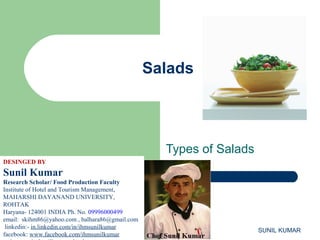
Salads

Types of Salads
DESINGED BY

Sunil Kumar
Research Scholar/ Food Production Faculty
Institute of Hotel and Tourism Management,
MAHARSHI DAYANAND UNIVERSITY,
ROHTAK
Haryana- 124001 INDIA Ph. No. 09996000499
email: skihm86@yahoo.com , balhara86@gmail.com
linkedin:- in.linkedin.com/in/ihmsunilkumar
facebook: www.facebook.com/ihmsunilkumar

SUNIL KUMAR
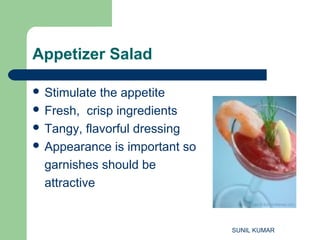
Appetizer Salad
 Stimulate

the appetite
 Fresh, crisp ingredients
 Tangy, flavorful dressing
 Appearance is important so
garnishes should be
attractive

SUNIL KUMAR
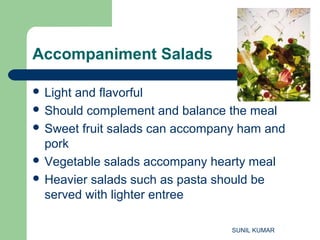
Accompaniment Salads
 Light

and flavorful
 Should complement and balance the meal
 Sweet fruit salads can accompany ham and
pork
 Vegetable salads accompany hearty meal
 Heavier salads such as pasta should be
served with lighter entree
SUNIL KUMAR
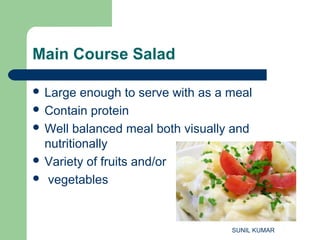
Main Course Salad
 Large

enough to serve with as a meal
 Contain protein
 Well balanced meal both visually and
nutritionally
 Variety of fruits and/or
 vegetables

SUNIL KUMAR
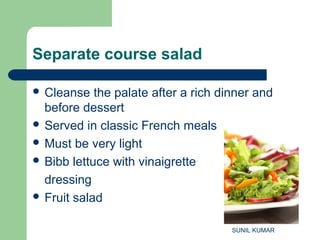
Separate course salad
 Cleanse

the palate after a rich dinner and
before dessert
 Served in classic French meals
 Must be very light
 Bibb lettuce with vinaigrette
dressing
 Fruit salad
SUNIL KUMAR
Dessert Salad
 Sweet

and often contain fruit, sweet gelatin,
whip cream
 Too sweet to be served as accompaniment
or appetizer

SUNIL KUMAR
Salads

Parts of a Salad

SUNIL KUMAR
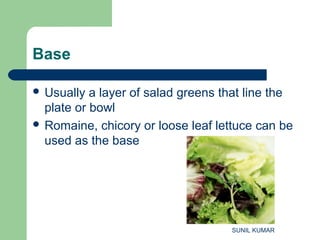
Base
 Usually

a layer of salad greens that line the
plate or bowl
 Romaine, chicory or loose leaf lettuce can be
used as the base

SUNIL KUMAR
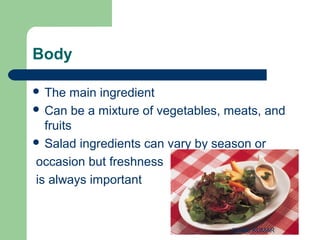
Body
 The

main ingredient
 Can be a mixture of vegetables, meats, and
fruits
 Salad ingredients can vary by season or
occasion but freshness
is always important

SUNIL KUMAR
Garnish
 Adds

color and appeal
 Simple garnishes are best
 Can be mixed with other ingredients or
added at the end
 Examples include parsley,
paprika, fresh cherry tomato

SUNIL KUMAR
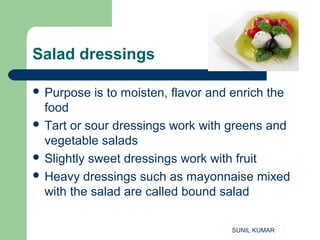
Salad dressings
 Purpose

is to moisten, flavor and enrich the

food
 Tart or sour dressings work with greens and
vegetable salads
 Slightly sweet dressings work with fruit
 Heavy dressings such as mayonnaise mixed
with the salad are called bound salad
SUNIL KUMAR
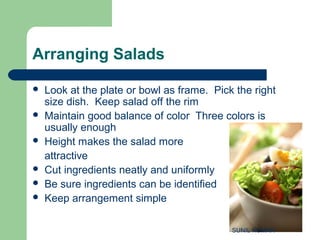
Arranging Salads








Look at the plate or bowl as frame. Pick the right
size dish. Keep salad off the rim
Maintain good balance of color Three colors is
usually enough
Height makes the salad more
attractive
Cut ingredients neatly and uniformly
Be sure ingredients can be identified
Keep arrangement simple
SUNIL KUMAR

Salads

  • 1.
    Salads Types of Salads DESINGEDBY Sunil Kumar Research Scholar/ Food Production Faculty Institute of Hotel and Tourism Management, MAHARSHI DAYANAND UNIVERSITY, ROHTAK Haryana- 124001 INDIA Ph. No. 09996000499 email: skihm86@yahoo.com , balhara86@gmail.com linkedin:- in.linkedin.com/in/ihmsunilkumar facebook: www.facebook.com/ihmsunilkumar SUNIL KUMAR
  • 2.
    Appetizer Salad  Stimulate theappetite  Fresh, crisp ingredients  Tangy, flavorful dressing  Appearance is important so garnishes should be attractive SUNIL KUMAR
  • 3.
    Accompaniment Salads  Light andflavorful  Should complement and balance the meal  Sweet fruit salads can accompany ham and pork  Vegetable salads accompany hearty meal  Heavier salads such as pasta should be served with lighter entree SUNIL KUMAR
  • 4.
    Main Course Salad Large enough to serve with as a meal  Contain protein  Well balanced meal both visually and nutritionally  Variety of fruits and/or  vegetables SUNIL KUMAR
  • 5.
    Separate course salad Cleanse the palate after a rich dinner and before dessert  Served in classic French meals  Must be very light  Bibb lettuce with vinaigrette dressing  Fruit salad SUNIL KUMAR
  • 6.
    Dessert Salad  Sweet andoften contain fruit, sweet gelatin, whip cream  Too sweet to be served as accompaniment or appetizer SUNIL KUMAR
  • 7.
    Salads Parts of aSalad SUNIL KUMAR
  • 8.
    Base  Usually a layerof salad greens that line the plate or bowl  Romaine, chicory or loose leaf lettuce can be used as the base SUNIL KUMAR
  • 9.
    Body  The main ingredient Can be a mixture of vegetables, meats, and fruits  Salad ingredients can vary by season or occasion but freshness is always important SUNIL KUMAR
  • 10.
    Garnish  Adds color andappeal  Simple garnishes are best  Can be mixed with other ingredients or added at the end  Examples include parsley, paprika, fresh cherry tomato SUNIL KUMAR
  • 11.
    Salad dressings  Purpose isto moisten, flavor and enrich the food  Tart or sour dressings work with greens and vegetable salads  Slightly sweet dressings work with fruit  Heavy dressings such as mayonnaise mixed with the salad are called bound salad SUNIL KUMAR
  • 12.
    Arranging Salads       Look atthe plate or bowl as frame. Pick the right size dish. Keep salad off the rim Maintain good balance of color Three colors is usually enough Height makes the salad more attractive Cut ingredients neatly and uniformly Be sure ingredients can be identified Keep arrangement simple SUNIL KUMAR