BASIC
CUTTING
TECHNIQUES
Why Proper Cuts are Important
 The first reason is uniformity.
 ensures that you have even, predictable
cooking times. Nobody wants carrots that are
mushy and hard at the same time. Size is
important when it comes to stocks or soups.
 Longer cooking stocks will benefit from large
coarse cuts so as to reduce the chance of the
items breaking down into the stock, clouding it.
The Julienne Cut
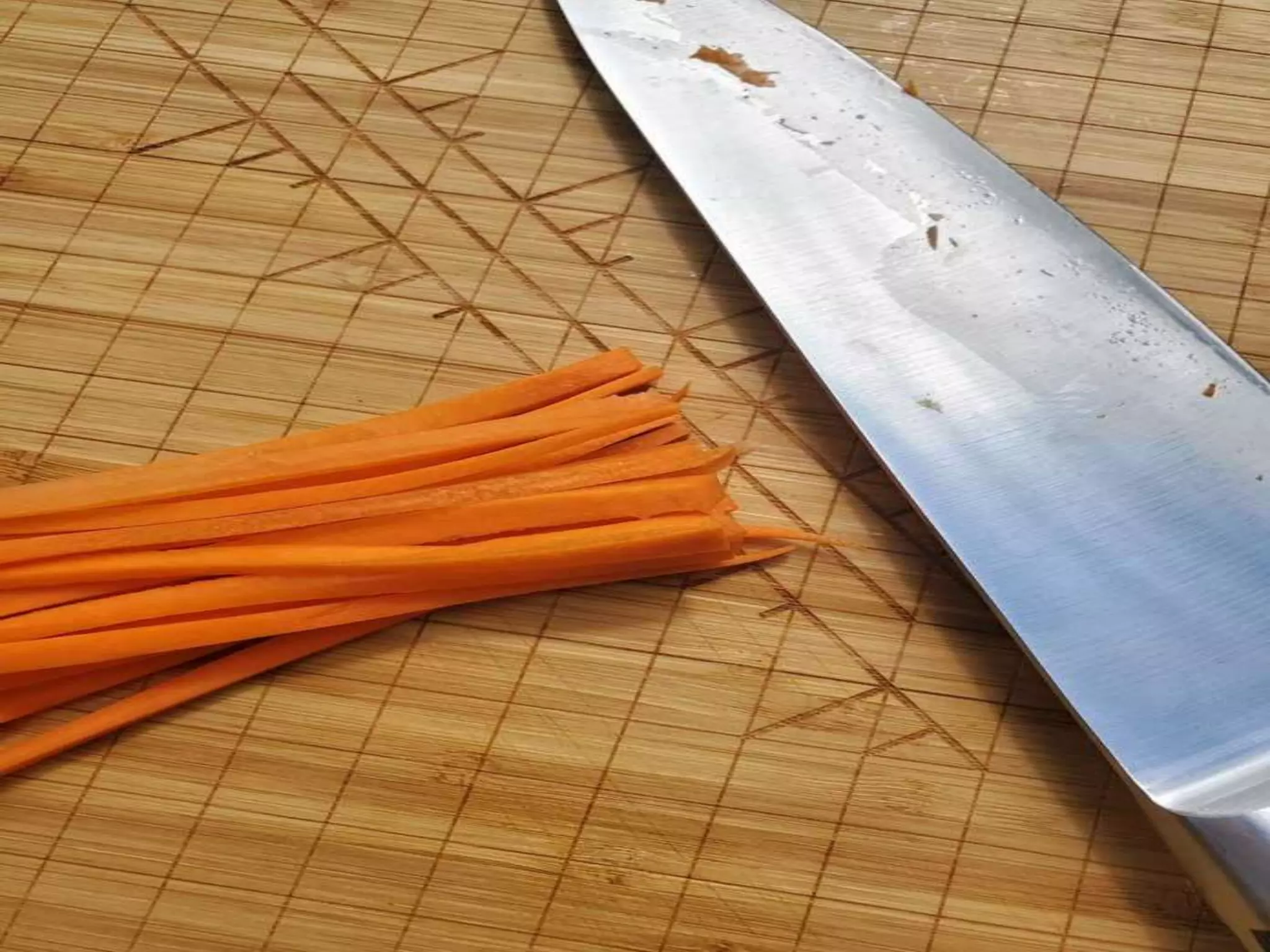
 The julienne is a type of cut that is stick-
shaped and very thin. Cut from a squared-
off item, you will then slice that item
length-wise at a thickness of 1-2mm (1/16 in)
leaving you with thin rectangular cuts.
Then, take the thin slices and apply the
same technique. You will end up with
Julienne (Or matchstick) knife cuts!
The Brunoise Dice
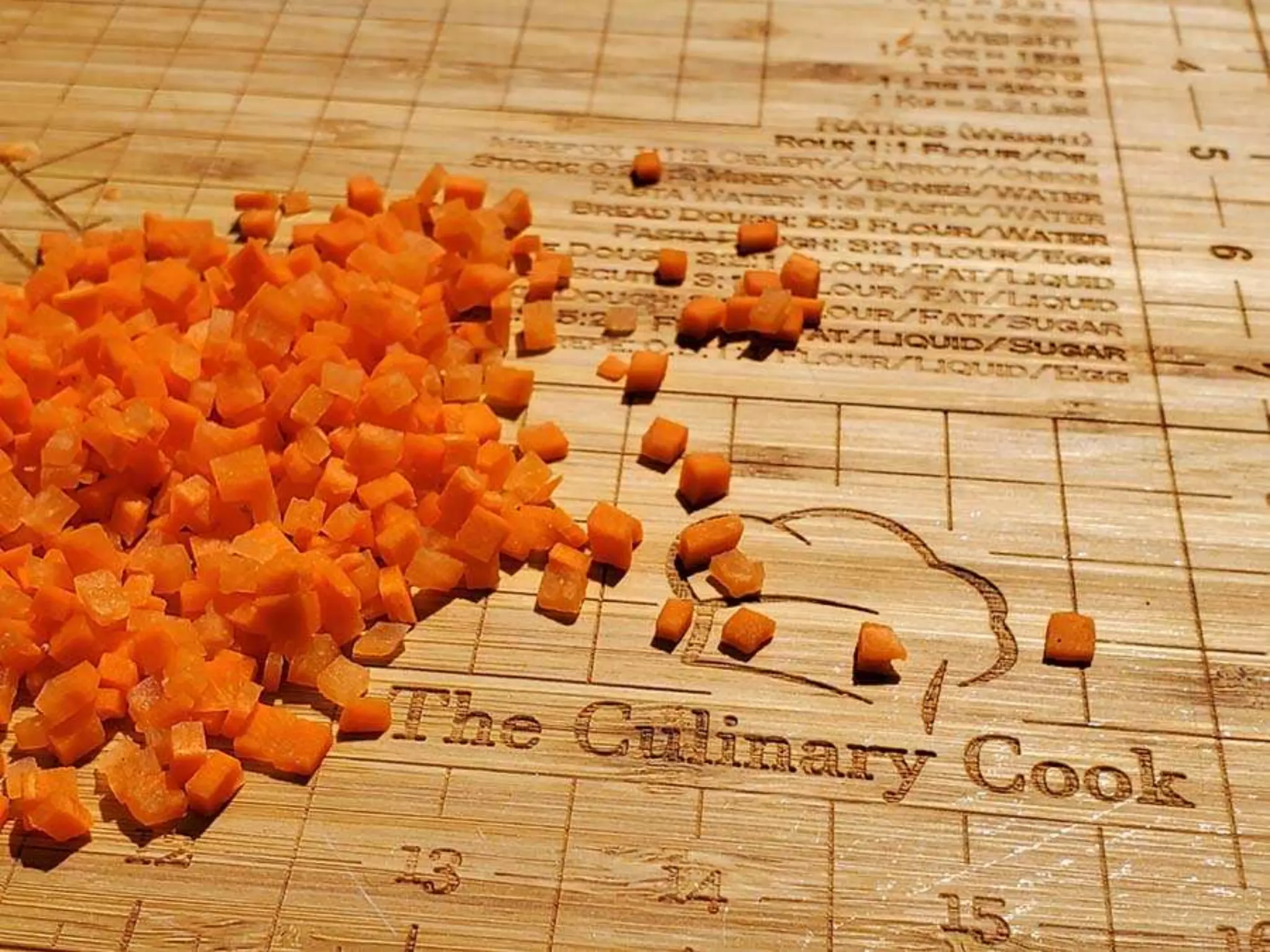
 The Brunoise dice is the smallest dice you can
have. While you can mince to a smaller
dimension, this knife cutting method refers to
the smallest uniform size available for dicing.
This method is simple and only adds an
additional step to the Julienne method. Take
your julienne cuts and bunch them up with
your hand. Then cut the julienne into equally
shaped dice. That’s it! While simple, it does
take a long time to master. Great for Soups.
The Small Dice
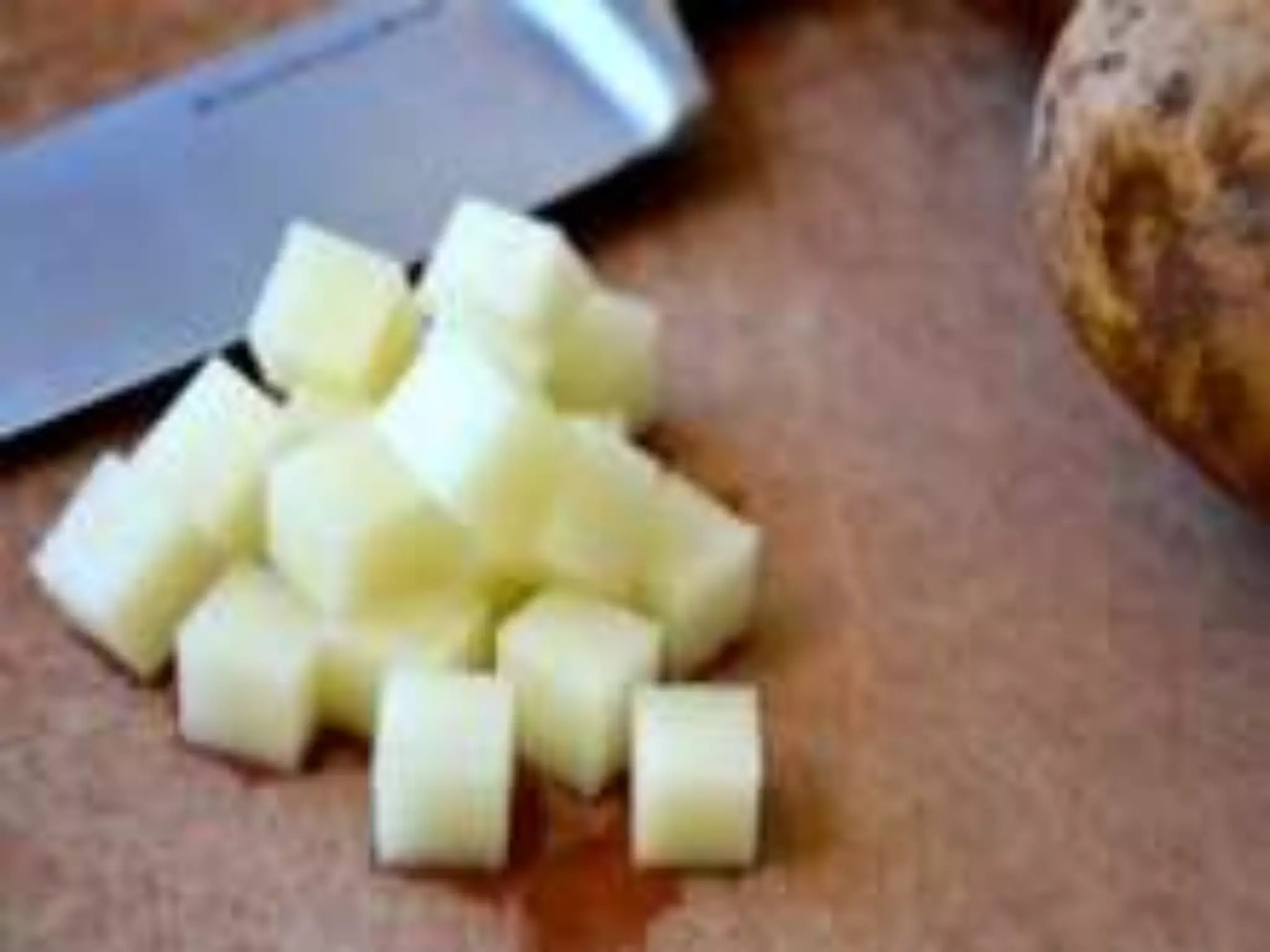
 The small dice are similar to the brunoise,
but it is slightly larger. Start by following
the steps to Julienne your item. You want
to slice your squared-off item at a
thickness of 3mm. Now it’s only a matter of
finishing off the dice as you would the
Brunoise!
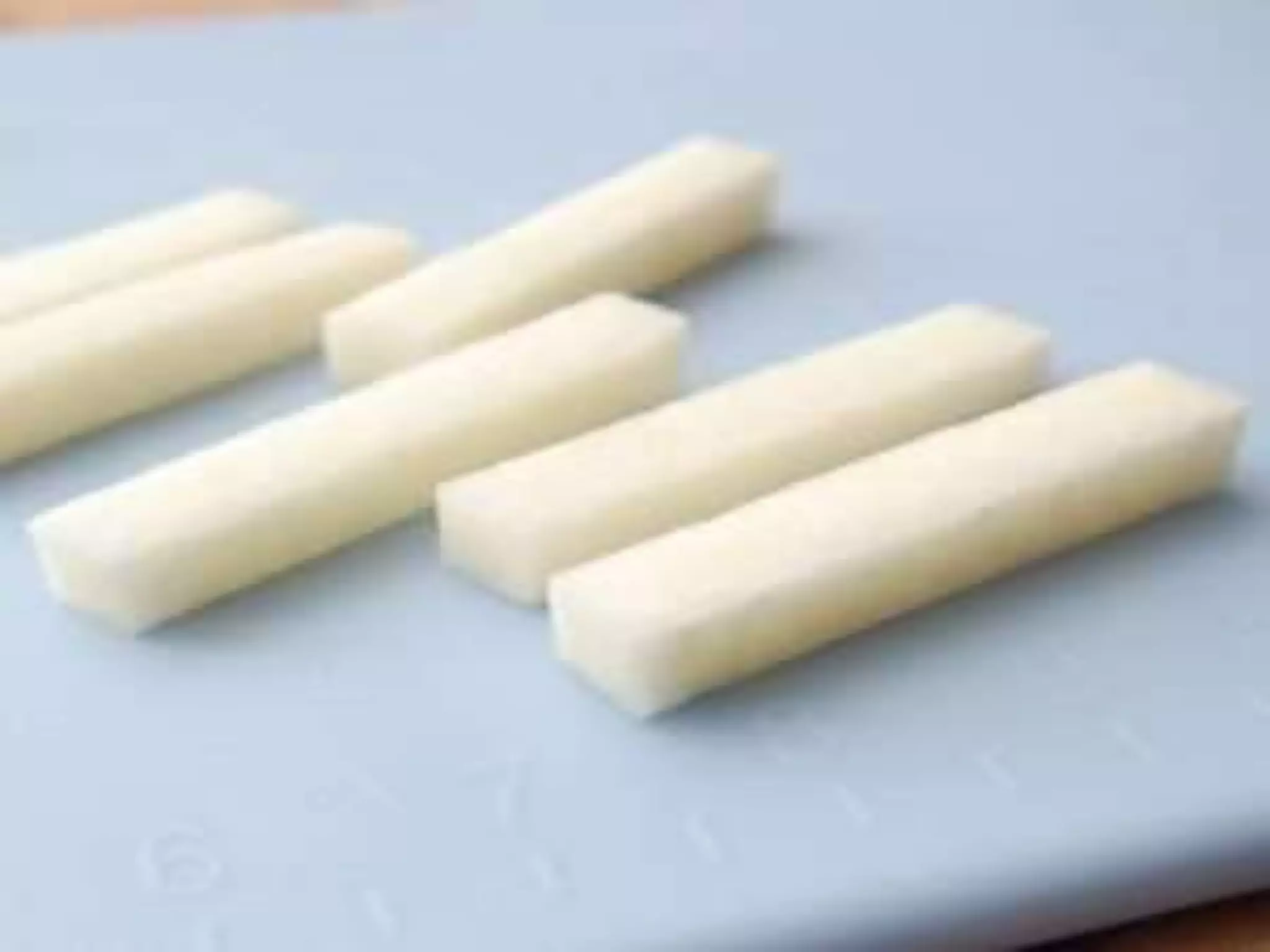
The Batonnet
 Let’s continue. The Batonnet is no different,
and we are aiming for a larger stick-cut.
The batonnet is used when serving a larger
portion of an item such as a vegetable
side, to gain height in your dish, or to
provide imposing linear appeal to an
otherwise linear-absent dish.
The Chiffonade
 The chiffonade types of cuts are used when
slicing very thin items such as herbs or
leafy vegetables such as spinach.
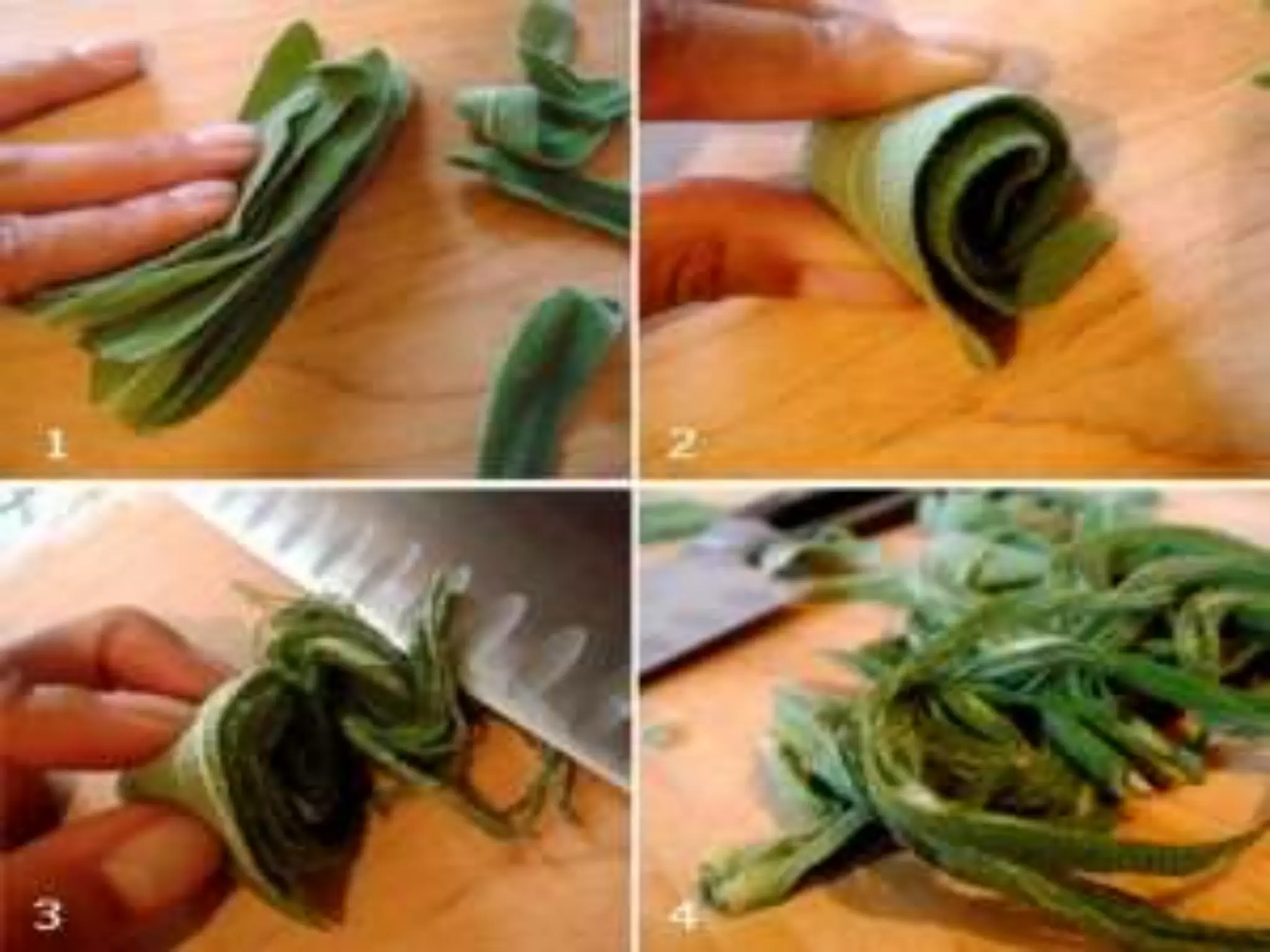
Cutting en chiffonade is a really simple
process. Start by stacking the items you
are looking to slice. Then roll up the items,
producing a cigar-shaped roll. Once it’s
rolled, start slicing to produce a nice
chiffonade suitable for garnishing and
other purposes.
SOURCES
 https://www.google.com/url?sa=i&url=https%3A%2F%2Fwww.nogent
3etoiles.com%2Fen%2Fhow-to-cut-vegetables-
properly%2F&psig=AOvVaw0RND6riVPJMwFPVL4Qk8pa&ust=1574
900701580000&source=images&cd=vfe&ved=0CAIQjRxqFwoTCMi9
1bLniuYCFQAAAAAdAAAAABAD
 https://theculinarycook.com/knife-skills-different-types-of-cuts/

Basic cutting techniques

  • 1.
  • 2.
    Why Proper Cutsare Important  The first reason is uniformity.  ensures that you have even, predictable cooking times. Nobody wants carrots that are mushy and hard at the same time. Size is important when it comes to stocks or soups.  Longer cooking stocks will benefit from large coarse cuts so as to reduce the chance of the items breaking down into the stock, clouding it.
  • 3.
    The Julienne Cut The julienne is a type of cut that is stick- shaped and very thin. Cut from a squared- off item, you will then slice that item length-wise at a thickness of 1-2mm (1/16 in) leaving you with thin rectangular cuts. Then, take the thin slices and apply the same technique. You will end up with Julienne (Or matchstick) knife cuts!
  • 5.
    The Brunoise Dice The Brunoise dice is the smallest dice you can have. While you can mince to a smaller dimension, this knife cutting method refers to the smallest uniform size available for dicing. This method is simple and only adds an additional step to the Julienne method. Take your julienne cuts and bunch them up with your hand. Then cut the julienne into equally shaped dice. That’s it! While simple, it does take a long time to master. Great for Soups.
  • 7.
    The Small Dice The small dice are similar to the brunoise, but it is slightly larger. Start by following the steps to Julienne your item. You want to slice your squared-off item at a thickness of 3mm. Now it’s only a matter of finishing off the dice as you would the Brunoise!
  • 9.
    The Batonnet  Let’scontinue. The Batonnet is no different, and we are aiming for a larger stick-cut. The batonnet is used when serving a larger portion of an item such as a vegetable side, to gain height in your dish, or to provide imposing linear appeal to an otherwise linear-absent dish.
  • 11.
    The Chiffonade  Thechiffonade types of cuts are used when slicing very thin items such as herbs or leafy vegetables such as spinach. Cutting en chiffonade is a really simple process. Start by stacking the items you are looking to slice. Then roll up the items, producing a cigar-shaped roll. Once it’s rolled, start slicing to produce a nice chiffonade suitable for garnishing and other purposes.
  • 13.