Basic cutting
Techniques
WHY PROPER CUTS ARE
IMPORTANT?
 Uniformity
 To ensure that you have even predictable cooking times.
Nobody wants carrots that are mushy and hard at the
same time.
Why is it important to use the
proper knife when cutting items?
Different knives are designed for specific
purposes, such as slicing, chopping, or dicing.
Equipping your kitchen with the correct knives
will minimize the risk of using the wrong tool
and it will potentially prevent incidents.
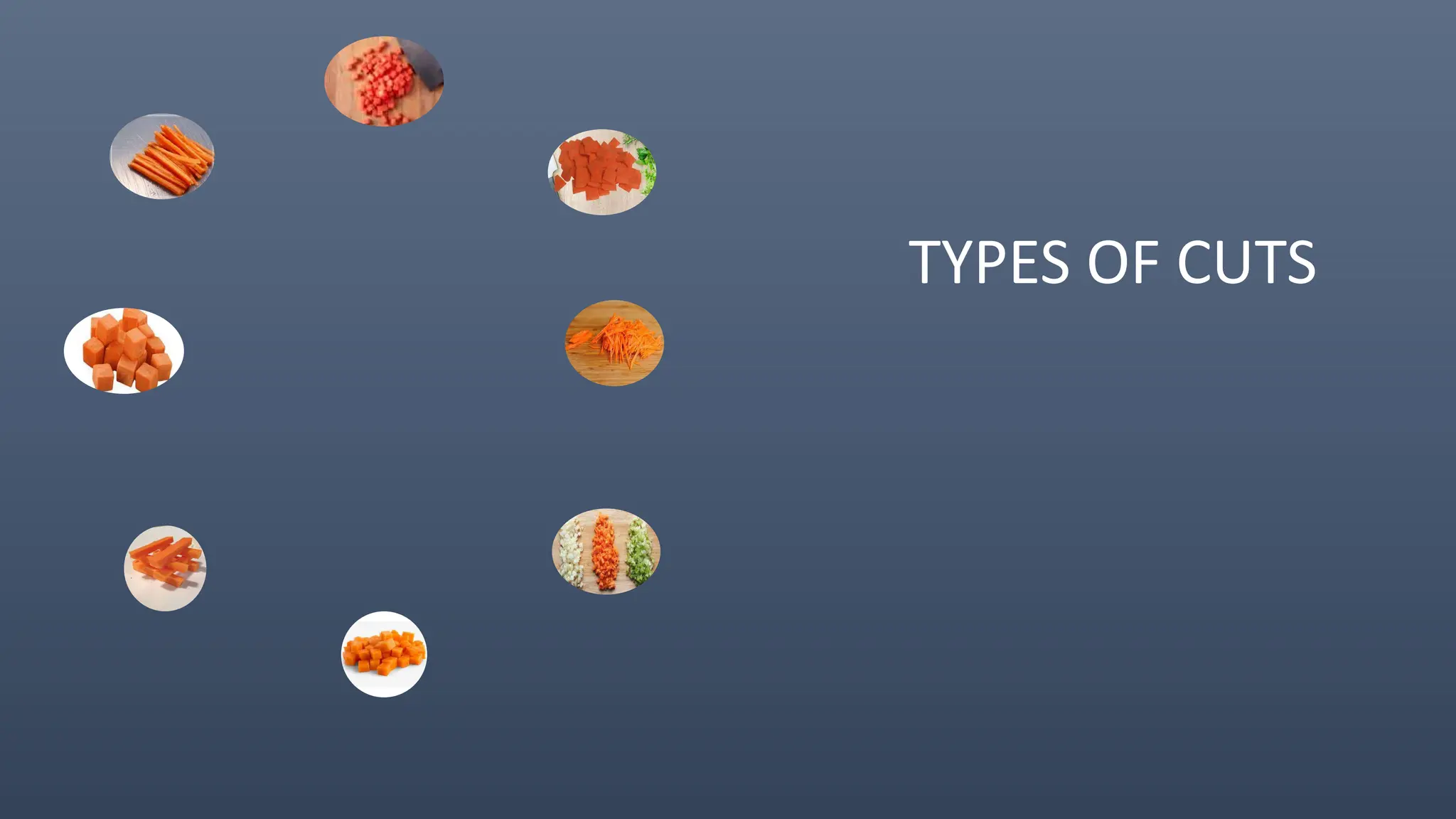
TYPES OF CUTS
TYPES OF CUTS
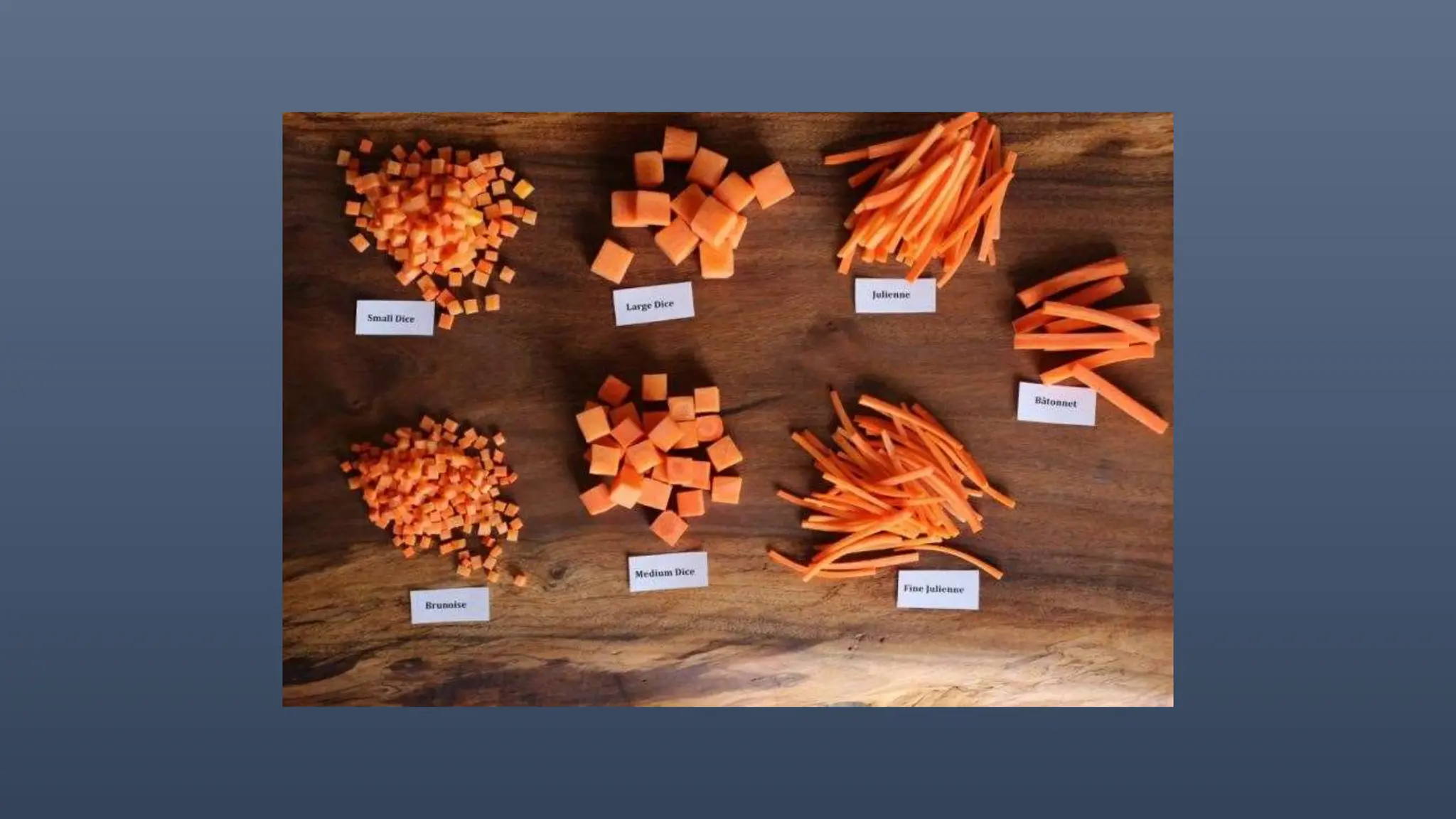
SMALL DICE – are similar to
the brunoises but it is
slightly larger. Start by
following the steps to
Julienne your item
TYPES OF CUTS
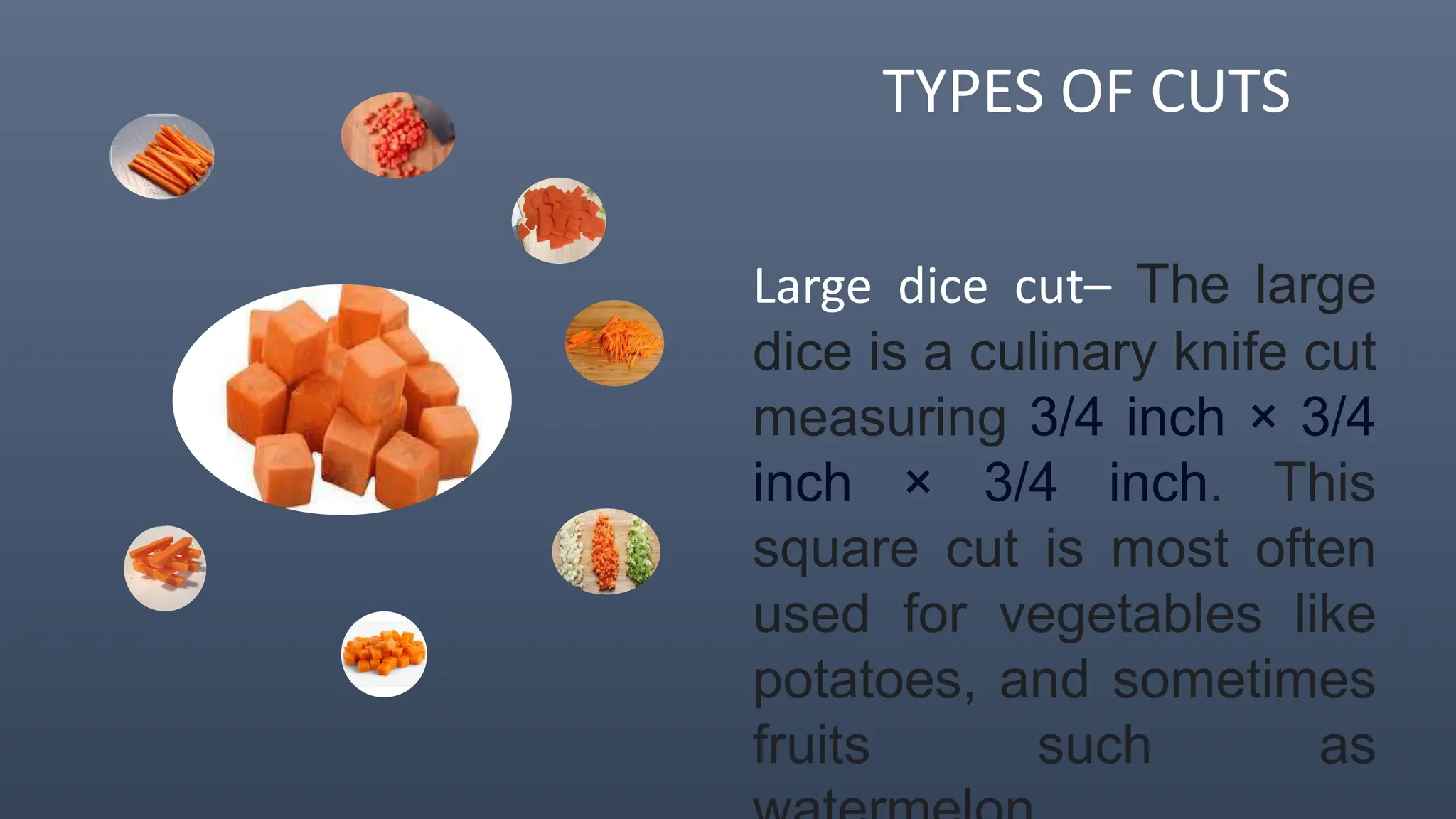
Large dice cut– The large
dice is a culinary knife cut
measuring 3/4 inch × 3/4
inch × 3/4 inch. This
square cut is most often
used for vegetables like
potatoes, and sometimes
fruits such as
TYPES OF CUTS
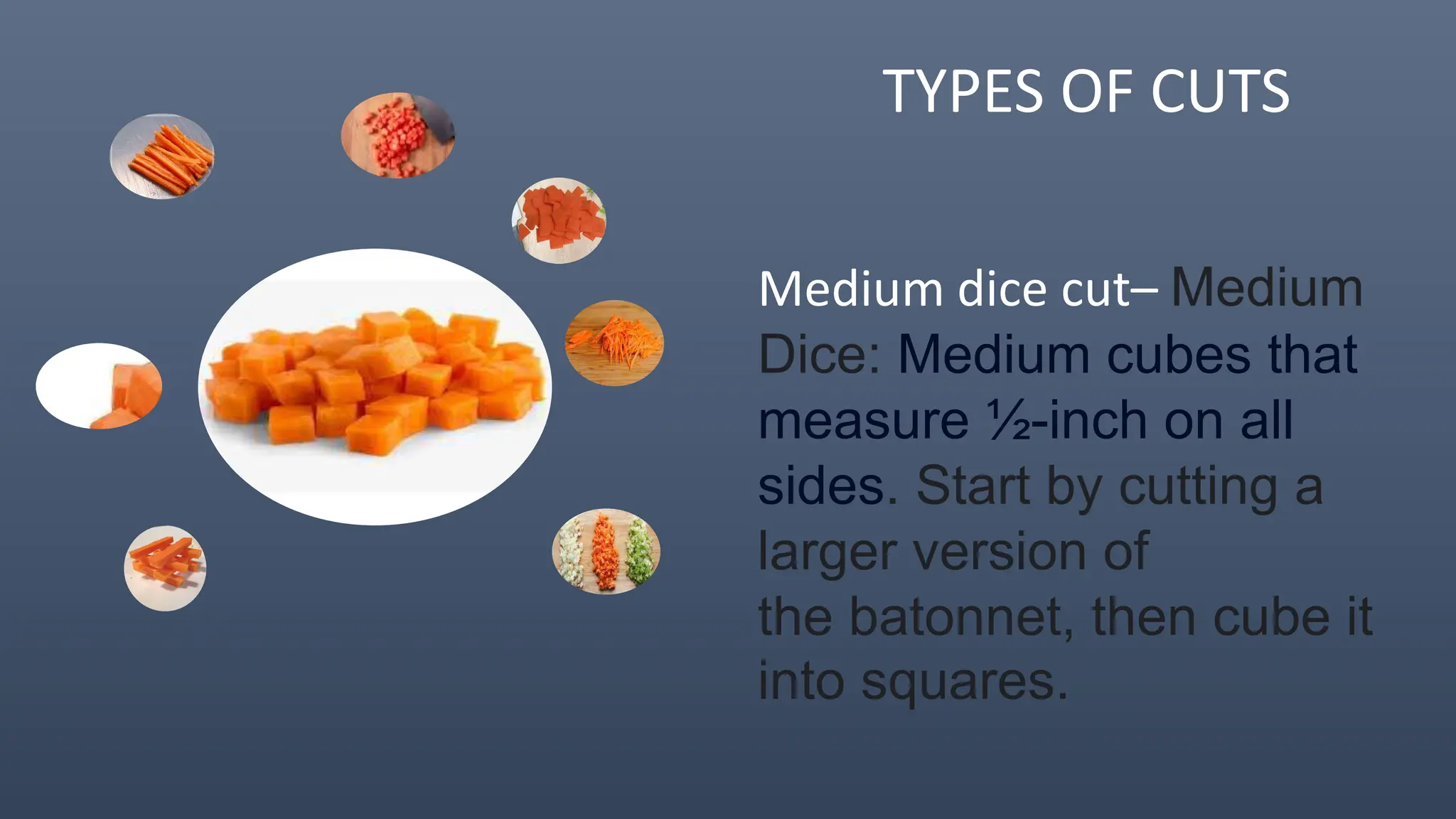
Medium dice cut– Medium
Dice: Medium cubes that
measure ½-inch on all
sides. Start by cutting a
larger version of
the batonnet, then cube it
into squares.
TYPES OF CUTS
Julienne cut– even slices
of a vegetable or fruit
made by squaring off the
edges of said veggie or
fruit and cutting it into
planks and then strips.
TYPES OF CUTS
Payenne– Cutting a
vegetable paysanne-style
is to slice it thinly, but
according to its natural
shape, without squaring it
off
TYPES OF CUTS
Batonnet - the French
term "batonnet" translates
into "small stick," with cuts
resulting in strips that
measure roughly ¼-inch by
¼- inch by 2–2 ½-inches.
This cut is commonly used
for making French fries, stir-
fry, carrot sticks, and roasted
TYPES OF CUTS
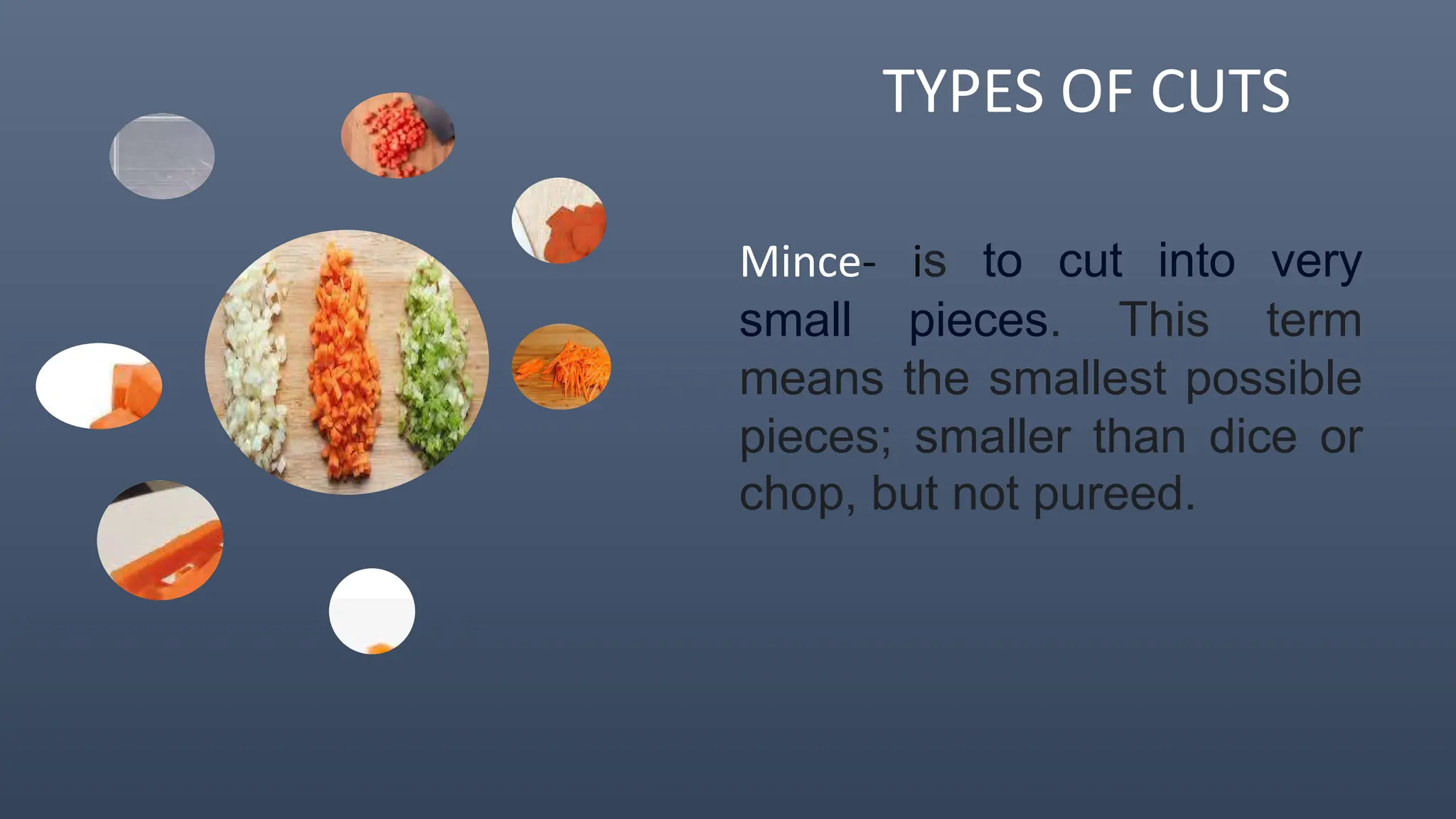
Mince- is to cut into very
small pieces. This term
means the smallest possible
pieces; smaller than dice or
chop, but not pureed.
TYPES OF CUTS
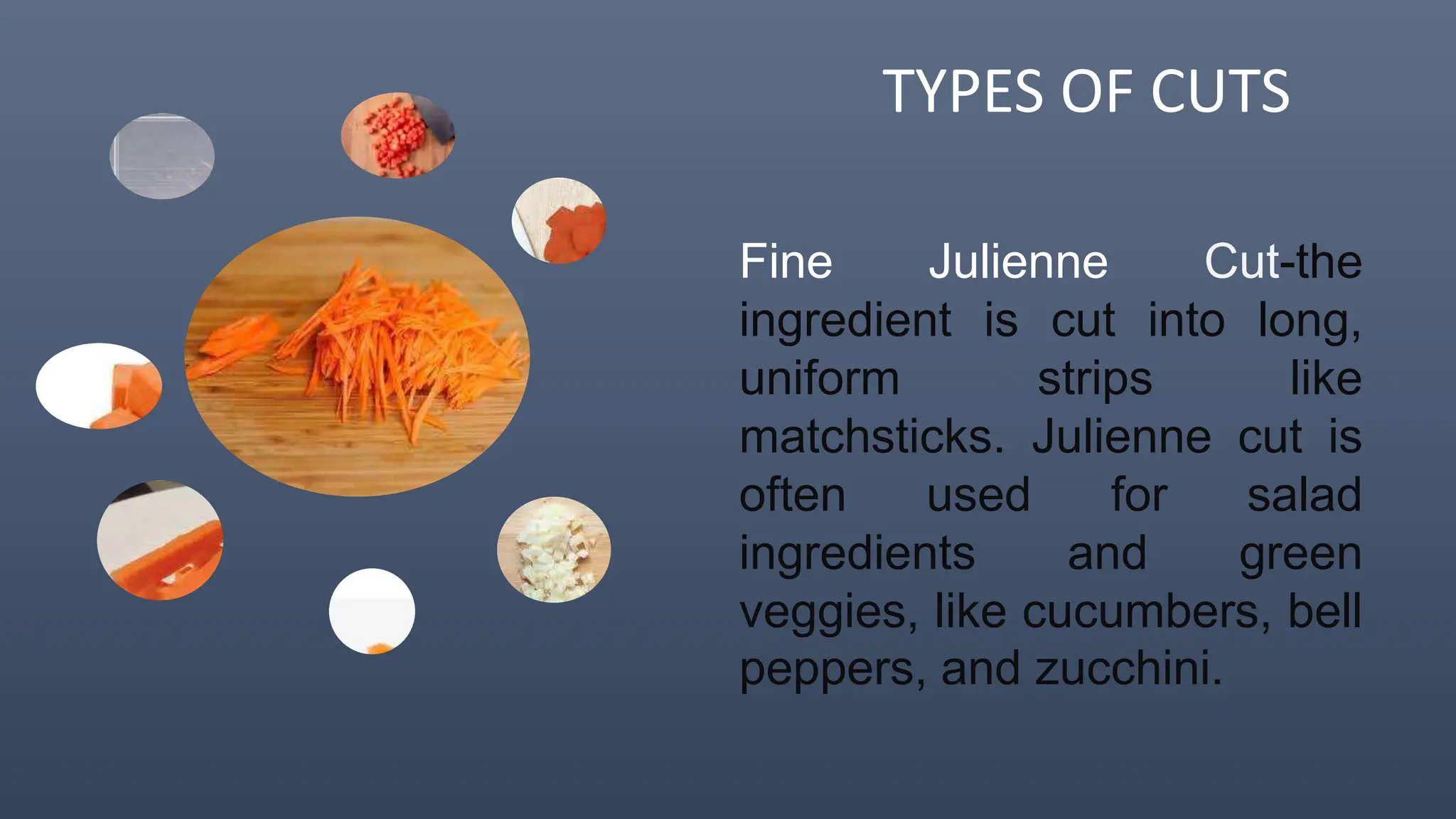
Fine Julienne Cut-the
ingredient is cut into long,
uniform strips like
matchsticks. Julienne cut is
often used for salad
ingredients and green
veggies, like cucumbers, bell
peppers, and zucchini.

3. Types of Cuts and defination.....pptx

  • 1.
  • 2.
    WHY PROPER CUTSARE IMPORTANT?  Uniformity  To ensure that you have even predictable cooking times. Nobody wants carrots that are mushy and hard at the same time.
  • 3.
    Why is itimportant to use the proper knife when cutting items? Different knives are designed for specific purposes, such as slicing, chopping, or dicing. Equipping your kitchen with the correct knives will minimize the risk of using the wrong tool and it will potentially prevent incidents.
  • 5.
  • 6.
    TYPES OF CUTS SMALLDICE – are similar to the brunoises but it is slightly larger. Start by following the steps to Julienne your item
  • 7.
    TYPES OF CUTS Largedice cut– The large dice is a culinary knife cut measuring 3/4 inch × 3/4 inch × 3/4 inch. This square cut is most often used for vegetables like potatoes, and sometimes fruits such as
  • 8.
    TYPES OF CUTS Mediumdice cut– Medium Dice: Medium cubes that measure ½-inch on all sides. Start by cutting a larger version of the batonnet, then cube it into squares.
  • 9.
    TYPES OF CUTS Juliennecut– even slices of a vegetable or fruit made by squaring off the edges of said veggie or fruit and cutting it into planks and then strips.
  • 10.
    TYPES OF CUTS Payenne–Cutting a vegetable paysanne-style is to slice it thinly, but according to its natural shape, without squaring it off
  • 11.
    TYPES OF CUTS Batonnet- the French term "batonnet" translates into "small stick," with cuts resulting in strips that measure roughly ¼-inch by ¼- inch by 2–2 ½-inches. This cut is commonly used for making French fries, stir- fry, carrot sticks, and roasted
  • 12.
    TYPES OF CUTS Mince-is to cut into very small pieces. This term means the smallest possible pieces; smaller than dice or chop, but not pureed.
  • 13.
    TYPES OF CUTS FineJulienne Cut-the ingredient is cut into long, uniform strips like matchsticks. Julienne cut is often used for salad ingredients and green veggies, like cucumbers, bell peppers, and zucchini.