Creativity is a Leader’s Secret Weapon   Tudor Rickards & Susan Moger
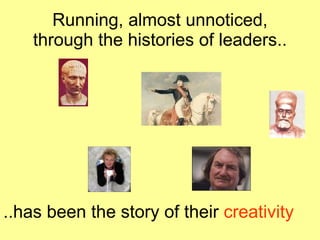
Running, almost unnoticed, through the histories of leaders.. ..has been the story of their  creativity
… is a link between Leadership and Creativity Studies at Manchester Business School  have established a clear link between  effective leaders and their skills at encouraging  creative change..
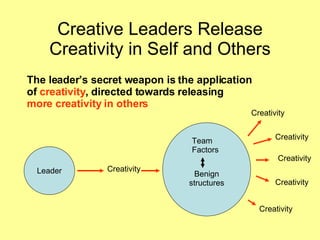
Creative Leaders Release Creativity in Self and Others The leader’s secret weapon is the application  of  creativity , directed towards releasing  more creativity in others Leader Creativity Creativity Benign structures Creativity Creativity Creativity Creativity Team Factors
Working and Theoretical Definitions Working definitions  are provided  here for  creativity ,  leadership,   creative leadership  and   benign structures  These definitions are adequate for  explaining a new idea, or for ‘ starting a conversation ’   Conceptually richer definitions   are required for  building and  exploring theory
Working definitions Creativity:  The process which generates new and valuable ideas Leadership:  The process directed towards influencing the actions and achievements of  a wider group Creative leadership:  The process which  generates new and valued ideas  directed towards influencing those actions and achievements Benign Structures:  Procedures through  which groups achieve valued  improvements in performance
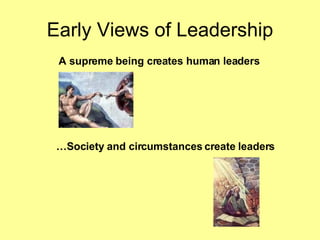
Early Views of Leadership … Society and circumstances create leaders A supreme being creates human leaders
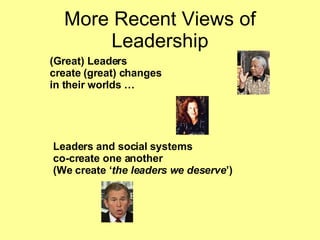
More Recent Views of Leadership (Great) Leaders  create (great) changes  in their worlds … Leaders and social systems  co-create one another (We create ‘ the leaders we deserve ’)
Creative Leadership: The MBS studies (1980s-2008) MBA project team studies (1980s-2000) Longitudinal studies (1999 - ) Leadership data base (2006 -) Manchester Business  School (West)
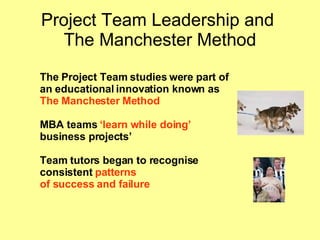
Project Team Leadership and  The Manchester Method The Project Team studies were part of  an educational innovation known as  The Manchester Method MBA teams  ‘learn while doing’ business projects’ Team tutors began to recognise  consistent  patterns  of success and failure
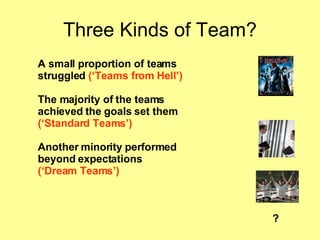
Three Kinds of Team? A small proportion of teams struggled  (‘Teams from Hell’) The majority of the teams achieved the goals set them (‘Standard Teams’) Another minority performed beyond expectations (‘Dream Teams’) ?
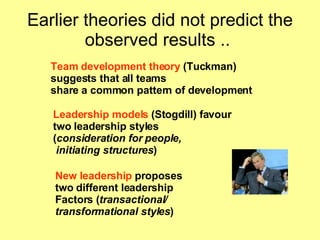
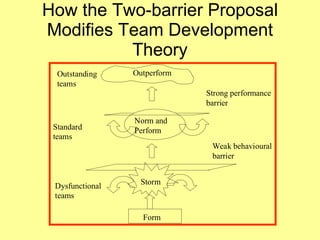
Earlier theories did not predict the observed results ..  Team development theory  (Tuckman)  suggests that all teams  share a common pattern of development   Leadership models  (Stogdill) favour  two leadership styles ( consideration for people, initiating structures ) New leadership  proposes  two different leadership  Factors ( transactional/  transformational styles )
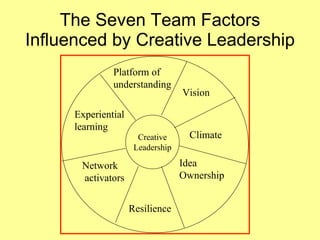
A Leadership Theory Emerged It proposed  two barriers to team success Leaders  created new and benign structures   for action and change The theory identified seven  team factors associated with team success
How the Two-barrier Proposal Modifies Team Development Theory
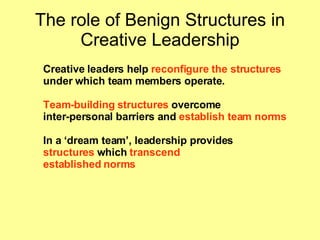
The role of Benign Structures in Creative Leadership Creative leaders help  reconfigure the structures   under which team members operate.  Team-building   structures  overcome  inter-personal barriers and  establish team norms In a ‘dream team’, leadership provides  structures  which  transcend established norms
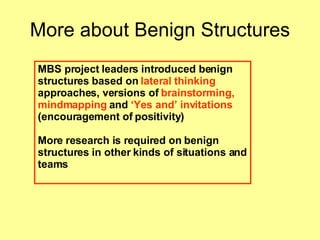
More about Benign Structures MBS project leaders introduced benign structures based on  lateral thinking  approaches, versions of  brainstorming, mindmapping  and  ‘Yes and’ invitations  (encouragement of   positivity)   More research is required on benign structures in other kinds of situations and teams
The Seven Team Factors Influenced by Creative Leadership
On-going research into Creative Leadership at MBS Longitudinal Studies (1999-2008) Extended studies of exceptional leaders The Leadership Data Base (2006-8) The 300 stories are of leadership events  such as corporate transformations  and crises from the worlds of  business, sport and politics.
Conclusions Leadership and creativity  are more closely  linked than has previously been believed Leaders set up  benign structures   through which teams and groups achieve  unexpectedly creative results The findings, mostly from project teams, may have more universal relevance

Creativity Is A Leader's Secret Weapon (Colour)

  • 1.
    Creativity is aLeader’s Secret Weapon Tudor Rickards & Susan Moger
  • 2.
    Running, almost unnoticed,through the histories of leaders.. ..has been the story of their creativity
  • 3.
    … is alink between Leadership and Creativity Studies at Manchester Business School have established a clear link between effective leaders and their skills at encouraging creative change..
  • 4.
    Creative Leaders ReleaseCreativity in Self and Others The leader’s secret weapon is the application of creativity , directed towards releasing more creativity in others Leader Creativity Creativity Benign structures Creativity Creativity Creativity Creativity Team Factors
  • 5.
    Working and TheoreticalDefinitions Working definitions are provided here for creativity , leadership, creative leadership and benign structures These definitions are adequate for explaining a new idea, or for ‘ starting a conversation ’ Conceptually richer definitions are required for building and exploring theory
  • 6.
    Working definitions Creativity: The process which generates new and valuable ideas Leadership: The process directed towards influencing the actions and achievements of a wider group Creative leadership: The process which generates new and valued ideas directed towards influencing those actions and achievements Benign Structures: Procedures through which groups achieve valued improvements in performance
  • 7.
    Early Views ofLeadership … Society and circumstances create leaders A supreme being creates human leaders
  • 8.
    More Recent Viewsof Leadership (Great) Leaders create (great) changes in their worlds … Leaders and social systems co-create one another (We create ‘ the leaders we deserve ’)
  • 9.
    Creative Leadership: TheMBS studies (1980s-2008) MBA project team studies (1980s-2000) Longitudinal studies (1999 - ) Leadership data base (2006 -) Manchester Business School (West)
  • 10.
    Project Team Leadershipand The Manchester Method The Project Team studies were part of an educational innovation known as The Manchester Method MBA teams ‘learn while doing’ business projects’ Team tutors began to recognise consistent patterns of success and failure
  • 11.
    Three Kinds ofTeam? A small proportion of teams struggled (‘Teams from Hell’) The majority of the teams achieved the goals set them (‘Standard Teams’) Another minority performed beyond expectations (‘Dream Teams’) ?
  • 12.
    Earlier theories didnot predict the observed results .. Team development theory (Tuckman) suggests that all teams share a common pattern of development Leadership models (Stogdill) favour two leadership styles ( consideration for people, initiating structures ) New leadership proposes two different leadership Factors ( transactional/ transformational styles )
  • 13.
    A Leadership TheoryEmerged It proposed two barriers to team success Leaders created new and benign structures for action and change The theory identified seven team factors associated with team success
  • 14.
    How the Two-barrierProposal Modifies Team Development Theory
  • 15.
    The role ofBenign Structures in Creative Leadership Creative leaders help reconfigure the structures under which team members operate. Team-building structures overcome inter-personal barriers and establish team norms In a ‘dream team’, leadership provides structures which transcend established norms
  • 16.
    More about BenignStructures MBS project leaders introduced benign structures based on lateral thinking approaches, versions of brainstorming, mindmapping and ‘Yes and’ invitations (encouragement of positivity) More research is required on benign structures in other kinds of situations and teams
  • 17.
    The Seven TeamFactors Influenced by Creative Leadership
  • 18.
    On-going research intoCreative Leadership at MBS Longitudinal Studies (1999-2008) Extended studies of exceptional leaders The Leadership Data Base (2006-8) The 300 stories are of leadership events such as corporate transformations and crises from the worlds of business, sport and politics.
  • 19.
    Conclusions Leadership andcreativity are more closely linked than has previously been believed Leaders set up benign structures through which teams and groups achieve unexpectedly creative results The findings, mostly from project teams, may have more universal relevance