Developing Global Leaders:

“The most important leader you
  will ever study is yourself”


     Professor Tudor Rickards
               2012
Twenty first century leadership
                  challenges
•   Today’s organisations face new challenges requiring different leadership responses
•   Developing new leadership ‘maps’ will be vital
•   A promising approach involves ‘learning while doing’ and exploring the dilemmas
    confronting leaders

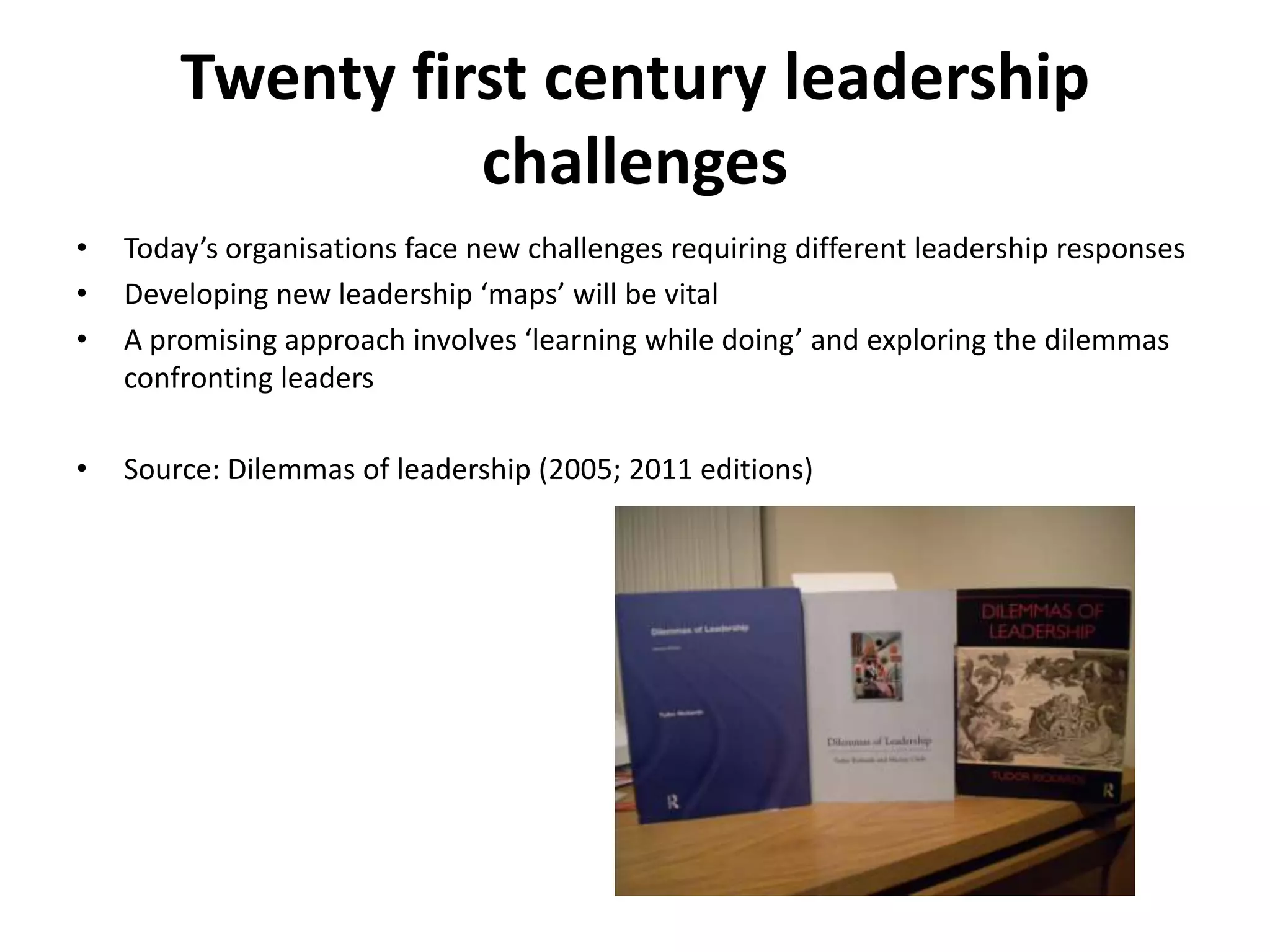
•   Source: Dilemmas of leadership (2005; 2011 editions)
Leadership is dealing with the
               unexpected
“A luxury cruise liner hits the rocks with 32 fatalities. Within weeks,
another ship from the same company suffers another serious
incident, and is towed to safety. The company faces serious
dilemmas of retaining credibility in the marketplace and of finding a
way of dealing with its corporate reputation.”


Source: Costa Rebrandia: A study in strategic leadership
and governance, Leaders we deserve, Feb 2012
Today’s business leaders face unprecedented challenges of
risk management many arising from technological, economic and
social upheavals…
Global risk themes

Leadership talent development
Credit and growth
Globalization
Resource squeeze
Societal values
CSR (Corporate Social Responsibility)


Source: Modified from Ernst & Young’s annual
risk assessments (2010-2011)
Beliefs about the nature of effective leadership are changing

One successful global organization announced recently
That it was considering how it could develop its employees
Into 50,000 leaders …
IBM’s globalisation strategy

 Samuel Palmisano reorganized IBM
 into an “integrated global enterprise”
 based on leading by values and collaboration.
 Its former chief learning officer recently
 estimated that the company will
 need 50,000 leaders in the future.
The importance of leadership today is confirmed in claims made
by organizations in various professions such as
health, government, leisure , engineering and finance
Medical leadership

“Medical leadership requires acknowledgement
that all doctors require management and
leadership competences to be effective
practitioners.”

NHS Institute for innovation and improvement.
(2008)
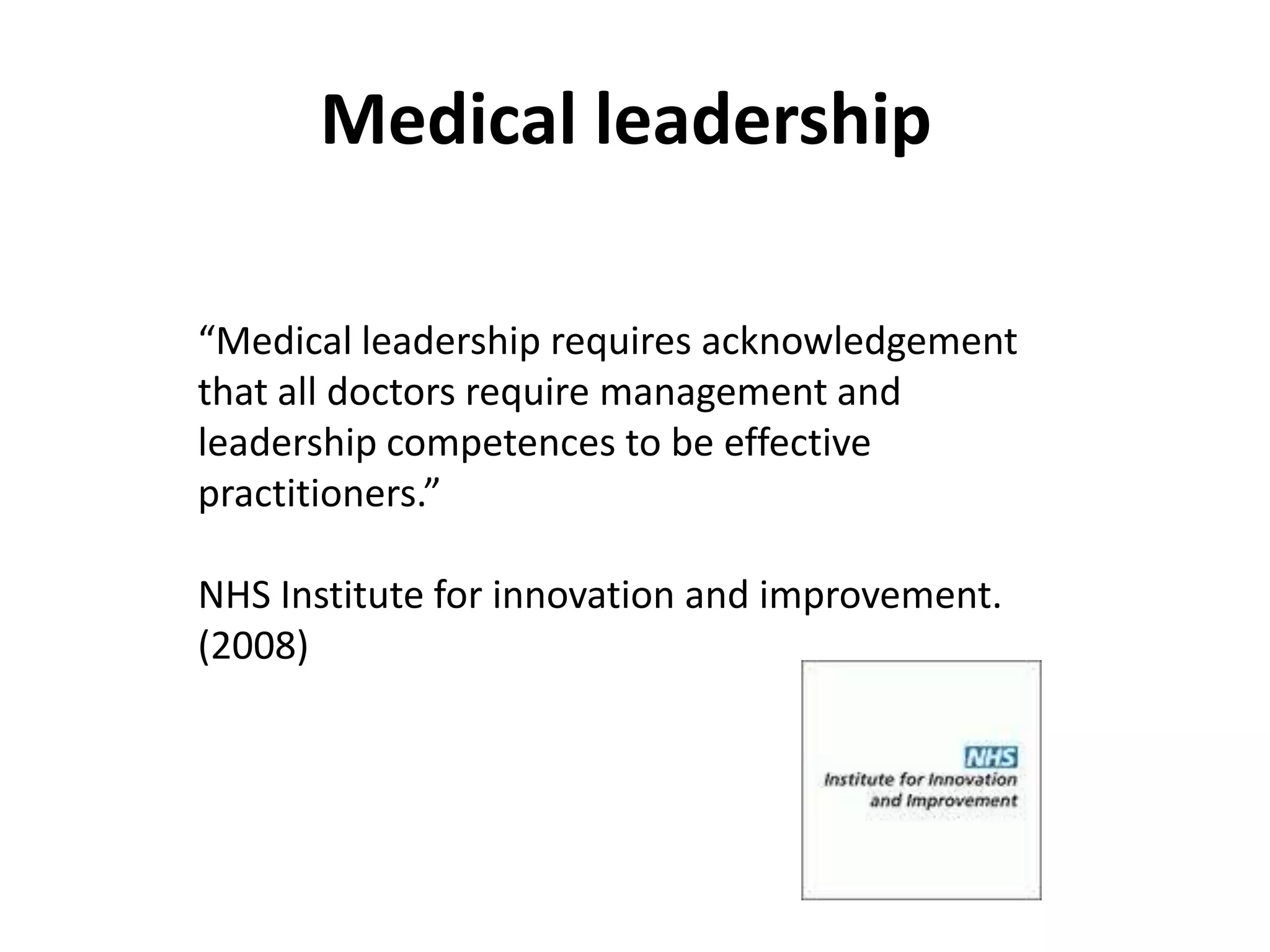
Financial leadership
This modern world has brought new and difficult leadership challenges
to every firm now involved in credit markets …I want to emphasize
enterprise leadership: responsibility for both results and viability
of the financial institution, and not just transactional leadership.

The test of enterprise leadership is whether the firm is stronger a decade
after a leader departs than while he or she was in charge.

Source: Robert Joss, Professor and Dean,
Stanford Graduate School of Business (Dec 2007)
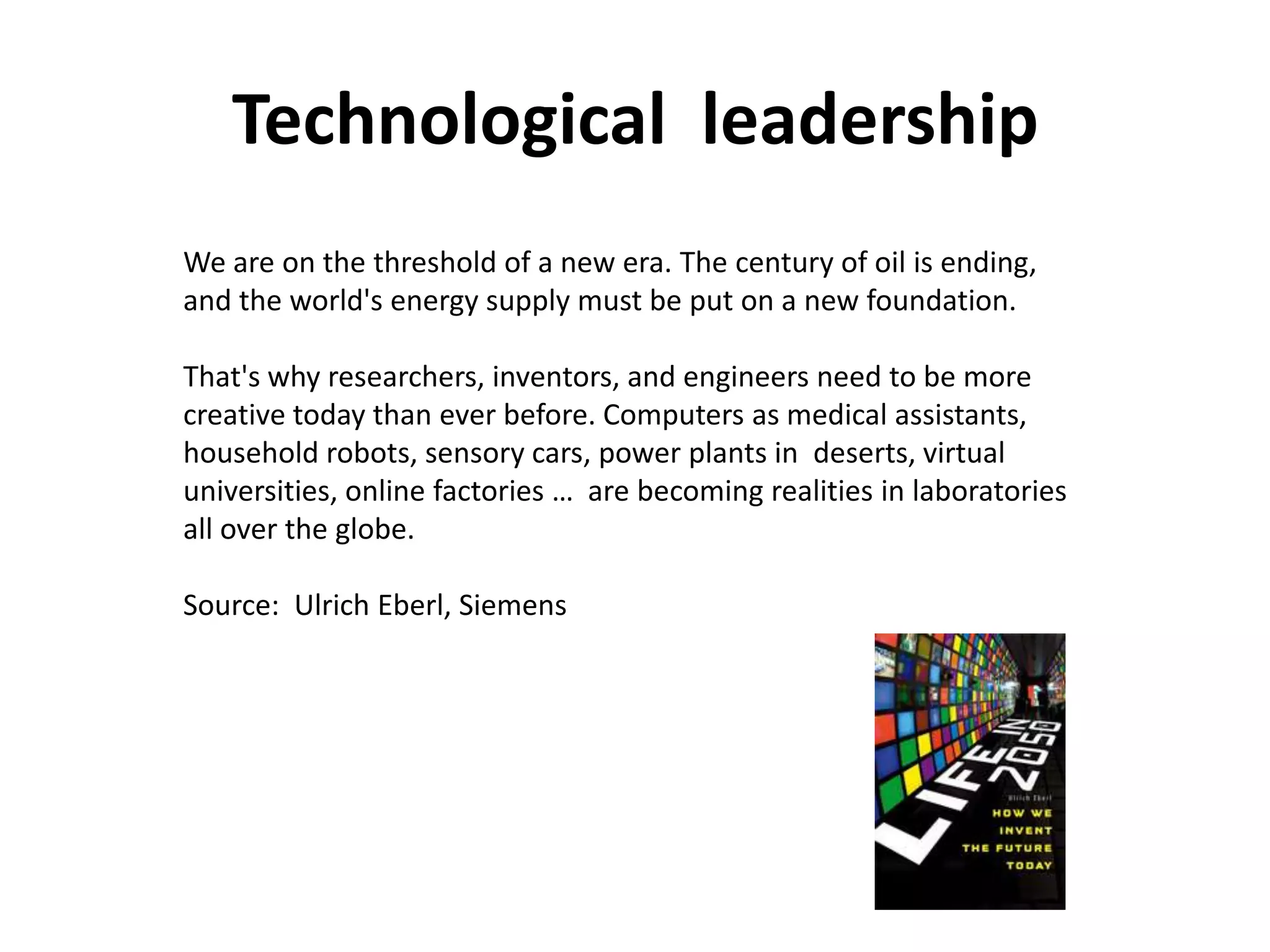
Technological leadership
We are on the threshold of a new era. The century of oil is ending,
and the world's energy supply must be put on a new foundation.

That's why researchers, inventors, and engineers need to be more
creative today than ever before. Computers as medical assistants,
household robots, sensory cars, power plants in deserts, virtual
universities, online factories … are becoming realities in laboratories
all over the globe.

Source: Ulrich Eberl, Siemens
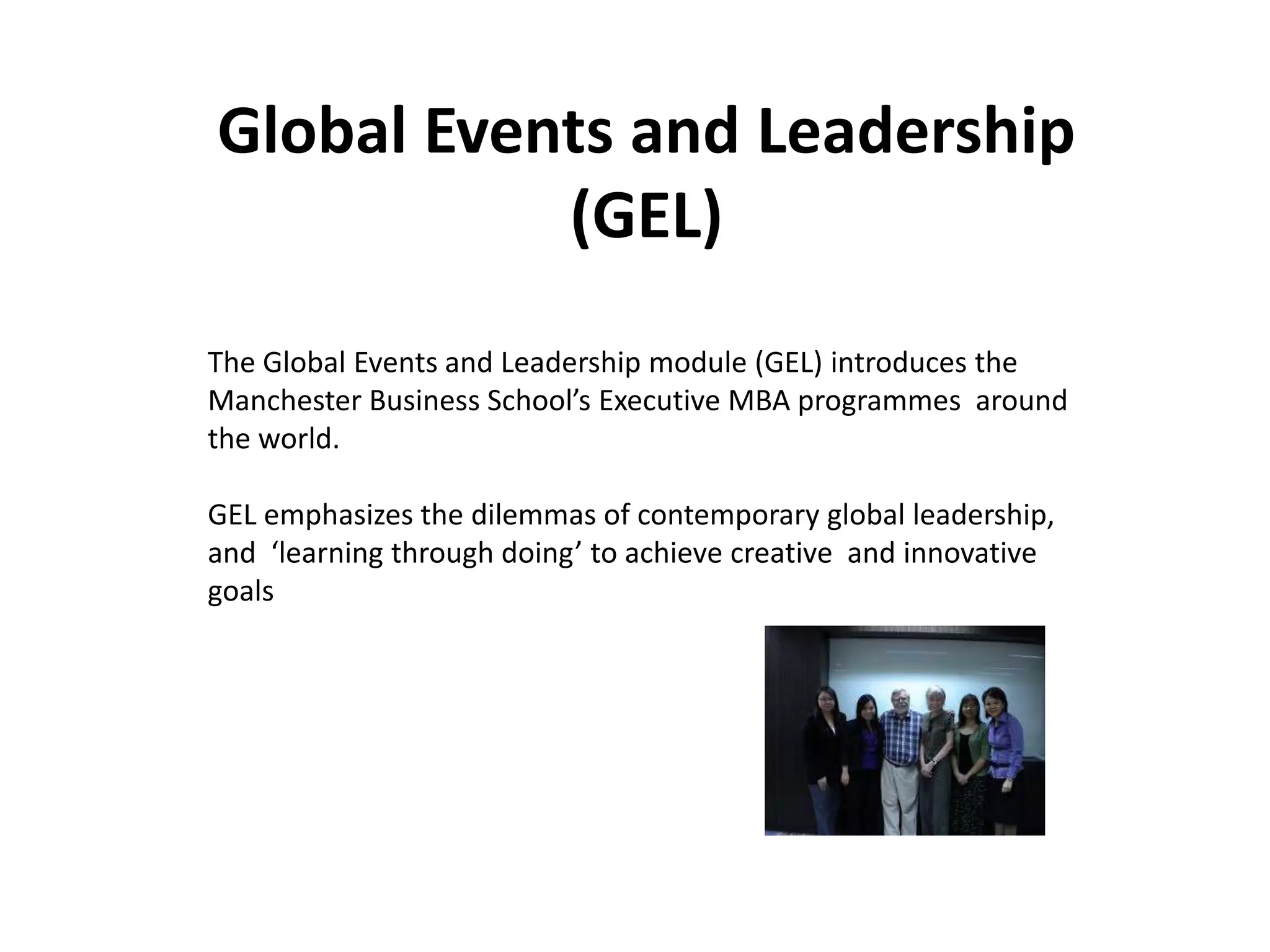
Global Events and Leadership
           (GEL)
The Global Events and Leadership module (GEL) introduces the
Manchester Business School’s Executive MBA programmes around
the world.

GEL emphasizes the dilemmas of contemporary global leadership,
and ‘learning through doing’ to achieve creative and innovative
goals
Leadership development programmes at MBS
are built around an educational innovation known as
The Manchester Method, a form of ‘learning while doing’

Project teams develop awareness of personal leadership
‘maps’ while tackling real business projects.
Creative leadership

Evidence from workshops with over 6000 participants confirms that
global leadership skills can be developed though programmes which
involve participants actively in the dilemmas facing today’s
international organizations.

Source: Rickards & Moger, Handbook for creative team leaders
GEL’s development goals

To develop skills at business analysis of complex issues with
global implications

To identify dilemmas within leadership challenges

To use ‘map reading, map testing, and map making’
In order to improve personal leadership beliefs and actions

To work in teams and understand leadership and team
dynamics under complex realistic conditions


Source: Global Events and Leadership study guide, MBS
Impact studies
Impact studies have been reported using information collected
during workshops and in follow-up surveys.

Participants apply learning to their subsequent workplace challenges.

Two specific aspects have been identified over time:
the benefits of searching for dilemmas confronting business leaders
and application of an approach for examining and refining conceptual maps

Sources: Rickards (2011); Rickards & Moger (2012)
Creative leadership

An important finding from the work at Manchester Business
School has been recognition that effective leadership and
creativity overlap strongly,

This leads to the conclusion that: ‘creativity is a leader’s secret
weapon’

Creative leadership is one way of differentiating leading from
managing [Abraham Zaleznick]
More about maps and dilemmas
 Leadership ‘maps’ are changing presenting different dilemmas

 Differing leadership styles co-exist:

 The charismatic leader
 The authentic leader
 The creative leader
 The ‘level five’ leader
 The rational leader

 Distributed leadership involves multiple leaders
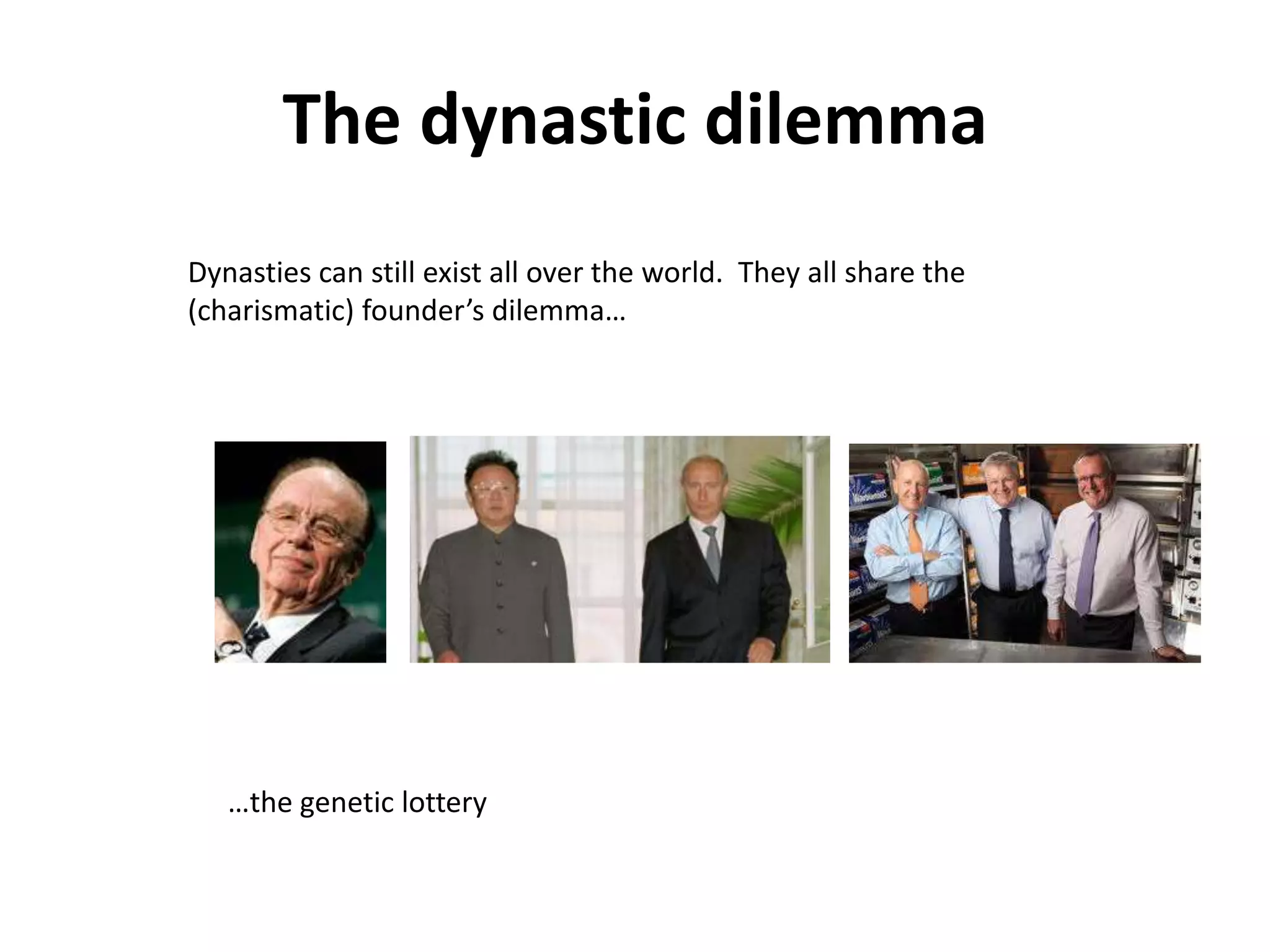
The dynastic dilemma
Dynasties can still exist all over the world. They all share the
(charismatic) founder’s dilemma…


   …the genetic lottery
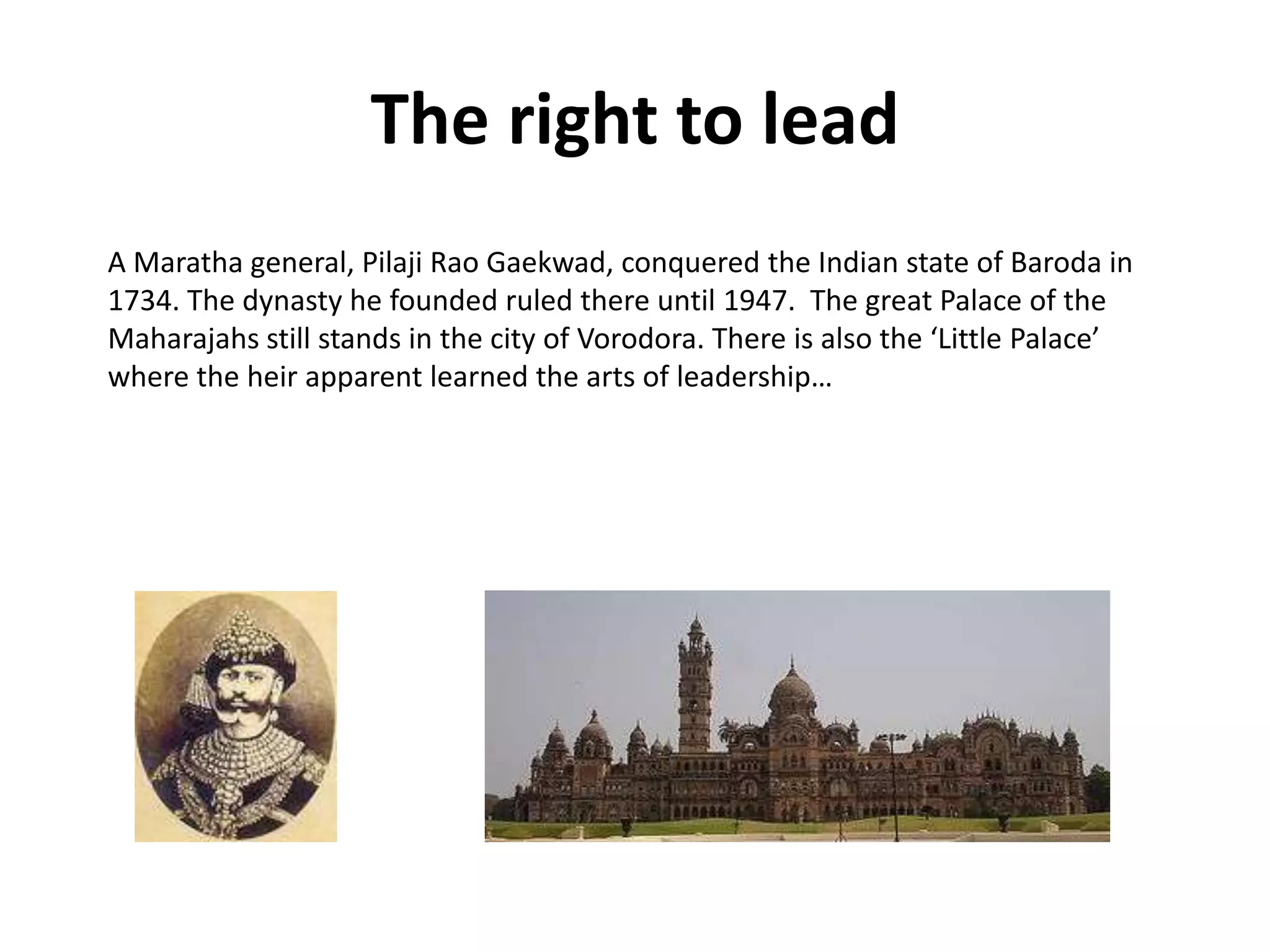
The right to lead
A Maratha general, Pilaji Rao Gaekwad, conquered the Indian state of Baroda in
1734. The dynasty he founded ruled there until 1947. The great Palace of the
Maharajahs still stands in the city of Vorodora. There is also the ‘Little Palace’
where the heir apparent learned the arts of leadership…
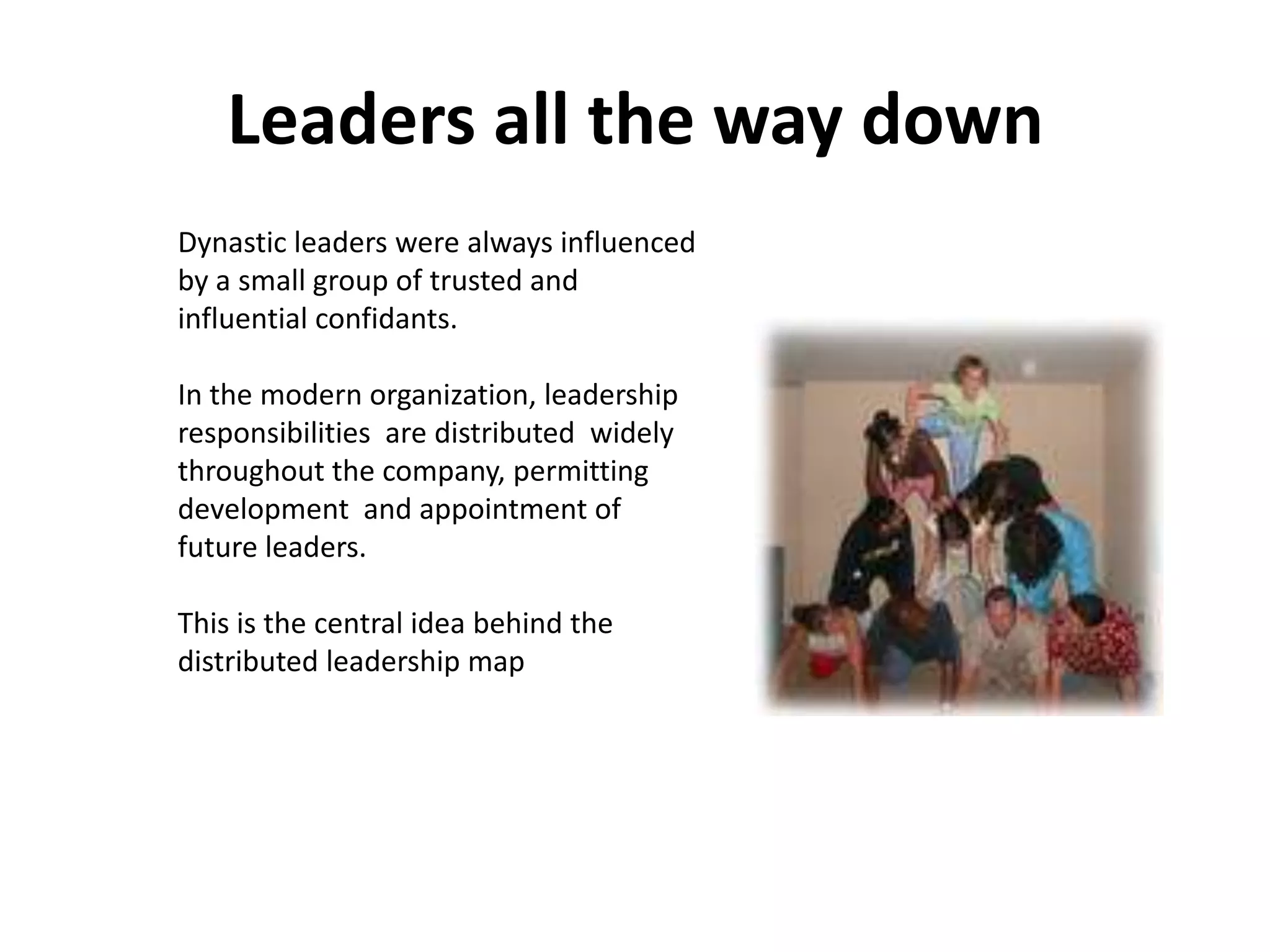
Leaders all the way down
Dynastic leaders were always influenced
by a small group of trusted and
influential confidants.

In the modern organization, leadership
responsibilities are distributed widely
throughout the company, permitting
development and appointment of
future leaders.

This is the central idea behind the
distributed leadership map
Other 21st Century dilemmas

  Dilemmas of power and discrimination

  Ethical dilemmas

  Dilemmas of trust and vulnerability

  Dilemmas of strategy and implementation


  Source: Rickards, (2011) Dilemmas of leadership
Summary

Effective organizations are accepting that leaders can be identified
and developed

Older 20th century ‘maps’ overlooked ethical and creative aspects of
leadership

An effective way to develop leaders is to encourage ‘learning through
doing’

Leadership is increasingly seen as distributed widely across social and
organizational networks

Complex challenges conceal dilemmas as well as alternatives to obvious
strategies

“The most important leader you will ever study is yourself”

Developing global leaders

  • 1.
    Developing Global Leaders: “Themost important leader you will ever study is yourself” Professor Tudor Rickards 2012
  • 2.
    Twenty first centuryleadership challenges • Today’s organisations face new challenges requiring different leadership responses • Developing new leadership ‘maps’ will be vital • A promising approach involves ‘learning while doing’ and exploring the dilemmas confronting leaders • Source: Dilemmas of leadership (2005; 2011 editions)
  • 3.
    Leadership is dealingwith the unexpected “A luxury cruise liner hits the rocks with 32 fatalities. Within weeks, another ship from the same company suffers another serious incident, and is towed to safety. The company faces serious dilemmas of retaining credibility in the marketplace and of finding a way of dealing with its corporate reputation.” Source: Costa Rebrandia: A study in strategic leadership and governance, Leaders we deserve, Feb 2012
  • 4.
    Today’s business leadersface unprecedented challenges of risk management many arising from technological, economic and social upheavals…
  • 5.
    Global risk themes Leadershiptalent development Credit and growth Globalization Resource squeeze Societal values CSR (Corporate Social Responsibility) Source: Modified from Ernst & Young’s annual risk assessments (2010-2011)
  • 6.
    Beliefs about thenature of effective leadership are changing One successful global organization announced recently That it was considering how it could develop its employees Into 50,000 leaders …
  • 7.
    IBM’s globalisation strategy Samuel Palmisano reorganized IBM into an “integrated global enterprise” based on leading by values and collaboration. Its former chief learning officer recently estimated that the company will need 50,000 leaders in the future.
  • 8.
    The importance ofleadership today is confirmed in claims made by organizations in various professions such as health, government, leisure , engineering and finance
  • 9.
    Medical leadership “Medical leadershiprequires acknowledgement that all doctors require management and leadership competences to be effective practitioners.” NHS Institute for innovation and improvement. (2008)
  • 10.
    Financial leadership This modernworld has brought new and difficult leadership challenges to every firm now involved in credit markets …I want to emphasize enterprise leadership: responsibility for both results and viability of the financial institution, and not just transactional leadership. The test of enterprise leadership is whether the firm is stronger a decade after a leader departs than while he or she was in charge. Source: Robert Joss, Professor and Dean, Stanford Graduate School of Business (Dec 2007)
  • 11.
    Technological leadership We areon the threshold of a new era. The century of oil is ending, and the world's energy supply must be put on a new foundation. That's why researchers, inventors, and engineers need to be more creative today than ever before. Computers as medical assistants, household robots, sensory cars, power plants in deserts, virtual universities, online factories … are becoming realities in laboratories all over the globe. Source: Ulrich Eberl, Siemens
  • 12.
    Global Events andLeadership (GEL) The Global Events and Leadership module (GEL) introduces the Manchester Business School’s Executive MBA programmes around the world. GEL emphasizes the dilemmas of contemporary global leadership, and ‘learning through doing’ to achieve creative and innovative goals
  • 13.
    Leadership development programmesat MBS are built around an educational innovation known as The Manchester Method, a form of ‘learning while doing’ Project teams develop awareness of personal leadership ‘maps’ while tackling real business projects.
  • 14.
    Creative leadership Evidence fromworkshops with over 6000 participants confirms that global leadership skills can be developed though programmes which involve participants actively in the dilemmas facing today’s international organizations. Source: Rickards & Moger, Handbook for creative team leaders
  • 15.
    GEL’s development goals Todevelop skills at business analysis of complex issues with global implications To identify dilemmas within leadership challenges To use ‘map reading, map testing, and map making’ In order to improve personal leadership beliefs and actions To work in teams and understand leadership and team dynamics under complex realistic conditions Source: Global Events and Leadership study guide, MBS
  • 16.
    Impact studies Impact studieshave been reported using information collected during workshops and in follow-up surveys. Participants apply learning to their subsequent workplace challenges. Two specific aspects have been identified over time: the benefits of searching for dilemmas confronting business leaders and application of an approach for examining and refining conceptual maps Sources: Rickards (2011); Rickards & Moger (2012)
  • 17.
    Creative leadership An importantfinding from the work at Manchester Business School has been recognition that effective leadership and creativity overlap strongly, This leads to the conclusion that: ‘creativity is a leader’s secret weapon’ Creative leadership is one way of differentiating leading from managing [Abraham Zaleznick]
  • 18.
    More about mapsand dilemmas Leadership ‘maps’ are changing presenting different dilemmas Differing leadership styles co-exist: The charismatic leader The authentic leader The creative leader The ‘level five’ leader The rational leader Distributed leadership involves multiple leaders
  • 19.
    The dynastic dilemma Dynastiescan still exist all over the world. They all share the (charismatic) founder’s dilemma… …the genetic lottery
  • 20.
    The right tolead A Maratha general, Pilaji Rao Gaekwad, conquered the Indian state of Baroda in 1734. The dynasty he founded ruled there until 1947. The great Palace of the Maharajahs still stands in the city of Vorodora. There is also the ‘Little Palace’ where the heir apparent learned the arts of leadership…
  • 21.
    Leaders all theway down Dynastic leaders were always influenced by a small group of trusted and influential confidants. In the modern organization, leadership responsibilities are distributed widely throughout the company, permitting development and appointment of future leaders. This is the central idea behind the distributed leadership map
  • 22.
    Other 21st Centurydilemmas Dilemmas of power and discrimination Ethical dilemmas Dilemmas of trust and vulnerability Dilemmas of strategy and implementation Source: Rickards, (2011) Dilemmas of leadership
  • 23.
    Summary Effective organizations areaccepting that leaders can be identified and developed Older 20th century ‘maps’ overlooked ethical and creative aspects of leadership An effective way to develop leaders is to encourage ‘learning through doing’ Leadership is increasingly seen as distributed widely across social and organizational networks Complex challenges conceal dilemmas as well as alternatives to obvious strategies “The most important leader you will ever study is yourself”