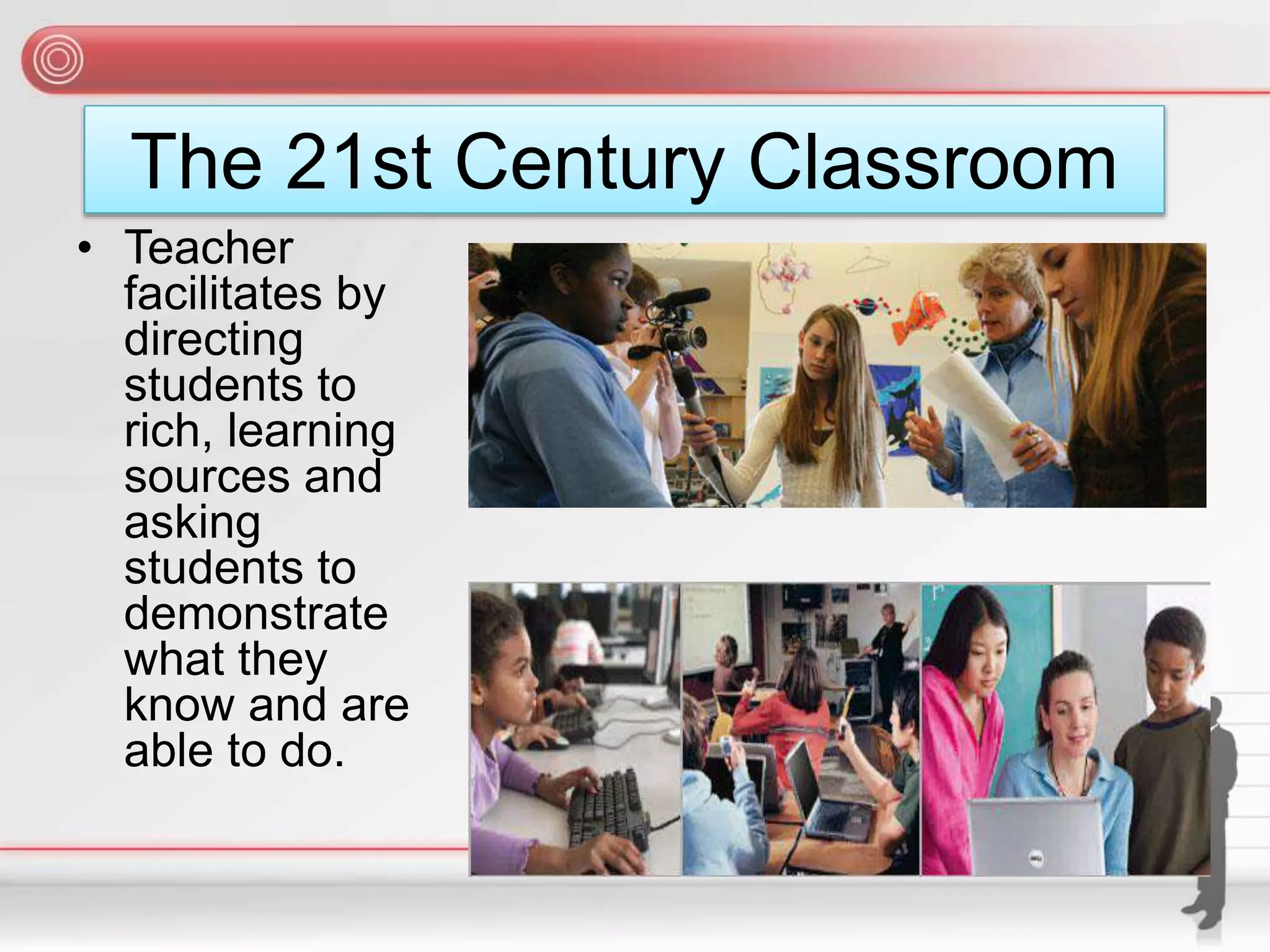
The document compares traditional classrooms to 21st century classrooms. In traditional classrooms, teachers deliver content through lectures and students are assessed based on their knowledge. However, in 21st century classrooms teachers facilitate learning by directing students to various sources and asking them to demonstrate their knowledge and skills.
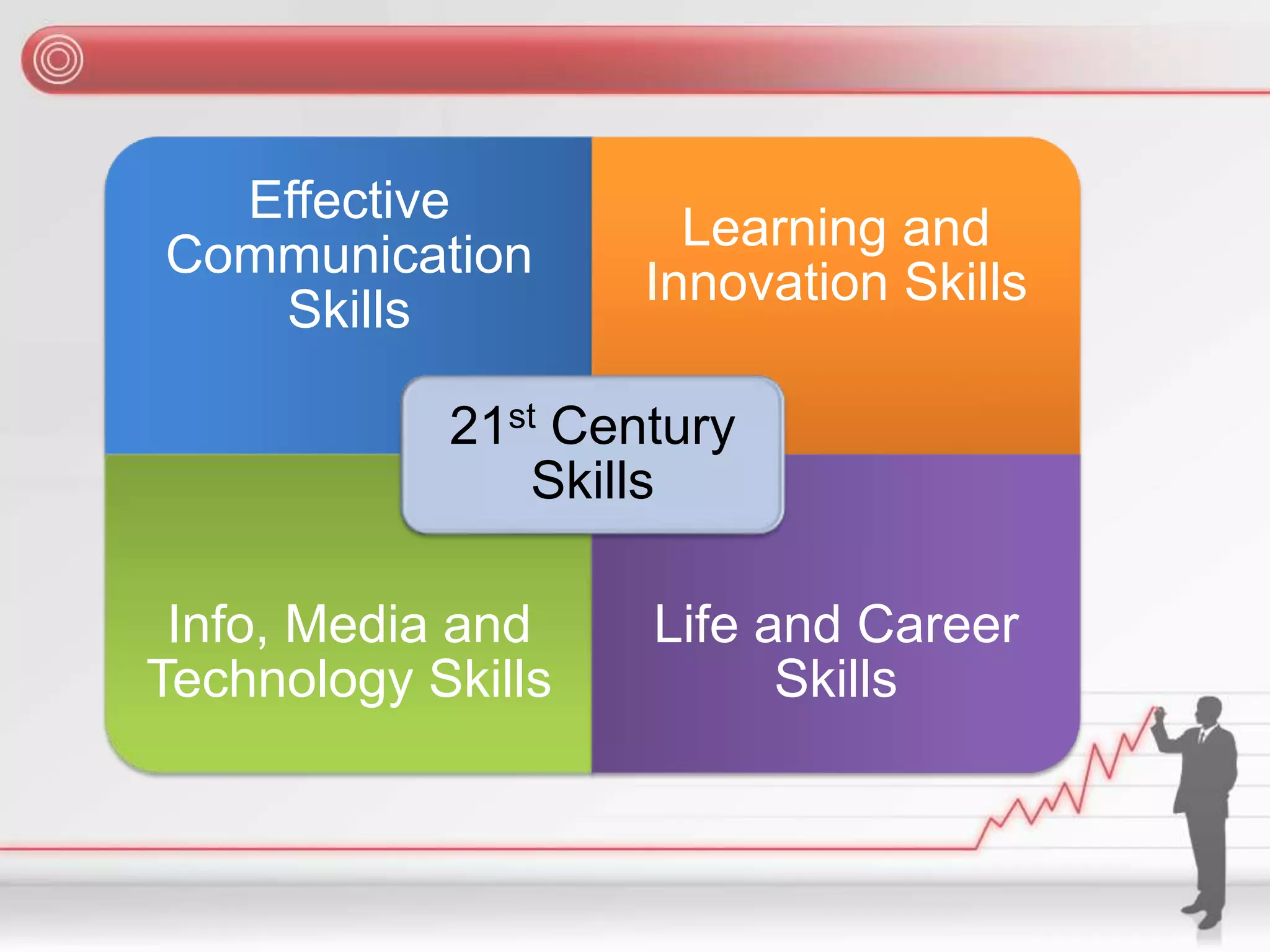
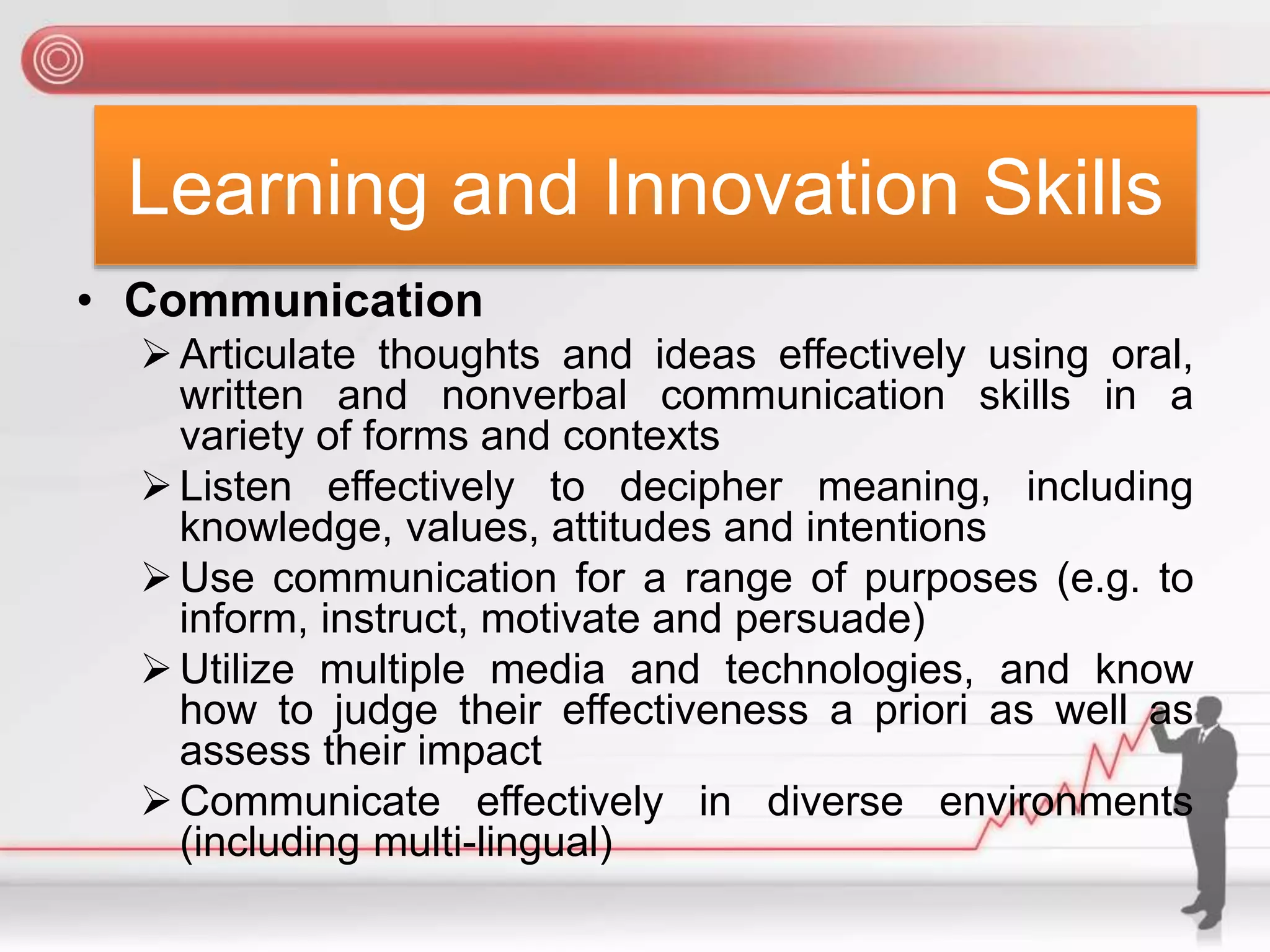
The document then outlines several 21st century skills grouped into 4 main categories - learning and innovation skills; life and career skills; information, media and technology skills; and effective communication skills. These skills include creativity, critical thinking, problem solving, flexibility, leadership, and technology literacy. The document emphasizes that to prepare students for tomorrow, teaching must evolve beyond traditional methods.