CRAYFISH  DISSECTION
 
 
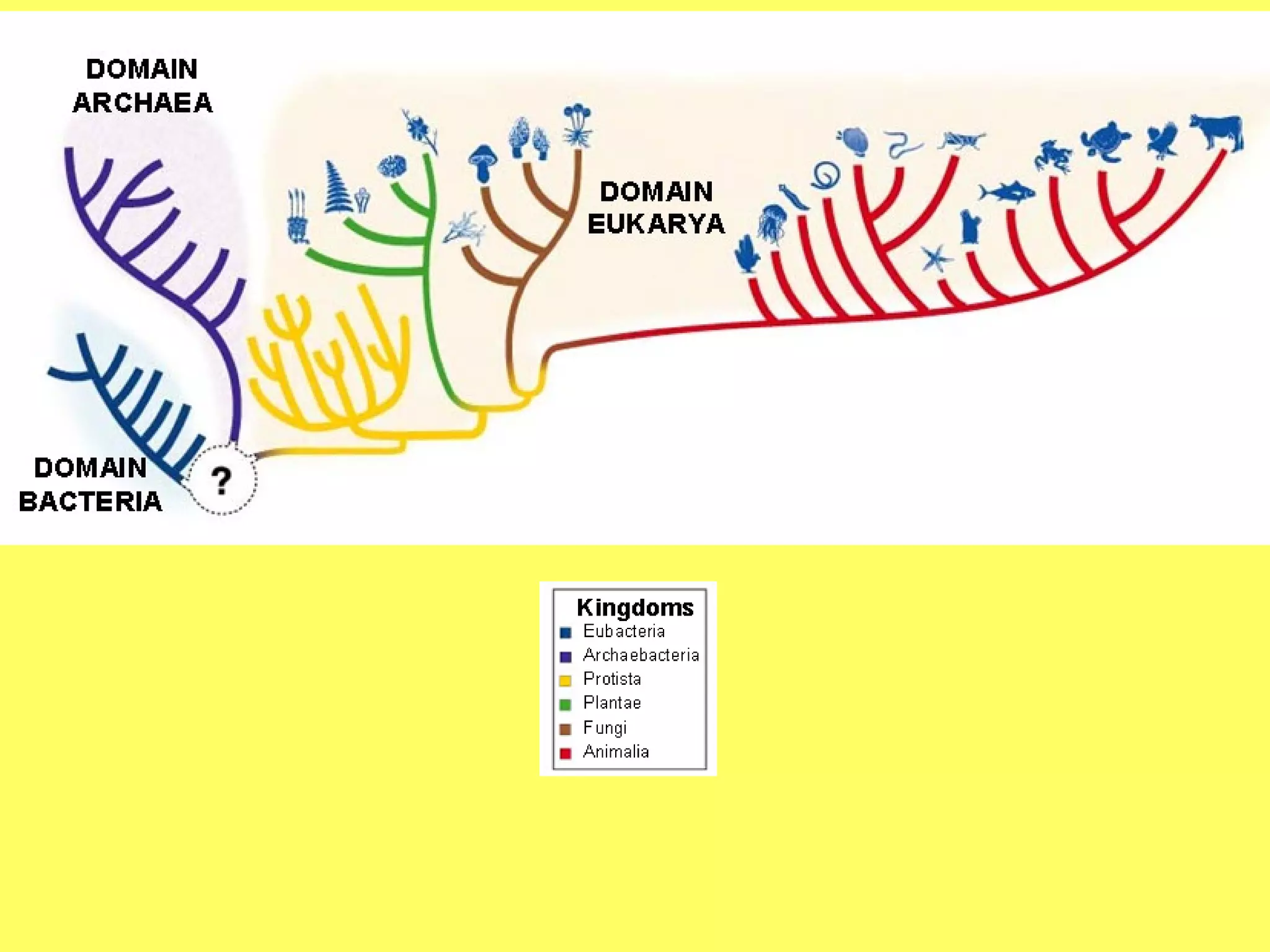
Animal Groups Image from:  http://ology.amnh.org/biodiversity/treeoflife/pages/graph.html
ARTHROPODA “ Arthro” = jointed “ pod” =  foot
Arthropods
Structures  to identify in lab All terns in the powerpoint that are printed in  RED .
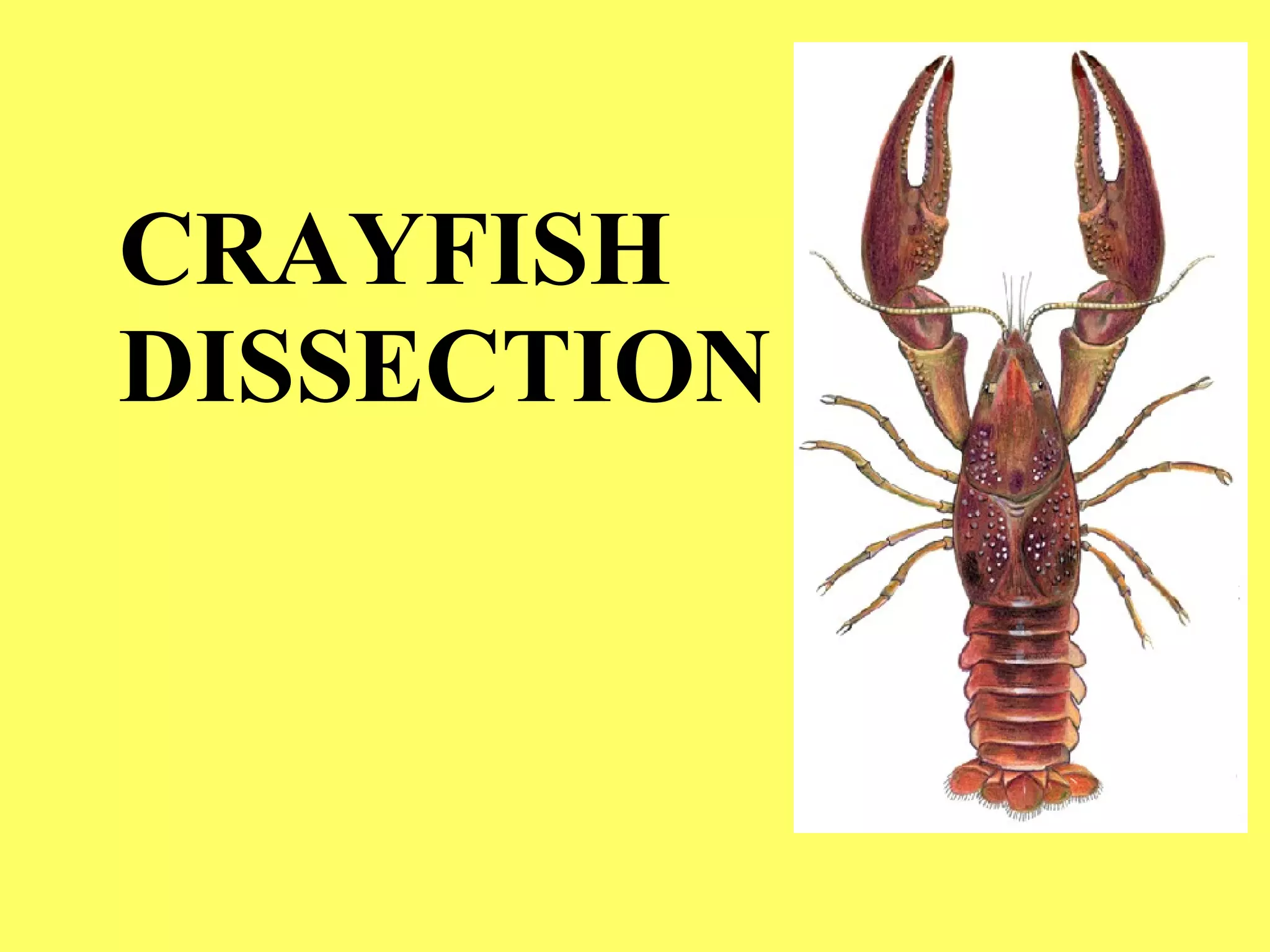
Classifying  Crayfish Kingdom:  ANIMALIA   Phylum:  ARTHROPODA Class:  CRUSTACEA
EXOSKELETON- Outside body; NON-LIVING Made of  CHITIN  (polysaccharide with some nitrogen)
All animals with an  EXOSKELETON  must  MOLT  (shed their exoskeleton) to grow bigger
SEGMENTED  BODY like earthworms
Fusion of smaller segments to make one bigger section Head + thorax =  cephalothorax
CARAPACE Part of exoskeleton that  covers the  cephalothorax
CHELIPED  = Pincher (defense; capture food) ROSTRUM  = “visor” protects eyes
COMPOUND EYE HAS MULTIPLE LENSES
ANTENNAE - touch, taste ANTENNULES - touch, taste, &  equilibrium
Statocyst
DECAPODS (10 legs)  (4 pair walking legs +  2 chelipeds)
SWIMMERETS  (5 pair)
SWIMMERETS Aid in reproduction In males – transfer sperm In females – carry eggs/young Create water currents
Telson Uropods Telson Uropods Uropods
MAXILLA – Manipulate food
LAST PAIR of MAXILLA  =  “BAILERS” Keep water moving over gills
MANDIBLE
Appendages Walking legs   Cheliped   3.  Maxillipeds 4.  2 nd  maxilla    (gill bailer) 5.  1 st  maxilla 6.  Mandible 7.  Antenna Antennule
APPENDAGES ANTENNA Touch, taste ANTENNULE Touch, taste, equilibrium MANDIBLE Chew food MAXILLA Manipulate food  Last pair “bailers”-    Move water over gills MAXILLIPEDS Touch, taste, manipulate food CHELIPED Capture food, defense WALKING LEGS Locomotion,  move water over gills SWIMMERETS Move water over EGGS, transfer sperm (males)  carry young/eggs (females) UROPOD Propulsion during tailflips
Is it a MALE  OR  FEMALE? MALES :  first two pair  of swimmerets  form a channel  to transfer  sperm to female  seminal receptacle
SWIMMERETS MALES Top pair  make a  “ V”
Females “ in berry ” carry developing embryos on swimmerets
REPRODUCTIVE SEPARATE SEXES Male and Female EXTERNAL FERTILIZATION sperm & eggs join outside body INDIRECT DEVELOPMENT Starts as a larva
INDIRECT DEVELOPMENT MOLLUSKS  ECHINODERMS  CRUSTACEANS TROCHOPHORE BIPINNARIA NAUPLIUS
Examine the inside of your crayfish
GILLS  (#2) RESPIRATORY Exchange gases Remove nitrogen waste (AMMONIA)
 
What keeps water moving over gills?  “ BAILERS”  WALKING LEGS:  are attached to gills so walking moves water   Image from:  http://www.aa.psu.edu/div/mns/biology/crayfish/crayfishtable.htm
INTERNAL Heart Stomach Digestive gland
OPEN CIRCULATORY SYSTEM HEART with openings (OSTIA) ARTERIES leaving heart but NO VEINS to return hemolymph
OSTIA
ADDUCTOR MUSCLES run mouthparts
PYLORIC CARDIAC STOMACH
GASTRIC MILL “teeth” inside stomach
DIGESTIVE GLAND Makes bile; finishes digestion; absorbs nutrients
GONADS  (produces sex cells)
Females:   OVARIES  – make eggs SEMINAL RECEPTACLES  - store received sperm Males: TESTES  – make sperm VAS DEFERENS-  tubules inside that carry sperm  from testes to exit opening ENDOCRINE SYSTEM: controls sexual development Also: molting, heart rate
ABDOMEN INTESTINE  (#4) – finish digestion; absorb  nutrients; collect & remove feces
GREEN GLANDS   (#2) - collect and remove excess water & nitrogen waste (ammonia, NH 3 )
NERVOUS SYSTEM like earthworms VENRAL NERVE CORD CEREBRAL GANGLIA (brain) GANGLIA  along body
VENTRAL NERVE CORD
CEREBRAL GANGLIA =  BRAIN Nerves connect  the eyes, antennae,  and antennules  to the brain. 
Brain Brain
AUTOTOMY & REGENERATION Crayfish have the ability to  “self amputate” parts to escape predators and regenerate to repair injuries
THE END

Crayfish dissection