TOPIC :- CPU
CPU
RAM, ROM, CACHE MEMORY, REGISTER
CPU
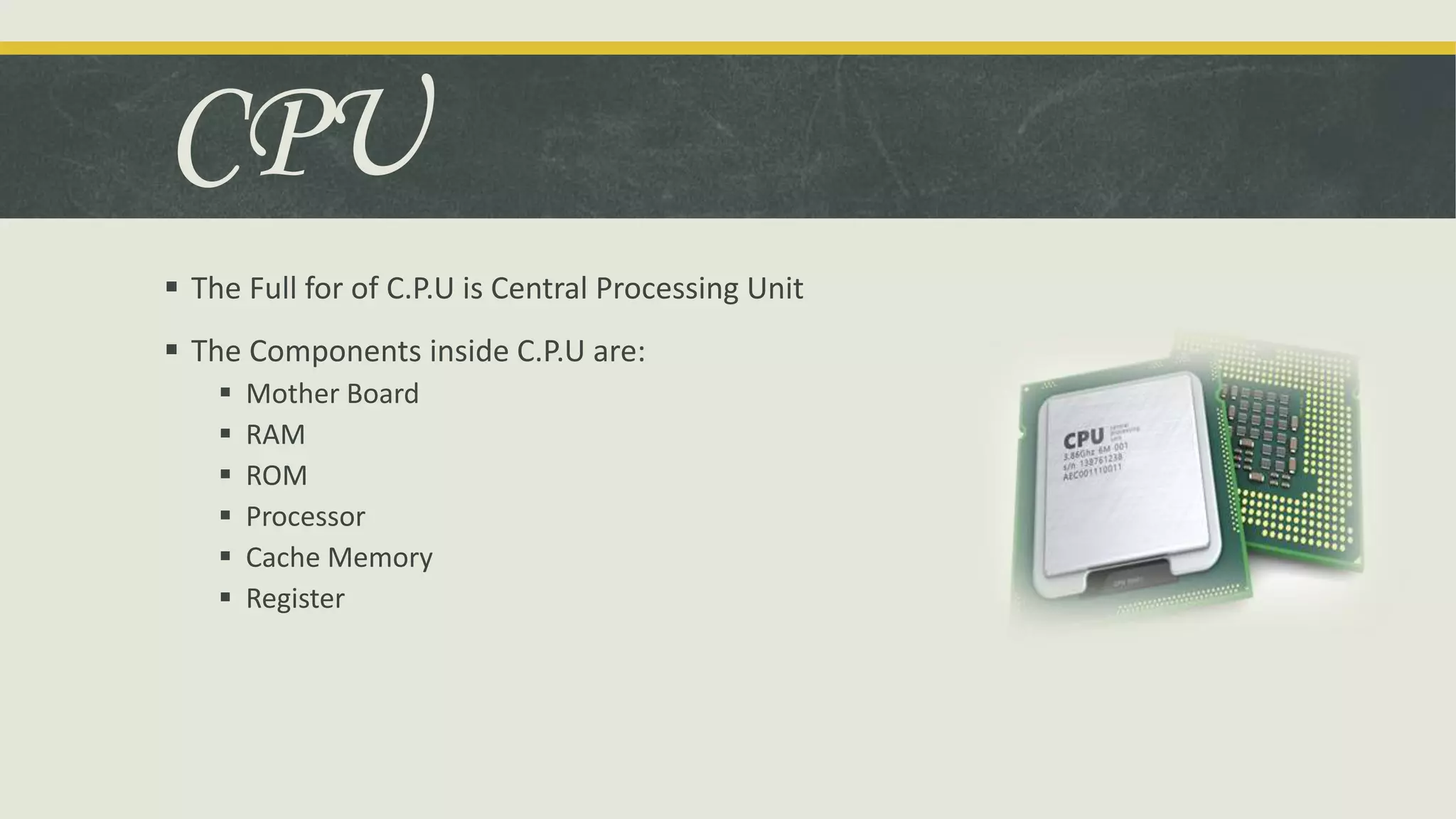
 The Full for of C.P.U is Central Processing Unit
 The Components inside C.P.U are:
 Mother Board
 RAM
 ROM
 Processor
 Cache Memory
 Register
RAM – Random Access Memory
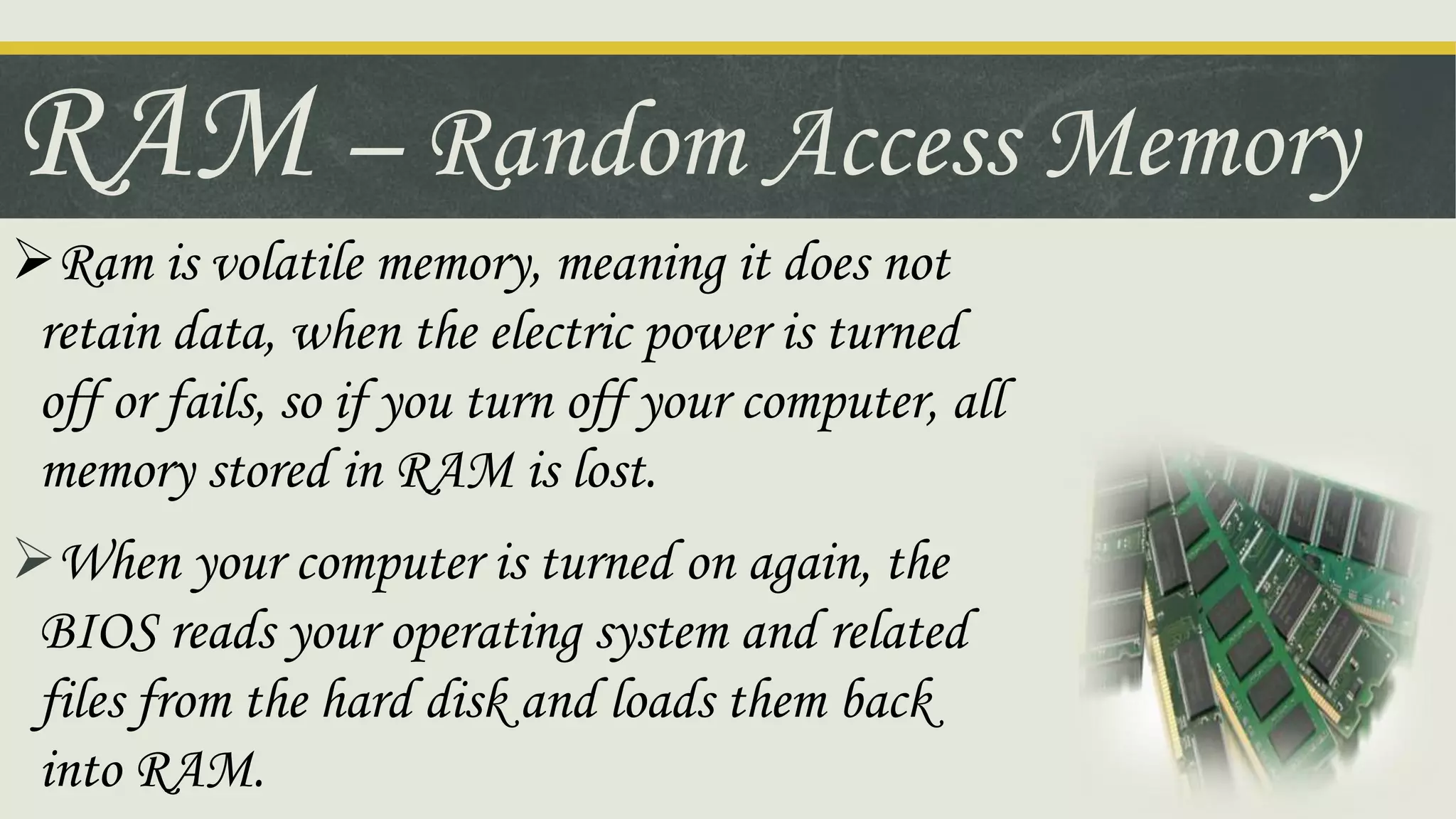
Ram is volatile memory, meaning it does not
retain data, when the electric power is turned
off or fails, so if you turn off your computer, all
memory stored in RAM is lost.
When your computer is turned on again, the
BIOS reads your operating system and related
files from the hard disk and loads them back
into RAM.
RAM stores its data in a series of memory cells that can
be accessed in any order, thus why it is called Random.
SAM (serial access memory) is much the same as RAM,
but can only access its memory cells in a specific order.
Continued…
ROM – Read only Memory
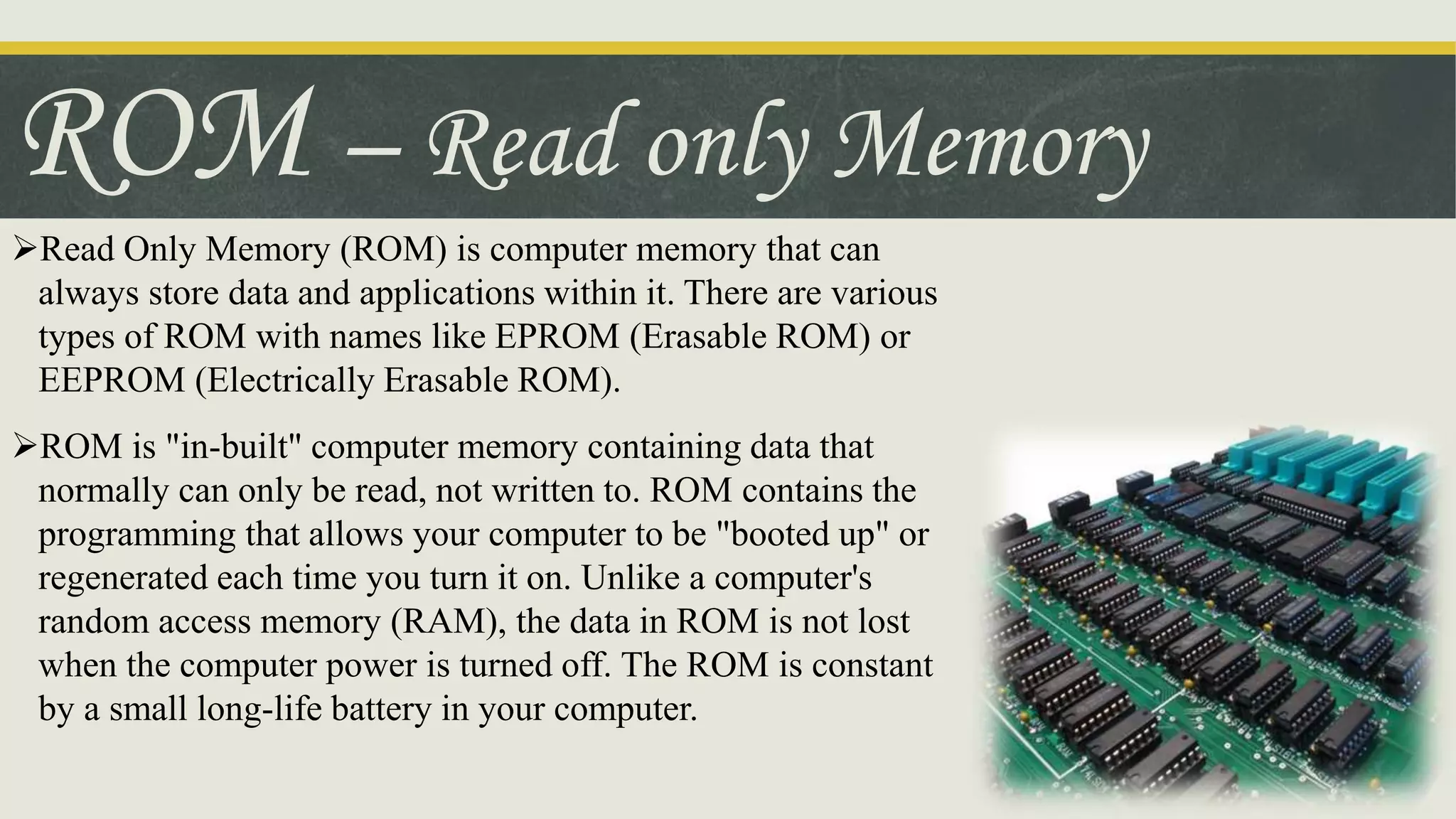
Read Only Memory (ROM) is computer memory that can
always store data and applications within it. There are various
types of ROM with names like EPROM (Erasable ROM) or
EEPROM (Electrically Erasable ROM).
ROM is "in-built" computer memory containing data that
normally can only be read, not written to. ROM contains the
programming that allows your computer to be "booted up" or
regenerated each time you turn it on. Unlike a computer's
random access memory (RAM), the data in ROM is not lost
when the computer power is turned off. The ROM is constant
by a small long-life battery in your computer.
CACHE MEMORY
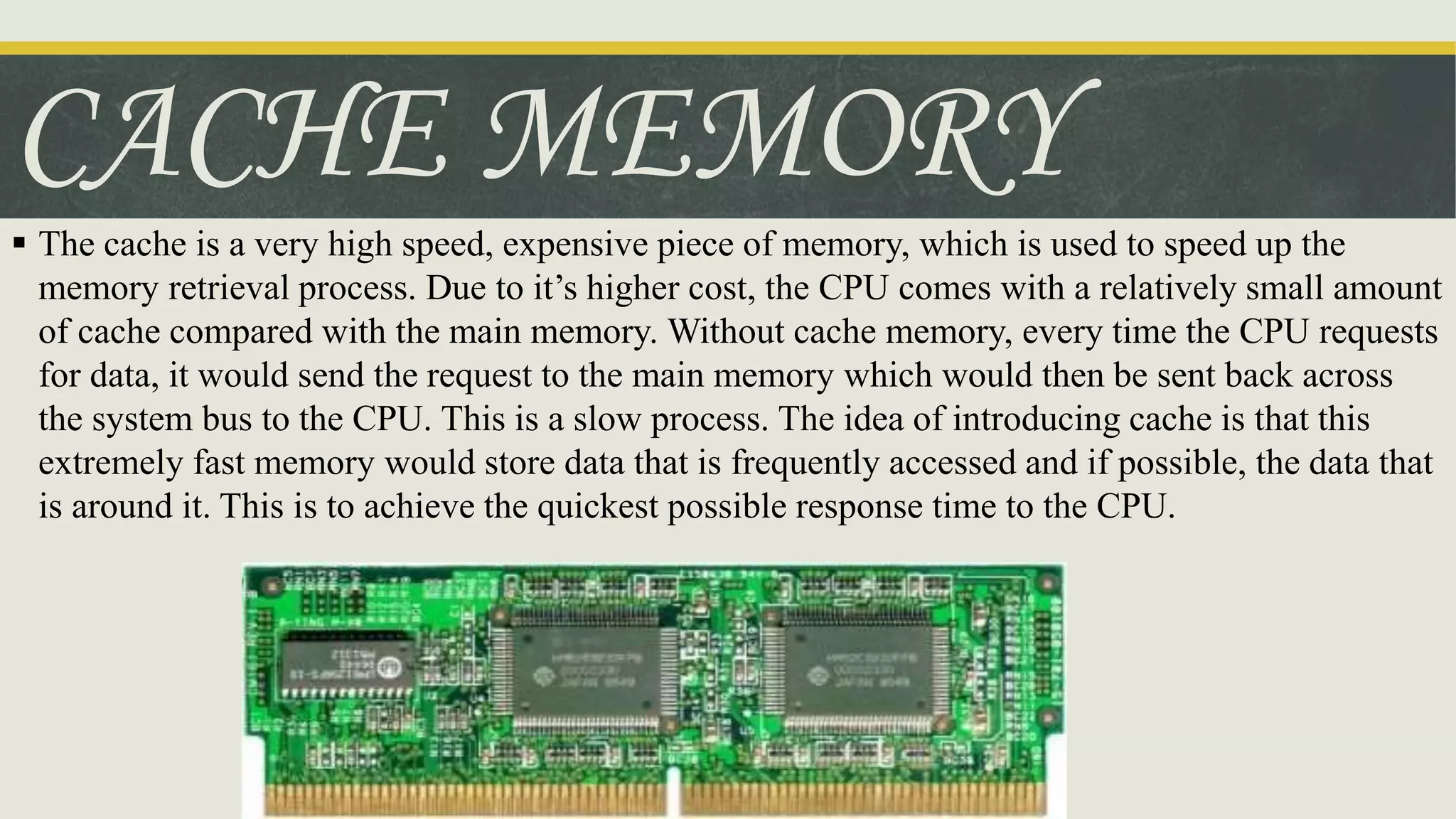
 The cache is a very high speed, expensive piece of memory, which is used to speed up the
memory retrieval process. Due to it’s higher cost, the CPU comes with a relatively small amount
of cache compared with the main memory. Without cache memory, every time the CPU requests
for data, it would send the request to the main memory which would then be sent back across
the system bus to the CPU. This is a slow process. The idea of introducing cache is that this
extremely fast memory would store data that is frequently accessed and if possible, the data that
is around it. This is to achieve the quickest possible response time to the CPU.
Register
A processor register (CPU register) is one of a small
set of data holding places that are part of the
computer processor.
A register may hold an instruction, a storage
address, or any kind of data (such as a bit sequence
or individual characters).
Some instructions specify registers as part of the
instruction. For example, an instruction may specify
that the contents of two defined registers be added
together and then placed in a specified register
CPU - Central processing unit

CPU - Central processing unit

  • 1.
  • 2.
    CPU RAM, ROM, CACHEMEMORY, REGISTER
  • 3.
    CPU  The Fullfor of C.P.U is Central Processing Unit  The Components inside C.P.U are:  Mother Board  RAM  ROM  Processor  Cache Memory  Register
  • 4.
    RAM – RandomAccess Memory Ram is volatile memory, meaning it does not retain data, when the electric power is turned off or fails, so if you turn off your computer, all memory stored in RAM is lost. When your computer is turned on again, the BIOS reads your operating system and related files from the hard disk and loads them back into RAM.
  • 5.
    RAM stores itsdata in a series of memory cells that can be accessed in any order, thus why it is called Random. SAM (serial access memory) is much the same as RAM, but can only access its memory cells in a specific order. Continued…
  • 6.
    ROM – Readonly Memory Read Only Memory (ROM) is computer memory that can always store data and applications within it. There are various types of ROM with names like EPROM (Erasable ROM) or EEPROM (Electrically Erasable ROM). ROM is "in-built" computer memory containing data that normally can only be read, not written to. ROM contains the programming that allows your computer to be "booted up" or regenerated each time you turn it on. Unlike a computer's random access memory (RAM), the data in ROM is not lost when the computer power is turned off. The ROM is constant by a small long-life battery in your computer.
  • 7.
    CACHE MEMORY  Thecache is a very high speed, expensive piece of memory, which is used to speed up the memory retrieval process. Due to it’s higher cost, the CPU comes with a relatively small amount of cache compared with the main memory. Without cache memory, every time the CPU requests for data, it would send the request to the main memory which would then be sent back across the system bus to the CPU. This is a slow process. The idea of introducing cache is that this extremely fast memory would store data that is frequently accessed and if possible, the data that is around it. This is to achieve the quickest possible response time to the CPU.
  • 8.
    Register A processor register(CPU register) is one of a small set of data holding places that are part of the computer processor. A register may hold an instruction, a storage address, or any kind of data (such as a bit sequence or individual characters). Some instructions specify registers as part of the instruction. For example, an instruction may specify that the contents of two defined registers be added together and then placed in a specified register