What is counseling?
Counseling is the means by which one
person helps another through purposeful
conversation
Counseling is a method of identifying
practical solution to an identified problem
Common Problems
Personality problems
Family conflicts, Personal problems (Difficulty
to adjust with others) etc.
Educational problems
Lack of motivation, Reading difficulties, etc.
Vocational problems
Difference between interests & aptitude
Financial problems
Need for self- support at school or college
Health problems
Psycho- somatic disorders (Insomania)
Common factors for counseling
Two persons are present during counseling
The process leads to action on the part of the
client
The counselor is a person who listens
The client can be trusted to find their own
solutions
Personal growth of the client usually occurs
Counseling is not usually concerned
with
Advice-giving
Psychotherapy
Treatment of severe mental illness
Solving client’s life’s problems
Not a remedy for all problems at a
single instance
Elements of counseling
An empathetic relationship
The counselor and client relates well
The counselor sticks closely to the clients
problems
The client feels free to say what they like
An atmosphere of mutual trust and confidence
exists
Rapport is essential
Personal qualities of a Counselor
Empathy
Ability to stand empathetically with clients
See the world as they see it
Warmth
Delicate one
Genuineness
Professional manner
But friendly manner
Positive regard
Disposition towards others is positive
Concreteness
Get to listen
Listens empathetically
Clarifies your thoughts
Leads you to logical conclusion
Counseling process
Getting started
Introductory talk
Identifying the issues
Coping with feelings
Identifying possible solutions
Agreeing a plan
Implementing the plan
Review
Counseling skills
Listening
It is the process of ‘hearing’ the other
person.
Linguistic aspects
Actual words using by the client
Ex: Expanding a business may turn to
developing a business
Paralinguistic aspects
Apart from speech, the timing,
volume, pitch, accent of the individual
Ex: Variation in volume (speech) in
certain times
Non-verbal aspects
refer to ‘body language expression
through the use of the body. ( facial
expression,use of gestures, body
position and movement)
Giving information
How much information is given during a counseling
session will depend on the nature of the counseling
relationship
Concrete issues
Expanding a business
Developing a career
Completing a college course
Buying a house
The expert counselor will access the particular and
accurate information of the individual.
Personal issues
- Continuing a relationship
- Coping with the death of a relative
- Developing self awareness
- Working through depression
Client is the ‘expert’
Making suggestions
‘Concrete’ domain
Ex: Due to parents(option) force a
student may be forced to choose a
subject
Drawing out
Open questions:
Do not have one correct answer
Have one word answer
Ex: How did you feel when that happened?
Closed questions:
Yes or no answer only.
Ex: Have you discussed with your
parents?
Reflection
Back of the few words client has
spoken
To clarify his thoughts and feelings
Ex: I found it is difficult to get a
job……………
Challenging
v Challenge to client saying
v Counselor role is a supportive
v Counselor is in ‘plain speaking’
Ex: There is no one in my
organization that I can talk to at all
Supporting
§ Client’s advocate - Counselor
§ Problems the client identified
§ Counselor “follow traveler”
Ex: I have some difficulties to
study at my home
Review
Evaluation carried out
Ex: Positive and negative
feedback about the counseling
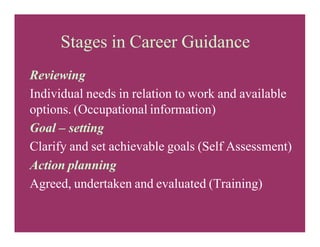
Stages in Career Guidance
Reviewing
Individual needs in relation to work and available
options. (Occupational information)
Goal – setting
Clarify and set achievable goals (Self Assessment)
Action planning
Agreed, undertaken and evaluated (Training)
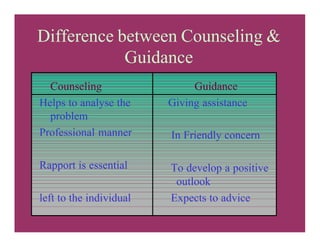
Difference between Counseling &
Guidance
Counseling
Helps to analyse the
problem
Professional manner
Rapport is essential
left to the individual
Guidance
Giving assistance
In Friendly concern
To develop a positive
outlook
Expects to advice
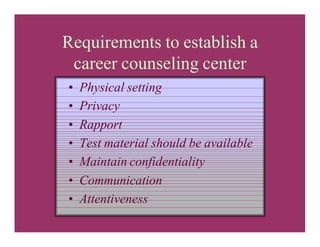
Requirements to establish a
career counseling center
• Physical setting
• Privacy
• Rapport
• Test material should be available
• Maintain confidentiality
• Communication
• Attentiveness

Counselor skills

  • 1.
    What is counseling? Counselingis the means by which one person helps another through purposeful conversation Counseling is a method of identifying practical solution to an identified problem
  • 2.
    Common Problems Personality problems Familyconflicts, Personal problems (Difficulty to adjust with others) etc. Educational problems Lack of motivation, Reading difficulties, etc. Vocational problems Difference between interests & aptitude Financial problems Need for self- support at school or college Health problems Psycho- somatic disorders (Insomania)
  • 3.
    Common factors forcounseling Two persons are present during counseling The process leads to action on the part of the client The counselor is a person who listens The client can be trusted to find their own solutions Personal growth of the client usually occurs
  • 4.
    Counseling is notusually concerned with Advice-giving Psychotherapy Treatment of severe mental illness Solving client’s life’s problems Not a remedy for all problems at a single instance
  • 5.
    Elements of counseling Anempathetic relationship The counselor and client relates well The counselor sticks closely to the clients problems The client feels free to say what they like An atmosphere of mutual trust and confidence exists Rapport is essential
  • 6.
    Personal qualities ofa Counselor Empathy Ability to stand empathetically with clients See the world as they see it Warmth Delicate one Genuineness Professional manner But friendly manner
  • 7.
    Positive regard Disposition towardsothers is positive Concreteness Get to listen Listens empathetically Clarifies your thoughts Leads you to logical conclusion
  • 8.
    Counseling process Getting started Introductorytalk Identifying the issues Coping with feelings Identifying possible solutions Agreeing a plan Implementing the plan Review
  • 9.
    Counseling skills Listening It isthe process of ‘hearing’ the other person. Linguistic aspects Actual words using by the client Ex: Expanding a business may turn to developing a business
  • 10.
    Paralinguistic aspects Apart fromspeech, the timing, volume, pitch, accent of the individual Ex: Variation in volume (speech) in certain times Non-verbal aspects refer to ‘body language expression through the use of the body. ( facial expression,use of gestures, body position and movement)
  • 11.
    Giving information How muchinformation is given during a counseling session will depend on the nature of the counseling relationship Concrete issues Expanding a business Developing a career Completing a college course Buying a house The expert counselor will access the particular and accurate information of the individual.
  • 12.
    Personal issues - Continuinga relationship - Coping with the death of a relative - Developing self awareness - Working through depression Client is the ‘expert’
  • 13.
    Making suggestions ‘Concrete’ domain Ex:Due to parents(option) force a student may be forced to choose a subject
  • 14.
    Drawing out Open questions: Donot have one correct answer Have one word answer Ex: How did you feel when that happened? Closed questions: Yes or no answer only. Ex: Have you discussed with your parents?
  • 15.
    Reflection Back of thefew words client has spoken To clarify his thoughts and feelings Ex: I found it is difficult to get a job……………
  • 16.
    Challenging v Challenge toclient saying v Counselor role is a supportive v Counselor is in ‘plain speaking’ Ex: There is no one in my organization that I can talk to at all
  • 17.
    Supporting § Client’s advocate- Counselor § Problems the client identified § Counselor “follow traveler” Ex: I have some difficulties to study at my home
  • 18.
    Review Evaluation carried out Ex:Positive and negative feedback about the counseling
  • 19.
    Stages in CareerGuidance Reviewing Individual needs in relation to work and available options. (Occupational information) Goal – setting Clarify and set achievable goals (Self Assessment) Action planning Agreed, undertaken and evaluated (Training)
  • 20.
    Difference between Counseling& Guidance Counseling Helps to analyse the problem Professional manner Rapport is essential left to the individual Guidance Giving assistance In Friendly concern To develop a positive outlook Expects to advice
  • 21.
    Requirements to establisha career counseling center • Physical setting • Privacy • Rapport • Test material should be available • Maintain confidentiality • Communication • Attentiveness