EPA Infrastructure Pvt. Ltd.
Corrosion Protection
B-267, North Ex Mall
Sector-9, Rohini,
Delhi-110085
What is Protection?

Corrosion is the gradual destruction of materials, (usually metals), by
chemical reaction with its environment.
In the most common use of the word, this means electrochemical
oxidation of metals in reaction with an oxidant such as oxygen. Rusting,
the formation of iron oxides, is a well-known example of electrochemical
corrosion. This type of damage typically produces oxide(s) or salt(s) of
the original metal. Corrosion can also occur in materials other than
metals, such as ceramics or polymers, although in this context, the term
degradation is more common. Corrosion degrades the useful properties of
materials and structures including strength, appearance and permeability
to liquids and gases.
What is corrosion Protection

Some metals are more intrinsically resistant to corrosion than others (for
some examples, see galvanic series). There are various ways of protecting
metals from corrosion (oxidation) including painting, hot dip galvanizing, and
combinations of these.
Thus the method of coating metals which are highlt affected by exposure to
moisture or oxygen with these inert metals to prevent them from degradation is
know as corrosion protection.
Methods of Corrosion Protection
Surface can be protected from corrosion by following methods:
Corrosion protection by surface treatment is done by the following ways:
Applied Coating
Reactive Coating
Biofilm Coating
Anodization
Controlled permeability formwork
Cathodic Protection
Anodic Protection
Advantages of Corrosion Protection
Advantages of corrosion protection are as follows:
Helps increase the life of the metal
Helps increase the serviceability of the metal or
structure
Prevent decay and damage of the metal
Enhances the beauty of the metal
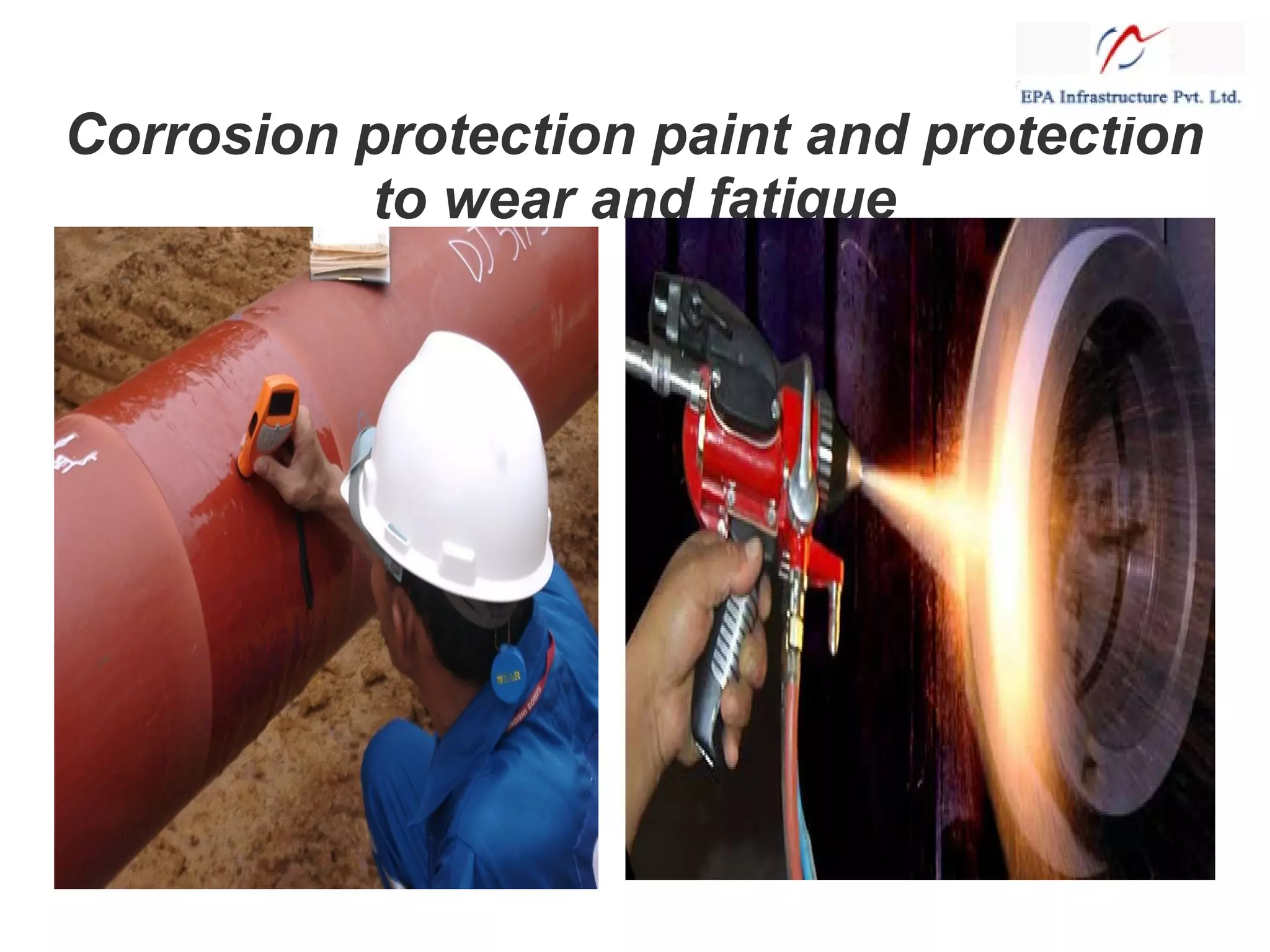
Corrosion protection paint and protection
to wear and fatigue

Corrosion protection

  • 1.
    EPA Infrastructure Pvt.Ltd. Corrosion Protection B-267, North Ex Mall Sector-9, Rohini, Delhi-110085
  • 2.
    What is Protection? Corrosionis the gradual destruction of materials, (usually metals), by chemical reaction with its environment. In the most common use of the word, this means electrochemical oxidation of metals in reaction with an oxidant such as oxygen. Rusting, the formation of iron oxides, is a well-known example of electrochemical corrosion. This type of damage typically produces oxide(s) or salt(s) of the original metal. Corrosion can also occur in materials other than metals, such as ceramics or polymers, although in this context, the term degradation is more common. Corrosion degrades the useful properties of materials and structures including strength, appearance and permeability to liquids and gases.
  • 4.
    What is corrosionProtection Some metals are more intrinsically resistant to corrosion than others (for some examples, see galvanic series). There are various ways of protecting metals from corrosion (oxidation) including painting, hot dip galvanizing, and combinations of these. Thus the method of coating metals which are highlt affected by exposure to moisture or oxygen with these inert metals to prevent them from degradation is know as corrosion protection.
  • 5.
    Methods of CorrosionProtection Surface can be protected from corrosion by following methods: Corrosion protection by surface treatment is done by the following ways: Applied Coating Reactive Coating Biofilm Coating Anodization Controlled permeability formwork Cathodic Protection Anodic Protection
  • 6.
    Advantages of CorrosionProtection Advantages of corrosion protection are as follows: Helps increase the life of the metal Helps increase the serviceability of the metal or structure Prevent decay and damage of the metal Enhances the beauty of the metal
  • 7.
    Corrosion protection paintand protection to wear and fatigue