
By
Phoenix
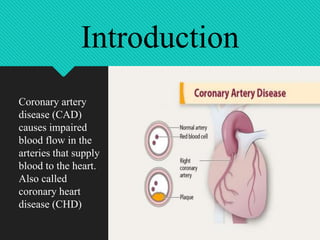
Coronary artery
disease (CAD)
causes impaired
blood flow in the
arteries that supply
blood to the heart.
Also called
coronary heart
disease (CHD)
Introduction
The most common cause of CAD is vascular injury with
cholesterol plaque buildup in the arteries, known as
atherosclerosis. Reduced blood flow occurs when one or more of
these arteries becomes partially or completely blocked.
The four primary coronary arteries are located on the surface of
the heart:
 Right main coronary artery
 Left main coronary artery
 Left circumflex artery
 Left anterior descending artery
Causes
When patient heart doesn’t get enough arterial blood, Patient may
experience a variety of symptoms. Angina (chest discomfort) is
the most common symptom of CAD. Other are :
 Chest pain
 Heaviness
 Tightness
 Burning
 Squeezing
Symptoms
Other symptoms of CAD include:
 Pain in the arms or shoulders
 Shortness of breath
 Sweating
 Dizziness
patient may experience more symptoms when patient blood flow
is more restricted. If a blockage cuts off blood flow completely or
almost completely, patient heart muscle will start to die if not
restored. This is a heart attack.
Understanding the risk factors for CAD can help with patient plan
to prevent or decrease the likelihood of developing the disease.
Risk factors include:
 High blood pressure
 High blood cholesterol levels
 Tobacco smoking
 Insulin resistance/hyperglycemia/diabetes mellitus
 Obesity
 Unhealthy eating habits
 Obstructive sleep apnea
 Excessive alcohol consumption
Risk Factors
Diagnosing CAD requires a review of patient medical history, a
physical examination, and other medical testing. These tests
include:
Electrocardiogram: This test monitors electrical signals that travel
through patient heart. It may help patient doctor determine
whether patient had a heart attack.
Echocardiogram: This imaging test uses ultrasound waves to
create a picture of patient heart. The results of this test reveal
whether certain things in patient heart are functioning properly.
Diagnosis
Cardiac catheterization (left heart catheterization): During this
procedure, patient doctor injects a special dye into patient
coronary arteries through a catheter inserted through an artery in
patient groin or forearm. The dye helps enhance the radiographic
image of patient coronary arteries to identify any blockages.
Heart CT scan: patient doctor may use this imaging test to check
for calcium deposits in patient arteries.
Stress test: This particular test measures the stress on patient
heart during physical activity and while at rest. The test monitors
patient heart’s electrical activity while patient walk on a treadmill
or ride a stationary bike. Nuclear imaging may also be performed
for a portion of this test.
Lifestyle changes can also reduce patient risk of heart disease and
stroke. For example:
•quit smoking tobacco
•reduce or stop patient consumption of alcohol
•exercise regularly
•lose weight to a healthy level
•eat a healthy diet (low in fat, low in sodium)
Management
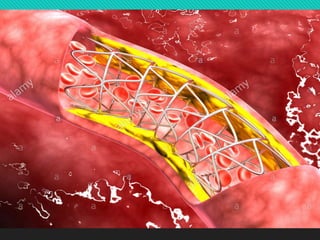
 Balloon angioplasty: to widen blocked arteries and smoosh
down the plaque buildup, usually performed with insertion of
a stent to help keep the lumen open after the procedure.
 Coronary artery bypass graft surgery: to restore blood flow to
the heart in open chest surgery.
 Enhanced external counter pulsation: to stimulate the
formation of new small blood vessels to naturally bypass
clogged arteries in a noninvasive procedure
Treatment
Coronary artery disease

Coronary artery disease

  • 1.
  • 3.
    Coronary artery disease (CAD) causesimpaired blood flow in the arteries that supply blood to the heart. Also called coronary heart disease (CHD) Introduction
  • 4.
    The most commoncause of CAD is vascular injury with cholesterol plaque buildup in the arteries, known as atherosclerosis. Reduced blood flow occurs when one or more of these arteries becomes partially or completely blocked. The four primary coronary arteries are located on the surface of the heart:  Right main coronary artery  Left main coronary artery  Left circumflex artery  Left anterior descending artery Causes
  • 5.
    When patient heartdoesn’t get enough arterial blood, Patient may experience a variety of symptoms. Angina (chest discomfort) is the most common symptom of CAD. Other are :  Chest pain  Heaviness  Tightness  Burning  Squeezing Symptoms
  • 6.
    Other symptoms ofCAD include:  Pain in the arms or shoulders  Shortness of breath  Sweating  Dizziness patient may experience more symptoms when patient blood flow is more restricted. If a blockage cuts off blood flow completely or almost completely, patient heart muscle will start to die if not restored. This is a heart attack.
  • 7.
    Understanding the riskfactors for CAD can help with patient plan to prevent or decrease the likelihood of developing the disease. Risk factors include:  High blood pressure  High blood cholesterol levels  Tobacco smoking  Insulin resistance/hyperglycemia/diabetes mellitus  Obesity  Unhealthy eating habits  Obstructive sleep apnea  Excessive alcohol consumption Risk Factors
  • 8.
    Diagnosing CAD requiresa review of patient medical history, a physical examination, and other medical testing. These tests include: Electrocardiogram: This test monitors electrical signals that travel through patient heart. It may help patient doctor determine whether patient had a heart attack. Echocardiogram: This imaging test uses ultrasound waves to create a picture of patient heart. The results of this test reveal whether certain things in patient heart are functioning properly. Diagnosis
  • 9.
    Cardiac catheterization (leftheart catheterization): During this procedure, patient doctor injects a special dye into patient coronary arteries through a catheter inserted through an artery in patient groin or forearm. The dye helps enhance the radiographic image of patient coronary arteries to identify any blockages. Heart CT scan: patient doctor may use this imaging test to check for calcium deposits in patient arteries.
  • 10.
    Stress test: Thisparticular test measures the stress on patient heart during physical activity and while at rest. The test monitors patient heart’s electrical activity while patient walk on a treadmill or ride a stationary bike. Nuclear imaging may also be performed for a portion of this test.
  • 11.
    Lifestyle changes canalso reduce patient risk of heart disease and stroke. For example: •quit smoking tobacco •reduce or stop patient consumption of alcohol •exercise regularly •lose weight to a healthy level •eat a healthy diet (low in fat, low in sodium) Management
  • 12.
     Balloon angioplasty:to widen blocked arteries and smoosh down the plaque buildup, usually performed with insertion of a stent to help keep the lumen open after the procedure.  Coronary artery bypass graft surgery: to restore blood flow to the heart in open chest surgery.  Enhanced external counter pulsation: to stimulate the formation of new small blood vessels to naturally bypass clogged arteries in a noninvasive procedure Treatment