GLAUCOMA OPTIC DISC CHANGES
PRESENTED BY-
PRAGATI JAIN
• Chronic progressive optic neuropathy caused by group of ocular
conditions which lead to damage of optic nerve with loss of visual
function.
Definitions
• ONH-distal portion of optic nerve,extends from retinal surface to
myelinated portion of optic nerve.
• Composed of the nerve fibres which originates in the Ganglionic cell
layer of retina & converge upon the nerve head from all points in the
fundus.
• Relation between ONH and glaucoma was first described by von
Graefe in 1857
• Physiological cup-represents partial or complete absence of
axons
Pallor of cup results from exposure of lamina cribrosa and lack of
glial tissue in the centre
• NRR-tissue b/w cup and disc margin
I>S>N>T
• Normal CDR is 0.3 :1
2% have CDR 0.7:1
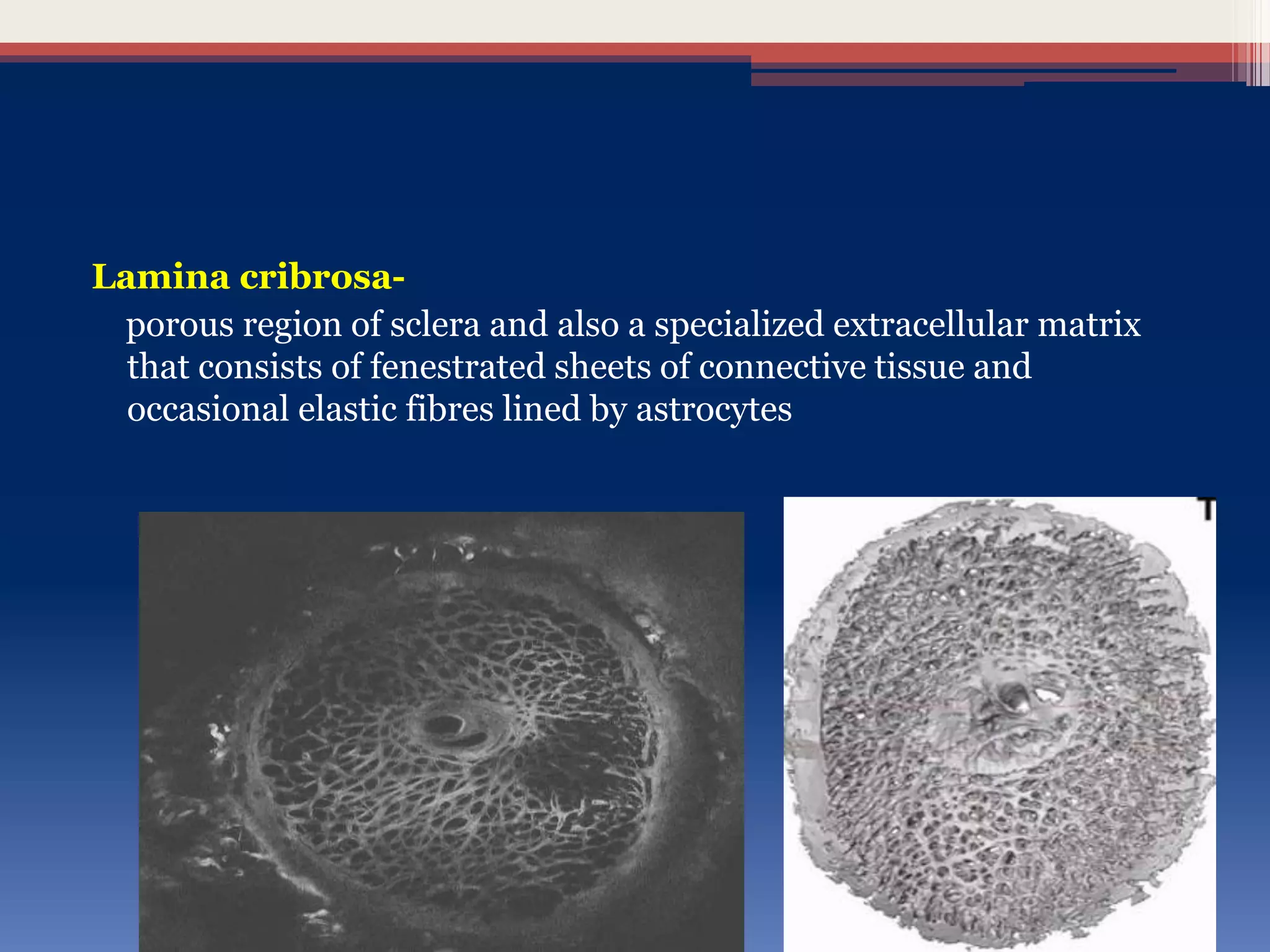
Lamina cribrosa-
porous region of sclera and also a specialized extracellular matrix
that consists of fenestrated sheets of connective tissue and
occasional elastic fibres lined by astrocytes
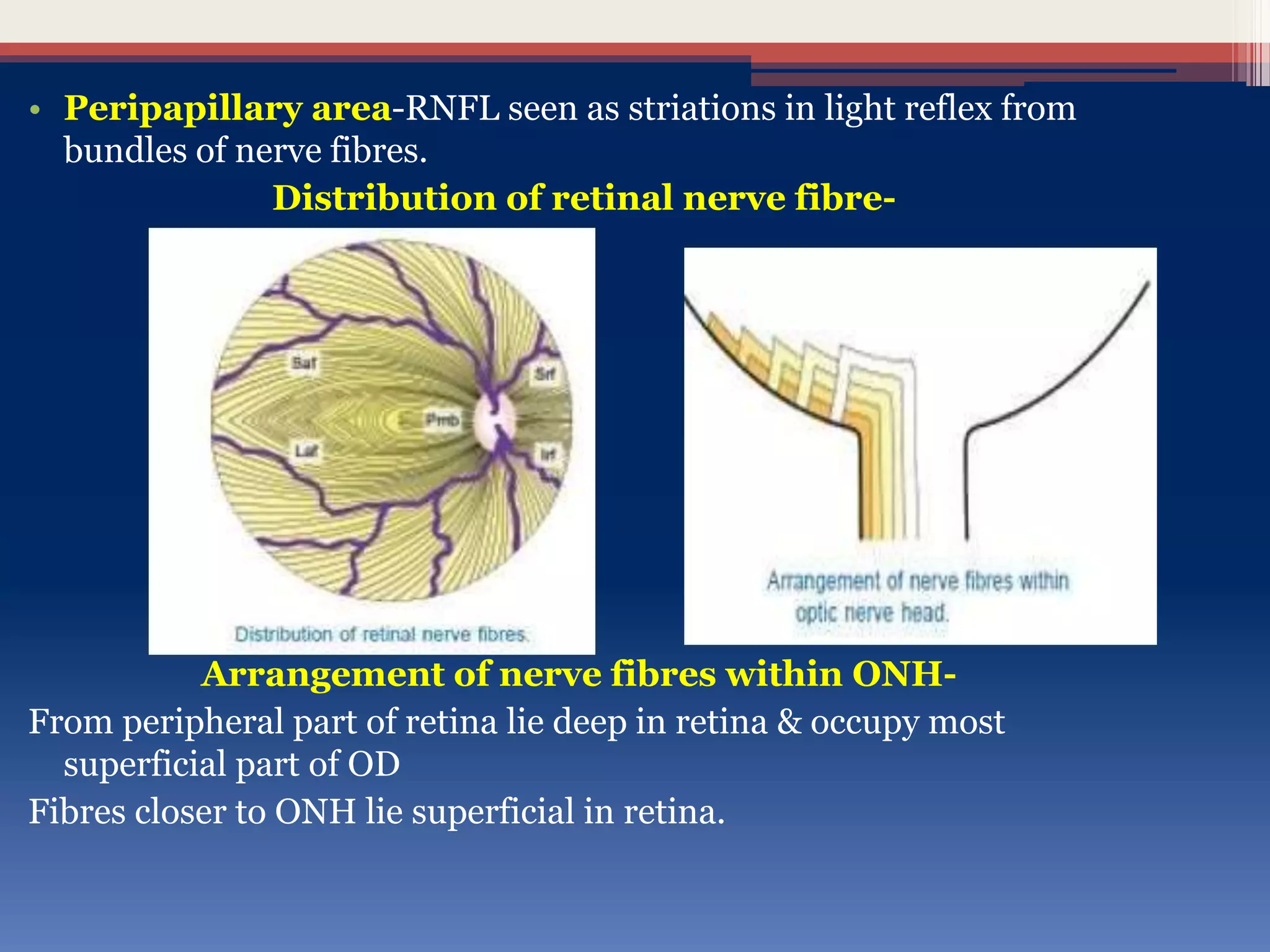
• Peripapillary area-RNFL seen as striations in light reflex from
bundles of nerve fibres.
Distribution of retinal nerve fibre-
Arrangement of nerve fibres within ONH-
From peripheral part of retina lie deep in retina & occupy most
superficial part of OD
Fibres closer to ONH lie superficial in retina.
Pathogenesis of ONH changes in glaucoma
• Mechanical effect-raised IOP forces lamina cribrosa backwards
and squeezes nerve fibres within ,disturb axoplasmic flow
• Vascular effect-ischaemic atrophy of nerve fibre
ONH Signs Suggestive Of Glaucoma
• Size of cup in relation to size of ONH-
Small disc with deep cup
Medium disc with deep cup
Meduim disc with large cup
Large disc with large cup
• Asymmetry of cups-
0.2 in both eyes suspicion.
• Vertical enlargement of cup-
Vertical CDR > horizontal CDR
Loss of axons occur more in superior and inferior regions so NRR
thinning at vertical poles
• Focal atrophy and polar notching
Inferotemporal region,sometimes superotemporally
Small discrete defect due to loss of neural rim tissue
• Sharpened nasal margins-
As focal defect enlarges and deepens it may develop sharp nasal
margins adjacent to major blood vessels.
• Sharpened rim-
NRR is lost adjacent to edge of the disc
No visible neural rim is seen
• `
• Bayonetting sign-
double angulation of blood vessel
When retinal vessels cross the sharpened rim,it will bend sharply at
the edge of the disc
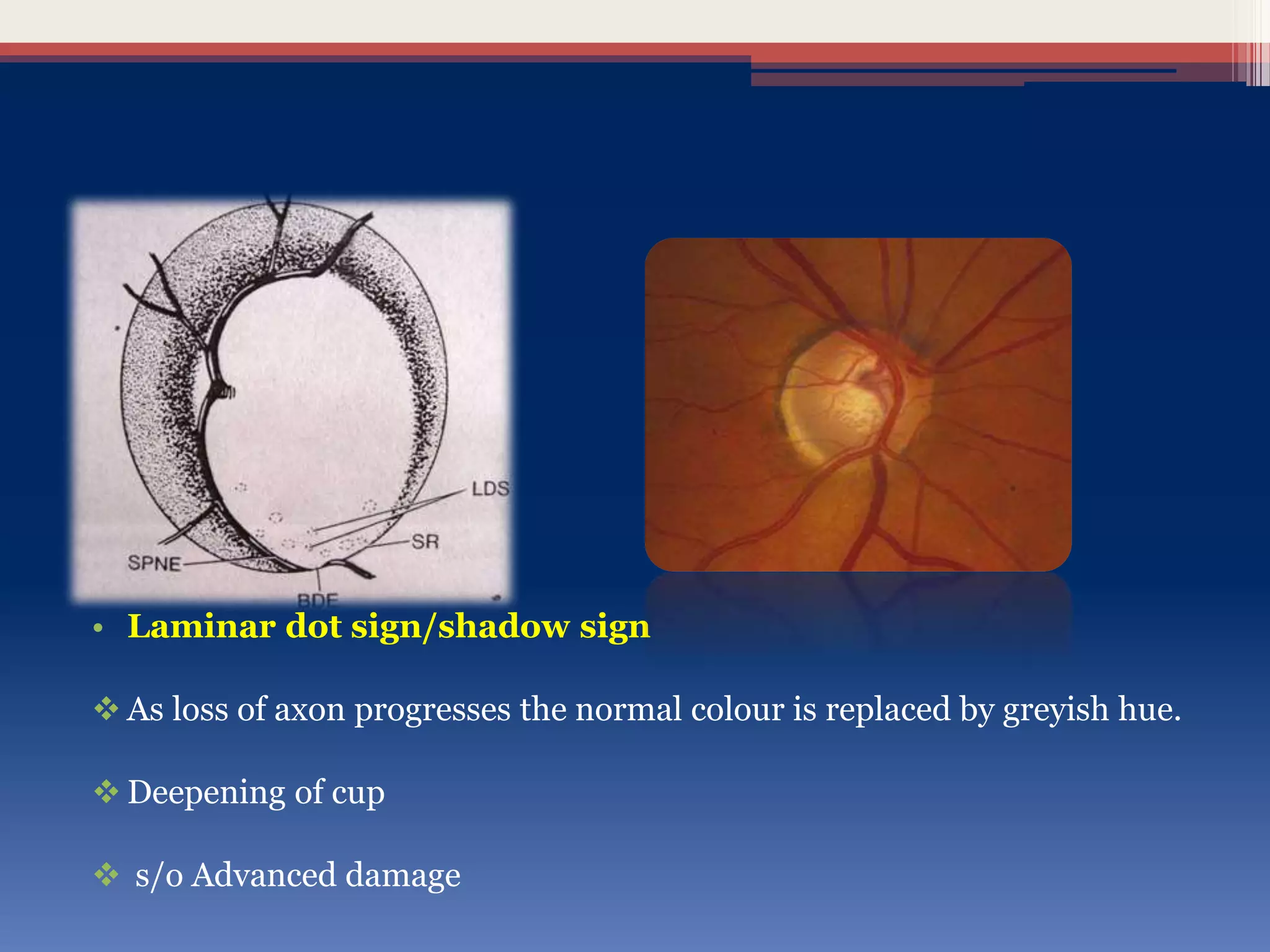
• Laminar dot sign/shadow sign
 As loss of axon progresses the normal colour is replaced by greyish hue.
 Deepening of cup
 s/o Advanced damage
• Overpass cupping-
Vessels initially bridge the deepened cup and later collapse into it
• Pallor areas on the disc-
 Kinking of vessels at cup margin
 Colour cup-
extent of central pallor
 Contour cup-
site at which vessel change their contour
 Enlargement of cup may progress ahead of pallor
 Pathognomic of glaucomatous optic atrophy
• Saucerization-
Diffuse shallow cupping extends disc margin with retention of central pale
cup
Focal saucerization –more localized shallow sloping cup
Early s/o glaucoma
• Tinted hollow-
Retention of normal NRR colour in area of focal saucerization
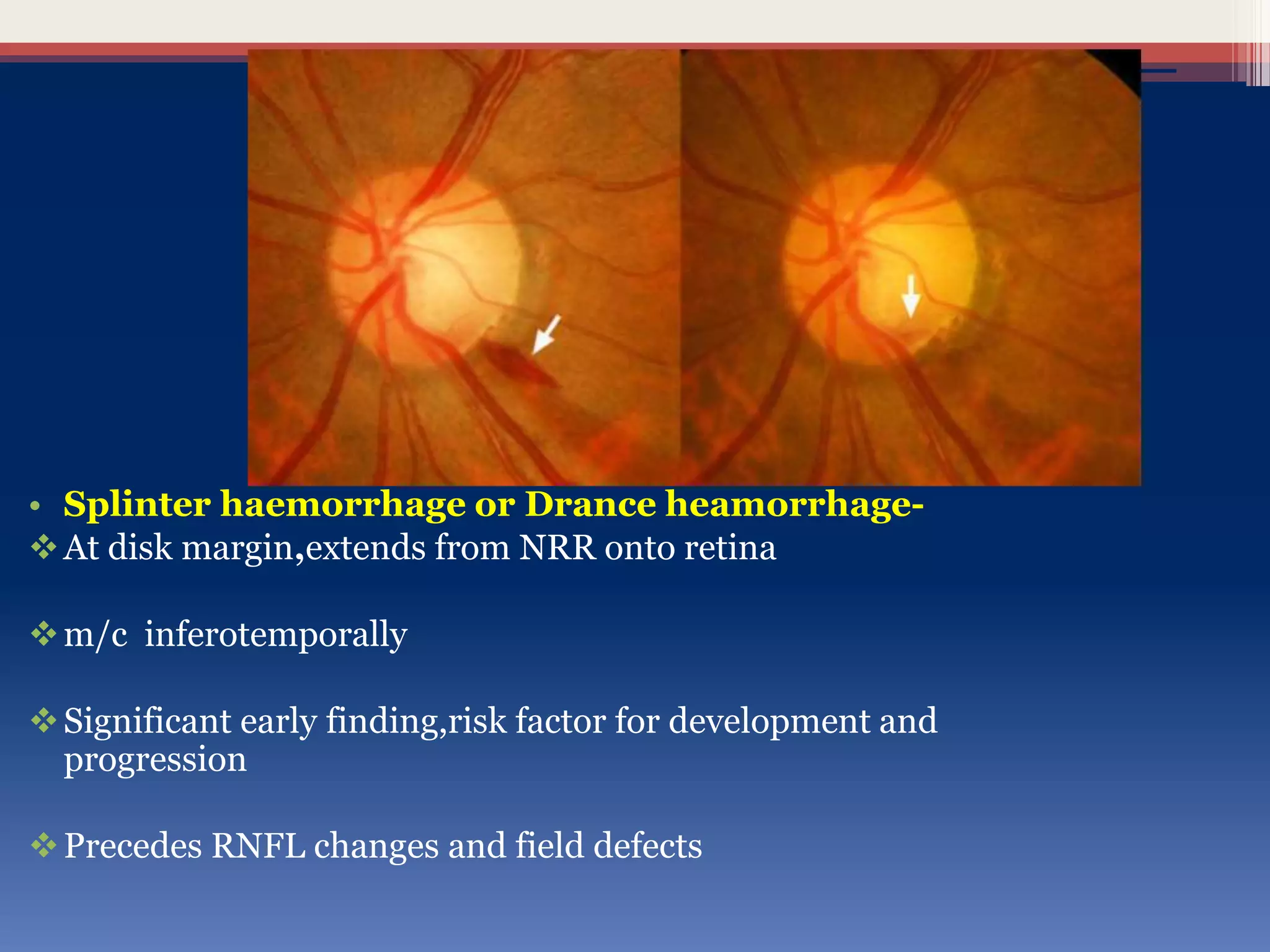
• Splinter haemorrhage or Drance heamorrhage-
At disk margin,extends from NRR onto retina
m/c inferotemporally
Significant early finding,risk factor for development and
progression
Precedes RNFL changes and field defects
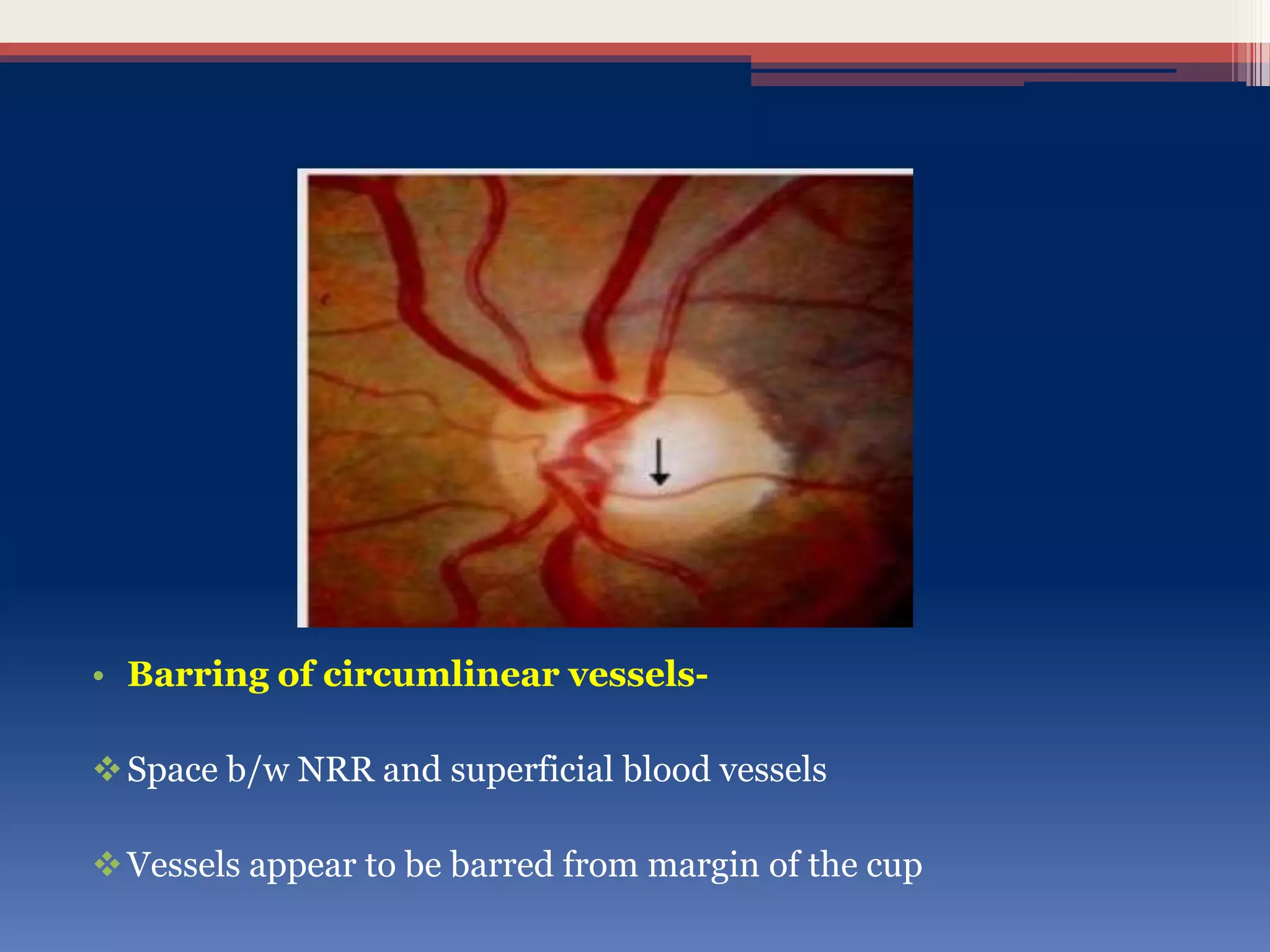
• Barring of circumlinear vessels-
Space b/w NRR and superficial blood vessels
Vessels appear to be barred from margin of the cup
• Tortousity of retinal vessels-
As response to chronic ischaemia
• Collaterals b/w 2 veins at the disc may also be seen
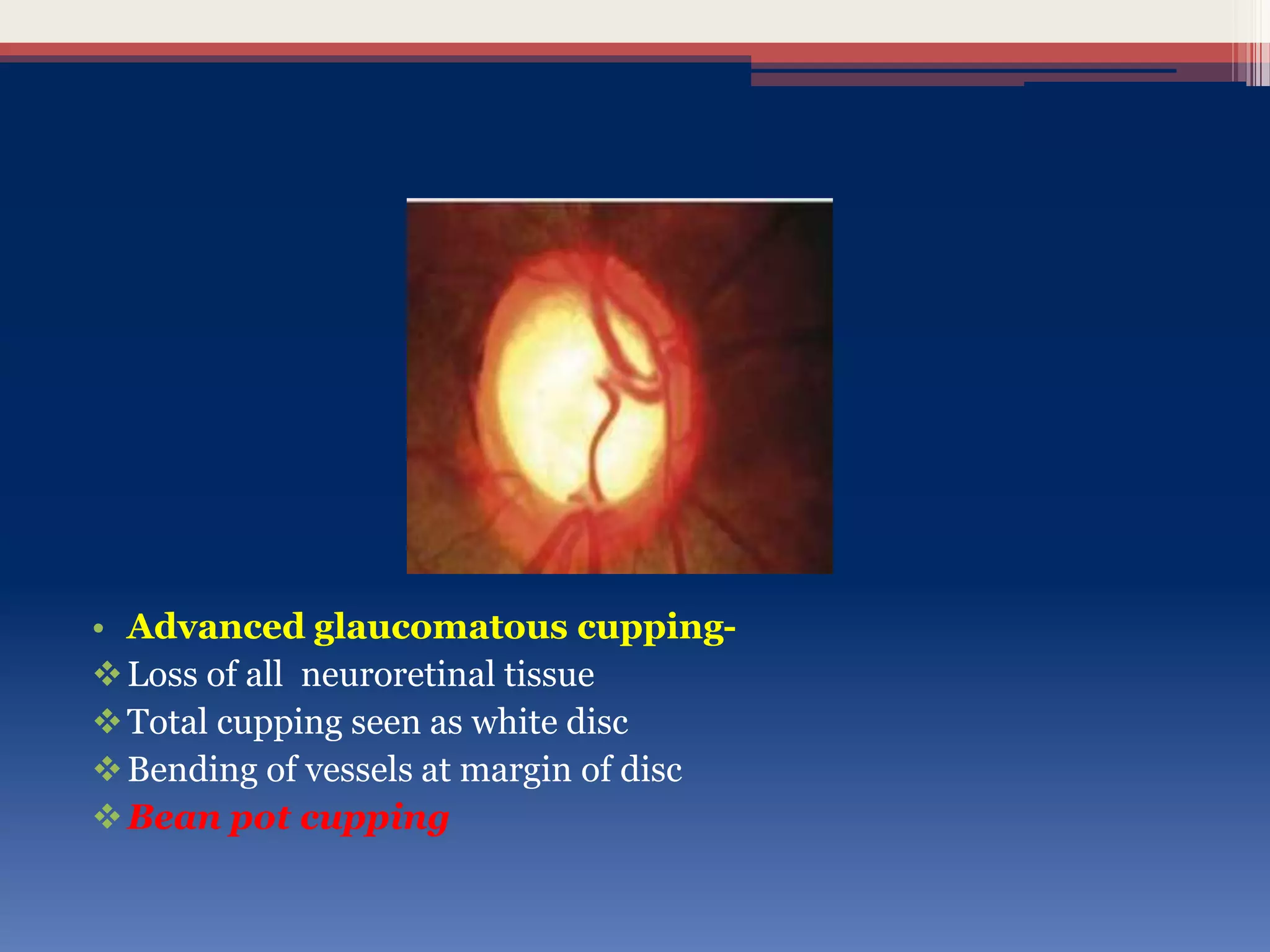
• Advanced glaucomatous cupping-
Loss of all neuroretinal tissue
Total cupping seen as white disc
Bending of vessels at margin of disc
Bean pot cupping
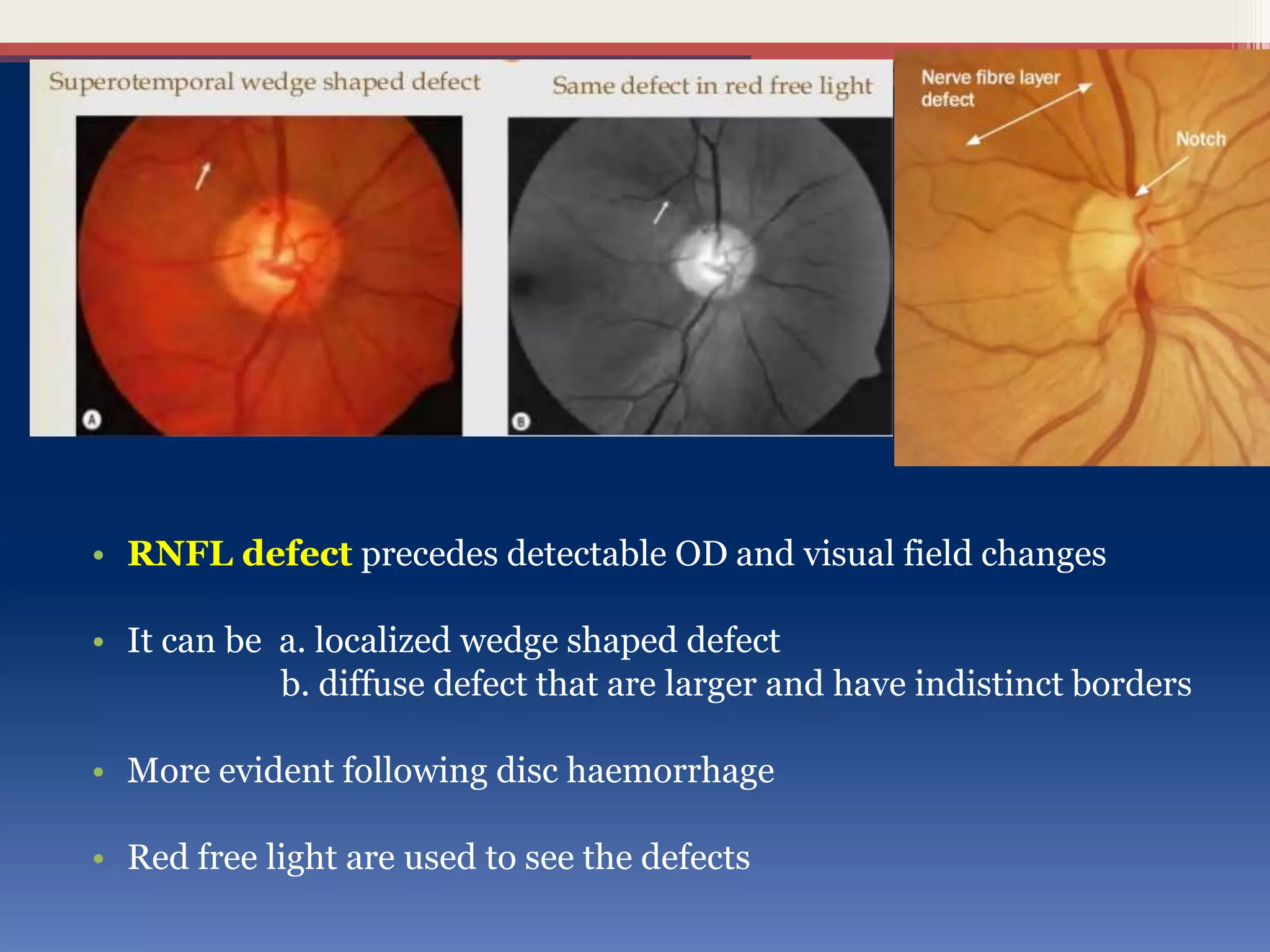
• RNFL defect precedes detectable OD and visual field changes
• It can be a. localized wedge shaped defect
b. diffuse defect that are larger and have indistinct borders
• More evident following disc haemorrhage
• Red free light are used to see the defects
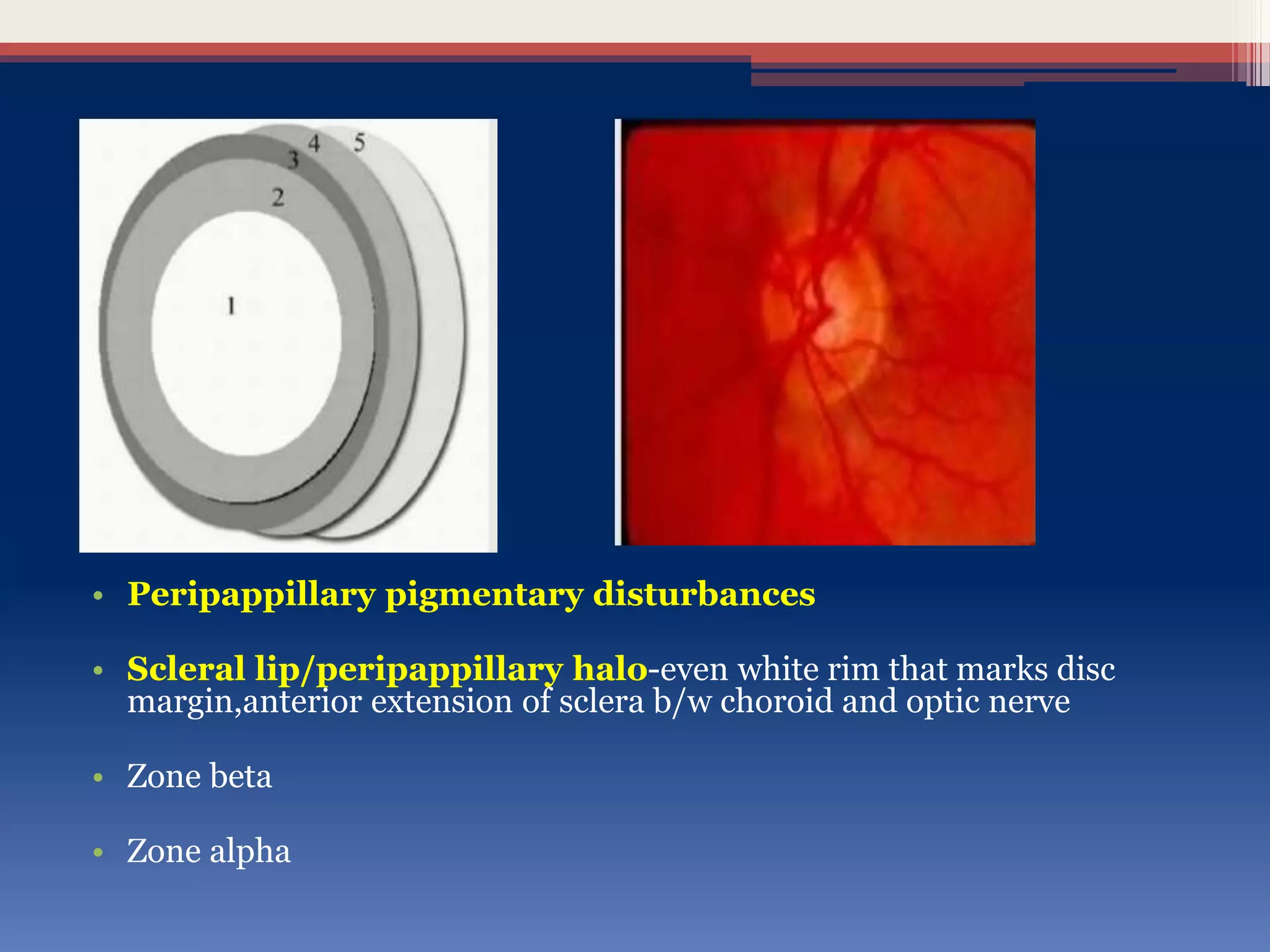
• Peripappillary pigmentary disturbances
• Scleral lip/peripappillary halo-even white rim that marks disc
margin,anterior extension of sclera b/w choroid and optic nerve
• Zone beta
• Zone alpha
• Alpha zone-irregular hypo or hyper pigmented zone associated
with chorioretinal thinning.
• Beta zone-represents loss of RPE and choriocapilaries leaving
intact choroidal vasculature.
THANK YOU

Glaucoma optic disc changes

  • 1.
    GLAUCOMA OPTIC DISCCHANGES PRESENTED BY- PRAGATI JAIN
  • 2.
    • Chronic progressiveoptic neuropathy caused by group of ocular conditions which lead to damage of optic nerve with loss of visual function.
  • 3.
    Definitions • ONH-distal portionof optic nerve,extends from retinal surface to myelinated portion of optic nerve. • Composed of the nerve fibres which originates in the Ganglionic cell layer of retina & converge upon the nerve head from all points in the fundus. • Relation between ONH and glaucoma was first described by von Graefe in 1857
  • 4.
    • Physiological cup-representspartial or complete absence of axons Pallor of cup results from exposure of lamina cribrosa and lack of glial tissue in the centre • NRR-tissue b/w cup and disc margin I>S>N>T • Normal CDR is 0.3 :1 2% have CDR 0.7:1
  • 5.
    Lamina cribrosa- porous regionof sclera and also a specialized extracellular matrix that consists of fenestrated sheets of connective tissue and occasional elastic fibres lined by astrocytes
  • 6.
    • Peripapillary area-RNFLseen as striations in light reflex from bundles of nerve fibres. Distribution of retinal nerve fibre- Arrangement of nerve fibres within ONH- From peripheral part of retina lie deep in retina & occupy most superficial part of OD Fibres closer to ONH lie superficial in retina.
  • 7.
    Pathogenesis of ONHchanges in glaucoma • Mechanical effect-raised IOP forces lamina cribrosa backwards and squeezes nerve fibres within ,disturb axoplasmic flow • Vascular effect-ischaemic atrophy of nerve fibre
  • 8.
    ONH Signs SuggestiveOf Glaucoma • Size of cup in relation to size of ONH- Small disc with deep cup Medium disc with deep cup Meduim disc with large cup Large disc with large cup
  • 9.
    • Asymmetry ofcups- 0.2 in both eyes suspicion.
  • 10.
    • Vertical enlargementof cup- Vertical CDR > horizontal CDR Loss of axons occur more in superior and inferior regions so NRR thinning at vertical poles
  • 11.
    • Focal atrophyand polar notching Inferotemporal region,sometimes superotemporally Small discrete defect due to loss of neural rim tissue
  • 12.
    • Sharpened nasalmargins- As focal defect enlarges and deepens it may develop sharp nasal margins adjacent to major blood vessels.
  • 13.
    • Sharpened rim- NRRis lost adjacent to edge of the disc No visible neural rim is seen
  • 14.
    • ` • Bayonettingsign- double angulation of blood vessel When retinal vessels cross the sharpened rim,it will bend sharply at the edge of the disc
  • 15.
    • Laminar dotsign/shadow sign  As loss of axon progresses the normal colour is replaced by greyish hue.  Deepening of cup  s/o Advanced damage
  • 16.
    • Overpass cupping- Vesselsinitially bridge the deepened cup and later collapse into it
  • 17.
    • Pallor areason the disc-  Kinking of vessels at cup margin  Colour cup- extent of central pallor  Contour cup- site at which vessel change their contour  Enlargement of cup may progress ahead of pallor  Pathognomic of glaucomatous optic atrophy
  • 18.
    • Saucerization- Diffuse shallowcupping extends disc margin with retention of central pale cup Focal saucerization –more localized shallow sloping cup Early s/o glaucoma • Tinted hollow- Retention of normal NRR colour in area of focal saucerization
  • 19.
    • Splinter haemorrhageor Drance heamorrhage- At disk margin,extends from NRR onto retina m/c inferotemporally Significant early finding,risk factor for development and progression Precedes RNFL changes and field defects
  • 20.
    • Barring ofcircumlinear vessels- Space b/w NRR and superficial blood vessels Vessels appear to be barred from margin of the cup
  • 21.
    • Tortousity ofretinal vessels- As response to chronic ischaemia • Collaterals b/w 2 veins at the disc may also be seen
  • 22.
    • Advanced glaucomatouscupping- Loss of all neuroretinal tissue Total cupping seen as white disc Bending of vessels at margin of disc Bean pot cupping
  • 23.
    • RNFL defectprecedes detectable OD and visual field changes • It can be a. localized wedge shaped defect b. diffuse defect that are larger and have indistinct borders • More evident following disc haemorrhage • Red free light are used to see the defects
  • 24.
    • Peripappillary pigmentarydisturbances • Scleral lip/peripappillary halo-even white rim that marks disc margin,anterior extension of sclera b/w choroid and optic nerve • Zone beta • Zone alpha
  • 25.
    • Alpha zone-irregularhypo or hyper pigmented zone associated with chorioretinal thinning. • Beta zone-represents loss of RPE and choriocapilaries leaving intact choroidal vasculature.
  • 26.