ASTHMA AND COPD
ARE THEY A SPECTRUM OF SAME
DISEASE?
PATHOPHYSIOLOGY
Nicola A. Hanania, MD, MS, FRCP(C), FCCP
Associate Professor of Medicine
Pulmonary and Critical Care Medicine
Director, Asthma Clinical Research Center
Baylor College of Medicine, Houston, Texas
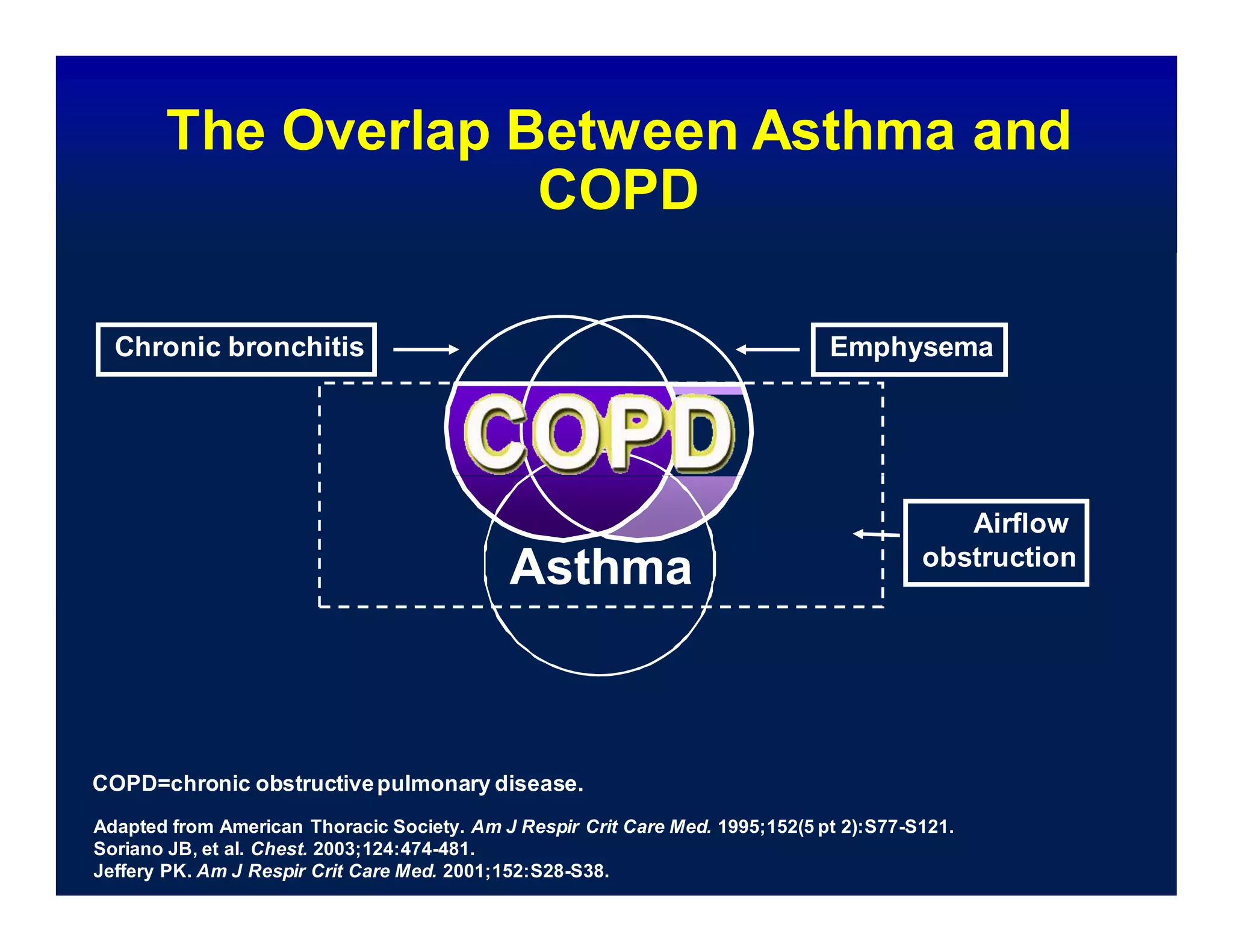
The Overlap Between Asthma and
COPD
Chronic bronchitis Emphysema
Asthma
COPD=chronic obstructivepulmonary disease.
Airflow
obstruction
Adapted from American Thoracic Society. Am J Respir Crit Care Med. 1995;152(5 pt 2):S77-S121.
Soriano JB, et al. Chest. 2003;124:474-481.
Jeffery PK. Am J Respir Crit Care Med. 2001;152:S28-S38.
The Dutch Hypothesis
 Various formsof airway obstruction are different expressions of
a single disease
– Chronic nonspecific lung disease (CNSLD)
 Host and environmental factors play a role in pathogenesis
– Host factors: atopy and AHR
◆Other endogenous factors: sex and age
– Exogenous factors: allergens, viral infections,
smoking (pollutants)
 Diffuse airway obstruction = common pathophysiologic
characteristic
Orie et al. Bronchitis II Second International Symposium. Assen, Netherlands:
Royal Van Gorcum; 1964:398-99
– Epidemiology
The British Hypothesis
 Asthma and COPD are distinct entities caused by
different mechanisms
– Differences in inflammation
– Airway remodeling vs alveolar remodeling
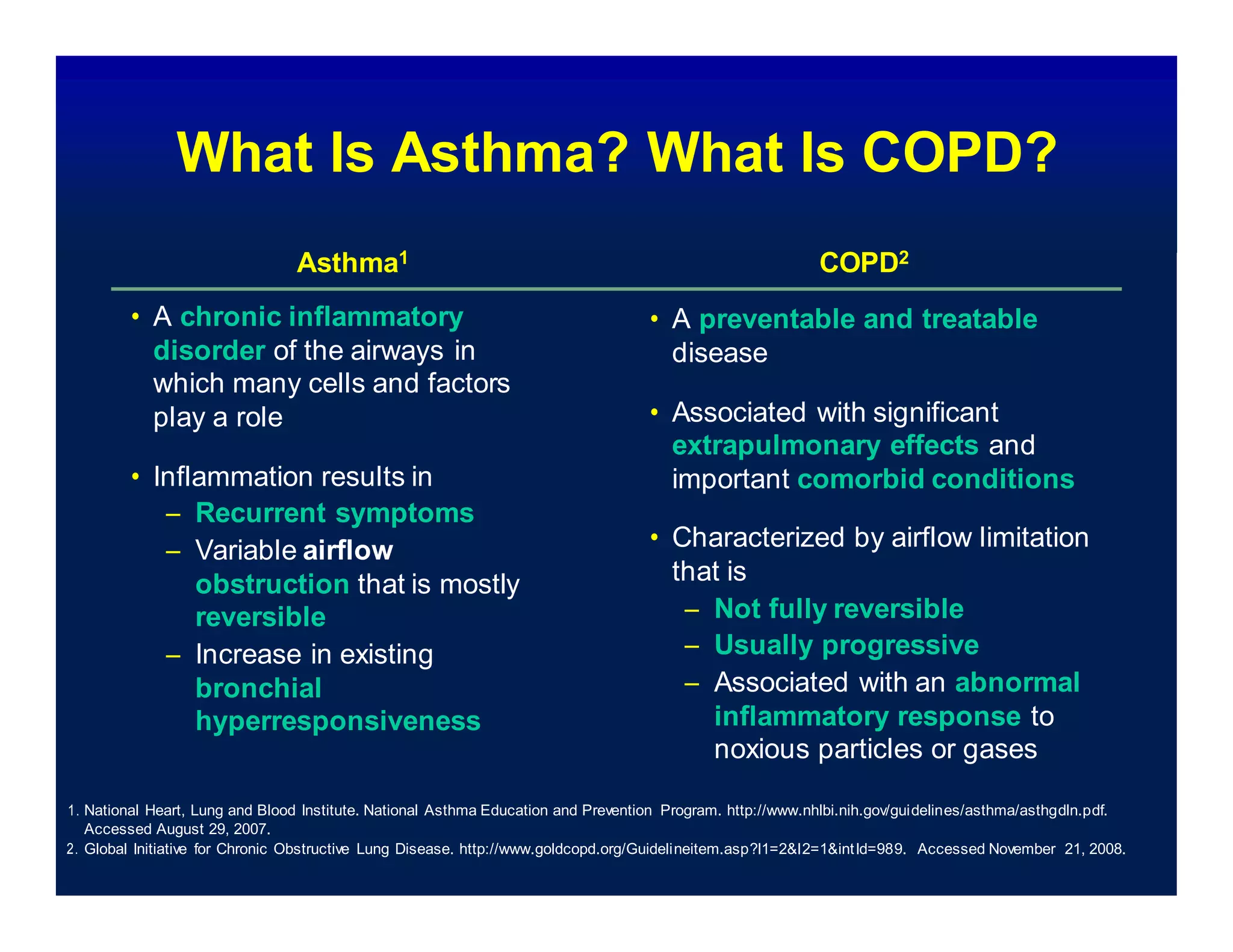
What Is Asthma? What Is COPD?
Asthma1
• A chronic inflammatory
disorder of the airways in
which many cells and factors
play a role
• Inflammation results in
– Recurrent symptoms
– Variable airflow
obstruction that is mostly
reversible
– Increase in existing
bronchial
hyperresponsiveness
COPD2
• A preventable and treatable
disease
• Associated with significant
extrapulmonary effects and
important comorbid conditions
• Characterized by airflow limitation
that is
– Not fully reversible
– Usually progressive
– Associated with an abnormal
inflammatory response to
noxious particles or gases
1. National Heart, Lung and Blood Institute. National Asthma Education and Prevention Program. http://www.nhlbi.nih.gov/guidelines/asthma/asthgdln.pdf.
Accessed August 29, 2007.
2. Global Initiative for Chronic Obstructive Lung Disease. http://www.goldcopd.org/Guidelineitem.asp?l1=2&l2=1&intId=989. Accessed November 21, 2008.
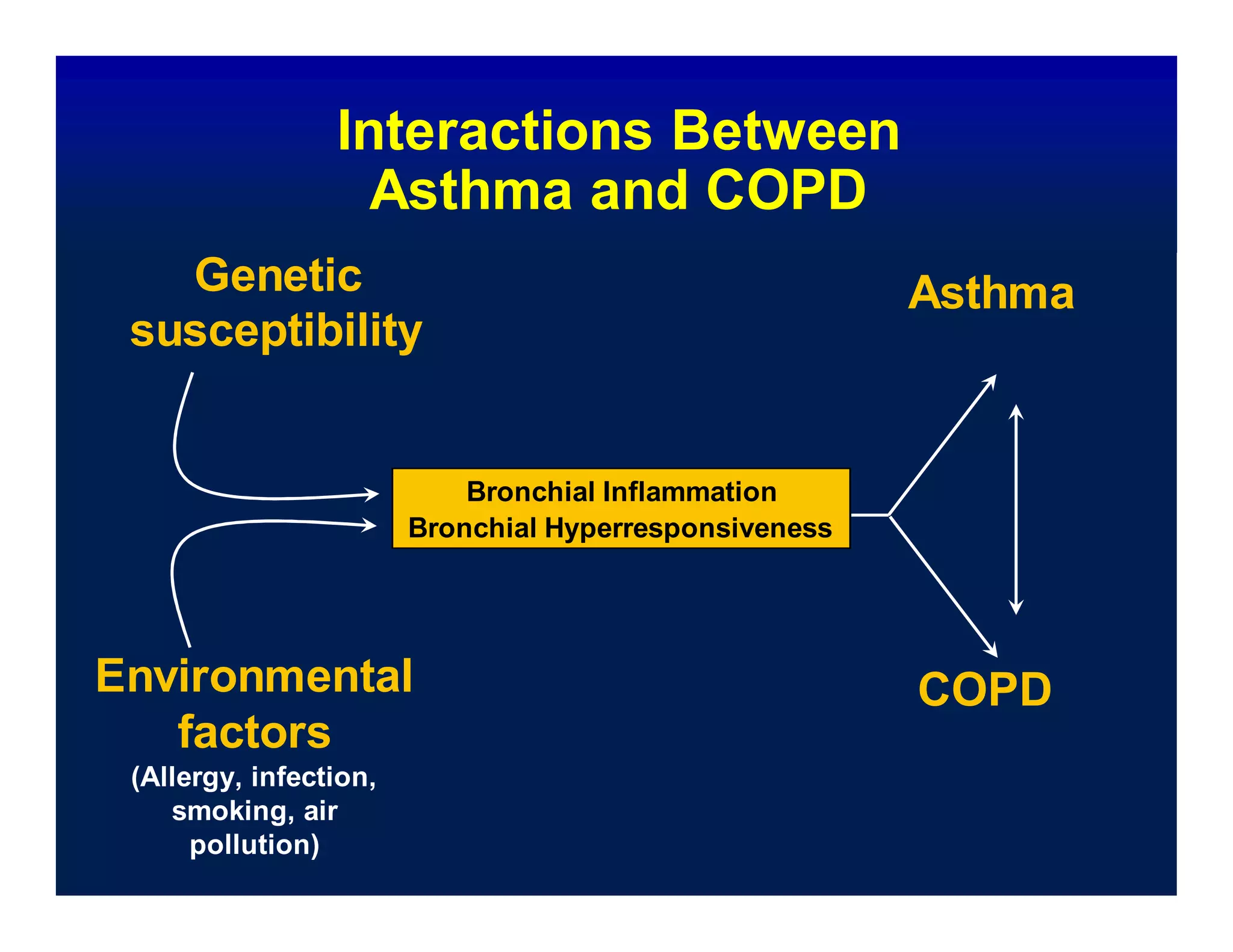
Bronchial Inflammation
Bronchial Hyperresponsiveness
Interactions Between
Asthma and COPD
Genetic
susceptibility
Asthma
Environmental
factors
(Allergy, infection,
smoking, air
pollution)
COPD
Genetic Associations that Suggest
a Common Origin in COPD &
Asthma
 IgE
 BHR IL-13
 Rate of FEV1 decline
 Airway thickness ADAM33
van der Pouw Kraan TC.GenesImmun1999;61–65 Howard TD. Am J Respir
Cell MolBiol 2001;377–384 van der Pouw Kraan TC.GenesImmun 2002;436–439
Ohar JA [abstract].Eur Respir J 2001;P3588 Simpson A. Am J Resp Crit Care Med 2005;55-60
Holgate ST.Thorax2005;466-69 van Diemen CC. Am J Resp Crit Care Med 2005;329-33
JongepierH. Clin Exp Allergy 2004;757-60
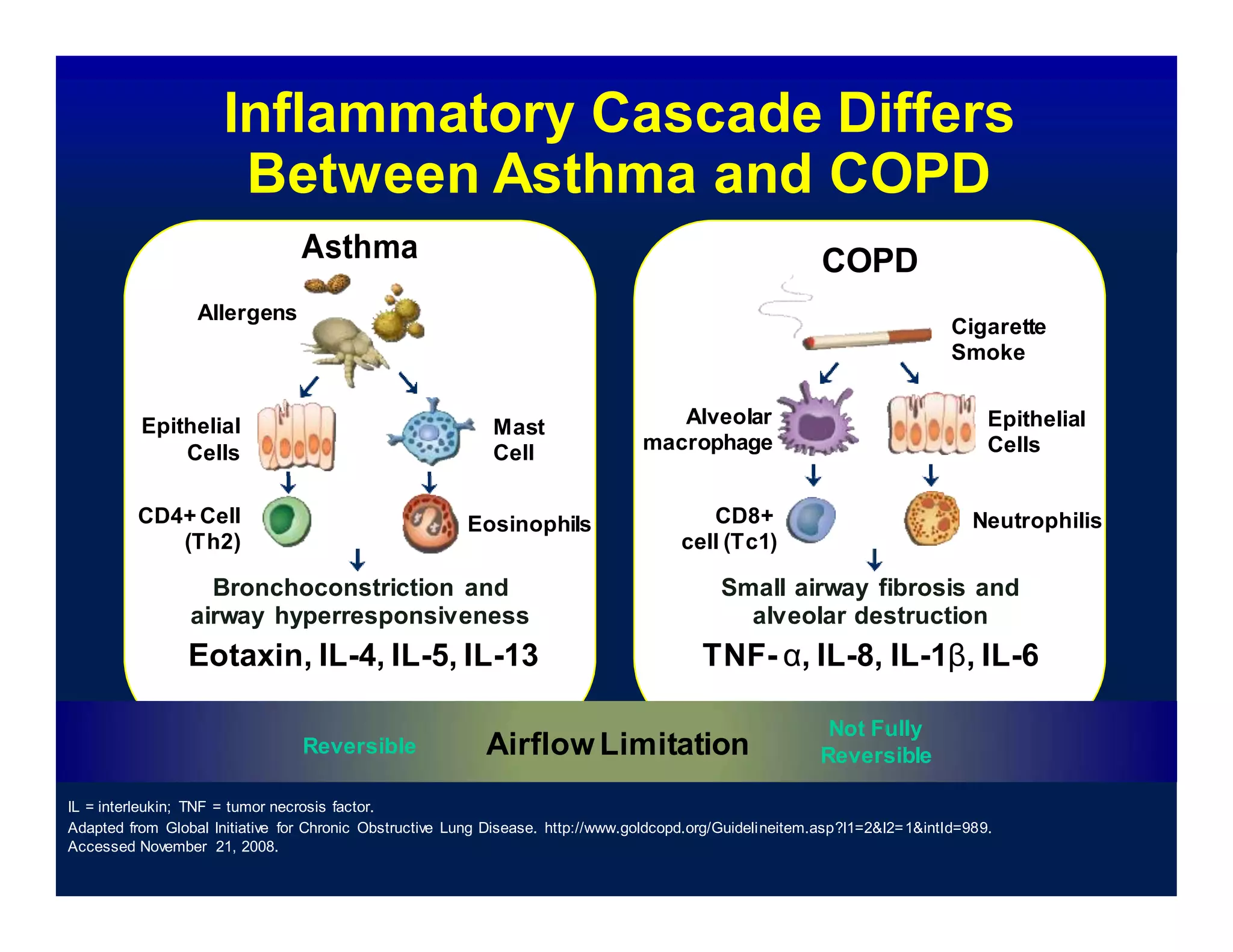
Inflammatory Cascade Differs
Between Asthma and COPD
Allergens
Epithelial
Cells
Asthma
Mast
Cell
Alveolar
macrophage
COPD
Cigarette
Smoke
Epithelial
Cells
CD4+ Cell
(Th2)
Eosinophils CD8+
cell (Tc1)
Neutrophilis
Bronchoconstriction and
airway hyperresponsiveness
Eotaxin, IL-4, IL-5, IL-13
Small airway fibrosis and
alveolar destruction
TNF- α, IL-8, IL-1β, IL-6
Reversible Airflow Limitation
Not Fully
Reversible
IL = interleukin; TNF = tumor necrosis factor.
Adapted from Global Initiative for Chronic Obstructive Lung Disease. http://www.goldcopd.org/Guidelineitem.asp?l1=2&l2=1&intId=989.
Accessed November 21, 2008.
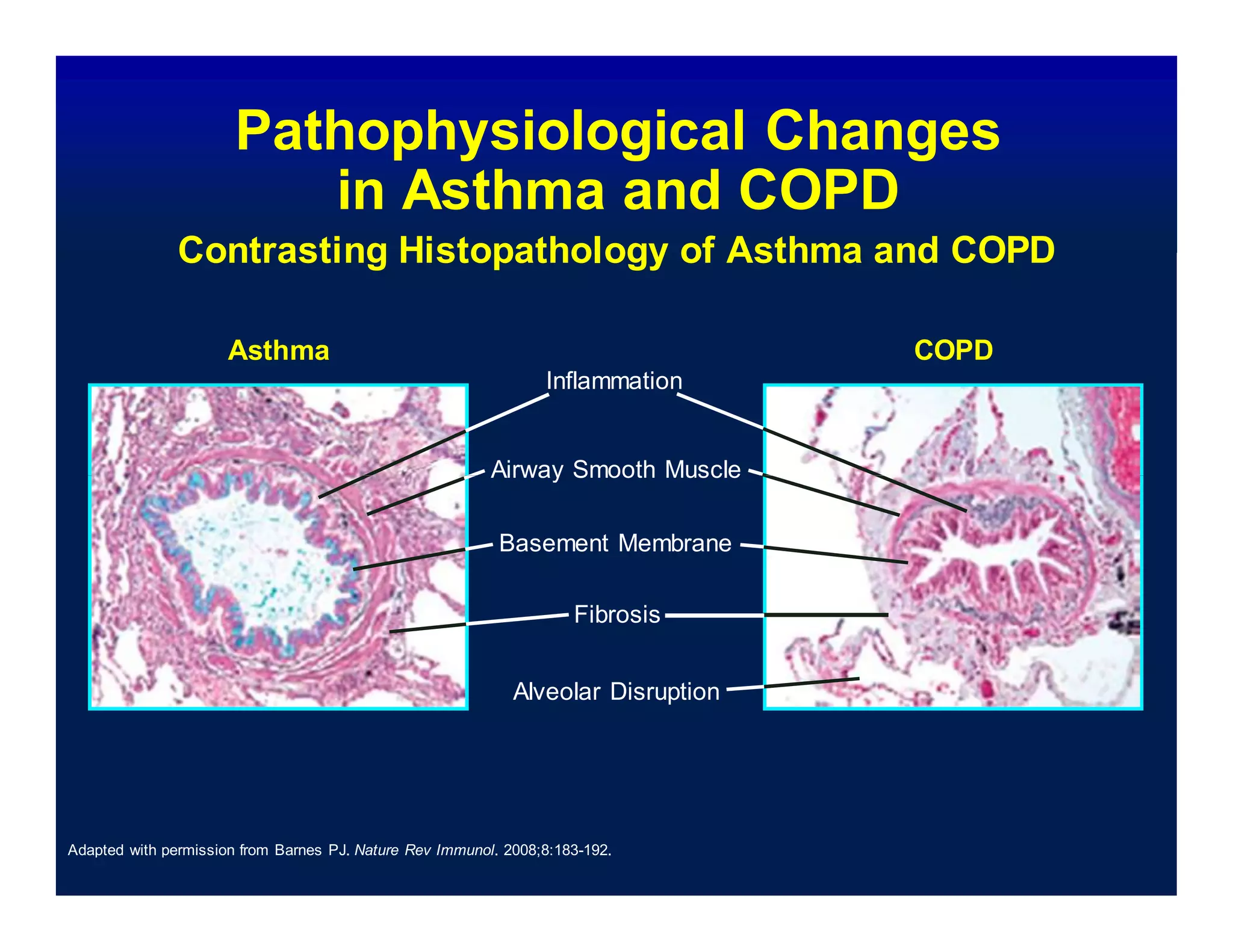
Pathophysiological Changes
in Asthma and COPD
Contrasting Histopathology of Asthma and COPD
Asthma COPD
Inflammation
Airway Smooth Muscle
Basement Membrane
Fibrosis
Alveolar Disruption
Adapted with permission from Barnes PJ. Nature Rev Immunol. 2008;8:183-192.
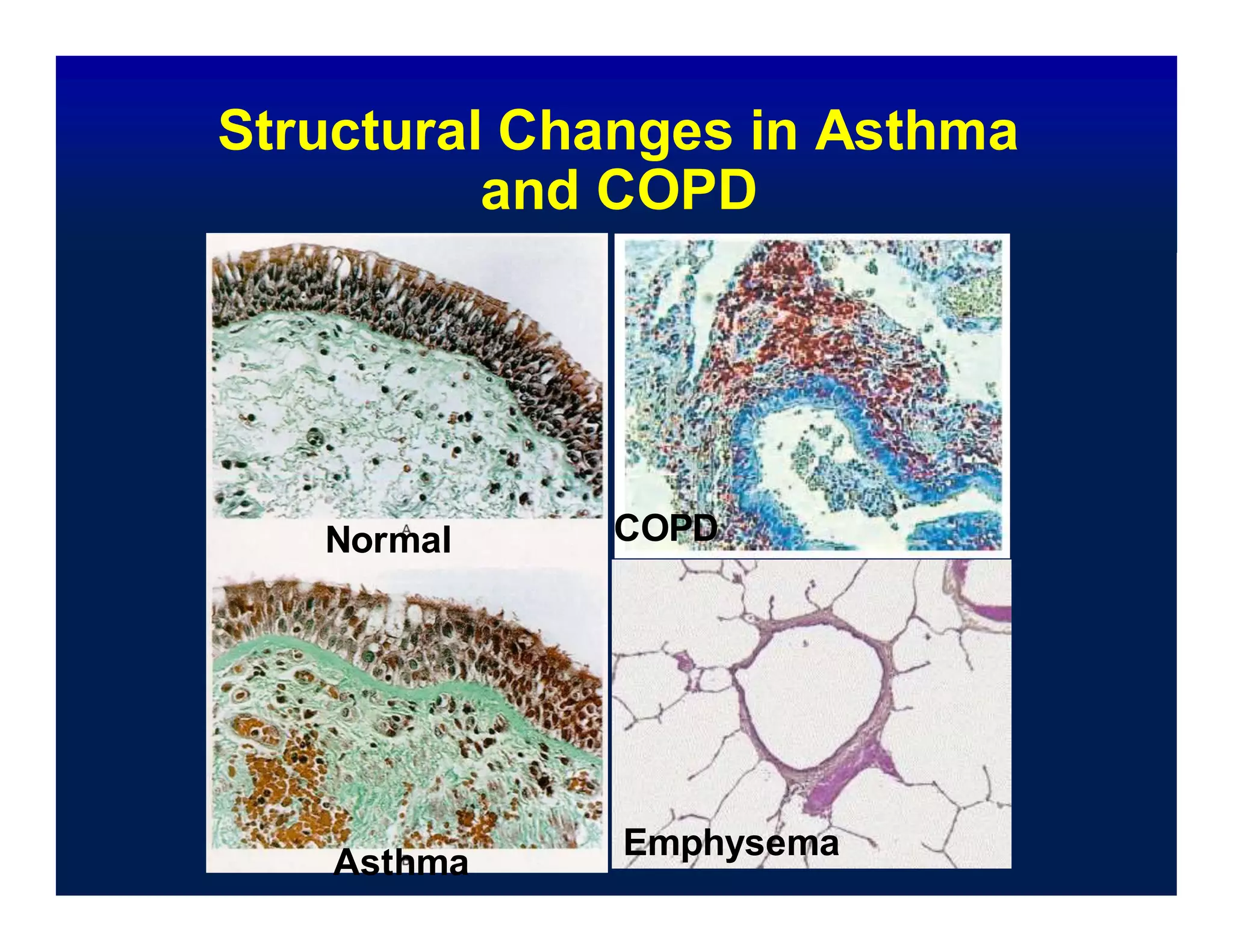
Structural Changes in Asthma
and COPD
Normal COPD
Asthma
Emphysema
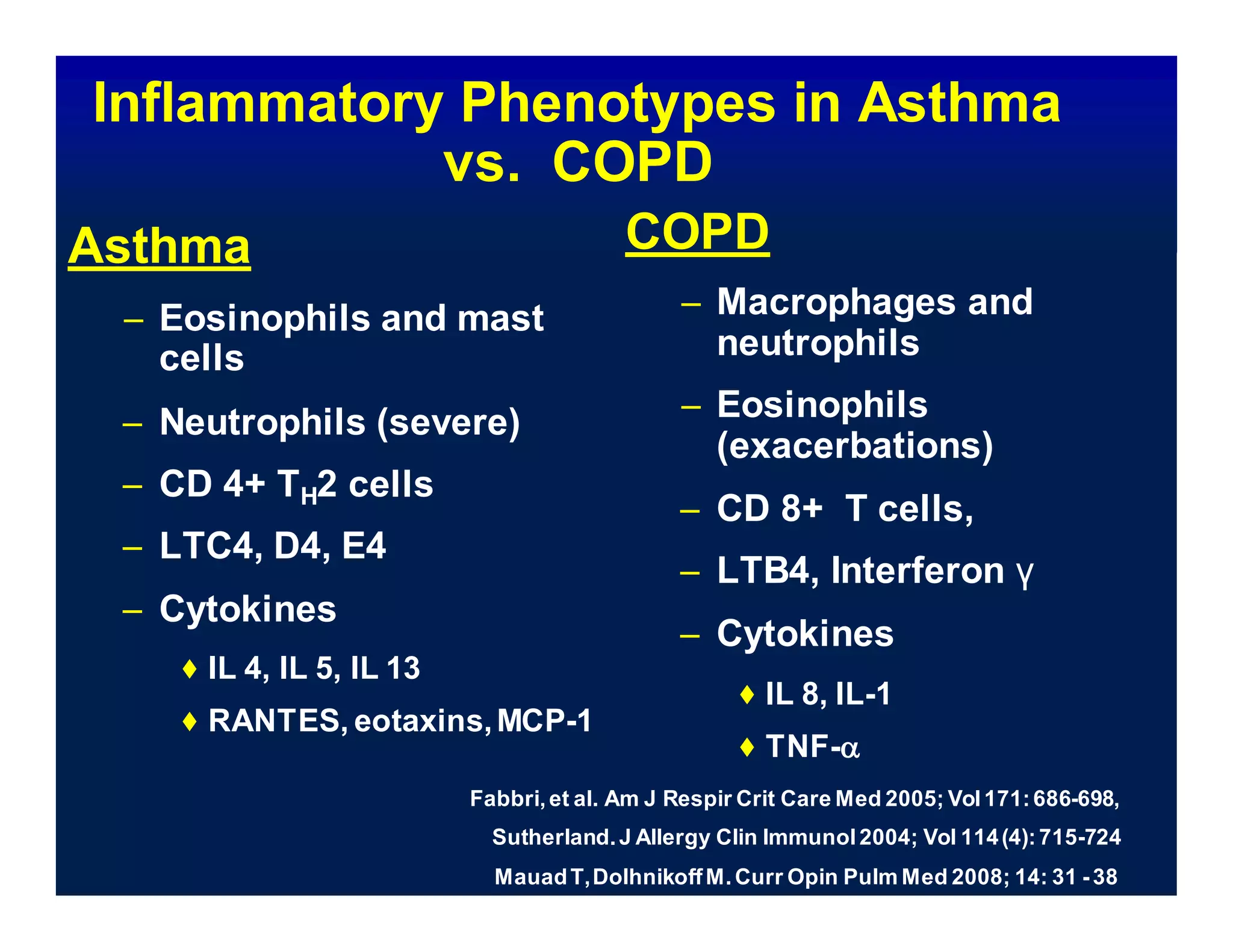
Inflammatory Phenotypes in Asthma
vs. COPD
Asthma
– Eosinophils and mast
cells
– Neutrophils (severe)
– CD 4+ TH2 cells
– LTC4, D4, E4
– Cytokines
◆ IL 4, IL 5, IL 13
◆ RANTES, eotaxins,MCP-1
COPD
– Macrophages and
neutrophils
– Eosinophils
(exacerbations)
– CD 8+ T cells,
– LTB4, Interferon γ
– Cytokines
◆ IL 8, IL-1
◆ TNF-

Fabbri,et al. Am J Respir Crit Care Med 2005; Vol171:686-698,
Sutherland.J Allergy Clin Immunol2004; Vol 114(4):715-724
MauadT,DolhnikoffM.Curr Opin Pulm Med 2008; 14: 31 -38
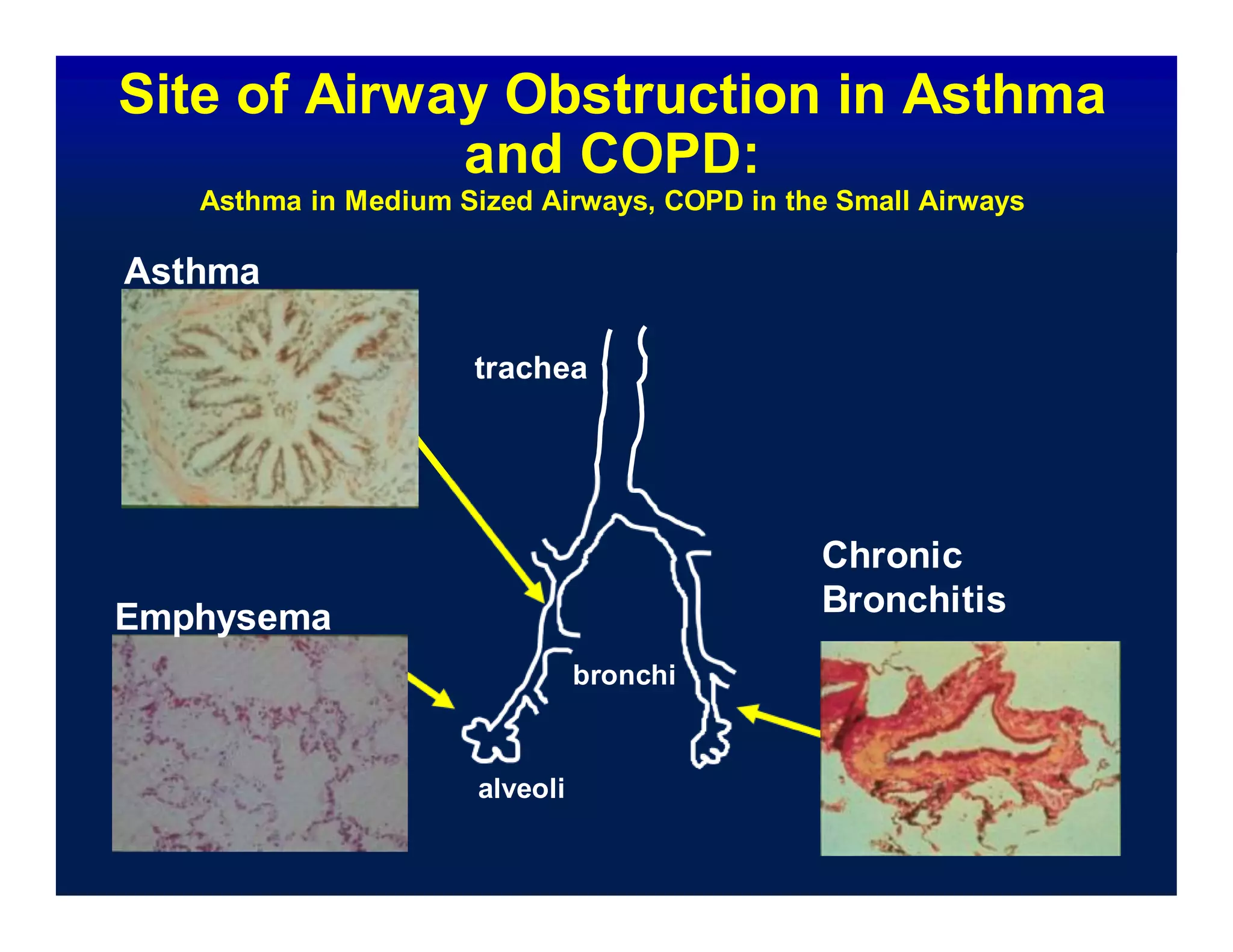
Site of Airway Obstruction in Asthma
and COPD:
Asthma in Medium Sized Airways, COPD in the Small Airways
Asthma
trachea
Emphysema
bronchi
Chronic
Bronchitis
alveoli
– Volume of lung in density range c/w emphysema:
5% in mild and 23% severe asthmatics
Sciurba FC Chest 2004:126:17S
However,
 Asthma is often progressive process with partially
reversible component that can involve small
peripheral airways
 CT scans demonstrating increased airway wall
thickness like COPD
* Kraft M.Am J Respir Crit Care.Med 1996:154:1505
**Wenzel S Am J Respir Crit Care Med:1999:160:1001
***Chanez P Am J Respir Crit Care Med
1997:155:1529
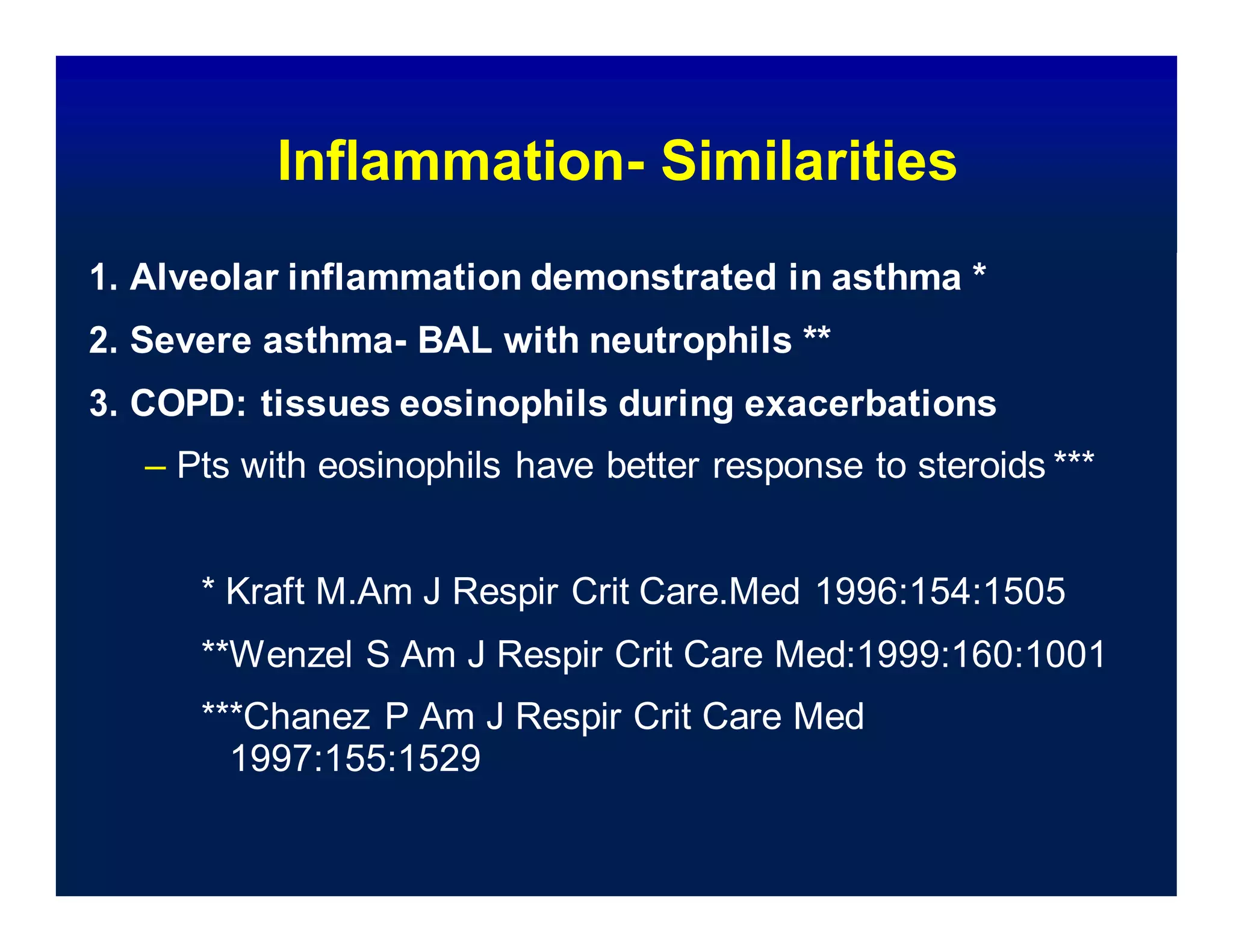
Inflammation- Similarities
1. Alveolar inflammation demonstrated in asthma *
2. Severe asthma- BAL with neutrophils **
3. COPD: tissues eosinophils during exacerbations
– Pts with eosinophils have better response to steroids ***
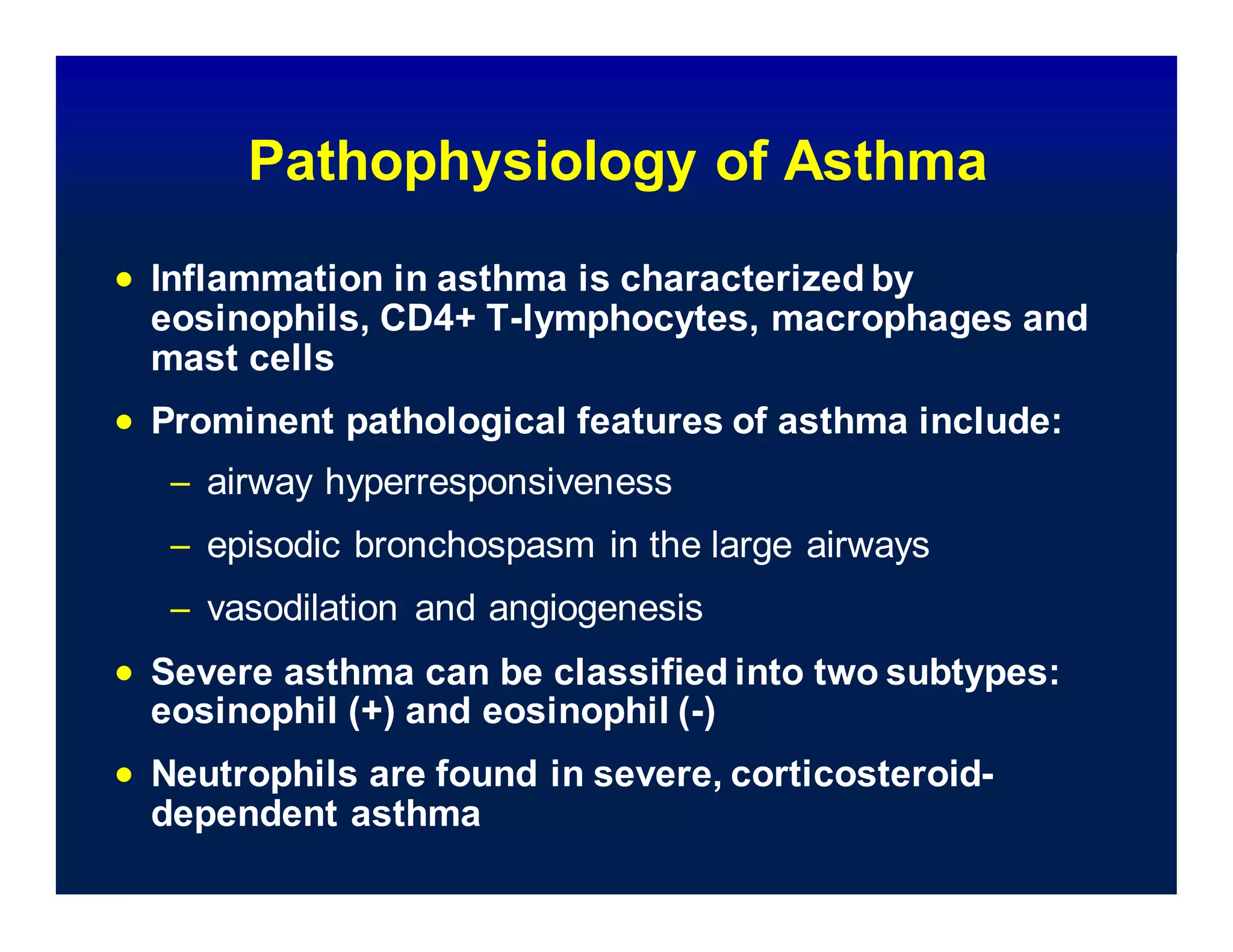
Pathophysiology of Asthma
 Inflammation in asthma is characterized by
eosinophils, CD4+ T-lymphocytes, macrophages and
mast cells
 Prominent pathological features of asthma include:
– airway hyperresponsiveness
– episodic bronchospasm in the large airways
– vasodilation and angiogenesis
 Severe asthma can be classified into two subtypes:
eosinophil (+) and eosinophil (-)
 Neutrophils are found in severe, corticosteroid-
dependent asthma
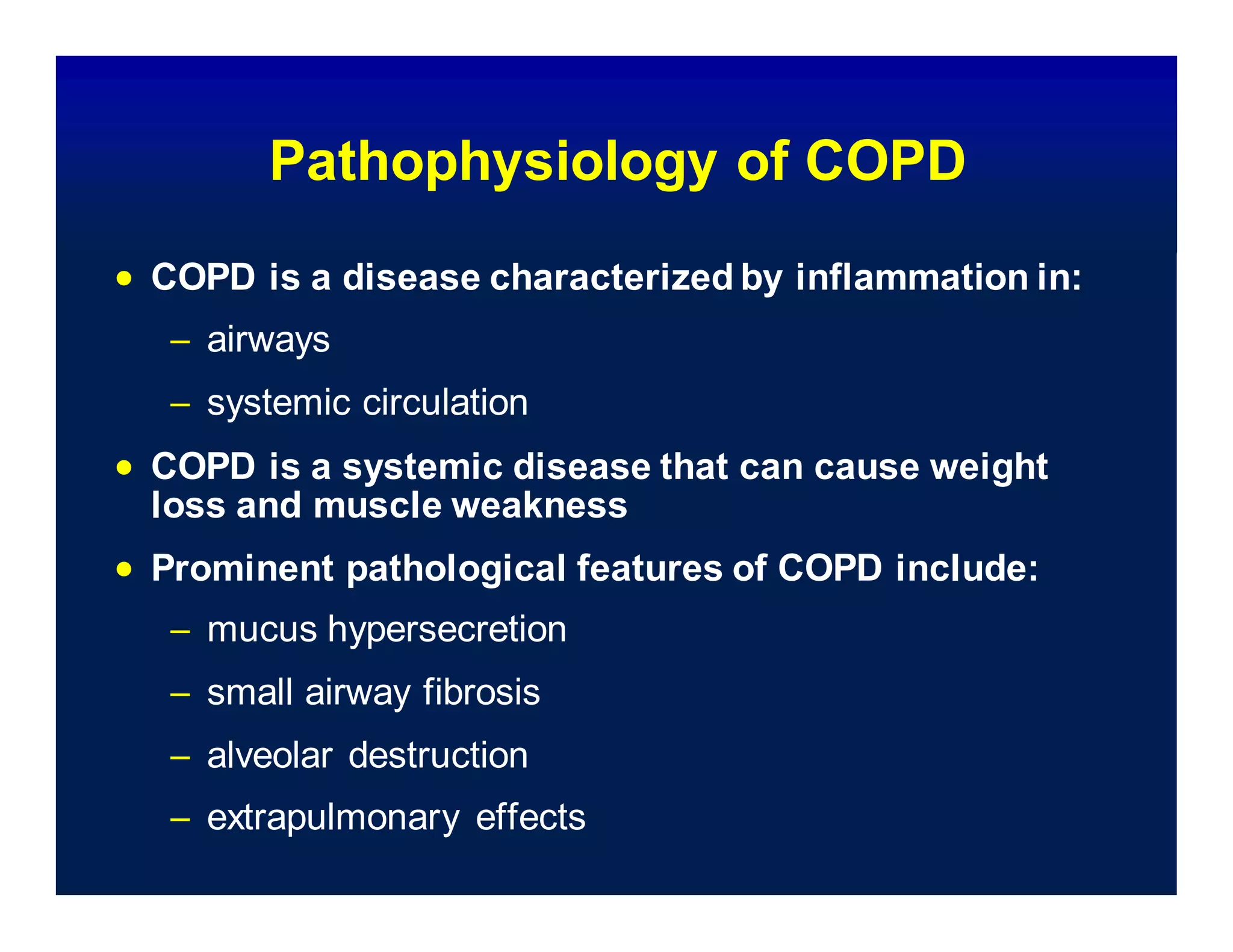
Pathophysiology of COPD
 COPD is a disease characterized by inflammation in:
– airways
– systemic circulation
 COPD is a systemic disease that can cause weight
loss and muscle weakness
 Prominent pathological features of COPD include:
– mucus hypersecretion
– small airway fibrosis
– alveolar destruction
– extrapulmonary effects
Boulet L Can Respir J 1998:5:270
Fabbri LM Am J Respir Crit Care Med 2003:167:418
Magnussen H. Clin Exp Allergy 1998 28:187
Pulmonary Function
 Classically
– Asthma reversible airway obstruction
– COPD partially reversible
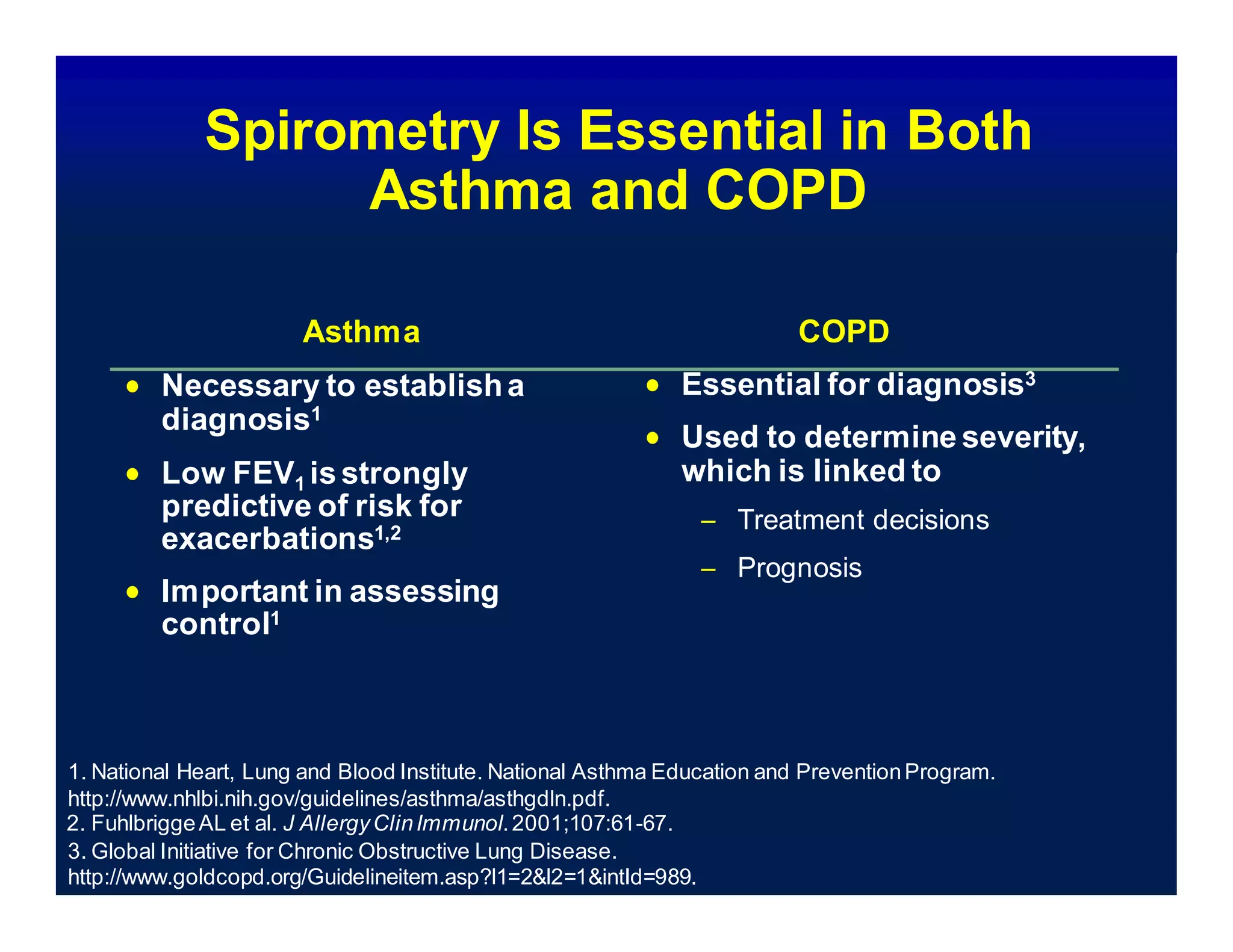
Spirometry Is Essential in Both
Asthma and COPD
Asthma
 Necessary to establisha
diagnosis1
 Low FEV1 isstrongly
COPD
 Essential for diagnosis3
 Used to determine severity,
which is linked to
predictive of risk for
exacerbations1,2
 Important in assessing
control1
– Treatment decisions
– Prognosis
1. National Heart, Lung and Blood Institute. National Asthma Education and PreventionProgram.
http://www.nhlbi.nih.gov/guidelines/asthma/asthgdln.pdf.
2. FuhlbriggeAL et al. J AllergyClinImmunol.2001;107:61-67.
3. Global Initiative for Chronic Obstructive Lung Disease.
http://www.goldcopd.org/Guidelineitem.asp?l1=2&l2=1&intId=989.
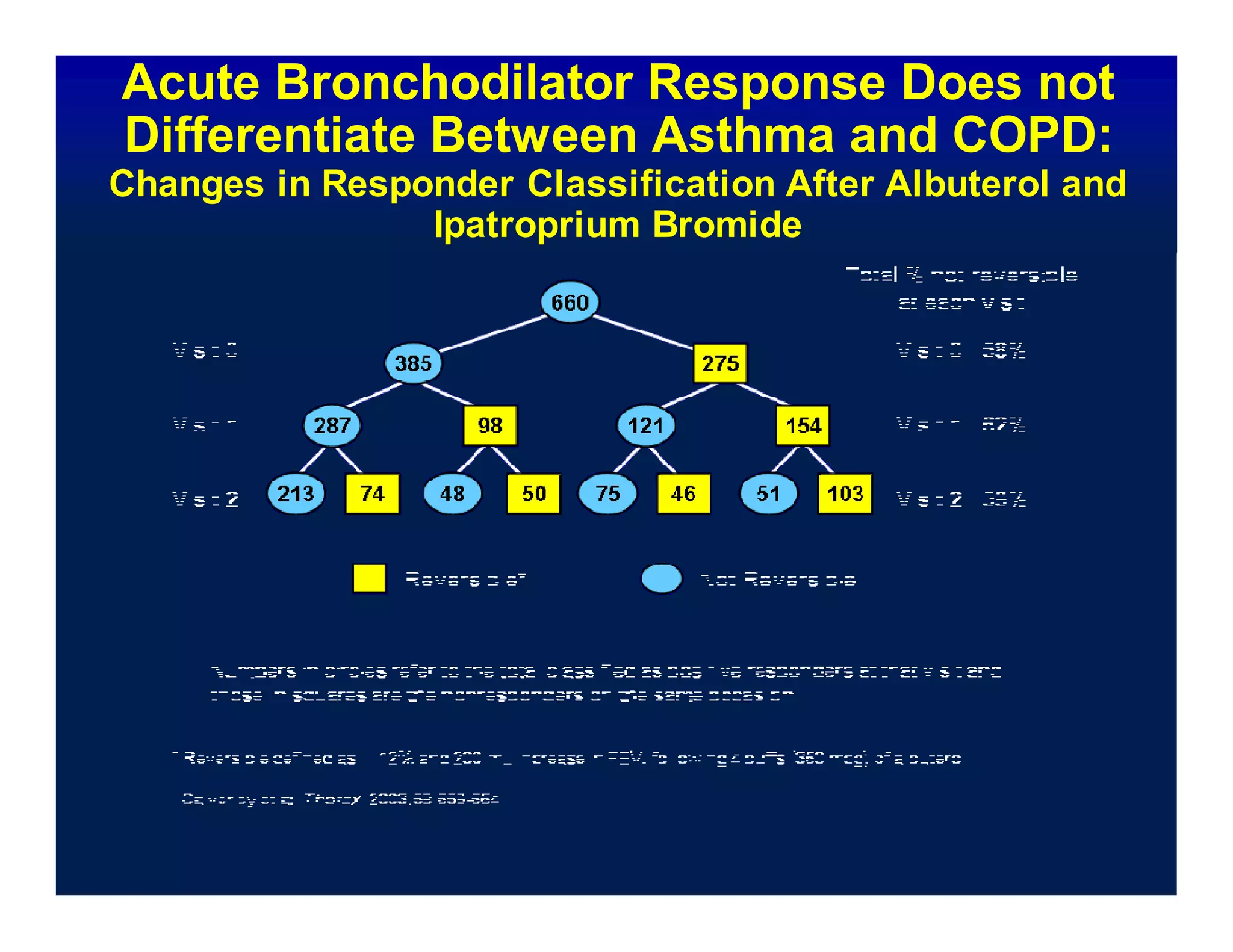
Acute Bronchodilator Response Does not
Differentiate Between Asthma and COPD:
Changes in Responder Classification After Albuterol and
Ipatroprium Bromide
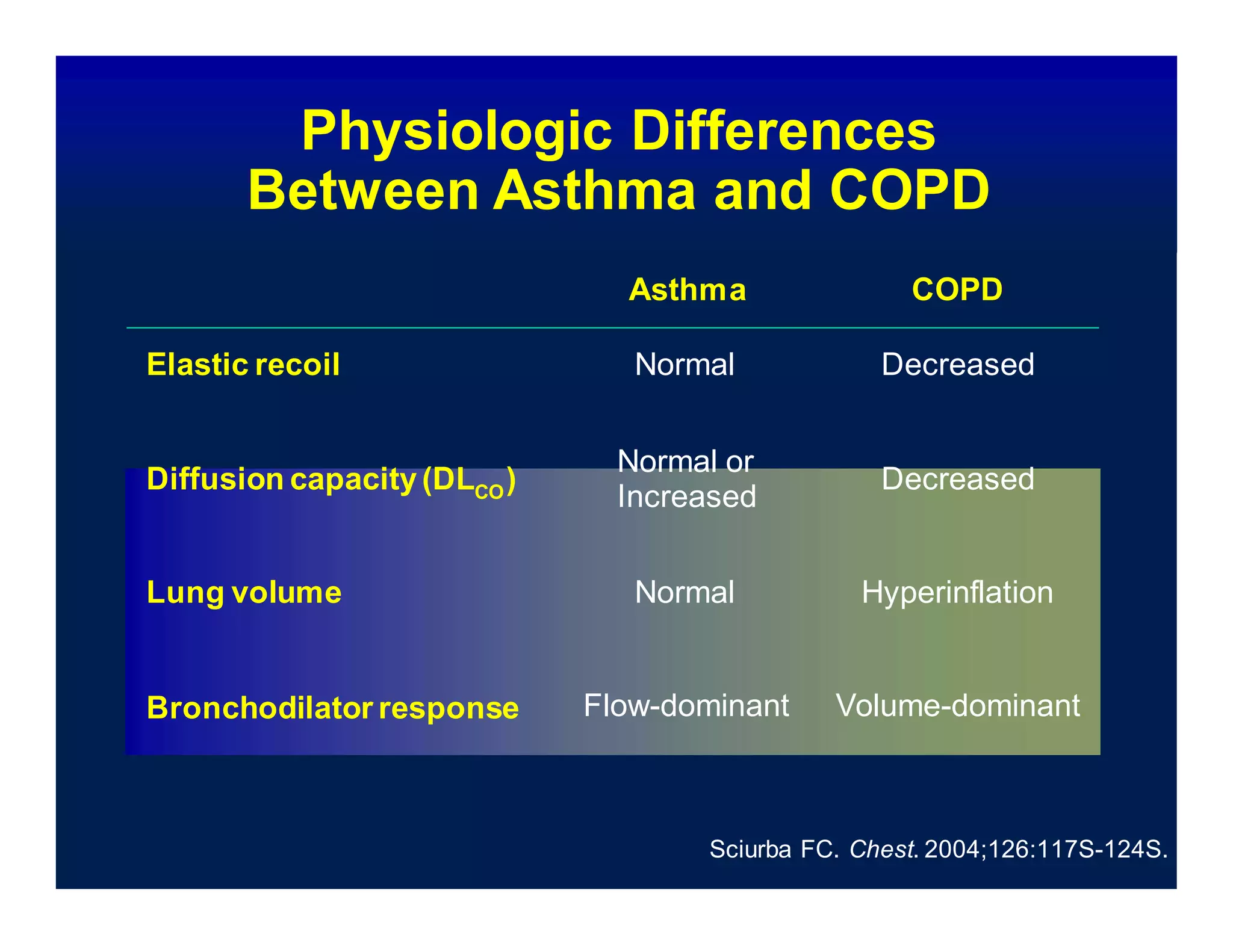
Diffusion capacity (DL )CO
Normal or
Increased
Decreased
Lung volume Normal Hyperinflation
Bronchodilator response Flow-dominant Volume-dominant
Sciurba FC. Chest. 2004;126:117S-124S.
Physiologic Differences
Between Asthma and COPD
Asthma COPD
Elastic recoil Normal Decreased
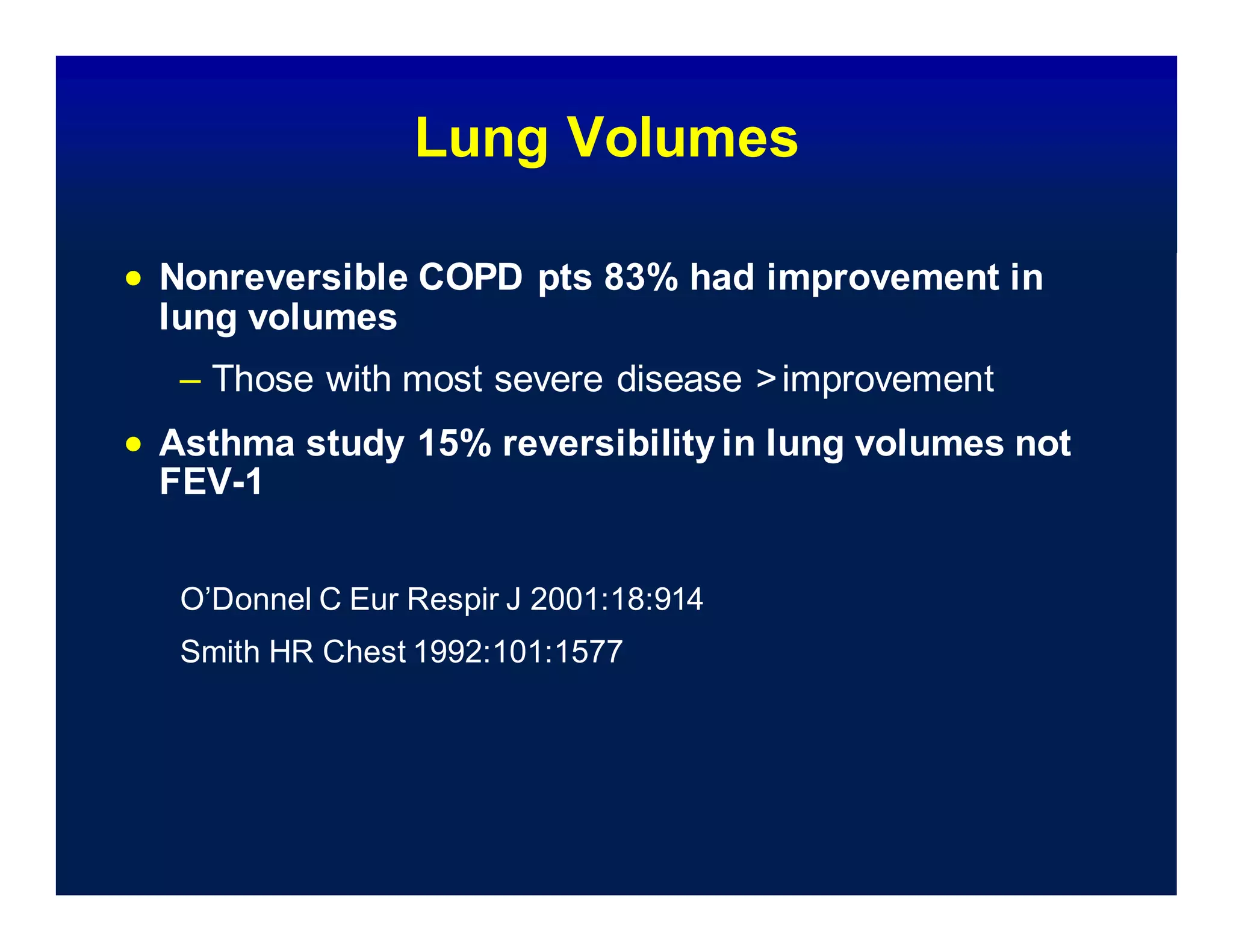
Lung Volumes
 Nonreversible COPD pts 83% had improvement in
lung volumes
– Those with most severe disease >improvement
 Asthma study 15% reversibility in lung volumes not
FEV-1
O’Donnel C Eur Respir J 2001:18:914
Smith HR Chest 1992:101:1577
Airway Hyperresponsiveness
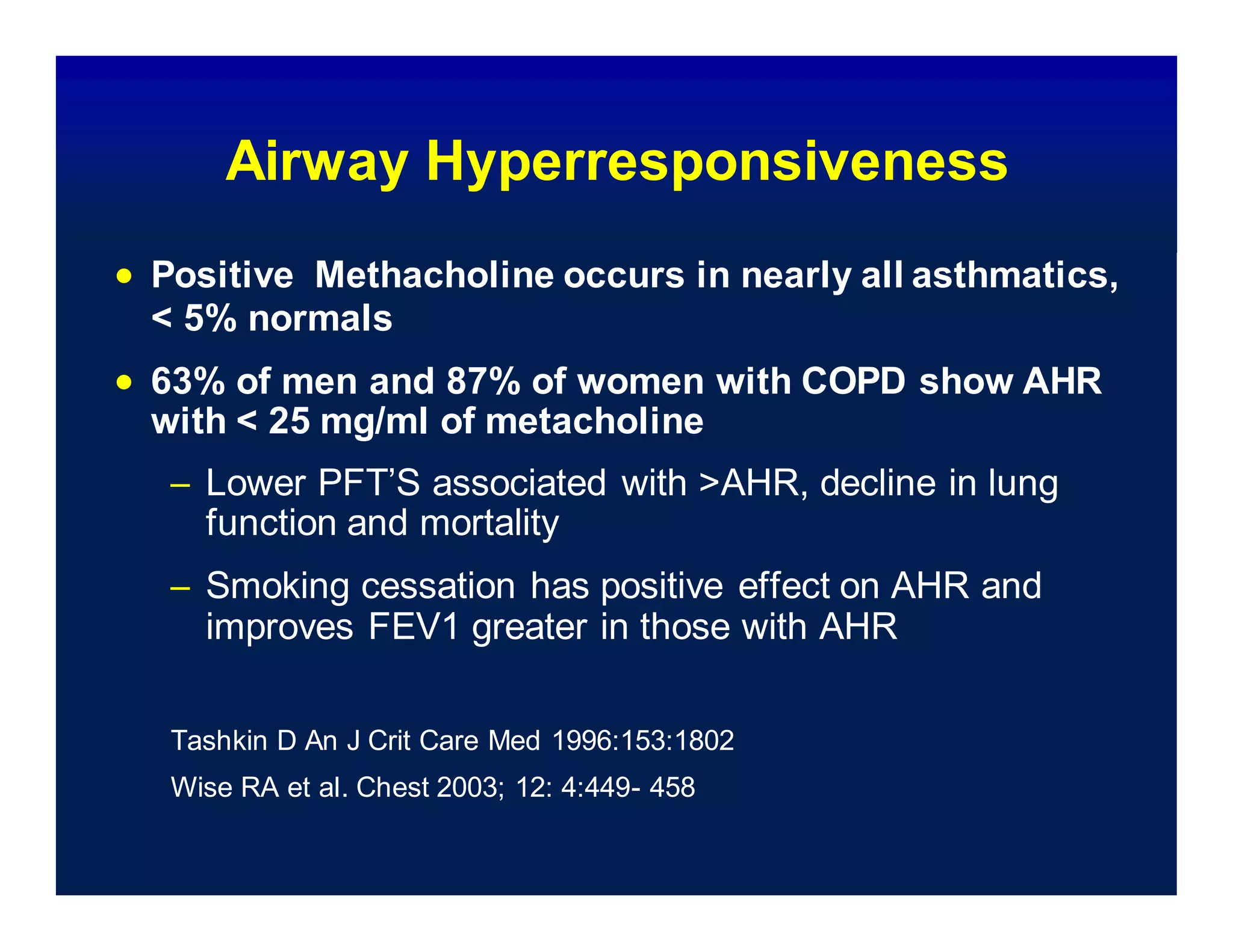
 Positive Methacholine occurs in nearly all asthmatics,
< 5% normals
 63% of men and 87% of women with COPD show AHR
with < 25 mg/ml of metacholine
– Lower PFT’S associated with >AHR, decline in lung
function and mortality
– Smoking cessation has positive effect on AHR and
improves FEV1 greater in those with AHR
Tashkin D An J Crit Care Med 1996:153:1802
Wise RA et al. Chest 2003; 12: 4:449- 458
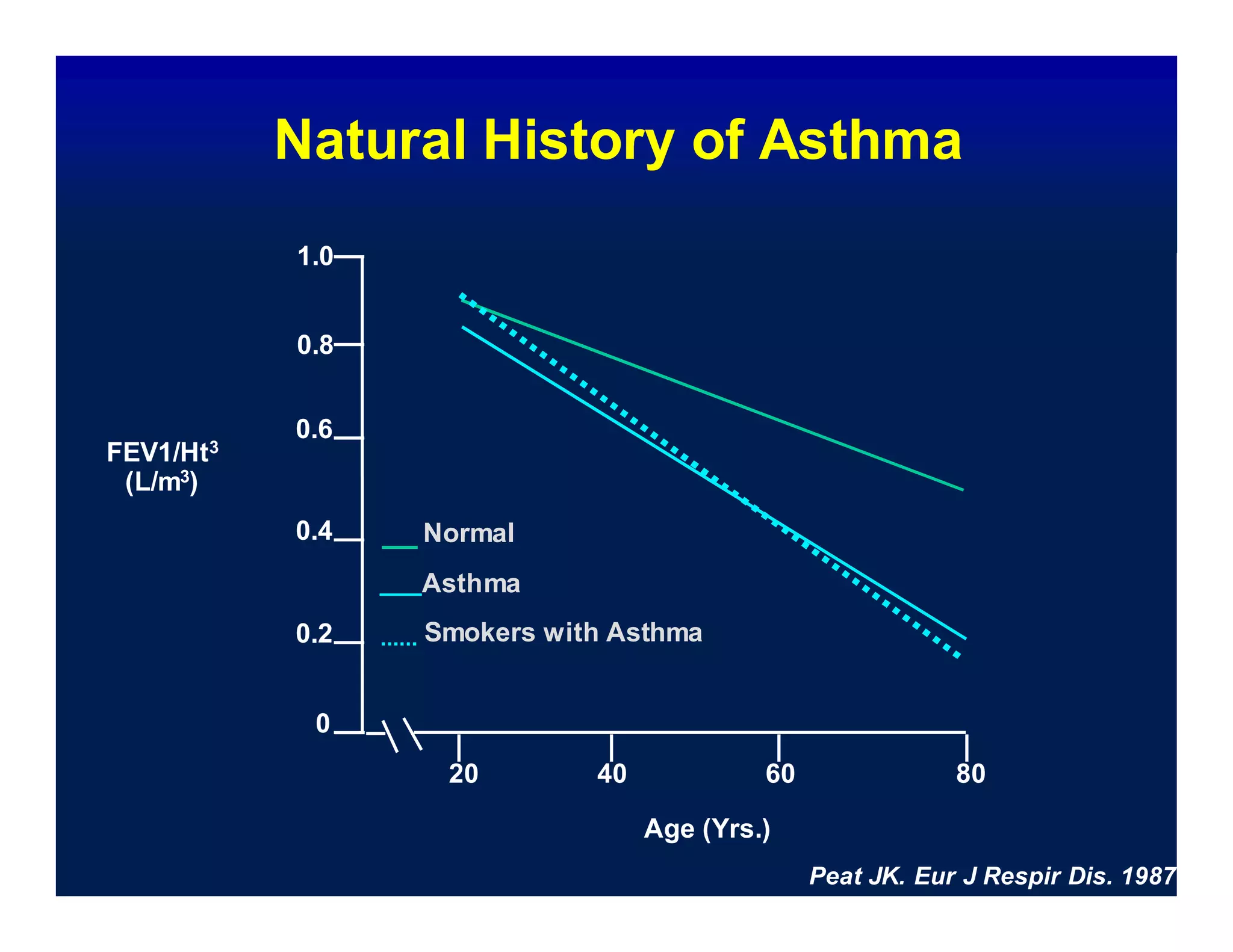
Natural History of Asthma
1.0
0.8
FEV1/Ht3
(L/m3)
0.6
0.4
0.2
0
Normal
Asthma
Smokers with Asthma
20 40 60 80
Age (Yrs.)
Peat JK. Eur J Respir Dis. 1987
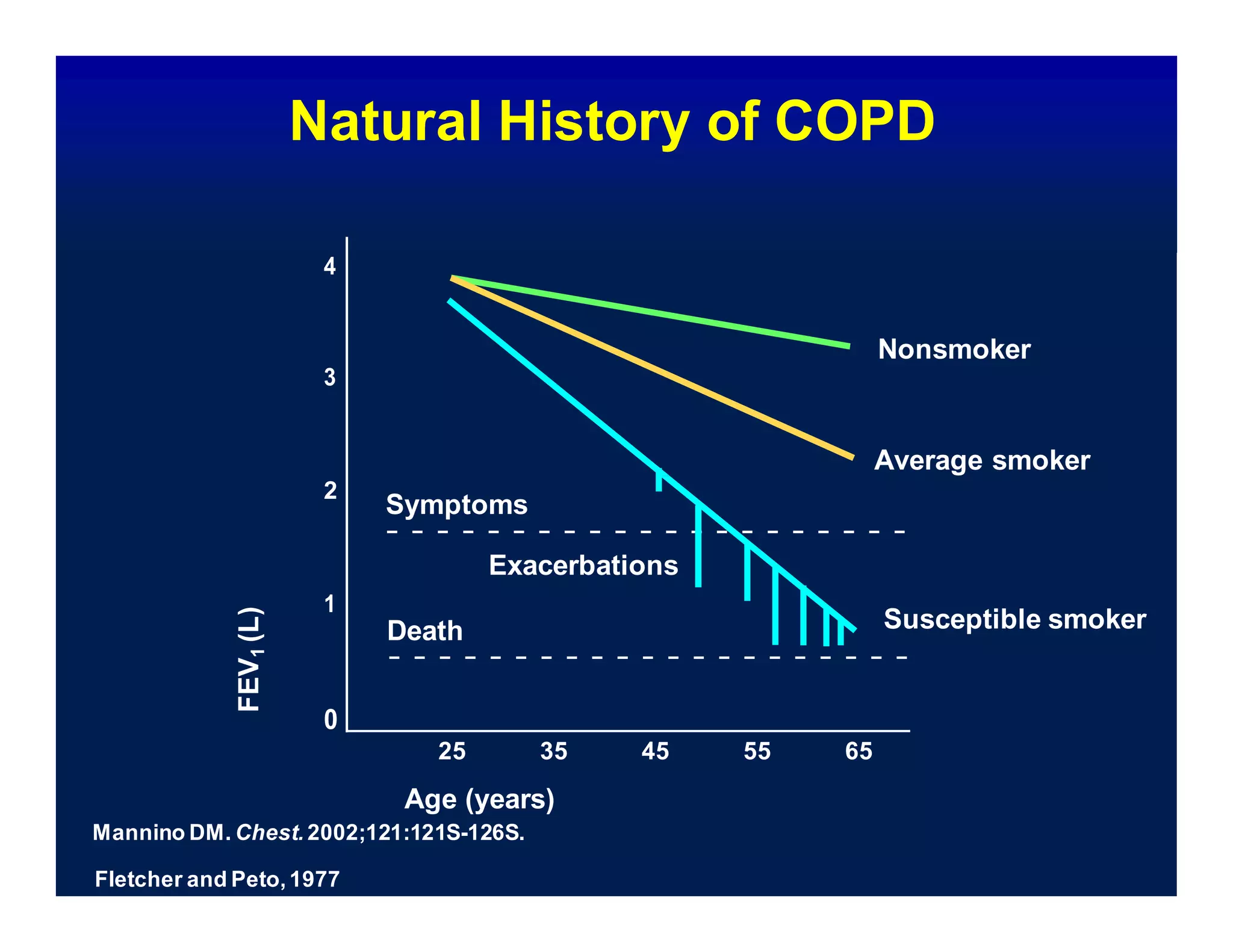
Natural History of COPD
4
Nonsmoker
3
2
Symptoms
Average smoker
1
Death
Exacerbations
Susceptible smoker
0
25 35 45 55 65
Age (years)
Mannino DM. Chest.2002;121:121S-126S.
Fletcher and Peto,1977
FEV1(L)
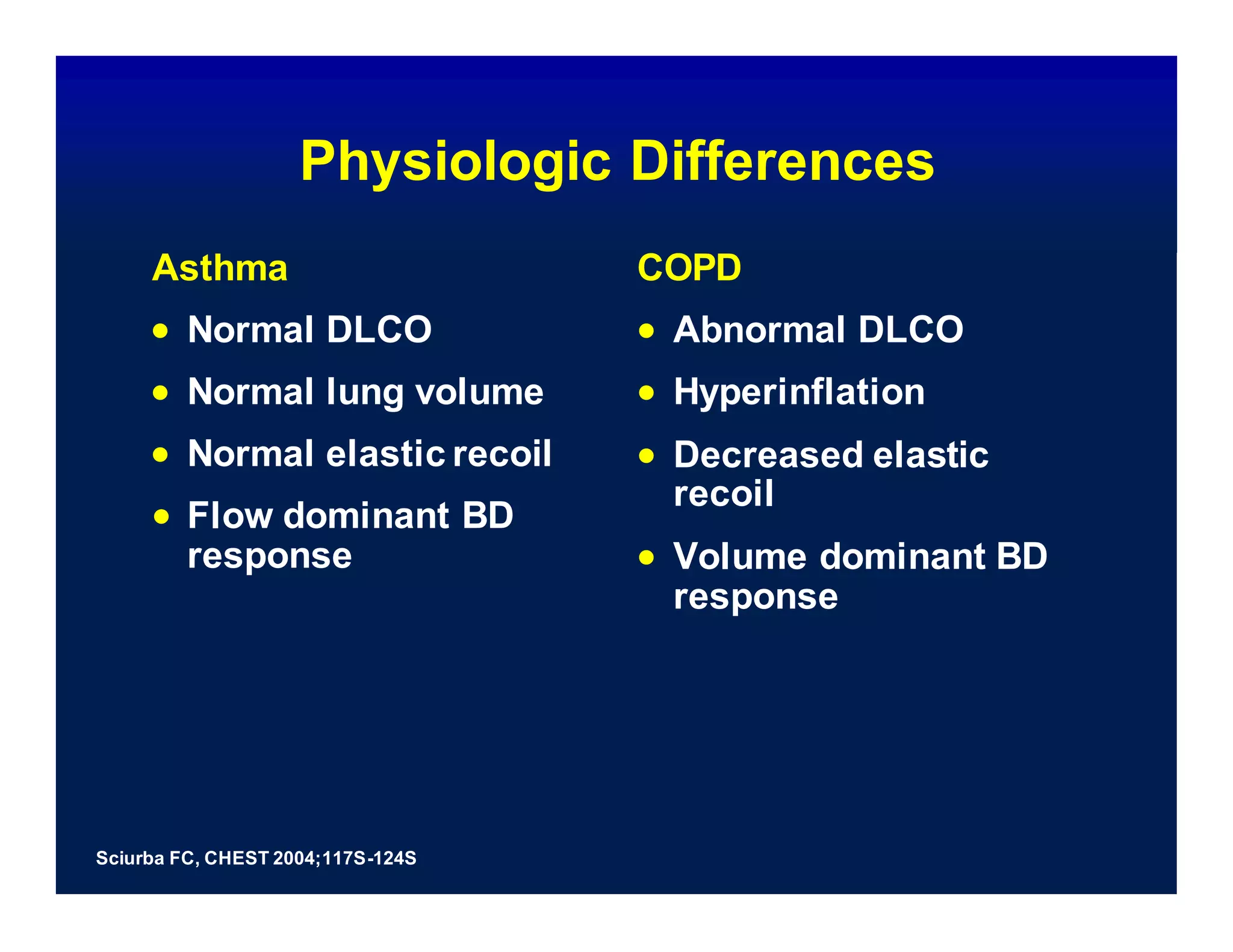
Physiologic Differences
Asthma
 Normal DLCO
 Normal lung volume
 Normal elastic recoil
 Flow dominant BD
response
COPD
 Abnormal DLCO
 Hyperinflation
 Decreased elastic
recoil
 Volume dominant BD
response
Sciurba FC, CHEST 2004;117S-124S
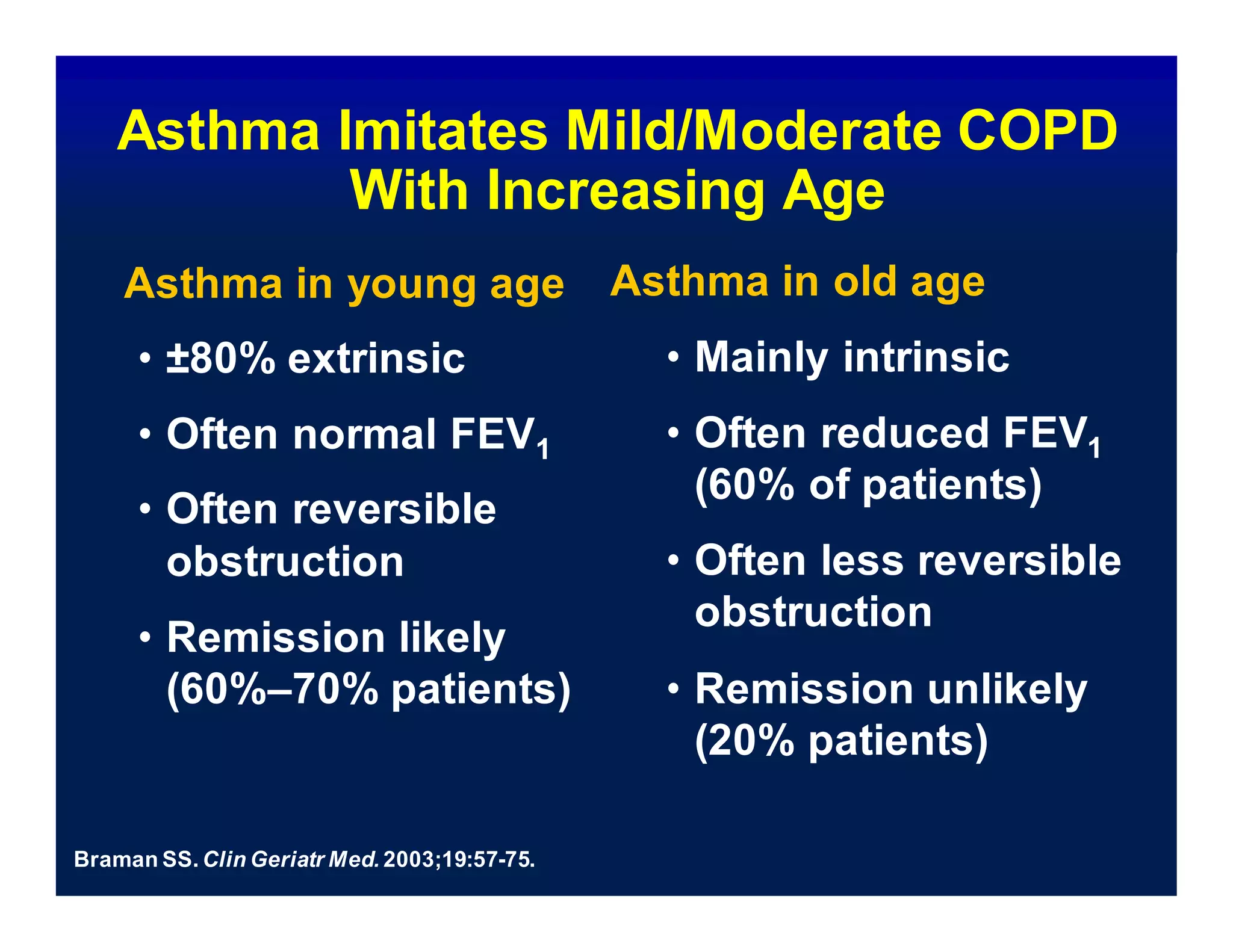
Asthma Imitates Mild/Moderate COPD
With Increasing Age
Asthma in young age Asthma in old age
• ±80% extrinsic
• Often normal FEV1
• Often reversible
obstruction
• Remission likely
(60%–70% patients)
Braman SS. Clin Geriatr Med. 2003;19:57-75.
• Mainly intrinsic
• Often reduced FEV1
(60% of patients)
• Often less reversible
obstruction
• Remission unlikely
(20% patients)
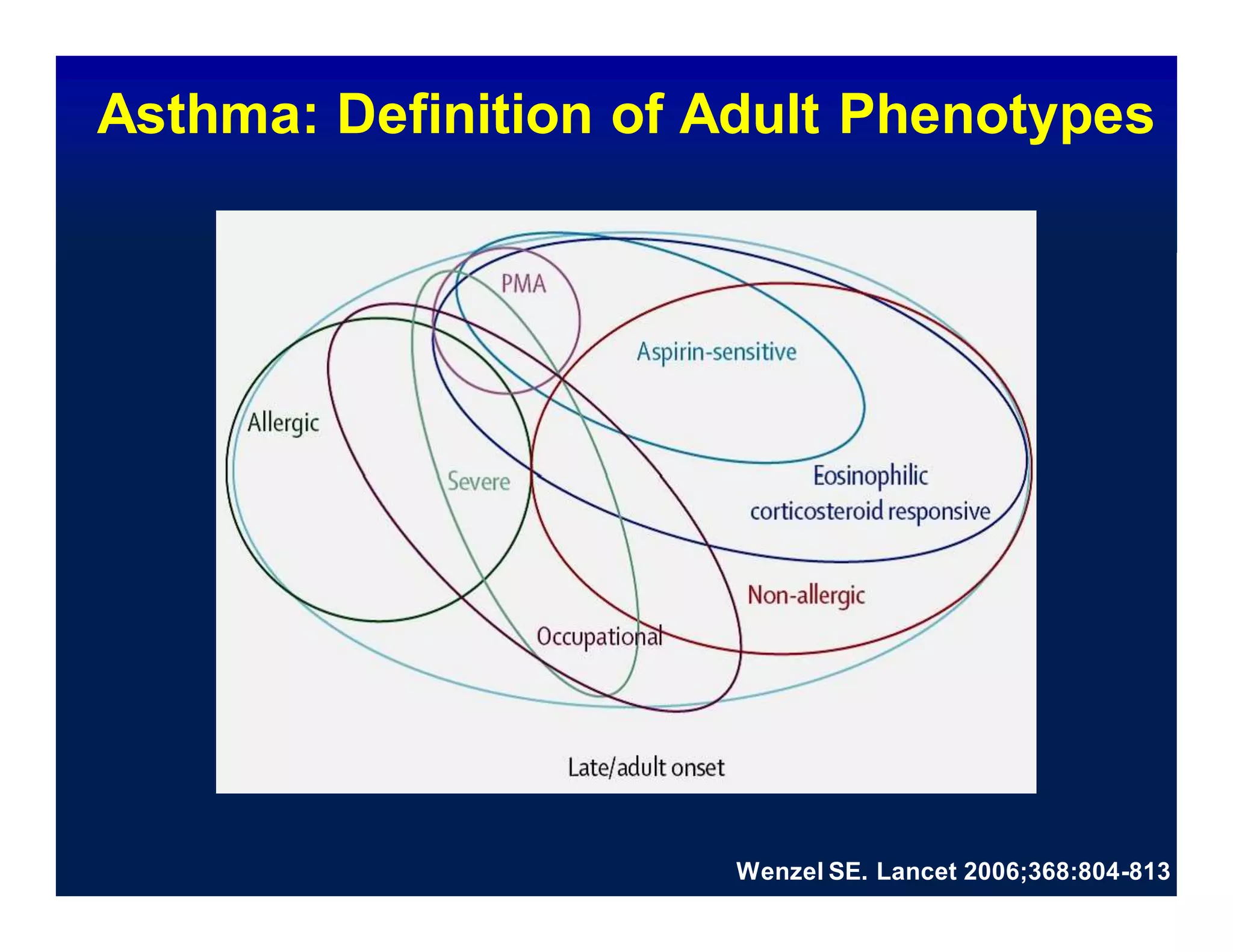
Asthma: Definition of Adult Phenotypes
Wenzel SE. Lancet 2006;368:804-813
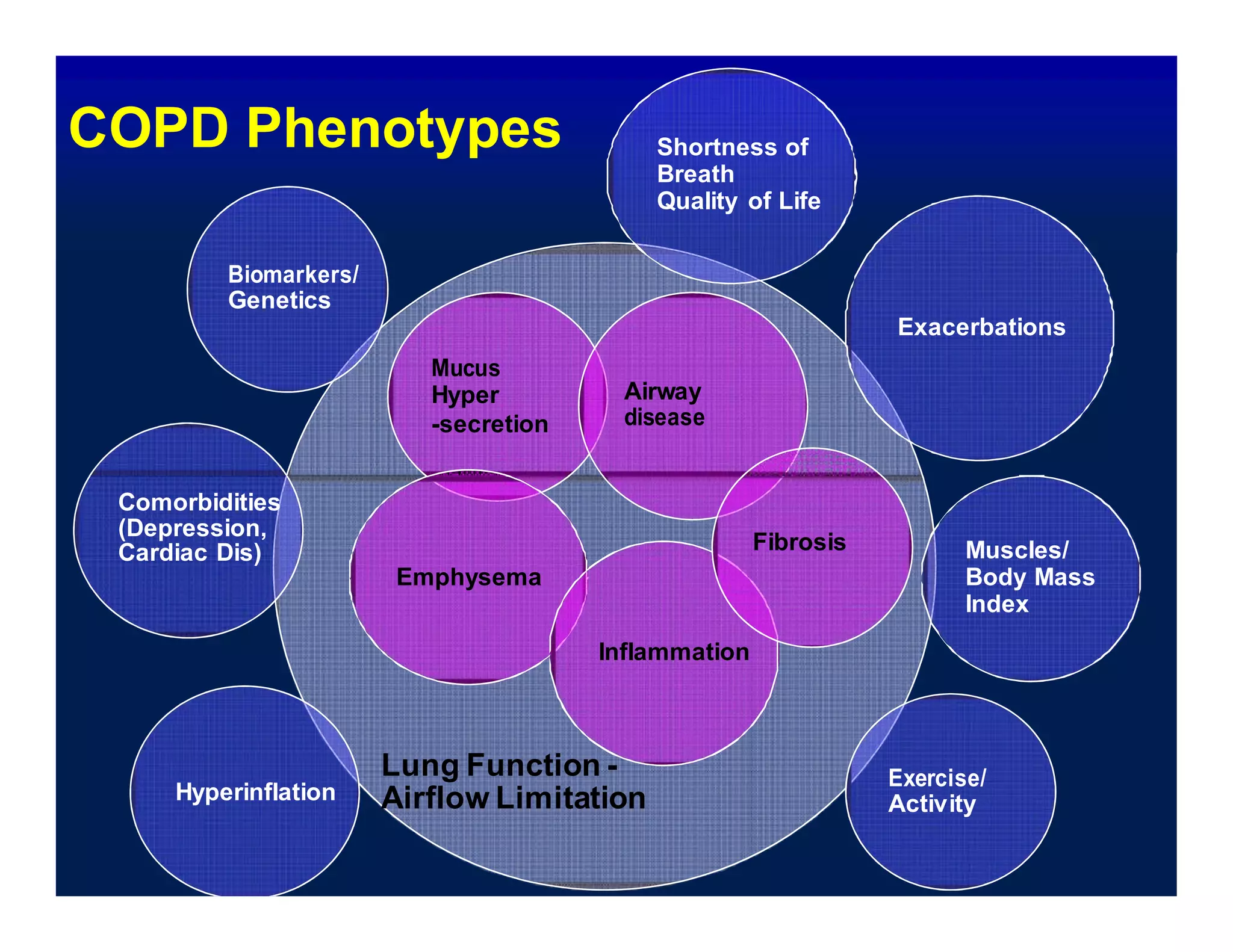
COPD Phenotypes Shortness of
Breath
Quality of Life
Biomarkers/
Genetics
Mucus
Hyper
-secretion
Airway
disease
Exacerbations
Comorbidities
(Depression,
Cardiac Dis) Fibrosis
Emphysema
Inflammation
Muscles/
Body Mass
Index
Hyperinflation
Lung Function -
Airflow Limitation
Exercise/
Activity
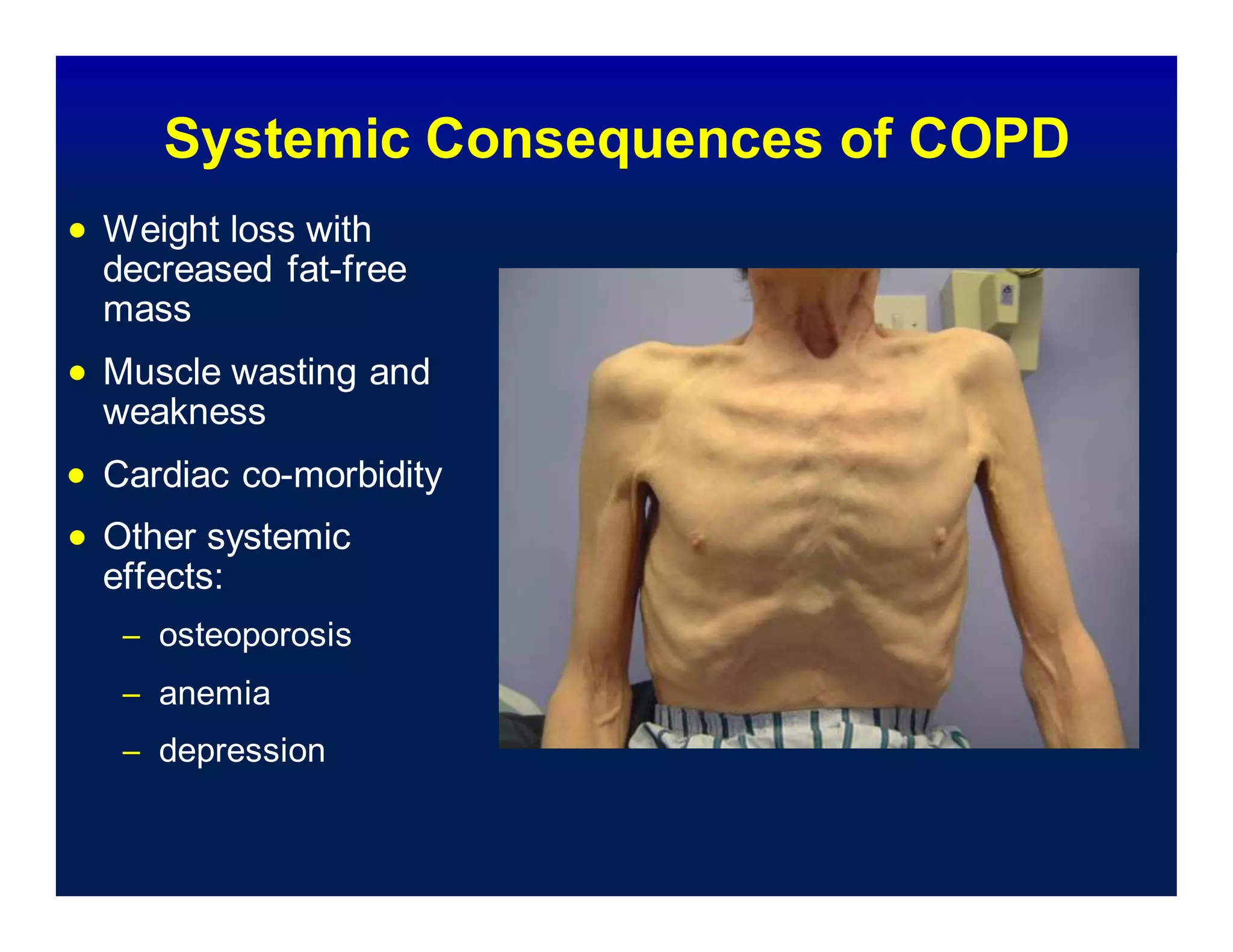
Systemic Consequences of COPD
 Weight loss with
decreased fat-free
mass
 Muscle wasting and
weakness
 Cardiac co-morbidity
 Other systemic
effects:
– osteoporosis
– anemia
– depression
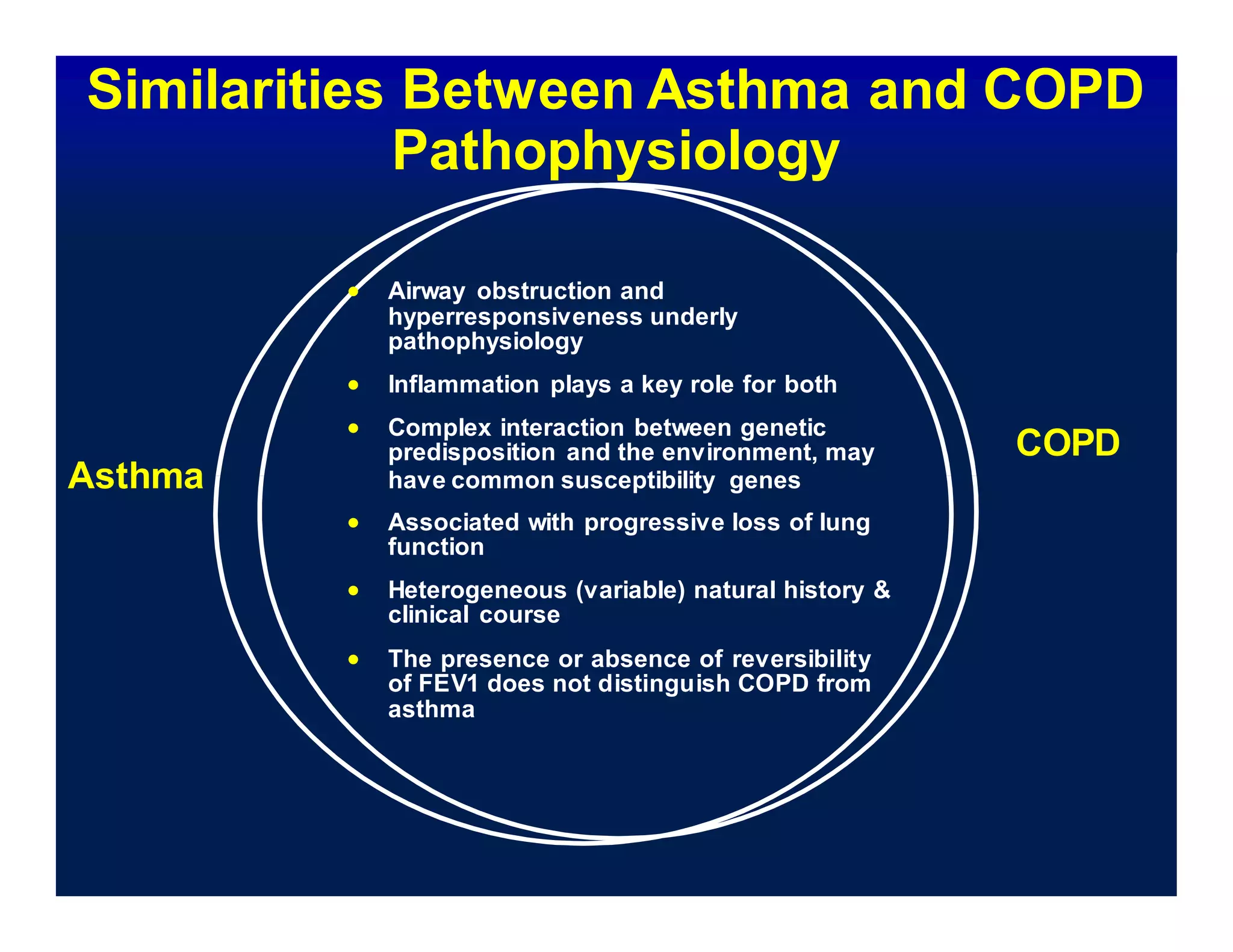
Similarities Between Asthma and COPD
Pathophysiology
 Airway obstruction and
hyperresponsiveness underly
pathophysiology
 Inflammation plays a key role for both
 Complex interaction between genetic
predisposition and the environment, may
Asthma have common susceptibility genes
 Associated with progressive loss of lung
function
 Heterogeneous (variable) natural history &
clinical course
 The presence or absence of reversibility
of FEV1 does not distinguish COPD from
asthma
COPD
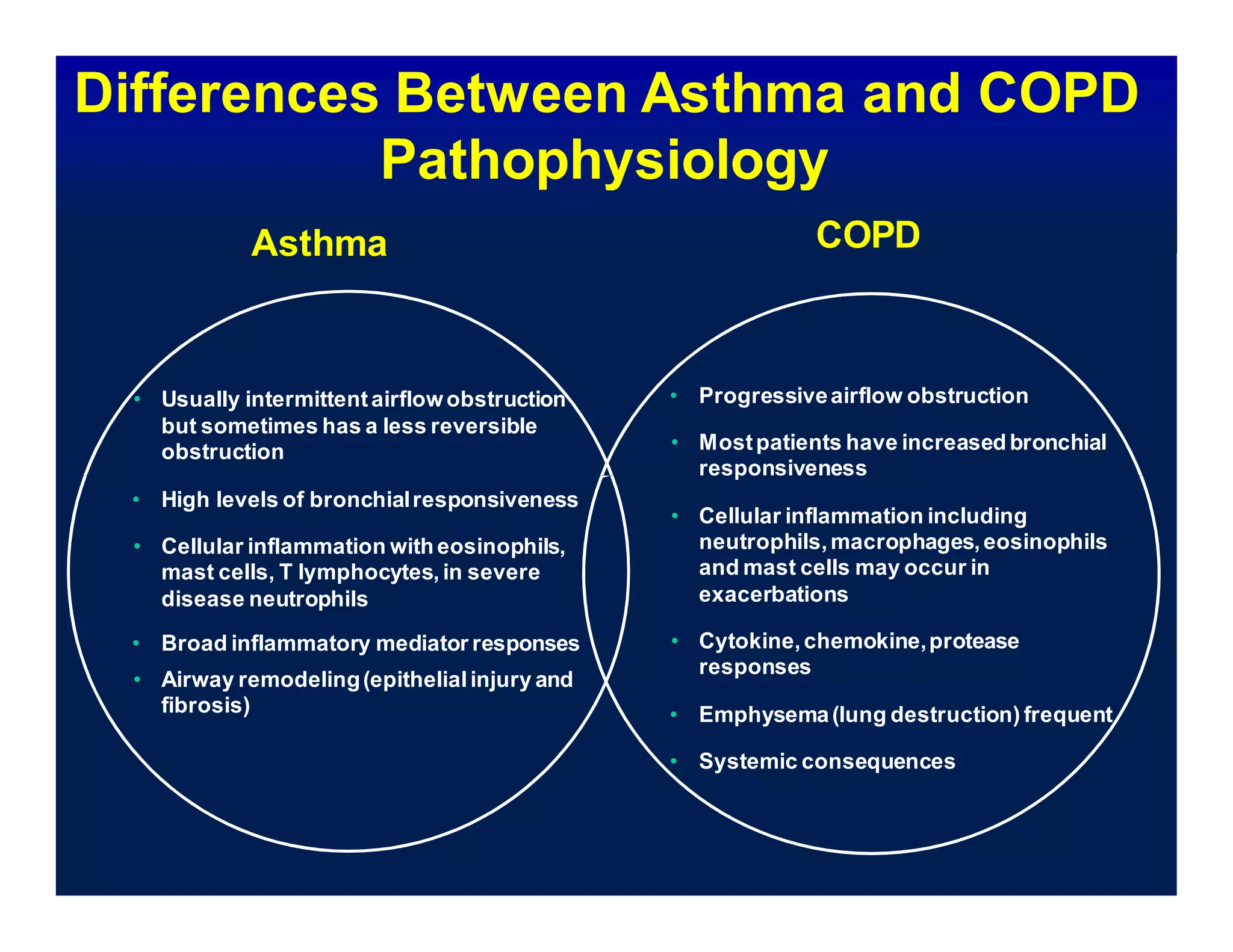
Differences Between Asthma and COPD
Pathophysiology
Asthma COPD
• Usually intermittentairflowobstruction
but sometimes has a less reversible
obstruction
• High levels of bronchialresponsiveness
• Cellular inflammation witheosinophils,
mast cells, T lymphocytes, in severe
disease neutrophils
• Broad inflammatory mediator responses
• Airway remodeling(epithelialinjury and
fibrosis)
• Progressiveairflow obstruction
• Mostpatients have increased bronchial
responsiveness
• Cellular inflammation including
neutrophils,macrophages,eosinophils
and mast cells may occur in
exacerbations
• Cytokine,chemokine,protease
responses
• Emphysema(lung destruction) frequent
• Systemic consequences

Copd and asthma

  • 1.
    ASTHMA AND COPD ARETHEY A SPECTRUM OF SAME DISEASE? PATHOPHYSIOLOGY Nicola A. Hanania, MD, MS, FRCP(C), FCCP Associate Professor of Medicine Pulmonary and Critical Care Medicine Director, Asthma Clinical Research Center Baylor College of Medicine, Houston, Texas
  • 2.
    The Overlap BetweenAsthma and COPD Chronic bronchitis Emphysema Asthma COPD=chronic obstructivepulmonary disease. Airflow obstruction Adapted from American Thoracic Society. Am J Respir Crit Care Med. 1995;152(5 pt 2):S77-S121. Soriano JB, et al. Chest. 2003;124:474-481. Jeffery PK. Am J Respir Crit Care Med. 2001;152:S28-S38.
  • 3.
    The Dutch Hypothesis Various formsof airway obstruction are different expressions of a single disease – Chronic nonspecific lung disease (CNSLD)  Host and environmental factors play a role in pathogenesis – Host factors: atopy and AHR ◆Other endogenous factors: sex and age – Exogenous factors: allergens, viral infections, smoking (pollutants)  Diffuse airway obstruction = common pathophysiologic characteristic Orie et al. Bronchitis II Second International Symposium. Assen, Netherlands: Royal Van Gorcum; 1964:398-99
  • 4.
    – Epidemiology The BritishHypothesis  Asthma and COPD are distinct entities caused by different mechanisms – Differences in inflammation – Airway remodeling vs alveolar remodeling
  • 5.
    What Is Asthma?What Is COPD? Asthma1 • A chronic inflammatory disorder of the airways in which many cells and factors play a role • Inflammation results in – Recurrent symptoms – Variable airflow obstruction that is mostly reversible – Increase in existing bronchial hyperresponsiveness COPD2 • A preventable and treatable disease • Associated with significant extrapulmonary effects and important comorbid conditions • Characterized by airflow limitation that is – Not fully reversible – Usually progressive – Associated with an abnormal inflammatory response to noxious particles or gases 1. National Heart, Lung and Blood Institute. National Asthma Education and Prevention Program. http://www.nhlbi.nih.gov/guidelines/asthma/asthgdln.pdf. Accessed August 29, 2007. 2. Global Initiative for Chronic Obstructive Lung Disease. http://www.goldcopd.org/Guidelineitem.asp?l1=2&l2=1&intId=989. Accessed November 21, 2008.
  • 6.
    Bronchial Inflammation Bronchial Hyperresponsiveness InteractionsBetween Asthma and COPD Genetic susceptibility Asthma Environmental factors (Allergy, infection, smoking, air pollution) COPD
  • 7.
    Genetic Associations thatSuggest a Common Origin in COPD & Asthma  IgE  BHR IL-13  Rate of FEV1 decline  Airway thickness ADAM33 van der Pouw Kraan TC.GenesImmun1999;61–65 Howard TD. Am J Respir Cell MolBiol 2001;377–384 van der Pouw Kraan TC.GenesImmun 2002;436–439 Ohar JA [abstract].Eur Respir J 2001;P3588 Simpson A. Am J Resp Crit Care Med 2005;55-60 Holgate ST.Thorax2005;466-69 van Diemen CC. Am J Resp Crit Care Med 2005;329-33 JongepierH. Clin Exp Allergy 2004;757-60
  • 8.
    Inflammatory Cascade Differs BetweenAsthma and COPD Allergens Epithelial Cells Asthma Mast Cell Alveolar macrophage COPD Cigarette Smoke Epithelial Cells CD4+ Cell (Th2) Eosinophils CD8+ cell (Tc1) Neutrophilis Bronchoconstriction and airway hyperresponsiveness Eotaxin, IL-4, IL-5, IL-13 Small airway fibrosis and alveolar destruction TNF- α, IL-8, IL-1β, IL-6 Reversible Airflow Limitation Not Fully Reversible IL = interleukin; TNF = tumor necrosis factor. Adapted from Global Initiative for Chronic Obstructive Lung Disease. http://www.goldcopd.org/Guidelineitem.asp?l1=2&l2=1&intId=989. Accessed November 21, 2008.
  • 9.
    Pathophysiological Changes in Asthmaand COPD Contrasting Histopathology of Asthma and COPD Asthma COPD Inflammation Airway Smooth Muscle Basement Membrane Fibrosis Alveolar Disruption Adapted with permission from Barnes PJ. Nature Rev Immunol. 2008;8:183-192.
  • 10.
    Structural Changes inAsthma and COPD Normal COPD Asthma Emphysema
  • 11.
    Inflammatory Phenotypes inAsthma vs. COPD Asthma – Eosinophils and mast cells – Neutrophils (severe) – CD 4+ TH2 cells – LTC4, D4, E4 – Cytokines ◆ IL 4, IL 5, IL 13 ◆ RANTES, eotaxins,MCP-1 COPD – Macrophages and neutrophils – Eosinophils (exacerbations) – CD 8+ T cells, – LTB4, Interferon γ – Cytokines ◆ IL 8, IL-1 ◆ TNF-  Fabbri,et al. Am J Respir Crit Care Med 2005; Vol171:686-698, Sutherland.J Allergy Clin Immunol2004; Vol 114(4):715-724 MauadT,DolhnikoffM.Curr Opin Pulm Med 2008; 14: 31 -38
  • 12.
    Site of AirwayObstruction in Asthma and COPD: Asthma in Medium Sized Airways, COPD in the Small Airways Asthma trachea Emphysema bronchi Chronic Bronchitis alveoli
  • 13.
    – Volume oflung in density range c/w emphysema: 5% in mild and 23% severe asthmatics Sciurba FC Chest 2004:126:17S However,  Asthma is often progressive process with partially reversible component that can involve small peripheral airways  CT scans demonstrating increased airway wall thickness like COPD
  • 14.
    * Kraft M.AmJ Respir Crit Care.Med 1996:154:1505 **Wenzel S Am J Respir Crit Care Med:1999:160:1001 ***Chanez P Am J Respir Crit Care Med 1997:155:1529 Inflammation- Similarities 1. Alveolar inflammation demonstrated in asthma * 2. Severe asthma- BAL with neutrophils ** 3. COPD: tissues eosinophils during exacerbations – Pts with eosinophils have better response to steroids ***
  • 15.
    Pathophysiology of Asthma Inflammation in asthma is characterized by eosinophils, CD4+ T-lymphocytes, macrophages and mast cells  Prominent pathological features of asthma include: – airway hyperresponsiveness – episodic bronchospasm in the large airways – vasodilation and angiogenesis  Severe asthma can be classified into two subtypes: eosinophil (+) and eosinophil (-)  Neutrophils are found in severe, corticosteroid- dependent asthma
  • 16.
    Pathophysiology of COPD COPD is a disease characterized by inflammation in: – airways – systemic circulation  COPD is a systemic disease that can cause weight loss and muscle weakness  Prominent pathological features of COPD include: – mucus hypersecretion – small airway fibrosis – alveolar destruction – extrapulmonary effects
  • 17.
    Boulet L CanRespir J 1998:5:270 Fabbri LM Am J Respir Crit Care Med 2003:167:418 Magnussen H. Clin Exp Allergy 1998 28:187 Pulmonary Function  Classically – Asthma reversible airway obstruction – COPD partially reversible
  • 18.
    Spirometry Is Essentialin Both Asthma and COPD Asthma  Necessary to establisha diagnosis1  Low FEV1 isstrongly COPD  Essential for diagnosis3  Used to determine severity, which is linked to predictive of risk for exacerbations1,2  Important in assessing control1 – Treatment decisions – Prognosis 1. National Heart, Lung and Blood Institute. National Asthma Education and PreventionProgram. http://www.nhlbi.nih.gov/guidelines/asthma/asthgdln.pdf. 2. FuhlbriggeAL et al. J AllergyClinImmunol.2001;107:61-67. 3. Global Initiative for Chronic Obstructive Lung Disease. http://www.goldcopd.org/Guidelineitem.asp?l1=2&l2=1&intId=989.
  • 19.
    Acute Bronchodilator ResponseDoes not Differentiate Between Asthma and COPD: Changes in Responder Classification After Albuterol and Ipatroprium Bromide
  • 20.
    Diffusion capacity (DL)CO Normal or Increased Decreased Lung volume Normal Hyperinflation Bronchodilator response Flow-dominant Volume-dominant Sciurba FC. Chest. 2004;126:117S-124S. Physiologic Differences Between Asthma and COPD Asthma COPD Elastic recoil Normal Decreased
  • 21.
    Lung Volumes  NonreversibleCOPD pts 83% had improvement in lung volumes – Those with most severe disease >improvement  Asthma study 15% reversibility in lung volumes not FEV-1 O’Donnel C Eur Respir J 2001:18:914 Smith HR Chest 1992:101:1577
  • 22.
    Airway Hyperresponsiveness  PositiveMethacholine occurs in nearly all asthmatics, < 5% normals  63% of men and 87% of women with COPD show AHR with < 25 mg/ml of metacholine – Lower PFT’S associated with >AHR, decline in lung function and mortality – Smoking cessation has positive effect on AHR and improves FEV1 greater in those with AHR Tashkin D An J Crit Care Med 1996:153:1802 Wise RA et al. Chest 2003; 12: 4:449- 458
  • 23.
    Natural History ofAsthma 1.0 0.8 FEV1/Ht3 (L/m3) 0.6 0.4 0.2 0 Normal Asthma Smokers with Asthma 20 40 60 80 Age (Yrs.) Peat JK. Eur J Respir Dis. 1987
  • 24.
    Natural History ofCOPD 4 Nonsmoker 3 2 Symptoms Average smoker 1 Death Exacerbations Susceptible smoker 0 25 35 45 55 65 Age (years) Mannino DM. Chest.2002;121:121S-126S. Fletcher and Peto,1977 FEV1(L)
  • 25.
    Physiologic Differences Asthma  NormalDLCO  Normal lung volume  Normal elastic recoil  Flow dominant BD response COPD  Abnormal DLCO  Hyperinflation  Decreased elastic recoil  Volume dominant BD response Sciurba FC, CHEST 2004;117S-124S
  • 26.
    Asthma Imitates Mild/ModerateCOPD With Increasing Age Asthma in young age Asthma in old age • ±80% extrinsic • Often normal FEV1 • Often reversible obstruction • Remission likely (60%–70% patients) Braman SS. Clin Geriatr Med. 2003;19:57-75. • Mainly intrinsic • Often reduced FEV1 (60% of patients) • Often less reversible obstruction • Remission unlikely (20% patients)
  • 27.
    Asthma: Definition ofAdult Phenotypes Wenzel SE. Lancet 2006;368:804-813
  • 28.
    COPD Phenotypes Shortnessof Breath Quality of Life Biomarkers/ Genetics Mucus Hyper -secretion Airway disease Exacerbations Comorbidities (Depression, Cardiac Dis) Fibrosis Emphysema Inflammation Muscles/ Body Mass Index Hyperinflation Lung Function - Airflow Limitation Exercise/ Activity
  • 29.
    Systemic Consequences ofCOPD  Weight loss with decreased fat-free mass  Muscle wasting and weakness  Cardiac co-morbidity  Other systemic effects: – osteoporosis – anemia – depression
  • 30.
    Similarities Between Asthmaand COPD Pathophysiology  Airway obstruction and hyperresponsiveness underly pathophysiology  Inflammation plays a key role for both  Complex interaction between genetic predisposition and the environment, may Asthma have common susceptibility genes  Associated with progressive loss of lung function  Heterogeneous (variable) natural history & clinical course  The presence or absence of reversibility of FEV1 does not distinguish COPD from asthma COPD
  • 31.
    Differences Between Asthmaand COPD Pathophysiology Asthma COPD • Usually intermittentairflowobstruction but sometimes has a less reversible obstruction • High levels of bronchialresponsiveness • Cellular inflammation witheosinophils, mast cells, T lymphocytes, in severe disease neutrophils • Broad inflammatory mediator responses • Airway remodeling(epithelialinjury and fibrosis) • Progressiveairflow obstruction • Mostpatients have increased bronchial responsiveness • Cellular inflammation including neutrophils,macrophages,eosinophils and mast cells may occur in exacerbations • Cytokine,chemokine,protease responses • Emphysema(lung destruction) frequent • Systemic consequences