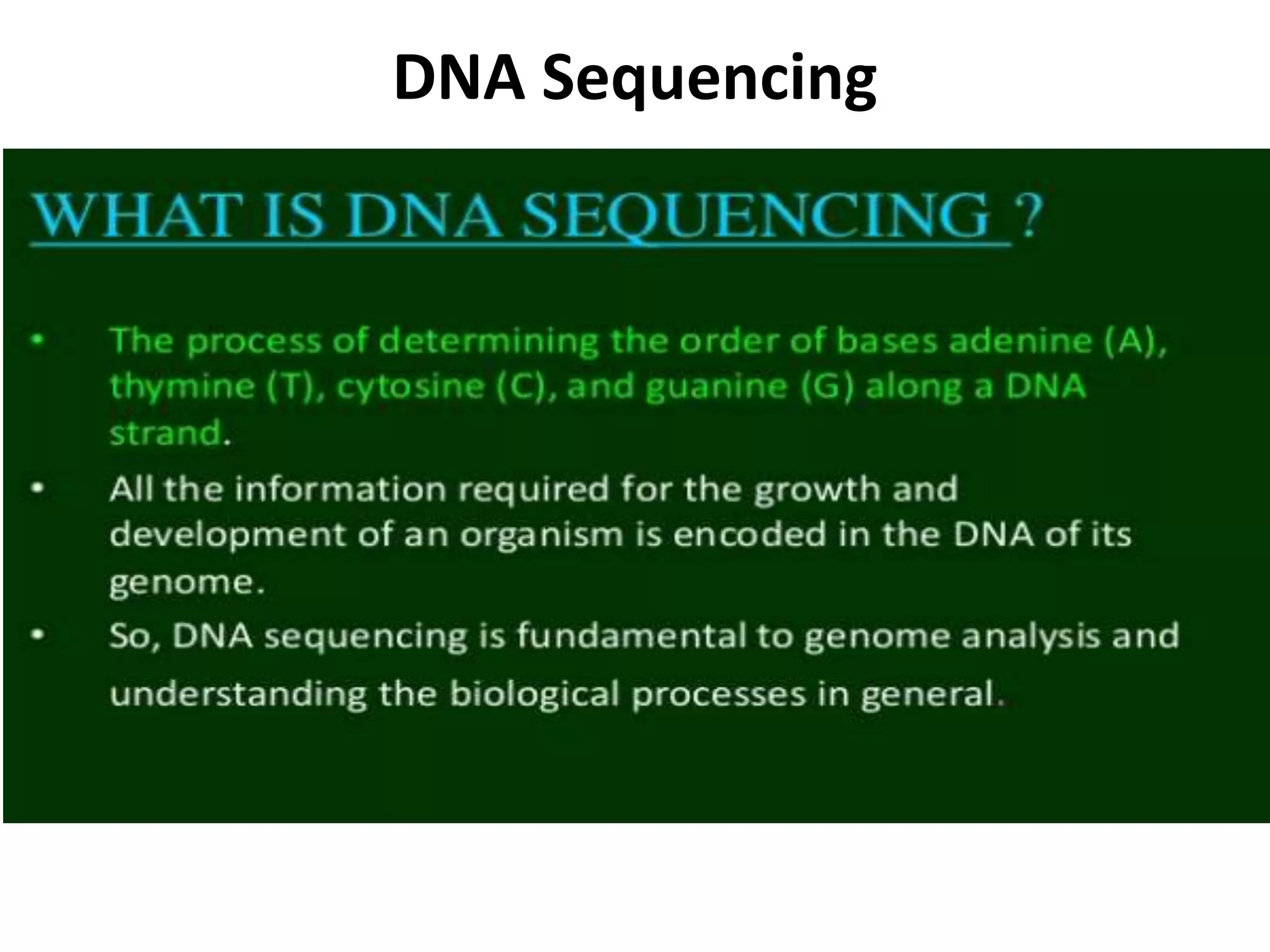
DNA Sequencing
and
Cloning Disease Genes in the Human
Genome
By Tajuddin Shaik
DNA Sequencing
Cloning a Disease Gene of Known
Function
• In general, the first step in cloning a gene of known function is
to isolate the protein. Protein isolation requires an assay for
the protein, such as an enzyme activity assay where a product can
be measured. In essence one needs to know the function of
the protein in order to purify it.
• 1. Once the protein is purified, small pieces of the protein
are sequenced, i.e. the amino acid order is determined. Protein
sequencing is a difficult technique and it will only be possible to
get partial protein sequence. Based on the protein sequence,
a synthetic oligonucleotide DNA probe is
generated using the genetic code. This probe is used to search
a cDNA library, i.e.
isolate a molecular clone containing the gene for the protein.
• 2. Examples of genes of known function that have been
cloned (associated disease): phenylalanine hydroxylase (phenylketo
nuria),
Cloning a Disease Gene
Application of Cloning Gene

Dna sequencing

  • 1.
    DNA Sequencing and Cloning DiseaseGenes in the Human Genome By Tajuddin Shaik
  • 2.
  • 6.
    Cloning a DiseaseGene of Known Function • In general, the first step in cloning a gene of known function is to isolate the protein. Protein isolation requires an assay for the protein, such as an enzyme activity assay where a product can be measured. In essence one needs to know the function of the protein in order to purify it. • 1. Once the protein is purified, small pieces of the protein are sequenced, i.e. the amino acid order is determined. Protein sequencing is a difficult technique and it will only be possible to get partial protein sequence. Based on the protein sequence, a synthetic oligonucleotide DNA probe is generated using the genetic code. This probe is used to search a cDNA library, i.e. isolate a molecular clone containing the gene for the protein. • 2. Examples of genes of known function that have been cloned (associated disease): phenylalanine hydroxylase (phenylketo nuria),
  • 10.
  • 11.