Controlling
By: Somya Agrawal
Meaning of Controlling


 • The process of monitoring activities to ensure
   that they are being accomplished as planned
   and of correcting any significant deviations.

 • According to Brech, “Controlling is a
   systematic exercise which is called as a
   process of checking actual performance
   against the standards or plans with a view to
   ensure adequate progress and also recording
   such experience as is gained as a contribution
   to possible future needs.”
Features


 •   Forward Looking
 •   End Function
 •   Continuous Process
 •   Pervasive
 •   Dynamic
 •   Related with Planning
Importance of Controlling


 •   Adjustment in Operations
 •   Policy Verification
 •   Managerial Responsibility
 •   Psychological Pressure
 •   Coordination in Action
 •   Organizational Efficiency and Effectiveness
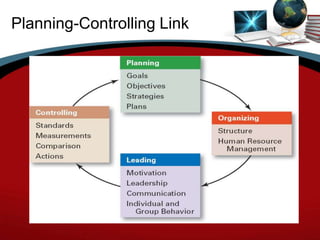
Relation Between Planning &
Controlling

 • Planning precedes controlling and controlling
   succeeds planning.

 • Planning and controlling are inseparable functions of
   management.

 • Activities are put on rails by planning and they are kept
   at right place through controlling.

 • The process of planning and controlling works on
   Systems Approach which is as follows :
   Planning → Results → Corrective Action
Planning-Controlling Link
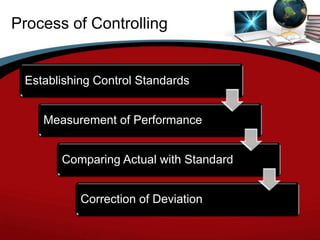
Process of Controlling


 Establishing Control Standards


    Measurement of Performance


       Comparing Actual with Standard


           Correction of Deviation
Establishing Control Standards

 Measurable or tangible
 • Those standards which can be measured and
   expressed quantitatively are called as measurable
   standards. They can be in form of cost, output,
   expenditure, time, profit, etc.

 Non-measurable or intangible
 • There are standards which cannot be measured
   quantitatively. For example- performance of a
   manager, deviation of workers, their attitudes
   towards a concern. These are called as intangible
   standards.
Measurement of Performance

 • Measurement of tangible performance is easy as it can
   be expressed in units, cost, money terms, etc.

 • Intangible performance can be measured only by-
    – Attitude of the workers,
    – Their morale to work,
    – The development in the attitudes regarding the
      physical environment, and
    – Their communication with the superiors.
Comparing Actual with
Standard

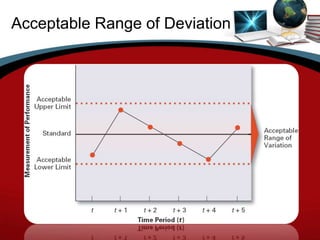
 • Deviation can be defined as the gap between
   actual performance and the planned targets.

 • The manager has to find out two things here-
   extent of deviation and cause of deviation.

 • Extent of deviation means that the manager
   has to find out whether the deviation is positive
   or negative or whether the actual performance
   is in conformity with the planned performance.
Acceptable Range of Deviation
Correction of Deviation


 • Once the causes and extent of deviations are
   known, the manager has to detect those errors
   and take remedial measures for it.
 • There are two alternatives here-
   – Taking corrective measures for deviations which
     have occurred; and
   – After taking the corrective measures, if the actual
     performance is not in conformity with plans, the
     manager can revise the targets.
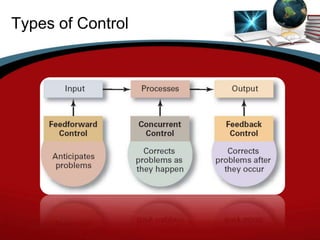
Types of Control
Feed Forward Control


 • Also called preliminary or preventive controls,
   attempt to identify and prevent deviations in
   the standards before they occur.

 • Feed forward controls focus on human,
   material, and financial resources within the
   organization.

 • These controls are evident in the selection and
   hiring of new employees.
Concurrent Control


 • Monitor ongoing employee activity to ensure
   consistency with quality standards.

 • These controls rely on performance standards,
   rules, and regulations for guiding employee
   tasks and behaviors.

 • Their purpose is to ensure that work activities
   produce the desired results.
Feed Back Control


 • Control takes place when the work is
   performed.

 • It involve reviewing information to determine
   whether performance meets established
   standards.
Questions???
Thank You

Controlling

  • 1.
  • 2.
    Meaning of Controlling • The process of monitoring activities to ensure that they are being accomplished as planned and of correcting any significant deviations. • According to Brech, “Controlling is a systematic exercise which is called as a process of checking actual performance against the standards or plans with a view to ensure adequate progress and also recording such experience as is gained as a contribution to possible future needs.”
  • 3.
    Features • Forward Looking • End Function • Continuous Process • Pervasive • Dynamic • Related with Planning
  • 4.
    Importance of Controlling • Adjustment in Operations • Policy Verification • Managerial Responsibility • Psychological Pressure • Coordination in Action • Organizational Efficiency and Effectiveness
  • 5.
    Relation Between Planning& Controlling • Planning precedes controlling and controlling succeeds planning. • Planning and controlling are inseparable functions of management. • Activities are put on rails by planning and they are kept at right place through controlling. • The process of planning and controlling works on Systems Approach which is as follows : Planning → Results → Corrective Action
  • 6.
  • 7.
    Process of Controlling Establishing Control Standards Measurement of Performance Comparing Actual with Standard Correction of Deviation
  • 8.
    Establishing Control Standards Measurable or tangible • Those standards which can be measured and expressed quantitatively are called as measurable standards. They can be in form of cost, output, expenditure, time, profit, etc. Non-measurable or intangible • There are standards which cannot be measured quantitatively. For example- performance of a manager, deviation of workers, their attitudes towards a concern. These are called as intangible standards.
  • 9.
    Measurement of Performance • Measurement of tangible performance is easy as it can be expressed in units, cost, money terms, etc. • Intangible performance can be measured only by- – Attitude of the workers, – Their morale to work, – The development in the attitudes regarding the physical environment, and – Their communication with the superiors.
  • 10.
    Comparing Actual with Standard • Deviation can be defined as the gap between actual performance and the planned targets. • The manager has to find out two things here- extent of deviation and cause of deviation. • Extent of deviation means that the manager has to find out whether the deviation is positive or negative or whether the actual performance is in conformity with the planned performance.
  • 11.
  • 12.
    Correction of Deviation • Once the causes and extent of deviations are known, the manager has to detect those errors and take remedial measures for it. • There are two alternatives here- – Taking corrective measures for deviations which have occurred; and – After taking the corrective measures, if the actual performance is not in conformity with plans, the manager can revise the targets.
  • 13.
  • 14.
    Feed Forward Control • Also called preliminary or preventive controls, attempt to identify and prevent deviations in the standards before they occur. • Feed forward controls focus on human, material, and financial resources within the organization. • These controls are evident in the selection and hiring of new employees.
  • 15.
    Concurrent Control •Monitor ongoing employee activity to ensure consistency with quality standards. • These controls rely on performance standards, rules, and regulations for guiding employee tasks and behaviors. • Their purpose is to ensure that work activities produce the desired results.
  • 16.
    Feed Back Control • Control takes place when the work is performed. • It involve reviewing information to determine whether performance meets established standards.
  • 17.
  • 18.