TYPES OF BANK


         Presented by :-

             Surabhi Prajapati
              Somya Agrawal
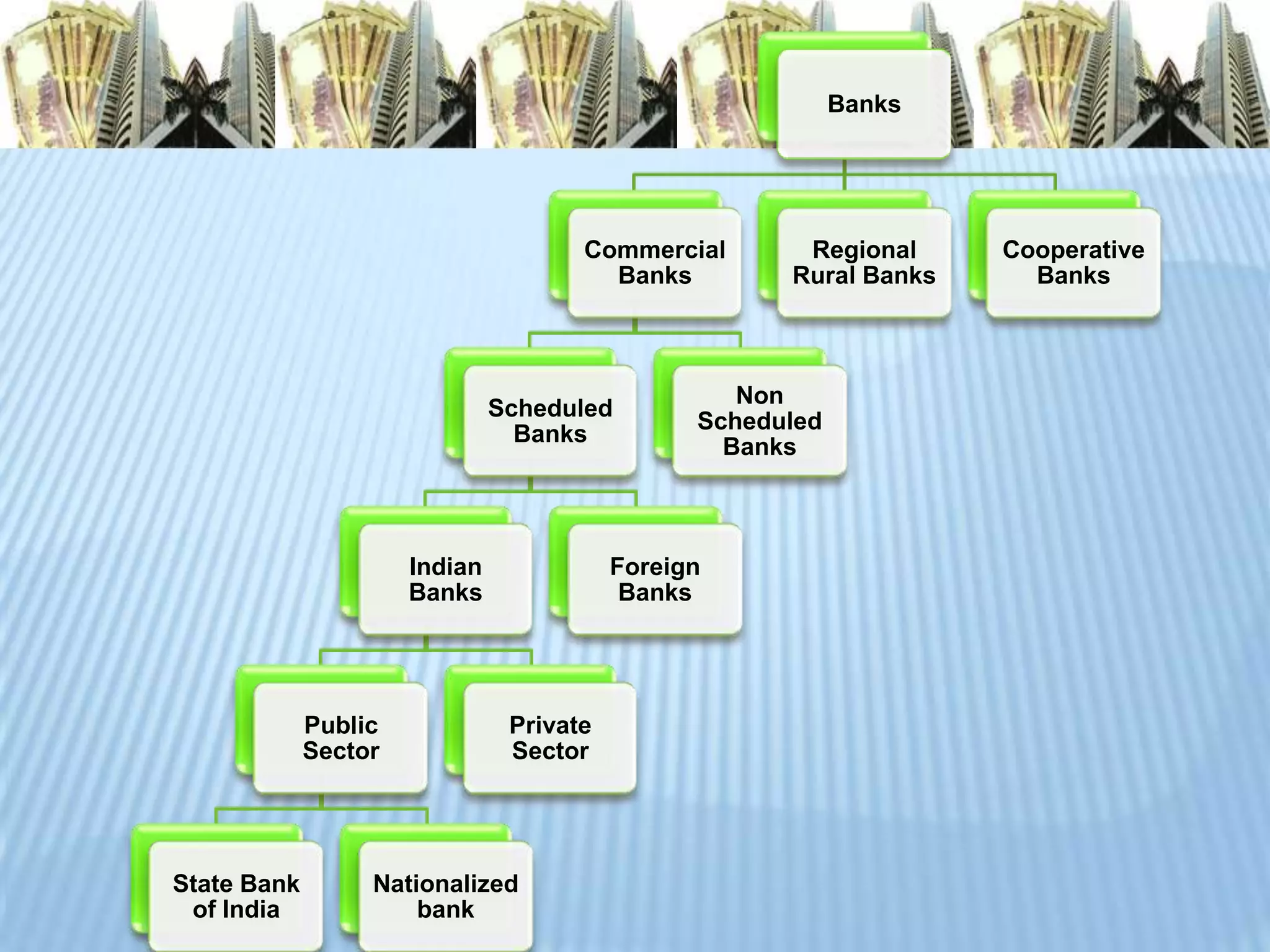
Banks


                                      Commercial       Regional     Cooperative
                                        Banks         Rural Banks     Banks


                                                   Non
                               Scheduled
                                                Scheduled
                                 Banks
                                                  Banks


                      Indian              Foreign
                      Banks                Banks


             Public             Private
             Sector             Sector


State Bank        Nationalized
 of India             bank
SCHEDULED BANKS

   Scheduled commercial banks are those included in the
    second schedule of the Reserve Bank of India Act,
    1934.
   For this, they have to satisfy three conditions:
      It must have paid-up capital and reserves of an
       aggregate value of atleast Rs. 5 lakhs.
      It is carrying on the business of banking in India.

      It must be a corporation or cooperative society and
       not a partnership or sole proprietorship firm.
SCHEDULED BANKS
INDIAN BANKS                      FOREIGN BANKS
 Registered or incorporated in    Registered or incorporated in
  India.                            their home country, not in
 They have their headquarter       India.
  in India and can have            They have their office and/or
  branches all over India.          branches in India.
 They can also operate in         They play an important role in
  foreign countries.                shaping the attitude and
                                    policies of foreign govt.,
                                    companies and their clients
                                    towards India.
PUBLIC SECTOR BANKS

   Public sector banks are
    banks in which the
    government has a major
    holding.
   At least 51% ownership
    is vested with the
    government.
   The shares of these banks
    are listed on stock
    exchanges.
STATE BANK OF INDIA
   Government of India        State Bank Group
    entered in commercial       State Bank of Hyderabad
    banking when it took        State Bank of Patiala
    over Imperial Bank of
                                State Bank of Travancore
    India and converted into
    State Bank of India on 1    State Bank of Bikaner &
    July 1955.                   Jaipur
   It was first one to make    State Bank of Maysore
    public issue in 1993-94     State Bank of Saurashtra
    after which the share       State Bank of Indore
    holding of RBI has come
    down to 68.93%.
NATIONALIZED BANKS
   In 1969, 14 banks with deposit base         Andhra Bank
    of Rs. 50 Crores or more were
    nationalized. In 1980,, 6 more              Punjab National Bank
    banks were nationalized.
   This step brought more than 90% of
                                                Indian Overseas Bank
    commercial banking in the public            IDBI
    sector.
   The main function of nationalised           Allahabad Bank
    bank is provide finance for the             Syndicate Bank
    housing projects, health facilities
    and increase the chance to                  UCO Bank
    providinig the products and
    services to the people of rural areas.      Dena Bank
PRIVATE BANKS
   All those banks in which
    majority of stake are held by
    private individuals
   The banks, which came in
    operation after 1991, with the
    introduction of economic
    reforms and financial sector
    reforms are called "new
    private-sector banks“
   New banks are strategic in
    their thinking and operations.
NON SCHEDULED BANKS
   The banks which are not included in the 2nd schedule of RBI Act,
    1934.
   These also have to maintain statutory cash reserve but not with
    RBI.
   Their banking activities are limited, e.g., they cannot deal in
    foreign exchange.
   The share of these banks are almost nil.
REGIONAL RURAL BANKS
   They were set up on the               Features of RRB:
    recommendation of Narasimham             The area of RRB is limited to only a
    Committee in 1975.                        region, comprising of some district
   The objective was to provide credit       of a state
    and other facilities to small and        These banks grant loan only to the
    marginal farmers, agricultural            rural agriculture sector and small
    labours and artisans.                     artisans.
   RRBs are working in all states           The lending rates would be some
                                              what lower than the commercial
    except GOA and Sikkim.
                                              banks.
   They are governed by Regional            These are intended to eliminate
    Rural Bank act, 1976                      money lenders.
   50% capital is provided by central       These banks are to supplement the
    govt., 15% by state govt., 35% by         effort of cooperative banks.
    sponsoring public sector bank.
COOPERATIVE BANKS
   Cooperative banking is a        Feature of cooperative banks:
                                     Government sponsored, supported
    small scale banking carried        and subsidized financial agencies in
    on a no profit no loss basis       India.
                                     Work on the principle of cooperation,
    for mutual cooperation and         self help and mutual help.
    help.                            They function on “no profit no loss”

   Engaged in financing rural         basis.
                                     Perform limited banking functions.
    and agricultural development.    Some of them are scheduled banks
   They are established under         but most are non- scheduled banks.
                                     Cooperative banks are financial
    the Cooperative Credit             intermediaries only because a
    Societies Act of 1904.             significant amount of their
                                       borrowings is from the RBI,
                                       NABARD, central and state
                                       government and cooperative apex
                                       institutions.
CONT…

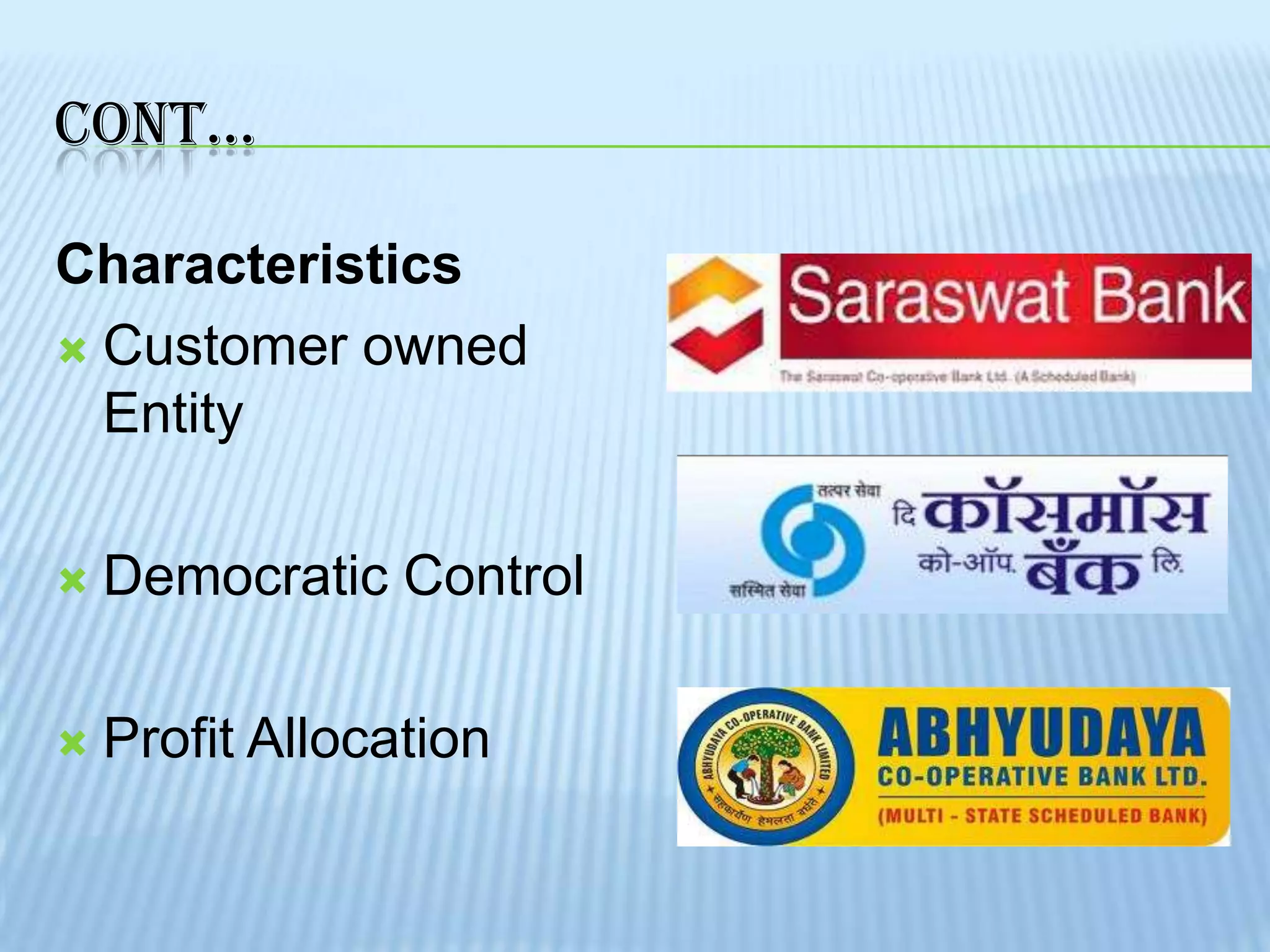
Characteristics
 Customer owned
  Entity

   Democratic Control

   Profit Allocation
QUESTIONS???
Thank You

Types of banks

  • 1.
    TYPES OF BANK Presented by :- Surabhi Prajapati Somya Agrawal
  • 2.
    Banks Commercial Regional Cooperative Banks Rural Banks Banks Non Scheduled Scheduled Banks Banks Indian Foreign Banks Banks Public Private Sector Sector State Bank Nationalized of India bank
  • 3.
    SCHEDULED BANKS  Scheduled commercial banks are those included in the second schedule of the Reserve Bank of India Act, 1934.  For this, they have to satisfy three conditions:  It must have paid-up capital and reserves of an aggregate value of atleast Rs. 5 lakhs.  It is carrying on the business of banking in India.  It must be a corporation or cooperative society and not a partnership or sole proprietorship firm.
  • 4.
    SCHEDULED BANKS INDIAN BANKS FOREIGN BANKS  Registered or incorporated in  Registered or incorporated in India. their home country, not in  They have their headquarter India. in India and can have  They have their office and/or branches all over India. branches in India.  They can also operate in  They play an important role in foreign countries. shaping the attitude and policies of foreign govt., companies and their clients towards India.
  • 5.
    PUBLIC SECTOR BANKS  Public sector banks are banks in which the government has a major holding.  At least 51% ownership is vested with the government.  The shares of these banks are listed on stock exchanges.
  • 6.
    STATE BANK OFINDIA  Government of India State Bank Group entered in commercial  State Bank of Hyderabad banking when it took  State Bank of Patiala over Imperial Bank of  State Bank of Travancore India and converted into State Bank of India on 1  State Bank of Bikaner & July 1955. Jaipur  It was first one to make  State Bank of Maysore public issue in 1993-94  State Bank of Saurashtra after which the share  State Bank of Indore holding of RBI has come down to 68.93%.
  • 7.
    NATIONALIZED BANKS  In 1969, 14 banks with deposit base  Andhra Bank of Rs. 50 Crores or more were nationalized. In 1980,, 6 more  Punjab National Bank banks were nationalized.  This step brought more than 90% of  Indian Overseas Bank commercial banking in the public  IDBI sector.  The main function of nationalised  Allahabad Bank bank is provide finance for the  Syndicate Bank housing projects, health facilities and increase the chance to  UCO Bank providinig the products and services to the people of rural areas.  Dena Bank
  • 8.
    PRIVATE BANKS  All those banks in which majority of stake are held by private individuals  The banks, which came in operation after 1991, with the introduction of economic reforms and financial sector reforms are called "new private-sector banks“  New banks are strategic in their thinking and operations.
  • 9.
    NON SCHEDULED BANKS  The banks which are not included in the 2nd schedule of RBI Act, 1934.  These also have to maintain statutory cash reserve but not with RBI.  Their banking activities are limited, e.g., they cannot deal in foreign exchange.  The share of these banks are almost nil.
  • 10.
    REGIONAL RURAL BANKS  They were set up on the Features of RRB: recommendation of Narasimham  The area of RRB is limited to only a Committee in 1975. region, comprising of some district  The objective was to provide credit of a state and other facilities to small and  These banks grant loan only to the marginal farmers, agricultural rural agriculture sector and small labours and artisans. artisans.  RRBs are working in all states  The lending rates would be some what lower than the commercial except GOA and Sikkim. banks.  They are governed by Regional  These are intended to eliminate Rural Bank act, 1976 money lenders.  50% capital is provided by central  These banks are to supplement the govt., 15% by state govt., 35% by effort of cooperative banks. sponsoring public sector bank.
  • 11.
    COOPERATIVE BANKS  Cooperative banking is a Feature of cooperative banks:  Government sponsored, supported small scale banking carried and subsidized financial agencies in on a no profit no loss basis India.  Work on the principle of cooperation, for mutual cooperation and self help and mutual help. help.  They function on “no profit no loss”  Engaged in financing rural basis.  Perform limited banking functions. and agricultural development.  Some of them are scheduled banks  They are established under but most are non- scheduled banks.  Cooperative banks are financial the Cooperative Credit intermediaries only because a Societies Act of 1904. significant amount of their borrowings is from the RBI, NABARD, central and state government and cooperative apex institutions.
  • 12.
    CONT… Characteristics  Customer owned Entity  Democratic Control  Profit Allocation
  • 13.
  • 14.