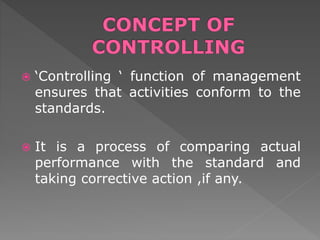
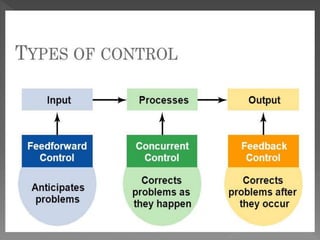
 ‘Controlling ‘ function of management
ensures that activities conform to the
standards.
 It is a process of comparing actual
performance with the standard and
taking corrective action ,if any.
Management control implies the
measurement of accomplishment
against the standard and the
correction of deviations to
assure attainment of objectives
according to plans.
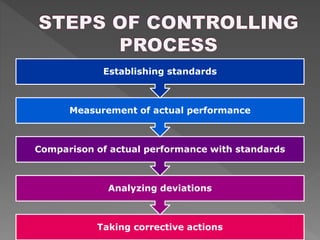
Taking corrective actions
Analyzing deviations
Comparison of actual performance with standards
Measurement of actual performance
Establishing standards
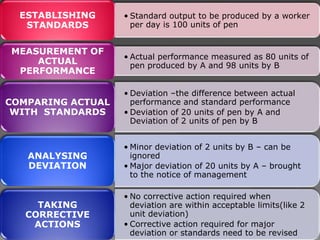
• Standard output to be produced by a worker
per day is 100 units of pen
ESTABLISHING
STANDARDS
• Actual performance measured as 80 units of
pen produced by A and 98 units by B
MEASUREMENT OF
ACTUAL
PERFORMANCE
• Deviation –the difference between actual
performance and standard performance
• Deviation of 20 units of pen by A and
Deviation of 2 units of pen by B
COMPARING ACTUAL
WITH STANDARDS
• Minor deviation of 2 units by B – can be
ignored
• Major deviation of 20 units by A – brought
to the notice of management
ANALYSING
DEVIATION
• No corrective action required when
deviation are within acceptable limits(like 2
unit deviation)
• Corrective action required for major
deviation or standards need to be revised
TAKING
CORRECTIVE
ACTIONS
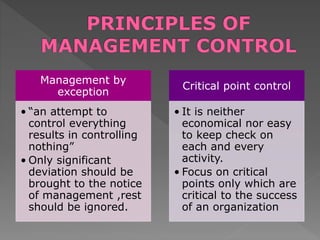
Management by
exception
• “an attempt to
control everything
results in controlling
nothing”
• Only significant
deviation should be
brought to the notice
of management ,rest
should be ignored.
Critical point control
• It is neither
economical nor easy
to keep check on
each and every
activity.
• Focus on critical
points only which are
critical to the success
of an organization
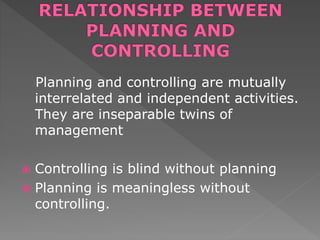
Planning and controlling are mutually
interrelated and independent activities.
They are inseparable twins of
management
 Controlling is blind without planning
 Planning is meaningless without
controlling.
 Controlling involves measurement of
actual performance with certain
standards which are provided by
planning.
 So when there is no plan ,managers
have no basis for controlling.
 Once plan become operational,
controlling is necessary to monitor the
progress, measure it ,identify deviation
and taking corrective action to ensure
that event conform to plans.
Management control
Management control

Management control

  • 2.
     ‘Controlling ‘function of management ensures that activities conform to the standards.  It is a process of comparing actual performance with the standard and taking corrective action ,if any.
  • 3.
    Management control impliesthe measurement of accomplishment against the standard and the correction of deviations to assure attainment of objectives according to plans.
  • 4.
    Taking corrective actions Analyzingdeviations Comparison of actual performance with standards Measurement of actual performance Establishing standards
  • 5.
    • Standard outputto be produced by a worker per day is 100 units of pen ESTABLISHING STANDARDS • Actual performance measured as 80 units of pen produced by A and 98 units by B MEASUREMENT OF ACTUAL PERFORMANCE • Deviation –the difference between actual performance and standard performance • Deviation of 20 units of pen by A and Deviation of 2 units of pen by B COMPARING ACTUAL WITH STANDARDS • Minor deviation of 2 units by B – can be ignored • Major deviation of 20 units by A – brought to the notice of management ANALYSING DEVIATION • No corrective action required when deviation are within acceptable limits(like 2 unit deviation) • Corrective action required for major deviation or standards need to be revised TAKING CORRECTIVE ACTIONS
  • 6.
    Management by exception • “anattempt to control everything results in controlling nothing” • Only significant deviation should be brought to the notice of management ,rest should be ignored. Critical point control • It is neither economical nor easy to keep check on each and every activity. • Focus on critical points only which are critical to the success of an organization
  • 7.
    Planning and controllingare mutually interrelated and independent activities. They are inseparable twins of management  Controlling is blind without planning  Planning is meaningless without controlling.
  • 8.
     Controlling involvesmeasurement of actual performance with certain standards which are provided by planning.  So when there is no plan ,managers have no basis for controlling.
  • 9.
     Once planbecome operational, controlling is necessary to monitor the progress, measure it ,identify deviation and taking corrective action to ensure that event conform to plans.