Control of Marketing Operations
BADM Dept.
Marketing Organization and Control: Evolution of
Marketing Department, Organizing the Marketing
Department, Marketing Implementation, Control of
Marketing Performance, Annual Plan Control,
Profitability Control, Efficiency Control, Strategic
Control
• Marketing control provides the means whether the desired
goals have been achieved or not and if necessary, applying
corrective measures so that the performance takes place
according to plan.
• Marketing control is the process of monitoring the proposed
plans as they proceed and adjusting where necessary.
• Marketing control is a step through which the success of
marketing efforts can be assessed, present and prospective
problems could be identified & steps are taken to resolve
them in order to achieve marketing goals.
Definitions:
“Marketing control is the process of
taking steps to bring actual results
and desired results closer together”.
----Phillip Kotler
• Helps in keeping all marketing operations in
right direction
• Helps in improving the performance of
marketing department
• Helps in better utilisation of marketing
resources
• Improve the effectiveness of marketing
planning
• Help marketing manager to delegate his
authority to the lowest possible extent
• Minimizes the chance of mistakes
• Helps in coordination of the activities of the
various department
• Helps in marketing decision-making
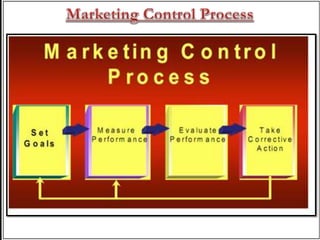
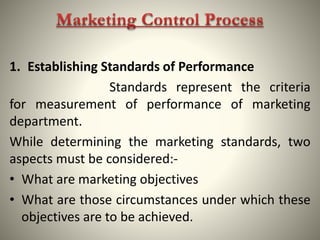
1. Establishing Standards of Performance
Standards represent the criteria
for measurement of performance of marketing
department.
While determining the marketing standards, two
aspects must be considered:-
• What are marketing objectives
• What are those circumstances under which these
objectives are to be achieved.
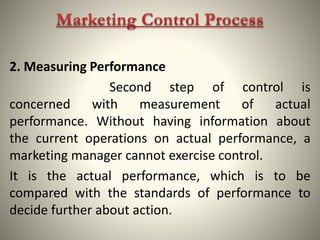
2. Measuring Performance
Second step of control is
concerned with measurement of actual
performance. Without having information about
the current operations on actual performance, a
marketing manager cannot exercise control.
It is the actual performance, which is to be
compared with the standards of performance to
decide further about action.
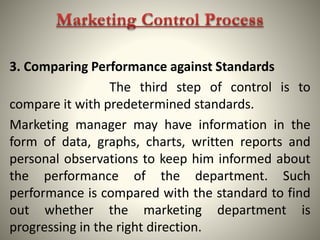
3. Comparing Performance against Standards
The third step of control is to
compare it with predetermined standards.
Marketing manager may have information in the
form of data, graphs, charts, written reports and
personal observations to keep him informed about
the performance of the department. Such
performance is compared with the standard to find
out whether the marketing department is
progressing in the right direction.
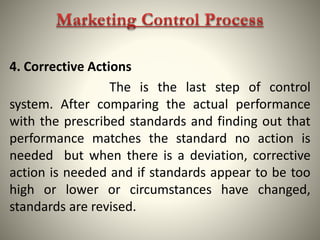
4. Corrective Actions
The is the last step of control
system. After comparing the actual performance
with the prescribed standards and finding out that
performance matches the standard no action is
needed but when there is a deviation, corrective
action is needed and if standards appear to be too
high or lower or circumstances have changed,
standards are revised.
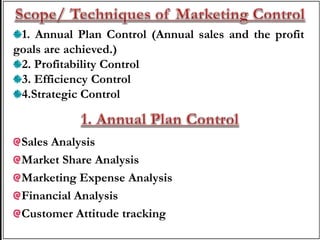
1. Annual Plan Control (Annual sales and the profit
goals are achieved.)
2. Profitability Control
3. Efficiency Control
4.Strategic Control
Sales Analysis
Market Share Analysis
Marketing Expense Analysis
Financial Analysis
Customer Attitude tracking
The basis of annual plan control aims to
ensure that the company achieves certain goals
in its annual sales and profits.
Top & Middle management exercise this
control.
Sales Analysis: In this technique actual sales is compared
with the targeted sales.
Market Share Analysis: Sales analysis does not reveal how
well the company is performing relative to competitors. It is
helpful in identifying whether the change in sales due to
change in external environment or it is the internal
weaknesses of the company. (Competitors evaluation)
Marketing Expense Analysis: Annual plan control
requires making sure that company is not overspending to
achieve sales goals. (Sales for expenses, sales promotion
expenses, market research expenses, sales administration
expenses.)
Financial Analysis:
Financial Analysis: Marketers are using financial analysis
to find profitable strategies beyond sales building. (Ratio
analysis is very useful here. Profitability and turnover
ratios are very famous)
Customer Attitude Studies: It is the method to track
customer attitude and satisfaction (It is a qualitative term.
Identification of customers, dealers and other employees.
1. Feedback or suggestion system
2.Customer panel
3. Customer surveys
Profitability control and efficiency control allow a
company to closely monitor its sales, profits, and
expenditures.
Profitability control demonstrates the relative profit-
earning capacity of a company’s different products and
consumer groups.
This control is to determine the actual profitability of
the firms products, territories, market segments and
intermediaries.
Efficiency control involves micro-level analysis of the
various elements of the marketing mix,
including sales force, advertising, sales promotion, and
distribution.
It explain that what extent marketing resources have
been used efficiently to achieve annual goals.
For example, to understand its sales-force efficiency, a
company may keep track of how many sales calls a
representative makes each day.
This type of analysis highlights areas in which
companies can manage their marketing efforts in a
more productive and cost-effective manner.
These systems help management determine the fit
between the firm’s marketing and the external
environment.
It is a in-depth study undertaken to examine whether
the company is pursuing its best opportunities with
respect to markets and products. Marketing department
having policies, objectives, strategies and programs are
to be reviewed and changed periodically.
Market audit is a in-depth analysis of the marketing
functions. Marketing audit is a comprehensive,
systematic, independent and periodic examination of
company’s marketing environment, objectives, strategies
and activities with a view to determining problem areas
and opportunities and recommending a plan of action
to improve the company’s marketing resources.
Components of Marketing Audit:
Marketing environment audit
Marketing strategy audit
Marketing organisation audit
Marketing system audit, productivity audit, functional
audit

Control of marketing operations

  • 1.
    Control of MarketingOperations BADM Dept.
  • 2.
    Marketing Organization andControl: Evolution of Marketing Department, Organizing the Marketing Department, Marketing Implementation, Control of Marketing Performance, Annual Plan Control, Profitability Control, Efficiency Control, Strategic Control
  • 3.
    • Marketing controlprovides the means whether the desired goals have been achieved or not and if necessary, applying corrective measures so that the performance takes place according to plan. • Marketing control is the process of monitoring the proposed plans as they proceed and adjusting where necessary. • Marketing control is a step through which the success of marketing efforts can be assessed, present and prospective problems could be identified & steps are taken to resolve them in order to achieve marketing goals.
  • 4.
    Definitions: “Marketing control isthe process of taking steps to bring actual results and desired results closer together”. ----Phillip Kotler
  • 5.
    • Helps inkeeping all marketing operations in right direction • Helps in improving the performance of marketing department • Helps in better utilisation of marketing resources • Improve the effectiveness of marketing planning
  • 6.
    • Help marketingmanager to delegate his authority to the lowest possible extent • Minimizes the chance of mistakes • Helps in coordination of the activities of the various department • Helps in marketing decision-making
  • 8.
    1. Establishing Standardsof Performance Standards represent the criteria for measurement of performance of marketing department. While determining the marketing standards, two aspects must be considered:- • What are marketing objectives • What are those circumstances under which these objectives are to be achieved.
  • 9.
    2. Measuring Performance Secondstep of control is concerned with measurement of actual performance. Without having information about the current operations on actual performance, a marketing manager cannot exercise control. It is the actual performance, which is to be compared with the standards of performance to decide further about action.
  • 10.
    3. Comparing Performanceagainst Standards The third step of control is to compare it with predetermined standards. Marketing manager may have information in the form of data, graphs, charts, written reports and personal observations to keep him informed about the performance of the department. Such performance is compared with the standard to find out whether the marketing department is progressing in the right direction.
  • 11.
    4. Corrective Actions Theis the last step of control system. After comparing the actual performance with the prescribed standards and finding out that performance matches the standard no action is needed but when there is a deviation, corrective action is needed and if standards appear to be too high or lower or circumstances have changed, standards are revised.
  • 12.
    1. Annual PlanControl (Annual sales and the profit goals are achieved.) 2. Profitability Control 3. Efficiency Control 4.Strategic Control Sales Analysis Market Share Analysis Marketing Expense Analysis Financial Analysis Customer Attitude tracking
  • 13.
    The basis ofannual plan control aims to ensure that the company achieves certain goals in its annual sales and profits. Top & Middle management exercise this control.
  • 14.
    Sales Analysis: Inthis technique actual sales is compared with the targeted sales. Market Share Analysis: Sales analysis does not reveal how well the company is performing relative to competitors. It is helpful in identifying whether the change in sales due to change in external environment or it is the internal weaknesses of the company. (Competitors evaluation) Marketing Expense Analysis: Annual plan control requires making sure that company is not overspending to achieve sales goals. (Sales for expenses, sales promotion expenses, market research expenses, sales administration expenses.) Financial Analysis:
  • 15.
    Financial Analysis: Marketersare using financial analysis to find profitable strategies beyond sales building. (Ratio analysis is very useful here. Profitability and turnover ratios are very famous) Customer Attitude Studies: It is the method to track customer attitude and satisfaction (It is a qualitative term. Identification of customers, dealers and other employees. 1. Feedback or suggestion system 2.Customer panel 3. Customer surveys
  • 16.
    Profitability control andefficiency control allow a company to closely monitor its sales, profits, and expenditures. Profitability control demonstrates the relative profit- earning capacity of a company’s different products and consumer groups. This control is to determine the actual profitability of the firms products, territories, market segments and intermediaries.
  • 17.
    Efficiency control involvesmicro-level analysis of the various elements of the marketing mix, including sales force, advertising, sales promotion, and distribution. It explain that what extent marketing resources have been used efficiently to achieve annual goals. For example, to understand its sales-force efficiency, a company may keep track of how many sales calls a representative makes each day. This type of analysis highlights areas in which companies can manage their marketing efforts in a more productive and cost-effective manner.
  • 18.
    These systems helpmanagement determine the fit between the firm’s marketing and the external environment. It is a in-depth study undertaken to examine whether the company is pursuing its best opportunities with respect to markets and products. Marketing department having policies, objectives, strategies and programs are to be reviewed and changed periodically.
  • 19.
    Market audit isa in-depth analysis of the marketing functions. Marketing audit is a comprehensive, systematic, independent and periodic examination of company’s marketing environment, objectives, strategies and activities with a view to determining problem areas and opportunities and recommending a plan of action to improve the company’s marketing resources. Components of Marketing Audit: Marketing environment audit Marketing strategy audit Marketing organisation audit Marketing system audit, productivity audit, functional audit