CONTINUOUS FLOW REACTORS WORKING PRINCIPLE, ADVANTAGEES ,DISADVANTAGES ,SYNTHETIC APPLICATION .pptx
The document provides an overview of continuous flow reactors, detailing their working principles, advantages, disadvantages, and synthetic applications. Continuous flow chemistry allows for steady-state operations, efficient mixing, and real-time product removal, enhancing reaction control and scalability. Key examples highlight the improvement in reaction times and waste reduction through the use of continuous flow methodologies in chemical synthesis.
CONTINUOUS FLOW REACTORS WORKING PRINCIPLE, ADVANTAGEES ,DISADVANTAGES ,SYNTHETIC APPLICATION .pptx
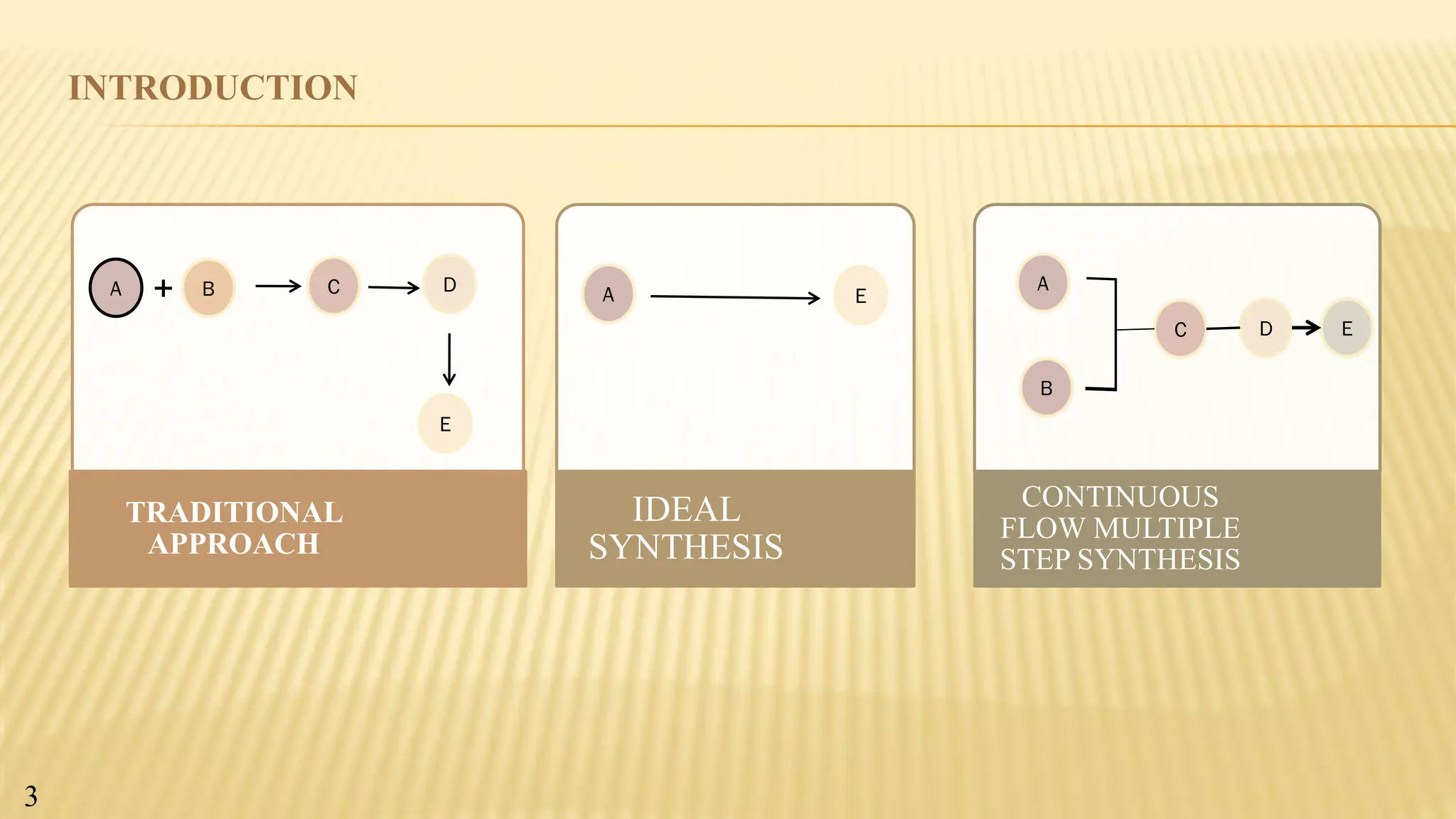
1.
jjj
CONTINUOUS FLOW REACTORS
WORKINGPRINCIPLE, ADVANTAGES AND SYNTHETIC APPLICATION
Presentation By,
Ms. KRISHNAPRIYA K R
Reg.No.NU23PHPC06
Department of Pharmaceutical Chemistry
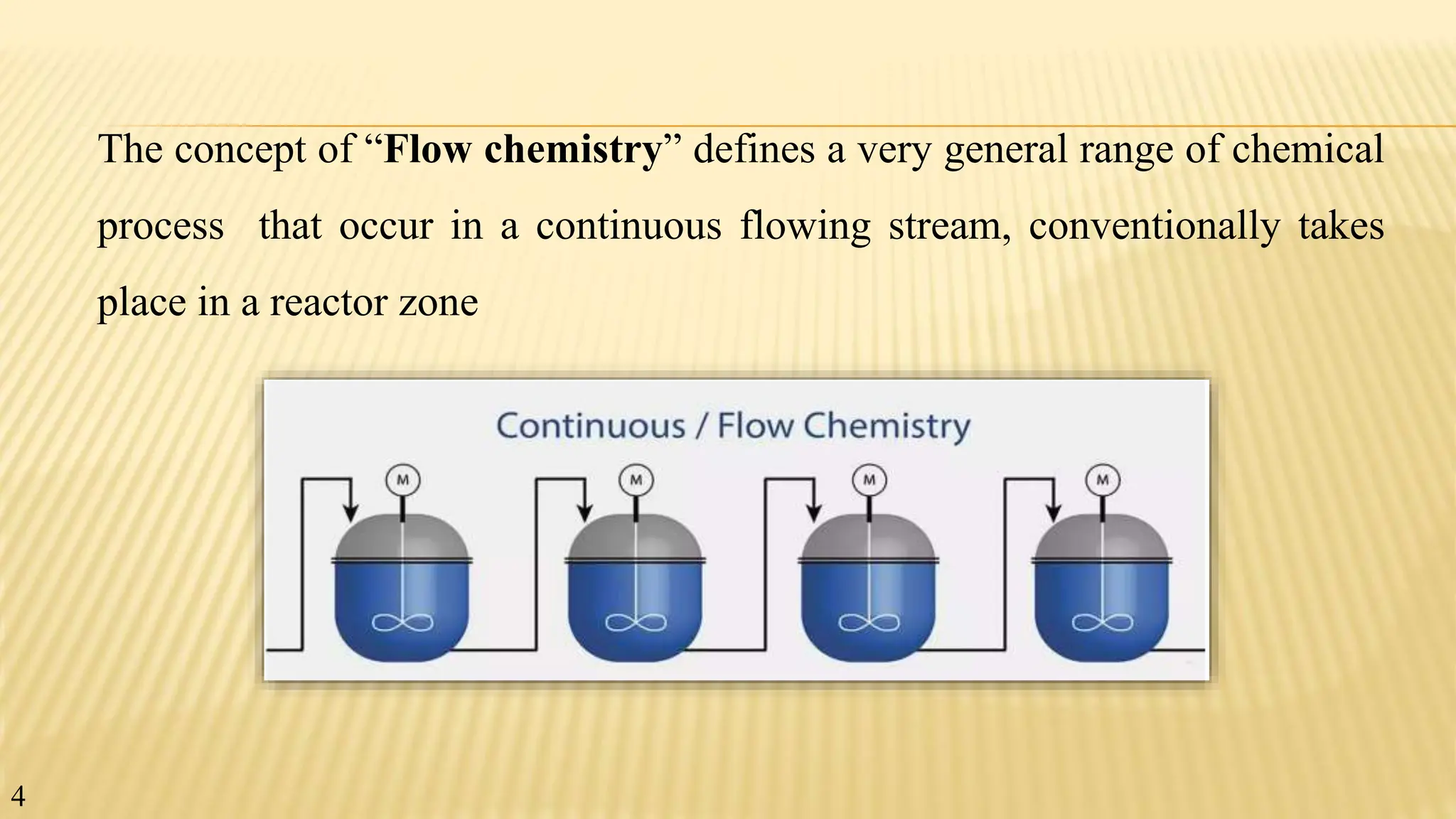
The concept of“Flow chemistry” defines a very general range of chemical
process that occur in a continuous flowing stream, conventionally takes
place in a reactor zone
4
5.
REACTORS
• A reactoris a vessel or system in which a chemical reaction takes place
Eg ; Batch reactors
Continuous flow reactors
• This reactor also called the heart of the Chemical process
• Depends upon,
Type of reaction
Reaction rate
Required product yield
5
6.
In the majorityof cases, a reactor does three things, it provides
1. Residence Time
2. Transfer Heat
3. Agitates or mix phases
6
7.
WORKING PRINCIPLE
• Continuousintroduction of reactants into the reactor while simultaneously removing
products, allowing for continuous operation and steady-state conditions
1. Continuous feed of reactants: Reactants are continuously pumped or fed into the
reactor at a constant flow rate.
2. Mixing: Thoroughly mixed to ensure homogeneity
Mechanical stirring, turbulence, or flow-induced mixing
All reactants are evenly distributed throughout the reactor volume
7
8.
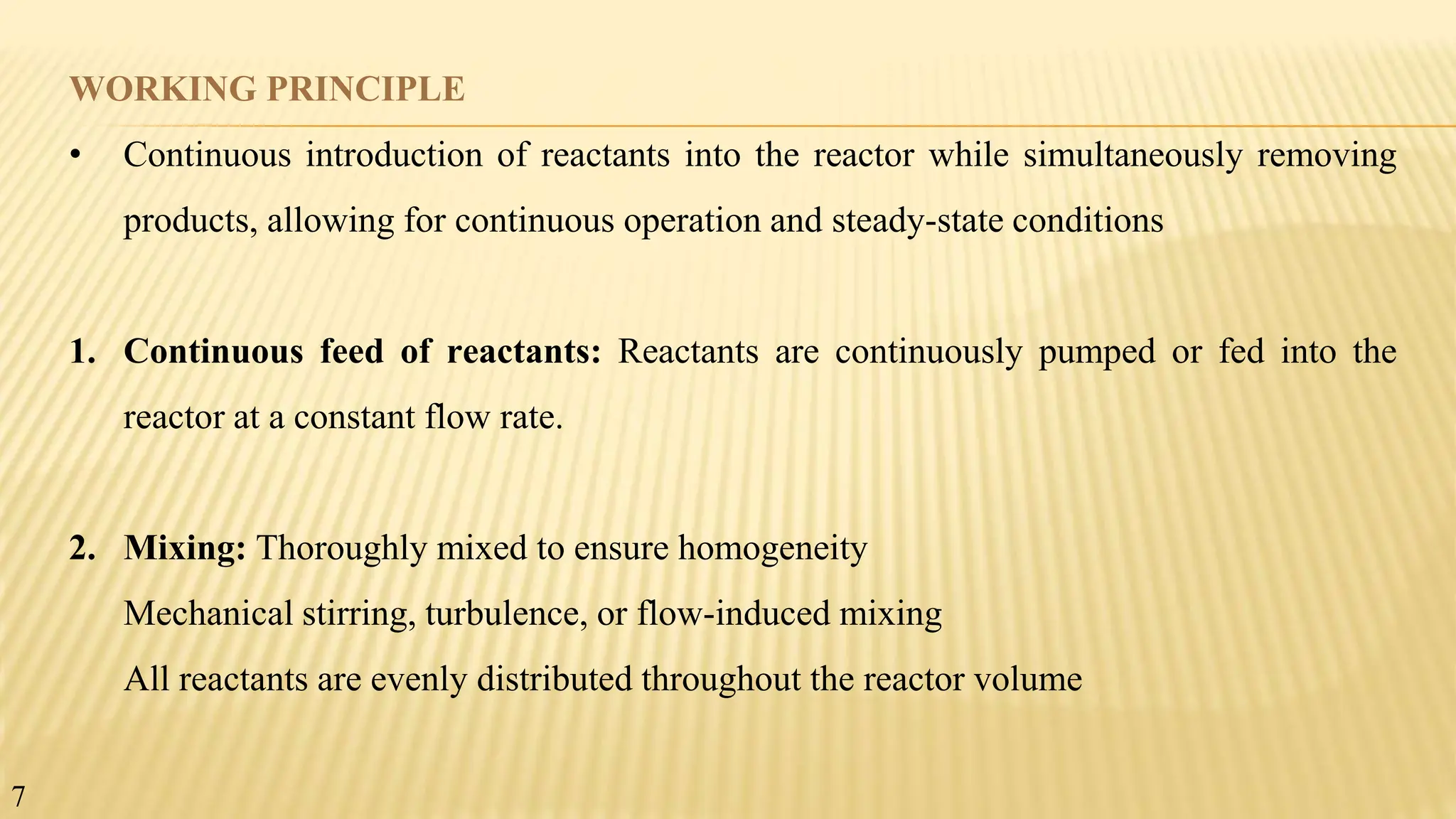
3. Reaction: Thedesired chemical reaction
takes place.
Reaction kinetics depend on factors such as
temperature, pressure, and the concentration
of reactants.
4. Residence time: The time it takes for a reactant molecule to spend in the reactor, known
as residence time, is crucial for determining the extent of the reaction.
Residence time can be controlled by adjusting the flow rate of reactants or the volume of
the reactor.
8
9.
5. Product removal:The products are continuously removed from the reactor to
prevent accumulation and maintain a constant volume.
Continuous withdrawal from the reactor outlet or separation using downstream
processes like filtration or distillation.
6) Steady-state operation: Flow rates of reactants and products, as well as other
operating parameters such as temperature and pressure, remain constant over time
9
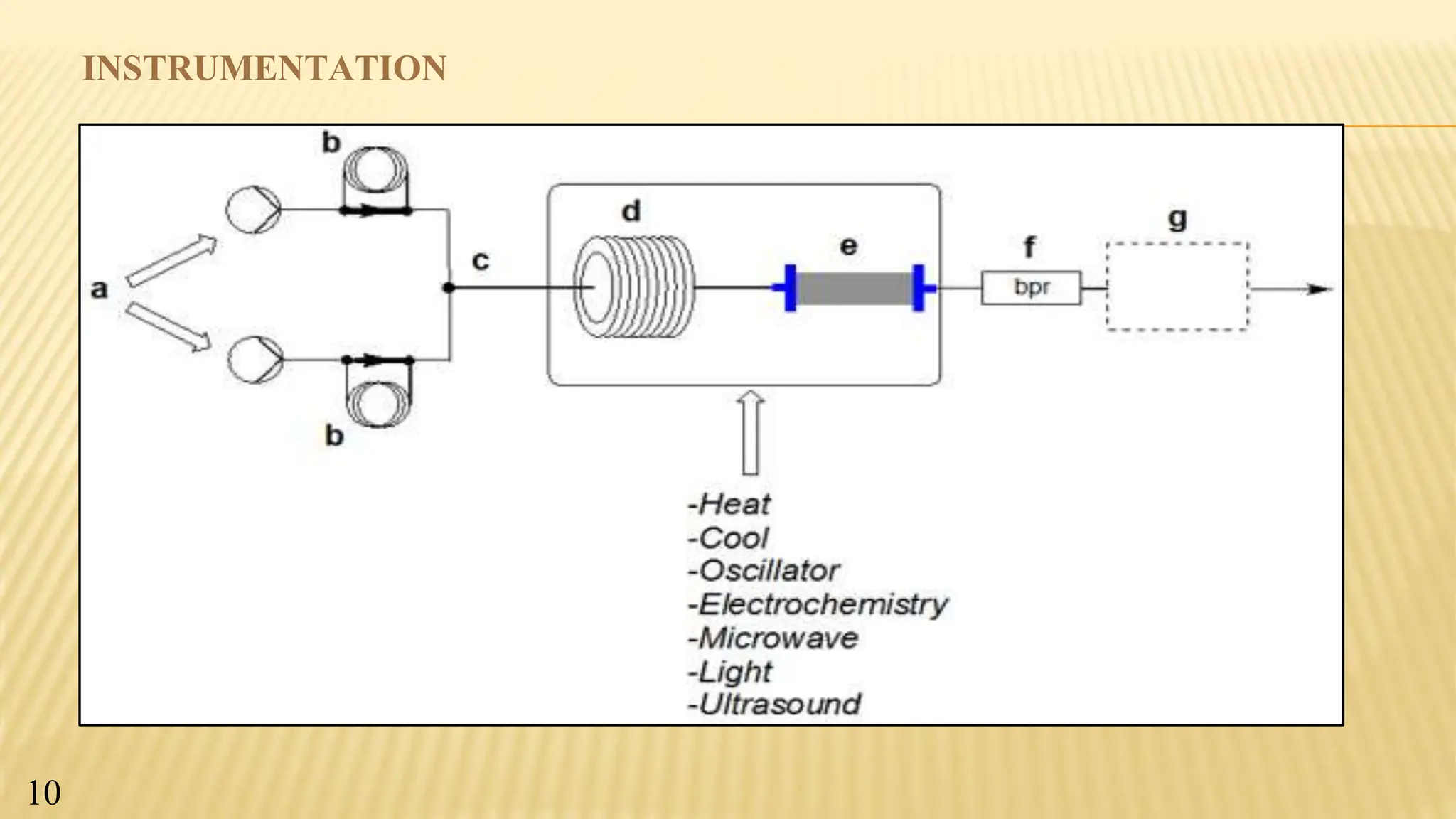
a) Pumps :Used to deliver reproducible quantities of solvents and reagents; the usual
types are piston, peristaltic, syringe or gear centrifugal pumps
b) Reaction loops : Used to introduce small volumes of reagents
c) T-piece : Primary mixing point , where reagents streams are combined
d) Coil reactor : Provides residence time for the reaction
e) Column reactor : Packed with solid reagents, catalyst or scavengers
f) Back pressure regulators : Controls the pressure of the system
g) Downstream unit : In-line analytics ,work-up operations
11
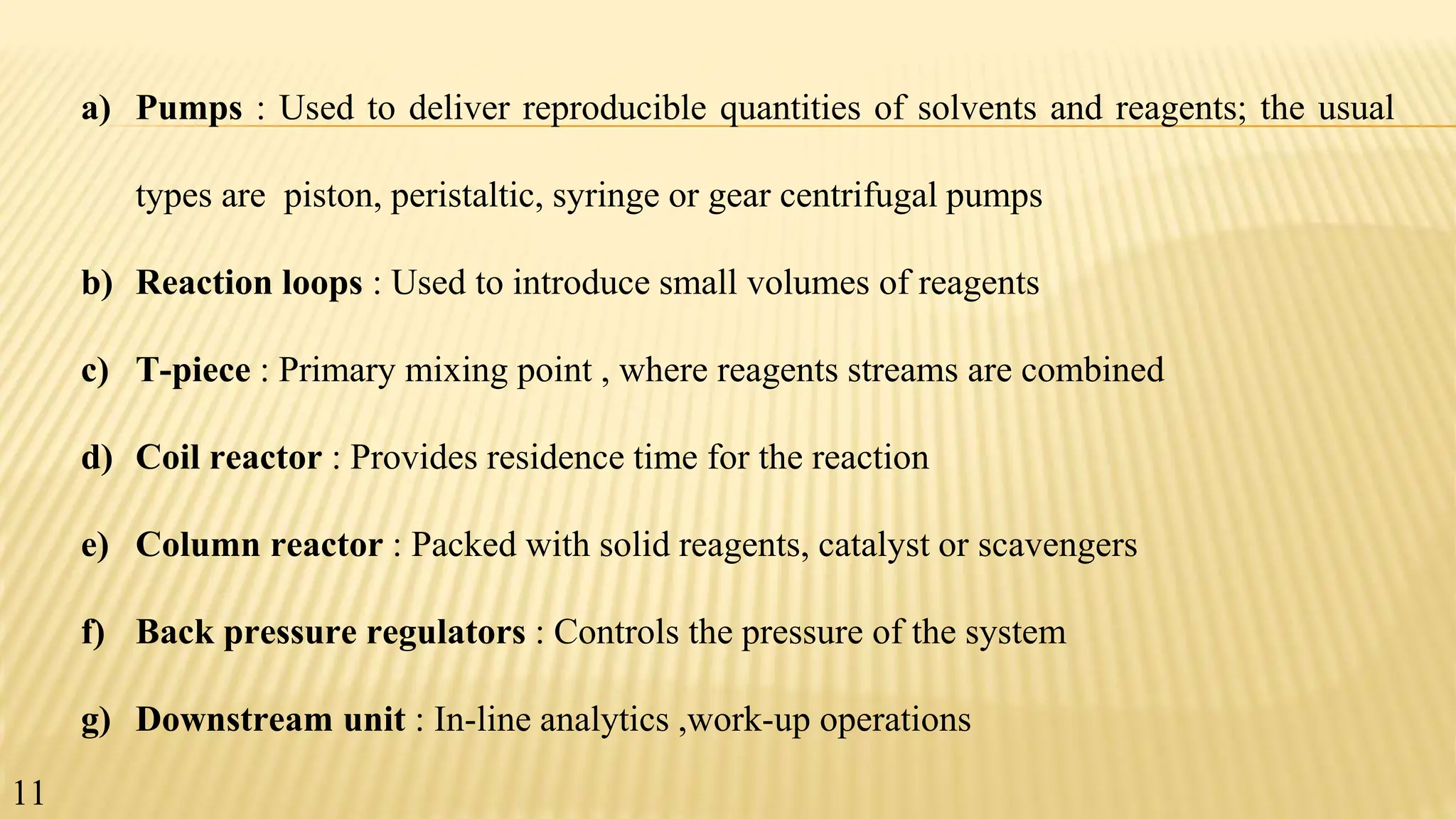
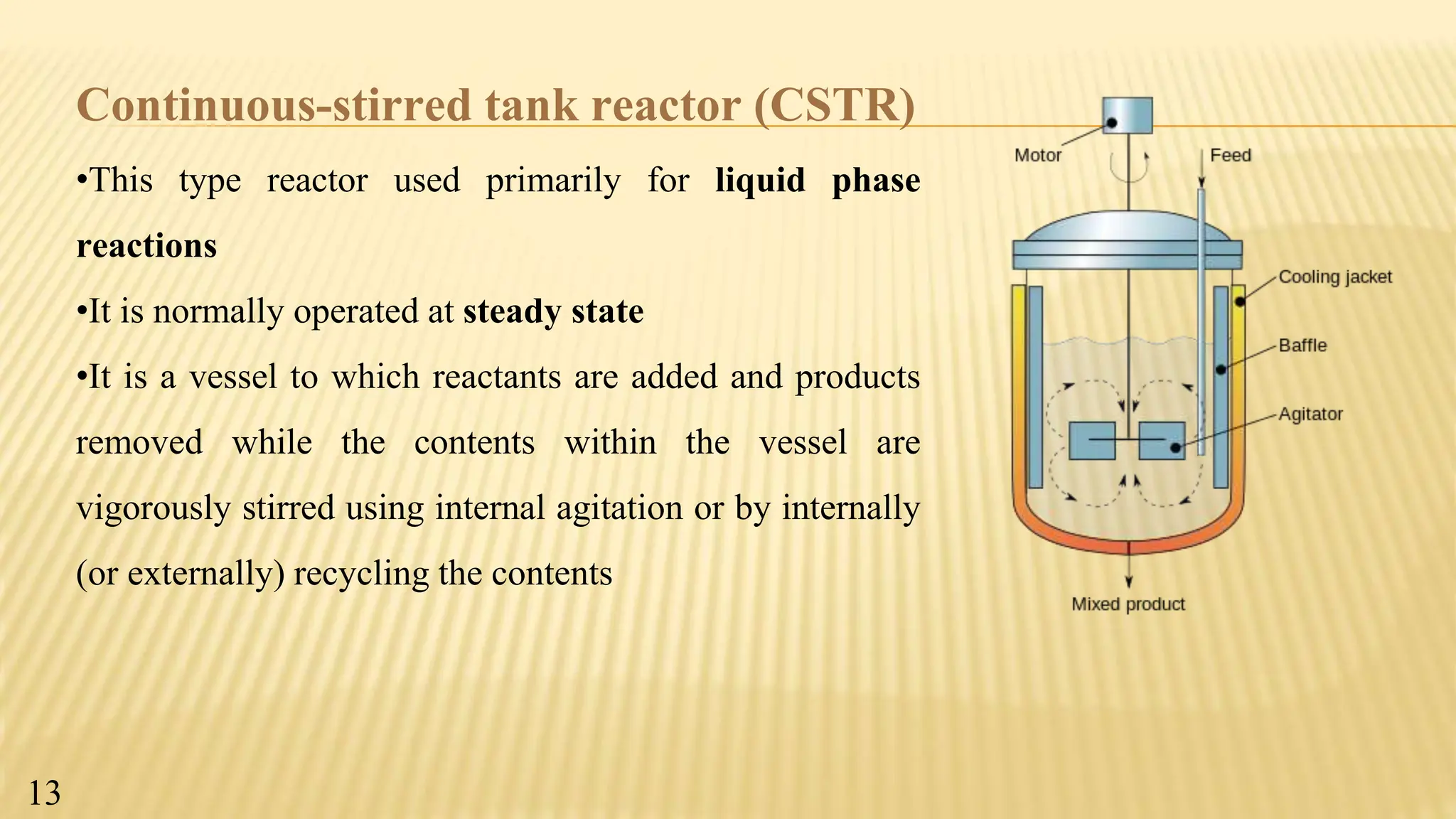
Continuous-stirred tank reactor(CSTR)
•This type reactor used primarily for liquid phase
reactions
•It is normally operated at steady state
•It is a vessel to which reactants are added and products
removed while the contents within the vessel are
vigorously stirred using internal agitation or by internally
(or externally) recycling the contents
13
14.
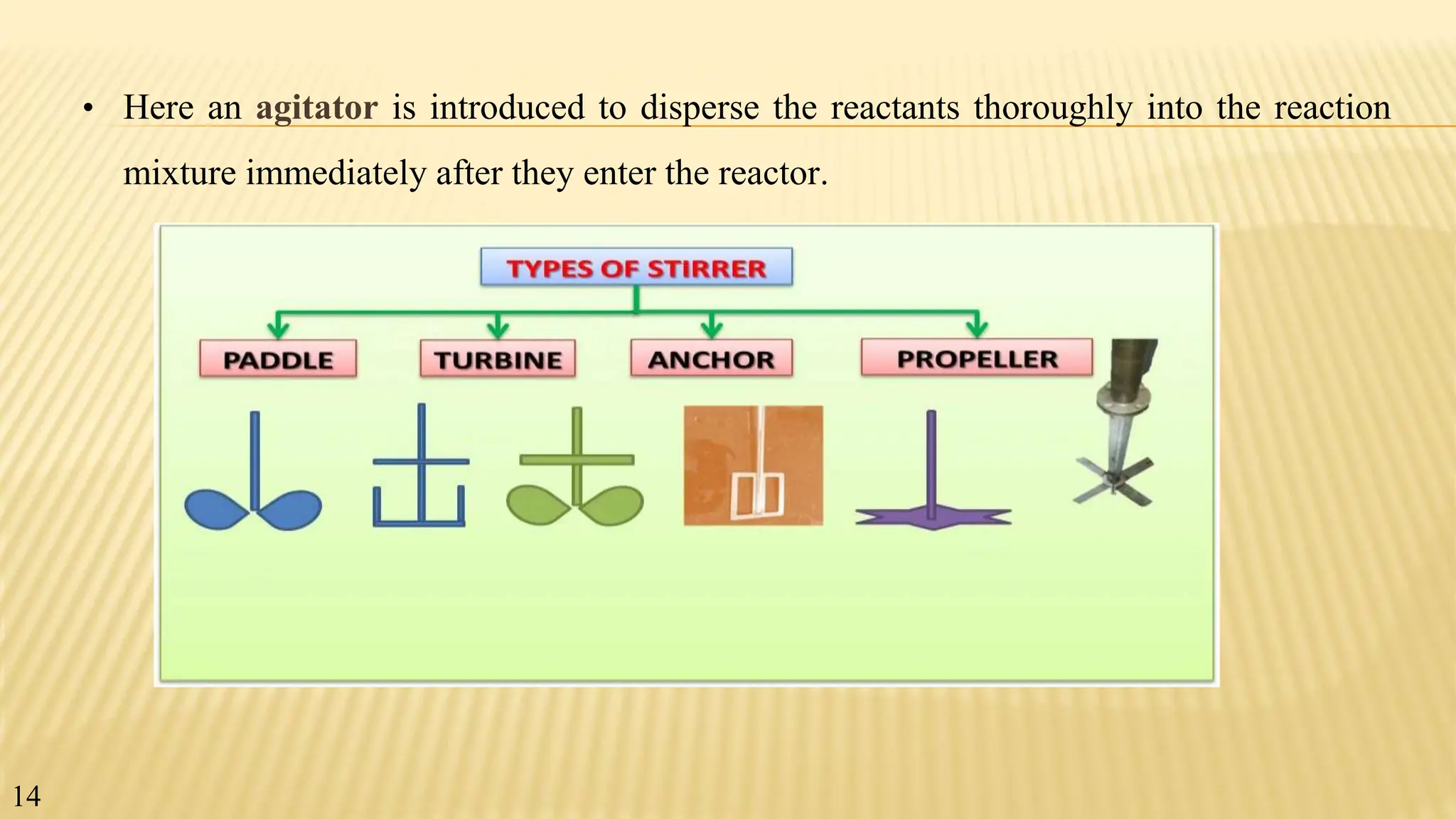
• Here anagitator is introduced to disperse the reactants thoroughly into the reaction
mixture immediately after they enter the reactor.
14
15.
Continuous stirred-tank reactorshave the following characteristics:
1. Continuous flow passes through a CSTR, both output and input streams. But not
certainly at equal rates.
2. The mass of the system inside a CSTR is not necessarily steady.
3. The fluid is perfectly mixed inside a CSTR. Hence, its properties are consistent at any
time because of adequate stirring.
4. The flow in the system may not necessarily have a constant density. The density of the
inlet flow may vary among the process to reach the exit and have a different density output
stream.
5. Provide some kinds of heat transfer equipment for temperature control.
15
16.
Advantages
∙ Large numbersof the product can be produced at a low cost.
∙ Good temperature control
∙ Reactor has a large heat capacity
∙ Interior of the reactor is easily accessed
∙ Good control
∙ Easy to clean
∙ Continuous operation
16
17.
Disadvantages
• Very costlyas large amounts of equipment are required.
• Conversion of reactant to product per volume of the reactor is small compared to other
flow reactors
• A breakdown of any part of the assembly line can lead to a complete shutdown thus
stopping production completely.
• Consumption of more power due to the presence of mechanical pumps.
• Reactants can bypass because of improperly positioned outlet.
• It has size limitation because of motor size, weight, and shaft length.
17
18.
SYNTHETIC APPLICATIONS
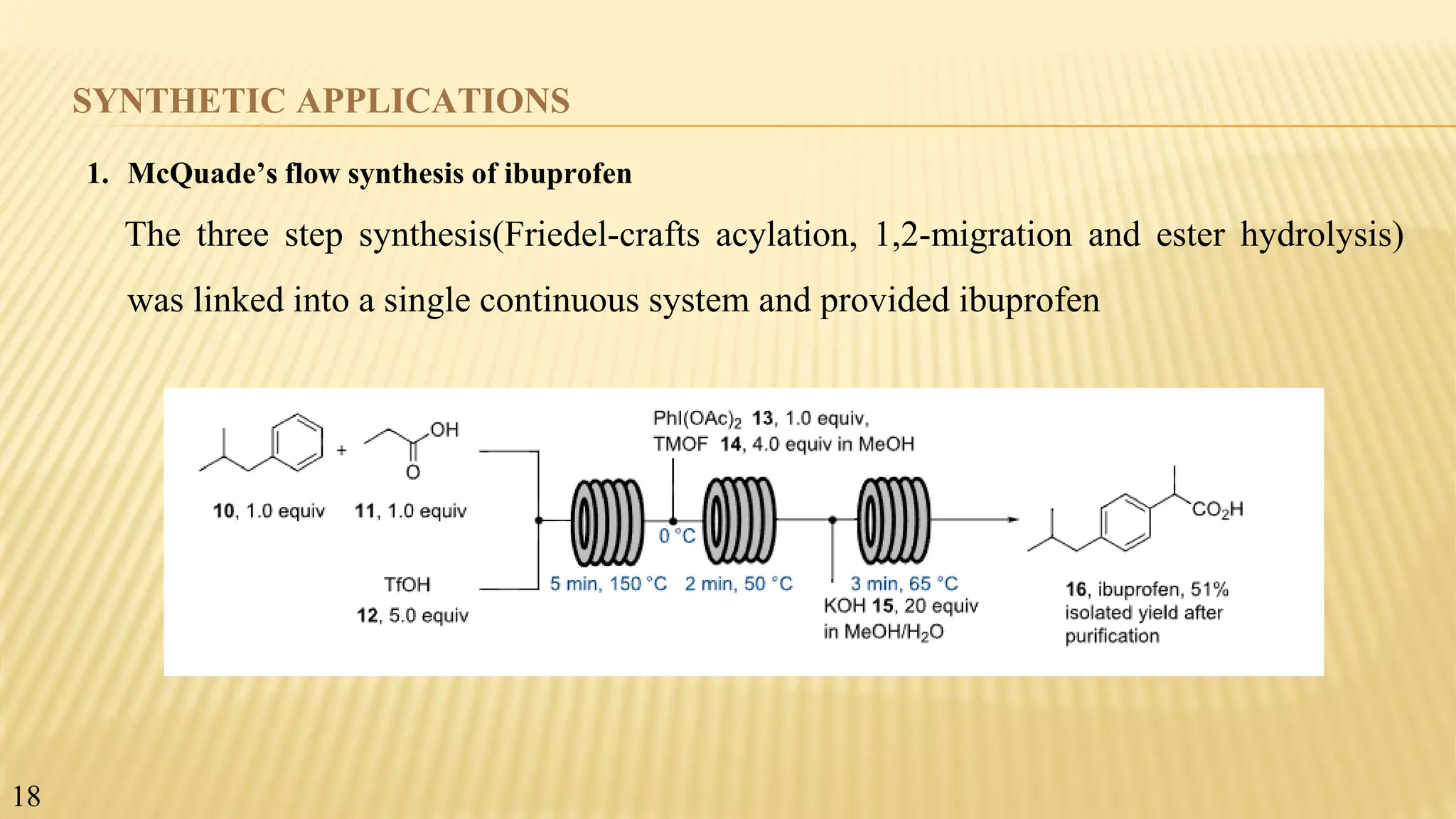
1. McQuade’sflow synthesis of ibuprofen
The three step synthesis(Friedel-crafts acylation, 1,2-migration and ester hydrolysis)
was linked into a single continuous system and provided ibuprofen
18
19.
2. Prevention ofwaste
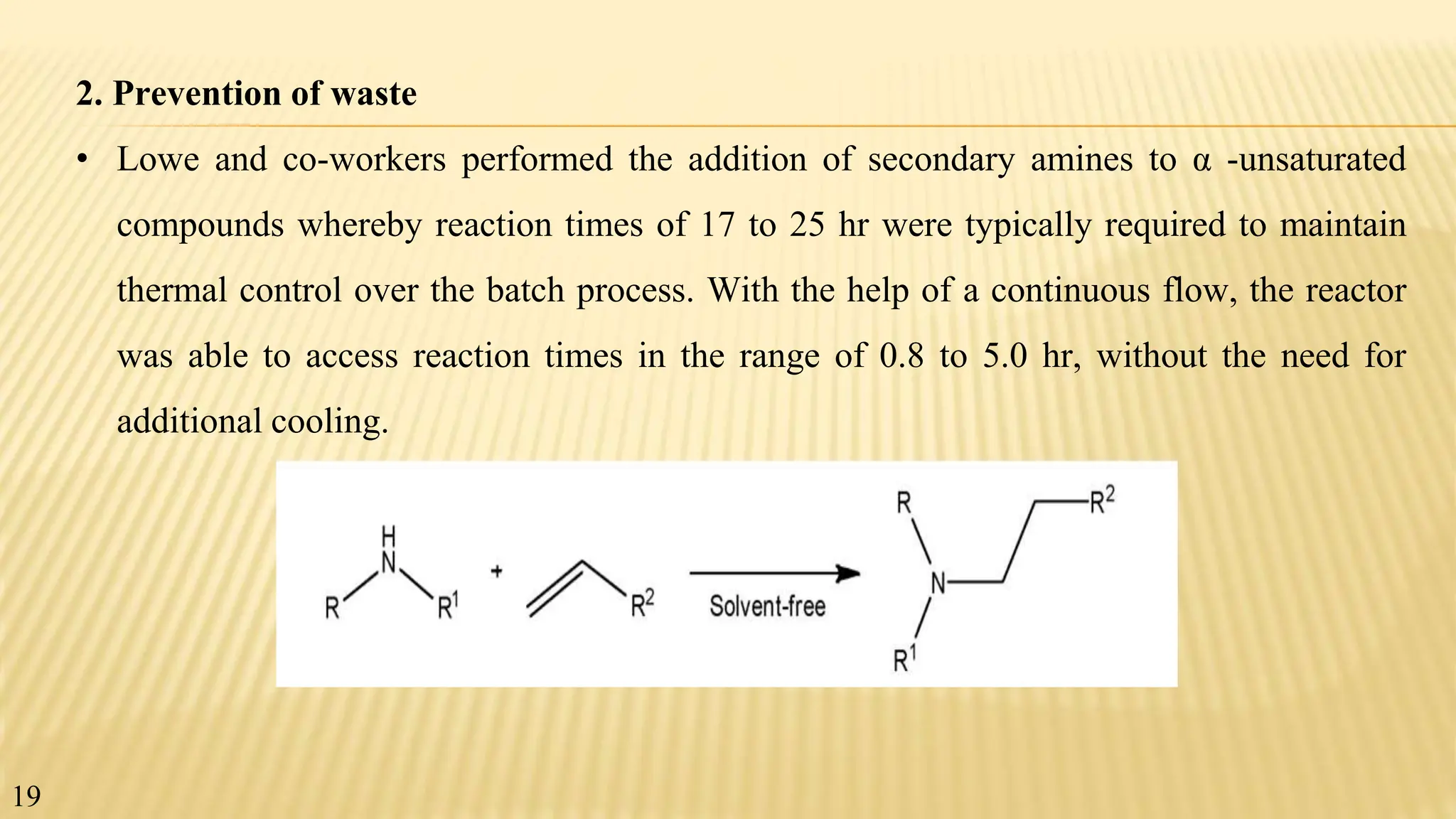
• Lowe and co-workers performed the addition of secondary amines to α -unsaturated
compounds whereby reaction times of 17 to 25 hr were typically required to maintain
thermal control over the batch process. With the help of a continuous flow, the reactor
was able to access reaction times in the range of 0.8 to 5.0 hr, without the need for
additional cooling.
19
20.
3. Atom economy
•The atom economy of a reaction is a measure of the percentage of the mass of reactants
that are incorporated into the product and is often used as a measure of waste
generation
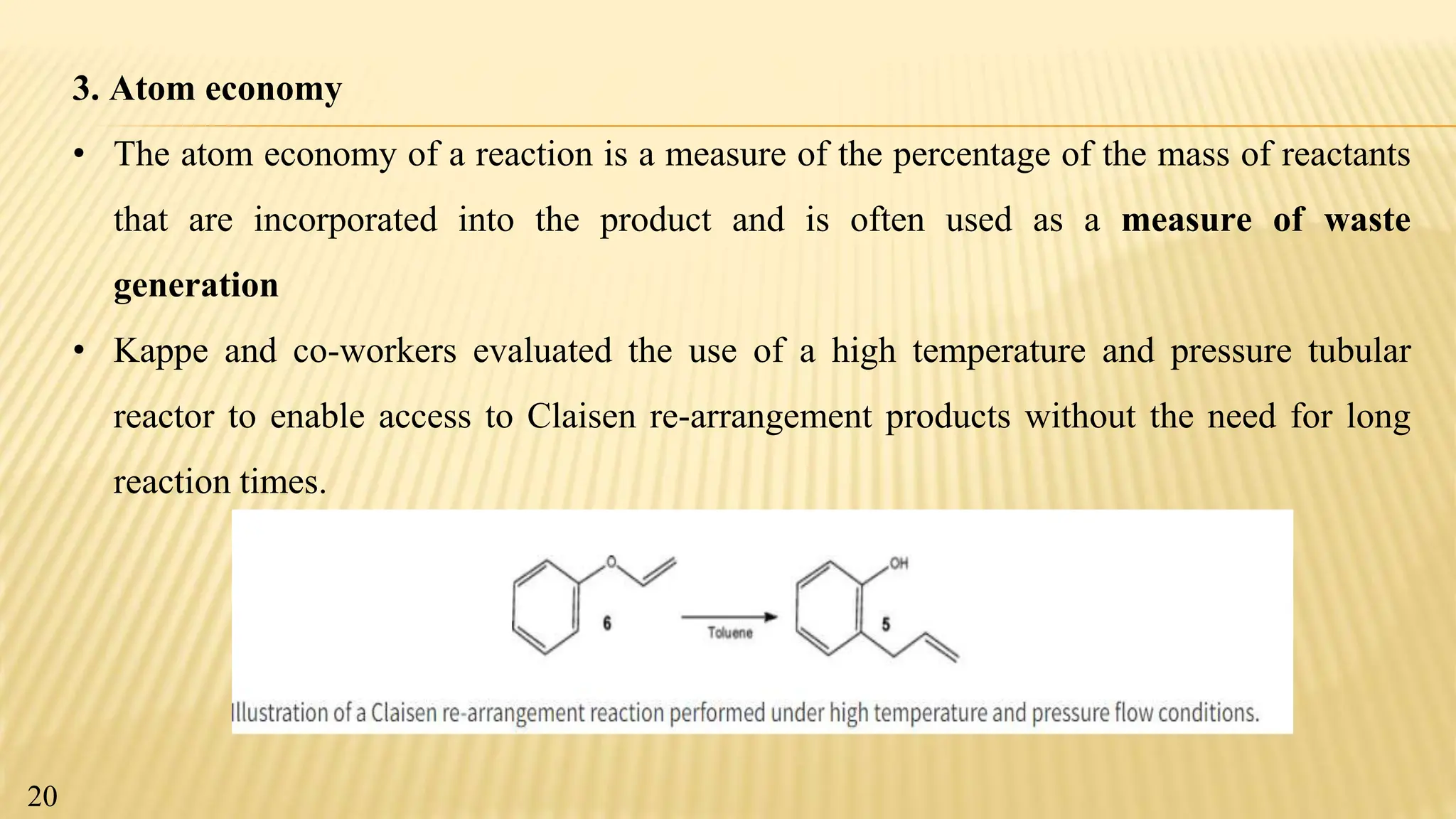
• Kappe and co-workers evaluated the use of a high temperature and pressure tubular
reactor to enable access to Claisen re-arrangement products without the need for long
reaction times.
20
21.
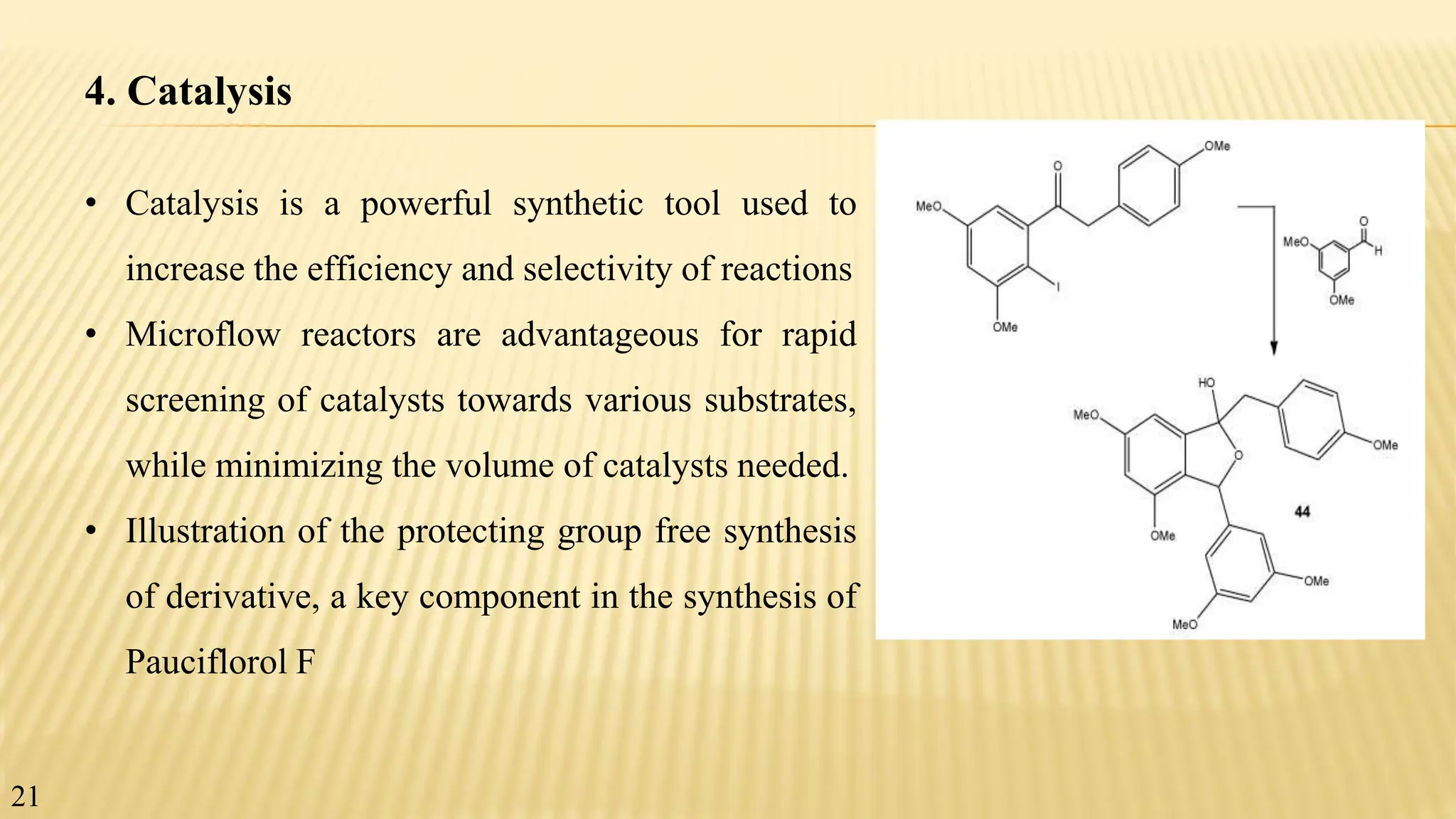
4. Catalysis
• Catalysisis a powerful synthetic tool used to
increase the efficiency and selectivity of reactions
• Microflow reactors are advantageous for rapid
screening of catalysts towards various substrates,
while minimizing the volume of catalysts needed.
• Illustration of the protecting group free synthesis
of derivative, a key component in the synthesis of
Pauciflorol F
21
22.
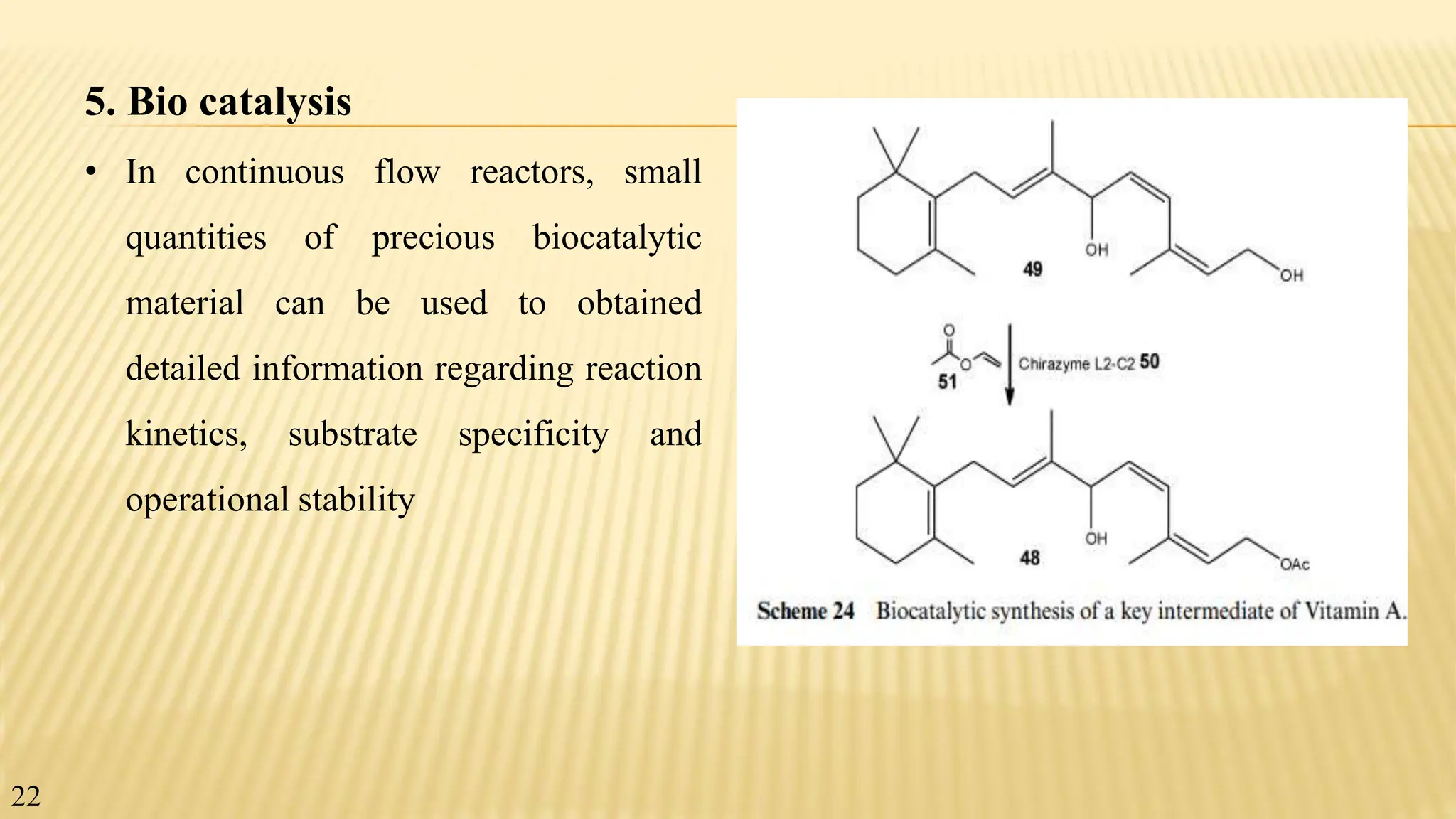
5. Bio catalysis
•In continuous flow reactors, small
quantities of precious biocatalytic
material can be used to obtained
detailed information regarding reaction
kinetics, substrate specificity and
operational stability
22
23.
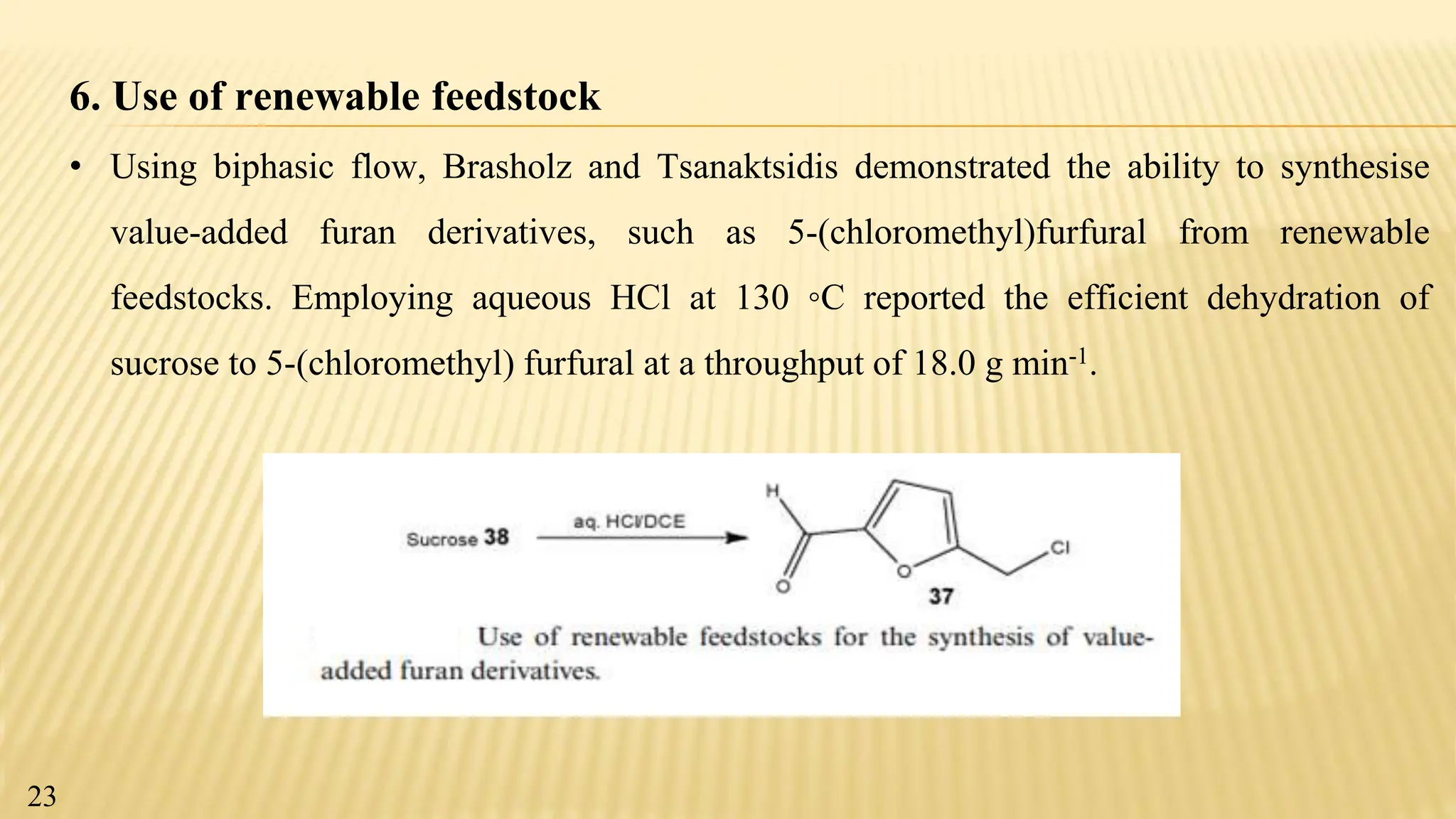
6. Use ofrenewable feedstock
• Using biphasic flow, Brasholz and Tsanaktsidis demonstrated the ability to synthesise
value-added furan derivatives, such as 5-(chloromethyl)furfural from renewable
feedstocks. Employing aqueous HCl at 130 ◦C reported the efficient dehydration of
sucrose to 5-(chloromethyl) furfural at a throughput of 18.0 g min-1.
23



![CHEMISTRY OF PEPTIDES [M.PHARM, M.SC, BSC, B.PHARM]](https://cdn.slidesharecdn.com/ss_thumbnails/45-191219080659-thumbnail.jpg?width=640&height=640&fit=bounds)


